16.5 million new-energy vehicles sold. Zero Canadian dealerships. The gap between those two numbers is not an accident, and it is not about product, it is about a tariff wall, a rebate program designed to exclude the world's largest EV maker, and a Canadian buying public that already knows the brand better than it knows Volkswagen.
BYD is the company legacy automakers gestured at when they warned about "Chinese competition" for a decade. Now it is the company Canadians can price-shop online but cannot walk into a showroom to buy. This guide walks through what BYD Auto is, how it got here, what it actually sells, and the specific numbers Canadians should watch before the first dealership opens.
Key takeaways
- BYD's cumulative NEV sales hit 16.5 million units by May 2026, nearly double Tesla's total production.
- Canada's 100% tariff wall, not product quality, is the only reason BYD has zero Canadian dealerships.
- BYD's Blade Battery LFP cells pass nail-penetration tests without thermal runaway, removing the fire-risk tradeoff of cheaper chemistry.
- The Ocean series, Atto 3, Seal, Dolphin, is BYD's export lineup and what Canadians would actually buy.
- BYD has committed to paying for crashes caused by its God's Eye driver-assist system, a liability position Tesla still refuses on FSD.
Quick Answer: What Is BYD Auto and Why Does It Matter
BYD Auto is the automotive subsidiary of BYD Company, a Shenzhen-headquartered battery and vehicle manufacturer that has become the single largest producer of plug-in electric vehicles on the planet. BYD Auto was established in January 2003 as a subsidiary of BYD Company, a battery manufacturer, following the acquisition and restructuring of Xi'an Qinchuan Automobile. The first car it designed, the petrol-engined BYD F3, began production in 2005, a starting point that is easy to forget when the company now ships more electric cars than anyone else.
The parent company's origin explains the structural advantage. BYD was founded by Wang Chuanfu in February 1995 as a battery manufacturing company. The automotive business was built on top of that chemistry expertise, not bolted onto it. BYD Auto has since become the world's largest manufacturer of plug-in electric vehicles, and since 2009 the automotive business has accounted for over 50% of BYD's revenue, surpassing 80% by 2023. What began as a battery firm is now, in revenue terms, a car company that happens to make its own cells.
Scale is the headline. BYD's own investor material states that cumulative NEV sales exceeded 16.5 million units by May 2026, and that BYD became the first automaker to produce 10 million NEVs in a single year in 2024. No one else is close. The nearest useful comparison is Tesla's cumulative production, which crossed roughly 7 million units in early 2025, less than half of BYD's total, and stretched across a longer product history if you count from the Roadster rather than the Model S.
Gear worth having
As an Amazon Associate, ThinkEV earns a small commission from qualifying purchases — at no extra cost to you.

Lectron Level 2 J1772 Charger (40A, WiFi)
Smart WiFi charger with real-time energy monitoring. 40A / 9.6 kW, J1772 with a NEMA 14-50 plug, schedule charging right from your phone.
As an Amazon Associate, ThinkEV earns from qualifying purchases — at no extra cost to you.
How BYD Became the World's Largest EV Maker
Vertical integration is the answer most analysts reach for, and it is the correct one. BYD manufactures its own battery cells, its own motors, its own power electronics, and, through the Blade Battery LFP architecture, its own cell chemistry. Toyota and Volkswagen buy most of these components. BYD sells them, including to competitors. That is a structural cost position, not a temporary one.
The Blade Battery is the technical piece that made LFP chemistry competitive for passenger EVs at scale. Earlier lithium-iron-phosphate cells traded energy density for thermal stability and cycle life; BYD's cell-to-pack format recovered enough of that density to make LFP viable in a mainstream sedan without the fire-risk profile of NMC chemistry. The result is a cheaper battery that also passes nail-penetration tests without thermal runaway. A useful combination.
The skeptical read on all this, and it is a fair one, is that BYD's cost position depends on Chinese industrial policy, subsidised power, and a domestic market that shields it from real global pricing pressure. Strip those away, the argument goes, and the margin collapses. The problem with that read is that BYD is now profitable in export markets that offer none of those supports. European Atto 3 pricing sits above domestic Chinese pricing by a wide margin and still undercuts Volkswagen's ID.4 on comparable specification. The subsidy story explains part of the cost floor. It does not explain the model cadence or the software teams.
Volume numbers underline the position. BYD last year became the world's top-selling maker of electric cars with sales of 2.26 million battery-only passenger EVs, well ahead of industry heavyweight Tesla, plus a similar number of plug-in hybrid electric vehicles. Tesla still leads on BEV-only volume in specific quarters; BYD leads on the combined BEV-plus-PHEV number that most of the industry now uses as the measure of electrified sales. The Globe piece also notes Chery Automobile is queuing behind BYD for the Canadian market, one Chinese entrant is a policy exception; two starts to look like a category the tariff regime has to price rather than ignore.
Engineering headcount is the other structural piece. BYD Europe's own materials cite more than 100,000 engineers and technicians on staff. That is not an R&D budget line that can be cut in a bad quarter, it is a fixed cost that keeps the model cadence high and the software teams staffed through downturns. It is also the reason legacy automakers keep losing ground to Chinese EV brands on price and refresh speed at the same time.
The accountability layer is notable. BYD has committed to paying for crashes caused by its God's Eye driver-assistance system, a position Tesla has refused for a decade on Full Self-Driving. The gap between those two liability positions is the measure of who is actually confident in their software.
The Model Lineup: Dynasty, Ocean, and What You'd Actually Buy
BYD's model architecture splits into two mainstream series, plus premium and performance sub-brands most Canadians will never see.
The Dynasty series, Han, Tang, Song, Qin, targets the domestic Chinese market:
- Han EV, flagship sedan, positioned against the BMW 5 Series and Mercedes E-Class on price and specification
- Tang, three-row SUV, the family hauler slot
- Song and Qin, mid-size and compact sedans built for domestic volume
These names carry cultural weight in China and none outside it, which is why BYD built a second series for export.
The Ocean series, Atto 3, Atto 2, Seal, Dolphin, is the export-facing lineup. These are the models arriving in Europe, Australia, Southeast Asia, and Latin America, and they are the ones that would show up in Canadian dealerships if and when the tariff arithmetic changes. The Atto 3 is a compact SUV and the highest-volume international model; the Atto 2 sits below it as the entry point.
The Seal is the mid-size sedan positioned against the Tesla Model 3. On paper the comparison is close, similar range, similar footprint, comparable charging speeds, but the Seal undercuts the Model 3 by roughly 15% in every European market where both are sold, and it ships with a physical instrument cluster the Model 3 removed years ago. The Dolphin is the sub-compact hatchback that undercuts almost anything Europe sells. BYD's premium sub-brand Yangwang and the off-road-focused Fang Cheng Bao exist mostly for domestic buyers who want to make a statement, neither is on any credible near-term roadmap for North America.
Gear worth having
As an Amazon Associate, ThinkEV earns a small commission from qualifying purchases — at no extra cost to you.

WeatherTech FloorLiner for Tesla Model 3
Deep-channel liners that trap every drop of slush and salt. The difference between a ruined interior and a showroom-fresh cabin after a Canadian winter.
As an Amazon Associate, ThinkEV earns from qualifying purchases — at no extra cost to you.
A reasonable objection here: the Ocean-versus-Dynasty split looks tidy in a slide deck, but in practice BYD has quietly cross-shipped Dynasty nameplates into export markets when local dealers ask for a larger SUV than the Atto 3. That is true, and it matters because it means the Canadian lineup, whenever it arrives, will not be constrained to the four Ocean models. If the tariff shifts, expect Tang variants to follow the Atto 3 by a model year, aimed squarely at the three-row RAV4 Prime and Kia EV9 segment where Canadian margins are highest.
For a Canadian buyer trying to picture what would actually land here first, the answer is still the Atto 3. Everything else is either priced for a market Canada does not have, or engineered for a regulatory regime Canada does not run.
Gear worth having
As an Amazon Associate, ThinkEV earns a small commission from qualifying purchases — at no extra cost to you.

Grizzl-E Classic Level 2 EV Charger (40A)
Canadian-made and rated for minus 40C winters. 40A / 9.6 kW, NEMA 14-50, indoor/outdoor, 24-ft cable. The charger built for Canadian weather.
As an Amazon Associate, ThinkEV earns from qualifying purchases — at no extra cost to you.
BYD in Canada: Brand Awareness Without a Single Dealership
The most striking Canadian data point on BYD is not a sales number. It is a survey. The Chinese automaker expected to begin sales in Canada as early as this year already has more brand awareness for its EV lineup than incumbents such as Volkswagen and BMW, according to AutoTrader.ca's latest research. BYD is outranking two century-old European brands on Canadian mindshare without selling a single car in the country.
Dealership conversations have been running for at least two years. China's Chery Automobile Co. is also set to join the Canadian market, and BYD has been in talks with Canadian dealer groups on the same timeline. "As early as this year" has been the holding pattern since 2024, and every quarter that passes without a signed dealer agreement pushes the effective launch further into the tariff-review window.
The structural barrier is Ottawa's, not Shenzhen's. Canada imposed a 100% surtax on Chinese-made EVs in October 2024, matching the U.S. tariff schedule. That surtax dropped to 6.1% on January 16, 2026, but only inside a 49,000-unit annual quota, and Chinese-built vehicles are explicitly excluded from the Electric Vehicle Availability Program (EVAP), the federal rebate that replaced iZEV in February 2026. Country of origin, not price, is the disqualifier. No BYD model qualifies for the $5,000 federal rebate at any MSRP.
One objection worth taking seriously: brand awareness is not the same as purchase intent, and AutoTrader's survey may be capturing curiosity about a novel entrant rather than a serious buying signal. That is a fair caution, but the same survey methodology has tracked Volkswagen and BMW for years, and neither is a novelty in Canada. If BYD is polling ahead of them on EV mindshare specifically, that is a shift in the consideration set, not just noise. It also means the dealer groups signing letters of intent are not speculating on a cold market, they are queuing for one that has already warmed.
The tariff-and-rebate gap is also why BYD is negotiating to take over legacy auto plants in Europe while Canada stays a waiting room. Europe is a market. Canada, right now, is a holding pen with good survey numbers.
Gear worth having
As an Amazon Associate, ThinkEV earns a small commission from qualifying purchases — at no extra cost to you.
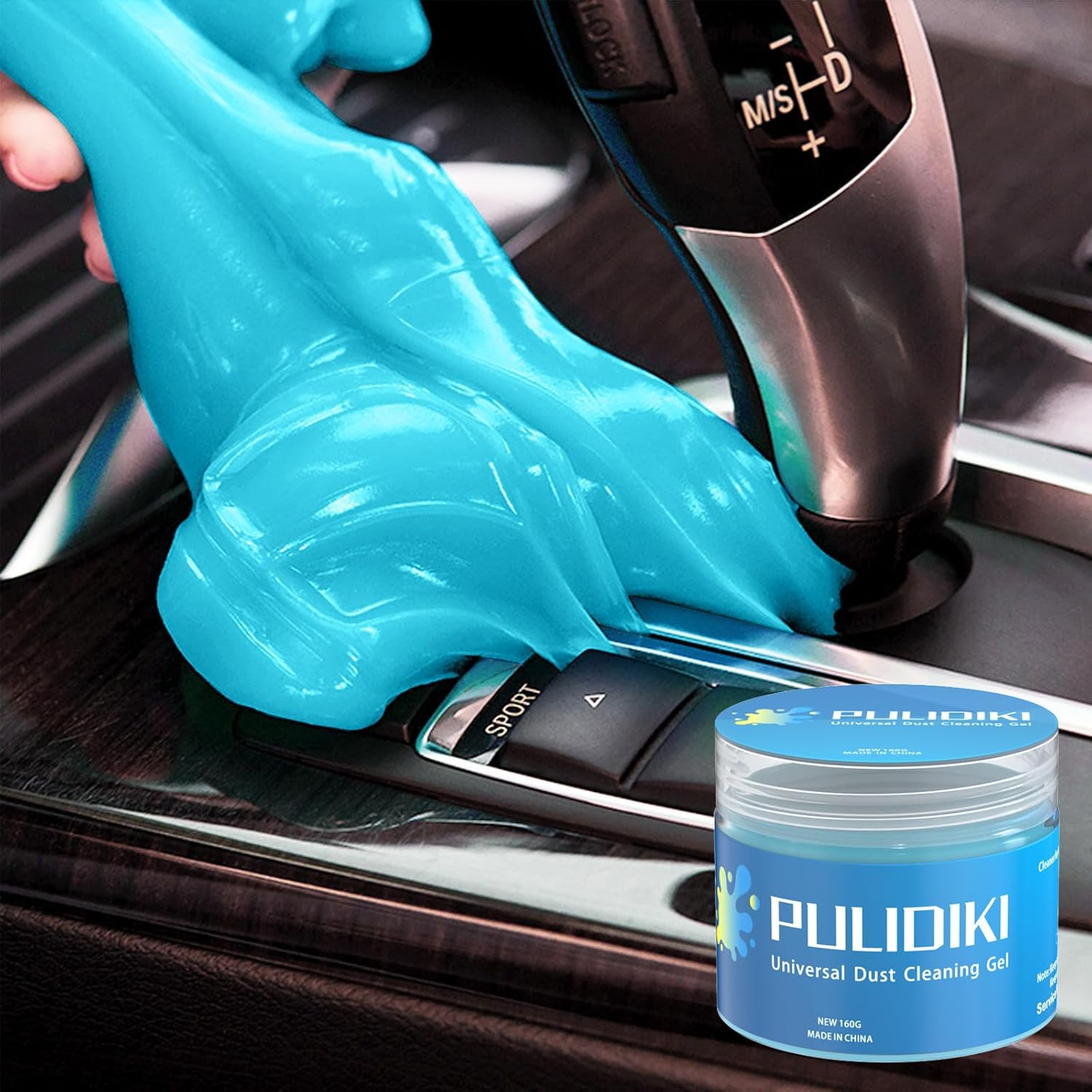
PULIDIKI Car Cleaning Gel (Detailing Putty)
Press it into vents, buttons, and seams and it lifts out dust you did not know was there. Weirdly satisfying, genuinely useful.
As an Amazon Associate, ThinkEV earns from qualifying purchases — at no extra cost to you.
What Canadians Should Watch Before BYD Arrives
Three specific numbers will tell you when the Canadian launch is real, and none are the ones the press releases will emphasise.
The tariff-quota mechanics. The 49,000-unit quota is for vehicles that qualify for the reduced rate, currently that excludes Chinese-built EVs on country-of-origin grounds. Watch for any Transport Canada or Global Affairs statement that expands the qualifying list. Without that expansion, BYD sells into a 100% tariff wall, which puts the base Atto 3 landed price somewhere in the $58,000 to $72,000 band before dealer margin. I'd put the odds of a country-of-origin change before the 2026 EVAP review at low.
European and Australian residual values. Chinese EVs have been in those markets long enough that three-year residuals are now measurable. If the Atto 3 holds 55% of MSRP at three years in Australia, Canadian buyers can price total cost of ownership with real numbers. If it drops below 45%, the pricing argument gets much harder regardless of tariff position. The counter here is that Australian residuals are being propped up by supply constraints on the Atto 3 specifically, dealers cannot get enough units, so used prices stay high. If BYD ramps Rayong output through 2026 and the Australian retail queue clears, expect those residuals to soften by five or six points before they settle. That softening is what a Canadian buyer wants to see happen before the launch, not after.
The EVAP $50,000 cap and MSRP arithmetic. EVAP pays up to $5,000 for a BEV with a final transaction value at or below $50,000. Even if the country-of-origin exclusion were removed tomorrow, BYD would need to price the Atto 3 under $50,000 landed to qualify. That is aggressive but not impossible for a company with BYD's cost structure, and it is the single price point that would move the volume needle in Canada.
Circle these on the calendar. The EVAP program review is scheduled for mid-2026, Transport Canada's next Chinese-EV tariff assessment is due before the end of the calendar year, and BYD's own investor cadence puts the next cumulative-sales milestone, 20 million NEVs, on track for the second half of 2026 based on the 16.5 million reported through May. If either Ottawa document lands without a country-of-origin adjustment, the practical Canadian launch window closes until 2027. If Transport Canada publishes a compliance pathway for Atto 3 certification before Q4 2026, the launch is real. If it does not, the AutoTrader survey stays a curiosity rather than a leading indicator.
The two agencies whose decisions actually move this timeline are NRCan (which administers EVAP) and Transport Canada (which handles vehicle certification and safety approvals). The trade file sits with Global Affairs. Watching those three, in that order, is more useful than watching press-release cycles from Shenzhen.
BYD arrives in Canada when the tariff arithmetic changes, not before. The company has the product, the price structure, and the brand awareness. The gate is Ottawa's, and Ottawa is not in a hurry.
Gear worth having
As an Amazon Associate, ThinkEV earns a small commission from qualifying purchases — at no extra cost to you.

WixGear Magnetic Air Vent Phone Mount (2-Pack)
A magnet strong enough that your phone never flinches over potholes or rail crossings. Two in the box, one for each car.
As an Amazon Associate, ThinkEV earns from qualifying purchases — at no extra cost to you.

Founder & Chief Editor
Vlad Pereira is the founder and chief editor of ThinkEV.ca, the Canadian electric-vehicle publication he writes and edits from Courtenay, British Columbia. He covers EV pricing, federal and provincial rebates, charging costs, and the Chinese manufacturers now entering Canada, from the buyer's side rather than the press-fleet side. ThinkEV is a venture of Vlad Pereira Online; his writing on health, income and the long game lives at vladpereira.com.
Frequently asked questions
Could Canadians buy a BYD if they really wanted one?
Does the 100% tariff mean BYD is actually twice as expensive here?
Is the Blade Battery genuinely safer, or is that marketing?
Why does BYD sell PHEVs if it's pitched as an EV company?
Which BYD model would actually land in Canada first?
More EV & road-trip finds
Affordable upgrades worth a look — tap any to check the price on Amazon.
 ★ 47,507
HOMEXCEL Microfiber Cloths (12-Pack)
View on Amazon ★ 164
★ 164Solar-Powered LED Ambient Light
View on Amazon ★ 546
★ 546Funny Headrest Face Covers (2-Pack)
View on Amazon ★ 27,769
Car Cup Holder Coasters (4-Pack)
View on Amazon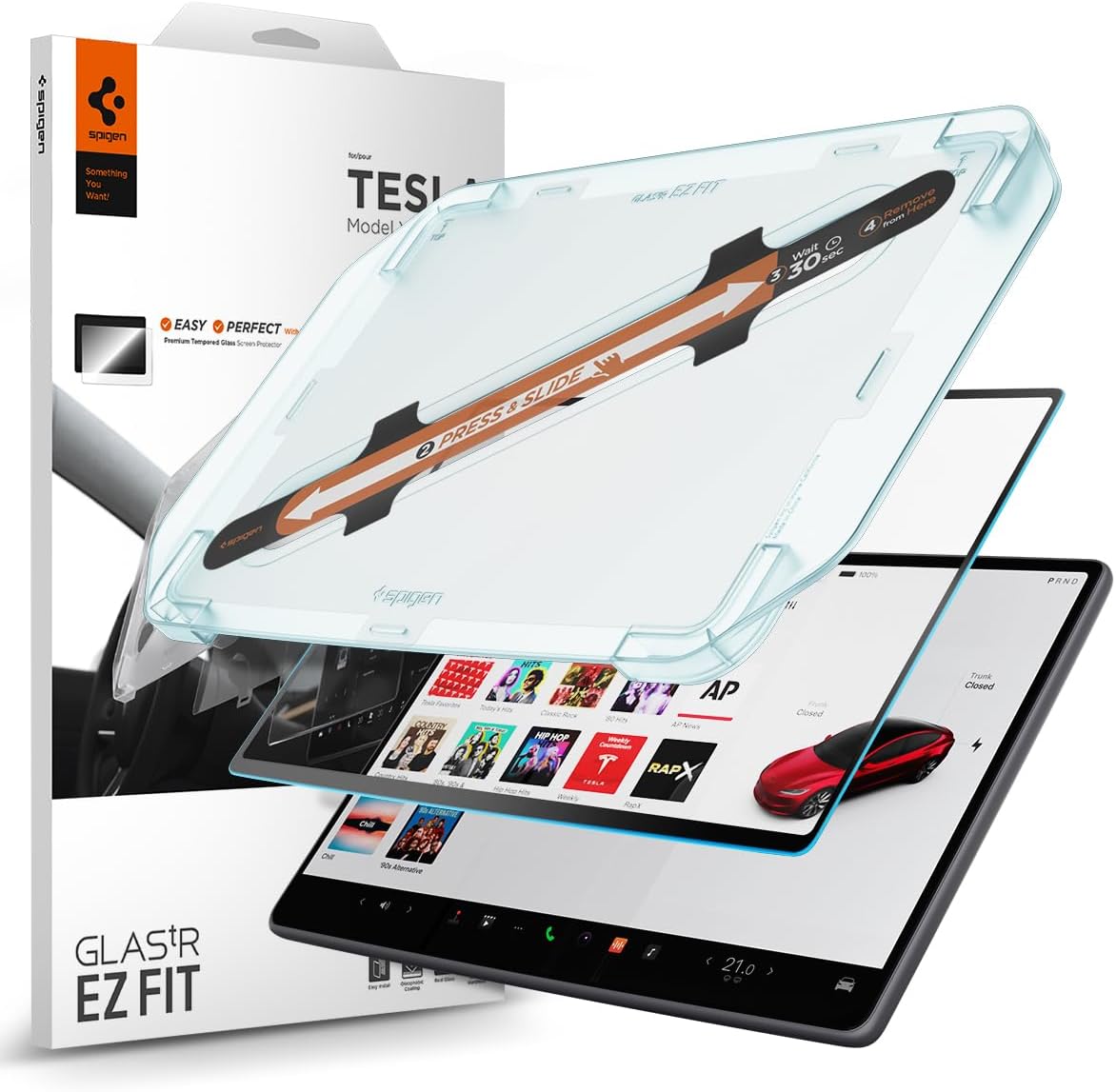 ★ 15,014
Spigen Tempered Glass for Tesla Model 3/Y
View on Amazon ★ 119
★ 119Foldable Waterproof Trunk Organizer
View on Amazon ★ 17,839
Qifutan Vent Phone Mount (Military-Grade Clip)
View on Amazon ★ 9,349
Auto Detailing Brush Set (10-Piece)
View on AmazonRead, Plan, Then Stay Current
Explore our expert articles to understand incentives and ownership costs, use the map to pressure-test charging reality, then subscribe so new EV coverage comes straight to you.
Continue Reading
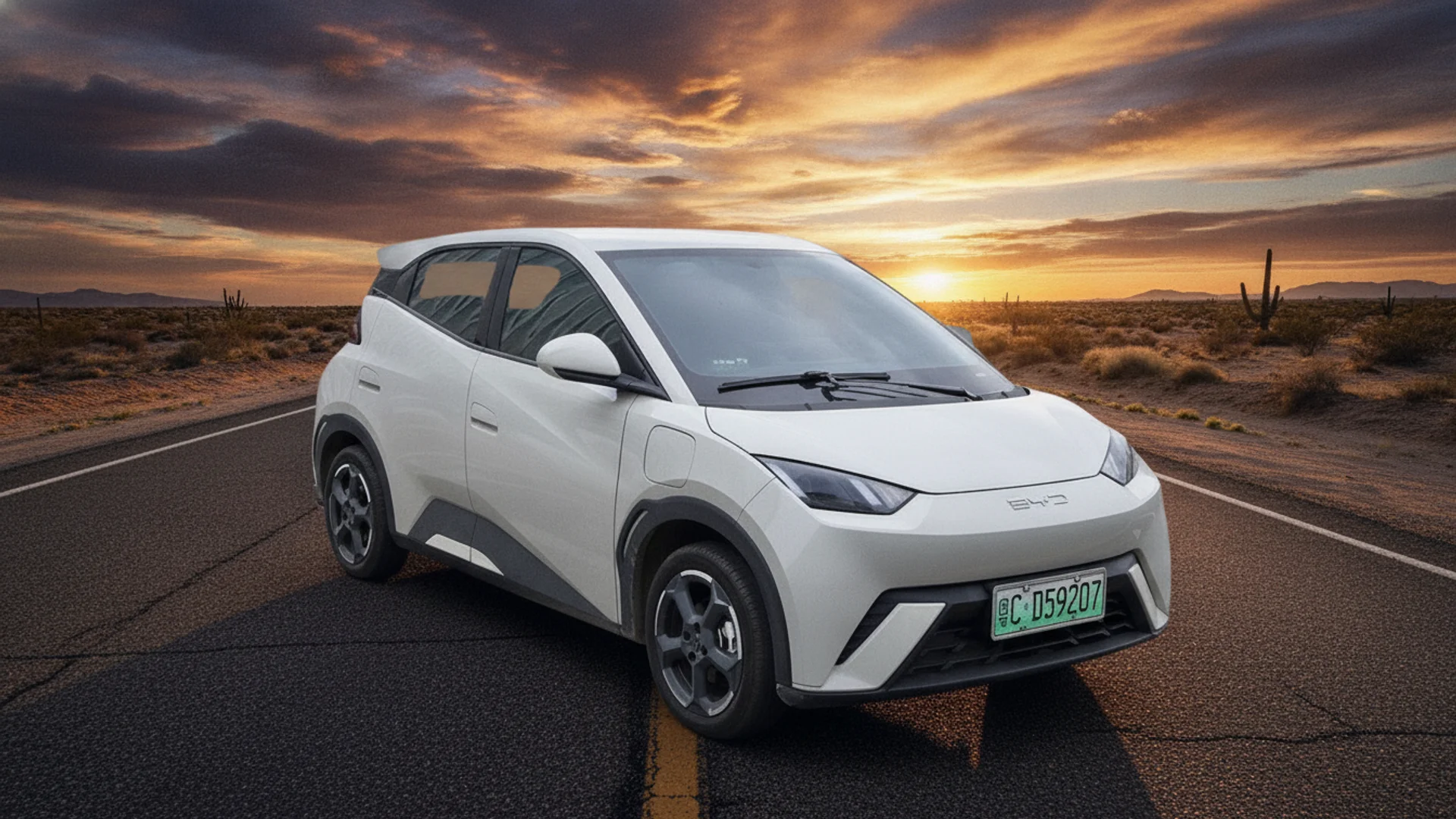
BYD Seagull Canada: Real Price, Real Specs, Real Wait
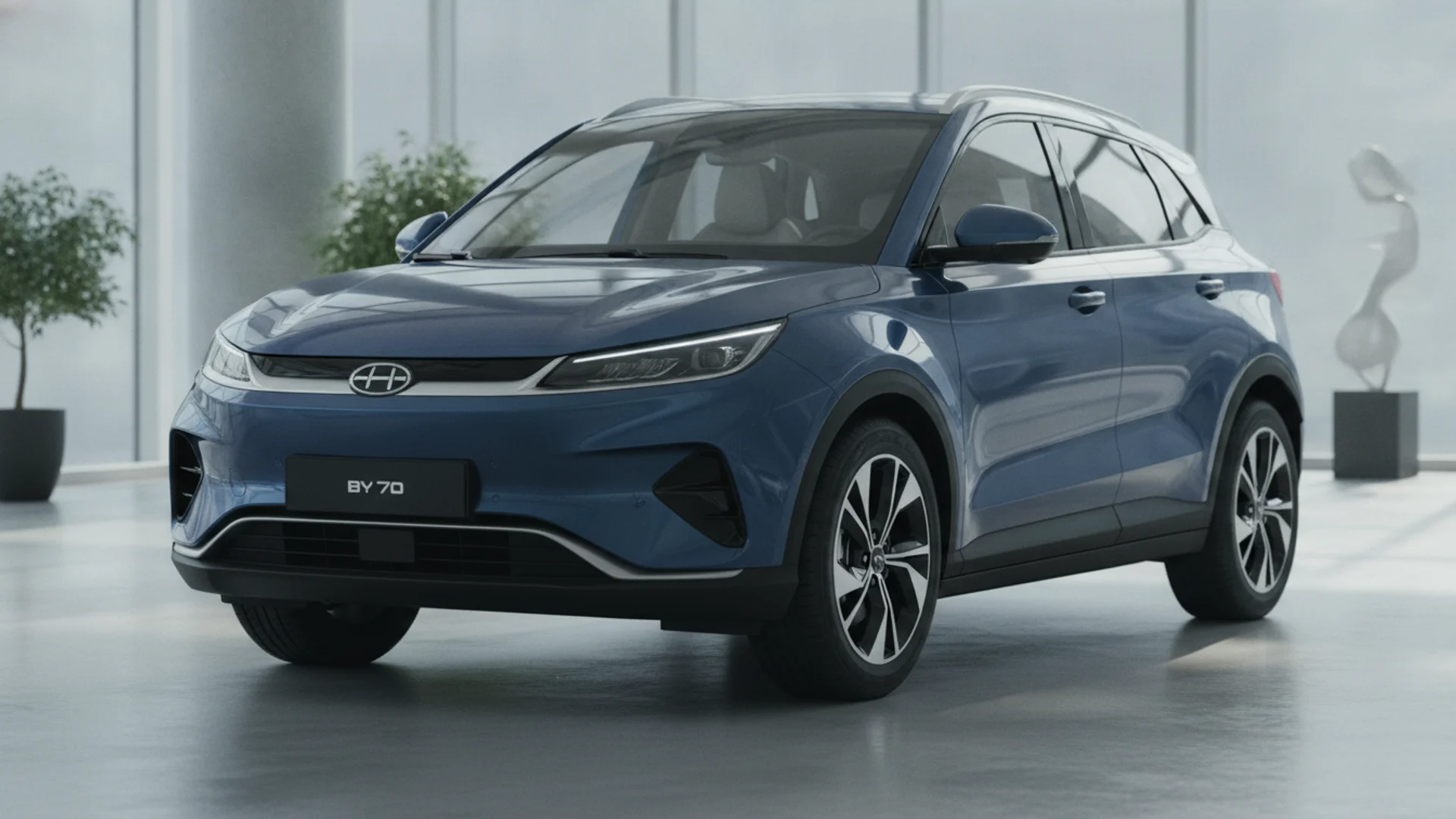
BYD Atto 3 Price Canada 2026, The Real Number, Banded
BYD in Canada: What You Can Buy and What It Costs
Are Canada's Repair Shops Ready for Chinese EVs?
How to Test-Drive an EV: What Gas-Car Buyers Miss