Key takeaways
- BYD, NIO, and XPeng built EVs from scratch with no gas car legacy to protect. GM, Ford, and VW built EVs while defending billion-dollar gas car profits. That conflict shapes every engineering and pricing decision they make.
- Vertical control is the core advantage. BYD makes its own batteries, chips, and motors. Ford and GM buy parts from suppliers, adding cost at every step of the chain.
- VW's CARIAD software disaster, five years and 2.4 billion euros spent on software that never shipped on time, proves that bolting a tech unit onto a car company doesn't make a tech company.
- Chinese brands launch new EV models in 18 to 24 months. Legacy brands take 4 to 5 years. By the time a 2028 GM model ships, BYD will have iterated three generations of the same type of car.
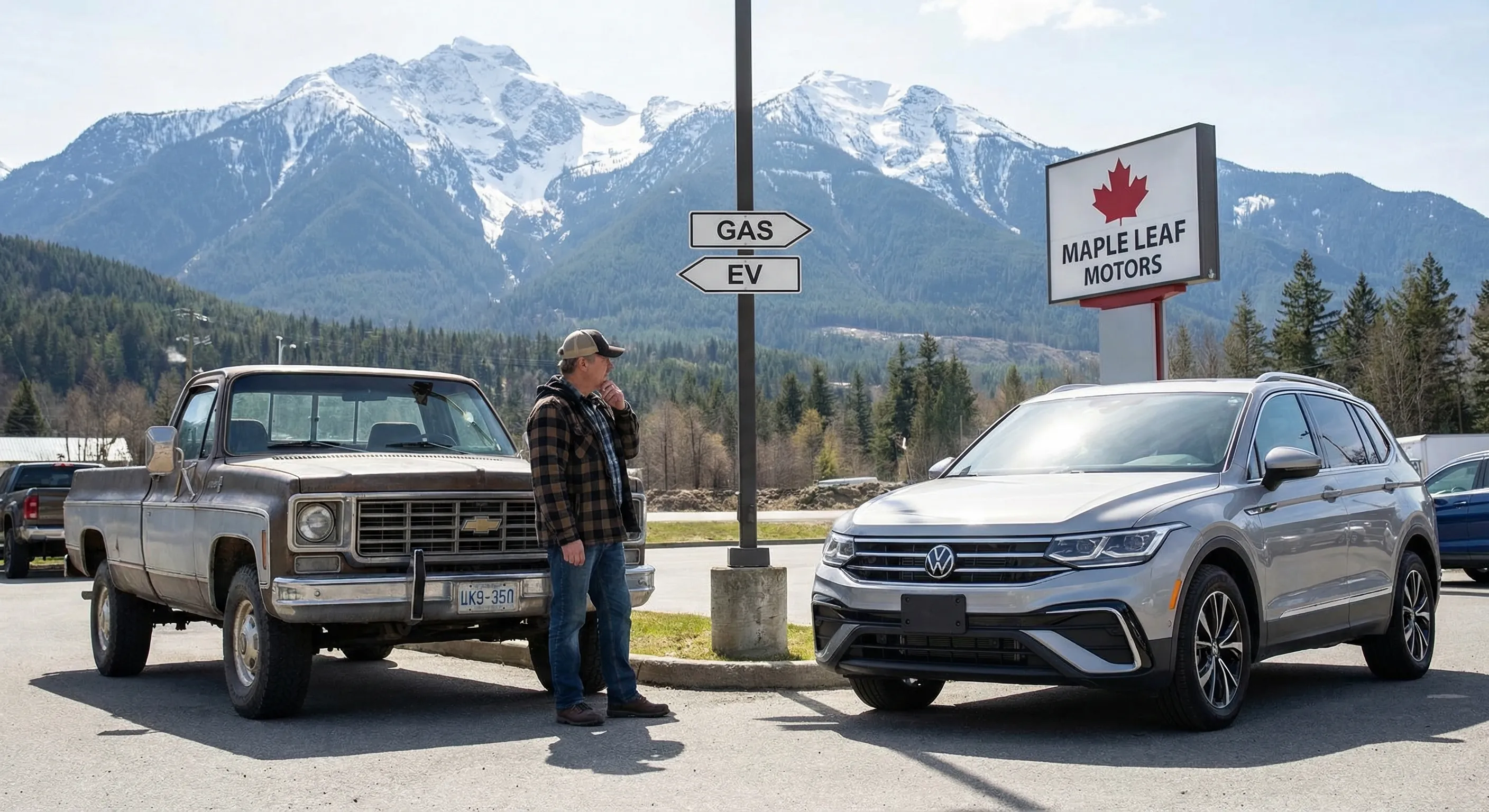
- For Canadian buyers in cities like Vancouver, Toronto, and Calgary, this pressure means more choice and lower prices over time. Tariff policy, not technology, controls what you can buy at a Canadian dealer right now.
Ford lost US$5.1 billion on EVs in 2024. GM lost US$6.0 billion. VW spent five years and billions of euros building software that didn't work. Toyota spent a decade telling the public that batteries weren't ready.
BYD sold 1.76 million battery-electric vehicles in 2024 and posted gross margins that beat Ford's across its entire car business (Source: BYD Annual Report 2024). NIO built battery-swap stations across China that removed range anxiety for daily drivers. XPeng ships over-the-air updates that change how their cars drive. Zeekr hits 0-100 km/h times that shame sports cars costing three times as much.
This didn't happen because Chinese brands got lucky. They built for electricity from day one. Legacy brands tried to bolt electricity onto machines built for gas. That sounds simple. The impact runs twelve layers deep.
Every major failure at GM, Ford, VW, Stellantis, and Toyota traces back to the same root. They built their EV programs inside companies whose supply chains, dealer networks, and cultures were set up to sell gas cars. The new thing had to survive inside a machine built for the old thing. It rarely does.
The Cannibalization Trap and the Vertical Integration Fix
Start with money. Where do legacy automakers' profits come from? GM's best-selling vehicles in 2024 were the Silverado, Sierra, Tahoe, and Suburban. Ford's were the F-150, Expedition, and Explorer.
These trucks and large SUVs carry gross margins of US$10,000 to US$20,000 per unit. Ford's average F-150 transaction price sits above US$60,000. Ford Financial Services earns extra profit on every financed unit. An EV that replaces one of those ICE sales kills a high-margin product and swaps it for a low-margin or money-losing one.
Ford's EV division, Model e, lost US$44,000 per vehicle in the first half of 2024. Every EV Ford sold cost the company money. Every F-150 made money. The real question is: which one do Ford's executives push?
This isn't a theory. Ford CFO John Lawler said in public in 2024 that Ford wouldn't grow EV volume faster than it could reach profit. Translation: Ford won't hurt F-150 margins to win EV sales. You can find full detail in Ford's investor relations filings, which show the EV loss data quarter by quarter.
BYD has no such problem. BYD CEO Wang Chuanfu set a price and committed to making it work at scale. No more profitable gas car pulling the company the other way. I think this point gets glossed over in most coverage of the EV wars.
Journalists write about battery density and software features. The real structural issue is incentive design. Ford's bonus pool, stock options, and management targets are all built around total company profitability. A division that loses US$44,000 per unit hurts everyone's pay cheque.
The engineers working on the Equinox EV are smart people. They're working inside a machine that punishes the results of their work. Toyota shows what happens when gas protection drives EV choices. Chairman Akio Toyoda spent years arguing publicly that battery EVs were oversold.
Toyota's hybrid program earns strong margins on Camry, RAV4, and Prius HEV. Going hard on BEVs would have meant admitting the hybrid bet was overextended. Toyoda didn't do that until outside pressure forced the issue. Toyota lost years of EV time in the process.
Toyota's global EV output in 2024 was under 200,000 units. BYD sold 1.76 million. The bZ4X, Toyota's mass-market BEV, hit a wheel hub bolt recall affecting thousands of vehicles within months of launch. That forced a global stop of sales.
The quality systems that made Toyota the benchmark for car reliability didn't stop a core engineering failure on its main BEV.BEV engineering was still much less developed than Toyota's ICE and hybrid work. Toyota announced in 2024 a revised EV plan committing to 1.5 million BEV sales by 2026 and 3.5 million by 2030. These targets would have sounded bold in 2020. Against what BYD hit in 2024 alone, they look modest.
Toyota has the scale and money to run a catch-up strategy. But the years lost to hydrogen won't come back. Stellantis under Carlos Tavares treated EVs as a compliance exercise. Meet the rules at minimum cost.
Protect Jeep and Ram margins. When EV demand softened in 2024, Stellantis cut EV spending right away. That made sense for a company defending its gas business. It made no sense for a company trying to compete with BYD, which spends more on EV research in one quarter than some legacy brands spend in a full year.
Stellantis CEO Carlos Tavares resigned in December 2024 amid collapsing EV sales. His successor faces rebuilding an EV program that trails the market while managing falling gas car volumes. Stellantis has the Peugeot, Citroen, Opel, and Jeep brands, giving it consumer reach across many price segments globally. Turning those brands into EV volume requires products that haven't shipped yet.
No clean fix exists for this problem inside a company that depends on gas profits to fund EV work. Chinese brands entered without that burden. That starting point shapes everything after it.
Now layer on vertical control.
BYD makes its own battery cells. It produces its own chips through BYD Semiconductor, founded in 2004. It builds its own electric motors, power electronics, and battery management systems. When a BYD car rolls off the line, the share of parts made in-house looks nothing like a GM or Ford vehicle. GM buys cells from LG Energy Solution and Samsung SDI. It licences technology, manages supplier deals, and assembles packs. Every supplier earns a margin. Every layer of the supply chain adds cost. GM's battery cost per kilowatt-hour reflects cell chemistry costs plus the margins of a multi-tier supplier base. At pack level, Blade Battery configs come in well below US$60/kWh according to BloombergNEF and Bernstein Research.
GM's pack costs run higher. Ford's Ultium costs weren't competitive with Chinese producers at launch scale. Quarterly losses confirmed it. Vertical control isn't magic.
It takes massive upfront capital and years to build skill in each part area. BYD started internal battery production in 2003. That's two decades before most Western legacy brands started treating battery supply chains as a risk. You can't copy two decades of compounding internal development with a purchase contract or a joint venture in three years.
CATL sells to both sides. BMW, VW, Stellantis, Tesla, and NIO all buy CATL cells. Buying CATL cells gives you cell access, not cell knowledge. The engineering insight about cell chemistry, pack design, and heat management stays with CATL.
Legacy brands that rely on CATL develop procurement skill, not battery skill. Those are different things with different outcomes in a competitive market. If your supplier learns faster than you do, they own your cost structure. That's exactly the spot GM and Ford find themselves in right now.
Here is a concrete example. CATL manages technology tiers within its customer base. Its most advanced cell chemistry goes to the partners that give CATL the most strategic value. In 2024, that meant Chinese brands got first access to Shenxing Battery cells with ultra-fast charge rates.
BMW and VW buy from CATL too, but they buy the tier available to them. The supplier decides what that tier is. BYD faces no such constraint because BYD doesn't buy from CATL at all. BYD's Blade Battery is a fully in-house product.
Vertical control also compounds over time. Each generation of Blade Battery development builds on the last. The manufacturing process knowledge, the yield improvement data, the heat management tweaks -- all of it stays inside BYD and feeds into the next design. GM and Ford build procurement relationships.
BYD builds institutional knowledge. After twenty years, those are very different things. Geely's Zeekr brand shows what happens when you combine platform discipline with focused EV design. Zeekr sources cells from CATL but builds its own skateboard platform, thermal system, and drive units.
The Zeekr 001, launched in 2021, delivered 623 km of CLTC range with 800V charging years before most legacy brands committed to 400V across their lineups. The 2024 Zeekr 001 hits 0-100 km/h in 3.8 seconds and charges at 500 kW peak. Legacy brands are still rolling out 350 kW at dealers.
Gear worth having
As an Amazon Associate, ThinkEV earns a small commission from qualifying purchases — at no extra cost to you.

Grizzl-E Classic Level 2 EV Charger (40A)
Canadian-made and rated for minus 40C winters. 40A / 9.6 kW, NEMA 14-50, indoor/outdoor, 24-ft cable. The charger built for Canadian weather.
As an Amazon Associate, ThinkEV earns from qualifying purchases — at no extra cost to you.
The GM Ultium story is the clearest case study in platform over-promise.
GM announced the Ultium platform in March 2020 with considerable fanfare. Ultium promised modular battery packs under an entire portfolio of EVs from Chevy to Cadillac to GMC. CEO Mary Barra committed to 30 new EV models by 2025 globally and 1 million EV sales per year in North America by 2025. By 2024, GM had sold about 75,000 EVs in North America against that 1 million target.
The Ultium vehicles that shipped, including the GMC Hummer EV, Cadillac Lyriq, and Chevy Equinox EV, arrived late and over cost. The Hummer EV weighs over 4,000 kg and uses 212 kWh of battery to do what smaller BEVs manage with 80 kWh. Those choices reflect ICE-era thinking about vehicle size applied to a battery platform that wasn't ready to support them cheaply. GM's battery joint venture with LG, Ultium Cells LLC, hit production problems at its Ohio plant.
Yields were poor. Costs were high. Early Ultium cells weren't cost-competitive with what BYD packed into the Yuan Plus at lower Chinese retail prices. Priced at about CA$48,000 for the base trim, the Equinox EV is GM's best mass-market EV attempt so far.
It took four years from announcement to volume delivery. BYD built and launched the Atto 3 in about 24 months. The Atto 3 sells in Australia, Europe, and Southeast Asia at prices equal to CA$40,000 to CA$50,000, with similar range and more standard software features. That's a full product generation behind, not a small gap.
Based on reviews from a Canadian auto show, the Equinox EV is a competent car. The interior feels solid. The range is reasonable. But the software felt dated from day one.
Not because the hardware was bad, but because the update cycle that produced it ran on a 4-year clock.
By the time it hit dealers, the bar had moved. If you want to track Ford's EV losses yourself, Ford's investor relations page publishes quarterly Model e segment results. The numbers are blunt reading. Ford's Model e lost US$4.7 billion in 2023 and US$5.1 billion in 2024.
Ford blamed high manufacturing costs, supplier pricing, warranty costs on early EVs, and the cost of building charging and software ability. Ford's software problems made the hardware losses worse. The Mach-E and Lightning ship with mixed systems: old embedded hardware plus newer connected parts. Over-the-air update capability exists but is inconsistent.
Ford hired software engineers and worked with tech partners. But the underlying electrical setup wasn't designed for continuous software delivery. Adding software capability onto an old electrical design produces exactly the half-measure results Ford's vehicles show. Both the Mustang Mach-E and F-150 Lightning are solid vehicles.
Neither launched as a cost-competitive product. The Lightning, priced from US$49,995 at launch, couldn't be made cheaply enough at that price. Ford raised prices, then cut them in response to Tesla pressure, then lost money either way. Ford CEO Jim Farley said in 2024 that Ford needed to rethink its EV approach, especially on vertical control and supply chain cost.
This came six years after Ford announced its EV commitment. BYD engineers spent those six years on the third generation of their Blade Battery.
Speed, Software, and the 18-Month vs. 5-Year Problem
VW created CARIAD in 2020 as its software company. The mission was to build a unified software platform, called E3, running across all VW Group vehicles from VW to Audi to Porsche to Lamborghini. CARIAD employed over 10,000 software engineers at its peak and burned through billions in investment. By 2023, CARIAD had delivered software that delayed the Audi Q6 e-tron and Porsche Macan EV by more than a year. The VW ID.7 shipped with a stripped-down version because the full platform wasn't ready. VW CEO Oliver Blume said in 2023 that CARIAD hadn't made enough progress and announced cuts and a smaller roadmap. CARIAD's failure shows something structural about car company cultures. Software works on a different schedule than car manufacturing.
Car programs run on 4 to 5 year cycles with set milestones, regulatory steps, and supplier contracts. Software needs fast cycles, quick fixes, and comfort with shipping imperfect code that improves over time. These two ways of working clash hard. VW tried to run them together inside the same structure.
It failed. VW's biggest software problem wasn't that CARIAD lacked talent. VW's structure couldn't give software the freedom it needed. Every CARIAD decision touched product planning cycles, supplier contracts, and brand management layers.
A fix that would take a software company two weeks took CARIAD six months to plan, approve, test, and certify. Speed gaps show up across the whole industry, not just software. NIO launched the ET5 in 2022, refreshed it in 2024 with a new battery option, and announced the ET5T wagon within 18 months of the sedan launch. Total time from ET5 concept approval to production delivery: under 30 months.
Mercedes-Benz announced the EQS in 2020 and delivered production vehicles in 2021, on a standard 4 to 5 year cycle. The EQS is technically strong, especially its MBUX display. But when it launched, BYD Han had already built sub-US$40,000 luxury EV competition in China, and NIO's battery swap gave ET7 buyers a range solution that no Mercedes product offered. By the time Mercedes refreshes the EQS, NIO will have launched the ET9, grown battery swap to 2,500 stations globally, and cycled its driving software through multiple generations.
The gap compounds with every development cycle. This cycle time gap comes from structure. Legacy brands run vehicle programs through stage-gate processes built to catch errors in mechanical systems. Each gate needs sign-off from engineering, finance, legal, regulatory, and manufacturing.
The process works when cost of recall is higher than cost of delay. It fails when consumer expectations update every 18 months and your competitor ships a better product before yours reaches dealers. Chinese brands cut cycle times through a few methods. BYD uses concurrent engineering, where software, hardware, and manufacturing teams develop in parallel rather than in order.
XPeng built a flat structure where product teams decide without going through multiple management layers.
NIO's battery swap development put hardware and software teams in the same room, cutting key design decision time significantly. Geely Group applied the same thinking across its portfolio. Zeekr, launched as a standalone brand in 2021, delivered its first production vehicle to customers in the same calendar year. Fast cycle work was built into Geely's EV operations from day one, not added onto an existing product process.
The real question is whether legacy brands can change their internal processes fast enough to matter. I don't think they can do it in one or two cycles. The organizational reflex of a 5-year development process doesn't change by announcement. But there's also a data flywheel problem that makes this worse.
BYD has a fleet of over 5 million EVs in use right now. Every vehicle collects driving data: route patterns, charging behaviour, temperature response, regenerative braking tuning, battery wear curves. BYD's team uses this to improve battery management software, update heat management formulas, and refine motor control. OTA updates push those improvements back to the fleet.
The larger the fleet, the more data. More data means faster improvement. Faster improvement means a better product. A better product sells faster.
GM's EV fleet in 2024 was well under 100,000 vehicles in North America. BYD's fleet in China crossed 5 million EVs by 2023 (Source: IEA Global EV Outlook 2024). The data from those two fleets isn't comparable in volume, variety of driving conditions, or depth of edge case coverage. GM's engineers are talented.
They work with a fraction of the real-world data BYD's engineers use, and that gap grows every quarter. XPeng's ADAS program follows the same logic. XNGP highway driving improves in direct proportion to supervised driving data collected from XPeng's fleet. XPeng's Chinese fleet, where EV use is high and ADAS uptake is high, generates data at a rate European and North American rivals can't match.
When XPeng enters European markets with a more mature ADAS system than rivals who launched earlier, the data flywheel is why. Walk up to a 2024 XPeng G6 and tap the 15-inch centre screen. It responds in under 100ms.
The driver assist menu looks like it was designed by someone who builds apps. Voice understands natural questions, not preset command phrases. Sit in a 2024 Ford Explorer EV available in some European markets. The SYNC 4 system runs on a large touchscreen.
Response lags behind XPeng. The menu layout reflects years of adding touchscreen functions to a system built for physical controls. This gap isn't about screen size or chip speed. It's about how much the company cares about software experience at the concept stage.
Huawei's HarmonyOS, used in the Seres Aito M9 and Avatr 12, shows what car software looks like when built by a company whose core business is software. The Aito M9 cockpit runs a display with under-200ms response, voice recognition that handles regional accents, and links to Huawei's broader device setup. Drivers project their phone to the car screen, control home devices through the car's voice, and get live navigation from a cloud system. CARIAD spent five years trying to build a fraction of this and never shipped on time.
NIO's ET7 receives over-the-air updates that add navigation features, improve driver assist, and sometimes change the whole UI. An ET7 bought in 2022 runs much better software in 2025, with new capability, not just security patches. NIO's software team works like a mobile app developer, pushing firmware on a continuous cycle. Ford's OTA updates exist but run slower.
They mostly fix bugs and safety issues, not add features. Ford's electrical setup wasn't designed for continuous delivery. NIO designed its electrical system around software first and hardware second. Ford did the reverse.
Battery Innovation: Blade, CTP, and the Chemistry Edge
BYD's Blade Battery, announced in 2020, changed what was thought possible with lithium iron phosphate chemistry. Western brands had dismissed LFP for premium use because energy density was lower than NMC. BYD's blade cell form factor changed the math.
A normal cylindrical or prismatic cell pack needs significant structure around each cell. The Blade design puts cells directly into the structural frame of the pack. This removes module packaging and increases the ratio of active material to total volume. The result made LFP competitive on range while keeping LFP's thermal safety edge over NMC.
Heat stability matters for both safety and battery life. NMC chemistry needs more careful heat management because cells can enter thermal runaway at lower temperatures than LFP. BYD's Blade Battery passed the nail penetration test, a worst-case thermal runaway scenario, without fire. BYD showed this in a public video that spread widely in automotive engineering circles. The test results changed what the industry thought LFP could do.
CATL's Cell-to-Pack technology followed a similar path with both NMC and LFP, hitting cell-to-pack ratios above 70% and enabling the Kirin Battery used in multiple Chinese EV models. CATL's condensed battery, shown in 2023, targets energy density above 500 Wh/kg using semi-solid electrolyte. That's a step toward solid-state without needing a full solid-state factory overhaul.
You can review global EV battery deployment data from the International Energy Agency, which tracks cell chemistry trends across markets each year. The LFP adoption curve in China tells the whole story.
Here's what the chemistry shift means in practical terms. LFP cells are cheaper to produce than NMC cells. They have a longer cycle life, meaning they hold their capacity better over more charge cycles. They don't use cobalt, which cuts both cost and ethical supply chain risk. The main drawback is lower energy density, which meant shorter range at equivalent pack size. BYD's Blade design mostly solved that problem by making the pack structure more efficient. The result: a cheaper, safer, longer-lasting battery chemistry that now competes on range.
Western brands bet on NMC because energy density was the only metric that mattered to early EV buyers. Range anxiety was real. More kWh per kilogram meant more range. That logic made sense in 2015. By 2022, when BYD demonstrated Blade Battery range figures in the 500+ km class with LFP, the bet on NMC was looking expensive. NMC requires more sophisticated thermal systems. It has higher material costs. It carries more safety risk. Legacy brands are now running NMC chemistry to compete on range while BYD runs a cheaper chemistry and competes on both range and cost.
Western legacy brands buy cells from CATL and LG. GM's Ultium cells are LG Energy Solution's pouch cells. Ford's cells come from SK On through the BlueOval SK joint venture. When cell chemistry improves at CATL or BYD, legacy brands update their purchase orders. When it improves inside BYD, BYD updates its production lines. The speed of that response differs by several orders of scale.
NIO's battery swap system is a different kind of battery progress. Rather than compete on chemistry alone, NIO designed standardised, hot-swappable packs that exchange in under five minutes and are managed through a service called Battery-as-a-Service. An ET7 owner pays for battery use without buying the pack upfront, which cuts the purchase price. When a higher-density pack becomes available, NIO swap station workers upgrade the packs in rotation, and subscribers get the improvement without replacing their car.
No legacy brand has tried anything like this. The dealer model, where cars are sold once and serviced for profit, creates no reason for battery subscription programs. Swap requires investment in physical stations, standard pack sizes across model lines, and a service model that cuts into dealer revenue. Legacy brands structurally can't build swap networks without hurting their dealer economics.
The dealer franchise agreement isn't just a distribution deal. It's a legal constraint on the product model itself. Chinese brands built their sales approach around EVs from day one. Legacy brands are legally locked into a retail format built for gas.
Wang Chuanfu's company sells through company-owned showrooms and authorised retail partners. In China, the main model is company-owned stores in shopping malls, similar to what Tesla started. The buying experience is controlled. Prices are clear. Staff know the product. There are no back-room deals, no dealer markups on popular models, no sales staff steering buyers away from EVs because their commission is higher on a gas car.
Research on EV buying at franchised dealers found a consistent pattern. In a 2023 survey by the Sierra Club, 26% of visits to US dealers with EV stock showed sales staff actively steering customers toward gas or hybrid choices. This reflects the commission structure built for ICE sales. The dealer earns more on a gas car and faces a simpler conversation.
Gear worth having
As an Amazon Associate, ThinkEV earns a small commission from qualifying purchases — at no extra cost to you.
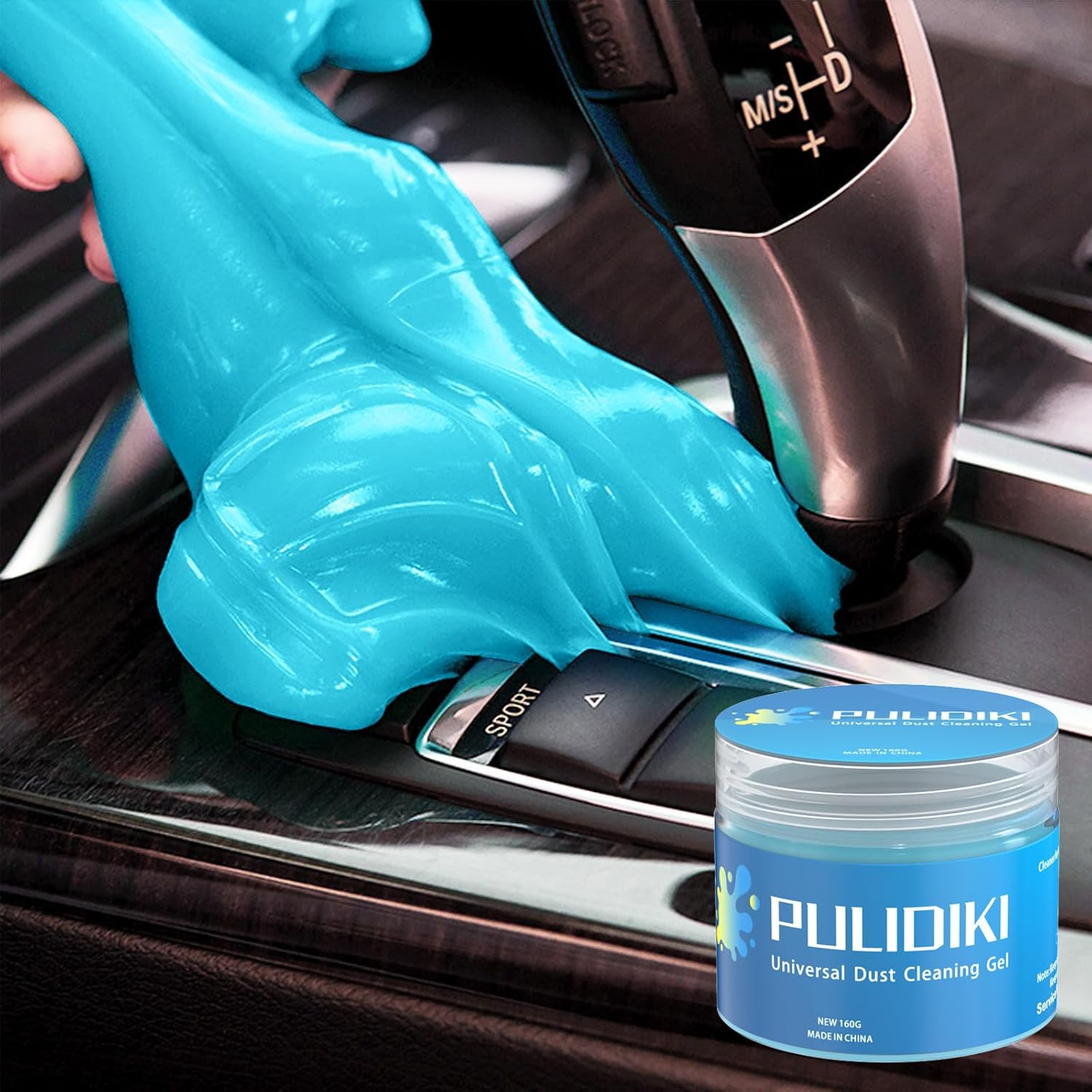
PULIDIKI Car Cleaning Gel (Detailing Putty)
Press it into vents, buttons, and seams and it lifts out dust you did not know was there. Weirdly satisfying, genuinely useful.
As an Amazon Associate, ThinkEV earns from qualifying purchases — at no extra cost to you.
Ford tried to create a direct EV sales model through Model e certified dealers at fixed prices. Established Ford dealers lobbied state governments to block the program. Several states with strong dealer franchise protection laws restricted Ford's ability to run fixed-price EV sales. Ford pulled back.
Chinese brands entering new markets, including Australia and the UK where BYD has launched, use direct-to-consumer formats or retail models that keep price control. BYD's retail partners sign agreements with narrower markup ranges than traditional franchise deals allow. The experience at a BYD showroom in Melbourne or London reflects brand standards in a way that a GM dealer in Vancouver structurally can't, because that GM dealer is an independent business with its own profit and loss statement.
Government Strategy: China's Decade Plan vs.
Western Stop-Start
China's government named electric vehicles a strategic priority in the mid-2000s. The 12th Five-Year Plan called NEVs a strategic emerging industry. The 13th Five-Year Plan set targets, funded charging stations, provided consumer subsidies, and required government fleets to switch to NEVs. The 14th Five-Year Plan continued with stricter NEV credit rules for all brands selling in China.
Chinese local governments competed to attract EV manufacturing. They offered land, tax breaks, cheap factory power, and preferred government purchase contracts. BYD received strong support from Shenzhen's city government. NIO received equity and loan support from a group of Hefei local governments in 2020, when NIO was close to bankruptcy. That backing, worth about US$1 billion, gave NIO the runway to build battery swap at scale.
China's approach represents consistent, decade-long commitment to a clear direction. If you want to see how that policy investment translated into compounding market share, the IEA Global EV Outlook tracks the numbers year by year. It's hard to argue with what consistent 10-year policy does to adoption curves.
Western governments, including Canada and the United States, have deployed bigger EV subsidy programs in recent years through the US Inflation Reduction Act and Canada's EVAP program. But these came after years of mixed signals that gave car makers little reason to invest at scale. The Canadian government's 100% tariff on Chinese EVs, imposed in October 2024 and partly reduced to 6.1% in January 2026 for vehicles within a 49,000-unit quota, is a trade policy move. It protects legacy brands from competition. It doesn't require them to improve.
Transport Canada publishes the tariff schedule and EVAP program details. You can find the current rules at Transport Canada's site. The numbers matter for understanding what you can buy at a Canadian dealer right now.
The IRA's EV tax credits, tied to North American battery and vehicle manufacturing, pushed battery supply chain investment into the US and Canada. LG Energy Solution, Panasonic, and Samsung SDI all announced North American battery plants in response. These will reduce the cost gap legacy brands face on battery purchasing. But they represent catching up to a position Chinese brands held a decade ago.
Look at charging policy and the contrast deepens further. China built public charging across its major cities before EV adoption went mainstream. The stations were there when buyers needed them, which reduced range anxiety as a purchase barrier. Canada is still building out charging in cities like Saskatoon, Thunder Bay, and Halifax. Range anxiety is a real factor for buyers in smaller provinces and rural areas. Policy built the demand in China. The market followed. In Canada, the market is asked to create the demand while the policy catches up.
For Canadian buyers, policy choices directly determine the available market. The current tariff structure makes most Chinese EVs too expensive for the Canadian market, regardless of their technical quality. If you compare a Ford Mustang Mach-E and a BYD Atto 3, you're looking at products separated by years of software and battery development time. But only the Ford is price-competitive at Canadian retail because the Atto 3 carries tariff costs that price it out. The situation around Chinese EVs entering Canada in 2026 continues to move, and understanding the tariff story matters for knowing what Canadian buyers can choose.
Buyers in British Columbia, Ontario, or Quebec already have solid EV incentive programs stacked on top of federal support. The gap between what you can buy with that support and what exists in China is the clearest way to see how far behind Canadian retail sits.
What This Means for Canadian Buyers
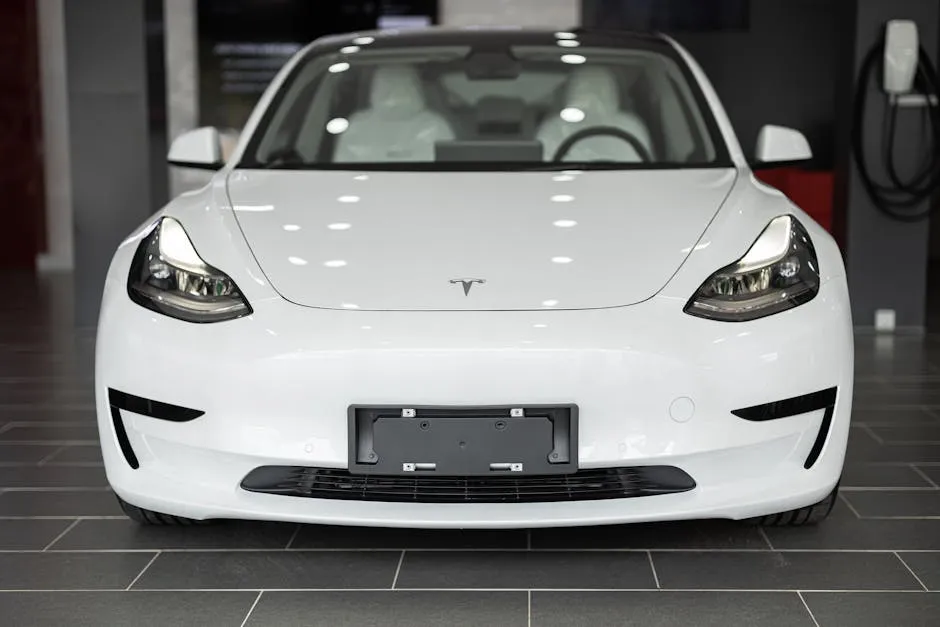
Canadian buyers live inside a specific set of rules that the global analysis above doesn't fully cover. Canada's tariff situation cuts your choices directly. That 100% tariff in October 2024 made most Chinese EV imports too expensive for Canadian retail. The partial cut to 6.1% for 49,000 vehicles, starting January 2026, opens a narrow window for competitive Chinese EV pricing in Canada.
The details of the BYD tariff deal for Canada in 2026 shape what BYD can price at Canadian retail. Canadian buyers choosing among available EVs are picking from a set that skews heavily toward legacy brands and Tesla. That set has improved. The Hyundai Ioniq 6, Kia EV6, Tesla Model Y, and Chevrolet Equinox EV are all solid products with real charging support.
Buyers choosing these are picking from a pool that sits behind the global frontier. The best EVs available in China in 2025 aren't at Canadian dealers in 2026. Competitive pressure from Chinese brands still helps Canadian buyers, even without direct market access. Legacy brands cut Mach-E and Model Y prices in response to BYD's pricing pressure in markets where both compete.
GM added Equinox EV features in response to comparisons with Chinese EVs shared through social media and auto journalism. Competition makes products better even when you can't buy from all competitors. Safety testing matters for context too. Chinese EVs entering European markets have passed Euro NCAP testing, which shares much of its method with Canadian and US certification.
The idea that Chinese EVs are lower quality or less safe isn't supported by available test data. As covered in the analysis of Chinese EVs and Euro NCAP safety ratings, BYD, NIO, and other Chinese brands score at or above legacy brand equals in independent crash tests (Source: Euro NCAP 2024 Results). Service network is a real concern and worth naming. BYD's Canadian footprint is tiny right now.
If something goes wrong with your vehicle, you want a dealer near you who knows the product. Legacy brands with decades of service networks in cities like Calgary, Ottawa, and Halifax have a real advantage here. That advantage shrinks as Chinese brands build North American service capacity, but for a 2026 buyer, it's a real consideration.
If your current car is reliable and you can wait two to four years, the Canadian market will likely have more options, possibly including competitive Chinese EV entrants through local manufacturing or quota imports. If you need a car now, what's available at Canadian dealers in 2026 is the best it's ever been compared to gas. The Hyundai Ioniq 6, Kia EV6, Chevrolet Equinox EV, and Tesla Model Y are all capable EVs.
You're not making a mistake buying one today. But you'll be buying a product that exists at a moment when the global frontier is much further ahead than Canadian tariff walls permit. That gap will close. When it does, cars improve and prices fall.
Eventually doesn't get you to work next winter in Winnipeg, though. If you live in British Columbia, Ontario, or Quebec, you have provincial incentives stacked on top of the federal iZEV rebate. That makes the current crop of available EVs more attractive on price than they look at sticker. The Equinox EV at CA$48,000 minus $5,000 federal plus up to $4,000 provincial in BC is a real car at a real price.
You're not settling. You're buying the best product available in a market that happens to be restricted by policy. You should understand the tariff math. Canada's 100% tariff on Chinese EVs, imposed October 2024, was the bluntest possible trade tool.
It protected legacy brands immediately. It didn't require any improvement from them. The partial cut to 6.1% in January 2026 for a 49,000-unit quota is more surgical, but 49,000 units is a tiny number for a market with millions of car buyers. BYD sold that many in a week in China in peak months of 2024.
If competition were allowed to run fully in Canada, the Atto 3 would price at roughly CA$38,000 to CA$42,000 without tariff. At that price it competes directly with the Corolla Cross and RAV4. That's the product Canadian legacy dealers don't want to face. The tariff is working as intended.
The comparison framework for emerging versus established EV brands in 2026 gives useful context for evaluating specific models across brand origin. Longer term, tariff policy will keep changing. Chinese brands will keep improving. The gap between what is at a Canadian dealer and what is available globally will keep putting pressure on trade policy. Whether that results in more Chinese EV access or better legacy products depends on decisions being made in Ottawa, Beijing, and Detroit.
The data that should concern legacy brands:
BYD's gross margin on vehicles was about 22% in 2024 Q3. Ford's auto gross margin in the same period was about 7%, with EV division losses dragging the blended number. That margin gap isn't about volume alone. BYD's internal parts manufacturing cuts per-unit cost in ways Ford's outside supply chain can't match at current scale.
Sales numbers tell the same story. 1.76 million pure BEV sales in 2024, plus another 1.76 million plug-in hybrids, totalled over 3.5 million electric vehicles for the year for BYD. Ford has been building cars since 1903 and sold fewer EVs globally in 2024 than BYD sold in a single strong month. BYD's company overview is at byd.com. XPeng's XNGP highway driving system, tested against competing ADAS systems by independent reviewers in China and Europe, outperformed legacy brand Level 2 systems in urban use.
XPeng processed sensor data from its fleet to improve XNGP over a seven-month period, piling up the equivalent of millions of kilometres of training data. Its fleet size and software setup made this possible. Legacy brands with lower EV fleet share and less connected software collect less useful data at slower rates. NIO's battery swap network passed 1,000 stations in 2022 and 2,000 in 2024, with expansion into Germany, Norway, and Denmark.
Each new swap station cuts the range anxiety gap. Legacy brands have no equal plan. Their charging answers are public DC fast charger deals. NIO's answer is a four-minute battery swap.
CATL announced the Shenxing Battery in 2023 with a claimed 10-minute charge to 400 km (Source: CATL Press Release 2023). That cell chemistry isn't on offer to legacy brands buying standard CATL cells.
CATL's top-tier products go to customers who give it the most strategic return. Right now, that's Chinese brands, not Western ones. Manufacturing scale creates its own flywheel advantage. BYD's Fudi Battery subsidiary builds Blade Batteries across multiple gigafactories with combined output that generates production process data at enormous scale. Every yield problem found and fixed at one plant becomes a standard procedure update across all plants. Manufacturing yield improvement compounds across the whole production system. Legacy brands building their first or second EV-specific gigafactories are at the start of this learning curve. BYD is several laps ahead.
The path forward for legacy brands:
Legacy brands aren't finished. They have deep engineering talent, manufacturing scale, brand loyalty, and financial strength. The question is whether each company can change fast enough to matter. Ford's Farley has shown willingness to make structural changes.
Ford created a separate EV division, looked at joint ventures with Chinese battery producers, and licenced technology from SK On for North American battery plants. These moves show awareness of the supply chain cost problem. They don't yet fix the software gap or the dealer model conflict. GM's Barra said in late 2024 that GM was rethinking its aggressive EV timeline in favour of hybrid growth, based on North American demand signals where hybrid sales beat BEV growth in 2024.
This is defensible as a near-term move. It delays the BEV capability building that the long-term market requires. VW, under CEO Oliver Blume, cut CARIAD, hired engineers from outside auto, and announced a joint venture with Rivian worth US$5.8 billion. The Rivian deal gave VW access to Rivian's electrical design and software platform.
That's the most aggressive tech deal any legacy brand has tried. Whether VW's culture can absorb outside software skill without the friction that killed CARIAD depends on details that won't be clear for years. Toyota's revised plan, announced after years of hydrogen and hybrid focus, may be the most believable catch-up story. Toyota's manufacturing discipline, supply chain control, and quality systems are real advantages that carry over to EV production.
Toyota also has Panasonic's Prime Planet Energy and Solutions as a battery joint venture, giving it more direct battery skill than most legacy peers.
If Toyota commits to BEV development at the same level it historically put into hybrids, the outcome could be different from VW or GM. The years lost to the hydrogen bet won't come back. But Toyota's manufacturing base is genuine and strong. Recovery paths exist.
None are fast. None address the head start Chinese brands carry into the next decade. The signal of real change in legacy brands isn't press releases. Press releases announcing EV commitment are cheap.
GM and Ford have issued dozens. The real indicator is the ratio of in-house component development versus external purchasing. The day Ford announces a chip design subsidiary or GM breaks ground on a pack engineering centre that reports directly to vehicle engineering rather than procurement, I'll update my view. Until then, the incentive structure remains intact, the supply chain dependency remains intact, and the prognosis remains the same.
VW's Rivian deal is the closest any legacy brand has come to truly restructuring how it builds software. Rivian's electrical architecture is purpose-built for continuous software delivery. VW buying into it rather than building its own is a pragmatic choice. It acknowledges that CARIAD failed and that buying competency is faster than building it.
Whether VW executes the integration well is a different question. Integration of acquired technology into a legacy culture is hard. But at least the direction is right. For Canadian buyers watching this from Toronto, Kelowna, or Moncton, the practical implication is simple: the brands available at your dealer are getting better faster than they have in years, precisely because they fear competition from brands you can't yet buy in Canada.
That fear is productive. Use it. The best time to buy a legacy EV is when they're under competitive pressure to justify the price. That time is now.
Legacy brands aren't failing at EVs because their engineers lack skill or their executives are confused. They're failing because the companies, incentive structures, supplier deals, dealer agreements, and financial models that made them great at selling gas cars are working against the kind of product development that winning at EVs requires.
If you want a simple framework for evaluating legacy brands' EV progress, watch one number: loss per vehicle. When Ford's Model e stops losing money per unit, Ford has crossed the structural threshold. Until that number turns positive, the ICE business is still subsidizing the EV business, and the incentive conflict outlined above remains active and working against the EV program. Wang Chuanfu's company passed that threshold years ago.
Vehicle gross margin in Q3 2024 was approximately 22%. Ford's EV division hasn't come close. That single data point captures most of the structural story in one number. BYD didn't become dominant by finding a secret.
Wang Chuanfu decided in 2003 to make batteries, then cars powered by those batteries, and spent twenty years building the skill to do it well. No shortcut. Consistent investment in vertical control, software skill, and product speed, held through three different Chinese government plans and multiple near-bankruptcy moments. There were at least two moments when BYD nearly failed.
A 2012 accounting controversy shook investor confidence. A 2020 sales slump before the Blade Battery launch stretched the company's cash. Both times, BYD's internal battery capability was the reason it survived. That technology gave investors and partners a reason to stay.
A company without that in-house asset might not have made it. Vertical control isn't just about cost structure. It's about resilience in hard times. Legacy brands facing BYD across global markets are trying to do in three to five years what BYD did in twenty.
They're doing it while running a gas car business that funds the change. They're doing it with dealer networks that resist EV sales, supplier chains that limit cost, and software cultures that can't move at the speed EV buyers now expect. Tariffs buy legacy brands time. They don't close the gap.
Every year Chinese brands spend building EV technology without competing in Canadian sales is a year that gap grows in ways tariffs don't address. I've seen this pattern play out in other industries. Protecting local producers from foreign competition is a short-term tool that works best when paired with genuine investment requirements.
Canada's tariff on Chinese EVs isn't paired with a requirement for legacy brands to hit specific battery cost targets or software milestones. It's purely protective. If legacy brands use the tariff window to close those structural gaps, buyers benefit. If they use the time to protect ICE margins and slow-roll EV development, the tariff just delays the inevitable while Canadian buyers pay higher prices for products that trail the global frontier.
Watching what GM, Ford, and Stellantis build over the next three years will tell you which path they chose. Canadian buyers deserve to understand this. The vehicles at Canadian dealers right now aren't the best EVs in the world. They're among the better products from companies that started EV development late and are catching up. The best EVs in the world in 2025 are in China, and the structural reasons they're better aren't going to change because of a tariff schedule.
Gear worth having
As an Amazon Associate, ThinkEV earns a small commission from qualifying purchases — at no extra cost to you.

WixGear Magnetic Air Vent Phone Mount (2-Pack)
A magnet strong enough that your phone never flinches over potholes or rail crossings. Two in the box, one for each car.
As an Amazon Associate, ThinkEV earns from qualifying purchases — at no extra cost to you.
Related Reading
- Chinese EVs Entering Canada 2026: What's Actually Happening -- The tariff situation, quota details, and which brands are positioning for the Canadian market
- BYD Coming to Canada: The Tariff Deal Explained -- Breaking down what the January 2026 tariff cut means for BYD's Canadian market plan
- Chinese EVs Safety Ratings: Euro NCAP Results You Need to Know -- Independent crash test data on BYD, NIO, and other Chinese brands
- Emerging vs. Established EV Brands: A 2026 Comparison for Buyers -- How to judge newer EV brands against legacy automakers when making a purchase decision
Gear worth having
As an Amazon Associate, ThinkEV earns a small commission from qualifying purchases — at no extra cost to you.
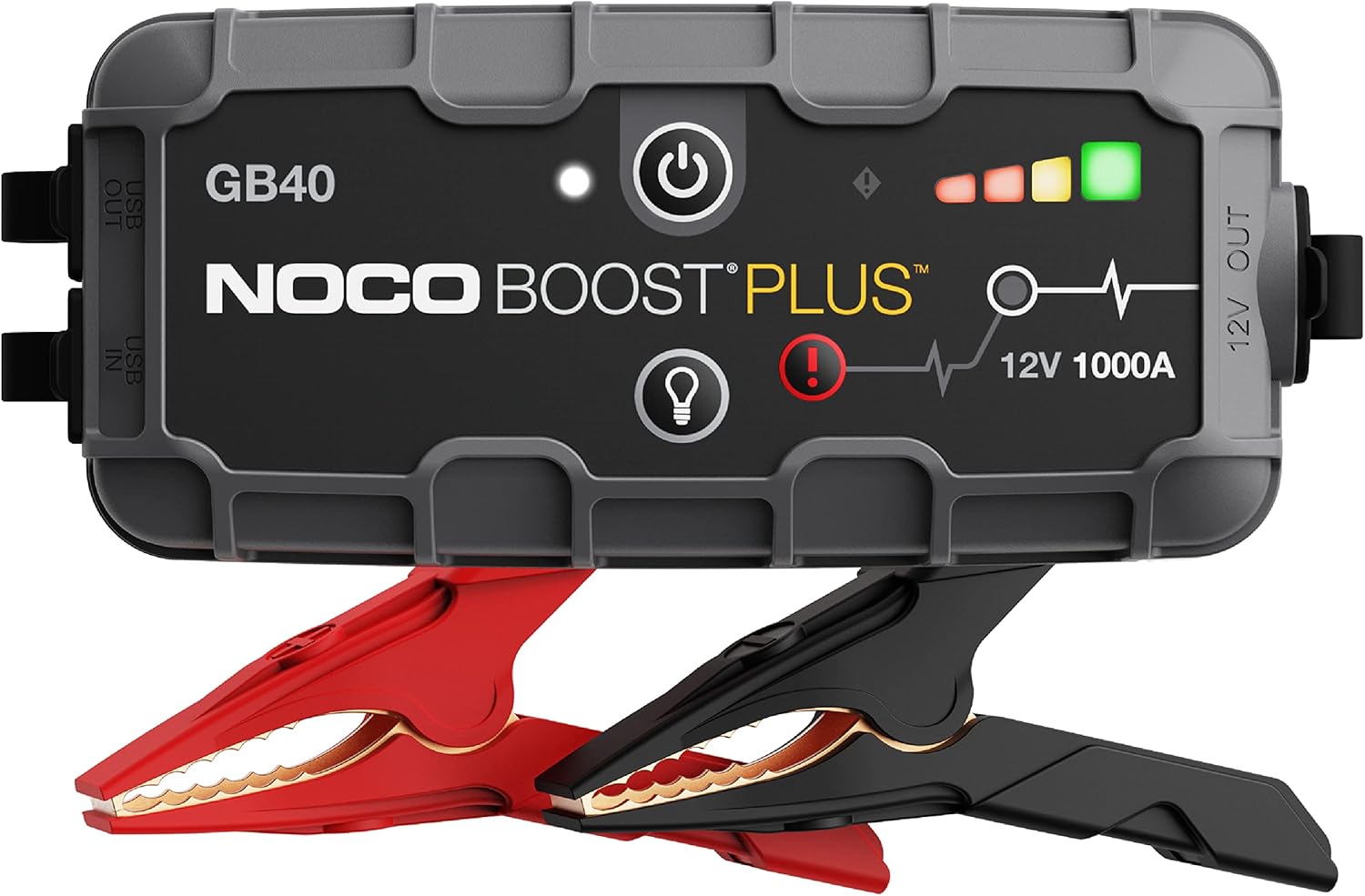
NOCO Boost Plus GB40 Jump Starter
A 1000A lithium jump starter that fits in your glovebox and works on any 12V battery. Your insurance against a dead 12V in a parking lot.
As an Amazon Associate, ThinkEV earns from qualifying purchases — at no extra cost to you.

Founder & Chief Editor
Vlad Pereira is the founder and chief editor of ThinkEV.ca, the Canadian electric-vehicle publication he writes and edits from Courtenay, British Columbia. He covers EV pricing, federal and provincial rebates, charging costs, and the Chinese manufacturers now entering Canada, from the buyer's side rather than the press-fleet side. ThinkEV is a venture of Vlad Pereira Online; his writing on health, income and the long game lives at vladpereira.com.
Frequently asked questions
Why can't legacy automakers just copy what BYD is doing?
Is BYD's quality actually comparable to European or North American brands?
J.D. Power initial quality surveys in China show scores that improved much between 2021 and 2024. In Australia, where BYD launched in 2022, early owner feedback noted software glitches and service network gaps, both of which got better as BYD expanded its service footprint. Euro NCAP crash tests gave the BYD Atto 3 a five-star rating with scores close to European rivals in the same size class. The story that Chinese EVs are categorically lower quality than legacy brand products isn't backed by independent test data as of 2025. Build quality variation between model lines and markets is still real, and individual buyers should research specific models rather than brand alone.
When will Chinese EVs be widely available at good prices in Canada?
Is NIO's battery swap actually better than DC fast charging?
No legacy brand has done this because it requires fixing battery sizes across multiple model years and investing in stations without knowing the return.
Will legacy brands catch up with Chinese EVs over the next five years?
Should I wait for Chinese EVs to become available in Canada before buying?
More EV & road-trip finds
Affordable upgrades worth a look — tap any to check the price on Amazon.
 ★ 21,310
Magnetic Car Phone Mount
View on Amazon ★ 121
★ 121Foldable Windshield Sun Umbrella
View on Amazon ★ 268
★ 268Anti-Slip Leather Steering Wheel Cover
View on Amazon ★ 12,051
Windex Electronics Screen Wipes
View on Amazon ★ 537
★ 537USB Star Projector Roof Light
View on Amazon ★ 1,349
Cool Swinging Duck Dashboard Ornament
View on Amazon ★ 4,424
Sun Visor Card and Document Organizer
View on Amazon ★ 721
★ 72145W USB-C Fast Car Charger
View on AmazonRead, Plan, Then Stay Current
Explore our expert articles to understand incentives and ownership costs, use the map to pressure-test charging reality, then subscribe so new EV coverage comes straight to you.
Continue Reading
Import a Chinese EV Canada to US: Why It Fails
EV Market Under $50K in Canada: Why This Price Band Matters
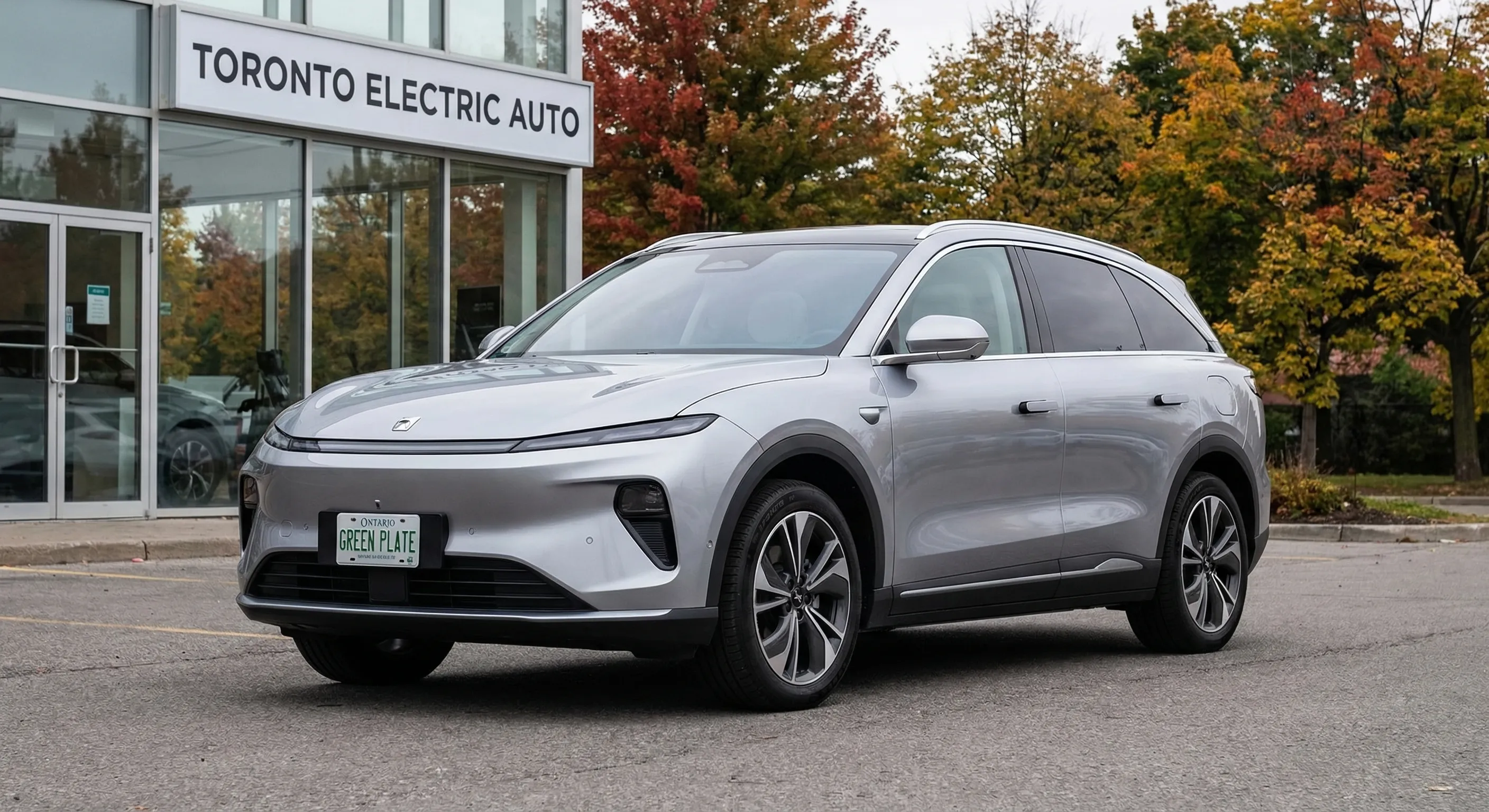
Chery EVs Coming to Canada: Models and Prices
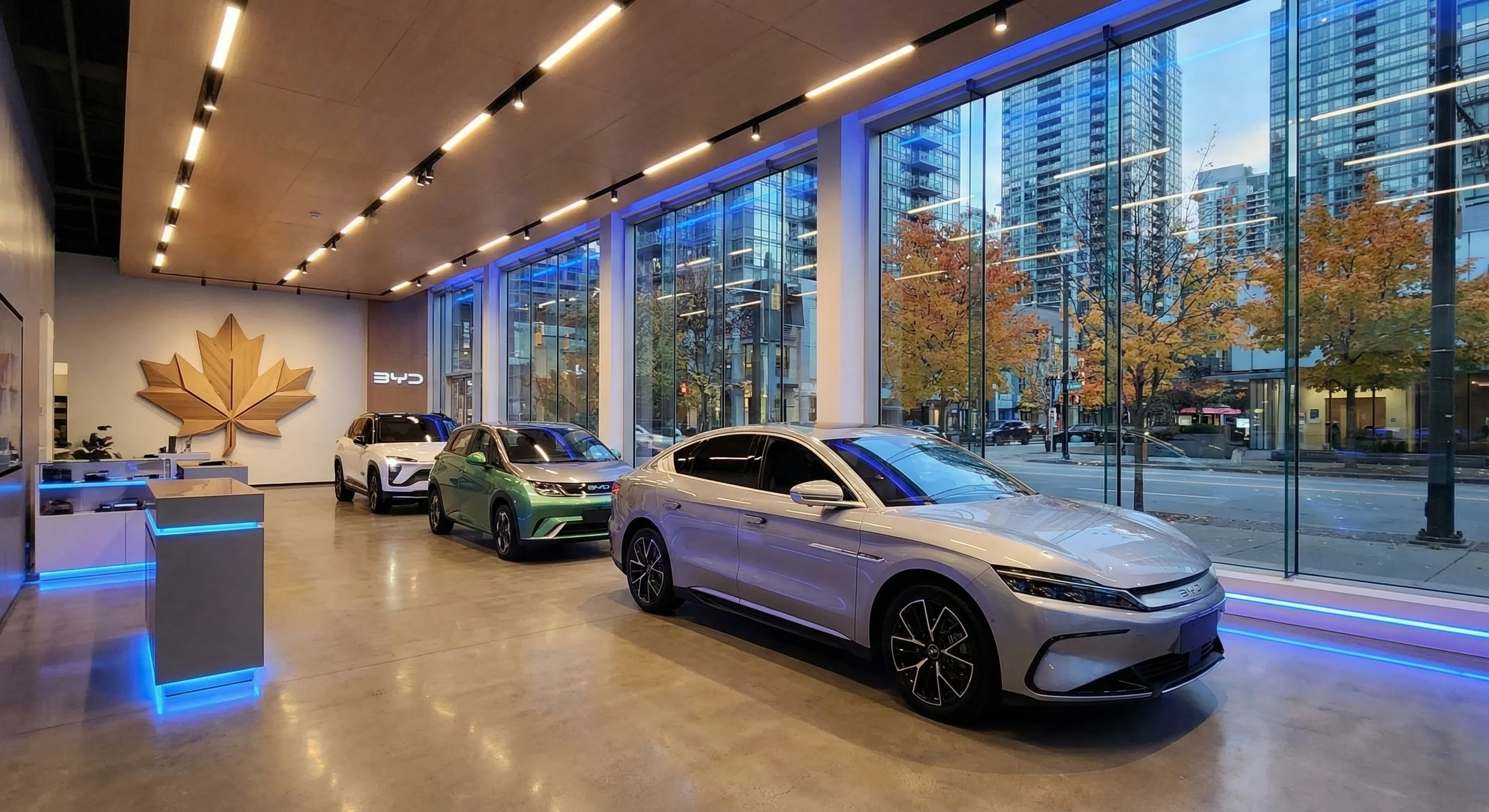
Every Chinese EV Brand Coming to Canada in 2026
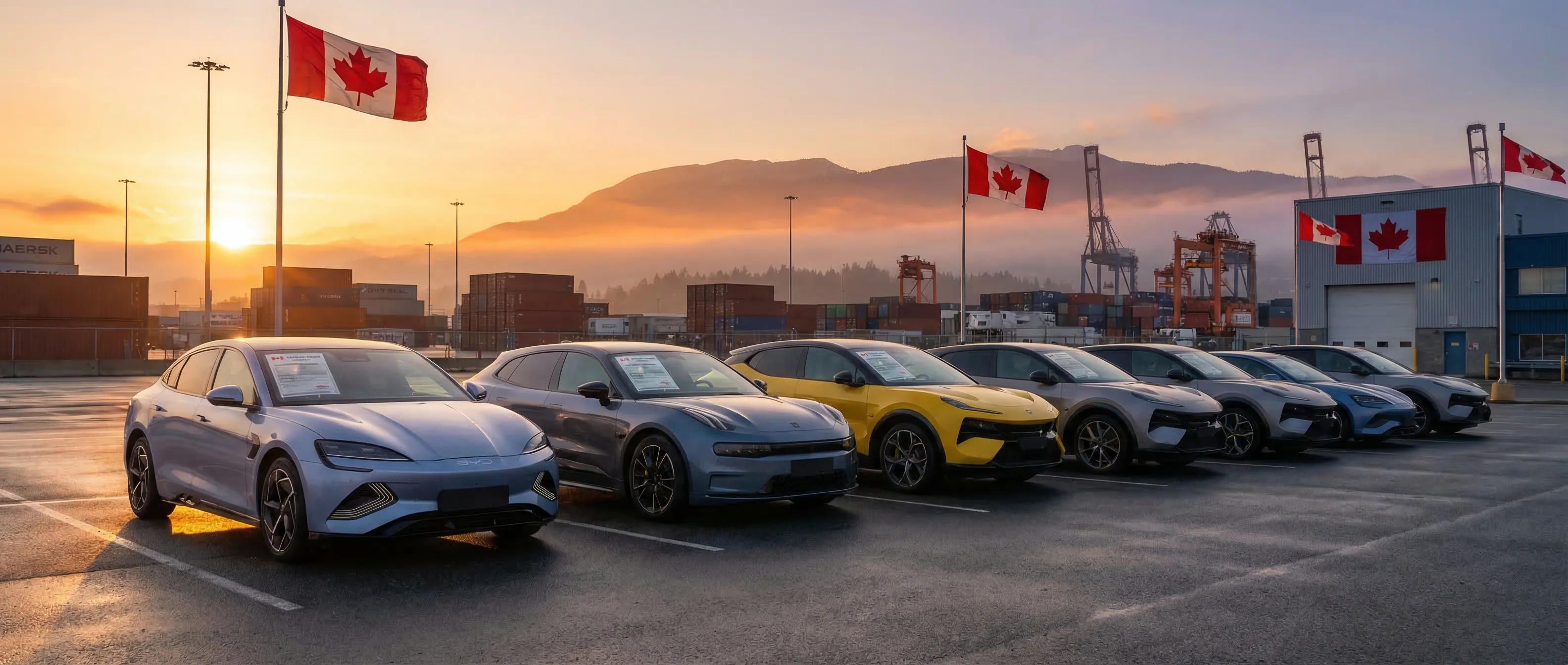
Who Got Canada's First Chinese EV Import Permits