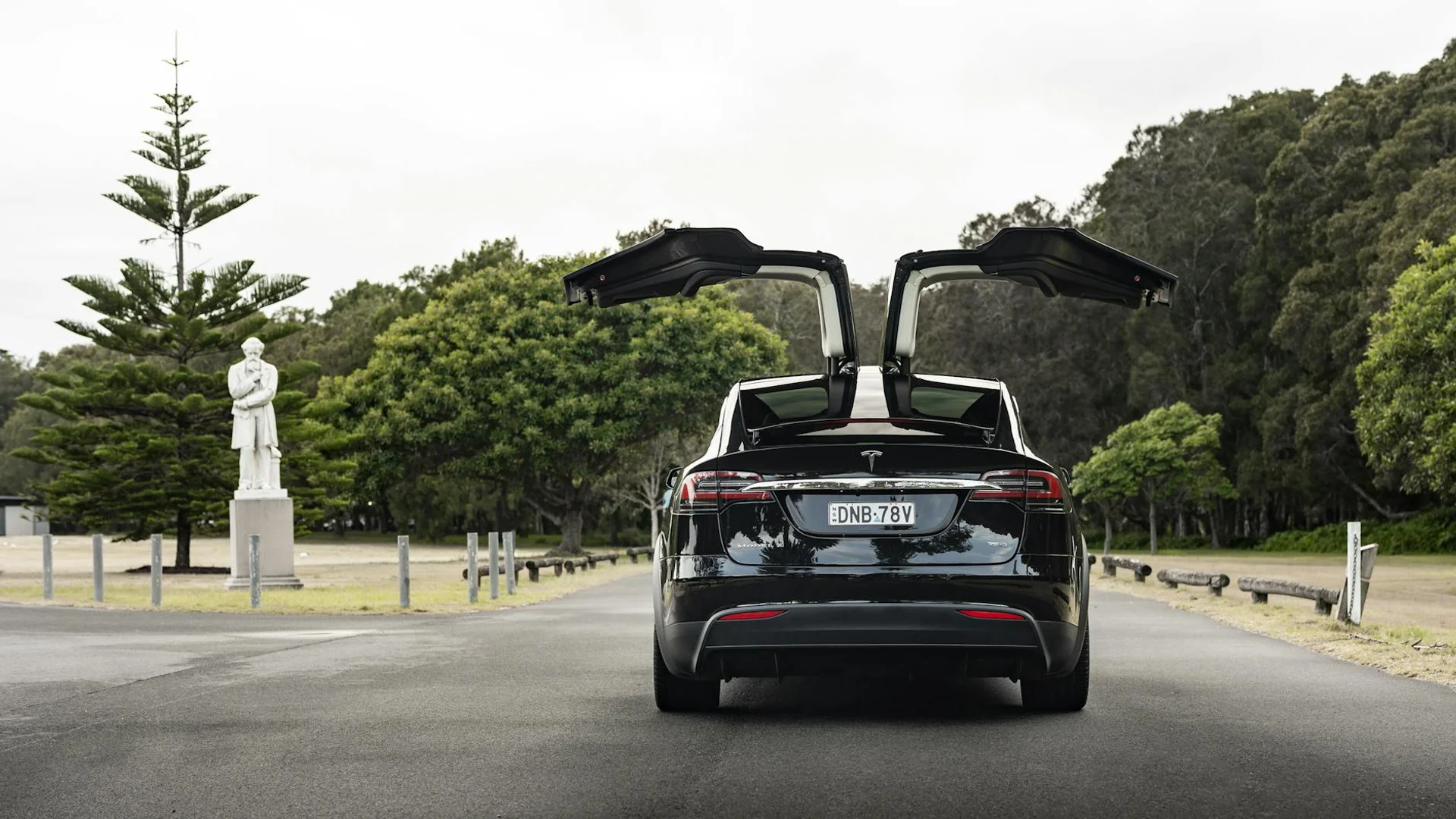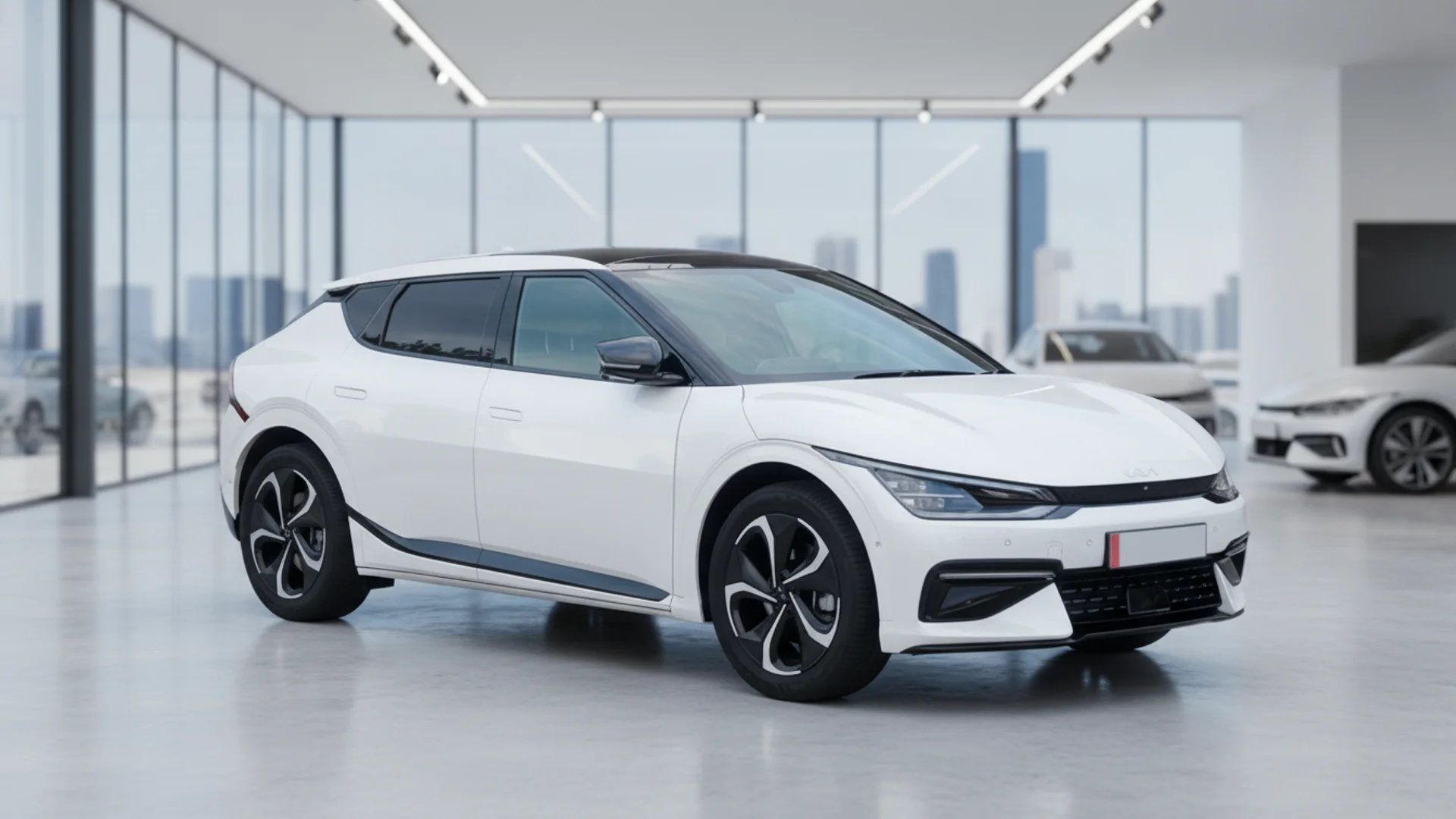
The salesperson hands you the key fob and you instinctively reach for a gear shift that isn't there. That reflex, trained by three decades of internal combustion, is the reason most gas-car buyers walk out of an EV test drive having answered the wrong questions. A 20-minute dealer loop cannot tell you whether the range works for your commute. It can tell you whether the regen feel makes you queasy, whether the port lives on the wrong side of your driveway, and whether the infotainment demands three taps to turn on the heated seat in February. Those are the dealbreakers. Everything else is a spreadsheet exercise you can do at home.
Key takeaways
- Book 45 minutes minimum, a shorter dealer loop cannot surface the regen feel, port placement, or infotainment logic that decide regret inside a week.
- Drive the same stretch twice with strong regen on and off; your passenger's reaction to the deceleration counts as much as yours.
- NACS is now the native port on most new 2026 Canadian EVs, but many 2024–2025 models on dealer lots still use CCS and need a $200 adapter for Superchargers.
- Count the taps to reach heated seat in a cold car, more than two means that's your Tuesday morning in February for the life of the car.
- EVs carry 300–500 kg more curb weight than equivalent gas cars, so Canadian pothole season is a rattle stress test the factory quality loop never sees.
Quick Answer: What the Test Drive Is Actually For
Book 45 minutes minimum. A shorter loop is theatre; the dealer knows it, and if they cannot accommodate longer, that itself is data about what the ownership experience will look like. The test drive's job is not to simulate ownership, no drive is long enough for that, but to surface the two or three physical, sensory, ergonomic mismatches that would make you regret the purchase inside a week.
Rank the things you're evaluating in the correct order: cabin noise, regen and brake feel, interface logic, port placement, seat and visibility. Range does not appear on that list, because a 45-minute loop cannot tell you anything meaningful about it that the spec sheet does not tell you better. Wind noise at 110 km/h can only be evaluated by actually going 110 km/h. Do that. The interface's cold-start behaviour can only be evaluated by starting the car cold, from off, in the parking lot before you leave. Do that too.
One honest limitation: I have not driven every EV on the Canadian market, and this guide is not a road-test replacement. The spec sheets, the owner reports, and the pattern across a decade of EV coverage tell a consistent story anyway, the same three or four categories decide the buy-or-walk call.
Gear worth having
As an Amazon Associate, ThinkEV earns a small commission from qualifying purchases — at no extra cost to you.

Magnetic EV Charger Plug Cover
A magnetic cap that keeps rain, road salt, and grit out of your home charger handle between sessions.
As an Amazon Associate, ThinkEV earns from qualifying purchases — at no extra cost to you.

Regenerative braking is the one control-input change that separates an EV drive from a gas-car drive in a way no amount of reading prepares you for. Every other difference, the silence, the torque, the single-speed transmission, flatters the driver on first exposure. Regen requires a recalibration of your right foot.
One-pedal driving is almost always a setting, not a hardwired default. Ask the salesperson to toggle it, and drive the same stretch of road twice, once with strong regen engaged, once with it off. The difference at highway lift-off is where opinions polarize: some drivers find the deceleration reassuring, others find it nauseating on the passenger side. Your passenger's vote counts as much as yours here.
Brake blending, how the car transitions between regen and the friction brakes as you press the pedal, is the single most reliable ergonomic tell of a well-engineered EV. A $45,000 car with poor blending will feel grabby, wooden, or unpredictable at low speed. A well-executed $75,000 car will feel like any other brake pedal you have ever pressed. This gap has more to do with software calibration than with hardware, which is why used comparisons of the Nissan Leaf, Tesla Model S, Zoe, i3 and Twizy tend to expose the older, cheaper cars first: they were built before brake blending got good.
Most drivers recalibrate within ten minutes. If you have not adjusted by the end of a 45-minute loop, the car is telling you something. Trust it. The EVs on sale in 2026 offer enough variety in regen feel that you do not have to buy the one that annoys you. For a deeper read on how software calibration is quietly deciding EV quality, the technical breakdown of what a software-defined vehicle really means covers the architecture change underneath.
The Charging Port, the Infotainment, and the Things You'll Touch Every Day
Before you fall in love with the range number, walk around the car and look at where the charge port lives. Front left fender, rear right quarter panel, centre rear, every automaker has a different answer, and the one that matters is whether the port lines up with your driveway, your garage, or your condo parking stall. A port on the wrong corner turns every home charging session into a hose-management problem. This is the single cheapest, fastest check on the test drive and the one buyers skip most often.
The North American charging standard question got sharper in 2026. NACS, the Tesla-originated connector, is now the native port on most new EVs sold in Canada; CCS remains on many 2024 and 2025 model-year cars still on dealer lots. Ask which standard the car carries natively, and ask whether an adapter is included, sold separately, or not offered. This decides which fast-charging networks the car reaches without a $200 dongle in the frunk. The infrastructure map has genuinely reshuffled, Tesla's Supercharger network is the largest fast-charging network in North America, and until recently non-Tesla EV drivers mostly missed those benefits. That is no longer true for cars with native NACS.
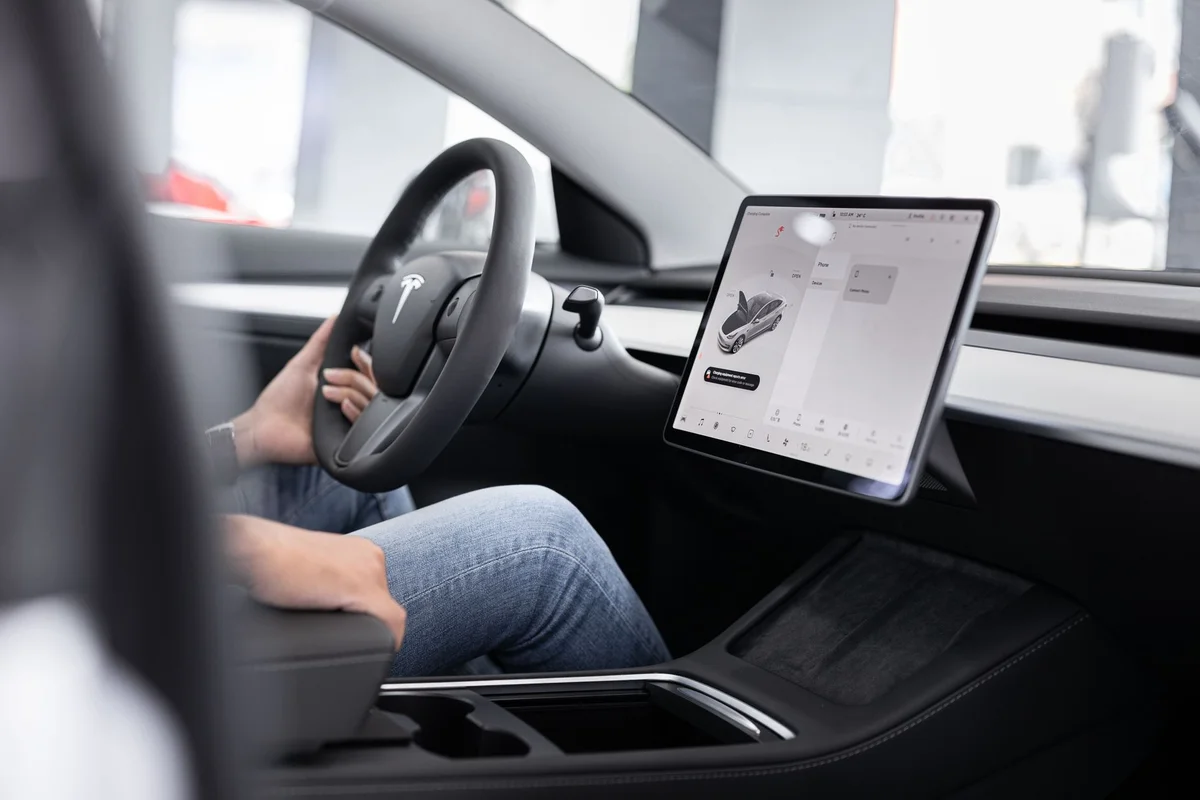
Test the infotainment cold, from off, sitting in the parking lot. Turn on the climate. Turn on the heated seat. Turn on the heated steering wheel. Count the taps. If the answer is more than two for any of those, that is Tuesday morning in February, and Tuesday morning in February is a long time. Physical controls for volume and HVAC are a spec, either the car has them or it does not. Confirm which, and decide whether you can live with the answer before you sign anything. A screen that requires attention to change the fan speed is a screen that will take your attention off the road for the life of the car.
Gear worth having
As an Amazon Associate, ThinkEV earns a small commission from qualifying purchases — at no extra cost to you.

WeatherTech FloorLiner for Tesla Model 3
Deep-channel liners that trap every drop of slush and salt. The difference between a ruined interior and a showroom-fresh cabin after a Canadian winter.
As an Amazon Associate, ThinkEV earns from qualifying purchases — at no extra cost to you.
Gear worth having
As an Amazon Associate, ThinkEV earns a small commission from qualifying purchases — at no extra cost to you.

Grizzl-E Classic Level 2 EV Charger (40A)
Canadian-made and rated for minus 40C winters. 40A / 9.6 kW, NEMA 14-50, indoor/outdoor, 24-ft cable. The charger built for Canadian weather.
As an Amazon Associate, ThinkEV earns from qualifying purchases — at no extra cost to you.
Remove the engine and everything else gets louder. Wind noise, road noise, the A/C compressor, the passenger's phone ringing in their pocket, all of it. Gas cars mask these frequencies with combustion; EVs unmask them, and the buyer who does not listen for them on the test drive discovers them on the highway in month two.
Take the car above 100 km/h and listen. Some EVs, heavier ones with worse aerodynamics, generate a highway wind roar that becomes fatiguing on a two-hour drive. Others are cathedral-quiet. The spec sheet does not tell you which is which; only the drive does. Motor whine under hard acceleration is a different question: low-frequency whine is acceptable and honest, high-frequency whine is fatiguing and gets worse with age.
Sit in the car with the climate on full at idle in the parking lot. The A/C compressor in an EV cycles audibly in ways it never did in a gas car, because there is no engine noise covering it. If that cycling is loud enough to notice at idle, it will be loud enough to notice at every stoplight for the next eight years. This is the kind of small, chronic annoyance that decides how much you actually enjoy the car after the novelty wears off.
Drive over rough pavement and listen for rattles and squeaks. EVs carry 300 to 500 kilograms more curb weight than the equivalent gas car, and that mass amplifies body flex on broken road surfaces. A car that rattles in month one will rattle louder in year three. This is one place where Canadian roads are a genuinely useful diagnostic, pothole season is a stress test the factory quality-control loop never sees.
Gear worth having
As an Amazon Associate, ThinkEV earns a small commission from qualifying purchases — at no extra cost to you.
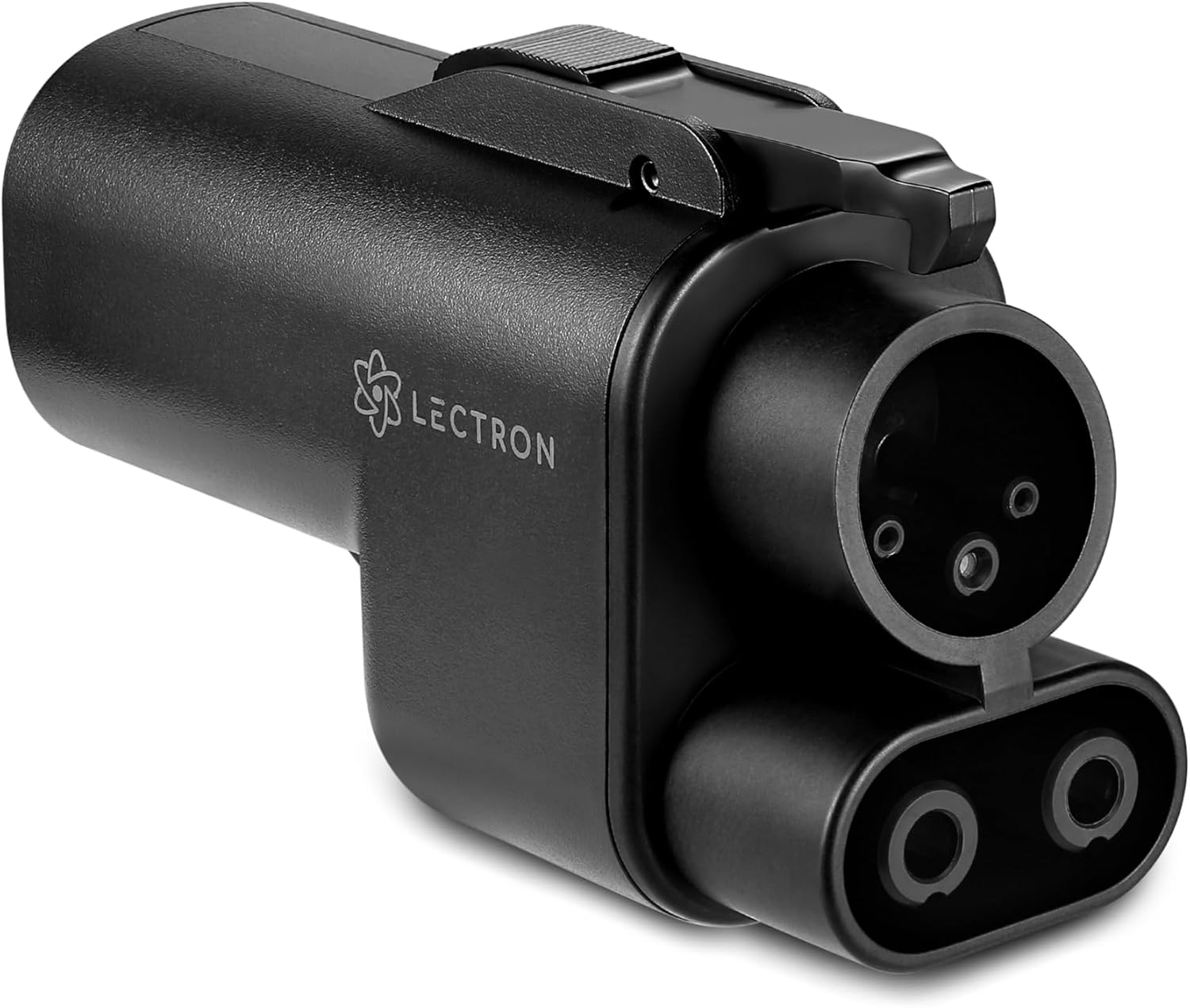
Lectron NACS to CCS Fast-Charge Adapter
Unlock every CCS fast charger for your Tesla, up to 500A DC. Never get stranded at a non-Tesla DC station again.
As an Amazon Associate, ThinkEV earns from qualifying purchases — at no extra cost to you.
The Route to Run and the Questions to Ask Before You Leave the Lot
The default dealer test drive route is designed to flatter the car. Politely refuse it. The route you want includes: a highway on-ramp taken at full throttle to feel the torque delivery honestly, at least one stretch of rough pavement to hunt rattles, a low-speed parking manoeuvre to test the 360-degree camera and turning circle, and a full stop from 60 km/h to feel the brake blending under real deceleration. That takes about 30 minutes if you plan it. If the dealer will only permit a fixed loop, drive it, then ask to do it again in the opposite direction, you will hear things the second time you missed the first.
Before you leave the lot, ask the dealer to show you the state-of-charge display at trip start. Note the range estimate. When you return, note it again and compare against actual kilometres driven. This will not give you a real-world range figure, no 30-minute drive does, but it will tell you whether the car's range estimator is calibrated optimistically or honestly. That gap matters more than the number itself.
Confirm EVAP eligibility at the sales desk before any price conversation. The Electric Vehicle Availability Program, launched February 2026, pays up to $5,000 for a qualifying BEV, caps at a $50,000 final transaction value (no cap on Canadian-built vehicles), and excludes China-built EVs regardless of price. Demonstrator vehicles with under 10,000 kilometres on the odometer qualify, which means the car you just drove may itself be eligible if the dealer is willing to sell it as a demo. This is the kind of detail that changes the effective price by five figures and gets missed because nobody asked. iZEV, the predecessor program EVAP replaced, is no longer active; do not let a salesperson quote you an incentive under the old name.
Ask for a 48-hour take-home before you negotiate. Not every dealer will offer it; the ones that do are telling you something about their confidence in the car. A weekend with the vehicle plugged into your own outlet, running your own commute, is worth more than any test-drive checklist ever written. If a take-home is not available, ask whether a weekly rental is, renting an EV before buying is genuinely useful for a first-time buyer, and the data suggests a meaningful share of first-time renters convert to purchase inside six months.
Two related reads round out the pre-purchase checklist: what driver-assist features actually do, and what they don't covers the ADAS questions to ask on the drive, and the CAA winter range test of 14 EVs in sub-zero Canadian conditions is the reference to consult before you trust any manufacturer range spec through February. Neither of those is answered by a 45-minute loop. Both are answered by 20 minutes of homework the night before.
The test drive cannot tell you whether an EV is the right car for the next eight years of your life. It can tell you, in 45 minutes, whether this specific EV is disqualified by something you will notice every day. That is a useful answer. It is the only answer the drive is designed to give.
Gear worth having
As an Amazon Associate, ThinkEV earns a small commission from qualifying purchases — at no extra cost to you.

Lectron Level 2 J1772 Charger (40A, WiFi)
Smart WiFi charger with real-time energy monitoring. 40A / 9.6 kW, J1772 with a NEMA 14-50 plug, schedule charging right from your phone.
As an Amazon Associate, ThinkEV earns from qualifying purchases — at no extra cost to you.

Founder & Chief Editor
Vlad Pereira is the founder and chief editor of ThinkEV.ca, the Canadian electric-vehicle publication he writes and edits from Courtenay, British Columbia. He covers EV pricing, federal and provincial rebates, charging costs, and the Chinese manufacturers now entering Canada, from the buyer's side rather than the press-fleet side. ThinkEV is a venture of Vlad Pereira Online; his writing on health, income and the long game lives at vladpereira.com.
Frequently asked questions
Can I ask to extend the standard dealer test drive route?
Does my Canadian condo parking stall affect which EV I should buy?
What happens if regen braking still feels wrong after 45 minutes?
Is NACS or CCS the right connector for Canada right now?
Will an EV actually be quieter than my current gas car?
More EV & road-trip finds
Affordable upgrades worth a look — tap any to check the price on Amazon.
 ★ 2,941
Microfiber Cleaning Cloths (Multi-Pack)
View on Amazon ★ 537
★ 537USB Star Projector Roof Light
View on Amazon ★ 546
★ 546Funny Headrest Face Covers (2-Pack)
View on Amazon ★ 27,769
Car Cup Holder Coasters (4-Pack)
View on Amazon ★ 308
★ 308Coiled Lightning Car Cable for iPhone (2-Pack)
View on Amazon ★ 119
★ 119Foldable Waterproof Trunk Organizer
View on Amazon ★ 17,839
Qifutan Vent Phone Mount (Military-Grade Clip)
View on Amazon ★ 96,686
PULIDIKI Car Cleaning Gel (Detailing Putty)
View on AmazonRead, Plan, Then Stay Current
Explore our expert articles to understand incentives and ownership costs, use the map to pressure-test charging reality, then subscribe so new EV coverage comes straight to you.
Continue Reading
Federal EV Rebate Canada 2026: EVAP Pays $5,000

Do Used EVs Qualify for Rebates in Canada? 2026 Guide
What Is Vehicle-to-Load (V2L) and How to Use It in Canada
The Best Electric SUVs in Canada (2026): Ranked by Value
Do Teslas Qualify for Canada's EV Rebates in 2026?