The three acronyms share a showroom floor and almost nothing else. Picking the wrong one costs you either range anxiety you didn't sign up for, or a gas engine you're paying to drag around. The drivetrain question is a math problem with three inputs, daily kilometres, charging access, and the rebate your province actually pays, and the answer almost never matches the one the salesperson opens with.
BEV if you can charge at home and drive more than roughly 20,000 km a year. PHEV if your daily cycle fits inside 80 km and home charging is iffy. HEV if you're a high-km highway driver with no plug access at all. The math below is why.
Key takeaways
- BEV saves money only if you drive 20,000+ km annually AND charge at home, public DC fast charging costs 2–4x residential rates.
- Canadian winters reliably strip 20–40% from rated range, turning a 400 km BEV into roughly 280 km at minus-15 with heat on.
- RAV4 Prime and Mitsubishi Outlander PHEV dominate Canadian PHEV sales specifically because both sneak under the $60,000 iZEV rebate cap.
- A PHEV driven without regular plugging in hauls dead battery weight while an undersized gas engine works harder, European fleet data showed 2–3x advertised consumption.
- HEV wins for high-km highway drivers with zero charging access, since it never needs a plug to deliver its fuel-economy advantage.
Three Drivetrains, Three Different Problems
BEVs, PHEVs, and hybrids solve three different problems for three different drivers, the question resolves once you specify whose driving pattern you're optimising. The standard category breakdown sorts battery electric vehicles, plug-in hybrid vehicles, and electric vehicle conversions of hybrid electric systems into the same family tree, but that taxonomy flattens what are genuinely three different purchase decisions.
BEV wins on total cost of ownership when annual mileage clears roughly 20,000 km and home Level 2 charging is in place. The per-km energy advantage compounds; without home charging, that advantage collapses because public DC fast-charge pricing in Canada sits two to four times the residential rate.
PHEV wins for the 40–80 km daily-commute driver who can't reliably charge at work but can plug in overnight. The electric range covers the median Canadian commute on battery alone, and the gas engine takes the long-weekend trip without a charging-corridor calculation.
HEV, the no-plug hybrid, wins for high-km highway drivers with no charging access at home or at work. A hybrid electric vehicle couples a conventional internal combustion engine with one or more electric engines, and crucially it does not need to be plugged in to deliver its fuel-economy advantage.
The federal iZEV rebate complicates the picture in one specific way: most PHEVs above $60,000 MSRP fall outside the eligibility cap, which is why the bestselling Canadian PHEVs are the ones that sneak in under it (see the Pacifica-vs-ID.Buzz minivan breakdown for how that line draws the market). The rebate is the policy thumb on the scale; it tilts the math toward Toyota and Mitsubishi and away from European luxury PHEVs.

Gear worth having
As an Amazon Associate, ThinkEV earns a small commission from qualifying purchases — at no extra cost to you.

Portable Level 2 EV Charger (40A, NEMA 14-50)
Throw it in the trunk and charge anywhere with a 240V outlet. 40A portable with NEMA 14-50 plug. Your road-trip insurance policy.
As an Amazon Associate, ThinkEV earns from qualifying purchases — at no extra cost to you.
BEV: Zero Tailpipe, Full Commitment, Real Constraints
A typical 2026 BEV delivers 350–500 km of rated range. The Tesla Model Y Long Range at 533 km WLTP sits at the upper end of mainstream offerings, and WLTP is a European standard. Canada is not Europe, in several relevant respects, winter being the most important one.
Home Level 2 charging, a 240V circuit, usually 30–40 amps, recovers 40 to 50 km of range per hour. This is not a speed. It is a philosophy: the BEV refills overnight on a sleep cycle, not on a fuel-stop cycle, and the buying decision has to internalise that change. EV depreciation curves are a separate variable that the three-year owner cares about more than the new buyer expects; the brand-by-brand resale breakdown is the relevant deep-dive.
DC fast charging, the kind you actually pay attention to on a road trip, adds about 200 km in 20 to 30 minutes on most modern BEVs. The newer 800-volt architectures (Ioniq 5, EV6, the Korean cohort generally) do better; the older 400-volt platforms do worse in cold weather.
Cold-weather range loss is the number BEV ads skip. Canadian winters reliably take 20 to 40 percent off rated range, depending on temperature, speed, and how aggressively the cabin is heated. A 400 km rated BEV becomes a 280 km BEV at minus-15 with the heat on. That is fine for a Vancouver commuter and a real constraint for a Regina one. Buying a sub-300 km rated BEV in a province that sees minus-20 routinely is a planning error, not a brand failure.
The strongest objection to the BEV-only case is that public charging has improved enough to make the home-charger gate obsolete, and renters shouldn't be locked out of the cleanest drivetrain by their landlord. The reply is colder than it sounds: a renter relying on public DC fast charging at two to four times residential rates loses the per-km cost advantage that justifies the BEV's purchase premium in the first place. Until the cost gap between residential and public charging narrows below 1.5x, the home-charging gate is a financial reality, not a snobbery.
The per-kilometre energy cost is where the BEV pays back. On the Canadian residential grid average, a BEV runs roughly $0.03 to $0.05 per km. Gasoline at $1.65 per litre in a 7 L/100km sedan runs about $0.12 per km. The gap is what funds the higher upfront price, provided the annual kilometres are there to amortise it. Below 12,000 km a year, the BEV's purchase premium may never pay back, and that's the case where the rebate stops being a nice-to-have and becomes the entire financial argument.
PHEV: The Bridge Vehicle With an Asterisk
A PHEV's 40 to 80 km of electric range is calibrated, not coincidental. The median Canadian daily commute sits around 50 km round-trip, the engineering target was always "cover the commute on battery and let the gas engine handle the rest." The category definition itself is honest about the trade-off: PHEVs combine battery power with internal combustion engines, which is the polite way of saying they ship with the compromise built into the spec sheet.
Two PHEVs dominate Canadian sales: the Toyota RAV4 Prime and the Mitsubishi Outlander PHEV. Both list under the $60,000 iZEV threshold and both pull the $5,000 federal rebate, which is not an accident of pricing. European PHEVs, BMW, Mercedes, Volvo, routinely cross the cap and forfeit the rebate, which is one reason the Canadian PHEV market looks Japanese on the sales chart and European in the buff-book reviews. The named contrast is sharper than the sales totals suggest: a BMW 330e and a Toyota RAV4 Prime arrive at similar electric ranges and similar combined economy, but the BMW costs the buyer the rebate on top of the higher sticker. The same drivetrain category, two different out-the-door prices, and the policy is doing most of the sorting.
Gear worth having
As an Amazon Associate, ThinkEV earns a small commission from qualifying purchases — at no extra cost to you.

WeatherTech FloorLiner for Tesla Model 3
Deep-channel liners that trap every drop of slush and salt. The difference between a ruined interior and a showroom-fresh cabin after a Canadian winter.
As an Amazon Associate, ThinkEV earns from qualifying purchases — at no extra cost to you.
The maintenance complexity is the asterisk. Two drivetrains means two fluid regimes, two cooling loops, and an ICE that sometimes goes weeks between firings. Brake fade from infrequent gas-engine use and brake-pad glazing from heavy regenerative braking are both documented in owner reports. Neither is catastrophic. Both are real costs the per-km energy math doesn't show.
The deeper problem with PHEVs is behavioural. A PHEV driven without plugging in, fleet use, lazy owners, condos without charging, delivers worse real-world fuel economy than a comparable Toyota hybrid. You're hauling a heavy battery around as dead weight while a smaller-than-it-should-be gas engine does all the work. The European fleet data on this is brutal: PHEVs in corporate fleets routinely measured two to three times their advertised consumption because nobody was charging them.
The decision rule is sharp: PHEV makes sense only if you will plug it in five nights a week. If you won't, buy an HEV.
The same charge-discipline question changes the gig-economy math entirely, Canadian Uber and Lyft drivers running the per-km numbers end up at very different drivetrains depending on whether overnight home charging is in the picture.
Gear worth having
As an Amazon Associate, ThinkEV earns a small commission from qualifying purchases — at no extra cost to you.

Grizzl-E Classic Level 2 EV Charger (40A)
Canadian-made and rated for minus 40C winters. 40A / 9.6 kW, NEMA 14-50, indoor/outdoor, 24-ft cable. The charger built for Canadian weather.
As an Amazon Associate, ThinkEV earns from qualifying purchases — at no extra cost to you.
HEV and MHEV: The No-Plug Option That Still Burns Gas
The Toyota hybrid system, the dominant HEV architecture sold in Canada, recovers braking energy into a small traction battery and uses the electric motor to assist the gas engine, particularly at low speeds and during acceleration. No external charging. No range anxiety. No charger-network anxiety. The compromise is that the car still burns gasoline, just less of it.
Real-world Canadian fuel economy for the current hybrid bestsellers: Corolla Hybrid in the 5.0–5.5 L/100km band, Camry Hybrid around 5.5–6.0, RAV4 Hybrid 6.0–6.5. Those numbers hold through winter, the electric motor and battery do their work whether it is minus-25 or plus-25, because the system never depends on a charger being available.
The MHEV, the 48V belt-starter "mild hybrid" found on a growing slice of the European lineup, is a different animal entirely. It shaves five to ten percent off fuel use by smoothing engine starts and recovering small amounts of braking energy. It cannot drive on electric power alone. It is a spec-sheet footnote that gets shelved alongside BEV/PHEV/HEV mostly for marketing reasons.
The rebate picture for HEVs is the cleanest of the three drivetrains because there isn't one. No federal iZEV rebate applies to non-plug-in hybrids. Most provinces offer nothing either, British Columbia and Quebec, the two largest provincial-rebate programmes, both restrict their cheques to BEVs and PHEVs. The HEV buyer pays full sticker and recovers the difference at the pump over the ownership cycle. That math still works for high-km drivers; it just works without policy assistance.
The obvious objection: if the HEV gets no rebate and still burns gasoline, why does it survive in a market the policy is trying to electrify? Because the gap between "best drivetrain on the lot" and "best drivetrain the buyer can actually charge" is wider than Ottawa wants to admit. A Corolla Hybrid in a rural Saskatchewan driveway displaces more litres of gasoline annually than a Model Y the same owner can't reliably charge in February. The rebate sorts cars by policy goal; the driveway sorts cars by what works.
Gear worth having
As an Amazon Associate, ThinkEV earns a small commission from qualifying purchases — at no extra cost to you.

PULIDIKI Car Cleaning Gel (Detailing Putty)
Press it into vents, buttons, and seams and it lifts out dust you did not know was there. Weirdly satisfying, genuinely useful.
As an Amazon Associate, ThinkEV earns from qualifying purchases — at no extra cost to you.
Which Driver Gets Which Drivetrain
The matrix collapses to four common cases, and the answer is rarely ambiguous.
- Urban renter, no home charging, under 60 km a day: PHEV if workplace Level 2 exists and you'll actually use it; HEV otherwise. A BEV without home charging is a public-charging-network bet, and that bet is still expensive in 2026.
- Suburban homeowner, 60 to 150 km a day, garage with 240V access: BEV is the clear financial answer within three to four years of ownership. This is the case the BEV was designed for, and the case where the per-km cost gap funds the purchase premium fastest.
- Rural driver, 200+ km days, sparse DC fast-charge corridor: PHEV or HEV until the network fills in. The BEV math doesn't fail because the car can't do it, it fails because the charging stops add an hour to a five-hour trip, and that is a lifestyle change, not a drivetrain change.
- Condo dweller with strata Level 2 access pending board approval: PHEV now, reassess in 24 months. Do not buy a BEV on the expectation that the strata vote will land, buy on what exists today.
If FLO and Petro-Canada keep building out the corridor between Calgary and Vancouver at the 2026 pace, the rural case flips toward BEV by 2028. If they don't, the PHEV stays the right call for another product cycle. The number to watch is the average distance between operational 150kW-plus DC fast-charge stations on the Trans-Canada, under 80 km and the BEV case for rural Canada opens up; over 120 km and the PHEV holds the line. A second checkpoint sits on the calendar: by Q4 2027, the iZEV cap will either have been lifted above $60,000 to let European PHEVs back in, or it won't. If it does, the Canadian PHEV mix stops looking Japanese inside a single sales quarter. If it doesn't, the Toyota-Mitsubishi duopoly on plug-in hybrids in this country is a structural feature, not a temporary one.
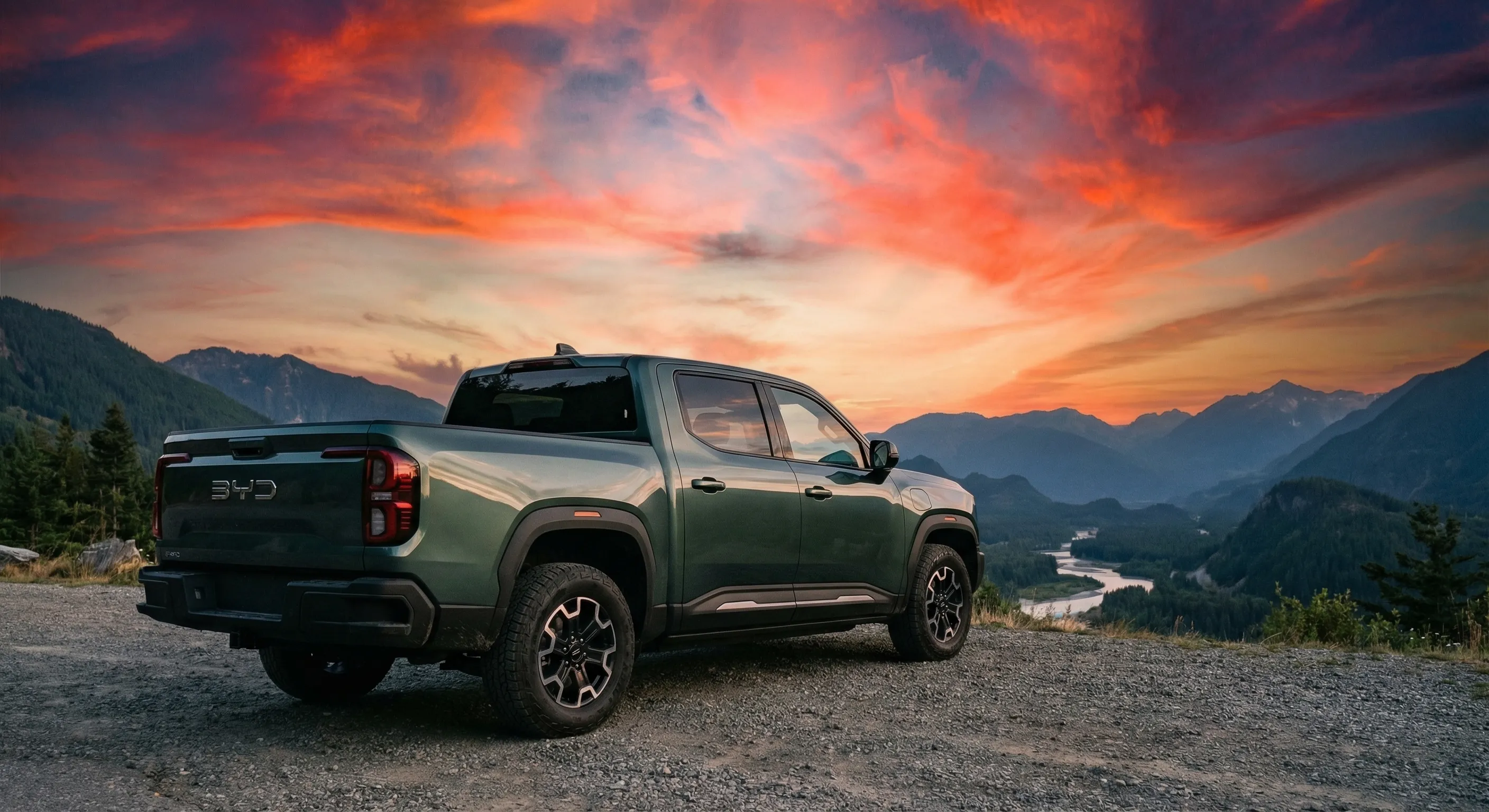
The tariff cut on Chinese EVs from 100% to 6.1% in January 2026 changes the price side of this equation too; which BYD models actually reach Canadian buyers under the 49,000-unit quota is the supply-side question that pairs with this drivetrain-fit one. A BYD Seal at a post-tariff price collapses the BEV-vs-PHEV math for the urban renter case in a way no rebate adjustment can match, provided the quota actually lets enough units land to clear dealer floors.
The drivetrain question doesn't have a single answer because it isn't a single question. It is three questions wearing the same coat, how far do you drive, where do you charge, and what does the rebate pay you, and the right car drops out of the answers within about ninety seconds of honest accounting.
Gear worth having
As an Amazon Associate, ThinkEV earns a small commission from qualifying purchases — at no extra cost to you.

WixGear Magnetic Air Vent Phone Mount (2-Pack)
A magnet strong enough that your phone never flinches over potholes or rail crossings. Two in the box, one for each car.
As an Amazon Associate, ThinkEV earns from qualifying purchases — at no extra cost to you.

Founder & Chief Editor
Vlad Pereira is the founder and chief editor of ThinkEV.ca, the Canadian electric-vehicle publication he writes and edits from Courtenay, British Columbia. He covers EV pricing, federal and provincial rebates, charging costs, and the Chinese manufacturers now entering Canada, from the buyer's side rather than the press-fleet side. ThinkEV is a venture of Vlad Pereira Online; his writing on health, income and the long game lives at vladpereira.com.
Frequently asked questions
Does the federal iZEV rebate apply to all three types?
How much range does a BEV actually lose in a Canadian winter?
Can a renter reasonably own a BEV without home charging?
What goes wrong if I buy a PHEV and never plug it in?
Is a hybrid worth it if I already drive over 20,000 km yearly?
More EV & road-trip finds
Affordable upgrades worth a look — tap any to check the price on Amazon.
 ★ 87
★ 87Car Window Sun Shades for Kids (4-Pack)
View on Amazon ★ 392
★ 392Large Cup Holder Adapter (32-40oz)
View on Amazon ★ 4,050
Touchscreen Mist Screen Cleaner Kit
View on Amazon ★ 55
★ 55LED Car Door Logo Projector Light
View on Amazon ★ 900
★ 900Personalized Photo Car Air Freshener
View on Amazon ★ 979
★ 979Leather Headrest Purse Hook
View on Amazon ★ 12,834
P3 Kill A Watt Electricity Usage Monitor
View on Amazon ★ 121
★ 121Foldable Windshield Sun Umbrella
View on AmazonRead, Plan, Then Stay Current
Explore our expert articles to understand incentives and ownership costs, use the map to pressure-test charging reality, then subscribe so new EV coverage comes straight to you.
Continue Reading

New or Used EV: Which Is the Smarter Buy in 2026?

EV Highway vs City Range: Why They Flip
Buy or Lease an EV in Canada? The 2026 Answer

Single-Motor vs Dual-Motor EVs: What AWD Actually Adds
BYD Shark 6 Price in Canada: $55K–$62K Estimate, Explained