
A gas engine converts about 20–40% of its fuel into motion. An electric motor converts 85–95%. The rest is physics, not marketing, and most of the EV-vs-gas debate spends its time arguing about the wrong things because that physics gap is rarely stated plainly. Range anxiety, charging time, sticker price: those are infrastructure and policy problems. Efficiency, torque delivery, and mechanical complexity are not problems. They are settled engineering questions, and the motor won them a century ago. The reason the conversation feels close is that gasoline carries roughly ninety times more energy per kilogram than a lithium-ion cell, which papers over a lot of inefficiency on the energy-density end. Strip that out, and the comparison gets lopsided fast.
On efficiency, torque, and long-term mechanical reliability, the electric motor wins structurally. On energy density and refueling logistics outside major corridors, gasoline still holds ground. The infrastructure gap is closing annually. The physics gap is not closing at all.
Key takeaways
- Electric motors convert 85–95% of energy into motion; gas engines waste 60–80% as heat.
- EV motors deliver maximum torque at zero RPM, which is why a 350-hp EV beats a 350-hp gas car off the line.
- A gas drivetrain has roughly 2,000 moving parts; an EV drivetrain has a rotor, stator, inverter, and one reduction gear.
- Canadian EV owners save $1,800–$3,200 annually in fuel costs alone, before factoring in eliminated maintenance intervals.
- Gasoline holds about 90 times more energy per kilogram than a lithium-ion cell, that energy density gap is the only structural advantage combustion still holds.
The Physics Gap: Why the Efficiency Numbers Are That Lopsided
An internal combustion engine is a heat engine, and heat engines are bound by thermodynamics in ways electric motors simply are not. The fuel burns, the explosion drives a piston, the piston turns a crankshaft, the crankshaft spins through a multi-speed transmission, and somewhere along that chain 60–80% of the energy you paid for at the pump leaves the system as heat through the radiator, heat through the exhaust, and friction across every mechanical interface. This is not a tuning problem. It is the Carnot cycle imposing a hard ceiling: at the ~2,000°C peak combustion temperatures and ~400°C exhaust temperatures of a typical gasoline engine, the theoretical maximum thermal efficiency sits near 70%, and real-world losses to incomplete combustion, friction, and pumping work drag the delivered number down to the 20–40% range.
The US Department of Energy puts the number bluntly: up to 80% of the energy stored in an EV battery reaches the wheels. The gasoline equivalent sits somewhere between 20% and 40% depending on driving conditions, with stop-and-go traffic dragging the lower bound down hard, every brake application in a gas car is energy converted to heat and thrown away. Power-to-weight ratio (also called specific power, or power-to-mass ratio) is a calculation commonly applied to engines and mobile power sources, and on that metric modern electric motors routinely embarrass the engines they replace.
Regenerative braking widens the gap further. An electric motor run in reverse is a generator, so the same hardware that drives the wheels can recover energy back into the battery during deceleration. A gas engine has no equivalent mechanism. Every time a combustion vehicle slows down, that kinetic energy becomes brake-pad heat and disappears into the atmosphere. The DOE's 80% figure understates the real-world delta in city driving because of this, the efficiency math gets more lopsided in stop-and-go, not less. It is, to be fair, a number that does not flatter the engine.
Gear worth having
As an Amazon Associate, ThinkEV earns a small commission from qualifying purchases — at no extra cost to you.

Lectron Level 2 J1772 Charger (40A, WiFi)
Smart WiFi charger with real-time energy monitoring. 40A / 9.6 kW, J1772 with a NEMA 14-50 plug, schedule charging right from your phone.
As an Amazon Associate, ThinkEV earns from qualifying purchases — at no extra cost to you.
Torque Delivery and the Verdict on Performance
A gas engine builds torque across an RPM band. To get the peak number off the spec sheet into the wheels, you need the engine spinning at a specific range, which requires the transmission to be in the right gear, which requires either a competent driver or a competent torque-converter. There is a delay between asking for power and receiving it. Engineers have spent a hundred years tuning that delay down, turbochargers, dual-clutch gearboxes, launch-control software, and the delay is still there.
An electric motor produces maximum torque at zero RPM. Full force is available the instant current flows through the windings. There is no band, no gear selection, no rev-matching, no turbo lag. This is why a 350-horsepower EV will routinely outrun a 350-horsepower gas car off the line, and it is why the entire 0–60 metric has become slightly misleading as a comparison tool, equivalent peak power numbers do not produce equivalent acceleration when one drivetrain delivers everything immediately and the other ramps up. The structural advantage shows up everywhere this curve is measured, the torque-curve gap is the real engine of every EV performance claim.
The first-generation Tesla Roadster, a battery electric sports car based on the Lotus Elise chassis, proved this commercially almost twenty years ago by embarrassing combustion sports cars that cost three times as much. The architecture won; the marketing took longer to catch up. For real-world acceleration feel, the motor wins structurally. Not by tuning, not by software, not by clever launch modes. By the shape of the torque curve itself.
Gear worth having
As an Amazon Associate, ThinkEV earns a small commission from qualifying purchases — at no extra cost to you.

WeatherTech FloorLiner for Tesla Model 3
Deep-channel liners that trap every drop of slush and salt. The difference between a ruined interior and a showroom-fresh cabin after a Canadian winter.
As an Amazon Associate, ThinkEV earns from qualifying purchases — at no extra cost to you.
Gear worth having
As an Amazon Associate, ThinkEV earns a small commission from qualifying purchases — at no extra cost to you.

PULIDIKI Car Cleaning Gel (Detailing Putty)
Press it into vents, buttons, and seams and it lifts out dust you did not know was there. Weirdly satisfying, genuinely useful.
As an Amazon Associate, ThinkEV earns from qualifying purchases — at no extra cost to you.
Mechanical Complexity and What It Costs Over Time
Count the moving parts. A modern gasoline drivetrain runs to roughly two thousand of them:
- Pistons, connecting rods, crankshaft, camshafts, valves
- Spark plugs, fuel injectors, timing chain
- Water pump, oil pump
- Multi-speed transmission with its own gear sets and synchronisers
- Exhaust system with catalytic converter and oxygen sensors
Each one is a potential failure point. Each one needs to be lubricated, cooled, replaced, or all three over the vehicle's life.
An EV drivetrain has a rotor, a stator, an inverter, and a single-speed reduction gear. The count is an order of magnitude lower, and most of what remains has no sliding contact under load. There is no oil to change. There is no timing belt to fail at 160,000 km. There is no transmission fluid, no spark plugs, no exhaust system to corrode through a Canadian winter's worth of road salt.
The financial consequence is measurable. Canadian EV owners save $1,800–$3,200 per year in fuel costs at current electricity rates, depending on province and driving distance, and the maintenance savings compound on top of that, because the scheduled-service intervals that bleed an ICE owner of a few hundred dollars every six months largely do not exist. The lifetime emissions math runs the same direction across every Canadian grid, even Alberta's.
Battery pack replacement is the structural uncertainty an ICE drivetrain does not carry. A pack out of warranty is a five-figure repair. Real-world degradation data from eight-year-old EVs suggests this happens less often than the early fear models predicted, but the cost asymmetry is real, a worn-out gasoline engine can be rebuilt; a worn-out pack is replaced wholesale. The maintenance ledger still favours the motor by a wide margin. The tail risk is just shaped differently.
Gear worth having
As an Amazon Associate, ThinkEV earns a small commission from qualifying purchases — at no extra cost to you.

WixGear Magnetic Air Vent Phone Mount (2-Pack)
A magnet strong enough that your phone never flinches over potholes or rail crossings. Two in the box, one for each car.
As an Amazon Associate, ThinkEV earns from qualifying purchases — at no extra cost to you.
Where Gas Engines Still Hold Ground, and for How Long
Energy density is the structural advantage gasoline still carries. A litre of gasoline holds roughly 46 megajoules per kilogram. A lithium-ion cell holds about 0.5 megajoules per kilogram. That is a factor of ninety, and no amount of motor efficiency closes that gap on its own. The 85–95% efficiency number gets the motor about a third of the way back; the rest is why a gas car can drive 700 km on a tank that weighs 40 kg while an EV needs a 500 kg battery to do similar.
Refueling logistics fall out of the same physics. Five minutes at a pump replaces the entire energy budget. The fastest DCFC chargers on the market need 20 to 40 minutes to do something comparable, and that assumes the charger is working, available, and not throttled by ambient temperature. Outside the major corridors, and "major corridors" in a country this geographically uncooperative means a much shorter list than it does in Europe, the network density still favours gasoline. The buildout is annual. Tesla and EVgo's 1,000-charger Canadian expansion is exactly the kind of infrastructure move that narrows this gap, but it is narrowing, not closed.
The cold-weather range penalty is real. A Canadian winter takes 20–30% off advertised range on most EVs, and on the worst grids that penalty compounds with grid carbon intensity. But "the worst grids" is doing a lot of work in that sentence: lifecycle emissions of an EV charged on Alberta's grid still come in roughly 40% lower than a comparable gas vehicle, despite Alberta's significant natural-gas grid share. The range hit is not marketing fiction. The emissions advantage is also not marketing fiction. Both can be true.
The forward read is simple. Infrastructure gaps close with capital expenditure. Dealership economics around EV sales, where advertising the benefits of an electric car would disparage the gas-powered vehicles, creating a disincentive to dealership EV sales, those are policy and incentive problems, solvable on policy and incentive timelines. The physics is not solvable. Motors convert energy to motion more efficiently than heat engines because the laws of thermodynamics say they have to. On the metrics the engineering controls, efficiency, torque delivery, mechanical reliability, the verdict was settled before the first Roadster left Hethel. The remaining argument is about energy storage, which is a battery problem, not a motor problem. The number to watch is energy density per kilogram of pack, measured at the cell level, dated yearly. Everything else is downstream of that one curve.
Gear worth having
As an Amazon Associate, ThinkEV earns a small commission from qualifying purchases — at no extra cost to you.

NOCO Boost Plus GB40 Jump Starter
A 1000A lithium jump starter that fits in your glovebox and works on any 12V battery. Your insurance against a dead 12V in a parking lot.
As an Amazon Associate, ThinkEV earns from qualifying purchases — at no extra cost to you.

Founder & Chief Editor
Vlad Pereira is the founder and chief editor of ThinkEV.ca, the Canadian electric-vehicle publication he writes and edits from Courtenay, British Columbia. He covers EV pricing, federal and provincial rebates, charging costs, and the Chinese manufacturers now entering Canada, from the buyer's side rather than the press-fleet side. ThinkEV is a venture of Vlad Pereira Online; his writing on health, income and the long game lives at vladpereira.com.
Frequently asked questions
Why does an EV feel faster even with the same horsepower rating?
Does regenerative braking actually make a meaningful difference in real life?
What happens if my EV battery needs replacing out of warranty?
Is the efficiency gap actually closing as gas engines improve?
How much less maintenance does an EV actually need in Canada?
More EV & road-trip finds
Affordable upgrades worth a look — tap any to check the price on Amazon.
 ★ 61
★ 61Toddler Car Seat Snack and Cup Tray
View on Amazon ★ 392
★ 392Large Cup Holder Adapter (32-40oz)
View on Amazon ★ 2,941
Microfiber Cleaning Cloths (Multi-Pack)
View on Amazon ★ 55
★ 55LED Car Door Logo Projector Light
View on Amazon ★ 401
★ 401Crochet Daisy Rear-View Mirror Charm
View on Amazon ★ 979
★ 979Leather Headrest Purse Hook
View on Amazon ★ 17,242
LISEN Mini USB-C Car Charger (54W)
View on Amazon ★ 87
★ 87Car Window Sun Shades for Kids (4-Pack)
View on AmazonRead, Plan, Then Stay Current
Explore our expert articles to understand incentives and ownership costs, use the map to pressure-test charging reality, then subscribe so new EV coverage comes straight to you.
Continue Reading

Rare Earth-Free Motor Claim From a $5M Startup
What kWh Means for Your EV: Energy and Efficiency Explained
Aerodynamics Beat Diet, Why EV Size Barely Moves the Needle
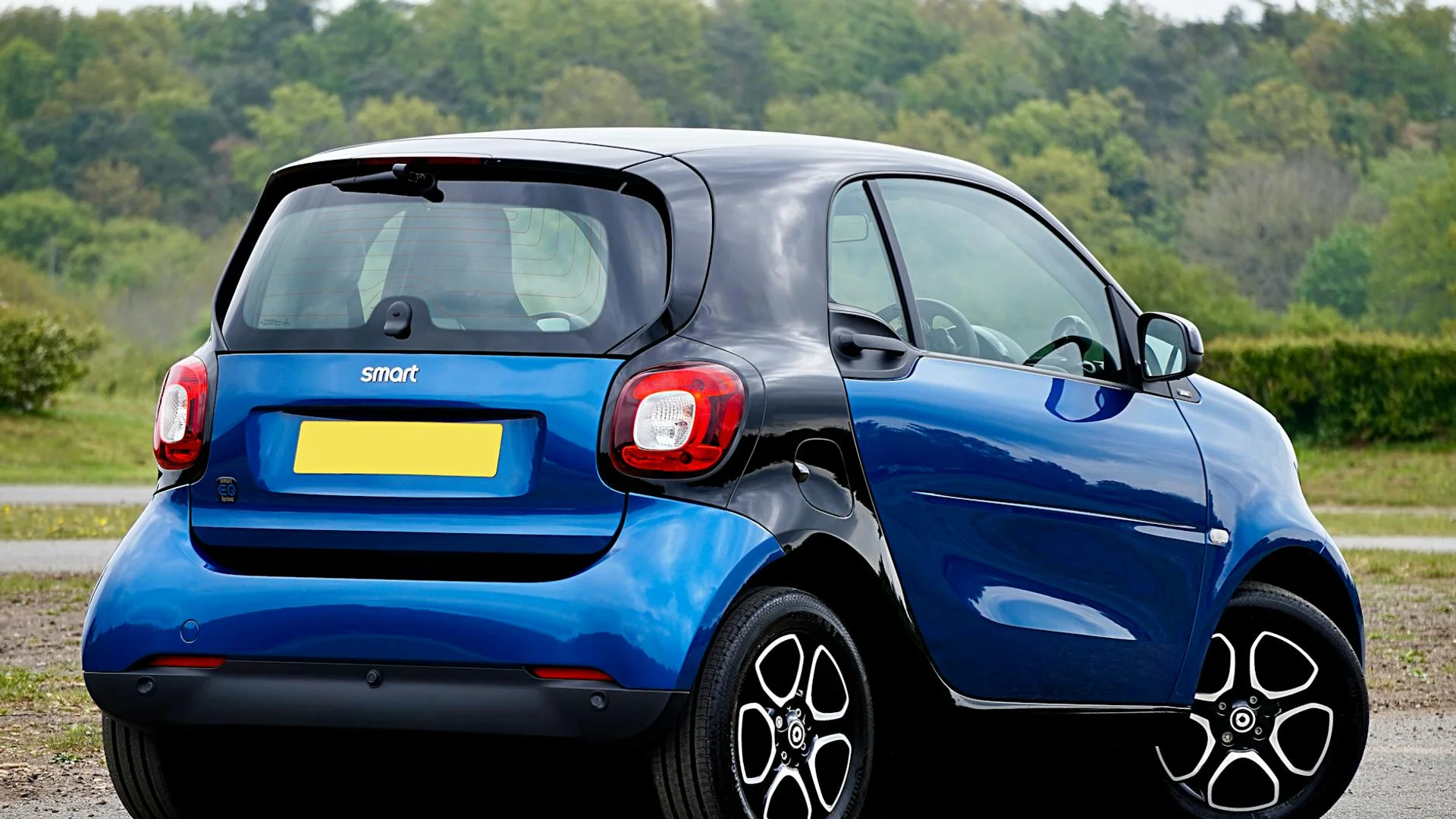
Automakers Sold You 'Efficient Small EVs', The Data Disagrees
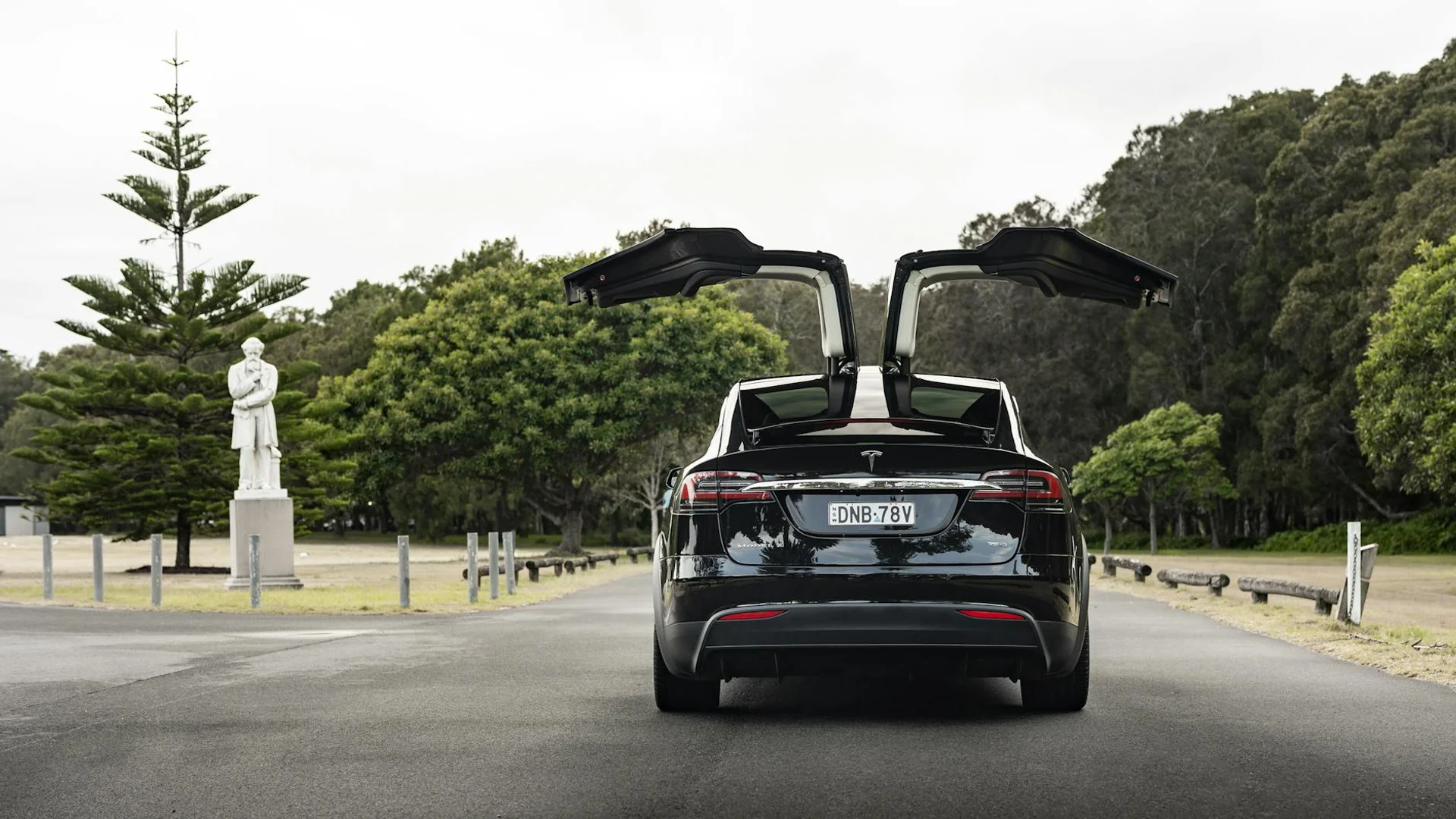
Why Most EV Efficiency Coverage Gets It Backwards