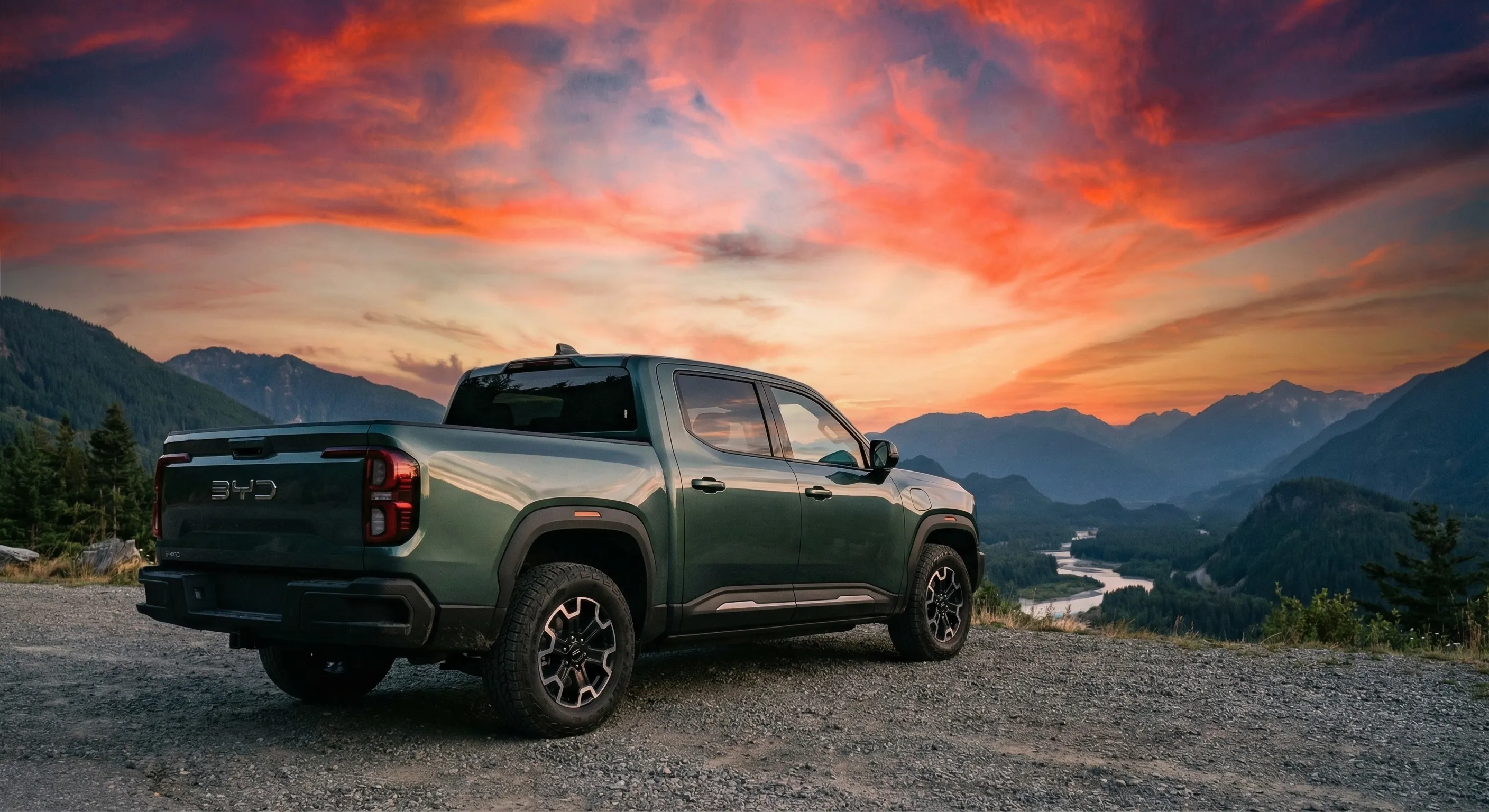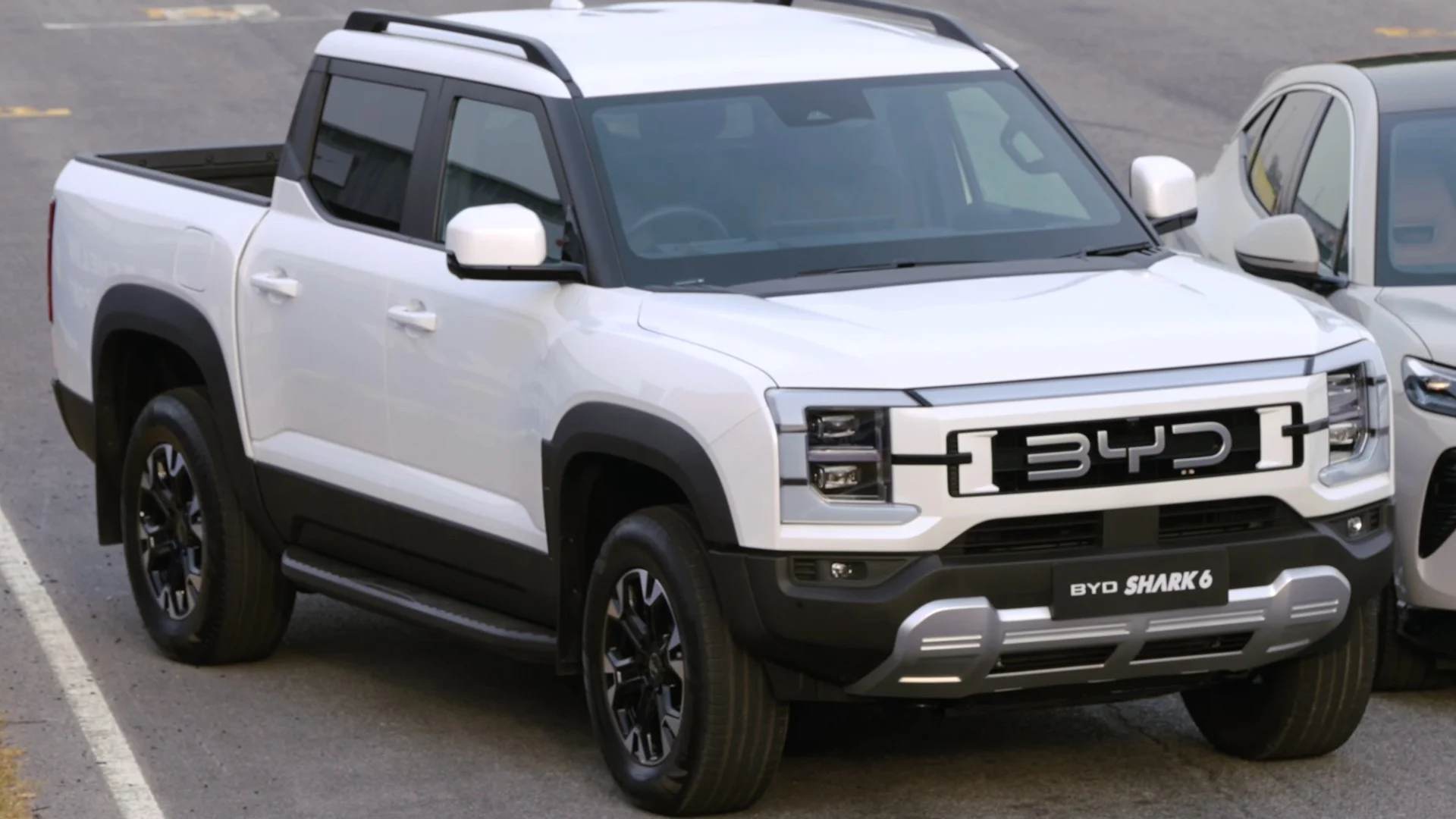
A 49,000-unit annual quota cracked open a door Ford and GM assumed would stay shut. The question is no longer whether a BYD truck reaches Canadian driveways. It is who walks through that door first, on what timeline, and what the incumbents do in the eighteen months they have left to prepare.
I'll put my position on the record before the data carries us there. A BYD truck, almost certainly the Shark 6, will reach Canadian consumers at retail scale within the 2027–2028 window. Not 2026. Not 2030. The middle ground, where the quota is real, the price gap is real, and the dealer buildout has had two model years to catch up to the import authorization that already exists.
That's an editorial call, not a forecast wearing analytical drag. It rests on three things the data has already settled: BYD is a Chinese multinational manufacturing conglomerate headquartered in Shenzhen, Guangdong, with the production scale to move volume into a new market on short notice; Transport Canada has already authorized BYD's two corporate entities to import passenger vehicles; and the Shark 6's estimated Canadian price band sits roughly $30,000 below the F-150 Lightning's entry trim. None of those facts is contested. What's contested is the timing, the dealer network, and whether Ottawa lets the quota do what the quota was designed to do.
The engineering breakdown and the buyer guide each have their own posts. This one is the publication's position: why the Shark 6 matters, why the 2027–2028 window is the right call, and what would flip that call.
Key takeaways
- Canada's 49,000-unit quota at 6.1% tariff, effective January 16, 2026, is the policy lever that makes a BYD truck commercially viable here.
- Transport Canada's Appendix G registry already lists BYD across two corporate entities, clearing the regulatory groundwork most new entrants spend years on.
- The Shark 6's estimated $52,000 CAD landing price undercuts the F-150 Lightning's entry trim by roughly $30,000, not a competitive gap, a category reset.
- The Shark 6's series-hybrid architecture directly answers the dominant Canadian objection to electric trucks: range collapse in winter and under tow.
- BYD's Australian Shark 6 pre-orders sold out within weeks of launch, the closest open-market demand signal for this product before Canada opens up.
Why the Quota Changes Everything for Canadian Truck Buyers
The headline number is 6.1%. That's the tariff rate Canada applies to Chinese-built passenger vehicles inside the new 49,000-unit annual quota, effective January 16, 2026. Outside the quota, the rate snaps back to 100%, the full punitive level that has kept Chinese EVs out of Canada since October 2024.
The quota itself is the policy lever that matters. 49,000 vehicles a year is not a number that floods the Canadian market. Total light-vehicle sales in Canada run roughly 1.7 million units annually. The quota represents less than 3% of the market, small enough that the incumbents cannot credibly claim existential threat, large enough that a single manufacturer can establish a meaningful beachhead if it chooses one model and pushes hard.
That last point matters more than the percentage. A quota of 49,000 vehicles, spread across seven Chinese manufacturers and twenty models, is noise. A quota of 49,000 vehicles concentrated in one Shark 6 trim sold through a focused dealer network is a category event. The structure rewards focus, not breadth. The manufacturer that picks one product and commits gets the beachhead. The manufacturer that hedges across a lineup gets a footnote.
BYD has the structural advantage here, and it has it twice over. First, the import authorization. Transport Canada's Appendix G registry, the federal list of every foreign manufacturer authorized to import vehicles into Canada, already lists BYD seven times across two corporate entities, BYD AUTO CO., LTD. for passenger cars and a separate listing for commercial vehicles. This is the kind of regulatory groundwork that takes years for a new entrant. BYD did it.
Second, the volume capacity. BYD's manufacturing base in China spans electric buses and electric trucks alongside passenger vehicles, which means the production lines that would feed a Canadian truck program are already running at scale for other markets. Australia is taking Shark 6 units. New Zealand is taking them. Mexico is taking them. Adding Canadian RHD-to-LHD conversion at the spec level is a software-and-trim exercise, not a factory build.
The price gap is the third pillar. Ford's F-150 Lightning enters the Canadian market north of $80,000 CAD for any trim a working contractor would actually buy. GM's Silverado EV sits in a similar band: capability impressive, sticker brutal. The Shark 6's estimated $45,000–$55,000 CAD landing band, with a central estimate of $52,000 with the caveats below, undercuts the Lightning by roughly $30,000. That is not a competitive delta. That is a category reset.
I'll label the uncertainty on that price band. The $45K–$55K estimate predates any confirmed CAD pricing from BYD Canada, predates final iZEV eligibility rulings, and assumes the quota structure holds without political amendment. If Ottawa moves the quota to passenger cars only, the truck variant doesn't ship and the band is moot. If iZEV rebates apply to the PHEV trim, the effective consumer price drops to the high $30Ks. Both outcomes are live.
The Shark 6 Is the Model That Fits the Quota Logic
Of every model in BYD's catalogue, the Shark 6 is the one that matches the quota's strategic geometry. That is not an accident. It is the model BYD would pick if it were designing a Canadian entry from first principles, and the model that arrives even if Canadian entry was already on the roadmap before the tariff cut.
The architecture is plug-in hybrid, not full battery-electric. That choice is the single most important fact about the Shark 6's Canadian prospects. The dominant Canadian truck-buyer objection to electrification, that range collapses in winter, that towing eats the battery, that the charging network can't support a long-haul work cycle, is structurally answered by PHEV architecture. The electric drivetrain handles the daily commute and the urban duty cycle. The internal combustion engine handles the road trip, the trailer, and the −30°C cold soak. The Shark 6 does not ask the Canadian buyer to accept the compromises that have kept the F-150 Lightning at single-digit market share in its category.
The Shark 6 is also a coherent engineering proposition rather than a retrofit. The engine doesn't drive the wheels directly. It exists to top up the battery. The battery feeds the motors. The motors do the work. That is the same series-hybrid logic that made the Honda Accord Hybrid powertrain critically successful, applied to a truck body, scaled to a North American duty cycle, and priced where Ford cannot compete on cost.
The closest demand proxy we have is Australia. The Shark 6 launched there in late 2024 and pre-orders sold out within weeks. Australia is not Canada, different climate, different fuel prices, different cultural relationship to the pickup truck, but it is the closest open-market test of the product in a right-hand-drive country with a comparable retail environment. The signal it sends is that the product, at its price point, doesn't need to be sold. It needs to be supplied.
The federal iZEV rebate question is where the price calculus gets unstable. As of today, NRCan's iZEV program covers full battery-electric and plug-in hybrid vehicles with electric range above a defined threshold. The Shark 6's electric-only range, roughly 100 km on the WLTP cycle, sits comfortably above the iZEV threshold, which suggests eligibility in principle. The complication is that NRCan has not ruled specifically on Chinese-built PHEVs entering under the quota, and the political optics of writing a federal rebate cheque to a Chinese manufacturer are something Ottawa has not yet had to navigate. I expect a ruling within the first six months of quota activity. Until that ruling lands, the effective consumer price has a $5,000 swing in it.
That swing is what makes the Shark 6 the bet inside the bet. At $52K with no rebate, it undercuts the Lightning by $30K. At $47K with the iZEV rebate, it undercuts the Lightning by $35K and trades against the gas-engine F-150 directly. The latter scenario is the one Ford and GM are not pricing for.
Gear worth having
As an Amazon Associate, ThinkEV earns a small commission from qualifying purchases — at no extra cost to you.

WeatherTech FloorLiner for Tesla Model 3
Deep-channel liners that trap every drop of slush and salt. The difference between a ruined interior and a showroom-fresh cabin after a Canadian winter.
As an Amazon Associate, ThinkEV earns from qualifying purchases — at no extra cost to you.
What the Demand Signal Actually Tells Us
There is real, unprompted Canadian consumer interest in BYD trucks at this price point. I'm not citing the source forum because the source isn't load-bearing, what's load-bearing is the structural pattern. When Canadian consumers discussing the EV market spontaneously generate threads asking how fast 49,000 BYD units at roughly $49K would sell out at midnight, they are not asking the academic question. They are asking the logistics question. They are asking whether the website infrastructure could handle the load. The framing assumes the demand exists. The discussion is about the bottleneck.
That framing is the signal. The Canadian conversation about Chinese EVs has skipped the "would you consider one" stage and arrived at the "how do I get one before they sell out" stage, and it did so before any official BYD Canada announcement, before any dealer signage, before any test-drive availability. The product hasn't been sold and demand is already binding against supply in the consumer imagination.
The Canadian light-truck segment is the highest-volume category in the market. Pickups and pickup-adjacent vehicles outsell every passenger-car class combined. If BYD wants meaningful Canadian volume, and the quota structure is the only reason to come to Canada at all, the truck is the only entry point that hits the size of audience the quota cap allows for. The math doesn't work with a city car. It works with a Shark 6.
What that demand signal cannot tell us is execution. Demand and infrastructure are not the same problem. Canadian consumers wanting a BYD truck do not constitute Canadian dealers selling one. Which brings us to the question the press releases keep dodging.
The Infrastructure Gap Is the Real Barrier, Not the Tariff
The tariff is solved. The authorization is solved. The product exists. The price works. What does not exist is the dealer network, the service infrastructure, the warranty support, or the parts logistics that would make a Canadian consumer purchase a defensible decision rather than a leap of faith.
BYD's existing Canadian presence is commercial, not consumer. The supplier listings position the brand as an industrial vehicle vendor, buses, forklifts, medium-duty trucks, sold to fleet operators and municipalities, not to families shopping for a pickup. A fleet customer buys differently from a retail customer. The fleet customer accepts a long parts lead time, contracts service through a third party, and absorbs warranty friction as a line item. A retail Canadian truck buyer will not. The infrastructure that supports the existing BYD Canadian business does not transfer.
Vancouver is the logical port of entry. The shipping geography from Shenzhen to the Port of Vancouver is the shortest North American Pacific routing, and BC has the highest concentration of EV-ready charging infrastructure in the country. If you were building a Canadian BYD truck launch from a blank page, you would start with a Greater Vancouver dealer footprint, expand down the Lower Mainland through Victoria, and then extend east. The Toronto and Montreal markets, where roughly 60% of Canadian truck volume sits, require rail from Vancouver, which adds cost and lead time and complicates service support for any vehicle that arrives in eastern Canada needing factory backup.
Gear worth having
As an Amazon Associate, ThinkEV earns a small commission from qualifying purchases — at no extra cost to you.

Grizzl-E Classic Level 2 EV Charger (40A)
Canadian-made and rated for minus 40C winters. 40A / 9.6 kW, NEMA 14-50, indoor/outdoor, 24-ft cable. The charger built for Canadian weather.
As an Amazon Associate, ThinkEV earns from qualifying purchases — at no extra cost to you.
Tesla solved this problem by building service centres before delivering volume. The first Model S deliveries in Canada were paired with service infrastructure in the same metropolitan markets, and Tesla absorbed years of unprofitable service capacity as the cost of building consumer trust. BYD's stated timeline for equivalent Canadian infrastructure is unknown. There is no public dealer announcement. There is no public service partnership. There is no public commitment on warranty turnaround.
That gap is what makes 2026 the wrong target year for consumer trucks at scale. The quota activates January 16. The first quota year's allocation will move, probably toward passenger cars from manufacturers with more established sales channels, possibly toward fleet sales for commercial buyers who already accept the infrastructure trade-off. Consumer Shark 6s in Canadian driveways at retail scale in 2026 would require a dealer buildout that BYD has not publicly committed to and could not credibly execute in the time remaining.
The 2027–2028 window is different. It gives BYD two model years to announce, sign, and stand up a Canadian dealer network. It gives the parts and service supply chain time to relocate inventory to Canadian warehouses. It gives Transport Canada and the provincial regulators time to work through the policy questions that the first quota year will surface. And it gives the Shark 6's product position, PHEV pickup, $30K below the incumbents, time to do its work in the segment without being undercut by an immature service experience.
Gear worth having
As an Amazon Associate, ThinkEV earns a small commission from qualifying purchases — at no extra cost to you.

PULIDIKI Car Cleaning Gel (Detailing Putty)
Press it into vents, buttons, and seams and it lifts out dust you did not know was there. Weirdly satisfying, genuinely useful.
As an Amazon Associate, ThinkEV earns from qualifying purchases — at no extra cost to you.
The Editorial Position: Arrival Is Likely, Timeline Is the Bet
Three positions, stated plainly.
First: a BYD truck reaches Canadian consumers at retail scale. The combination of import authorization, quota structure, and price gap makes this a question of when, not whether. If you are reading this and waiting for the announcement that confirms BYD Canada consumer retail intent, you are reading for the timing, not the outcome. The outcome is settled by the conditions already in place.
Second: 2026 is too early and 2030 is too late. The credible window is 2027 into 2028. 2026 is too early because the dealer and service infrastructure does not exist and cannot be built in the months remaining. 2030 is too late because every model year of delay gives Ford, GM, and Stellantis time to close the price gap with a smaller, cheaper electric truck program, a program none of them has on the public roadmap today, but which becomes existential if BYD lands a Shark 6 at $52K and starts moving units. The middle window is the one where BYD's structural advantage is largest and the incumbents' counter-moves are slowest.
Third: the thesis can be killed cleanly. The single scenario that invalidates everything above is Ottawa reallocating the 49,000-unit quota toward passenger cars only, excluding light trucks from the eligible vehicle classes. That outcome is politically conceivable, the domestic auto manufacturing lobby has every incentive to push for it, and a federal government with a thin majority might accommodate the push. If that reallocation happens, the Shark 6 stays out of Canada and BYD's truck program targets Mexico and Australia at scale instead. The editorial thesis dies on a single Order-in-Council.
Short of that policy reversal, Ford and GM have approximately two years to close a $30,000 price gap on a vehicle class where neither company has shown the manufacturing-cost roadmap to do so. The Lightning is built on a platform optimized for the existing F-150 supply chain, not for cost competition with a PHEV manufactured in Shenzhen. The Silverado EV is a more capable vehicle than the Shark 6 on most engineering axes, battery size, towing, range, and is priced accordingly. Neither incumbent has a credible path to a $55K Canadian electric pickup before the 2028 model year. That is not a critique of either company's engineering. It is a recognition that their cost basis was set by a North American manufacturing strategy that did not anticipate this entrant.
The forward call: I'd bet on BYD Shark 6 retail availability in BC and Ontario in the second half of 2027, with national coverage following through 2028. I'd put the consumer entry price band at $48K–$54K CAD pre-rebate. I'd watch the Lightning pricing carefully for any sub-$65K trim announcement, which is the only counter-move Ford could realistically execute in the window.
For the engineering breakdown of BYD's PHEV pickup architecture and the Canadian price math, that post covers the specification detail. The BYD Shark 6 Canada preview handles the head-to-head against Ford's truck on a feature-by-feature basis. And for the broader category context, the Rivian R1T versus F-150 Lightning showdown is the cleanest snapshot of the segment the Shark 6 is about to walk into.
What I Am Watching to Confirm or Kill the Thesis
Four signals between now and the end of 2026 will tell us whether the 2027–2028 window holds.
The first is any BYD dealer partnership announcement in BC or Ontario. That is the single most important leading indicator. BYD does not need a national network to launch, it needs a flagship metropolitan footprint and a service spine. A signed dealer agreement, even one with a single multi-franchise group, is the green light. Silence through 2026 is the red light. I expect news on this front before the end of Q3 2026 if the program is real, and I'll revise my timeline if we hit December with no announcement.
The second is the federal iZEV ruling on Chinese-built PHEV trucks. NRCan will have to take a position one way or the other once Shark 6 units start clearing customs, and the position they take is materially load-bearing. A yes, Shark 6 qualifies for the rebate, moves the effective consumer price into a band where the Lightning is no longer a serious alternative for a buyer cross-shopping on price. A no creates an asymmetric tariff outcome that's politically harder to defend than the quota itself, and I expect Ottawa to land on yes for that reason.
The third is the quota utilization rate through the first half of 2026. BYD already ships electric semi-tractors in California and has supplied commercial vehicles in international markets for over a decade, so the manufacturer has the logistics maturity to fill its share of the quota fast if it chooses to. If the 49,000 units sell out within the first six months of the year, Ottawa faces immediate political pressure either to expand the quota or restrict it further. Either outcome reshapes the 2027 window.
The fourth is any F-150 Lightning price cut below $65K CAD for a contractor-spec trim. That is the price point at which Ford has a credible counter-narrative, and it's the only short-window move available to the incumbents. If it happens, BYD's runway narrows. If it doesn't happen by the 2027 model year, the runway is fully open.
Gear worth having
As an Amazon Associate, ThinkEV earns a small commission from qualifying purchases — at no extra cost to you.

WixGear Magnetic Air Vent Phone Mount (2-Pack)
A magnet strong enough that your phone never flinches over potholes or rail crossings. Two in the box, one for each car.
As an Amazon Associate, ThinkEV earns from qualifying purchases — at no extra cost to you.
The Larger Pattern This Truck Represents
The Shark 6 isn't an EV story. It's a manufacturing-cost story arriving in North America's most profitable vehicle segment, and the EV component is incidental to why it matters. BYD's structural advantage is vertical integration, battery cells, motors, software, and final assembly under one corporate roof at a labour-cost basis the North American incumbents cannot match. The Shark 6 is the proof-of-concept that demonstrates the cost basis works on a pickup body. Whatever follows it in the 2028–2030 model cycle is the volume play that operationalizes the cost advantage across the lineup.
Canadian buyers who categorized Chinese EVs as compact city cars suitable for someone else's driveway now have a PHEV pickup priced for their own. That recategorization is the editorial event the publication has been tracking since the quota was announced, and the Shark 6 is the vehicle that crystallizes it.
The question for Canadian auto policy is whether the 49,000-unit quota was designed to manage this entry or prevent it. The two are different policy postures, and the difference shows up in how Ottawa handles the second-year allocation, the iZEV ruling, and any provincial response. Manage means letting the entry happen at a controlled pace while the domestic manufacturing base adjusts. Prevent means using the quota as a holding action until tariff escalation can be revisited. I think the policy posture is management. I think the political pressure will test it. The next twenty-four months will settle which posture wins.
That's where the editorial position lands. The truck is coming. The window is 2027–2028. The bet is on dealer buildout, not regulatory outcome. And the incumbents have two years to do something they have not yet shown they can do.
Gear worth having
As an Amazon Associate, ThinkEV earns a small commission from qualifying purchases — at no extra cost to you.
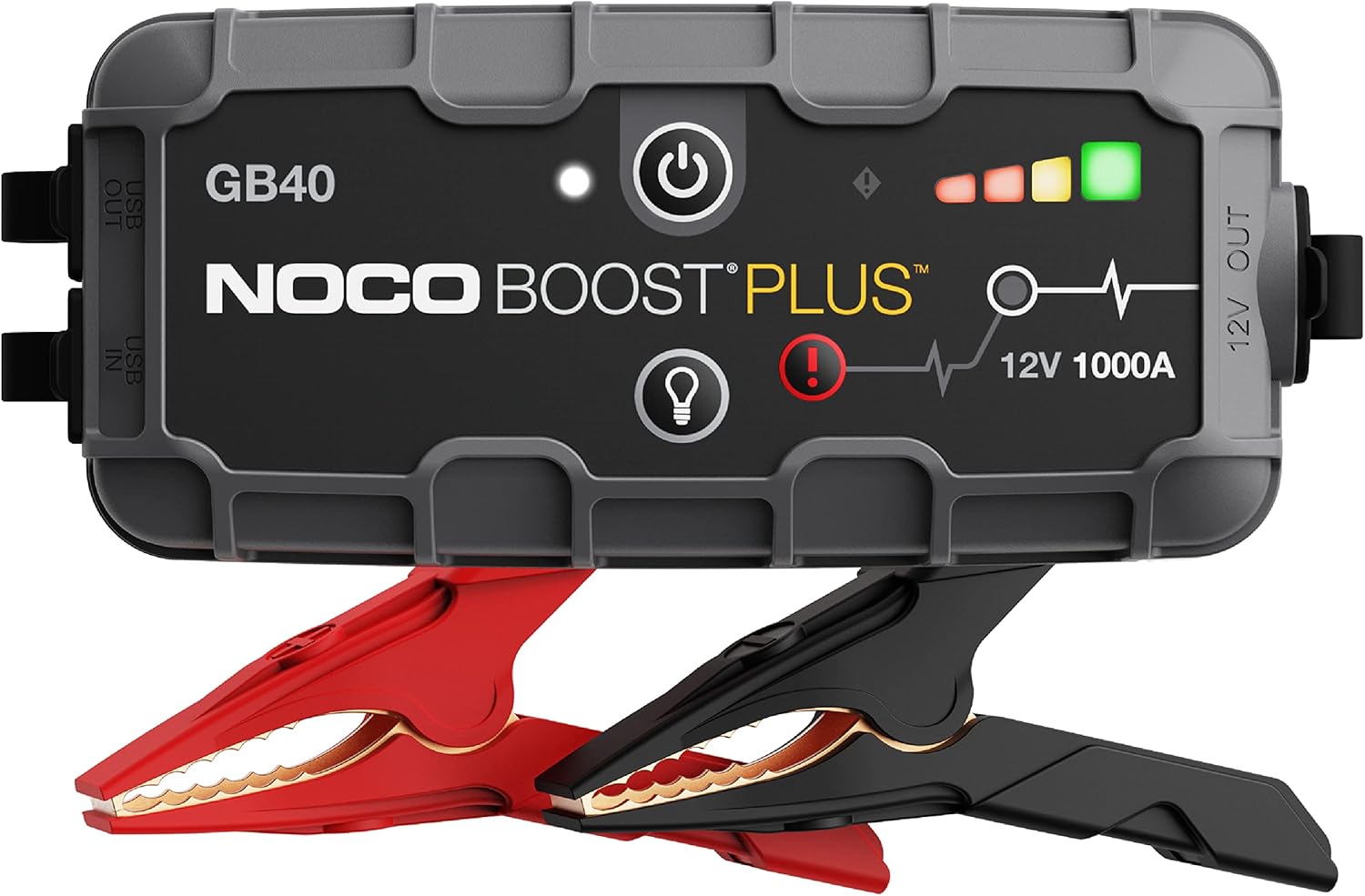
NOCO Boost Plus GB40 Jump Starter
A 1000A lithium jump starter that fits in your glovebox and works on any 12V battery. Your insurance against a dead 12V in a parking lot.
As an Amazon Associate, ThinkEV earns from qualifying purchases — at no extra cost to you.

Founder & Chief Editor
Vlad Pereira is the founder and chief editor of ThinkEV.ca, the Canadian electric-vehicle publication he writes and edits from Courtenay, British Columbia. He covers EV pricing, federal and provincial rebates, charging costs, and the Chinese manufacturers now entering Canada, from the buyer's side rather than the press-fleet side. ThinkEV is a venture of Vlad Pereira Online; his writing on health, income and the long game lives at vladpereira.com.
Frequently asked questions
Does the 49K quota guarantee BYD gets units into Canada?
Is the Shark 6 eligible for the federal iZEV rebate?
Why does PHEV architecture matter more than a bigger battery?
What happens to the Shark 6 math if Ottawa amends the quota?
How does Australia's launch tell us anything about Canada?
More EV & road-trip finds
Affordable upgrades worth a look — tap any to check the price on Amazon.
 ★ 119
★ 119Foldable Waterproof Trunk Organizer
View on Amazon ★ 17,839
Qifutan Vent Phone Mount (Military-Grade Clip)
View on Amazon ★ 47,507
HOMEXCEL Microfiber Cloths (12-Pack)
View on Amazon ★ 55
★ 55LED Car Door Logo Projector Light
View on Amazon ★ 1,083
Crystal Push-Start Button Ring (2-Pack)
View on Amazon ★ 979
★ 979Leather Headrest Purse Hook
View on Amazon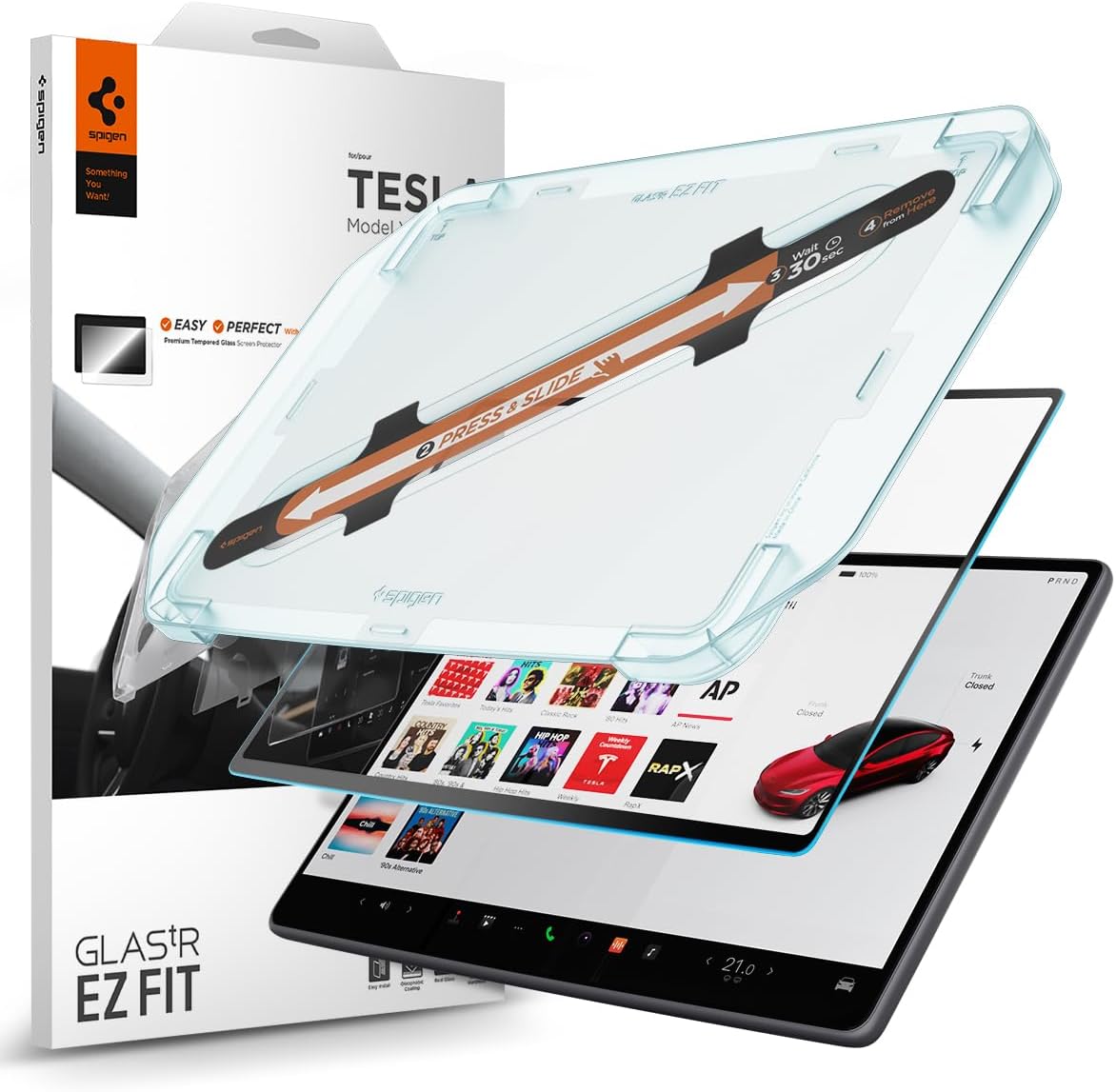 ★ 15,014
Spigen Tempered Glass for Tesla Model 3/Y
View on Amazon ★ 61
★ 61Toddler Car Seat Snack and Cup Tray
View on AmazonRead, Plan, Then Stay Current
Explore our expert articles to understand incentives and ownership costs, use the map to pressure-test charging reality, then subscribe so new EV coverage comes straight to you.
Continue Reading
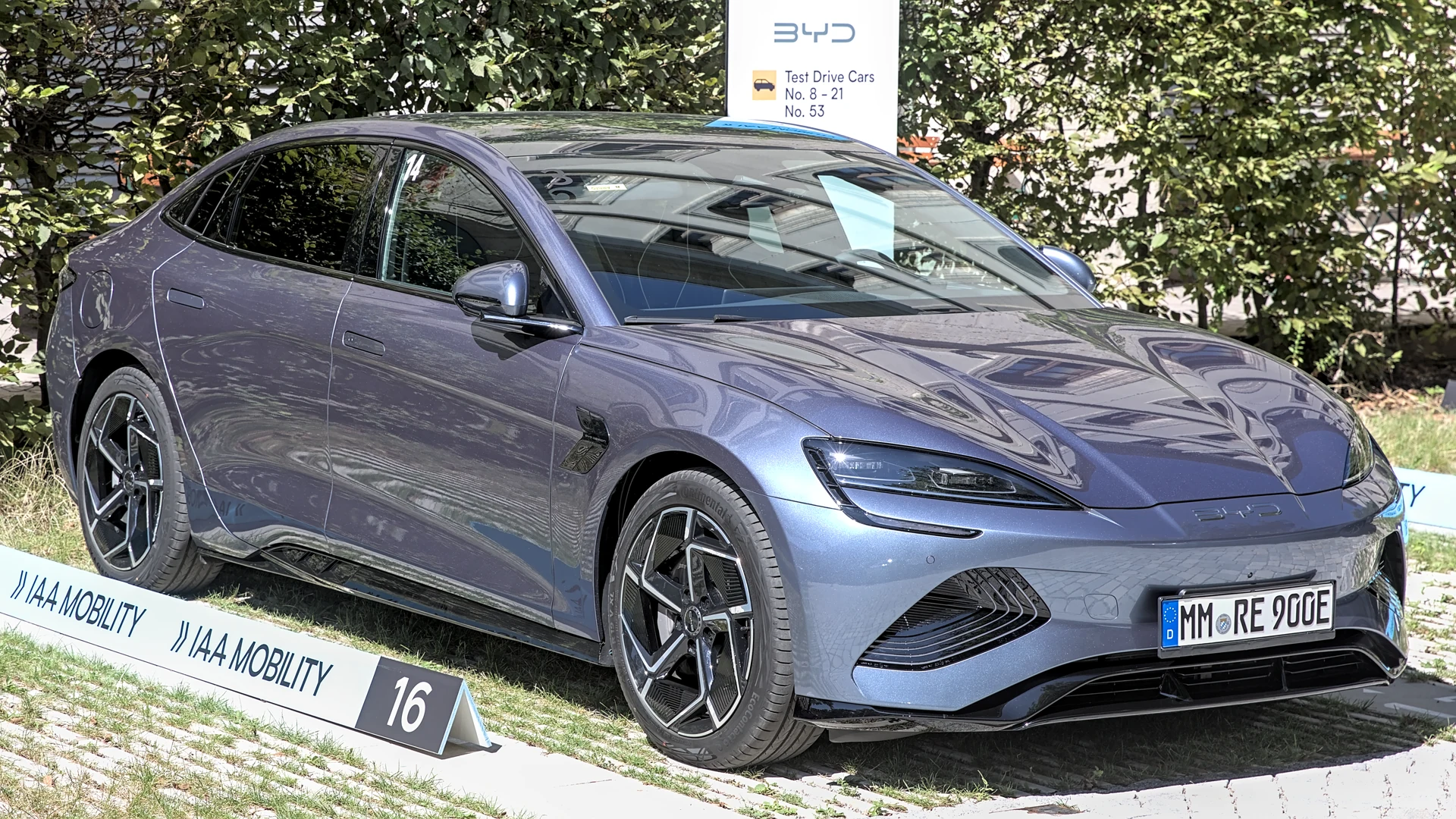
BYD Seal Lands in Canada: Sedan Math After the Tariff Cut
New or Used EV: Which Is the Smarter Buy in 2026?

EV Highway vs City Range: Why They Flip
Buy or Lease an EV in Canada? The 2026 Answer
Single-Motor vs Dual-Motor EVs: What AWD Actually Adds