Key takeaways
- An Uber driver saves $3,000-5,000/year switching to an EV.
- The average full-time Uber or Lyft driver in a major Canadian city puts between 60,000 and 80,000 kilometres on the odometer every year.
- At $1.60/litre, that's $11,200 a year going straight into the gas tank.
An Uber driver saves $3,000-5,000/year switching to an EV.
That's not a promo, it's basic arithmetic.
Here's what's actually happening in Canadian gig driving right now, and I'm excited about it, but let me give you the full picture, not just the highlights.
Ride-share driving is one of the highest-mileage jobs in Canada. The average full-time Uber or Lyft driver in a major Canadian city puts between 60,000 and 80,000 kilometres on the odometer every year. Some push past 100,000 km. At those numbers, the vehicle you drive stops being a lifestyle choice and becomes a financial decision, one of the biggest financial decisions you'll make as an independent contractor.
For the past decade, gig drivers have been stuck in the same trap: the more you drive, the more you pay. Gasoline, oil changes, brake replacements, transmission service, every extra kilometre adds cost. EVs flip that equation. They're not just cheaper to fuel; they're structurally cheaper to operate at high mileage. The powertrain is simpler, the braking system regenerates energy instead of grinding through pads, and the fuel source is priced in kilowatt-hours rather than litres of refined petroleum.
The economics are genuinely compelling, and the real-world operational experience has friction points worth naming clearly. The conversation in Canadian ride-share Facebook groups and Discord servers has already shifted, not "whether to go EV" but "which EV, how to handle charging on shift, and whether the EVAP rebate covers the trim I'm looking at." The decision is being made. The practical questions are what's left.
This post is about those practical questions, the numbers, the real-world tradeoffs, the models that actually pencil out, and the infrastructure picture that determines whether going electric means a smoother operation or a headache-per-shift. What Canadian gig drivers should know is that the case for EVs has never been stronger, and the barriers, while real, are getting smaller every year.
FUEL SAVINGS
Let's start where every gig driver starts: operating costs.
Gasoline in Canada is expensive by any global standard, and 2026 hasn't made it more affordable. Prices across the country have been averaging between $1.45 and $1.75 per litre depending on the province and how close you are to a major city centre. In Metro Vancouver and parts of Greater Toronto, sustained prices above $1.60/litre have been the norm rather than the exception. When you're filling up a 60-litre tank two or three times a week, that adds up fast, and I mean fast.
Here's what the math looks like at the scale a full-time driver operates.
A full-time ride-share driver averaging 70,000 km per year in a mid-size gasoline vehicle that achieves roughly 10 litres per 100 km burns through about 7,000 litres of fuel annually. At $1.60/litre, that's $11,200 a year going straight into the gas tank. At $1.70/litre, it hits $11,900. These aren't edge cases, these are the real numbers for anyone driving a full workweek.
Now swap that vehicle for an EV. A well-chosen EV for ride-share work will consume somewhere between 18 and 24 kWh per 100 km in real-world mixed driving. The Chevrolet Bolt EV comes in around 17–19 kWh/100 km. The Tesla Model 3 Standard Range runs 15–17 kWh/100 km in moderate weather, higher in Canadian winters. The Hyundai Kona Electric comes in at roughly 16–20 kWh/100 km. Use 20 kWh/100 km as a conservative round number that accounts for winter heating loads.
At 70,000 km and 20 kWh/100 km, you're consuming 14,000 kWh of electricity per year. At a blended rate of $0.12/kWh, which is realistic for drivers who do most of their charging at home off-peak in provinces like Ontario, Quebec, or BC, that's $1,680 per year in fuel costs. Compare that to $11,200 in gasoline. The gap is $9,520 a year.
Drivers without home charging, relying on DC fast chargers at $0.35–$0.55/kWh, face higher charging costs, but even the worst-case scenario doesn't close that gap. At $0.50/kWh for all 14,000 kWh, you're at $7,000 in electricity, still $4,200 cheaper than gasoline per year. The math doesn't fall apart even in the most expensive charging scenario.
At lower annual mileage the savings scale proportionally. A part-time driver doing 18,000 km annually who charges primarily at home saves around $900–$1,200 in fuel per year. It's not as dramatic, but it's real money, and it compounds with every year you hold the vehicle.
The Electric Vehicle Association of Canada puts annual fuel savings for high-volume EV drivers (those doing 40,000+ km/year) at up to $3,500 compared to gasoline equivalents. That figure is based on national average fuel prices and electricity rates. Drivers in Quebec and BC, where residential electricity rates are among the lowest in North America, push that number higher. Drivers relying entirely on public fast charging push it lower, but rarely below a meaningful positive.
The per-kilometre breakdown is stark. Driving 100 km in an EV on home electricity costs roughly $1.80 to $2.40 in energy. The same 100 km in a 10L/100km gasoline vehicle costs $16 at $1.60/litre. That's a 6-to-8x difference in fuel cost per kilometre. For a driver doing 200+ km per shift, that's the difference between $3.60–$4.80 per shift in electricity versus $32 per shift in gasoline. Run that shift every day for six days a week and the EV driver is pocketing an extra $160–$170 per week before any other savings are counted.
Natural Resources Canada has consistently reported that electric vehicles are more efficient and carry lower per-kilometre operating costs than internal combustion engine vehicles across virtually all Canadian driving conditions. The federal government's own EV incentive programs, including the EVAP rebate, are built on the premise that reducing total cost of ownership accelerates adoption. The cost data supports that premise unambiguously.
There is one catch worth naming: winter. Canadian winters degrade EV range, sometimes significantly. Battery chemistry slows in cold temperatures, and cabin heating draws heavily on the pack when you're not using regenerative heat from the motor. Real-world range reductions of 20–30% in sustained cold below -15°C are documented for most current EVs. For a driver in Winnipeg or Calgary, this matters. The Bolt EV loses roughly 30% of its 400+ km rated range in deep cold. The Model 3, with its heat pump, handles cold better than resistive-heating alternatives.
The fuel savings don't disappear in winter, electricity is still far cheaper than gas, but drivers in cold-climate cities need to factor reduced range into their operational planning. More on charging strategy in the Challenges section below.
I'm excited about the fuel savings story, but I want you to go in with eyes open: winter range reduction is the number one thing gig drivers underestimate when they're running the numbers. Factor it in properly and the math still works, don't factor it in and you'll have a frustrating first winter.
POPULAR MODELS
Not all EVs are created equal for ride-share use. The requirements are specific: you need enough range to run a full shift without anxiety, enough cargo and passenger space to pass platform vehicle requirements, reliability that can handle 70,000+ km per year without drama, and an acquisition cost that doesn't require you to drive for seven years just to break even on the vehicle purchase.
Here's what's actually working for Canadian gig drivers in 2026.

The Chevrolet Bolt EV and Bolt EUV remain the volume choice for budget-conscious drivers. The Bolt EV holds approximately 417 km of EPA-rated range. In real-world Canadian mixed driving, urban stop-and-go interspersed with highway runs to suburbs, expect 300–360 km per charge in moderate weather and 260–300 km in winter. For most urban full-time drivers, that's enough range to cover a full shift without needing a public charger mid-day, provided you charge fully overnight.
The Bolt's real advantage is acquisition cost. Used 2022–2023 Bolt EVs have been appearing on Canadian used car markets under $25,000, with some well-maintained examples in the $19,000–$22,000 range. At those prices, the breakeven calculation against a comparable used gasoline vehicle accelerates dramatically. A driver saving $4,000–$5,000 per year in fuel who pays $22,000 for a used Bolt instead of $14,000 for a comparable used gasoline vehicle is looking at a breakeven in roughly two years on the fuel savings alone, before accounting for lower maintenance costs.
The Bolt EUV, essentially the same powertrain in a slightly taller, roomier body, has become popular with drivers who haul larger passengers or run airport routes where luggage capacity matters. It's a practical choice that doesn't compromise the core economic case.
One practical note: Bolt EVs don't have access to the Tesla Supercharger network, and the public DCFC (DC fast charging) network that serves CHAdeMO and CCS vehicles is improving but less convenient than Supercharger coverage. Drivers who do home charging primarily aren't bothered by this. Drivers operating in areas with thin public charging coverage should weigh it carefully before committing.
The Tesla Model 3 is the premium choice, and for high-mileage drivers it earns its price premium through Supercharger network access and real-world efficiency. The Standard Range Model 3 carries roughly 490 km of EPA-rated range. Long Range variants go past 600 km. In Canadian winter, the heat pump system that comes standard on current Model 3 builds recovers meaningful efficiency compared to older resistive-heat EV designs.
The Supercharger network is the Model 3's biggest operational advantage for gig drivers. Supercharger locations are strategically placed, fast (up to 250 kW on V3 hardware), and the in-car navigation routes you through them automatically when needed. A 15–20 minute Supercharger stop can add 150–200 km of range, enough to not interrupt a profitable shift much. For drivers without reliable home charging, the Supercharger network can substitute more gracefully than the patchwork of CCS chargers that serve other vehicles.
The downside is acquisition cost. New Model 3s start around $53,000 CAD before incentives. EVAP-eligible versions bring that down, but not to Bolt EV territory. Used Model 3s from 2021–2023 can be found in the $35,000–$45,000 range. Breakeven timelines are longer at these price points, but so are the benefits. Drivers who log 80,000+ km/year and can access the Supercharger network frequently report that the Model 3 pays itself back faster than the sticker shock suggests.
The Hyundai Kona Electric is the dark horse in this field. Hyundai's Kona EV offers a solid balance of range (approximately 407 km EPA-rated), compact dimensions that work well in urban traffic, and competitive reliability. It's built on Hyundai's well-tested EV platform, and the warranty coverage, which extends battery coverage for an industry-standard 8 years/160,000 km on the pack, offers meaningful protection for high-mileage operators.
New Kona EVs have been EVAP-eligible in Canada, which brings their effective cost down with the $5,000 federal rebate applied. Used Kona EVs from 2022–2023 have been trading in the $27,000–$34,000 range. The Kona's CCS charging port gives it access to the growing fast-charge network, including Electrify Canada stations.
Gear worth having
As an Amazon Associate, ThinkEV earns a small commission from qualifying purchases — at no extra cost to you.

NOCO Boost Plus GB40 Jump Starter
A 1000A lithium jump starter that fits in your glovebox and works on any 12V battery. Your insurance against a dead 12V in a parking lot.
As an Amazon Associate, ThinkEV earns from qualifying purchases — at no extra cost to you.
The Chevrolet Equinox EV is the newest entrant worth naming in this context. GM launched the Equinox EV for the 2024 model year at a starting price around $40,000 CAD, with government incentives potentially bringing the effective cost below $35,000. The Equinox EV offers roughly 500 km of range, SUV dimensions that give it more passenger and cargo capacity than the Bolt, and the build quality of GM's more mature Ultium platform. For drivers who need the space of an SUV and don't want to pay Tesla prices, the Equinox EV is an emerging option that's worth serious consideration.
The Toyota bZ4X has also shown up in Canadian ride-share discussions. The bZ4X qualifies for EVAP rebates in most trims, and Toyota's reputation for long-term reliability carries weight with drivers who plan to put 150,000–200,000 km on a vehicle in three years. The bZ4X's range comes in around 400–470 km depending on trim and drivetrain configuration. Practical EV knowledge about the bZ4X in high-mileage Canadian use is still accumulating, but early reports from drivers who've committed to it are broadly positive.
What about newer Chinese EV models? Some Canadian drivers have been watching the BYD Atto 3 and other Chinese EV models, but the 100% Canadian tariff imposed on Chinese-manufactured EVs in October 2024, subsequently reduced to 6.1% for a 49,000-vehicle quota starting January 16, 2026, effectively prices most of them out of the market for new vehicle purchases. The tariff structure was specifically designed to limit Chinese EV penetration. Chinese-made EVs are also excluded from EVAP eligibility. For practical purposes, Canadian gig drivers looking at new vehicles are working with North American and Korean options.
A word on vehicle age: many ride-share drivers are already driving used EVs bought secondhand, not new vehicles. The used EV market in Canada has expanded materially as first-generation Bolt EVs and early Model 3s come off lease and enter the secondhand supply. A used 2022 Bolt EV with 40,000 km on the clock and a healthy battery has a long service life ahead of it. For a driver who isn't paying the original depreciation hit, the economics are even more compelling.
The platforms matter too. Uber requires vehicles to be 2015 or newer, 4-door, and in good condition. Lyft has similar requirements. Neither platform restricts EVs, in fact, both actively incentivize EV drivers through their respective green programs. That incentive structure is only going to get stronger.
UBER GREEN AND LYFT GREEN MODE
Uber Green is Uber's dedicated tier for passengers who want a ride in a hybrid or fully electric vehicle. For drivers, opting into Uber Green means your trips are filtered into this tier first when nearby passengers select it, and those trips come with a fare premium.
The Uber Green fare premium works out to roughly $2–$4 extra per ride, built into the rider's fare and passed through to the driver. On a full shift where you complete 20–25 trips, that premium compounds meaningfully. Run the math: 20 trips at an average $3 premium is $60 extra per shift. Over a six-day work week, that's $360 in additional income, before any fuel savings are counted. Monthly, that's around $1,440 in added revenue compared to a non-green driver doing the same number of trips.
Uber has committed publicly to having 100% of its North American ride-share fleet be electric by 2030. That's a company-wide strategic direction, and it's shaping everything from how Uber is investing in its platform to how it's recruiting and retaining drivers. Drivers who are already EV-equipped when the platform eventually requires or heavily incentivizes electrification will have structural advantages over drivers who are still running gasoline vehicles and facing mandatory transitions.
Uber has also partnered with charging networks and vehicle manufacturers in various markets to offer driver support programs. In some Canadian cities, Uber drivers have had access to preferred pricing at specific charging locations and in some cases discounted vehicle purchasing arrangements through manufacturer programs. These programs evolve frequently, the Uber app's driver dashboard is the canonical source for what's currently active in your specific city, but the direction of travel is consistent: Uber wants its Canadian fleet electrified, and it's willing to create financial incentives to make that happen.
Lyft has a parallel program under its Green Mode initiative. Lyft's Green Mode operates on a similar principle: EV and hybrid drivers are prioritized for green ride requests, and passengers who select Green Mode pay a modest premium that flows to the driver. Lyft has also committed to a fully electric US and Canadian platform by 2030, tracking Uber's trajectory.
For a driver deciding between going EV or staying with a gasoline vehicle, these platform incentives add a third column to the cost-benefit comparison alongside fuel savings and maintenance savings. The total economic picture is fuel savings + maintenance savings + platform premium earnings. Together, these three levers explain why the conversation in gig driver communities has shifted from "is it worth it?" to "how do I make it work?"
There's a market positioning aspect here too. Uber Green and Lyft Green Mode rides tend to correlate with higher-value trip segments, business travellers, airport runs from premium hotels, passengers who've opted specifically for the green tier because they're willing to pay for it. The clientele skews toward tippers and toward longer, higher-earning trips. It's not a guaranteed dynamic, but it's a pattern that EV-equipped drivers mention consistently in community forums.
What Canadian buyers should know is that Green tier availability varies significantly by city. In Toronto, Vancouver, and Montreal, the passenger demand for green rides is established and growing. In smaller markets, Kelowna, Saskatoon, Fredericton, the green ride request volume is thinner, and a driver in those markets should weight the fuel and maintenance savings more heavily than the platform premium when running the numbers. Green tier income is a bonus where volume supports it, not the core of the case.
THE MAINTENANCE EQUATION
Fuel savings get the headline, but maintenance cost reduction is where EV economics quietly compound over a vehicle's life, and nowhere is this more true than in high-mileage applications.
A conventional gasoline vehicle requires regular oil changes every 5,000–8,000 km. At $60–$120 per oil change (including synthetic oil for a modern engine), a driver doing 70,000 km per year is paying for 9–14 oil changes annually. That's $540–$1,680 per year in oil changes alone. EVs have no oil. No oil filter. No transmission fluid. No spark plugs. No timing belt. The entire category of conventional internal combustion drivetrain maintenance either disappears or is radically simplified.
The systems that do need attention on an EV are simpler and less frequent. Brake pads last significantly longer than on gasoline vehicles because regenerative braking handles the majority of deceleration at low speeds, reducing friction brake wear dramatically. Battery coolant and cabin air filters need periodic replacement. Tires wear at roughly comparable rates. The 12V auxiliary battery needs occasional attention. Wiper fluid, wiper blades, cabin filters, standard stuff shared with any vehicle.
Industry data on this is consistent. The US Department of Energy has published analysis showing that EVs cost roughly 40% less to maintain than comparable gasoline vehicles over equivalent mileage. Consumer Reports has documented similar findings from owner surveys. For a driver doing 70,000 km per year in Canada, 40% lower maintenance cost on a vehicle that's otherwise spending $3,000–$5,000 annually on upkeep translates to $1,200–$2,000 in annual savings.
Add fuel savings and maintenance savings together for a full-time driver and you're looking at a total operational cost reduction of $5,000–$7,000 per year compared to an equivalent gasoline vehicle. That number, $5,000–$7,000 annually, is what makes the EV business case essentially unanswerable for high-mileage gig operators in 2026.
Battery degradation is the maintenance question that gets raised most often as a counterargument. The concern is that EV batteries lose capacity over time, reducing range and eventually requiring expensive replacement. It's a legitimate concern, but the actual degradation curves for the vehicles most commonly used in Canadian ride-share work are less severe than the fear suggests.
The Chevrolet Bolt EV battery, specifically the battery management system improvements that GM applied from the 2022 model year onward, has shown degradation rates of roughly 2–3% per year under normal use conditions in monitored fleets. A 2022 Bolt EV with 100,000 km on the odometer might show 90–93% of its original battery capacity, translating to roughly 375–390 km of range instead of the factory-rated 417 km. That's meaningful degradation but not a functional crisis. You're still running a full shift on a single charge.
Tesla's battery longevity data from its fleet telemetry is similarly encouraging. At 160,000 km, the average Model 3 shows roughly 90% battery capacity retained. High-mileage drivers pushing past 200,000 km are more common in Uber/Lyft contexts, and at that point degradation accelerates, but the vehicles are also approaching end-of-life for other reasons. The battery outlasting the rest of the car is a more common outcome than it might seem.
The 8-year/160,000 km battery warranty that comes standard on most new EVs, including the Kona Electric and bZ4X, provides meaningful protection for drivers who buy new. Used vehicle buyers should check the battery health before purchase; most EV dealerships and independent EV mechanics can run a battery health diagnostic. Don't skip that step on a used EV purchase. It's worth the extra hour.
THE FEDERAL EVAP AND PROVINCIAL INCENTIVES
The math on EVs for ride-share driving gets better when you factor in government incentives, and in 2026 those incentives are substantial if you know where to look.
At the federal level, the Electric Vehicle Affordability Program (EVAP) provides a $5,000 rebate on eligible new EVs priced under $55,000 (for base trim, with some flexibility for higher trims under $65,000). The rebate is applied at the point of sale, so you don't need to front the money and wait for a refund, the dealer processes it directly. Eligible vehicles include the Chevrolet Equinox EV, Hyundai Kona Electric, Toyota bZ4X, and a range of other Canadian-market models.
The critical detail for used-vehicle buyers: EVAP applies to new vehicles only. Used EV purchases don't qualify for the federal rebate. This matters for the budget math but doesn't change the fuel savings calculation, those apply regardless of whether you bought new or used.
Several provinces layer additional incentives on top of the federal rebate. British Columbia's CleanBC Go Electric program provides up to $4,000 in additional provincial rebate on new eligible EVs, with income-linked eligibility criteria. Quebec's Roulez Vert program offers up to $7,000 in provincial rebate. Ontario eliminated its provincial EV rebate in 2018 under the previous government and hasn't reinstated it, but municipal programs and electricity rate discount programs for EV owners have partially filled that gap.
Nova Scotia, Prince Edward Island, and New Brunswick all have provincial EV incentive programs of varying generosity. If you're a gig driver in Atlantic Canada and you haven't researched your provincial program, you should, the combination of federal and provincial incentives can reduce the effective purchase price of an eligible EV by $5,000–$12,000 depending on where you live.
There's also the EVAP commercial applicability question. Independent contractors, which is how Uber and Lyft classify their drivers, can potentially claim vehicle expenses on their taxes. If you're claiming your vehicle as a business expense, the cost of an EV, the cost of charging, and potentially some depreciation can flow through your tax filings. Canadian gig workers should speak with an accountant familiar with independent contractor taxation to understand how EV ownership interacts with their specific tax situation. The CRA's guidance on motor vehicle expenses for self-employed individuals is the starting point.
I'm excited about the incentive stack, but here's a grounded note: incentive programs change. Verify current eligibility directly with Transport Canada's EVAP page and your provincial program before signing a purchase agreement. The programs I've listed were active as of early 2026, that doesn't mean they'll be unchanged by the time you're shopping.
CHARGING STRATEGY FOR GIG DRIVERS
Charging is where the EV experience for ride-share drivers diverges most from the EV experience for regular commuters. A regular commuter drives 30–50 km per day and charges at home overnight. A full-time gig driver runs 200–300 km per shift and may be on the road for 8–12 hours. The charging equation is fundamentally different, and it's the part of the EV switch that requires the most advance planning.
The drivers who report the smoothest EV experience are overwhelmingly those with reliable home charging. A Level 2 charger (240V, 32A or 48A circuit) can replenish a Bolt EV from 20% to 100% in approximately 7–8 hours. For a driver who starts their shift in the afternoon and gets home by 2–3am, plugging in overnight delivers a full battery for the next day. The entire shift runs on the previous night's charge, no mid-shift stop required, no opportunity cost, no DCFC pricing.
Gear worth having
As an Amazon Associate, ThinkEV earns a small commission from qualifying purchases — at no extra cost to you.

Grizzl-E Classic Level 2 EV Charger (40A)
Canadian-made and rated for minus 40C winters. 40A / 9.6 kW, NEMA 14-50, indoor/outdoor, 24-ft cable. The charger built for Canadian weather.
As an Amazon Associate, ThinkEV earns from qualifying purchases — at no extra cost to you.
Level 2 charger installation for a house or condo unit with a dedicated parking spot runs $800–$1,500 installed in most Canadian cities, including the electrician's labour and a mid-tier charger unit. Some provincial programs offer rebates on home charger installation. Ontario's Green Ontario Fund has offered such rebates in the past; BC Hydro and Hydro-Québec have both run programs. Check current provincial utility programs before assuming you're paying full price, you might get $200–$500 back.
The challenge is apartment and condo residents without dedicated parking. This is a genuine structural barrier for a segment of Canadian gig drivers, particularly in cities like Toronto and Vancouver where a large proportion of ride-share drivers live in multi-unit buildings. Building strata councils and landlords have been slow to approve EV charger installations in common parking areas, often citing shared electrical infrastructure costs or insurance concerns. This is changing, several provincial governments have introduced right-to-charge legislation, but the pace of change is frustrating for drivers who need it now.
For drivers without reliable home charging, two approaches are emerging as practical workarounds.
The first is workplace charging. An increasing number of Canadian employers who offer parking are installing Level 2 chargers as part of sustainability commitments. If you have a daytime job in addition to evening gig work, workplace charging during your day job hours can substitute for home charging. Similarly, some shopping centres, municipal buildings, and libraries have installed free or low-cost Level 2 chargers. A driver who figures out two or three reliable Level 2 charging spots near their home or regular route can establish a de facto charging circuit that doesn't require home installation, it just requires planning.
The second approach is DCFC (DC fast charging) strategically placed during shift downturns. The challenge with DCFC for full-time drivers isn't the cost per kWh, though that's real, at $0.35–$0.55/kWh compared to $0.08–$0.12/kWh at home. The challenge is time management. A 30-minute DCFC stop that adds 200 km of range is time you're not earning. For a driver averaging $25–$35 per hour in ride earnings, a 30-minute charging stop costs $12–$17 in lost opportunity.
The economics of DCFC mid-shift make sense in specific scenarios: when you're already waiting for ride requests in a dead zone, when you're taking a mandatory break to eat, or when your battery is dropping below 20% with no alternative. Using DCFC as a primary charging strategy for daily operation is more expensive and more time-consuming than home charging, but it's viable for drivers who plan around it carefully.
Gear worth having
As an Amazon Associate, ThinkEV earns a small commission from qualifying purchases — at no extra cost to you.

PULIDIKI Car Cleaning Gel (Detailing Putty)
Press it into vents, buttons, and seams and it lifts out dust you did not know was there. Weirdly satisfying, genuinely useful.
As an Amazon Associate, ThinkEV earns from qualifying purchases — at no extra cost to you.
One tactic that experienced EV gig drivers mention consistently: parking near a Level 2 charger while waiting for airport ride requests. Many Canadian airport passenger pickup areas are developing EV charging infrastructure for waiting vehicles. Toronto Pearson, Vancouver YVR, and Calgary YYC have all been expanding charging access in ride-share waiting areas. If your airport queue time is 20–40 minutes, picking up 20–30 km of free or cheap Level 2 charging while you wait is a genuine operational advantage, essentially free range recovery during dead time.
Pre-conditioning is another EV feature that experienced cold-weather drivers learn quickly: you can remote-heat the cabin while the car is still plugged in, using grid power for heating instead of drawing from the battery. This preserves range meaningfully. Leaving the car plugged in during a winter lunch break and pre-heating before returning to work is a habit that makes cold-weather EV operation substantially easier. It's one of those small operational details that makes the difference between a stressful winter shift and a smooth one.
CHALLENGES
No piece about EV adoption in Canadian ride-share is complete without being honest about the friction points. I'm excited about where this is heading, but the day-to-day operational experience has real wrinkles, and glossing over them doesn't help anyone make a good decision.
Fast charging availability remains uneven. The public DCFC network in Canadian cities is growing, but coverage is not yet uniform. Montreal's charging infrastructure, for example, was reporting approximately 45 Level 3 fast chargers in the city in early 2026. For a city with hundreds of active EV gig drivers plus the general EV population, that creates queuing problems during peak demand periods, particularly in winter when more drivers are topping up more frequently due to range reduction. Finding an available DCFC spot in Montreal between 5pm and 8pm is a known friction point that experienced drivers plan around.
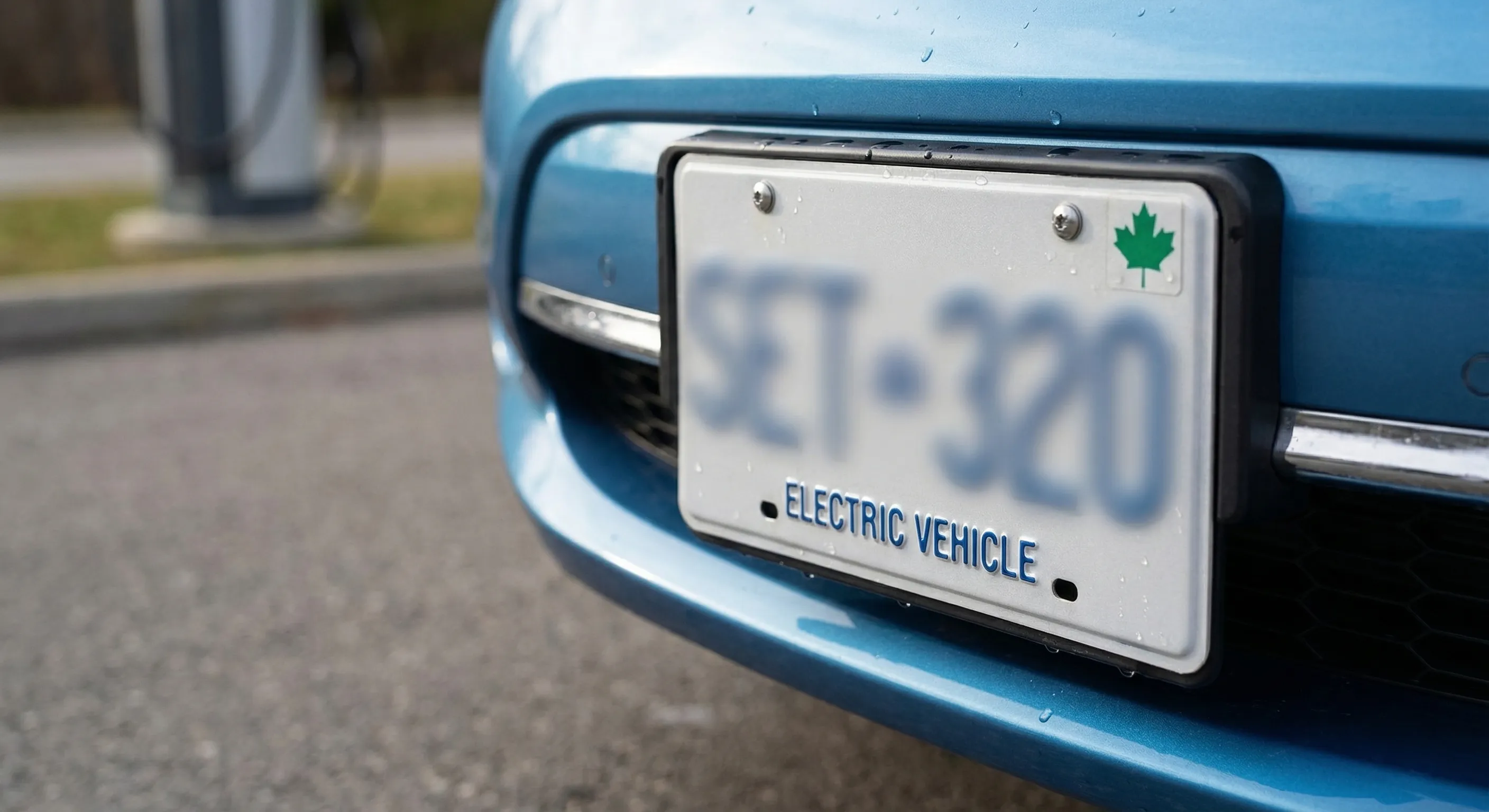
Vancouver and Toronto have more strong fast charging infrastructure relative to their EV population, with Electrify Canada having made consistent investments in both markets. The Electrify Canada network now covers most major Canadian urban centres and highway corridors, providing CCS fast charging that serves Bolt EVs, Kona EVs, and most non-Tesla vehicles. But coverage in smaller cities and in suburban areas outside major urban centres remains thin. A gig driver in Surrey, Laval, or Markham has different charging accessibility than a driver in the respective city centres, that disparity is real and shouldn't be dismissed.
DCFC reliability is a separate issue from DCFC availability. Every EV driver who's relied on public fast charging has encountered a charger that's out of service. The failure rates on public DCFC stations have historically been higher than acceptable, a 2023 UC Berkeley study found that 25% of public fast chargers in the US were non-functional on any given day. Canadian data is comparable. Electrify Canada and BC Hydro's EV network have been investing in reliability improvements, and uptime has been improving. But a driver whose operational plan depends on a specific public charger being available cannot count on it with the same reliability they'd count on a gas station pump. Build in a backup plan.
Range anxiety in winter is real for certain city/vehicle combinations. A gig driver in Saskatoon or Winnipeg running a Bolt EV through a January with consistent -25°C temperatures needs to recalibrate their range expectations to 260–280 km per charge instead of 380+ km. That's still enough to complete most shifts, but it requires more active battery management, staying above 20%, charging more frequently, pre-conditioning the battery while plugged in before starting a shift.
The upfront acquisition cost remains a genuine barrier. Even with EVAP and provincial rebates, a new EV typically costs more than a comparable used gasoline vehicle in the market segment that ride-share drivers are shopping. A gig driver who's cash-strapped and needs a vehicle immediately has more options in the gasoline market. The $19,000–$25,000 used Bolt EV market is improving this situation, but not every driver has the credit access to finance a $22,000 used EV purchase versus a $12,000 used gasoline alternative.
Charging for apartment dwellers without dedicated parking is still the most significant structural barrier for many urban Canadian gig drivers. Some Canadian municipalities, Toronto and Vancouver among them, have implemented or are developing right-to-charge legislation that gives condo and apartment tenants the right to install EV charging in their parking spot at their own expense. But right-to-charge legislation doesn't eliminate the logistical challenges of shared electrical infrastructure or building-specific constraints. The legislation creates a path; the path isn't always smooth.
Insurance costs for EVs have been running slightly higher than equivalent gasoline vehicles in Canada. EV replacement parts, particularly for body panels and sensor arrays, are more expensive, and repair shops with EV expertise are not yet as numerous as conventional shops. Several Canadian insurance providers have introduced specific EV insurance products with pricing that reflects actual EV risk profiles, but the market is still calibrating. A driver adding an EV to their commercial ride-share insurance should expect a modest premium increase over what they'd pay for a comparable gasoline vehicle, typically 5–15%, not enough to break the economics but worth factoring in.
THE WESTERN CANADA PICTURE
Provincial context matters enormously for EV ride-share economics in Canada, and the Western Canadian provinces each present a distinct picture. What works in Vancouver doesn't automatically translate to Saskatoon, and understanding those differences upfront saves you from unpleasant surprises.
British Columbia has the most developed EV ecosystem in Canada. The CleanBC program's aggressive EV incentive policy, BC Hydro's extensive Level 2 and fast charging network, and Metro Vancouver's density of public chargers give BC-based gig drivers the best operational infrastructure in the country. Vancouver's Uber and Lyft population includes a high proportion of EV drivers relative to other Canadian cities. The Lower Mainland's mild winters also reduce the cold-weather range penalty that affects Prairie drivers more severely.
Alberta's situation is more nuanced. Edmonton and Calgary have strong urban charging networks, but Alberta's electricity grid is heavier in fossil fuel generation than BC or Quebec, which has implications for the environmental calculus (though not the cost calculus, electricity is still far cheaper than gasoline per kilometre even on a natural gas grid). Alberta's provincial government has not offered EV purchase incentives, leaving only the federal EVAP for Alberta-based buyers. But fuel savings and maintenance savings are province-agnostic, and Alberta's gasoline prices, often among the highest in Canada due to provincial tax structures and supply chain factors, actually strengthen the EV cost case compared to the national average.
Saskatchewan presents the most challenging environment for ride-share EV adoption: cold winters that push range down severely, a thin provincial charging network outside of major cities, and no provincial EV incentives. The fuel savings math still applies in Saskatoon and Regina, but the operational friction is higher, and drivers need to plan more carefully around charging availability. It's viable, but it takes more work.
Manitoba's situation is similar to Saskatchewan in terms of cold-weather challenges, but Winnipeg has been building out its charging infrastructure more aggressively in 2025–2026. Manitoba Hydro's residential electricity rates are among the lowest in Canada, which amplifies the fuel savings calculation significantly for drivers who can charge at home. In Winnipeg, the combination of cheap electricity and a growing DCFC network is starting to make the EV case more straightforward than it was two years ago.
THE EASTERN CANADA PICTURE
Quebec stands apart from every other Canadian province for EV ride-share economics. Hydro-Québec's residential electricity rates hover around $0.065–$0.075/kWh, some of the cheapest electricity in North America. For an EV driver doing 14,000 kWh per year on home charging, that's approximately $910–$1,050 per year in electricity costs compared to $11,000+ in gasoline. The difference is staggering, and it's the kind of number that makes the EV decision almost automatic for Quebec-based high-mileage drivers.
Quebec also has the most generous provincial EV incentives through the Roulez Vert program, and the Montreal charging infrastructure, while still constrained during peak periods, has been expanding through Hydro-Québec's Circuit Électrique network. Montreal's Uber and Lyft driver communities have been among the most active in Canada in adopting EVs, and it shows in the data: Uber has reported higher EV fleet percentages among Montreal drivers than any other Canadian city in which it operates.
Ontario presents a mixed picture. Toronto and Ottawa both have reasonably strong charging networks. DCFC access in the 905 suburbs is less consistent. Ontario Time-of-Use electricity rates, off-peak at approximately $0.086/kWh, mid-peak at $0.113/kWh, and on-peak at $0.177/kWh, incentivize overnight charging for gig drivers who work afternoon and evening shifts. A driver who charges between 11pm and 7am in Ontario is accessing the cheapest electricity in the province. Ontario's lack of a provincial EV incentive since 2018 is a real gap, but the federal EVAP partially compensates.
Atlantic Canada is a smaller gig economy market, but the economics are increasingly viable. Nova Scotia's provincial incentive, Prince Edward Island's EV program, and New Brunswick's incentives all reduce acquisition costs. The Atlantic provinces have variable charging network coverage, Halifax and Moncton are reasonably served; rural areas significantly less so. For Halifax-based ride-share drivers, the economic case is strong. For a driver covering rural Nova Scotia or New Brunswick, the charging situation requires more planning.
WHAT'S COMING
The 2026 picture for Canadian ride-share EV adoption is better than 2025, and 2027 should be better still. I'm genuinely excited about several of these developments, not because I'm an EV booster for its own sake, but because the trajectory is moving in a direction that benefits gig workers.
Uber's stated commitment to a 100% electric North American fleet by 2030 will eventually translate into platform-level requirements or incentives that make EV operation increasingly advantageous. Some industry observers expect Uber to introduce formal EV fleet requirements in major Canadian cities by 2027–2028, beginning with cities that have adequate charging infrastructure. Drivers who are already EV-equipped when those requirements materialize are positioned to continue operating without disruption; drivers who delay will face a forced transition under less favourable market conditions.
Battery technology is continuing to improve and acquisition costs are continuing to fall. The 2023–2024 price reductions on Bolt EVs, Kona EVs, and the introduction of the Equinox EV at sub-$40,000 pricing represent a genuine democratisation of EV access. The used EV market in Canada is growing as vehicles from the 2020–2022 surge in EV sales come off their original leases. By 2027, a Canadian gig driver should have meaningfully more sub-$20,000 used EV options than are available today.
The charging network is expanding. Electrify Canada has continued its infrastructure rollout, and federal infrastructure spending through the Zero Emission Vehicle Infrastructure Program (ZEVIP) has been funding charging installation at workplaces, multi-unit residential buildings, and public locations across the country. The apartment charging problem, the biggest structural barrier for urban gig drivers, is being addressed by right-to-charge legislation in several provinces, though implementation timelines vary.
Level 3 charger reliability is also improving as the networks mature. Electrify Canada has been upgrading older hardware and improving remote monitoring systems that enable faster response to charger failures. The gap between the reliability of Tesla's Supercharger network (which benefits from Tesla's vertically integrated approach) and the reliability of third-party networks has been narrowing. It's not closed, but it's narrowing measurably.
What Canadian buyers and drivers should know is this: the window for getting ahead of the curve is now. Fuel savings and maintenance savings are available immediately. Platform incentives for EV drivers exist today. Federal EVAP rebates are available on eligible new vehicles. Provincial incentives stack on top of that in several provinces. And the used EV market offers entry points that weren't available two years ago.
RUNNING YOUR OWN NUMBERS
The most important calculation you can do is the one specific to your situation. Industry averages and general examples are useful for understanding the broad picture, but the decision that matters is yours, and it depends on your specific mileage, your city's charging infrastructure, your access to home charging, and the acquisition cost of the vehicle you're considering.
Here's a framework for running that calculation.
Start with your annual kilometre total. Uber and Lyft both provide this in your driver dashboard. If you've been driving for at least 12 months, you have a real number. Use it, not a round estimate, your actual number.
Calculate your current annual fuel cost: annual km ÷ 100 × your vehicle's fuel consumption per 100 km × average local fuel price per litre. That's your baseline. Write it down.
Calculate your projected EV electricity cost: annual km ÷ 100 × 20 kWh (conservative consumption estimate) × your blended charging rate. If you have home charging, use your provincial off-peak rate. If you're mostly public charging, use $0.35–$0.45/kWh as a blended rate.
The difference between those two numbers is your annual fuel saving.
Add your estimated annual maintenance saving. For a gasoline vehicle doing 70,000 km/year, budget $2,500–$4,000 in annual maintenance (oil changes, filters, brakes, belts, transmission service). An equivalent EV budget is $600–$1,200. The difference is your annual maintenance saving.
Add Uber Green or Lyft Green premium income if applicable for your market.
Compare total annual savings against the incremental acquisition cost of the EV versus your current or alternative gasoline vehicle. Divide the incremental cost by annual savings to get your breakeven timeline in years.
If you're doing 70,000+ km per year and have access to home charging, most scenarios produce a breakeven in under three years and a six-figure cumulative saving over a seven-year vehicle life. At lower annual mileage, the breakeven stretches out, but for anyone in the 40,000+ km range, the math still lands in the EV's favour.
The charging access question is the variable that can complicate the calculation most. If you're relying entirely on public DCFC, your electricity cost per kWh roughly triples versus home charging. The savings still exist, you're replacing $1.60/litre gasoline with $0.45/kWh electricity, which is still dramatically cheaper per kilometre, but the margin is thinner and the operational friction is higher.
If you're in the genuinely difficult position of having no home charging access and limited public Level 2 infrastructure in your area, the EV case is harder to make for full-time gig work today. The operational friction, managing daily DCFC stops, the cost premium, the reliability concerns, erodes both the financial and practical advantages. This situation is improving, and it may be worth revisiting in 12–18 months as infrastructure continues to expand. Waiting is sometimes the right call.
For everyone else: the numbers are there. The vehicles are available. The incentives are in place. The only question is which EV makes sense for your specific situation and how you structure the financing.
TAX TREATMENT FOR GIG DRIVERS
One area where ride-share EV drivers are leaving money on the table is tax deductions. This is genuinely complicated territory, CRA rules are specific, and getting this wrong creates more problems than it solves, but the basic framework is worth understanding.
Uber and Lyft classify their Canadian drivers as independent contractors, not employees. That means you file your ride-share income as business income, and you're entitled to deduct legitimate business expenses against that income. The vehicle you use for ride-share is the most significant deductible expense in the gig economy.
The CRA allows self-employed individuals to deduct vehicle expenses based on the proportion of kilometres driven for business versus personal use. If you drive 80,000 km total in a year and 60,000 of those are on ride-share work, 75% of your vehicle expenses are deductible. This includes fuel (or electricity), insurance, maintenance, registration fees, and interest on a vehicle loan. For a leased vehicle, you can deduct the business proportion of lease payments up to CRA's prescribed limit.
For an EV, the electricity cost deduction works the same way as a gasoline cost deduction, you're deducting the business-use proportion of your actual electricity spend. If you're charging at home, you'll need to calculate the EV's share of your electricity bill. Most EV owners do this by tracking kWh consumed on the vehicle's onboard meter or the charging app. A smart charger like those in the Grizzl-E line records charging sessions precisely, which makes the CRA documentation straightforward.
The Capital Cost Allowance (CCA) for zero-emission vehicles, the CRA's term for EVs and plug-in hybrids, has been accelerated under recent federal policy. Class 54 covers zero-emission passenger vehicles and allows a 100% first-year deduction (subject to a cost cap that CRA periodically updates) compared to the normal 15% rate for regular passenger vehicles in Class 10 or 10.1. This accelerated deduction can substantially reduce your taxable income in the year you acquire the vehicle. The interaction between EVAP rebates and CCA deductions has specific rules, you deduct the net cost after rebate, not the gross purchase price, but the net effect is still more favourable than the conventional vehicle equivalent.
HST/GST input tax credits are another avenue. Registered GST/HST registrants (which many full-time gig drivers are, particularly if they're over the $30,000 annual revenue threshold that triggers mandatory registration) can claim input tax credits on the business proportion of GST/HST paid on vehicle expenses. This includes electricity purchased at public charging stations where HST is charged.
None of this is advice to file a specific way, CRA rules change, individual circumstances vary, and a gig driver with a complex vehicle-use situation should talk to an accountant who knows self-employment taxation. But the general principle is clear: an EV used for ride-share work generates a more favourable tax deduction picture than the same vehicle used exclusively for personal transportation, and the accelerated CCA for zero-emission vehicles adds a time-value advantage in the year of purchase.
Keep clean records. Save every charging receipt. Log your business kilometres and personal kilometres separately, apps like TripLog, MileIQ, or Gridwise (which integrates directly with Uber and Lyft data) can automate this. When tax season arrives, clean mileage records are the difference between a defensible deduction and a CRA headache.
THE PLATFORM SHIFT THAT'S COMING
Here's the view from a bit further out, because the operational reality of ride-share EV adoption in 2030 is going to be meaningfully different from what it is in 2026, and the decisions you make now affect which side of that shift you're on.
Uber's 2030 electrification commitment isn't just marketing. The company has backed it with concrete actions: the Uber Green premium tier creating financial incentives for EV drivers, partnerships with charging networks in multiple markets, and public policy advocacy for EV infrastructure investment. Lyft has made comparable commitments. Both platforms understand that regulatory pressure in cities like London, Amsterdam, and New York, where ride-share gasoline vehicles have faced or are facing restrictions, is pointing toward a future where operating a gas-powered vehicle on their platforms in major cities will either be prohibited by city ordinance or economically penalised by the platform's pricing structure.
Canadian cities are watching those developments closely. Toronto's City Council has been discussing clean transportation requirements for taxi and ride-share vehicles. Vancouver has been exploring emission standards for the for-hire vehicle sector. Montreal's climate commitments imply eventual restrictions on combustion vehicles in commercial transport contexts. The timeline is uncertain, 2030 is four years away and cities move slowly, but the directional pressure is consistent.
A driver who commits to an EV purchase in 2026 and drives it for seven years is not just making a financial decision for 2026. They're positioning themselves for the platform environment of 2030–2033. If mandatory or strongly-incentivised electrification comes to Canadian ride-share platforms during that period, they'll be operating without disruption while drivers who delayed are facing forced transitions in a market where EV acquisition costs, and the incentive picture, may look different.
There's also a supply dynamic worth watching. As EV adoption grows across the Canadian vehicle fleet, the relative demand for EV-compatible charging at the locations where ride-share drivers congregate, airports, hotels, entertainment districts, will drive investment. The charging infrastructure that exists for ride-share drivers in 2027 will be better than what exists in 2026, not because of any single government program, but because the commercial incentive to serve a growing EV driver population in those locations will be undeniable.
The ride-share driver community in Canada is not a passive participant in this transition. Online communities, Facebook groups like "Electric Vehicle Owners Canada," subreddits like r/electricvehicles, Discord servers specific to Uber/Lyft drivers, are active with peer knowledge sharing about which charging stations are reliable, which EV models hold up to 100,000+ km of gig work, which lease deals represent genuine value versus financial traps. The collective intelligence in these communities is moving faster than any official platform guidance. If you're seriously considering the switch, these communities are worth joining before you sign anything.
I'm excited about where this is heading. The economics are already compelling in 2026, by 2028 or 2029, I think the question of whether EVs make sense for Canadian gig drivers will feel as obvious as whether smartphones made sense for business travellers in 2015. We're close to that inflection point. Getting in now means getting the early-adopter advantages rather than the late-adopter pressure.
Gear worth having
As an Amazon Associate, ThinkEV earns a small commission from qualifying purchases — at no extra cost to you.

WixGear Magnetic Air Vent Phone Mount (2-Pack)
A magnet strong enough that your phone never flinches over potholes or rail crossings. Two in the box, one for each car.
As an Amazon Associate, ThinkEV earns from qualifying purchases — at no extra cost to you.
Related Reading
- GM Dethroned Tesla as Canada's #1 EV Brand, How GM captured 21.2% of the Canadian EV market.
- Every New EV Coming to Canada in 2026, The complete list of electric vehicles arriving this year.
- Federal EVAP Rebate Guide, How to claim your $5,000 federal EV incentive.
Gear worth having
As an Amazon Associate, ThinkEV earns a small commission from qualifying purchases — at no extra cost to you.

Car Cup Holder Coasters (4-Pack)
Drop-in coasters that catch spills and crumbs so your cup holders stay clean. Rinse and reuse forever.
As an Amazon Associate, ThinkEV earns from qualifying purchases — at no extra cost to you.

Founder & Chief Editor
Vlad Pereira is the founder and chief editor of ThinkEV.ca, the Canadian electric-vehicle publication he writes and edits from Courtenay, British Columbia. He covers EV pricing, federal and provincial rebates, charging costs, and the Chinese manufacturers now entering Canada, from the buyer's side rather than the press-fleet side. ThinkEV is a venture of Vlad Pereira Online; his writing on health, income and the long game lives at vladpereira.com.
Frequently asked questions
Is an EV a good car for ride-share driving in Canada?
Which EV is best for ride-share in Canada?
Can ride-share drivers charge at home?
Does the federal EVAP rebate apply if you use the vehicle for ride-share?
How does winter affect EV range for ride-share drivers?
How do EV tax deductions work for Canadian gig drivers?
More EV & road-trip finds
Affordable upgrades worth a look — tap any to check the price on Amazon.
 ★ 17,242
LISEN Mini USB-C Car Charger (54W)
View on Amazon ★ 61
★ 61Toddler Car Seat Snack and Cup Tray
View on Amazon ★ 17,839
Qifutan Vent Phone Mount (Military-Grade Clip)
View on Amazon ★ 2,941
Microfiber Cleaning Cloths (Multi-Pack)
View on Amazon ★ 55
★ 55LED Car Door Logo Projector Light
View on Amazon ★ 401
★ 401Crochet Daisy Rear-View Mirror Charm
View on Amazon ★ 21,304
Car Headrest Hooks (4-Pack)
View on Amazon ★ 848
★ 848Coiled USB-C to USB-C Car Cable (2-Pack)
View on AmazonRead, Plan, Then Stay Current
Explore our expert articles to understand incentives and ownership costs, use the map to pressure-test charging reality, then subscribe so new EV coverage comes straight to you.
Continue Reading
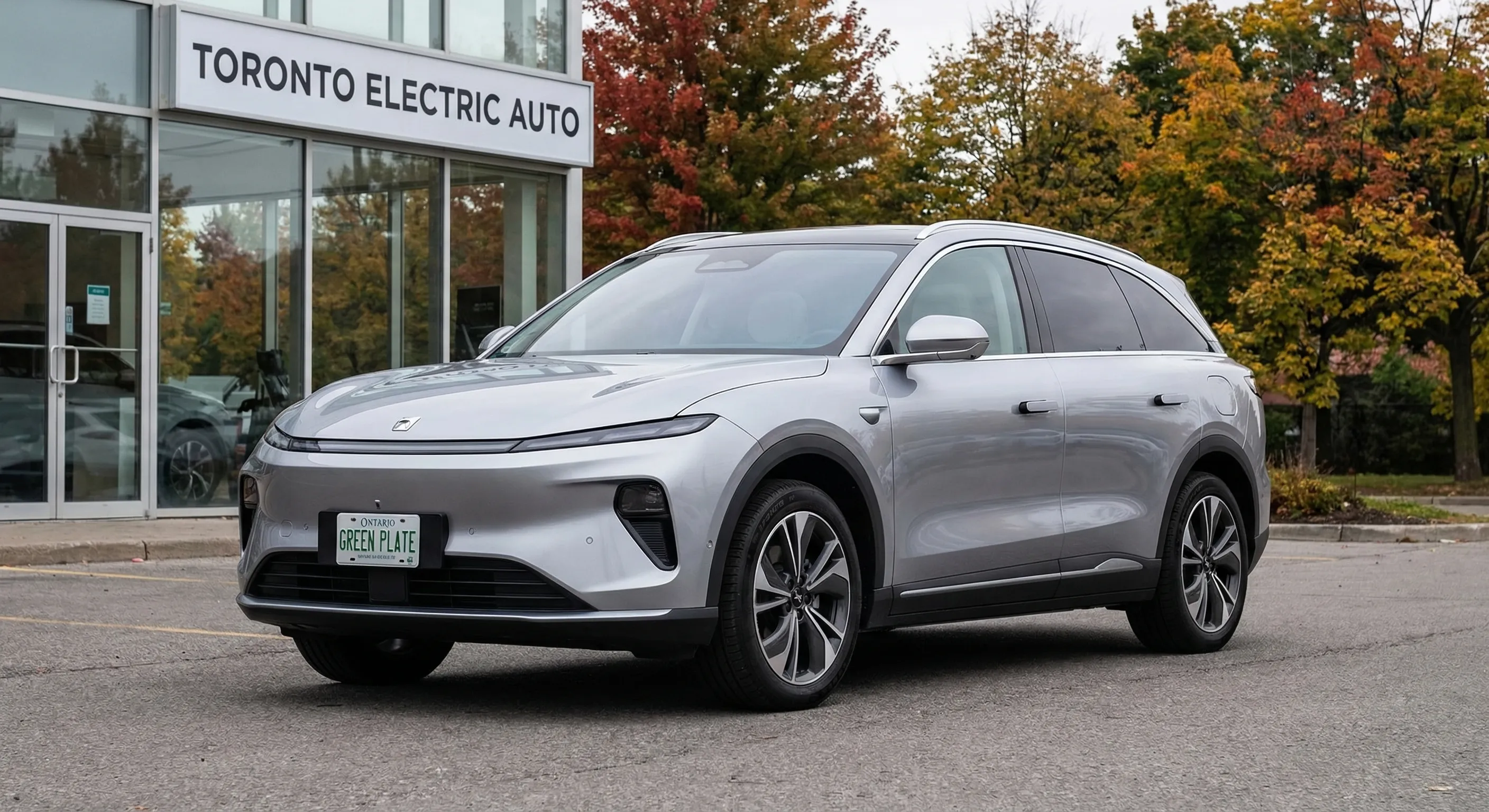
Chery EVs Coming to Canada: Models and Prices

Who Got Canada's First Chinese EV Import Permits

Canada's EV Market Crash of 2025, and What's Next
New EV Brands Coming to Canada: BYD, Chery, Xpeng

When Will New EVs Arrive in Canada? The Timeline