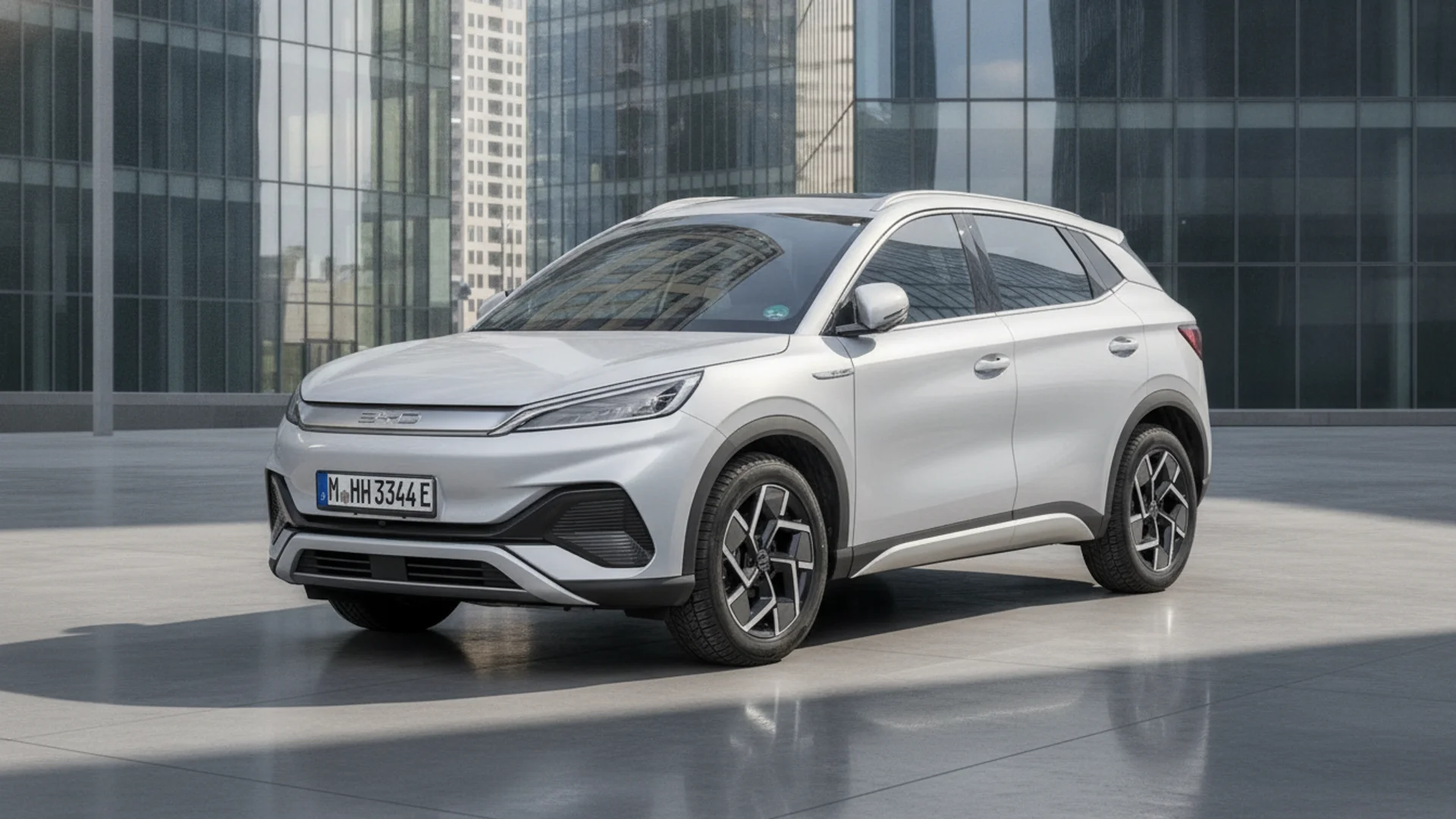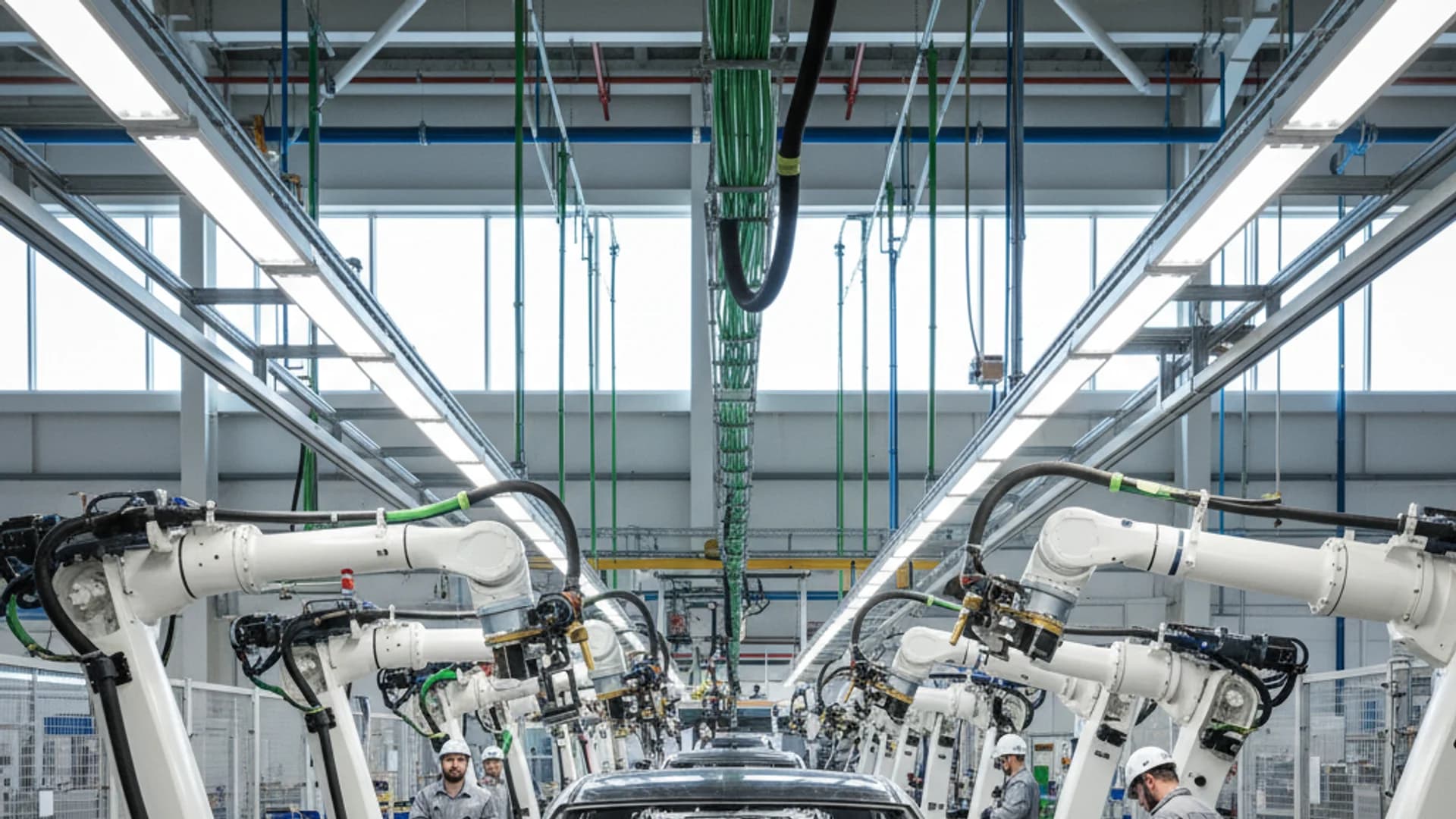
Canada sold 1,370 domestically made EVs last year. One country. One plant. One uncomfortable number.
Key takeaways
- Canada sold roughly 1,370 domestically assembled EVs in 2024, a rounding error against a market that runs near 170,000 EVs a year.
- The Chevrolet Equinox EV, built at CAMI Assembly in Ingersoll, Ontario, is the only EV actually assembled in Canada you can buy in 2026, starting at $44,995 and qualifying for the $5,000 EVAP rebate.
- Honda's Alliston plant is not expected to build EVs before 2028, and auto-industry timelines routinely slip 18 to 24 months past "at the earliest."
- The Volkswagen St. Thomas site is a battery-cell gigafactory, not an assembly line, so counting it as domestic EV manufacturing is a scorecard error.
- Canada's EV market is too small to justify a plant on its own, so any Canadian assembly line has to export to the US to recover its costs, and a 15% US tariff is the point where that math breaks.
That's the number every federal and provincial announcement about EV industrial policy should be measured against. Investment announcements aren't vehicles. Battery-cell capacity isn't vehicle assembly. Shovel ceremonies in 2024 don't put a Canadian-assembled EV in a Canadian driveway in 2026.
So let me be direct about where I land. Canada has one viable domestically assembled EV a buyer can drive home right now, the Chevrolet Equinox EV out of CAMI Assembly in Ingersoll, Ontario. Every other plant in the announcement pipeline is a battery facility mislabelled on the policy scorecard, an assembly retool that won't produce a vehicle before 2028, or a project hostage to a US tariff negotiation Canada doesn't control. The gap between ambition and output isn't a rounding error. It's structural.
The 2026 number will likely come in below 25,000 Canadian-assembled EVs delivered to Canadian buyers, and rounding it tighter than that, US export volume swings hard on where the tariff lands. Three things push it higher: the US 15% tariff threshold easing, CAMI adding a second nameplate, or Honda Alliston pulling its date forward. The same three slipping the other way push it lower. Right now the base case is one plant carrying the country's entire domestic EV story. That isn't industrial policy. It's a single point of failure with a press kit.
One Plant, One Model, One Province
The Chevrolet Equinox EV, built at CAMI Assembly in Ingersoll, Ontario, is the only electric vehicle assembled in Canada in 2026. That is the answer. Everything else is a footnote about what might happen later.
CAMI retooled from internal-combustion Equinox production to the EV variant with substantial federal and provincial investment, and the plant is now the sole Canadian source of a fully assembled, currently-purchasable electric vehicle. The Equinox EV starts at $44,995 CAD for the 1LT FWD trim, which puts it under the $55,000 EVAP ceiling and makes it one of the few domestically built EVs that qualifies for the Electric Vehicle Affordability Program launched in February 2026. The base-trim math works. That is the good news.
The bad news is the volume. Canada sold roughly 1,370 domestically made EVs in 2024 against a total EV market that ran well into six figures. That ratio is not a soft launch curve recovering toward a credible domestic share, it is a structural gap. Every Tesla Model Y delivered in Canada was assembled in Fremont, Shanghai, or Berlin. Every Hyundai Ioniq 5 and Kia EV6 came from Korea. Every Ford Mustang Mach-E came from Cuautitlán, Mexico. The list of imported nameplates is the entire EV market minus one line.
The case against framing this as a crisis runs roughly as follows: roughly 35 to 40 electric models are expected to hit the Canadian market in 2026, so buyers will have more choice than ever, and where the metal gets stamped matters less than what the buyer actually drives home. I take the point and reject the conclusion. Choice for buyers is not the same thing as industrial capacity for the country signing the subsidy cheques. A market with forty imported nameplates and one domestic assembly line is a market that has chosen consumption over production, and the policy announcements have explicitly promised both. You cannot pocket the political credit for the second promise while delivering only the first.
This is not a criticism of CAMI, which is doing what it was retooled to do. It is a criticism of how the policy scorecard gets reported. When a federal minister announces "Canada's EV manufacturing future," the implicit promise is plural, multiple plants, multiple models, multiple price points. The 2026 reality is singular. One plant. One model. One province. And every quarter the gap between the rhetoric and the registration statistics widens, because vehicle sales are reported monthly and groundbreakings are reported once.
The lens that matters here is the buyer's. A Canadian who walks into a dealership in 2026 wanting a domestically assembled EV has exactly one nameplate to choose from, at exactly one price band, in exactly one body style. That is the market. Pretending otherwise, by counting battery cell capacity, by counting investment dollars, by counting press releases, does not change what is on the showroom floor.
Why CAMI Is Both the Answer and the Warning Sign
CAMI is doing the job. The Equinox EV is a credible product at a credible price, and the plant has the floor space and the workforce to run more volume than it currently does. The constraint at Ingersoll is not capacity, it is demand calibration and supply chain throughput, which are solvable problems. Give the plant a second EV nameplate and a smoother battery supply, and the output number moves.
That is the answer. The warning sign is that one plant cannot carry a national industrial story. CAMI is a single point of failure for Canada's domestic EV manufacturing scorecard, and any disruption, a battery supplier issue, a US tariff escalation, a model-cycle gap when the Equinox EV refreshes, leaves the country with effectively zero domestically assembled EVs for a quarter or two. That's not a hypothetical risk. It's the structural exposure of one nameplate at one plant in one province.
The Equinox EV's role in the EVAP qualification matrix is the second reason CAMI matters. Under the program, vehicles must be priced under $55,000 MSRP to qualify, and the Equinox EV's 1LT trim slides under that ceiling with room to spare. Compare that against the Tesla Model Y Long Range AWD at $59,990 CAD, over the limit. The Hyundai Ioniq 5 Standard Range AWD at $54,999, under the limit at base, but the higher trims push past it. The Kia EV6 Long Range RWD at approximately $55,995, over the limit on most configurations.
The Equinox EV's pricing discipline is what makes it the rare Canadian-assembled vehicle that also clears the federal affordability bar. That is a meaningful product-policy alignment. It is also fragile, a single trim repricing or option-bundle restructure could push the qualifying configuration into a less attractive corner of the lineup. For a more detailed look at how the Equinox EV competes against the imported Model Y on price and value, the Chevy Equinox EV versus Tesla Model Y Canada breakdown lays out the math.
The named comparison that sharpens the point is the Tesla Cybertruck, which appears on Canada Driving's 2026 expert-rated EV list at $139,990 to $167,990 plus $2,750 Freight and PDI. The Cybertruck is a halo product imported from Texas, priced three times the Equinox EV, and emblematic of where the prestige-EV media oxygen goes. The Equinox EV does not get that kind of editorial coverage in Canada because it is a working-trim compact crossover from Ingersoll, not a stainless-steel novelty from Austin. That asymmetry matters for the political durability of the domestic-manufacturing argument: the one Canadian-assembled EV on the market is also the least photogenic product in its segment, and a country's industrial story is harder to defend politically when the flagship is somebody else's prestige vehicle.
The deeper warning sign is what CAMI's solo status implies about the rest of the announced pipeline. If Canada had three or four plants running, CAMI's single-model risk would be diversified across the system. With CAMI alone, every quarterly registration report rests on one plant's uptime and one product's market reception. The reporting cycle is unforgiving, every month CAMI is running at half capacity, the "Canada makes EVs" story softens. Every month it runs at full tilt, the story holds.
I'd watch CAMI's monthly production figures as the single most important domestic EV metric for 2026, ahead of investment-announcement count, ahead of battery cell capacity, ahead of any provincial subsidy total. The vehicles assembled and shipped from Ingersoll are the only number on the scorecard that translates directly into Canadian-made EVs in Canadian driveways.
The Plants That Were Promised and the Timelines That Slipped
The pipeline behind CAMI is real on paper and unconvincing on calendar. Three projects carry most of the announcement weight, Honda's Alliston, Ontario EV retool, Stellantis's Windsor minivan plant conversion, and Volkswagen's St. Thomas facility, and each of them has a different problem.
Honda Alliston is the cleanest of the three on intent. The plant has federal backing, the company has publicly committed to EV production in Canada, and the site has the legacy of a functioning vehicle assembly operation. The problem is the date. Honda's Canadian EV production is not expected before 2028 at the earliest, and "at the earliest" in the auto industry routinely slips eighteen to twenty-four months. A 2028 announcement date is a 2029 or 2030 reality date on any realistic risk-adjusted basis. The vehicles that will roll off Alliston are not on the 2026 scorecard, and they are not on the 2027 scorecard either.
Stellantis Windsor is messier. The plant's EV retool, originally tied to a Jeep-branded electric model, with a minivan conversion in the announced project mix, is contingent on the US tariff environment in ways the other projects are not. Stellantis's North American EV strategy is structured around cross-border supply chains, and a 15% US tariff on Canadian-assembled vehicles is the threshold at which Windsor's EV math breaks. The timeline is officially unconfirmed, and the unofficial reading is "depends on what Washington does," which is not a date.
Volkswagen St. Thomas is the project most often miscounted. The facility is a battery cell plant, a gigafactory in the literal sense, and it is not a vehicle assembly facility. It will produce battery cells that go into vehicles assembled elsewhere, most likely in the US for VW's American EV lineup. Counting St. Thomas as part of Canada's vehicle manufacturing capacity is a category error that inflates the policy scorecard without producing a single additional Canadian-assembled EV. Battery cells and assembled vehicles are different industries with different supply chains, different workforces, and different market exposures. Conflating them is how the announcement total reaches headline-friendly billions while the output total stays at four digits.
The pattern across all three is investment announcement first, production date deferred. That is normal for the auto industry, assembly plants take three to five years to retool, but it has a real cost when the rhetoric runs ahead of the build calendar. The Canadian public is being told a Canadian EV manufacturing story that 2026 cannot deliver and 2027 will struggle to deliver. By 2028 the picture may shift, but 2028 is a long way off when the policy debates and the buying decisions are happening now.
A reasonable counter is that three to five year retool cycles are simply how the auto industry works, and that holding 2024 announcements to a 2026 delivery test is the wrong yard-stick. Fine, but the ministers chose the yard-stick when they marketed the announcements as a 2026 manufacturing story instead of a 2028 one. The complaint is not about industry physics. The complaint is about communications discipline. If Ottawa had said "we are building a 2028-2030 EV manufacturing base" the country would be running a different conversation. Instead it said "Canada is becoming an EV manufacturing power" in the present tense, and the present tense is what the 1,370-unit number gets to grade.
A pipeline of promises isn't a pipeline of vehicles. The Canadian EV manufacturing story in 2026 is CAMI plus a calendar.
Gear worth having
As an Amazon Associate, ThinkEV earns a small commission from qualifying purchases — at no extra cost to you.

Grizzl-E Classic Level 2 EV Charger (40A)
Canadian-made and rated for minus 40C winters. 40A / 9.6 kW, NEMA 14-50, indoor/outdoor, 24-ft cable. The charger built for Canadian weather.
As an Amazon Associate, ThinkEV earns from qualifying purchases — at no extra cost to you.
The Tariff Trap: Why 15% Makes Canadian EV Export Economics Break
The variable that determines whether Canadian-assembled EV plants run at capacity is set in Washington, not Ottawa. The US 15% tariff threshold is the point at which Canadian-built vehicles lose margin viability for cross-border sale, and the Canadian market alone, roughly 170,000 EVs annually at recent run-rates, cannot absorb CAMI-scale production, let alone the additional capacity that Honda Alliston and Stellantis Windsor would bring online if they hit their announced dates.
The arithmetic is straightforward. A Canadian assembly plant retooled for EV production needs to run at scale to recover its capital cost. Scale means selling into both the Canadian and US markets, because the Canadian market by itself is too small to fill a modern assembly line at the price points buyers will pay. A 15% US tariff on Canadian-assembled vehicles eliminates the margin on the cross-border units. Without the US volume, the plant is structurally underutilized. Underutilized assembly plants don't stay open.
A Conservative MP put the point bluntly in industry coverage of Canada's 1,370-unit domestic EV output: "auto manufacturing in Canada cannot survive at the 15% tariff, because that makes those cars unprofitable to go to the United States." That is not partisan rhetoric, it is the manufacturing math. It is also why every announced EV retool in Canada has a clause, explicit or implicit, that ties production timing to tariff resolution.
The flip side of the tariff conversation is what happens at the import end. Canada's tariff on Chinese-built EVs dropped from 100% to 6.1% in January 2026 under a 49,000-unit annual quota, which reshapes the competitive set for imported vehicles entering the Canadian market. That matters for buyers, BYD, Chery, and Geely now have a credible path to Canadian showrooms, but it does not change the domestic manufacturing equation. As Electrek reported, none of the Chinese EVs are expected to actually reach Canadian showrooms until late 2026 at the earliest, and when they do arrive they will be imported, not assembled here.
The buyer who is debating whether to wait for a Chinese-built EV at a more aggressive price point should read the BYD-to-Canada decision math for the practical version of that calculation. My narrower point: the Chinese-import question is a buyer question, not a manufacturing question. The two policy threads run on separate tracks.
What ties the two threads together is the political pressure. If Canadian domestic EV production stays at four digits while Chinese imports surge under the new quota, the political optics of "we opened the door to Chinese EVs and our own plants did not get built" will land hard. That pressure will accelerate either tariff renegotiation with the US or further domestic subsidy, neither of which solves the underlying structural sequencing problem in the announced retools. The 2026 reality is locked in by the build calendars set in 2023 and 2024.
What would change my read here is a US tariff settlement that puts Canadian-assembled EVs back inside the duty-free North American envelope before the Alliston and Windsor production dates land. If that happens by mid-2027, the announced pipeline holds and the 2028-2030 output story stays credible. If it slips past 2027, expect at least one of the announced retools to be quietly rescoped from vehicle assembly to component or sub-assembly work, and the domestic EV scorecard to stay anchored around CAMI for the rest of the decade.
What "Made in Canada" Actually Means for the Buyer in 2026
For the Canadian buyer who has decided that domestic assembly is a meaningful factor in their EV purchase, the 2026 shopping list is short. The Chevrolet Equinox EV is the list. That is one nameplate, one body style, one approximate price band, and crucially, one EVAP-qualifying configuration at the base trim.
Compare that against the imported alternatives that compete for the same buyer. The Hyundai Ioniq 5 Standard Range AWD starts at $54,999, assembled in Korea, EVAP-eligible at base. The Kia EV6 Long Range RWD lands at approximately $55,995, assembled in Korea, just over the EVAP threshold on most trims. The Tesla Model 3 Standard Range at approximately $44,990, assembled in Fremont, California, EVAP-qualified. The Ford Mustang Mach-E Select RWD at $44,690, assembled in Mexico, EVAP-qualified.
All of those are competitive products at competitive prices, and most of them clear the EVAP qualification bar. None of them are assembled in Canada. For a buyer indifferent to country of origin, the choice set is broad and the value math is good. For a buyer who treats "made in Canada" as a tiebreaker, the choice set collapses to one.
That collapse is not a complaint about the imported lineup. The Korean, Mexican, and American-assembled EVs reaching Canada in 2026 are products that any market should be happy to have on its showroom floors. The point is that the Canadian-content side of the buyer's value equation has exactly one answer in 2026, and that answer is the Equinox EV at CAMI. The practical comparison between the Hyundai Ioniq 5 and the Kia EV6 is the buyer's real frame of reference for the imported alternatives, that is the segment competition the Equinox EV faces.
There is a second layer to the "made in Canada" question that the policy conversation often blurs. Vehicles assembled in Canada do not automatically qualify for the federal EVAP incentive, qualification runs on MSRP, not country of assembly. Vehicles imported from Korea, Mexico, or the US can absolutely qualify for EVAP if their base trim is under $55,000. The two questions, domestic content and incentive eligibility, are independent variables, and conflating them is a common source of buyer confusion. The Equinox EV happens to satisfy both; that is product-policy alignment, not a structural rule.
The counter-argument here, made fairly by some auto-industry analysts, is that "country of assembly" is itself an obsolete frame in a continental supply chain where a Mexican-assembled Mach-E may carry more Ontario-made parts content than the Equinox EV does. That is true at the component level and irrelevant at the policy level. Federal and provincial governments did not subsidize Canadian parts content in the recent EV announcement cycle. They subsidized assembly plants, on the explicit promise of Canadian-assembled vehicles. The scorecard the political class wrote is the scorecard it has to be graded on, and that scorecard counts vehicles off Canadian assembly lines, not Ontario brake calipers in foreign-built crossovers.
What the buyer should walk away with is this. In 2026, "Canadian-made EV" means the Equinox EV. Anything else marketed as such is either a Canadian-content claim about a battery component, a Canadian-investment claim about a plant under construction, or a misstatement. Hold the language to that standard, and the showroom conversation stays honest.
Gear worth having
As an Amazon Associate, ThinkEV earns a small commission from qualifying purchases — at no extra cost to you.

PULIDIKI Car Cleaning Gel (Detailing Putty)
Press it into vents, buttons, and seams and it lifts out dust you did not know was there. Weirdly satisfying, genuinely useful.
As an Amazon Associate, ThinkEV earns from qualifying purchases — at no extra cost to you.
Investment Without Output Isn't Industrial Policy
The federal and provincial EV investment announcements over the past three years total in the multiple billions of dollars. The domestic EV unit output for 2024 was 1,370 vehicles. Put those two numbers next to each other. That's the argument.
That gap is not a funding problem. The capital has been committed. The plants have been announced. The press conferences have been held. The gap is a sequencing problem, the announcements ran ahead of the build calendars, and an accountability problem, because the policy scorecard has been quietly redefined to count things that are not assembled vehicles.
Battery cells are not assembled vehicles. The Volkswagen St. Thomas gigafactory will be a major contributor to North American EV battery supply, and that is a legitimate industrial achievement on its own terms. It is not a Canadian vehicle manufacturing achievement. Counting it as such inflates the policy scorecard and obscures the actual question, which is: how many EVs are assembled in Canada and sold to Canadians? The answer in 2024 was 1,370. The answer in 2026 will be larger because CAMI is running at higher volume, but it will not be the order-of-magnitude shift the investment announcements implied.
The metric that matters for Canada's domestic EV manufacturing scorecard is vehicles assembled in Canada. Not gigawatt-hours of cell capacity. Not investment dollars committed. Not jobs announced. Vehicles. The federal and provincial governments that have staked political capital on the EV manufacturing story should be reporting that metric monthly, alongside the assembly plant utilization rate at CAMI, the announced production dates at Alliston and Windsor, and the cross-border tariff status that determines whether any of those plants can run profitably.
Until that reporting discipline arrives, the public conversation will keep running on announcement totals and ribbon-cutting photos. The buyer-facing reality will keep running on what is in the dealer lot, which is one domestically assembled EV at one price point.
I'd put it this way. Canada has a real EV manufacturing pipeline, with real potential by 2028 or 2029. But the 2026 reality is one plant, one model, one province, and a number anyone serious about industrial policy needs to look at without flinching. The story isn't over. It's also not what the announcement totals suggest. The next eighteen months, CAMI's production curve, the US tariff settlement, the Alliston and Windsor production dates firming or slipping, will determine whether the 2026 number was the start of a credible domestic industry or the high-water mark of a policy thesis that did not deliver vehicles.
The bet worth placing: if by the end of 2027 Canada is shipping a second domestically assembled EV nameplate from a second plant, any plant, any nameplate, any price point, the announcement-era policy thesis was right and the sequencing was just slower than advertised. If by the end of 2027 the answer is still CAMI alone, the thesis was wrong, the subsidies financed battery cells and parking lots more than they financed assembly lines, and the country needs a different conversation about what its EV industrial policy is actually buying. I'd bet on the second outcome at even odds today, and shift to the first only if the US tariff settlement lands clean before the federal budget cycle closes.
The thing I'd watch above all else is the monthly CAMI output figure. If it climbs, the story is real. If it stalls, the rest of the pipeline becomes a longer wait than the headlines have prepared the country for. Bottom line: until a second Canadian plant is shipping a second Canadian-assembled EV, the answer to "are any electric cars made in Canada" is one, and one isn't a manufacturing industry.
Gear worth having
As an Amazon Associate, ThinkEV earns a small commission from qualifying purchases — at no extra cost to you.

WixGear Magnetic Air Vent Phone Mount (2-Pack)
A magnet strong enough that your phone never flinches over potholes or rail crossings. Two in the box, one for each car.
As an Amazon Associate, ThinkEV earns from qualifying purchases — at no extra cost to you.

Founder & Chief Editor
Vlad Pereira is the founder and chief editor of ThinkEV.ca, the Canadian electric-vehicle publication he writes and edits from Courtenay, British Columbia. He covers EV pricing, federal and provincial rebates, charging costs, and the Chinese manufacturers now entering Canada, from the buyer's side rather than the press-fleet side. ThinkEV is a venture of Vlad Pereira Online; his writing on health, income and the long game lives at vladpereira.com.
Frequently asked questions
Does buying a Canadian-assembled EV automatically qualify you for the federal EVAP incentive?
Is the Volkswagen St. Thomas plant in Ontario building electric cars?
When will Honda Alliston and Stellantis actually build EVs in Canada?
Why does the US tariff level matter so much to Canadian EV manufacturing?
More EV & road-trip finds
Affordable upgrades worth a look — tap any to check the price on Amazon.
 ★ 537
★ 537USB Star Projector Roof Light
View on Amazon ★ 546
★ 546Funny Headrest Face Covers (2-Pack)
View on Amazon ★ 21,304
Car Headrest Hooks (4-Pack)
View on Amazon ★ 721
★ 72145W USB-C Fast Car Charger
View on Amazon ★ 119
★ 119Foldable Waterproof Trunk Organizer
View on Amazon ★ 392
★ 392Large Cup Holder Adapter (32-40oz)
View on Amazon ★ 8,681
Chemical Guys Complete Car Wash Kit
View on Amazon ★ 314
★ 314Mini USB LED Ambient Lamps (4-Pack)
View on AmazonRead, Plan, Then Stay Current
Explore our expert articles to understand incentives and ownership costs, use the map to pressure-test charging reality, then subscribe so new EV coverage comes straight to you.
Continue Reading
The Best Electric SUVs in Canada (2026): Ranked by Value
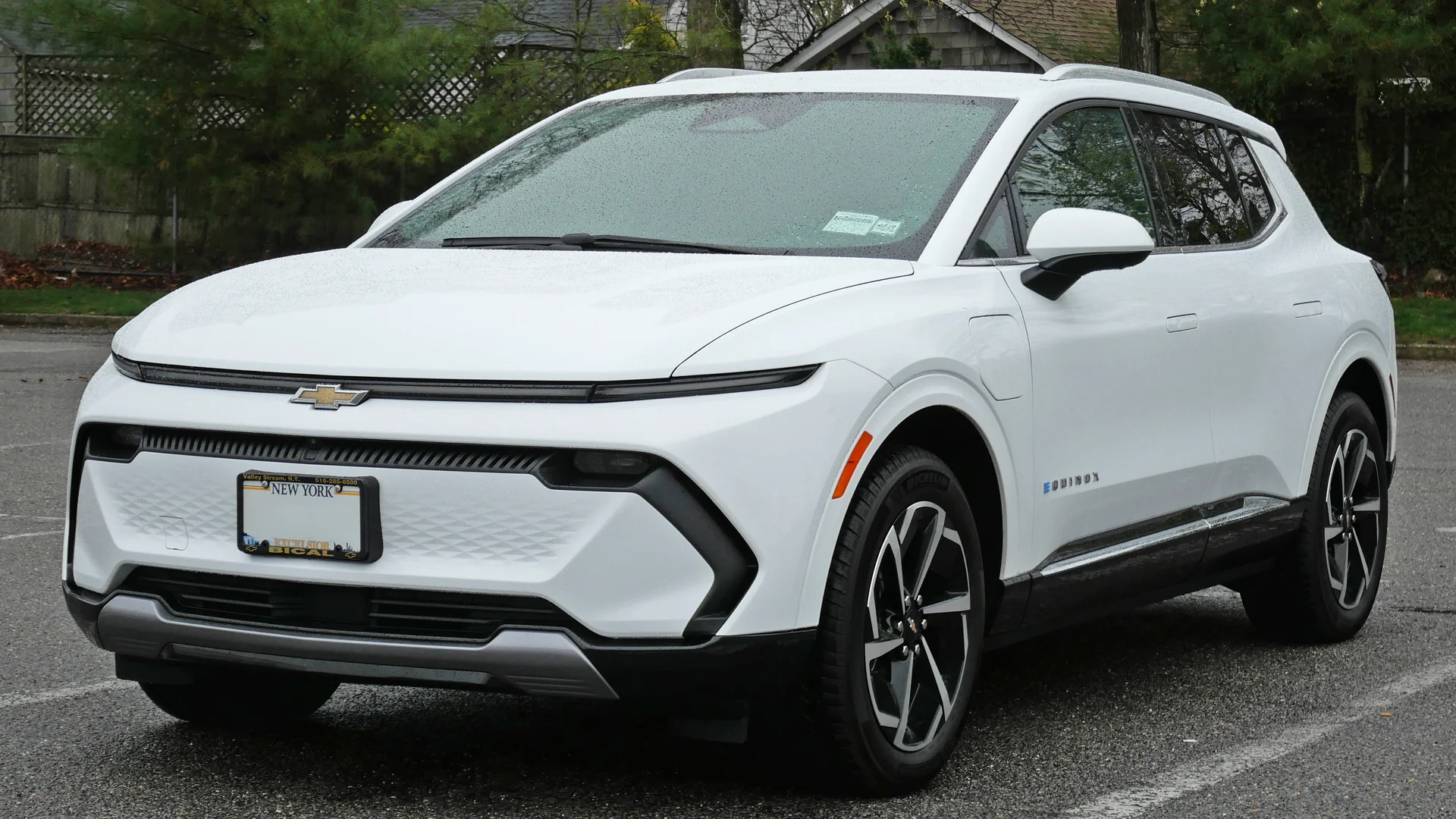
Best GM EVs in Canada for Budget Families 2026
Are Electric Cars Real Cars? The Regulatory Answer
Tesla, Caterpillar and the EV Tech Training Gap
Foxconn Just Unveiled a Tesla Model Y Competitor