The "not a real car" claim has no statutory basis in any jurisdiction that regulates passenger vehicles, the legal definition is propulsion-agnostic, and every G7 government registers, taxes, crash-tests, and mandates electric vehicles inside the same regulatory frame as combustion cars. The empirical anchor is straightforward: in 2024, Transport Canada processed roughly 233,000 zero-emission vehicle registrations under the same Motor Vehicle Safety Act that governs gasoline vehicles. Same VIN system. Same provincial plates. Same liability framework. Same road.
The question itself is therefore a category error. It treats a cultural intuition about what a car sounds like as if it were a legal or technical claim about what a car is. The two are not equivalent, and the policy record is unambiguous on which one governs registration, insurance, manufacturer compliance, and incentive eligibility.
This post walks through the statutory definitions, the crash and safety regimes, the multi-jurisdictional market frameworks, and the misinformation data, and ends where the evidence points. The classification question was settled before it was asked. What persists is a communication gap, not a product gap.
Key takeaways
- Transport Canada registered roughly 233,000 zero-emission vehicles in 2024 under the same Motor Vehicle Safety Act as gas cars.
- Canada, the US, EU, UK, and China all define motor vehicles by function, not fuel, battery-electric drivetrains qualify on the statutory text.
- All 13 Canadian provinces and territories register BEVs under the same motor-vehicle acts, same plates, same licence class as combustion vehicles.
- EU Regulation 2018/858 and over 70 US Federal Motor Vehicle Safety Standards apply to BEVs with no drivetrain carve-outs.
- The median Canadian daily drive is about 37 km while median BEV range in 2026 sits well above 400 km, an order of magnitude separating range anxiety from actual driving.
What "Real Car" Actually Means in Law
Canadian federal law defines a motor vehicle in the Motor Vehicle Safety Regulations as a vehicle that is propelled or driven otherwise than by muscular power. The text does not specify combustion. It does not specify a particular energy carrier. It specifies the negation of muscle, meaning a horse-drawn cart is excluded, and everything else with a powertrain is in scope. Battery-electric vehicles qualify on the face of the statute, not by analogy or extension.
The same propulsion-agnostic logic appears in every comparable jurisdiction. The United States Federal Motor Vehicle Safety Standards apply to "motor vehicles" defined by function and intended use on public roads, not by fuel chemistry. The European Union's type-approval framework under Regulation 2018/858 covers M1-category passenger vehicles regardless of drivetrain. The United Kingdom's Road Traffic Act 1988 defines "motor vehicle" by the same functional criterion Canada uses. China's vehicle production licensing folds new-energy vehicles into the existing passenger-vehicle category for credit and quota accounting.
No regulator in any major automotive market has created a separate "real car" legal category that excludes battery-electric vehicles. The Canadian, American, European, British, and Chinese statutory texts are propulsion-neutral by construction. A vehicle that meets the safety and emissions performance standards of its class is a vehicle of that class. Drivetrain is not in the definition.
This matters because the framing of the original objection, that an EV is somehow not a car, assumes there is some authoritative definition the EV fails to meet. There is not. Every authoritative definition that exists in law treats the battery-electric drivetrain as a permissible propulsion method within the standard motor-vehicle category. The objection lives only in cultural intuition, and cultural intuition is not what determines whether a 2024 BMW iX can be registered, plated, insured, and driven on a provincial highway. The Motor Vehicle Safety Act determines that, and it answered the question in the affirmative the moment the iX passed certification.
The same point applies to torque, performance, and capability claims that get raised in these debates. An electric car or electric vehicle (EV) is an automobile that uses electrical energy as the primary source of propulsion, the Wikipedia definition tracks the statutory one. Automobile. Not appliance, not toy, not approximation.
Registration, Insurance, and Liability: The Policy Paper Trail
The administrative apparatus that surrounds vehicle ownership offers the cleanest test of legal classification, because every interaction between an owner and the state generates a paper record. Provincial registration systems, insurance underwriting categories, and liability rules all produce documentation, and that documentation is identical whether the vehicle in question runs on lithium iron phosphate or on premium unleaded.
All thirteen Canadian provinces and territories register battery-electric vehicles under the same motor-vehicle acts that cover combustion vehicles. There is no separate provincial registry for EVs. There is no separate plate series. There is no separate licence class required to operate them. The Insurance Bureau of Canada classifies battery-electric vehicles under standard personal auto lines, with the same at-fault rules, the same collision and comprehensive coverage frameworks, and the same liability minimums. Premiums vary by vehicle, as they do across all makes and models, but the underwriting category does not.
The European Union applies the same logic at the type-approval stage. EU Regulation 2018/858 covers M1-category passenger vehicles regardless of drivetrain, meaning the certification process that allows a vehicle to be sold across the bloc treats BEVs and ICE vehicles as members of the same regulatory class. The United States National Highway Traffic Safety Administration subjects BEVs to all applicable Federal Motor Vehicle Safety Standards, over seventy individual standards covering crash protection, lighting, braking, controls, and visibility, with no carve-outs for electric drivetrains. Where EV-specific provisions exist, they are additions (battery enclosure integrity, high-voltage isolation) to the existing framework, not replacements for it.
The liability question often gets raised separately, but it follows the same pattern. A driver who causes a collision in a BEV is treated under tort and statutory liability identically to a driver who causes a collision in an ICE vehicle. Provincial fault determination rules, the federal Motor Vehicle Safety Act recall regime, and product-liability case law all apply. The vehicle is a motor vehicle. The driver is a driver. The legal architecture is the same.
For readers thinking about the practical cost side of this, particularly the premium gap that does emerge when a BEV gets quoted against a comparable ICE car, the explanation lies in repair-network maturity, not in classification. The full breakdown of why EV insurance costs more than gas-car insurance, and what's actually driving the gap is its own analysis. The relevant point here is that the gap exists within the standard auto-insurance framework, not because BEVs sit outside it.
Gear worth having
As an Amazon Associate, ThinkEV earns a small commission from qualifying purchases — at no extra cost to you.
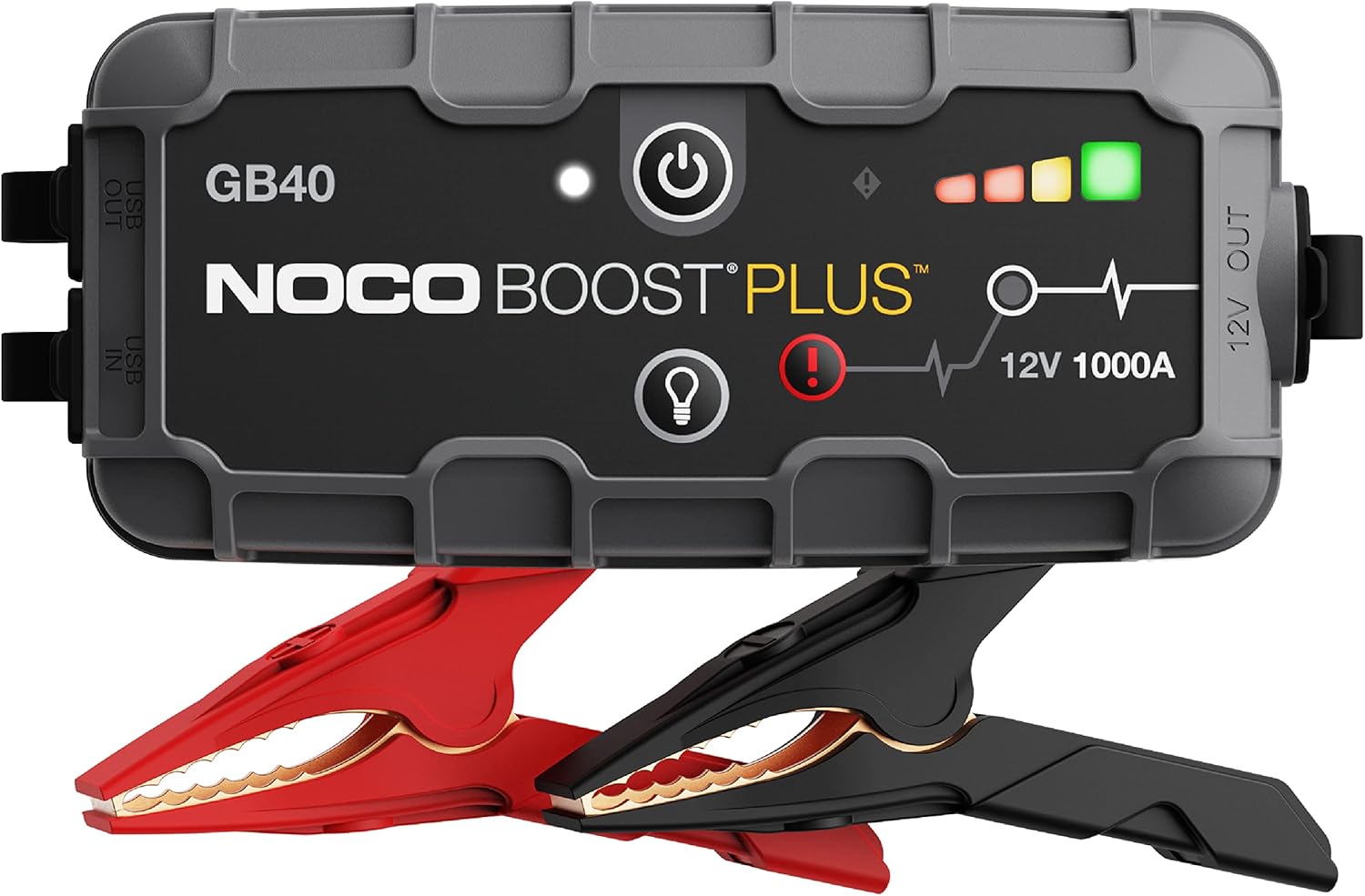
NOCO Boost Plus GB40 Jump Starter
A 1000A lithium jump starter that fits in your glovebox and works on any 12V battery. Your insurance against a dead 12V in a parking lot.
As an Amazon Associate, ThinkEV earns from qualifying purchases — at no extra cost to you.
Performance Metrics Regulators Actually Measure
If the legal frame treats BEVs as cars, the testing frame confirms it by subjecting them to the same physical benchmarks. The Transport Canada and NRCan 5-cycle test, the protocol that produces the consumption and range figures on the EnerGuide label, applies identically to battery-electric and combustion vehicles. Energy consumption is reported in litres per 100 kilometres for ICE and in kilowatt-hours per 100 kilometres for BEVs, but the test cycles, drive traces, and ambient conditions are the same. The metric translates; the test does not change.
Crash-test programmes follow the same pattern. The 2024 BMW iX earned a five-star Euro NCAP rating across adult occupant, child occupant, vulnerable road user, and safety assist categories, under the same crash test criteria applied to the combustion BMW X5. The Insurance Institute for Highway Safety, NHTSA's New Car Assessment Program, and Australasian NCAP run their respective protocols against BEVs without methodological adjustment. The frontal offset deformable barrier does not behave differently because the powertrain is electric. The side-impact moving deformable barrier does not behave differently. The test rates the structure and the restraint system; what propels the vehicle to the test bay is immaterial.
The United States Environmental Protection Agency redesigned its fuel-economy label in 2013 specifically to place electric vehicles in direct comparison with internal combustion efficiency. The MPGe metric, miles per gallon equivalent, converts electrical energy consumption into the same units gasoline drivers had been reading since the 1970s. The redesign was, in effect, a regulatory statement: these vehicles belong on the same label because they are the same category of consumer product. Comparison is the entire point of the label.
The Federal Motor Vehicle Safety Standards reinforce the same principle on dynamics. FMVSS 135 governs light vehicle brake systems and applies to BEVs without modification, the stopping-distance requirements, pedal-force limits, and parking-brake provisions are powertrain-neutral. FMVSS 126 mandates electronic stability control on light vehicles, and BEVs must comply on the same timeline and to the same performance threshold as ICE vehicles. The regulator does not care whether the torque arriving at the wheels comes from a permanent-magnet synchronous motor or a port-injected V6. It cares whether the vehicle stops, stays in its lane under loss-of-traction conditions, and protects occupants in a crash.
There is a secondary observation worth making here. EVs frequently outperform ICE vehicles on the metrics regulators measure, torque delivery, low-speed acceleration, centre-of-gravity-driven handling stability. The structural argument that BEVs are not real cars often coexists, in the same conversation, with the complaint that they accelerate too fast. Both objections cannot be true at once. The legal and testing record sides with capability.
Multi-Jurisdiction Market Recognition: Who Is Counting EVs as Cars
The most decisive evidence that regulators treat BEVs as cars sits in the mandate language itself. When a government writes a rule saying that a defined percentage of new vehicle sales must be zero-emission, the rule has to specify what category of vehicle it is talking about, and across five major jurisdictions, that category is "car" or "passenger vehicle" with no qualifier separating BEVs out.
Canada's zero-emission vehicle mandate, targeting 100% of new passenger car and light truck sales by 2035, uses "car" language explicitly in the regulatory text. The mandate does not create a parallel category for BEVs; it requires that the existing passenger-car category be filled, by 2035, exclusively with zero-emission options. The European Union's CO2 fleet average regulation 2019/631 counts BEVs as zero-emission cars within the car fleet, the same fleet that determines whether a manufacturer faces penalties for exceeding the average emissions ceiling. China's new-energy vehicle credit policy, in force since 2019, integrates NEV production into the existing passenger-vehicle production quota system; NEVs earn credits against the same quota framework that ICE vehicles draw down. The United Kingdom's ZEV mandate, which set the 22% threshold for the 2024 model year, applies "car" as defined in the Road Traffic Act 1988, the same definition that has governed combustion vehicles for nearly four decades.
Brazil's MOVER programme, launched in 2023, is the same story from a different angle. Battery-electric vehicles are included in the domestic vehicle production incentive framework, classified as automobiles under the federal tax code, and eligible for the same industrial-policy supports that combustion manufacturers receive. The Brazilian approach is instructive precisely because it treats integration as the default, there is no separate BEV tax regime to argue about, because BEVs fall under the existing one.
The pattern across these five jurisdictions is uniform: BEVs are integrated into the existing passenger-vehicle policy framework, not siloed into a separate one. A separate legal category would have required parliaments and regulators to construct one, and none of them have. The 2035 EU ICE ban makes the integration even sharper, when the combustion engine is phased out, the category called "new passenger cars" continues to exist, and BEVs are the compliant occupants of it. The category is the constant. Drivetrain is the variable.
Gear worth having
As an Amazon Associate, ThinkEV earns a small commission from qualifying purchases — at no extra cost to you.

Emporia Smart Level 2 EV Charger (48A)
Budget-friendly 48A charger with WiFi and per-session energy tracking. Best bang for buck if you want smart features under 500 dollars.
As an Amazon Associate, ThinkEV earns from qualifying purchases — at no extra cost to you.
This is also why discussions about Chinese-market EVs entering Canada operate inside the same legal frame as any other import. The trade question is real, the tariff question is real, but neither rests on a claim that a BYD Seal or a Zeekr 001 isn't a car. Both vehicles meet the technical definition of a passenger automobile in every market they sell in. The growing presence of Chinese EV listings in Canadian secondary markets like Port Alberni is a market-access story, not a classification story.

Gear worth having
As an Amazon Associate, ThinkEV earns a small commission from qualifying purchases — at no extra cost to you.

Amazon Basics Seat Belt Cutter and Window Hammer
The 10-dollar tool you hope to never use: cuts a jammed belt and shatters a window in an emergency. Mount it within reach.
As an Amazon Associate, ThinkEV earns from qualifying purchases — at no extra cost to you.
Where the "Not a Real Car" Belief Originates: Misinformation by the Numbers
If the legal, administrative, and regulatory record is this clear, the persistence of the belief requires its own explanation. The data on EV misinformation, drawn from survey research and platform-level discussion analysis, points consistently in one direction: the objection is cultural, not technical, and it survives contact with evidence because evidence is not what produced it.
A 2025 David Suzuki Foundation survey found that 42% of British Columbians believe electric car batteries create more pollution than internal combustion engines, a claim that is factually incorrect under NRCan lifecycle data, which shows BEV manufacturing emissions are paid back within roughly two years of typical Canadian driving and net negative over the vehicle's service life. The 42% figure is not a fringe data point. It represents close to half of the residents of a province that has been a Canadian leader on ZEV adoption and policy. The misconception persists despite exposure to the policy environment, not because of insulation from it.
CleanTechnica's July 2025 reporting documented the same pattern from the inside. CleanTechnica has long sought to dispel the myths and misinformation around electric vehicles, here is an early article from 2018, for example (yes, this fight has been going on a long time). The publication then documented uptake of fear, uncertainty, and doubt narratives even among existing EV owners, a population that has direct, daily, empirical experience with the technology. The belief persists post-purchase. That detail is diagnostic. If the misconception were primarily an information-gap problem, ownership would resolve it. It does not.
Motor Finance Online, drawing on Carwow's UK consumer research, found that 32% of respondents cited range anxiety as a key barrier to EV adoption. The median Canadian daily drive is approximately 37 kilometres. Median BEV range in 2026 is well above 400 kilometres. The numerical gap between the worry and the reality is more than an order of magnitude. Range anxiety functions not as a calibrated technical assessment but as a stand-in for unfamiliarity. The Association of Fleet Professionals in the United Kingdom has documented organised misinformation campaigns against EVs in the period before and after COVID, institutional rather than organic, with talking points that propagate across forums and into mainstream commentary.
Reddit signal data tells the same story at the cultural level. The German-language r/Elektroautos thread asking where the hate for electric cars comes from drew 627 comments, and the dominant themes were engine sound, mechanical ritual, and identity, not range, charging, or capability. The technical objections function as rationalisations for an identity-level discomfort with a powertrain that does not announce itself. Removing the sound removes a signifier. The signifier is what the objection is defending.
This pattern, belief that survives evidence because the belief is not evidence-derived in the first place, is well-documented in misinformation research. It is the same pattern observed with EV fire risk, where the actual safety data shows EVs catch fire dramatically less often than combustion vehicles per vehicle on the road, yet the perception runs in the opposite direction. The full breakdown of how EV fire rates compare against gas-car fire rates across Tesla, BYD, and Hyundai shows the same gap between data and perception, driven by the same dynamic. Salience beats statistics in public discourse, and the asymmetry compounds when the narrative is reinforced by media coverage that treats the rare event as the representative one.
The implication is not that the misconceptions should be dismissed. It is that they need to be addressed as cultural phenomena, with cultural tools, direct experience, peer-to-peer demonstration, plain-language policy communication, rather than as gaps in the technical record that another sourced statistic will close. The technical record is already closed. It's been a fun topic to cover as solar energy, wind energy, and electric vehicles have grown tremendously and costs have declined sharply over nearly two decades of CleanTechnica reporting, and the misconceptions have proven durable through the entire arc.
EVAP Eligibility and Incentive Policy: Governments Disagree With the Myth
The final piece of the regulatory record is the incentive structure. When a government writes a cheque for a vehicle purchase, the rules governing that cheque have to specify what category of vehicle qualifies, and the language used is consistently the language of passenger vehicles, with BEVs as the eligible category.
Canada's iZEV programme, which has offered up to $5,000 in federal rebates on qualifying zero-emission vehicles, classifies BEVs explicitly as passenger vehicles in its program rules. The eligibility list is structured by vehicle segment, passenger cars, light SUVs, light trucks, and BEVs appear within those segments, not in a parallel column. The same classification logic underwrites the Electric Vehicle Availability Programme (EVAP) eligibility framework. When Chinese-built BEVs were excluded from EVAP eligibility, the exclusion was structured as a trade measure tied to the 100% tariff in effect through 2024 and the 6.1% tariff with a 49,000-unit quota that took effect in January 2026, not as a ruling that the affected vehicles weren't cars. They are cars. They were not eligible for the subsidy. Those are two different statements, and the policy text keeps them distinct.
The United States Inflation Reduction Act, Section 30D, applies its $7,500 EV tax credit to "new clean vehicles," with the underlying definition in the Internal Revenue Code resting on the term "motor vehicle" plus a battery capacity threshold. The IRC definition of motor vehicle is the same definition used across federal transportation and tax statutes, meaning the IRA credit is layered on top of the existing legal classification, not granted as an exception to it. A vehicle that did not qualify as a motor vehicle in US law would not be eligible for the credit. The credit's existence presumes the classification.
The European Union 2035 internal combustion engine ban operates from the same baseline. The ban applies to "new passenger cars," and the regulatory text contemplates BEVs as the principal compliant category for that classification after the cutoff. If the EU's regulators had concluded BEVs were a different category of product, the 2035 deadline would be incoherent, there would be nothing left to fill the passenger-car category. The deadline is operable precisely because the integration is already legally complete.
Across these three frameworks, the policy record converges. Governments that disagree on nearly every other dimension of climate, industrial, and trade policy agree on this one: EVs are cars, and the incentive systems built around them treat them as cars. The disagreement that exists is about which EVs qualify, not about whether the underlying objects are vehicles. That distinction is important when responding to the "not a real car" claim, because it locates the actual policy debates, trade access, battery sourcing, domestic content, in their correct registers, separate from a classification question that no regulator considers open.
Truck buyers thinking about the practical performance comparison can find one of the cleanest case studies in Ford's F-150 Lightning experience in Canada, including range, towing, and the real-world test against the gas F-150. And on the commercial side, the data on Canadian fleet electrification trends through 2026 shows that the operators with the most exposure to total-cost-of-ownership math are converting fastest. Fleet buyers are not asking whether an electric F-150 is a real truck. They are asking whether it is a profitable one, and the answer is increasingly yes.
Gear worth having
As an Amazon Associate, ThinkEV earns a small commission from qualifying purchases — at no extra cost to you.

Roadside Emergency Safety Kit
Jumper cables, a portable air compressor, tow strap, first aid, and more for when something goes wrong between chargers. Canadian winters do not forgive the unprepared.
As an Amazon Associate, ThinkEV earns from qualifying purchases — at no extra cost to you.
The Classification Question Was Settled Before It Was Asked
Every G7 government taxes, registers, insures, crash-tests, and mandates electric vehicles as cars. The Motor Vehicle Safety Act, the Federal Motor Vehicle Safety Standards, EU Regulation 2018/858, the UK Road Traffic Act 1988, and China's passenger-vehicle credit framework all use propulsion-neutral definitions of the underlying product category. No major automotive market has created a separate legal classification that excludes BEVs from the definition of a motor vehicle, and no major incentive programme treats them as a parallel product line rather than an integrated one.
The "not a real car" framing therefore has no regulatory or statutory basis in any jurisdiction reviewed. It survives because it functions as cultural identity signalling rather than as a technical or legal claim, and the misinformation research confirms that pattern, beliefs that persist post-ownership, range anxiety that bears no numerical relationship to median daily drives, organised campaigns documented by industry bodies in multiple countries. The 42% British Columbia misconception rate on EV battery pollution illustrates the gap between perception and the lifecycle data. It is a policy communication gap, not a product reality gap. The standard is being met. The vehicles meet the definition. The category continues to exist and BEVs continue to fill it.
What would change this picture? A statutory amendment in a G7 jurisdiction creating a separate legal category for BEVs. There is no current proposal of that kind in any parliament reviewed. The opposite trend is in motion, integration is deepening, mandate percentages are rising, and the 2035 cutoff dates are converging across the EU, UK, and Canada. The next decade's regulatory output will be about which BEVs qualify for incentives and how fast the transition proceeds, not whether the underlying vehicles are cars.
Bottom line: the legal record settled the classification question well before the cultural argument got loud about it. When the question gets raised at a dinner table or in a thread, the productive response is not another sourced statistic. It is to locate the disagreement correctly, as a discussion about cultural attachment to combustion, not about regulatory categorisation. The regulators have already decided.
Gear worth having
As an Amazon Associate, ThinkEV earns a small commission from qualifying purchases — at no extra cost to you.

Escape Tool Keychain (5-Pack, Glass Breaker)
A keychain-sized window breaker and belt cutter for every set of keys in the family. Tiny, until the day it matters.
As an Amazon Associate, ThinkEV earns from qualifying purchases — at no extra cost to you.

Founder & Chief Editor
Vlad Pereira is the founder and chief editor of ThinkEV.ca, the Canadian electric-vehicle publication he writes and edits from Courtenay, British Columbia. He covers EV pricing, federal and provincial rebates, charging costs, and the Chinese manufacturers now entering Canada, from the buyer's side rather than the press-fleet side. ThinkEV is a venture of Vlad Pereira Online; his writing on health, income and the long game lives at vladpereira.com.
Frequently asked questions
Does Canadian law actually define what a 'real car' is?
Do EVs need separate provincial registration or a different plate?
Are EV drivers treated differently under liability law after a collision?
Which other countries use propulsion-neutral vehicle definitions?
Why does the 'not a real car' claim keep circulating if it has no legal basis?
More EV & road-trip finds
Affordable upgrades worth a look — tap any to check the price on Amazon.
 ★ 121
★ 121Foldable Windshield Sun Umbrella
View on Amazon ★ 268
★ 268Anti-Slip Leather Steering Wheel Cover
View on Amazon ★ 12,051
Windex Electronics Screen Wipes
View on Amazon ★ 537
★ 537USB Star Projector Roof Light
View on Amazon ★ 1,349
Cool Swinging Duck Dashboard Ornament
View on Amazon ★ 979
★ 979Leather Headrest Purse Hook
View on Amazon ★ 17,242
LISEN Mini USB-C Car Charger (54W)
View on Amazon ★ 119
★ 119Foldable Waterproof Trunk Organizer
View on AmazonRead, Plan, Then Stay Current
Explore our expert articles to understand incentives and ownership costs, use the map to pressure-test charging reality, then subscribe so new EV coverage comes straight to you.
Continue Reading
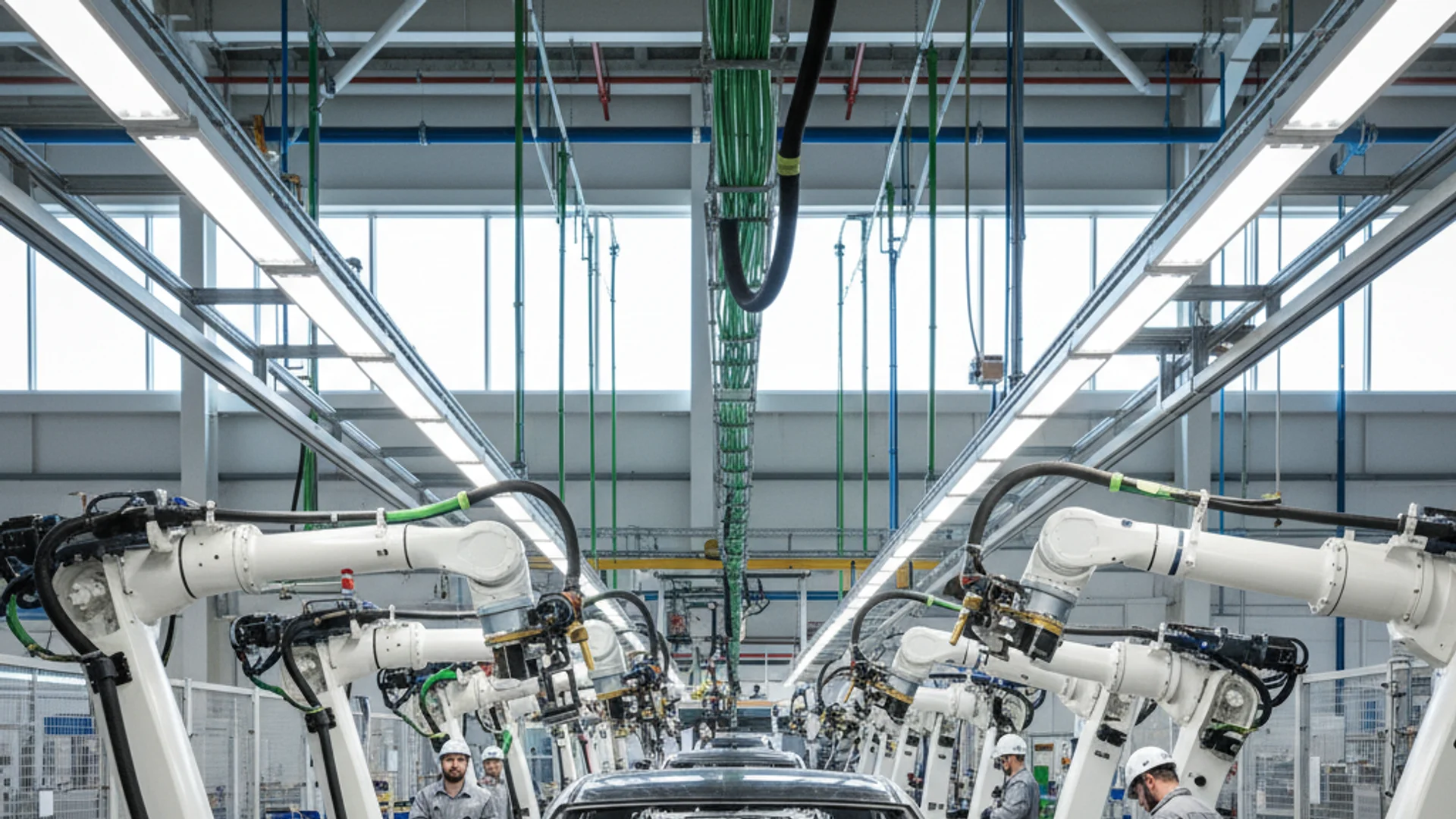
Are Any Electric Cars Made in Canada? The 2026 Reality
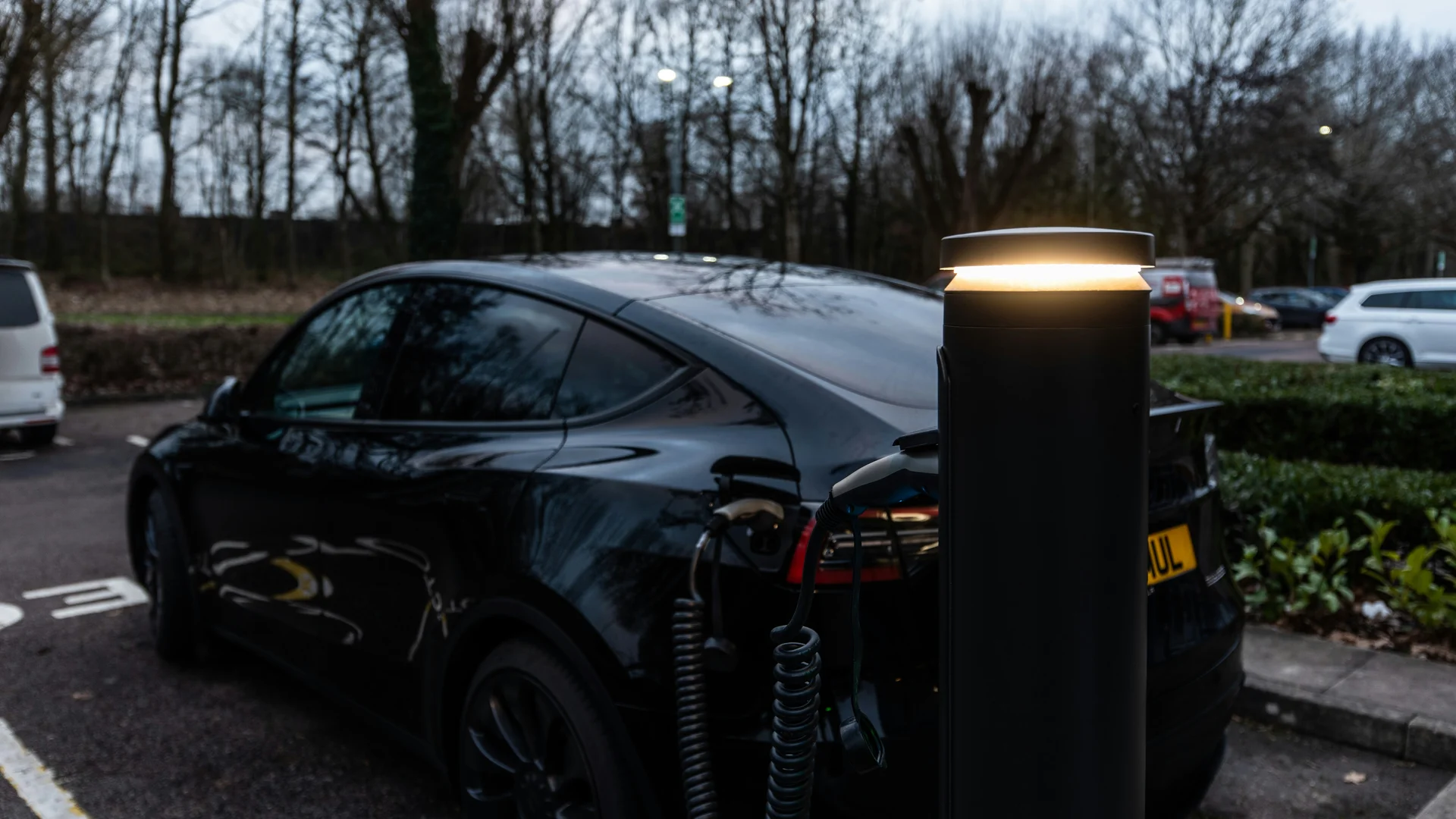
EV Charge Limits: NMC vs LFP and What Owners Miss

EV Efficiency Ratings Compared Across Four Markets
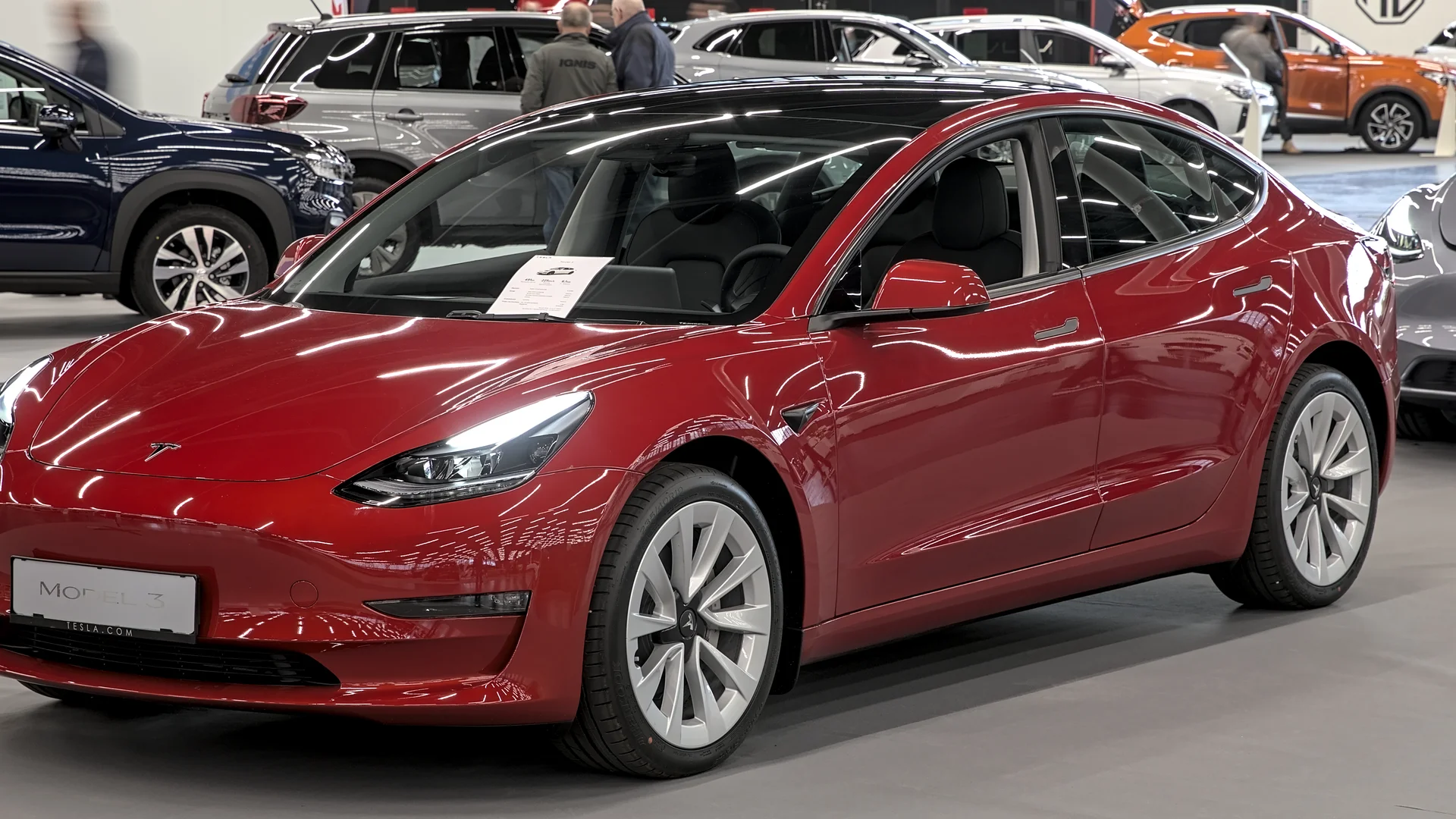
Tesla, Caterpillar and the EV Tech Training Gap

The EV Fumble Video Is a Genre, Not a Review