Key takeaways
- Manitoba buyers who act before March 31, 2026 can stack the $4,000 provincial rebate with the $5,000 federal EVAP for $9,000 off a new EV, one of Canada's biggest stacks.
- The provincial rebate is backed by a $25 million pool that can run dry before the March 31 deadline, closing the program early without warning.
- Manitoba's $70,000 MSRP cap is the most generous in Canada, qualifying nearly every mainstream EV including the $64,495 Chevy Blazer EV.
- Manitoba also rebates $2,500 on used EVs from the 2023 model year or newer bought at a Manitoba dealer, one of the only provinces to do so, also ending March 31, 2026.
- Manitoba Hydro's $0.09–$0.10 per kWh rate puts EV "fuel" at about $1.62 per 100 km versus $10–$12 for gasoline, saving a 20,000-km-a-year driver roughly $1,700–$2,100 a year.
If you live in Manitoba and you have been thinking about buying an electric vehicle, you have approximately two weeks left to take advantage of one of the best EV deals in Canada. The Manitoba Electric Vehicle Rebate Program, a $4,000 provincial rebate on new battery-electric and plug-in hybrid vehicles, ends March 31, 2026. After that date, the money disappears. There is no confirmed renewal. There is no extension announcement. The program simply stops.
And it could end even sooner. The $25 million funding pool backing this program is being drawn down with every approved application. If that pool is exhausted before March 31, the program closes early. No warning. No grace period. The money runs out, and the door shuts.
Right now, a Manitoba buyer can stack $4,000 from the province with $5,000 from the federal Electric Vehicle Availability Program (EVAP) for a combined $9,000 off a new EV. That ties with PEI for the second-highest rebate stack in the country, behind only Yukon at $10,000. Ontario offers nothing provincial. Alberta offers nothing. British Columbia's rebate is capped at $4,000 but has stricter eligibility. Manitoba, the province most people never think about when they think about EV policy, is quietly offering one of the best purchase incentives in the entire country.
But only until the end of March.
I have watched provincial EV rebate programs come and go across this country. Quebec's Roulez vert has been trimmed repeatedly. BC's program has been restructured with tighter income caps. Ontario killed its rebate entirely years ago and never brought it back. The pattern is clear: these programs are temporary, and governments rarely announce their end with enough lead time for consumers to react. Manitoba's program is following the same trajectory, except this time you have the advantage of knowing the exact expiry date.
This is not a "nice to have" situation. This is $4,000 that will not exist on April 1. For a used EV, it is $2,500 that will not exist on April 1. Combined with Manitoba's extraordinarily cheap electricity and public insurance through MPI, the financial case for buying an EV in this province right now is arguably stronger than anywhere else in Canada, if you act before the deadline.
Here is everything you need to know about Manitoba's EV incentives in 2026, how to maximize them, and why the window is closing fast.
THE PROVINCIAL REBATE
Manitoba's Electric Vehicle Rebate Program is administered through Manitoba Public Insurance (MPI), which is unusual. In most provinces, EV rebates flow through the ministry of environment or a dedicated clean energy agency. In Manitoba, your auto insurer handles it. This is actually an advantage, MPI already has your vehicle registration data, which streamlines the verification process.
The program structure is straightforward:
- New BEVs and PHEVs: $4,000 rebate
- Used EVs (2023 model year or newer, purchased from a Manitoba dealer): $2,500 rebate
- MSRP cap: $70,000
That $70,000 MSRP cap deserves special attention because it is the most generous in Canada. The federal EVAP uses a $50,000 final transaction value cap (with an exception for Canadian-assembled vehicles, which have no cap). Quebec's Roulez vert program caps at $60,000. BC's CleanBC Go Electric program has income-tested tiers with lower thresholds for higher rebate amounts.
Manitoba's $70,000 cap means virtually every mainstream EV on the market qualifies. The Kia EV6 Long Range at $56,995? Qualifies. The Hyundai Ioniq 5 Long Range at $54,999? Qualifies. The Chevy Blazer EV at $64,495? Qualifies. Even some luxury-adjacent models like the Volkswagen ID.4 AWD Pro S sneak in under the wire. The only vehicles excluded are true luxury EVs, your BMW iX xDrive50, your Mercedes EQS, your Rivian R1S. For the vast majority of Manitobans shopping for an EV, the $70,000 cap is essentially invisible.
Who Qualifies
Both individuals and businesses are eligible for the Manitoba EV rebate. This is significant, in some provinces, fleet purchases or business-registered vehicles are excluded from consumer rebate programs. In Manitoba, if your small business buys a Chevy Equinox EV for service calls, you get the $4,000. Sole proprietors, incorporated businesses, and individual buyers all qualify.
The vehicle must be purchased from a Manitoba dealership. Out-of-province purchases do not qualify, and neither do private sales (for new vehicles, this is a non-issue, but it matters for the used EV rebate). You must be a Manitoba resident with valid Manitoba vehicle registration.
How to Apply
The application process goes through MPI at evrebate.mpi.mb.ca. Here is what you need:
- Your vehicle purchase agreement (bill of sale from the dealer)
- Vehicle registration showing Manitoba registration
- Proof of Manitoba residency (driver's licence or utility bill)
- Vehicle VIN number
- For used EVs: proof that the vehicle is 2023 model year or newer
You apply after taking delivery of the vehicle, not before. This means you need to complete the purchase, register the vehicle with MPI, and then submit your rebate application. The dealer does not apply on your behalf, though some Manitoba dealers will walk you through the process as part of their delivery experience.
Processing time is typically 4 to 8 weeks. The rebate comes as a cheque mailed to your address. Some buyers have reported receiving it in as little as three weeks; others have waited the full eight. Given that the program ends March 31, if you purchase a vehicle in March and apply immediately, you should still be eligible even if the cheque arrives in April or May, the critical factor is the purchase date, not the processing date. However, I would strongly recommend confirming this with MPI directly, as the program terms specify the application must be submitted before the deadline.
The Deadline Reality
The program ends March 31, 2026, or when the $25 million funding pool is exhausted, whichever comes first. This is not a soft deadline. There is no announced extension. The Manitoba government has not signalled any intention to renew the program.
Twenty-five million dollars sounds like a lot, but at $4,000 per new vehicle rebate, that funds approximately 6,250 new vehicle rebates (before accounting for the $2,500 used vehicle rebates drawing from the same pool). Given that Manitoba registered approximately 1,800 new EVs in 2025, the fund should theoretically last, but uptake has been accelerating, and the approaching deadline creates a rush effect. Programs that announce end dates tend to see a surge in applications in the final months. If you are reading this in March 2026, the responsible move is to treat the funding as limited and act accordingly.
STACKING WITH FEDERAL EVAP
The federal Electric Vehicle Affordability Program (EVAP), the successor to the original iZEV program, provides $5,000 for new battery-electric vehicles. The EVAP has its own eligibility requirements:
- Final transaction value under $50,000 (including destination, PDI, and mandatory dealer fees)
- Exception: Canadian-assembled vehicles have no price cap
- Vehicle must be manufactured in Canada or a country with a free trade agreement with Canada
- Chinese-manufactured vehicles are excluded, this matters because BYD, for example, would not qualify even if sold in Canada
In Manitoba, an eligible buyer stacking both programs receives:
- Provincial rebate: $4,000
- Federal EVAP: $5,000
- Total: $9,000
This $9,000 stack is extraordinary by Canadian standards. Let me put it in national context:
- Yukon: $5,000 territorial + $5,000 EVAP = $10,000 (highest in Canada, but tiny market)
- Manitoba: $4,000 provincial + $5,000 EVAP = $9,000
- PEI: $4,000 provincial + $5,000 EVAP = $9,000
- Quebec: $4,000 Roulez vert (reduced from $7,000 in 2025) + $5,000 EVAP = $9,000 (but Quebec has income caps and is reducing)
- British Columbia: up to $4,000 CleanBC + $5,000 EVAP = $9,000 (but income-tested, higher earners get less)
- Ontario: $0 provincial + $5,000 EVAP = $5,000
- Alberta: $0 provincial + $5,000 EVAP = $5,000
Manitoba is in the top tier, and unlike Quebec and BC, its $4,000 rebate is not income-tested. A surgeon making $400,000 a year gets the same $4,000 as a teacher making $65,000. There is no means test, no sliding scale, no additional hoops. If you buy a qualifying vehicle from a Manitoba dealer, you get $4,000. Period.
Vehicle-by-Vehicle Math
Here is what the $9,000 stack looks like applied to the most popular EVs available in Manitoba right now:
Kia EV4 (Long Range watchlist scenario) - early Canadian pricing has been discussed around $38,995
- If the qualifying trim remains EVAP-eligible and Manitoba's provincial rebate is still available before March 31, the stack could bring it to roughly $29,995
- Manitoba 12% sales tax (7% PST + 5% GST) on net price: about $3,600
- Out-the-door estimate: about $33,594
- Treat this as a high-conviction scenario, not a settled Manitoba dealer sticker
Chevrolet Equinox EV (LT), MSRP $44,995
- After $9,000 stack: $35,995
- Out-the-door estimate: ~$40,315
- A proper mid-size SUV with 515 km of range for about $40,000.
Hyundai Kona Electric (Preferred Long Range), MSRP $42,999
- After $9,000 stack: $33,999
- Out-the-door estimate: ~$38,079
- One of the most popular EVs in Canada, at a price point that matches a nicely equipped Tucson gas model.
Chevrolet Equinox EV (2LT AWD), MSRP $49,995
- After $9,000 stack: $40,995
- Out-the-door estimate: ~$45,915
- AWD variant with every feature, still under $46,000 all-in.
Kia EV6 (Long Range RWD), MSRP $52,995
- After $9,000 stack (EVAP eligible, Canadian assembly exception): $43,995
- Out-the-door estimate: ~$49,274
- A performance-oriented EV with 500+ km range and 800V ultra-fast charging architecture.
Tesla Model 3 Long Range, MSRP ~$54,990
- EVAP eligible? No. The Model 3 exceeds the $50,000 transaction value cap after mandatory fees, and is not Canadian-assembled.
- After $4,000 Manitoba rebate only: ~$50,990
- Out-the-door estimate: ~$57,109
- Model 3 Long Range buyers in Manitoba get the provincial rebate but miss out on the federal $5,000. Note: the Tesla Model Y RWD base ($49,990) is a different story, it's now on Transport Canada's EVAP eligible list and can qualify for the federal $5,000 if the final transaction value stays under the cap. The Model 3 Long Range at $54,990 does not qualify regardless.
The message is clear: if you want to maximize your rebate, buy a non-Tesla EV priced under $50,000 before mandatory fees. If Kia Canada's final EV4 pricing and qualifying trim structure land where current reporting suggests, it will be one of the most compelling rebate-stacked new-EV deals in Canada.

WHAT HAPPENS AFTER MARCH 31
On April 1, 2026, the Manitoba EV market changes significantly. The $4,000 provincial rebate on new EVs disappears. The $2,500 provincial rebate on used EVs disappears. What remains is the $5,000 federal EVAP, and only that.
This means a Manitoba buyer purchasing a qualifying EV4-like compact electric sedan before March 31 could plausibly save about $4,000 more than a buyer making the same purchase after the provincial program ends. For a used EV, the buyer on April 1 gets $0 from the province instead of $2,500.
Manitoba will go from having one of the best EV incentive packages in Canada to having a merely average one, identical to Ontario and Alberta, which offer no provincial rebate at all. The competitive advantage that made Manitoba an attractive place to buy an EV will evaporate overnight.
Is there any chance the program gets renewed? Possibly. The Manitoba government could announce a successor program, extend the deadline, or replenish the funding pool. But as of mid-March 2026, there is no official indication that any of this will happen. Provincial EV rebate programs across Canada have a pattern of being announced with great fanfare and then quietly allowed to expire. Ontario's $14,000 rebate died in 2018. Nova Scotia's $3,000 rebate expired in 2024. Manitoba's appears to be following the same arc.
If the program is renewed, you lose nothing by purchasing before March 31, you simply got the rebate sooner. If the program is not renewed, buying after March 31 costs you $4,000. The risk-reward calculus is entirely one-sided: buy now.
For buyers on a tight timeline, here is the practical reality. You need to:
- Select and test drive a vehicle (1-2 dealer visits)
- Negotiate and sign the purchase agreement
- Take delivery (some models have dealer stock; others may require a factory order with weeks of lead time)
- Register the vehicle with MPI
- Submit your rebate application at evrebate.mpi.mb.ca
If you are starting this process in mid-to-late March, focus on vehicles that are in stock at Manitoba dealerships right now. A factory order that does not arrive until April will not qualify. Call dealers, confirm inventory, and be prepared to move quickly. The $4,000 is worth a phone call.
THE ELECTRICITY ADVANTAGE
Manitoba's EV proposition does not start and end with rebates. The province has a structural advantage that no government policy change can take away: exceptionally cheap electricity.
Manitoba Hydro's residential electricity rate is approximately $0.09 to $0.10 per kWh. This is the second-cheapest residential electricity in Canada, behind only Quebec at roughly $0.07-$0.09/kWh. For context, here is what other provinces pay:
- Quebec: $0.07-$0.09/kWh
- Manitoba: $0.09-$0.10/kWh
- British Columbia: $0.10-$0.12/kWh (tiered)
- Alberta: $0.12-$0.18/kWh (variable, market-rate)
- Ontario: $0.08-$0.17/kWh (time-of-use, off-peak to on-peak)
- Saskatchewan: $0.15-$0.18/kWh
- Nova Scotia: $0.17-$0.19/kWh
Manitoba's rate has a important advantage over Ontario's: no time-of-use pricing. In Ontario, if you charge during on-peak hours (weekdays 4-9 PM), you pay $0.17/kWh. You need to schedule your charging for overnight off-peak windows ($0.08/kWh) to get reasonable rates. In Manitoba, the rate is flat. Plug in at 2 PM or 2 AM, you pay the same $0.09-$0.10/kWh. This simplicity is underrated. You never have to think about when to charge. You never have to set timers. You just plug in.
The Fuel Savings Math
A typical modern EV consumes approximately 18 kWh per 100 km in mixed driving (this varies by vehicle, a Kia EV4 is closer to 16 kWh/100 km, while a larger Equinox EV is closer to 20 kWh/100 km). At Manitoba Hydro's $0.09/kWh rate:
EV cost per 100 km: 18 kWh x $0.09 = $1.62
Now compare that to a fuel-efficient gas car. A 2026 Honda Civic consumes approximately 7.0L/100 km combined. With regular gasoline at $1.45/L in Winnipeg (2026 average):
Gas car cost per 100 km: 7.0L x $1.45 = $10.15
For a less efficient vehicle like a Toyota RAV4 at 8.4L/100 km:
Gas SUV cost per 100 km: 8.4L x $1.45 = $12.18
The EV costs 84-87% less per kilometre to fuel in Manitoba. This is not a marginal advantage. This is a structural, permanent cost reduction that compounds every single day you own the vehicle.
Over 20,000 km of annual driving (roughly average for a Canadian driver):
- EV annual fuel cost: $324
- Civic annual fuel cost: $2,030
- RAV4 annual fuel cost: $2,436
- Annual savings vs Civic: $1,706
- Annual savings vs RAV4: $2,112
Over five years at 20,000 km/year:
- Savings vs Civic: $8,530
- Savings vs RAV4: $10,560
And this does not account for oil changes ($50-$80 each, 2-3 times per year for a gas car, zero for an EV), engine air filters, spark plug replacements, or transmission fluid services. An EV's maintenance is essentially tires, cabin air filters, and brake pads, and the brake pads last far longer thanks to regenerative braking. Over five years, EV maintenance savings add another $2,000-$4,000 to the advantage.
Manitoba's cheap electricity is a permanent advantage. Even after the provincial rebate expires on March 31, every EV owner in Manitoba will continue to save roughly $1,700-$2,100 per year on fuel compared to an equivalent gas vehicle. The rebate gets you into the car cheaper. The electricity keeps you in it cheaper for the life of the vehicle.
For a deeper comparison of EV vs gas costs across every Canadian province, see our full total cost of ownership analysis.
Gear worth having
As an Amazon Associate, ThinkEV earns a small commission from qualifying purchases — at no extra cost to you.

Grizzl-E Classic Level 2 EV Charger (40A)
Canadian-made and rated for minus 40C winters. 40A / 9.6 kW, NEMA 14-50, indoor/outdoor, 24-ft cable. The charger built for Canadian weather.
As an Amazon Associate, ThinkEV earns from qualifying purchases — at no extra cost to you.
CHARGING INFRASTRUCTURE
Manitoba's charging network is smaller than Ontario's or Quebec's, that is the reality of a province with 1.4 million people versus 15 million or 8.7 million. But the network covers the routes that matter, and for a province where the vast majority of EV owners will do 90% of their charging at home, the public network is adequate and improving.
Winnipeg
The capital has the highest concentration of public chargers in the province, which is expected given that roughly 60% of Manitoba's population lives in the Winnipeg metro area. You will find Level 2 chargers (6-10 kW) at shopping centres including Polo Park, St. Vital Centre, and Kildonan Place, as well as at some downtown parking garages, hotels, and workplaces. DC fast chargers (50-150 kW) are available at select locations along major arterials and at highway-adjacent commercial areas.
The charging experience in Winnipeg is fundamentally different from the charging experience in, say, rural Saskatchewan. You can live in Winnipeg, charge at home overnight, and essentially never need a public charger for your daily routine. Public charging is a convenience for topping up during errands or a necessity for apartment dwellers without home charging, but for the typical homeowner with a garage or carport, it is secondary to the Level 2 charger you install at home.
Brandon and Regional Centres
Brandon, Manitoba's second-largest city at roughly 53,000 people, has public charging available including both Level 2 and DC fast charging. Steinbach (approximately 18,000), Portage la Prairie (approximately 13,000), and Thompson (approximately 13,000) also have public charging infrastructure. These are not dense urban charging networks, in most of these communities, you are looking at one to three public charging locations. But for residents, home charging handles the daily driving, and the public stations are there for top-ups or emergency situations.
The Trans-Canada Corridor
The Trans-Canada Highway (Highway 1) through Manitoba runs roughly 500 km from the Saskatchewan border near Virden to the Ontario border near Whiteshell Provincial Park, passing through Brandon and Winnipeg. This corridor now has charging stations at intervals that make east-west travel feasible in any modern long-range EV. The gap between stations is tight enough that a vehicle with 350+ km of range (which covers most 2025-2026 EVs) can make the crossing comfortably, even in winter with 30-40% range reduction.
Manitoba Hydro has been the primary driver of public charging expansion. The crown corporation has installed stations along key highways and has plans for further expansion. Natural Resources Canada's Zero Emission Vehicle Infrastructure Program (ZEVIP) has also funded charging stations in Manitoba, particularly along inter-provincial corridors.
Home Charging, The Manitoba Sweet Spot
For most Manitoba EV owners, the home charger is the only charger that matters. And Manitoba is arguably the best province in Canada for home charging:
- Flat rate electricity: $0.09-$0.10/kWh, 24 hours a day, 365 days a year. No time-of-use games.
- No charger installation rebate: Manitoba does not offer a provincial incentive for home charger installation. Budget $1,500-$2,500 for a Level 2 (240V, 40A) charger and installation by a licensed electrician. This is a one-time cost that pays for itself within the first year through fuel savings.
- Overnight charging is effortless: A Level 2 home charger delivers roughly 40-50 km of range per hour of charging. Plug in at 10 PM, wake up to a full battery. Even in winter, when the car needs preconditioning before departure, you simply set the departure time in the car's app and let the charger handle it.
The absence of a provincial charger installation rebate is a missed opportunity by the Manitoba government. BC and Quebec both offer $350-$700 rebates for home charger installation. For a province that is otherwise aggressive on EV incentives, this gap is surprising. But at $1,500-$2,500 all-in, a home charger installation is still one of the best investments a Manitoba homeowner can make, you are buying years of $0.09/kWh fuel access. For home charger recommendations, see our EV charging costs guide.

WINTER IN MANITOBA
Let us not sugarcoat this. Manitoba has some of the harshest winters in Canada. Winnipeg regularly sees temperatures of -25C to -35C in January and February. Thompson and northern communities hit -40C. The province's nickname is not "Winterpeg" for nothing.
And cold weather affects EVs. This is not a myth, and it is not propaganda from the oil industry. It is physics. Lithium-ion batteries produce less power in extreme cold. The cabin heater draws significant energy. Rolling resistance increases on snow and ice. At -30C, most EVs lose 30 to 40 percent of their rated range.
Gear worth having
As an Amazon Associate, ThinkEV earns a small commission from qualifying purchases — at no extra cost to you.
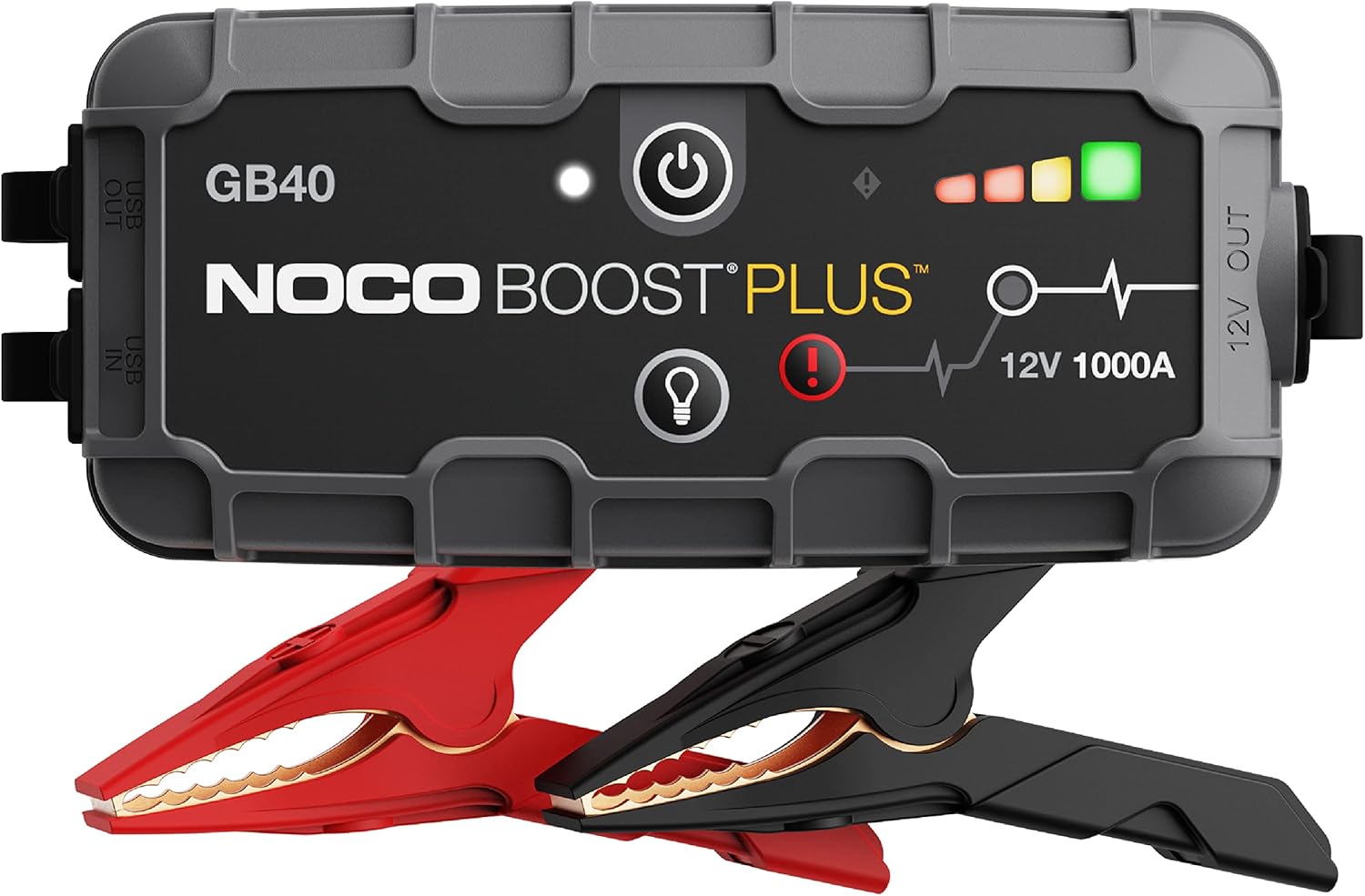
NOCO Boost Plus GB40 Jump Starter
A 1000A lithium jump starter that fits in your glovebox and works on any 12V battery. Your insurance against a dead 12V in a parking lot.
As an Amazon Associate, ThinkEV earns from qualifying purchases — at no extra cost to you.
A vehicle rated at 400 km of range will realistically deliver 240-280 km in the depths of a Manitoba winter. A vehicle rated at 500 km, like the Chevy Equinox EV Long Range, will deliver roughly 300-350 km. For daily driving in Winnipeg (where the average commute is 25-30 km round trip) or Brandon, this is still more than sufficient. You are never going to be stranded driving to work in January because your 400 km EV only has 260 km of range. The math still works comfortably.
Where winter range matters is on longer trips. The drive from Winnipeg to Brandon is roughly 200 km. In summer, any modern EV handles this without a charging stop. In January at -35C, a vehicle with 400 km rated range and 260 km effective range can still make the trip, but you will arrive with less buffer. For the Winnipeg-to-Kenora run (210 km), same story. Planning and awareness matter in winter, and you should know your vehicle's cold-weather range from experience, not just the manufacturer's spec sheet.
For an in-depth analysis of how Canadian EVs perform in winter, see our EV winter range test.
Preconditioning: Manitoba's Secret Weapon
Here is where Manitoba's cheap electricity turns a winter disadvantage into something manageable. Preconditioning means warming the cabin and battery while the car is still plugged into your home charger. The energy comes from the grid, not the battery, so your driving range is preserved.
In Ontario, preconditioning during on-peak hours costs you $0.17/kWh. Not ruinous, but noticeable over a season. In Manitoba, it costs you $0.09/kWh, all day, every day. Running a 6 kW preconditioning session for 30 minutes costs approximately $0.27. Over a 150-day Manitoba winter, that adds up to roughly $40 for the entire season. That is the cost of two Tim Hortons visits.
Compare this to a gas car's block heater. Manitobans know all about block heaters, if you do not plug in your gas car overnight in January, it may not start. A typical block heater draws 400-600 watts for 4-6 hours overnight. At $0.09/kWh, that is roughly $0.22-$0.32 per night, or about $33-$48 over the winter. The EV preconditioning cost is comparable, except you also get a warm cabin, a warm battery (which preserves range), and you never have to scrape frost off the inside of your windshield because the defroster ran while you were eating breakfast.
Heat Pump EVs
Most 2025-2026 model year EVs come standard with heat pump climate systems. This is a significant advancement over the resistive heaters used in earlier EVs. A heat pump moves heat rather than generating it, which means it draws roughly 40-60% less energy for cabin heating compared to a resistive system. In Manitoba's extreme cold, a heat pump makes a measurable difference in winter range retention.
The Kia EV4 is expected to use an efficient heat-pump setup, while the Hyundai Kona Electric, Chevy Equinox EV, and Tesla Model 3 already use heat-pump-based thermal management. When shopping for an EV in Manitoba, confirm that the model you are considering has a heat pump - it is not optional equipment in this climate, it is essential.
The Block Heater Analogy
Here is a reframing for Manitobans who are sceptical about EVs in winter: you already plug in your car every night for four months. Every house in Winnipeg has an outdoor outlet. Every parking lot at every workplace has block heater plugs. Manitoba is, structurally, the most prepared province in Canada for EVs that need to be plugged in. The infrastructure for overnight plugging-in already exists. You just swap the block heater cord for a Level 1 or Level 2 charging cable. The habit is already there. The outlets are already there. The only thing that changes is what the electricity is doing, instead of keeping your engine block warm enough to start, it is filling your battery with the cheapest electrons in the country.
BEST EVS FOR MANITOBA BUYERS
With the March 31 deadline approaching, here are the vehicles that maximize the $9,000 rebate stack. These are all available at Manitoba dealerships, qualify for both provincial and federal rebates, and represent the best value for Manitoba buyers right now.
1. Watchlist: compact electric sedan scenario - roughly $29,995 after rebates
If Kia Canada prices the EV4 where early reporting suggests and the qualifying trim remains EVAP-eligible before Manitoba's provincial rebate expires, the stack could bring a long-range compact electric sedan into roughly the $29,995 range before tax.
Treat that as a high-conviction buying scenario, not a locked dealer sticker. The point for Manitoba shoppers is that this class of vehicle could dip below many gas sedans once the full rebate stack is applied.
2. Chevrolet Equinox EV LT, $35,995 After Rebates
MSRP $44,995. After $9,000 stack: $35,995. Estimated out-the-door: ~$40,315.
The Equinox EV is the vehicle GM should have built five years ago. A practical, mid-size SUV with 515 km of rated range (the longest-range affordable EV in Canada), a proper trunk, back-seat room for adults, and a starting price that undercuts the gas Equinox's total cost of ownership within the first two years. At $40,000 out the door in Manitoba, this is the family SUV answer.
3. Hyundai Kona Electric Preferred Long Range, $33,999 After Rebates
MSRP $42,999. After $9,000 stack: $33,999. Estimated out-the-door: ~$38,079.
The Kona Electric is one of the most popular EVs in Canada for good reason: it is well-built, efficient (approximately 16 kWh/100 km), and comes with Hyundai's strong warranty package. The subcompact SUV form factor works well for Winnipeg city driving and Manitoba highway trips alike.
4. Nissan Ariya Engage, $36,998 After Rebates
MSRP $45,998. After $9,000 stack: $36,998. Estimated out-the-door: ~$41,438.
The Ariya is Nissan's proper EV crossover and a significant step up from the ageing Leaf. With approximately 350 km of rated range and a comfortable, well-insulated cabin, it is a solid choice for Manitoba buyers who want a mid-size crossover with Japanese reliability.
5. Chevrolet Equinox EV 2LT AWD, $40,995 After Rebates
MSRP $49,995. After $9,000 stack: $40,995. Estimated out-the-door: ~$45,915.
The AWD variant of the Equinox EV adds all-wheel drive, valuable in Manitoba winters, plus additional features. Even fully loaded, it still comes in under $46,000 all-in after the full rebate stack.
6. Kia EV6 Long Range RWD, $43,995 After Rebates
MSRP $52,995. After $9,000 stack: $43,995 (EVAP eligible via Canadian assembly exception). Estimated out-the-door: ~$49,274.
The EV6 is the performance choice. Its 800V architecture enables ultra-fast charging (10-80% in roughly 18 minutes at a 350 kW charger), it has over 500 km of rated range, and it drives like a proper sport sedan despite its crossover proportions. At under $50,000 all-in, it is a compelling premium option.
For a complete comparison of affordable EVs available in Canada, see our most affordable EVs guide.
USED EVS IN MANITOBA
The $2,500 provincial rebate for used EVs is one of the most underappreciated incentives in the country. Very few provinces offer any rebate on used EV purchases. Manitoba does, but only until March 31.
Eligibility Requirements
The $2,500 used-EV rebate has five conditions, and missing any one of them disqualifies the application. The most common stumbles are private-sale purchases (dealer-only) and original MSRP above the $70,000 cap, which excludes some used Teslas and luxury European EVs. Note that the federal EVAP rebate cannot stack on used vehicles, so the provincial $2,500 is the maximum total incentive available.
- Vehicle must be model year 2023 or newer
- Must be purchased from a Manitoba dealership (private sales do not qualify)
- Must be a battery-electric vehicle or plug-in hybrid
- MSRP when new must have been $70,000 or less
- The federal EVAP does not apply to used vehicles, so the maximum incentive is $2,500
Popular Used EVs in Manitoba
The used EV market in Manitoba is growing but still relatively small compared to larger provinces. Here is what you are likely to find on dealer lots:
Used Tesla Model 3 (2023): $35,000-$42,000 at Manitoba dealers. After $2,500 rebate: $32,500-$39,500. A 2023 Model 3 Long Range with 40,000-60,000 km on it is still a very capable vehicle with 500+ km of range when new (expect 450+ km in real-world conditions at that mileage).
Used Chevrolet Bolt EV/EUV (2023): $24,000-$30,000. After $2,500 rebate: $21,500-$27,500. The Bolt was discontinued but remains one of the most affordable EVs on the used market. With approximately 400 km of range and a proven track record (post-battery-recall), it is an excellent value.
Used Hyundai Ioniq 5 (2023): $38,000-$45,000. After $2,500 rebate: $35,500-$42,500. An award-winning crossover with ultra-fast charging capability and a spacious interior.
Used Hyundai Kona Electric (2023): $28,000-$34,000. After $2,500 rebate: $25,500-$31,500. A practical choice for budget-conscious buyers who want a newer-model EV at a used price point.
Where to Find Them
Check Manitoba dealer inventory at dealerships in Winnipeg (the largest selection), Brandon, and Steinbach. AutoTrader.ca filtered for Manitoba, electric vehicles, 2023+ model year, will show you what is available. Some dealerships also list on Kijiji Autos and Facebook Marketplace, but remember: the $2,500 rebate requires a dealership purchase, not a private sale.
The key urgency here is the same: the used EV rebate also ends March 31, 2026. After that date, buying a used EV in Manitoba comes with zero government incentives, no provincial rebate, no federal rebate. The $2,500 you can get today will not be available tomorrow.
5-YEAR COST COMPARISON
Let me run the real numbers on what it costs to own an EV versus a gas car in Manitoba over five years, factoring in the full $9,000 rebate stack, Manitoba Hydro's cheap electricity, and realistic maintenance costs. This is the analysis that settles the "are EVs really cheaper?" question for Manitoba buyers.
Comparison 1: compact electric sedan scenario vs Honda Civic
Compact electric sedan watchlist scenario
- Purchase price after stacked rebates: about $29,995
- Out-the-door (12% tax): about $33,594
- Annual electricity (20,000 km at roughly 16 kWh/100 km, $0.09/kWh): about $288
- 5-year electricity: about $1,440
- 5-year maintenance: about $3,000
- 5-year total cost: about $38,034
2026 Honda Civic EX
- Purchase price: $31,490
- Out-the-door (12% tax): about $35,269
- Annual fuel (20,000 km at 7.0L/100 km, $1.45/L): $2,030
- 5-year fuel: $10,150
- 5-year maintenance: about $5,500
- 5-year total cost: about $50,919
5-year advantage of the compact-EV scenario over Civic: about $12,885
If the pricing and eligibility assumptions hold, the compact-electric-sedan scenario is cheaper to buy than a Civic after incentives and substantially cheaper to run. That is the real point. Manitoba's rebate stack can pull a new EV into mainstream gas-sedan territory.
Comparison 2: Chevy Equinox EV vs Toyota RAV4
Chevrolet Equinox EV LT
- Purchase price after $9,000 rebates: $35,995
- Out-the-door (12% tax): ~$40,315
- Annual electricity (20,000 km at 20 kWh/100 km, $0.09/kWh): $360
- 5-year electricity: $1,800
- 5-year maintenance: ~$3,200
- 5-year total cost: ~$45,315
2026 Toyota RAV4 LE AWD
- Purchase price: $38,290
- Out-the-door (12% tax): ~$42,885
- Annual fuel (20,000 km at 8.4L/100 km, $1.45/L): $2,436
- 5-year fuel: $12,180
- 5-year maintenance: ~$6,000
- 5-year total cost: ~$61,065
5-year advantage of Equinox EV over RAV4: ~$15,750
The Equinox EV is $2,570 cheaper to buy after rebates, saves $10,380 on fuel, and saves roughly $2,800 on maintenance. The total five-year advantage exceeds $15,000. An EV SUV in Manitoba is not just competitive with a gas SUV, it is dramatically cheaper to own.
These numbers are specific to Manitoba because of the combination of the $9,000 rebate stack (available only until March 31) and $0.09/kWh electricity. In Ontario, where there is no provincial rebate and electricity costs $0.08-$0.17/kWh (time-of-use), the five-year advantage is smaller. In Alberta, where electricity can hit $0.18/kWh during peak months, the fuel savings narrow further. Manitoba is the sweet spot. But only if you buy before the rebate expires.
For a comprehensive province-by-province breakdown, see our EV vs gas total cost of ownership analysis.
MPI INSURANCE ADVANTAGE
Manitoba is one of three provinces with public auto insurance (along with BC through ICBC and Saskatchewan through SGI). Manitoba Public Insurance (MPI) is a crown corporation, which means it operates as a not-for-profit insurer with a mandate to provide affordable coverage to all Manitobans.
What does this mean for EV owners? Generally, lower insurance costs than comparable coverage in provinces with private insurance markets.
In Ontario, EV insurance premiums have been a pain point. Private insurers price based on the replacement value of the vehicle, and EVs, with their expensive battery packs, can carry higher premiums than equivalent gas vehicles. Some Ontario EV owners have reported premiums 10-25% higher than comparable gas cars. In Alberta, the story is similar.
In Manitoba, MPI sets premiums based on the vehicle's rate group, which considers the vehicle's value, repair costs, and claims history. EVs do tend to be in slightly higher rate groups than equivalent gas vehicles due to higher repair costs (battery damage, specialized parts), but MPI's not-for-profit structure and regulated premiums keep the differential modest. A Chevy Equinox EV's MPI premium will typically be within $100-$200 annually of a gas Equinox's premium, depending on your driving record and usage.
MPI does not currently offer a specific EV discount or green vehicle incentive on premiums, this is something the corporation could and should consider as EV adoption grows. But the baseline advantage of public insurance means Manitoba EV owners are already paying less for coverage than their counterparts in Ontario, Alberta, or Atlantic Canada.
Additionally, MPI's Extension coverage (optional additional coverage beyond basic Autopac) is competitively priced for EVs. You can add comprehensive and collision coverage at rates that would make Ontario EV owners envious. For a Manitoba buyer, this is yet another cost advantage that compounds over the life of the vehicle.
Gear worth having
As an Amazon Associate, ThinkEV earns a small commission from qualifying purchases — at no extra cost to you.
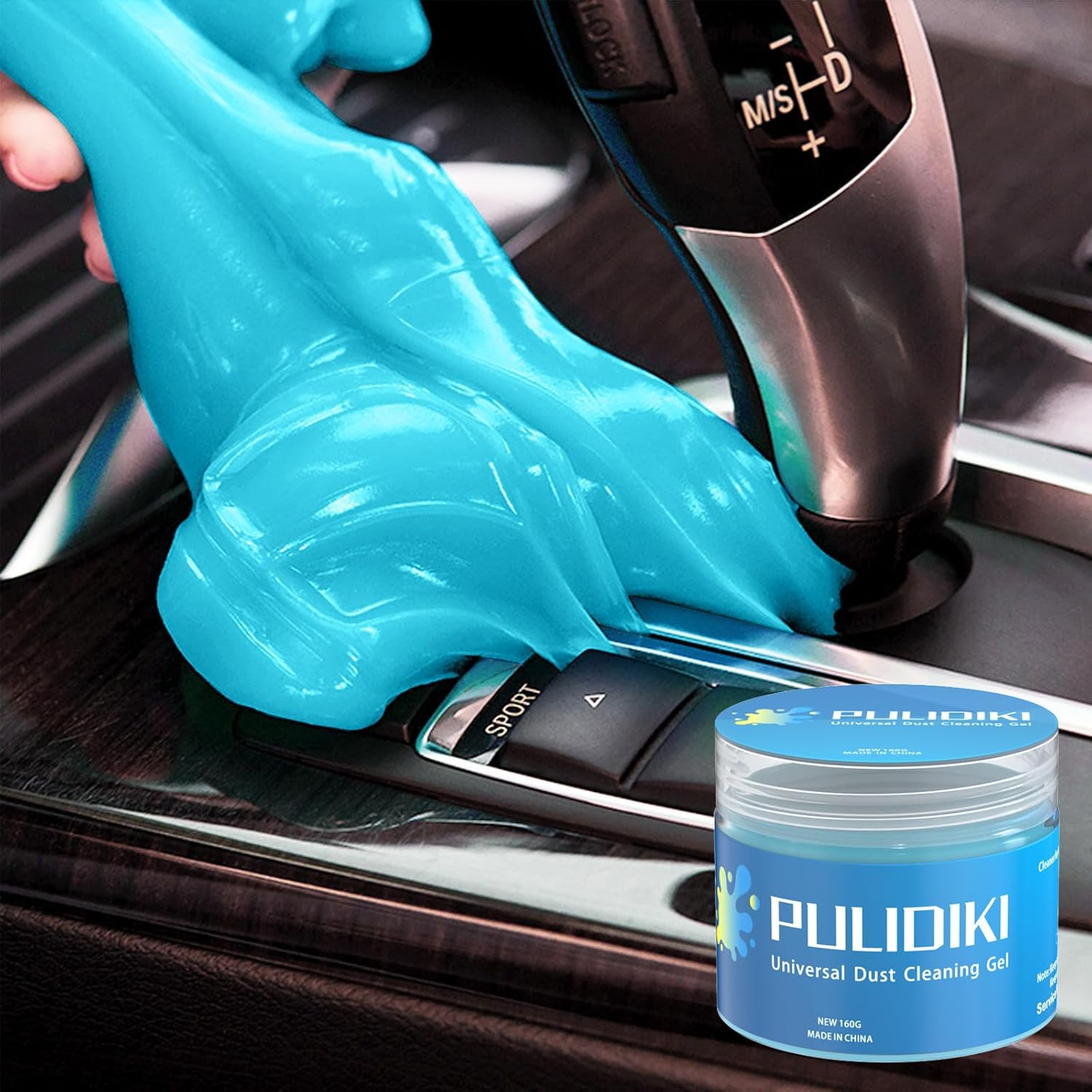
PULIDIKI Car Cleaning Gel (Detailing Putty)
Press it into vents, buttons, and seams and it lifts out dust you did not know was there. Weirdly satisfying, genuinely useful.
As an Amazon Associate, ThinkEV earns from qualifying purchases — at no extra cost to you.
POLICY ANALYSIS
Manitoba's EV rebate program deserves credit for several things the province got right, and scrutiny for what it got wrong.
What Manitoba Did Right
Generous MSRP cap. At $70,000, Manitoba's cap is the most inclusive in Canada. This was a deliberate choice to make the program accessible to buyers across the market, not just those shopping in the sub-$45,000 range. It signals that the province wants broad EV adoption, not just token adoption among the most price-sensitive buyers.
Including used EVs. The $2,500 used EV rebate is forward-thinking. Most provinces ignore the used EV market entirely, which is short-sighted, the used market is where middle-income and lower-income buyers actually shop. By including 2023+ used EVs from dealerships, Manitoba created a pathway for buyers who cannot afford a new $40,000 vehicle but can manage a $30,000 used one.
Including businesses. Fleet electrification is a critical part of the EV transition. By making businesses eligible for the same rebate, Manitoba encouraged commercial adoption alongside consumer adoption.
Simple, clean program design. No income tests, no sliding scales, no multi-tier eligibility matrices. Buy a qualifying vehicle from a Manitoba dealer, apply through MPI, get your cheque. The simplicity reduces administrative overhead and eliminates the confusion that plagues more complex programs like BC's income-tiered CleanBC rebate.
What Manitoba Got Wrong
No charger installation rebate. This is a significant gap. Home charging is the backbone of EV ownership, especially in a province where public charging is sparse outside Winnipeg. A $500-$750 rebate for Level 2 charger installation would have been a natural complement to the vehicle rebate. BC and Quebec offer this. Manitoba should have too.
No clear communication about program end date. The March 31, 2026 deadline exists, but the Manitoba government has not run a significant public awareness campaign about it. Many Manitobans who would benefit from this rebate do not know it exists, let alone that it is expiring. A province that spent $25 million on EV rebates but near-zero on telling people about them got a poor return on that investment.
No announced successor program. As of mid-March 2026, there is no indication of what comes next. Will Manitoba renew the program? Replace it with something different? Let EV incentives die entirely? The silence creates uncertainty that chills the market. Dealers cannot plan inventory. Buyers cannot plan purchases. The province should have announced its post-March 31 intentions months ago.
What Manitoba Should Do Next
If I were advising the Manitoba government, I would recommend a successor program with the following structure:
- Maintain the $4,000 new EV rebate through at least 2028, funded by a new allocation
- Add an income-tested top-up of $2,000-$3,000 for households earning under $80,000
- Introduce a $750 home charger installation rebate
- Continue the used EV rebate at $2,500, expanding eligibility to 2022+ model years
- Partner with Manitoba Hydro to install DC fast chargers in every community over 5,000 population
This would cost roughly $30-40 million per year and would position Manitoba as a genuine leader in EV adoption, not just a province that ran a temporary incentive and let it lapse.
But that is policy speculation. The reality on the ground is that the current program ends March 31, 2026. What Manitoba should do next is a question for the government. What you should do next, if you are a Manitoba resident considering an EV, is much simpler: act before the deadline.
Gear worth having
As an Amazon Associate, ThinkEV earns a small commission from qualifying purchases — at no extra cost to you.

WixGear Magnetic Air Vent Phone Mount (2-Pack)
A magnet strong enough that your phone never flinches over potholes or rail crossings. Two in the box, one for each car.
As an Amazon Associate, ThinkEV earns from qualifying purchases — at no extra cost to you.
FAQ
Related Reading
- EV Rebates by Province Canada 2026, How Manitoba's $9,000 stack compares to every other province and territory.
- Canada EVAP Rebate Guide 2026, How to claim the $5,000 federal incentive and which vehicles qualify.
- EV Charging Costs by Province Canada 2026, Manitoba's $0.09/kWh advantage and how it compares nationally.
- EV vs Gas Total Cost of Ownership Canada 2026, Full five-year ownership cost analysis for every province.
- EV Winter Range Test Canada 2026, How Canadian EVs perform at -20C, -30C, and -40C.
- Most Affordable EVs Canada 2026, The cheapest new EVs available in Canada after all rebates.
- Saskatchewan EV Incentives 2026, What Manitoba's neighbour offers (and why Manitoba's deal is better, while it lasts).
- EV Maintenance Costs Canada, What you actually pay for brakes, tires, and service on an EV versus gas.
Gear worth having
As an Amazon Associate, ThinkEV earns a small commission from qualifying purchases — at no extra cost to you.

Car Cup Holder Coasters (4-Pack)
Drop-in coasters that catch spills and crumbs so your cup holders stay clean. Rinse and reuse forever.
As an Amazon Associate, ThinkEV earns from qualifying purchases — at no extra cost to you.

Founder & Chief Editor
Vlad Pereira is the founder and chief editor of ThinkEV.ca, the Canadian electric-vehicle publication he writes and edits from Courtenay, British Columbia. He covers EV pricing, federal and provincial rebates, charging costs, and the Chinese manufacturers now entering Canada, from the buyer's side rather than the press-fleet side. ThinkEV is a venture of Vlad Pereira Online; his writing on health, income and the long game lives at vladpereira.com.
Frequently asked questions
How much can I save buying an EV in Manitoba in 2026?
Does Manitoba offer a rebate for used EVs?
How much does it cost to charge an EV in Manitoba?
How do I apply for the Manitoba EV rebate?
Does Tesla qualify for the Manitoba EV rebate?
Can I still get the rebate if I order a vehicle now but it arrives after March 31?
How does Manitoba's EV rebate compare to other provinces?
Will the Manitoba EV rebate be renewed after March 31, 2026?
Do businesses qualify for the Manitoba EV rebate?
More EV & road-trip finds
Affordable upgrades worth a look — tap any to check the price on Amazon.
 ★ 4,424
Sun Visor Card and Document Organizer
View on Amazon ★ 308
★ 308Coiled Lightning Car Cable for iPhone (2-Pack)
View on Amazon ★ 119
★ 119Foldable Waterproof Trunk Organizer
View on Amazon ★ 392
★ 392Large Cup Holder Adapter (32-40oz)
View on Amazon ★ 4,050
Touchscreen Mist Screen Cleaner Kit
View on Amazon ★ 314
★ 314Mini USB LED Ambient Lamps (4-Pack)
View on Amazon ★ 546
★ 546Funny Headrest Face Covers (2-Pack)
View on Amazon ★ 979
★ 979Leather Headrest Purse Hook
View on AmazonRead, Plan, Then Stay Current
Explore our expert articles to understand incentives and ownership costs, use the map to pressure-test charging reality, then subscribe so new EV coverage comes straight to you.
Continue Reading
Alberta EV Rebates 2026: What You Actually Get
BC EV Rebates 2026: What's Left After the Cuts
Newfoundland EV Rebates 2026: What You Can Claim
PEI EV Rebates 2026: The Island's Surprising $5,000 EV Deal
Quebec EV Rebates 2026: The Roulez Vert Changes