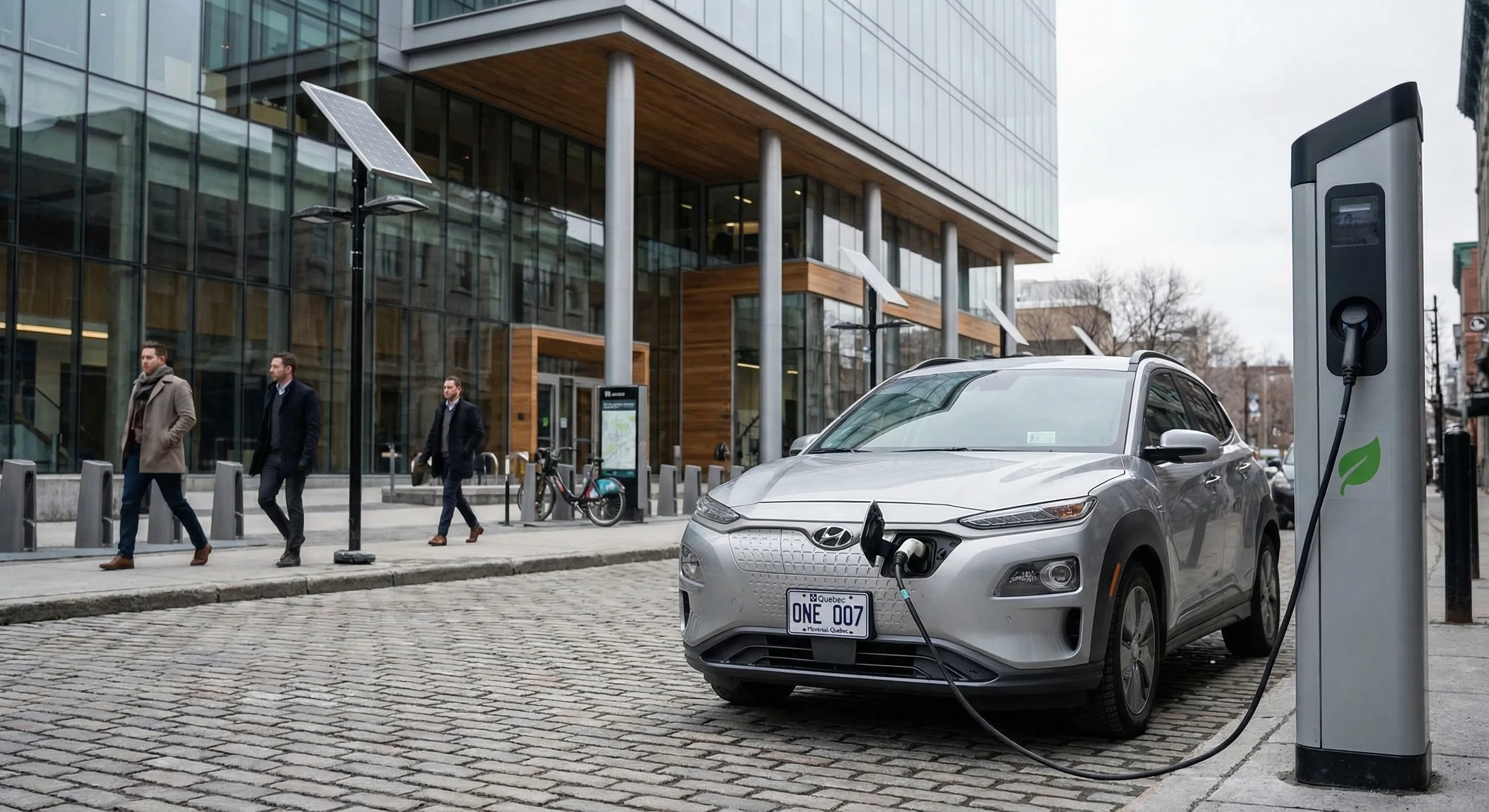
Key takeaways
- A buyer purchasing a $55,000 Tesla Model Y in Saskatchewan versus British Columbia walks away with $4,000 less in government support.
- That same buyer versus a Quebec resident faces a $7,000 gap.
- The transaction value cap is $55,000 for standard configurations, $60,000 for certain full-size vehicles and special editions.
Here's what you need to know before anything else: Saskatchewan is the most EV-hostile province in Canada, and the provincial government did it deliberately.
There is no provincial rebate. There is no home charging incentive. There is no registration discount tied to lower emissions. What Saskatchewan did add is a $150 annual surcharge that applies to EVs specifically, a fee designed to make EV ownership marginally more expensive while offering zero corresponding benefit. That's the starting position. Eyes open.
Now here's what I refuse to do with that information: conclude that it makes EVs financially wrong for Saskatchewan drivers. It doesn't. The math still works for a significant share of the province's drivers, and I'm going to show you exactly why, with real numbers, real winter conditions, and no hand-waving.
What the Provincial Government Decided Not to Do
Saskatchewan and Alberta are the only two provinces in Canada with no provincial EV incentive in 2026. Both are oil provinces. Both have governments whose political coalitions are tied to the fossil fuel industry. This is not a coincidence.
The province collected approximately $400 million in fuel taxes in 2024 according to budget documents. The prevailing view in the Legislative Assembly is that EVs represent a threat to road-funding revenue, not an opportunity for emissions leadership. That's a coherent political position if you accept its premises, I don't, but it's worth understanding rather than dismissing.
The practical consequence of this policy choice is straightforward arithmetic. A buyer purchasing a $55,000 Tesla Model Y in Saskatchewan versus British Columbia walks away with $4,000 less in government support. That same buyer versus a Quebec resident faces a $7,000 gap. These are real dollars that directly change the payback period on an EV purchase, and anyone who tells you the absence of a provincial rebate is "no big deal" is either optimistic or not doing the math.
The federal government's EVAP program is available to Saskatchewan buyers. What the province adds on top of that federal floor is nothing. Every dollar of government support for Saskatchewan EV owners comes from Ottawa, not Regina.
The Federal EVAP Rebate: Your $5,000 and How to Keep It
The Electric Vehicle Availability Program is a $5,000 rebate on qualifying battery electric vehicles and $2,500 on qualifying plug-in hybrids. It is not means-tested, not provincially conditional, and applies at point of sale through participating dealers. Saskatchewan residents are fully eligible.
The mechanics are simple: you buy a qualifying vehicle, the dealer deducts the rebate from your invoice and submits the claim to Transport Canada. You do not wait for a cheque. Your financing is calculated against the post-rebate price.
The eligibility conditions are where buyers consistently get tripped up. Let me be precise about each one.
The vehicle must be new. Used EVs don't qualify, and there's no provincial used-EV incentive to fill that gap. The transaction must be a purchase or lease through an authorized dealer, private sales are excluded. The rebate is per person, one time, for the life of the EVAP program, which means you can't claim it on a second EV while the program is active.
The transaction value cap is $55,000 for standard configurations, $60,000 for certain full-size vehicles and special editions. "Transaction value" is calculated on the base vehicle price plus options and fees, excluding freight and taxes. This is where people get surprised: a Hyundai Ioniq 6 base qualifies easily, but add the long-range battery and a few appearance packages and you can push past $55,000 without realizing it. Canadian-assembled vehicles, the Chevrolet Equinox EV, the Ford F-150 Lightning in certain trims, and Tesla's Fremont and Texas production vehicles, receive more favourable program treatment. Chinese-manufactured vehicles are entirely excluded following Canada's October 2024 trade measures.
Your dealer is required to calculate the qualifying transaction value before you sign. If they can't or won't do this for you, find a different dealer.
One thing worth understanding for Saskatchewan buyers specifically: the federal $5,000 is not a consolation prize for the missing provincial program. It's real money on a vehicle purchase. The issue isn't that the federal rebate is inadequate, it's that Saskatchewan buyers stop there while buyers in BC and Quebec collect an additional four to seven thousand on top. Know the gap, account for it in your decision, and move on.
The $150 Surcharge: What It Costs You and What It Means
In 2023, Saskatchewan added a $150 annual surcharge to EV registrations, on top of the standard passenger vehicle registration fee of approximately $125 per year. Total annual registration for an EV in Saskatchewan: roughly $275.
The government's stated rationale is road funding. The logic runs like this: a driver covering 15,000 kilometres annually in a conventional vehicle averaging 10 litres per 100 km burns approximately 1,500 litres of fuel per year, generating around $225 in provincial fuel tax at 15 cents per litre. EVs use the same roads without paying that fuel tax. The surcharge is positioned as a rough substitute.
The math doesn't quite work, $150 is less than the $225 in fuel tax the equivalent ICE driver pays, but the principle isn't entirely unreasonable. Roads need money. EVs use roads. Some mechanism to recoup that funding makes sense as EV adoption scales.
What's genuinely indefensible is the asymmetry: every other province that charges EV fees also pairs them with rebates. Saskatchewan charges the fee with no incentive. You pay the penalty without receiving the corresponding benefit. That's a legitimate policy grievance, and the provincial government should own it rather than dress it up as a principled funding mechanism.
In actual financial terms, $150 per year is $12.50 per month. Over five years of ownership, you'll pay $750 in EV registration surcharges. Keep that number in your head, I'll return to it when we run the full cost comparison.
The surcharge matters as a political signal more than a financial one. It signals that the province views EV ownership as something to be tolerated rather than encouraged. That signal matters for dealers, fleet purchasers, and charging infrastructure investors who are deciding where to direct resources. For an individual buyer running a household budget, it's noise in a much larger financial calculation.
SaskPower Rates: The Quiet Advantage Nobody Talks About
Here's something the anti-EV conversation in Saskatchewan consistently overlooks: electricity here is relatively cheap.
SaskPower's residential rate runs approximately $0.132 per kWh blended for most customers in 2026. That positions Saskatchewan in the lower half of the country. British Columbia's Tier 1 rate is around $0.14 per kWh, but heavy users hit Tier 2 at $0.21 per kWh, Saskatchewan heavy users don't face that penalty. Ontario's blended average across all rate periods is effectively $0.17 per kWh. Nova Scotia and PEI are north of $0.20 per kWh.
For EV charging math, the rate matters enormously. A typical battery electric vehicle consumes approximately 18 to 22 kilowatt-hours per 100 kilometres under normal driving conditions. I'll use 20 kWh/100km as my baseline, slightly conservative to account for Saskatchewan winters, which add heating load to the battery demand.
At 20 kWh/100km and $0.132/kWh, driving 100 kilometres costs you $2.64 in electricity. Fifteen thousand kilometres annually, a reasonable Saskatchewan driving total, runs to approximately $396 per year.
Compare that to petrol. Saskatchewan gasoline averaged around $1.55 per litre through 2025, trending toward $1.65 in peak summer months. A midsize crossover, the Toyota RAV4 is a fair comparison point, averages approximately 9.5 litres per 100 km on mixed Saskatchewan roads including winter warm-ups and highway travel. At $1.55/litre, that's $1.47 per 100 km in fuel. For 15,000 km: $2,213 per year.
The annual fuel saving is roughly $1,817 at $1.55/litre, climbing to approximately $1,957 at summer's $1.65/litre. Monthly, that's between $151 and $163 returning to your pocket. The $150 EV registration surcharge is covered in the first month, with the other eleven months of savings left untouched.
Run this calculation over five years and you're looking at between $9,000 and $10,000 in cumulative fuel savings. The $150/year surcharge costs you $750 over the same period. These numbers are not in the same conversation.
What Winter Actually Does to Your Range
Saskatchewan winters are severe, and I'm not going to soften that. Regina and Saskatoon regularly see -25°C to -30°C in January and February. Northern communities like Prince Albert and La Ronge see -35°C to -40°C as a normal operational condition. If you're buying an EV for Saskatchewan use, you need to understand lithium-ion chemistry in cold before you sign anything.
Cold weather affects EVs through two distinct mechanisms, and it's worth keeping them separate because the mitigations are different.
The first is reduced battery output. At -20°C, a lithium-ion cell delivers approximately 70 to 80 percent of its rated capacity at room temperature. The electrochemical reactions that move lithium ions through the electrolyte slow down in cold, and the battery management system limits how hard it pushes the pack to protect cell longevity. This is a temporary, reversible effect, warm the battery up and the capacity returns.
The second mechanism is increased energy demand. EVs warm their cabins using electrical energy, either through resistance heaters (essentially a large toaster element, effective but power-hungry) or heat pumps (which extract heat from ambient air and are three to four times more efficient than resistance heating). Modern EVs, the Tesla Model Y, Hyundai Ioniq 6, Volkswagen ID.4, come standard with heat pumps. But heat pumps have operational limits: below about -20°C to -25°C, they struggle to extract enough ambient heat and the system falls back on resistance heating, increasing energy draw significantly.
Combined, these effects produce real-world winter range reductions of 25 to 40 percent depending on temperature, vehicle, and driving habits. A Tesla Model Y Long Range rated at 533 kilometres on the Canadian EPA estimate might realistically deliver 320 to 370 kilometres in January conditions. That's still a lot of range, enough for the full Regina-Saskatoon highway run, but it's meaningfully less than what the sticker says.
The practical mitigations are worth knowing because they make a substantial difference. First: keep the vehicle plugged in when not driving in cold weather. Modern EVs run their battery thermal management systems from grid power when plugged in, keeping the pack warm without drawing on stored charge. An EV plugged into a 240V outlet at -30°C is maintaining optimal battery temperature for free, using your home electricity rather than its range.
Second: precondition the cabin before unplugging. Running the heater while connected to the grid means you're paying SaskPower for cabin warmth rather than spending range. Third: use seat heaters instead of the full cabin blower, seat heaters are direct-contact and highly efficient, while cabin heating through vents has to warm the entire air volume of the interior.
The net effect of these habits is meaningful: drivers who precondition regularly report winter range losses at the low end of the 25 to 40 percent range, while drivers who don't plug in between drives in cold weather hit the high end.
For the fuel savings calculation, I've already built in a winter energy penalty by using 20 kWh/100km rather than the optimistic 18 kWh/100km. Even if your winter average climbs to 25 kWh/100km due to heating load, the cost per kilometre is still $0.033, dramatically less than gasoline at any recent Saskatchewan price.
Home Charging: The Infrastructure Decision That Matters Most
If there's one decision that determines whether EV ownership works in Saskatchewan, it's this one.
Level 1 charging is your standard 120V household outlet. It delivers approximately 8 to 12 kilometres of range per hour of charging. For a Saskatchewan driver covering under 60 kilometres daily, the majority of urban commuters in Regina and Saskatoon, Level 1 charging overnight is technically sufficient. Plug in at 10 PM, unplug at 7 AM, and you've added roughly 80 to 100 kilometres. Most commutes are covered.
The problem with Level 1 in Saskatchewan is not capacity, it's margin. At -30°C, the EV's battery management system draws power to maintain pack temperature through the night. On Level 1, that thermal management load competes with charging current, and the net range added overnight can be significantly less than expected. You might go to bed planning on 90 kilometres of range added and wake up to 60. In winter, Level 1 barely keeps pace with the battery's self-heating demand on the coldest nights.
Level 2 charging runs on 240V, the same circuit type as your electric dryer or stove. A 40-amp Level 2 unit delivers approximately 9.6 kW of power, adding 40 to 50 kilometres of range per hour. Overnight, Level 2 can fully replenish a depleted EV battery and still have thermal management overhead left over. In Saskatchewan winter conditions, Level 2 is not a luxury, it's the configuration that makes the system work reliably.
Installation cost for a Level 2 charger in Saskatchewan typically runs $800 to $2,000 total: the charger unit itself plus electrical panel work if your service panel needs a dedicated 240V circuit added. There is no provincial rebate for this installation, and the federal home charger rebate through Natural Resources Canada has been discontinued. Budget for it as part of your total EV purchase cost alongside the vehicle.
The Grizzl-E Classic is worth specific mention for Saskatchewan conditions. It's Canadian-made, CSA-certified for outdoor installation, and rated for operation down to -40°C, which is not a theoretical specification in Saskatchewan. At 40 amps with a 24-foot cable, it handles virtually any current-generation EV's onboard charging capacity. There's no app, no WiFi, no scheduling features, and in a province where -35°C is a real operating condition, that mechanical simplicity is an advantage rather than a shortcoming. A well-installed Grizzl-E at -35°C will work. Some of the smarter WiFi-connected units have been known to freeze up or lose connectivity in extreme cold, adding a layer of unreliability you don't want when charging is your only morning option.
Gear worth having
As an Amazon Associate, ThinkEV earns a small commission from qualifying purchases — at no extra cost to you.

Grizzl-E Classic Level 2 EV Charger (40A)
Canadian-made and rated for minus 40C winters. 40A / 9.6 kW, NEMA 14-50, indoor/outdoor, 24-ft cable. The charger built for Canadian weather.
As an Amazon Associate, ThinkEV earns from qualifying purchases — at no extra cost to you.
If scheduling features matter to you, running the charger during off-peak hours if SaskPower's time-of-use pricing applies to your rate class, the ChargePoint Home Flex and JuiceBox 40 both have solid winter track records. The scheduling benefit at Saskatchewan's current electricity pricing is modest, but for drivers focused on optimizing every dollar, it's worth considering.
Saskatchewan's Public Charging Network: An Honest Map
I'll be direct: Saskatchewan's public charging network in 2026 is adequate for travel on the province's two main highway corridors and inadequate for large portions of the province's geography.
The Trans-Canada Highway through southern Saskatchewan is reasonably served. DCFC stations exist in Regina, Moose Jaw, Swift Current, and through into Medicine Hat on the Alberta side. That coverage is sufficient for a Winnipeg-to-Calgary electric road trip with planning. The Regina-to-Saskatoon corridor along Highway 11 has also received infrastructure investment, this is the most heavily driven inter-city route in the province, and prioritizing it makes sense.
Charging speeds on these corridors vary. Petro-Canada FAST Charge stations operate at 50 kW, adding approximately 200 kilometres of range in a 30-minute stop. Tesla Superchargers on the V3 and V4 hardware deliver 150 to 250 kW, which cuts that same 200 kilometres to 15 to 18 minutes, a meaningful practical difference on a long drive. If you're in a Tesla, the Supercharger network transforms Saskatchewan's major highways into workable EV routes. If you're in a Hyundai or Kia with 800V architecture and a compatible fast-charge port, target the higher-powered stations. Flo stations appear in urban centres with varying power levels.
Off those corridors, the picture changes sharply. Northern Saskatchewan, north of Prince Albert, the Highway 2 route toward La Ronge, the boreal forest communities, has almost no public fast charging. For residents of Meadow Lake, La Ronge, or Flin Flon who drive to Saskatoon for medical care or major shopping, the current network does not support that travel pattern. This is a real limitation, and I won't pretend otherwise.
Rural southern Saskatchewan, the highways between farming communities, the routes connecting Weyburn to Estevan or Swift Current to Kindersley, is better than the north but has meaningful gaps. Some routes require careful pre-trip planning and a willingness to make charging stops at stations you'd otherwise pass without stopping.
PlugShare is your best real-time tool for Saskatchewan charging. It aggregates commercial stations, shared residential Level 2 units, and real-time availability data from users. A Better Route Planner integrates charging stops into your itinerary and accounts for vehicle-specific consumption rates, which is valuable for any trip beyond a simple highway run. Use both tools before any unfamiliar long-distance trip.
The networks operating in Saskatchewan currently include Petro-Canada FAST Charge (50 kW, Highway corridor locations), Tesla Supercharger (150 to 250 kW in Regina and Saskatoon, extending along major routes), and Flo (urban centres, variable speeds). Each has different pricing structures and reliability records worth researching before your first trip.
Long-Distance Prairie Driving: The Real Numbers
Saskatchewan is a large province with substantial distances between population centres. Regina to Saskatoon is 258 kilometres. Saskatoon to Prince Albert is 142 kilometres. Saskatoon to Lloydminster is 252 kilometres. These are ordinary drives for people with family, medical, and work obligations.
The Regina-Saskatoon corridor is manageable for current EVs even in winter. A Tesla Model Y Long Range, accounting for a 30 percent winter reduction, delivers real-world January range of approximately 370 kilometres, enough for the full Regina-Saskatoon trip with margin left over. A Hyundai Ioniq 6 Long Range in similar conditions delivers 330 to 350 kilometres, adequate for the run, but worth stopping at a Highway 11 charging station for a partial top-up if you're making a same-day return trip.
The longer trips are where planning becomes essential rather than optional. Saskatoon to Calgary is approximately 600 kilometres. You'd make two charging stops, one in Swift Current (Supercharger and Petro-Canada options), one in Medicine Hat, and arrive in Calgary with a comfortable charge level. That's a reasonable road trip with 20-minute stops, not an ordeal.
Saskatoon to Winnipeg runs approximately 800 kilometres. The Yellowhead Highway (Highway 16) through Manitoba has received infrastructure investment in recent years, and the trip is doable with deliberate stop selection. Plan it on ABPR before you leave, identify your primary and fallback stations at each stop, and it becomes a well-organized drive rather than an anxiety exercise.
I want to address the argument that charging stops make EV road trips miserable, because it comes up constantly in anti-EV circles and it doesn't match the experience of people who actually do it. A 20-minute stop every 250 to 300 kilometres is a reasonable stretch break on a long Prairie drive. The drivers who report genuinely difficult EV road trips are almost universally people who didn't plan their charging stops in advance, or who arrived at a DCFC station with a cold, unpreconditioned battery (which charges slower), or who attempted routes where fast charging genuinely doesn't exist yet.
Plan the route. Know your fallbacks. Precondition before DCFC stops, most modern EVs do this automatically when you work through to a Supercharger or DC fast charger in the vehicle's nav system. Do those three things, and Saskatchewan's main highway corridors are workable for EV travel today.
The genuine limitation is the geography that doesn't have fast charging: northern Saskatchewan, rural routes off the major corridors. Those aren't planning problems, they're infrastructure gaps. Know which category your travel falls into before you buy.
The Five-Year Cost Model: Model Y vs.
RAV4
Let's build the actual financial comparison for a 2026 Saskatchewan EV purchase. I'll use a Tesla Model Y Standard Range and a Toyota RAV4 AWD, two similarly-sized crossover SUVs, both commonly purchased in Saskatchewan, both reasonable choices for the comparison.
Purchase prices and incentives:
Tesla Model Y Standard Range lists at approximately $52,990 Canadian MSRP. After the federal EVAP rebate of $5,000, your effective purchase price is $47,990, assuming your configured transaction value stays under the $55,000 cap. No provincial rebate applies.
Toyota RAV4 AWD, the variant most Saskatchewan buyers choose, lists at approximately $35,990 in base AWD trim. No rebate. No incentive. Sticker price.
The effective purchase gap is approximately $12,000 in the RAV4's favour after the federal rebate on the Model Y. That $12,000 is what you need to recover through five years of operating savings.
Fuel and electricity costs at 15,000 km annually (75,000 km over five years):
RAV4 fuel cost: at 9.5L/100km on Saskatchewan roads (accounting for winter idling and rural highway driving) and a five-year blended average of $1.58/litre, total fuel cost over five years is approximately $11,287.
Model Y electricity cost: at 22 kWh/100km (winter penalty already included in this figure) and $0.132/kWh, total electricity cost over five years is approximately $2,178.
Fuel savings: approximately $9,109 over five years.
Maintenance costs over 75,000 km:
Gear worth having
As an Amazon Associate, ThinkEV earns a small commission from qualifying purchases — at no extra cost to you.
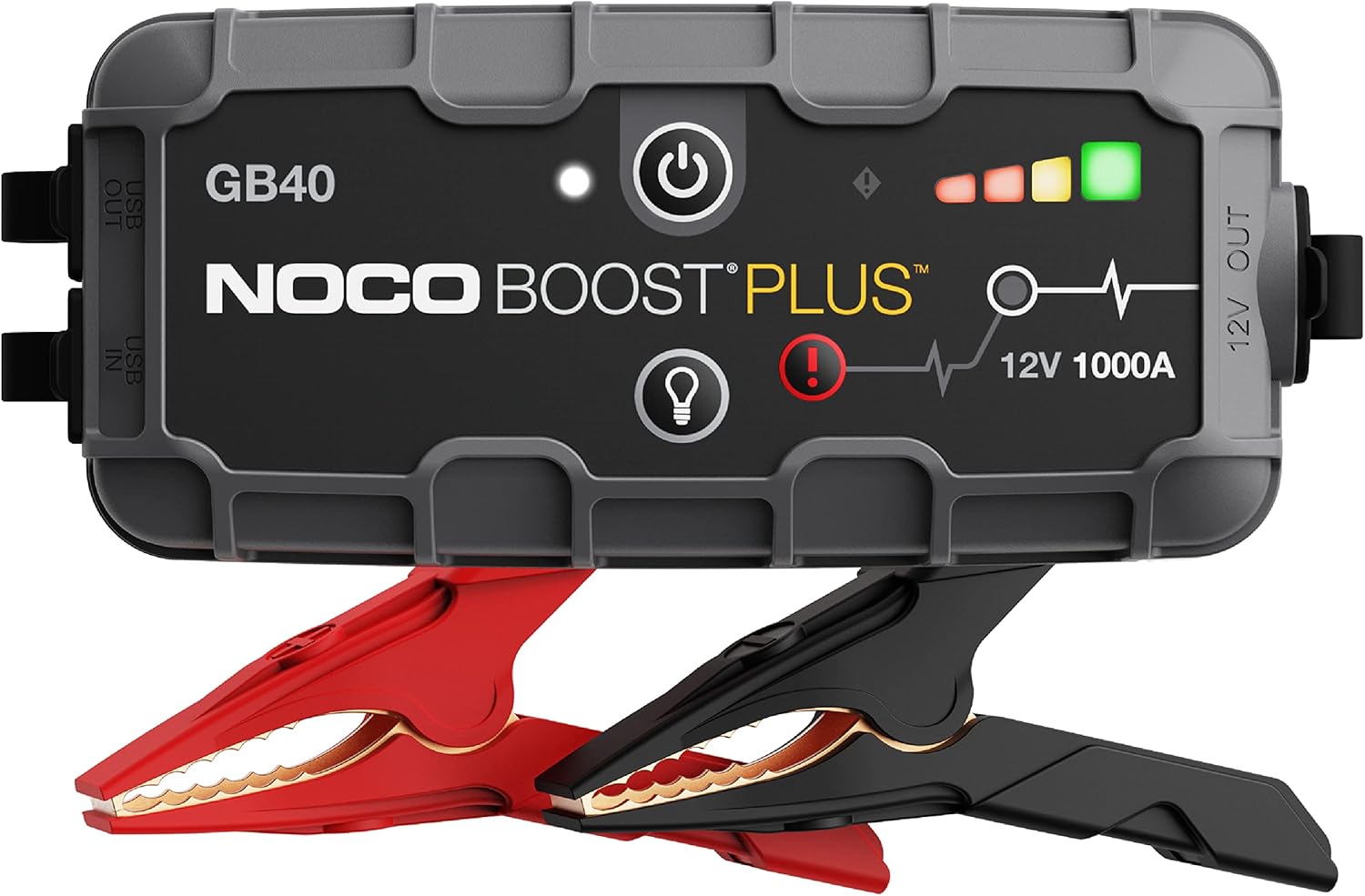
NOCO Boost Plus GB40 Jump Starter
A 1000A lithium jump starter that fits in your glovebox and works on any 12V battery. Your insurance against a dead 12V in a parking lot.
As an Amazon Associate, ThinkEV earns from qualifying purchases — at no extra cost to you.
RAV4 scheduled maintenance: oil changes at roughly $100 every 8,000 km (approximately 9 changes = $900), air filter replacement, cabin filter, transmission fluid service, spark plugs at 60,000 km, brake pad and rotor service. A well-maintained RAV4 over 75,000 km runs approximately $2,800 in scheduled maintenance and consumables, a conservative estimate that doesn't include unexpected repairs.
Model Y maintenance: no engine oil, no transmission fluid, no spark plugs, no timing belt. Tyres, cabin air filter, brake fluid flush every two years. Regenerative braking extends brake pad life dramatically, most Tesla owners replace pads far less frequently than ICE drivers on the same schedule. Conservative maintenance total over 75,000 km: $600 to $900.
Maintenance savings: approximately $1,900 to $2,200 over five years.
Additional Saskatchewan-specific costs:
EV registration surcharge: $150 per year × 5 years = $750.
Level 2 home charger installation: approximately $1,200 as a one-time cost, assuming your panel already has 240V capacity. Add $400 to $800 if a panel upgrade is required.
Net five-year financial picture:
You start with a $12,000 purchase price premium (after federal rebate) in the Model Y's column. Against that, operating savings accumulate: $9,109 in fuel savings, plus $2,050 in maintenance savings (midpoint of range), minus $750 in EV surcharges, minus $1,200 in charger installation. Net benefit from operating savings: approximately $9,209.
The purchase price premium is nearly recovered within five years. At 20,000 km annually, not unusual for Saskatchewan commuters covering longer rural distances, the fuel savings scale proportionally and breakeven arrives sooner.
This is the number the provincial government's EV surcharge doesn't change in any meaningful way. $150 per year against $1,817 per year in fuel savings is not a deterrent, it's a rounding error.

Battery Longevity in Cold Climates: What the Data Shows
A concern You hear regularly from Saskatchewan buyers is whether extreme cold accelerates long-term battery degradation. It's a fair question with a clear answer: cold weather itself does not cause permanent battery capacity loss in well-designed lithium-ion packs.
The temporary range reduction in cold weather is a performance effect, not a degradation effect. The battery chemistry slows down in cold, the management system limits discharge rates, and range is reduced. Warm the battery up to operating temperature and the full capacity returns. Repeated cold-weather driving cycles do not accumulate into permanent loss.
What does cause permanent cold-weather degradation is fast-charging a battery that hasn't been warmed up first. When you push high current through a lithium cell that's still cold, lithium ions plate onto the anode surface instead of intercalating properly, a phenomenon called lithium plating. This permanently reduces capacity and cannot be reversed. It's why modern EVs have preconditioning systems specifically for DCFC sessions: when you work through to a Supercharger or DCFC station in the nav, the vehicle actively warms the battery pack en route so it arrives at the charger ready for fast charging without the plating risk.
Tesla's battery data from cold-climate markets, Norway, Canada, northern US states, shows Model Y and Model 3 packs retaining 90 to 95 percent capacity after 100,000 kilometres regardless of climate, provided normal charging practices are followed. The degradation scare story that ICE advocates predict for cold-climate EVs hasn't materialized at scale in the field data.
The practical Saskatchewan battery care rules: keep the vehicle plugged in when parked in cold weather (thermal management runs on grid power, not battery), use DCFC sparingly with a cold unwarmed battery on the road (let the nav system precondition before fast-charge stops), and avoid regularly charging to 100 percent unless you specifically need the full range for an upcoming trip. Keeping daily charging between 20 and 80 percent is the long-term battery health practice every major manufacturer recommends, it applies equally in Saskatchewan and in Vancouver.
Cold-Start Reliability: The Problem That Doesn't Apply
While we're on Saskatchewan-specific concerns, let me address cold-start performance directly.
The cold-start problem, engine oil thickened to near-molasses, batteries reluctant to crank, condensation frozen in fuel lines, diesel gelling at -30°C, is an internal combustion engine problem. EVs don't have engine oil. They don't have ignition systems. They don't have fuel lines. The electric motor is a sealed unit that generates full torque the moment current flows to it, at any temperature within the battery's operating range.
At -35°C, an EV that was plugged in overnight is ready to drive the moment you open the door. The battery has been kept at optimal temperature by the thermal management system running on grid power. The cabin was preconditioned before you unplugged. The regenerative braking system is operating at full efficiency. The Saskatchewan EV owner's version of the cold-start problem is: "did Plugging in last night?", which is categorically simpler than the ICE cold-start protocol.
The reason block heaters became standard equipment in Saskatchewan is precisely because ICE cold-start reliability below -25°C is genuinely problematic without them. EVs don't need the equivalent, they need a 240V outlet and a habit of plugging in. Most people find the habit of plugging in each evening considerably less stressful than the ritual of a cold-start diesel in January.
For drivers who want a backup tool for winter emergencies, to help out a neighbour in a stranded ICE vehicle, or for the exceedingly rare scenario where your EV does need external assistance, the NOCO Boost GB40 is a compact lithium jump starter rated at 1,000 peak amps that handles vehicles with batteries up to 6 litres gas or 3 litres diesel. It stores inside the vehicle without taking up significant space.
The Rural Saskatchewan Reality Check
If your primary vehicle is a half-ton doing agricultural work, hauling equipment, covering 400 kilometres of gravel roads on irregular schedules, towing loaded grain trailers, the current EV truck market does not serve that use case reliably. The Ford F-150 Lightning is a capable truck in many respects, but its towing range drops dramatically under load. A 450-kilometre winter trip while towing is not feasible with current battery technology at any reasonable price point. The Ram 1500 REV is coming, but 2026 availability across Canadian markets with proper dealer support is limited.
Agricultural half-ton users in rural Saskatchewan should plan on ICE or hybrid primary work vehicles for now. This is not a permanent condition, battery technology is improving and 2028 and 2029 look substantially different, but accurate information serves buyers better than wishful thinking.
The rural picture changes significantly for secondary vehicles and for commuters within rural communities. A farmer operating grain equipment or an ICE half-ton for field work who commutes 60 kilometres to Yorkton, Melfort, or Humboldt for errands and appointments is a strong EV candidate for a second vehicle. The daily commute distance is well within EV range, home charging covers the daily replenishment, and the fuel savings on commute kilometres are the same as the urban calculation.
Small-city Saskatchewan residents, Estevan, Weyburn, Melfort, North Battleford, Yorkton, face a compressed version of the infrastructure question. Regular travel within or near your community is fully covered by home charging. Occasional trips to Regina or Saskatoon use the major corridor charging infrastructure that already exists. The challenge is occasional travel to communities off those corridors, which requires more deliberate planning than an Ontario driver would need for the equivalent trip.
The geographic constraint isn't EV technology, it's charging infrastructure. That infrastructure is improving. The province's northern communities and rural off-corridor routes are real constraints today that may be adequately served by 2028 or 2029 as federal infrastructure investment continues.
Which Vehicles Actually Qualify for EVAP in 2026
Saskatchewan buyers access the same federal EVAP-eligible vehicle list as the rest of Canada. The list updates periodically and specific configurations change, so I'll describe the pattern rather than claim any list is exhaustive, always verify your specific vehicle and trim against the current Transport Canada EVAP list before signing.
Tesla Model 3 Standard Range and Long Range both qualify at their base transaction values. Heavy options on the Long Range AWD variant can approach the $55,000 cap, so configure carefully and ask the dealer to calculate your qualifying transaction value explicitly. Tesla Model Y Standard Range qualifies cleanly; Long Range and Performance trims require careful options management to stay under the cap.
The Chevrolet Equinox EV is assembled in Canada, which gives it explicit favourable treatment under EVAP. Standard configurations qualify comfortably on price and Canadian assembly status. For Saskatchewan buyers who want a local dealer with provincial service network presence, the Equinox EV is available at GM dealers in communities where Tesla has no footprint.
Hyundai Ioniq 6 in Standard Range and Long Range RWD configurations qualifies at base pricing. The Long Range AWD approaches the cap with options. Hyundai Ioniq 5 RWD Standard Range qualifies; AWD Long Range needs configuration management to stay under. Both vehicles have strong cold-weather records from Canadian owner reports.
Volkswagen ID.4 Standard Range qualifies comfortably. Long-range configurations require verification depending on options selections.
Ford F-150 Lightning Pro and XLT base configurations may qualify at the $55,000 cap level, worth verifying specifically with your Saskatchewan Ford dealer for current pricing. Lariat and Platinum trims do not qualify. For Saskatchewan buyers interested in a truck with backup power capability, the Lightning in a qualifying configuration is worth the configuration conversation.
The Chevrolet Bolt EUV, Nissan Leaf, and Mini Electric Hardtop all qualify easily on price and represent the most accessible entry points for first-time EV buyers prioritizing minimal upfront cost.
Chinese-manufactured vehicles, including BYD and certain MG models, do not qualify following Canada's October 2024 trade measures, regardless of price.
Cold-Climate Vehicle Recommendations for Saskatchewan
Not all EVs handle Saskatchewan winters equally, and the differences matter enough to be specific.
The Tesla Model Y is the standard recommendation for cold-climate performance in Canada for good reason. Tesla's thermal management system is mature, it's been iterated over years of real-world cold-climate data, and the Supercharger network's automatic battery preconditioning (the car warms the pack en route to a Supercharger when you work through there) makes long-distance winter travel predictably manageable. The heat pump is standard. The software handling cold-weather behaviour has accumulated years of fleet learning.
The Hyundai Ioniq 6 and Ioniq 5 come standard with heat pumps and have demonstrated solid cold-weather performance in Canadian owner communities in Alberta and Ontario. Hyundai's cold-weather calibration improved substantially from the earlier Kona EV generation. The 800V architecture in these vehicles enables faster charging when compatible 150 kW+ DCFC is available, which matters for the Trans-Canada corridor where newer Petro-Canada FAST Charge installations have higher-power capability.
The Chevrolet Equinox EV is specifically interesting for Saskatchewan based on three factors: Canadian production (EVAP favoured), price point relative to the federal cap (substantial headroom for options), and GM's dealer network presence in communities where Tesla has no physical presence. In Humboldt, Lloydminster, or North Battleford, having a local GM dealer for service matters in ways it doesn't in Regina or Saskatoon.
The Ford F-150 Lightning warrants mention for buyers who need genuine truck capability and can work within its range constraints. In rural Saskatchewan where winter power outages are a real occurrence, the Lightning's bidirectional charging, it can power a home or farm building during an outage from its battery pack, is a capability no ICE truck offers. The practical value of that for a rural acreage or farm operation is worth factoring into the vehicle comparison.
Vehicles I'd be more cautious about for Saskatchewan specifically: older-generation Nissan Leafs with air-cooled battery packs (as opposed to the active liquid-cooled system in newer versions) degrade faster in extreme temperature cycling. If you're purchasing a used Leaf, verify which battery thermal management system it uses before committing. Similarly, any first-generation EV with passive or air-cooled thermal management will perform worse in Saskatchewan winters than current vehicles with active liquid-cooled systems.
Why Saskatchewan's EV Policy Is Unlikely to Change Soon
I'll say something you won't read on most Canadian EV advocacy sites: Saskatchewan's EV policy reflects the province's economic identity, and that identity isn't changing quickly.
The oil and gas sector accounts for approximately 20 percent of Saskatchewan's GDP. It's embedded in community identity across large parts of the rural economy. The provincial government represents constituents who work in oil and gas extraction, service the sector, or live in communities economically tied to it. Aggressive EV incentives would be read as a policy statement against oil, and the current provincial government has no political incentive to make that statement.
This is not irrational, it's a coherent political calculation within a particular value framework. You can disagree with the framework (I do) without being confused about why it persists.
The practical implication: buyers waiting for a Saskatchewan provincial EV rebate to appear should plan their purchasing decisions around the assumption that it won't, at least not in the current political cycle. This is not speculation; it's reading the provincial budget priorities and the government's policy statements accurately.
What may change is charging infrastructure. Infrastructure investment is politically less charged than rebates. It serves existing EV owners regardless of political affiliation, attracts EV-driving visitors from other provinces who spend money at Saskatchewan businesses, and creates local economic activity in construction and electrical trades. Federal money continues flowing to provincial charging infrastructure regardless of provincial EV policy positions. Expect the charging network to continue improving on the major corridors, more slowly in northern and rural areas, but improving.
Plan accordingly. Base your purchase decision on the current incentive environment, not on policy optimism.
The Verdict: Is It Worth It in 2026?
I'm going to give you a direct answer. This section doesn't hedge.
Regina and Saskatoon homeowners driving primarily within and between the two cities: Yes. The economics are clear and the charging infrastructure supports the use case. The federal rebate reduces your upfront cost by $5,000. Five years of operating savings substantially exceed the purchase price premium over a comparable conventional vehicle. The $150 annual surcharge is a political signal dressed up as a fee, in the financial model, it's irrelevant noise.
Saskatchewan homeowners driving rural commutes up to 80 km each way, with occasional inter-city trips on major corridors: Yes, with two non-negotiable requirements. First, a Level 2 home charger is essential, not optional. Budget $800 to $2,000 for installation and treat it as part of the vehicle purchase. Second, choose a vehicle whose rated range exceeds your worst-case daily need by a comfortable margin after winter penalty is applied. If your daily drive is 100 km, don't buy a vehicle with 200 km of January range, buy the one with 320 km. The planning discipline is real but manageable.
Small-town Saskatchewan residents whose primary travel is within their community and occasionally to Regina or Saskatoon: Yes for drivers who can install home charging. The major highway corridors to the two cities have adequate DCFC coverage for planned trips. Your challenge is occasional off-corridor travel, which requires more preparation than urban drivers need, but it's a planning challenge, not a fundamental incompatibility.
Northern Saskatchewan residents and rural drivers who regularly travel off major highway corridors: Not yet for a primary vehicle. The charging infrastructure doesn't reliably support that travel pattern in 2026. A plug-in hybrid provides fuel savings on shorter in-town driving while retaining the gas engine's range for the long-distance trips where charging doesn't exist. Full BEV ownership works better as a secondary vehicle covering predictable daily routes.
Renters without access to home charging: The calculus depends entirely on workplace charging or reliable public charging near your regular destinations. Without home charging as your operational foundation, Saskatchewan's public network is too sparse to substitute. This is a genuine barrier for the rental market that no amount of advocacy changes in the short term.
The provincial government has made EV adoption more expensive and less convenient here than it needed to be. No rebate, no installation incentive, plus an annual fee. Those are real disadvantages versus BC or Quebec. They don't, however, override the math for drivers whose situation matches the use case, and that's a meaningful share of Saskatchewan's driving population.
The Saskatchewan EV owners who made the switch consistently report that the experience, warm battery every morning, no fuel stops, no oil changes, full torque at -30°C when the RAV4 beside you is struggling to crank, made the decision worthwhile in ways the spreadsheet doesn't capture. The spreadsheet just shows you it pencils out. Driving it confirms the rest.
Run your own numbers. Then decide.

Gear worth having
As an Amazon Associate, ThinkEV earns a small commission from qualifying purchases — at no extra cost to you.

PULIDIKI Car Cleaning Gel (Detailing Putty)
Press it into vents, buttons, and seams and it lifts out dust you did not know was there. Weirdly satisfying, genuinely useful.
As an Amazon Associate, ThinkEV earns from qualifying purchases — at no extra cost to you.
Related Reading
- Canada EV Rebate EVAP 2026 Guide, How to claim your $5,000 federal EV incentive.
- EV Rebates by Province Canada 2026, Every provincial and territorial rebate compared.
- EV Charging Infrastructure Canada 2026, Everything you need to know about charging across Canada.
Gear worth having
As an Amazon Associate, ThinkEV earns a small commission from qualifying purchases — at no extra cost to you.

WixGear Magnetic Air Vent Phone Mount (2-Pack)
A magnet strong enough that your phone never flinches over potholes or rail crossings. Two in the box, one for each car.
As an Amazon Associate, ThinkEV earns from qualifying purchases — at no extra cost to you.
Gear worth having
As an Amazon Associate, ThinkEV earns a small commission from qualifying purchases — at no extra cost to you.

Car Cup Holder Coasters (4-Pack)
Drop-in coasters that catch spills and crumbs so your cup holders stay clean. Rinse and reuse forever.
As an Amazon Associate, ThinkEV earns from qualifying purchases — at no extra cost to you.

Founder & Chief Editor
Vlad Pereira is the founder and chief editor of ThinkEV.ca, the Canadian electric-vehicle publication he writes and edits from Courtenay, British Columbia. He covers EV pricing, federal and provincial rebates, charging costs, and the Chinese manufacturers now entering Canada, from the buyer's side rather than the press-fleet side. ThinkEV is a venture of Vlad Pereira Online; his writing on health, income and the long game lives at vladpereira.com.
Frequently asked questions
Is the $150 EV registration fee tax-deductible in Saskatchewan?
Can Saskatchewan residents claim the federal EVAP rebate?
How much does it cost to charge an EV at home in Saskatchewan?
Are there enough charging stations in Saskatchewan for road trips?
Does the EVAP rebate apply to used EVs?
How much range do EVs lose in Saskatchewan winters?
Is there a home charging installation rebate in Saskatchewan?
More EV & road-trip finds
Affordable upgrades worth a look — tap any to check the price on Amazon.
 ★ 1,866
70mai A810 4K Dual Dash Cam
View on Amazon ★ 121
★ 121Foldable Windshield Sun Umbrella
View on Amazon ★ 268
★ 268Anti-Slip Leather Steering Wheel Cover
View on Amazon ★ 2,941
Microfiber Cleaning Cloths (Multi-Pack)
View on Amazon ★ 55
★ 55LED Car Door Logo Projector Light
View on Amazon ★ 568
★ 568Personalized Photo and Text Keychain
View on Amazon ★ 21,304
Car Headrest Hooks (4-Pack)
View on Amazon ★ 15,014
Spigen Tempered Glass for Tesla Model 3/Y
View on AmazonRead, Plan, Then Stay Current
Explore our expert articles to understand incentives and ownership costs, use the map to pressure-test charging reality, then subscribe so new EV coverage comes straight to you.
Continue Reading
Alberta EV Rebates 2026: What You Actually Get
BC EV Rebates 2026: What's Left After the Cuts
Manitoba EV Rebates 2026: $4,000 Incentive Ends March 31
Newfoundland EV Rebates 2026: What You Can Claim
PEI EV Rebates 2026: The Island's Surprising $5,000 EV Deal