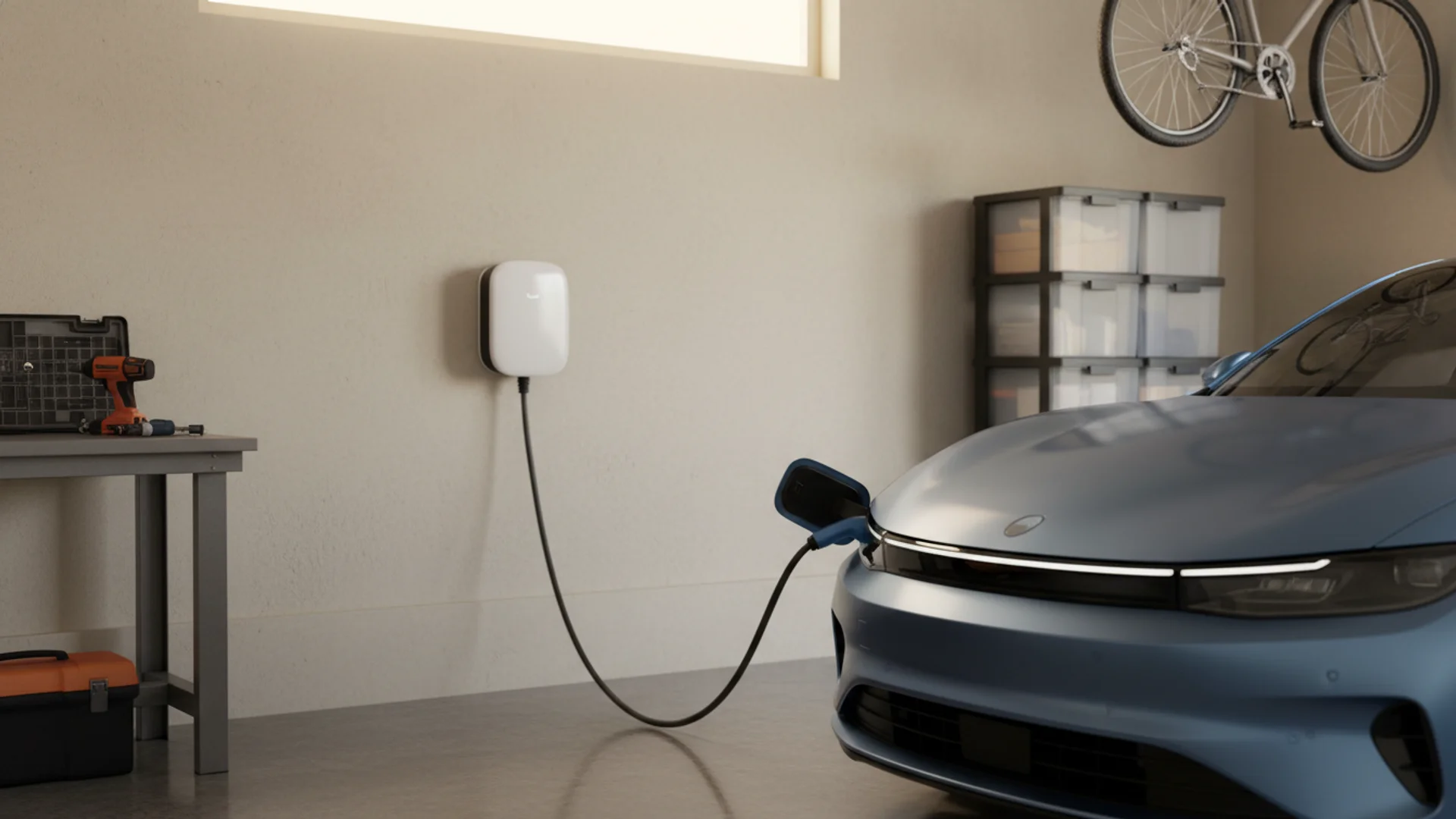
Your EV arrived Thursday. By Friday morning you've drained the trickle of a standard 120V outlet, and you're staring at a battery that gained maybe 60 km overnight against a 50 km commute that's about to happen again. A Level 2 charger fixes that permanently, and in Canada in 2026, it costs less, qualifies for more rebates, and installs faster than most buyers expect.
A quality Level 2 charger plus installation lands between $1,000 and $3,000 CAD in most Canadian homes, before any provincial rebates. BC and Quebec will give you $350 to $600 back. Ontario and Alberta won't give you anything direct, though some municipal utilities will. The Grizzl-E Classic at $399 CAD is the best cold-climate buy in the country. And no, you almost certainly don't need to upgrade your panel.
Now the details that matter when you actually pull the trigger.
Key takeaways
- The Grizzl-E Classic at $399 CAD is Canadian-made, rated to -40°C, and the default pick for cold-climate installers.
- BC and Quebec are the only provinces actively rebating home chargers, up to $350 and $600 respectively in 2026.
- A 40A Level 2 unit restores a full day's commute in four hours; Level 1 takes all night and still falls short in winter.
- Total installed cost runs $1,000–$3,000 CAD for most homes, but quotes in the same postal code vary 40% or more.
- Most homes built after 1990 have a 200A panel with room for a 40A circuit, a panel upgrade is rarely necessary.
Level 1 vs. Level 2: What Actually Changes for Your Daily Life
The wall outlet your toaster uses is 120V. That's Level 1 charging, and on most EVs it adds roughly 8 km of range per hour. Plug in at 7 p.m., unplug at 7 a.m., and you've gained around 95 km. Sounds fine on paper. It isn't.
The problem is the asymmetry of real Canadian driving. A 2026 Tesla Model Y owner in Burnaby commuting to downtown Vancouver burns 50 to 60 km a day, plus a Costco run on Saturday, plus a trip to Whistler once a month. Level 1 keeps up with the commute alone, barely, but the moment you add cold weather (which cuts range 20-30%) or any non-commute driving, the deficit compounds. By day three you're behind. By day five you're plugging in at a public charger to make up the gap.
Level 2 stations have similar electrical requirements to a clothes dryer or stove (240 Volts/30 Amps), and that doubled voltage changes the math entirely. A typical 40A Level 2 unit adds 30 to 50 km of range per hour. Plug in at 7 p.m., and by 11 p.m. you've fully erased the day's commute. By morning, the battery is at whatever cap you set, usually 80% for daily driving, 100% for trip days.
Level 1 tops you up. Level 2 fills the tank. If you drive your EV the way you drove your old car, you want the fill.
How Much Does a Level 2 Home Charger Cost in Canada? (2026 Numbers)
Total all-in cost in 2026 lands between $1,000 and $3,000 CAD for the vast majority of Canadian homes. Here's how that splits.
Charger hardware: $400–$900 CAD. The Grizzl-E Classic sits at the bottom of that range at $399. The ChargePoint Home Flex and Wallbox Pulsar Plus sit at the top, around $649–$699. Everything in between is mostly feature differentiation, app control, load balancing, NACS versus J1772 connector, warranty length.
Installation: $500–$2,000 CAD. This is the variable that catches people. The cost depends on three things: how far your electrical panel is from where the charger will mount, whether your panel has spare capacity, and which province you're in. A garage attached to the panel wall is the cheap end. A detached garage on the opposite side of the house from the panel is the expensive end.
Panel upgrade (if needed): $1,500–$3,500 CAD on top. Most Canadian homes built after 1990 have a 200A panel with room to add a 40A circuit. If you're in an older home with a 100A panel, or if the panel is already full, you may need to upgrade. Get an electrician to look at your panel before you order the charger.
The Plug'n Drive Canada guide is direct about one thing: in most jurisdictions, a licensed electrical contractor (not an electrician) is required to install a Level 2 station. The distinction matters for permits and inspection. Confirm credentials before you sign a quote.
One practical tip: get three quotes. In the same Toronto or Vancouver postal code, installation prices regularly vary 40% or more between licensed contractors. The cheapest quote isn't always the right one (cable length, conduit quality, and warranty differ), but the most expensive quote is almost never the best value.
Gear worth having
As an Amazon Associate, ThinkEV earns a small commission from qualifying purchases — at no extra cost to you.
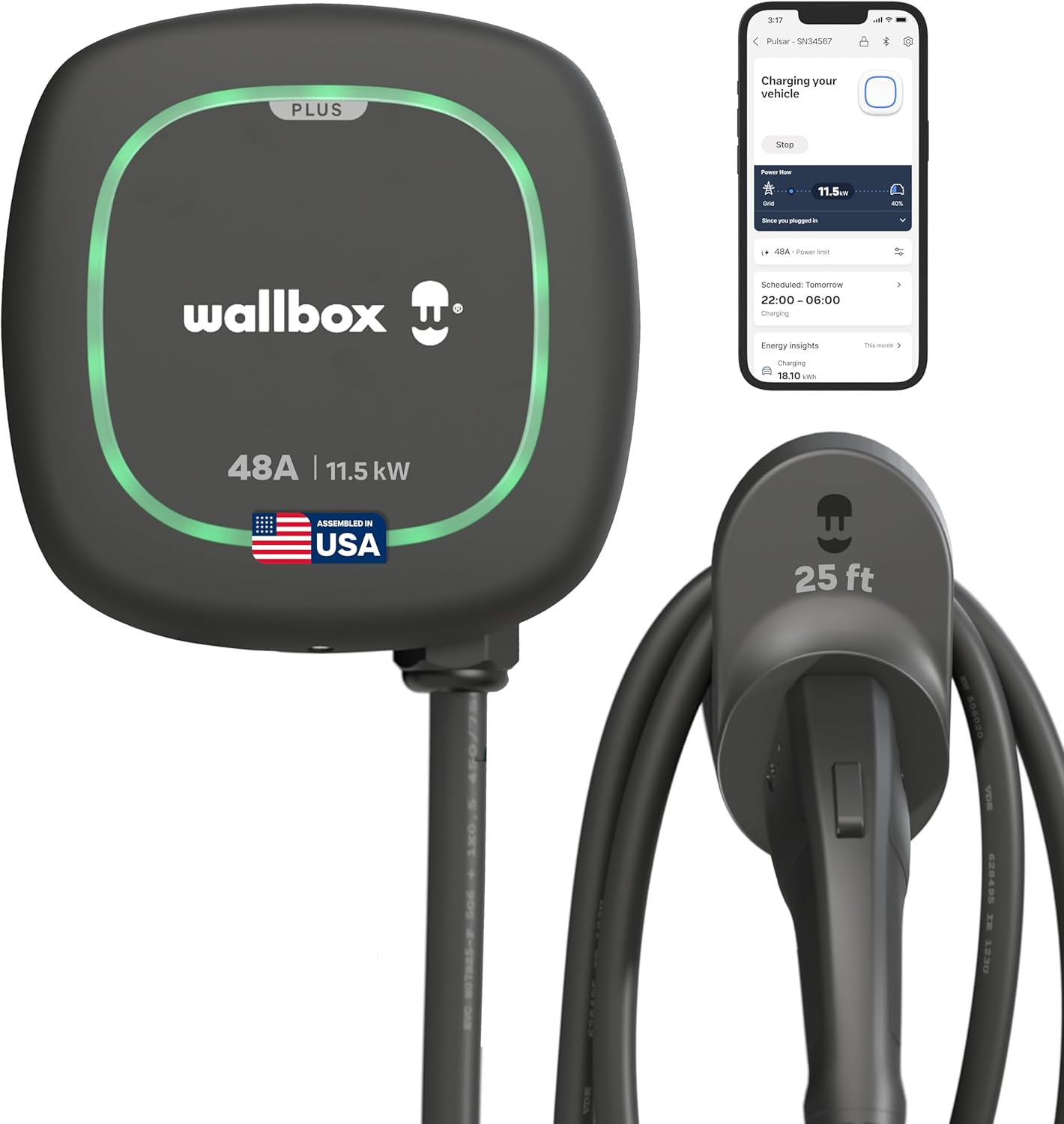
Wallbox Pulsar Plus 48A Level 2 Charger
Compact, sleek charger with app control and power sharing for two EVs. 48A / 11.5 kW, NEMA 14-50. Looks as good as your EV.
As an Amazon Associate, ThinkEV earns from qualifying purchases — at no extra cost to you.
Federal and Provincial Rebates: What You Can Claim Right Now
Federal first: there is no federal rebate specifically for home EV chargers in 2026. The iZEV program covers the vehicle. The Electric Vehicle Affordability Program (EVAP) that launched in February also covers the vehicle. The charger is on you, federally.
Provincially, the picture is uneven, and you need to know your province's program by name before you shop:
- British Columbia. CleanBC's EV charger rebate offers up to $350 for a qualifying Level 2 smart charger at single-family homes. The rebate requires a connected/smart unit. A dumb charger won't qualify. BC Hydro also runs separate programs for multi-unit buildings.
- Quebec. Roulez Vert offers up to $600 toward the purchase and installation of a home charger, currently the most generous program in the country. Hydro-Québec administers the rebate and requires a certified installer.
- Ontario. No active provincial home charger rebate in 2026. Check your local utility, some municipal distributors (Alectra, Toronto Hydro, Hydro Ottawa) offer $200–$500 in time-of-use credits or charger discounts, but these are not province-wide.
- Alberta. No provincial rebate. Out-of-pocket.
- Manitoba and Saskatchewan. No provincial rebate. Manitoba Hydro and SaskPower do not currently fund residential chargers.
- Atlantic provinces. Nova Scotia's program ended in 2024 and has not been renewed. New Brunswick has limited utility-side programs. PEI offers modest support through its EV incentive bundle.
The pattern: BC and Quebec actively subsidize the charger. Most other provinces subsidize the vehicle but leave the charger to the buyer. If a rebate exists in your province, the eligibility almost always requires a smart/connected charger. Confirm the model number on your province's approved list before you click buy.
For a deeper breakdown of how charging costs vary across provincial electricity rates, the complete network, cost and home setup guide covers what you'll actually pay per kWh once the charger is live.
Which Level 2 Charger Should You Actually Buy?
The Canadian home charger market in 2026 has four units that consistently make sense for the majority of buyers. The right pick depends on climate, smart features, and connector type.
Gear worth having
As an Amazon Associate, ThinkEV earns a small commission from qualifying purchases — at no extra cost to you.

TP-Link Kasa Smart Plug with Energy Monitoring
Track exactly how much electricity your Level 1 charger uses and schedule it for off-peak hours. Know your real cost per kWh.
As an Amazon Associate, ThinkEV earns from qualifying purchases — at no extra cost to you.
- Grizzl-E Classic, $399 CAD. Canadian-made in Stoney Creek, Ontario. Rated to operate at -40°C, which matters in Edmonton, Winnipeg, and Saskatoon in January. 40A output. No subscription, no required app, no cloud dependency. The best straight-value pick in the country, and the unit most cold-climate installers default to.
- ChargePoint Home Flex, $699 CAD. App control, scheduling, load balancing, and the broadest rebate eligibility list across provincial programs. NACS adapter version available for Tesla owners who don't want to swap connectors. 50A output.
- Wallbox Pulsar Plus, $649 CAD. Compact form factor (smallest of the four), strong app, and bidirectional V2H capability on select vehicles, useful if you're future-proofing for a home backup setup. 40A output.
- Lectron Portable Level 2, $299 CAD. Not a wall-mount unit. Plugs into a NEMA 14-50 outlet (the same plug a clothes dryer or RV uses). Ideal for renters, condo owners with a sympathetic landlord, or as a second unit for the cottage. No installation required if the outlet already exists.
Connector matters. Most non-Tesla EVs sold in Canada in 2026 still use J1772. Tesla uses NACS. The industry is mid-transition to NACS as the standard, and Tesla Superchargers are opening to other brands via adapter. If you're buying a non-Tesla EV today, J1772 is still the safe default, adapters from J1772-to-NACS and NACS-to-J1772 are widely available and cheap.
For a side-by-side breakdown including warranty, app quality, and real cold-weather performance, the tested and ranked comparison of the best Level 2 home chargers goes deeper than this section can. If you're cross-shopping against an Amazon import unit, the owner-experience review of EVIQO's Level 2 charger is worth reading before you click buy.
What the Installation Actually Involves (and Who Does It)
A licensed electrical contractor handles the install in every province. An EV charging station is a high voltage appliance that needs to be installed by a licensed electrical contractor. That's not a soft recommendation, it's the regulatory baseline, and it's also what makes the install insurable if anything ever goes wrong.
The typical job: run a dedicated 240V circuit (usually 40A or 50A) from the electrical panel to wherever the charger will mount in the garage. Two to four hours of labour for a clean run. Longer if the panel is in the basement on the opposite side of the house, or if conduit needs to be surface-mounted along finished walls.
The Canadian variable is winter. The wall-mount location should be sheltered enough that the cable doesn't freeze stiff at -30°C, and the breaker should be sized with cold-weather de-rating in mind. A good installer will ask where you park and how the cable will route before quoting. A bad installer will quote sight-unseen over text. Take the difference seriously.
Permit and inspection are part of the process. Expect a municipal electrical permit ($75–$200 depending on city) and a final inspection before the charger goes live. This is good, it protects the resale value of the home and the homeowner's insurance position.
Gear worth having
As an Amazon Associate, ThinkEV earns a small commission from qualifying purchases — at no extra cost to you.

Grizzl-E Classic Level 2 EV Charger (40A)
Canadian-made and rated for minus 40C winters. 40A / 9.6 kW, NEMA 14-50, indoor/outdoor, 24-ft cable. The charger built for Canadian weather.
As an Amazon Associate, ThinkEV earns from qualifying purchases — at no extra cost to you.
Condo and Rental Reality: What to Do If You Don't Own a Garage
The fastest-growing question in Canadian EV ownership is what to do when you don't have a private garage. Three viable paths in 2026:
The strata/board path. British Columbia's Strata Property Act amendments now require stratas to seriously consider written EV charger installation requests from owners, refusal needs a documented reason. Ontario doesn't have an equivalent mandate yet, but condo boards are increasingly receptive to a written proposal that includes the install cost, a sub-metering plan so the charging unit pays its own electricity, and proof that other units in the building have done the same.
The shared-circuit path. Load-management systems from Eaton, PowerFlex, and SWTCH allow multiple condo units to share a single panel circuit, the system dynamically balances available current across plugged-in vehicles. This is the install pattern most new condo buildings in Vancouver and Toronto are adopting. Retrofits are possible in older buildings but require board approval and an electrical assessment.
The portable path. A Lectron Portable Level 2 unit plus a NEMA 14-50 outlet is a legitimate bridge strategy. Many campgrounds, cottages, and rural properties already have the outlet. Friends and family with garages often do too. It's not the daily-driver solution, but for a renter waiting on a building upgrade, it stretches the gap.
If the building genuinely won't move, workplace charging is the fallback worth pursuing, many Canadian employers are adding Level 2 stations as a benefit, and the employer guide to workplace EV charging lays out the business case you can hand your HR team.
Gear worth having
As an Amazon Associate, ThinkEV earns a small commission from qualifying purchases — at no extra cost to you.

Lectron Level 2 J1772 Charger (40A, WiFi)
Smart WiFi charger with real-time energy monitoring. 40A / 9.6 kW, J1772 with a NEMA 14-50 plug, schedule charging right from your phone.
As an Amazon Associate, ThinkEV earns from qualifying purchases — at no extra cost to you.
Quick Reference: Common Questions
Buy / Wait / Skip
Buy a Level 2 charger now if you own your home, have a 200A panel (or a 100A panel you were planning to upgrade anyway), and drive your EV more than 40 km on a typical day. The math pays back in convenience within the first month, and in resale value over the long term.
Wait if you're in Ontario or Alberta and you're hearing rumours of an incoming provincial rebate program, both provinces have charger-rebate legislation under discussion in 2026. If a rebate lands, it could shave $300–$500 off the install. If you can tolerate Level 1 trickle charging for another quarter or two, the wait may be worth it. Watch your provincial energy ministry's program list.
Skip the home install if you're renting without a sympathetic landlord, in a strata that's actively blocked installation, or driving fewer than 30 km a day in a mild climate. A combination of workplace Level 2 and occasional public DC fast-charging will cover you for less than the install cost, and the calculus changes the moment you move or the building's policy shifts.
Bottom line: the Canadian Level 2 home-charging market in 2026 is mature, the hardware is good, the installer pool is competent, and BC and Quebec are actively paying you to buy. The thing to watch over the next six months is whether Ontario follows Quebec's lead on the rebate program, that's the policy move that would push a wait-and-see buyer off the fence.
Gear worth having
As an Amazon Associate, ThinkEV earns a small commission from qualifying purchases — at no extra cost to you.

ChargePoint Home Flex Level 2 Charger (50A)
Premium 50A / 12 kW charger with the best app ecosystem. Hardwired or NEMA 14-50, with real-time energy tracking and smart scheduling.
As an Amazon Associate, ThinkEV earns from qualifying purchases — at no extra cost to you.

Founder & Chief Editor
Vlad Pereira is the founder and chief editor of ThinkEV.ca, the Canadian electric-vehicle publication he writes and edits from Courtenay, British Columbia. He covers EV pricing, federal and provincial rebates, charging costs, and the Chinese manufacturers now entering Canada, from the buyer's side rather than the press-fleet side. ThinkEV is a venture of Vlad Pereira Online; his writing on health, income and the long game lives at vladpereira.com.
Frequently asked questions
Do I need a permit to install a Level 2 charger?
Will my existing electrical panel handle a 40A charger?
Does a smart charger actually matter, or is it marketing?
Can a renter or condo owner install a Level 2 charger?
How much does cold weather actually affect my charger's output?
More EV & road-trip finds
Affordable upgrades worth a look — tap any to check the price on Amazon.
 ★ 1,866
70mai A810 4K Dual Dash Cam
View on Amazon ★ 121
★ 121Foldable Windshield Sun Umbrella
View on Amazon ★ 268
★ 268Anti-Slip Leather Steering Wheel Cover
View on Amazon ★ 4,050
Touchscreen Mist Screen Cleaner Kit
View on Amazon ★ 419
★ 419RGB Car Interior LED Strip Light
View on Amazon ★ 568
★ 568Personalized Photo and Text Keychain
View on Amazon ★ 4,424
Sun Visor Card and Document Organizer
View on Amazon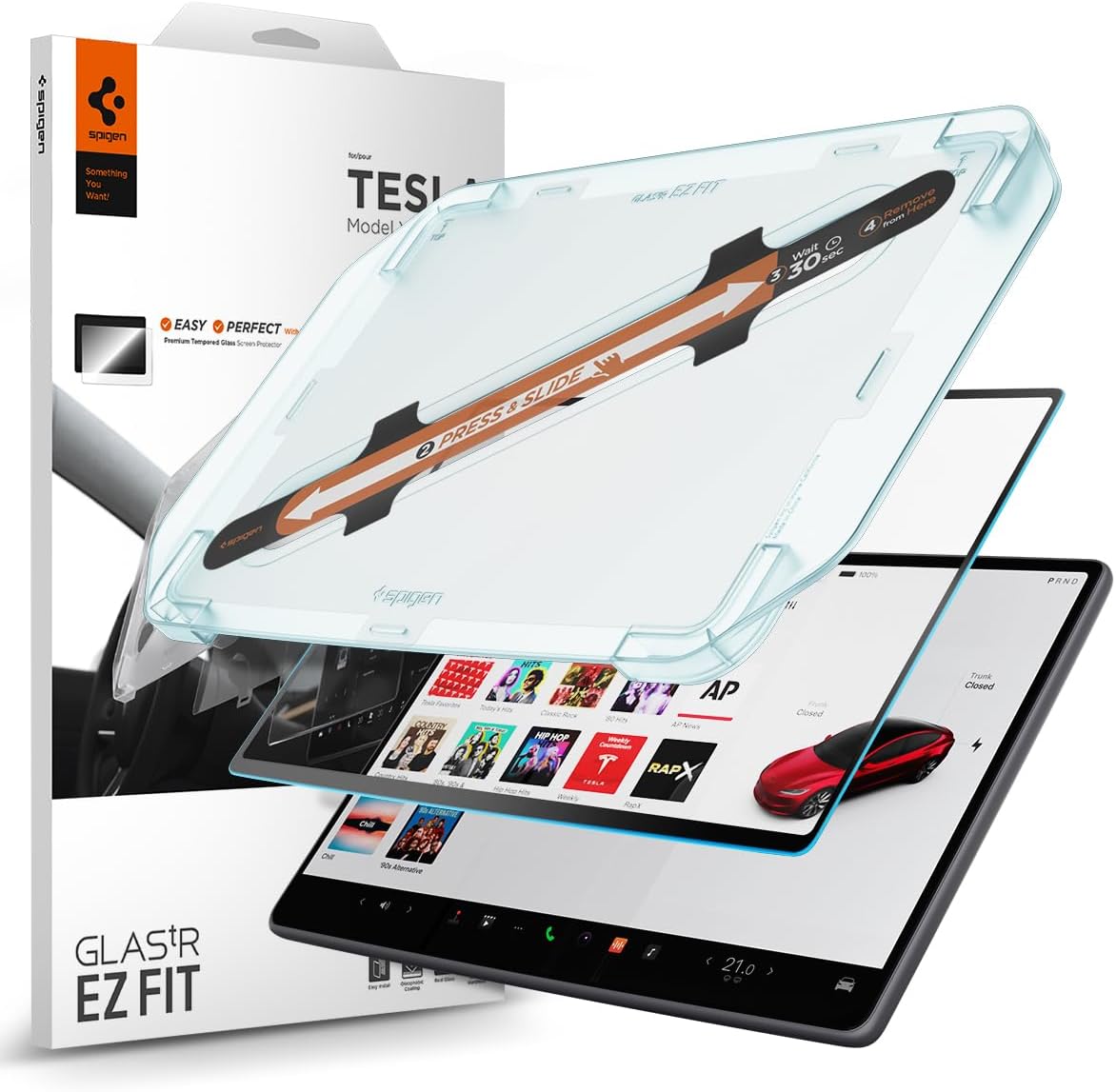 ★ 15,014
Spigen Tempered Glass for Tesla Model 3/Y
View on AmazonRead, Plan, Then Stay Current
Explore our expert articles to understand incentives and ownership costs, use the map to pressure-test charging reality, then subscribe so new EV coverage comes straight to you.
Continue Reading
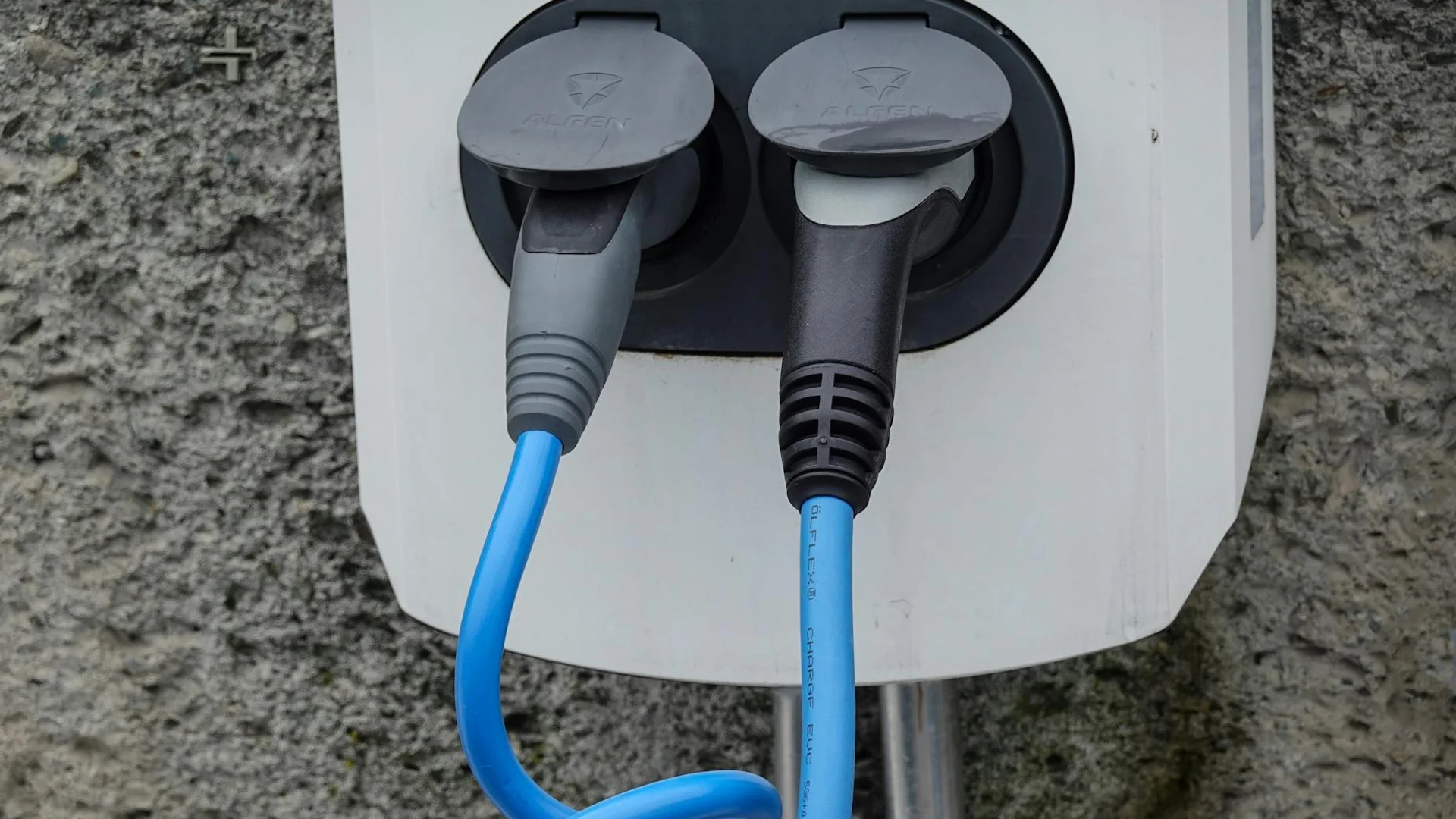
Dual EV Chargers in One Garage: Load Management
BYD Atto 3 Canada: Price, Range & EVAP Rebate (2026)
Home EV Charging Setup: The Basics for New Owners
BYD Shark 6 Canada 2026: Price Band, Specs, Incentive Reality
EV Battery Degradation: What's Normal and How to Slow It