Key takeaways
- Most EVs lose 20–30% range at -10 to -25C, but that still leaves 240km or more on nearly every modern model
- Heat pump-equipped EVs (Ioniq 5, EV6, Model Y, Polestar 2) outperform resistive-heat models by a significant margin
- LFP batteries lose more in cold than NMC, relevant if you're looking at BYD or Tesla Standard Range
- Pre-conditioning while plugged in recovers 10–15% of your projected winter range before you even leave the driveway
- Norway, which is colder than most of Canada, has over 90% EV market share, the range fear is real, but the math doesn't support staying away from EVs
- The average Canadian drives 55km per day; even at 40% winter loss, the math still works for almost everyone
Two-thirds of Canadians name winter range as the single biggest reason they haven't gone electric. That stat, from CAA's own survey data, is remarkable, not because the fear is irrational, but because the reality behind it is so much better than most people expect.
Canada is cold. Parts of it are brutally, legitimately cold. When an EV loses range in those conditions, it's not a myth or a manufacturer conspiracy. The physics are real. But the degree to which range loss actually affects day-to-day life for the average Canadian driver is almost always overstated, and in 2026, with the models now available, some EVs handle winter better than many gas cars handle an aging fuel system.
This post breaks it all down. What actually causes range loss, which EVs are genuinely built for Canadian winters, which ones aren't, and the specific habits and equipment choices that can recover a significant chunk of that lost range before you even touch the accelerator.
The Fear vs The Reality: What CAA's Data Actually Tells Us
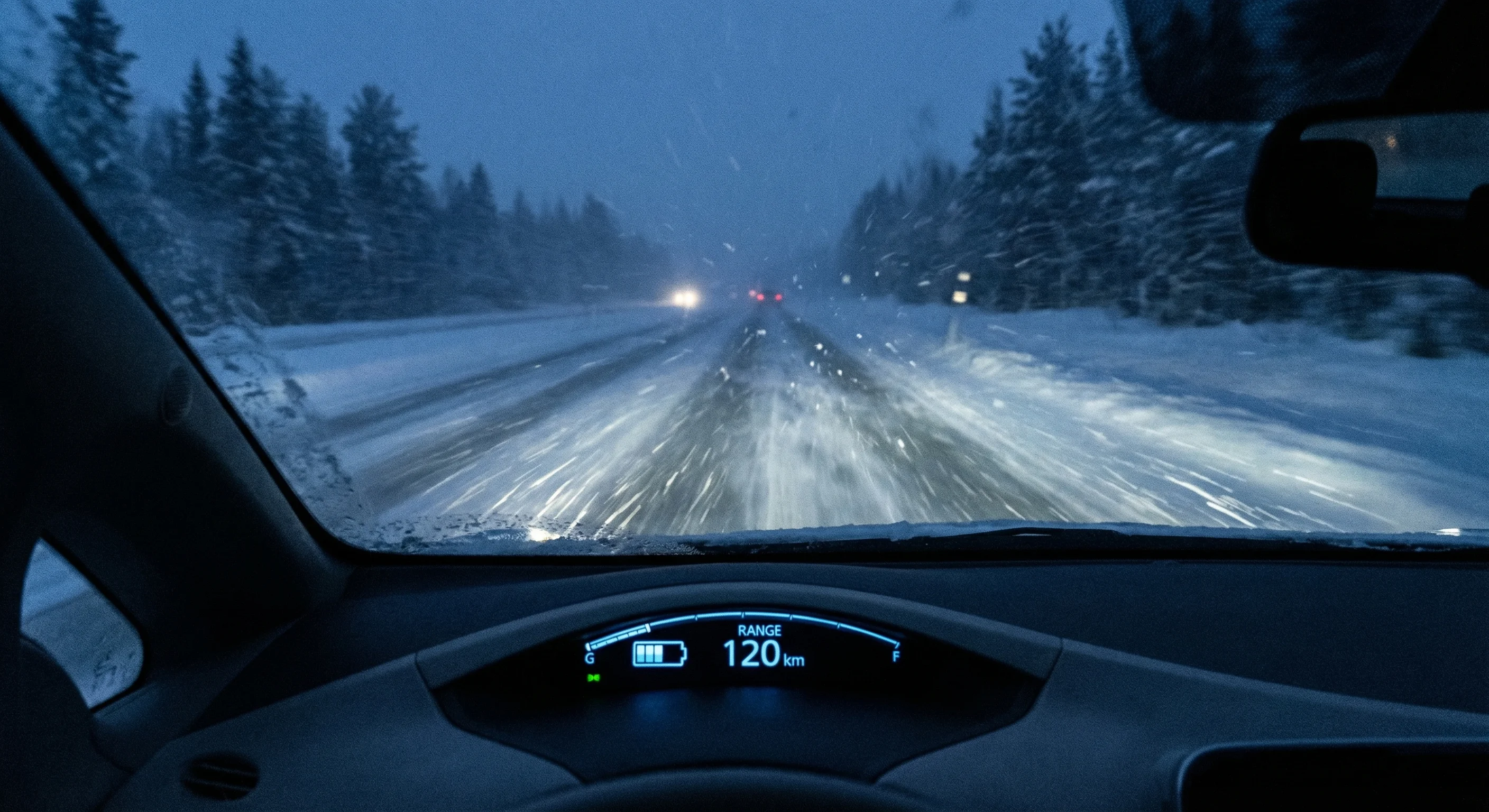
The fear of being stranded in a Canadian winter with a dead battery is visceral and specific. It's not abstract. It's: minus thirty, highway, blizzard, phone dying, battery at six percent. That image is powerful enough to keep millions of people in gas cars.
But CAA's survey data, when you actually read it carefully, reveals something interesting: the drivers most worried about winter range are also the drivers with the least direct EV experience.
Among Canadians who already own an EV and have driven through at least one full winter, the concern drops dramatically. They've seen the range gauge, they've managed it, and they've found it workable.
The disconnect makes sense. When you imagine EV winter performance, you're probably starting from full rated range, say, 480km on a new Ioniq 5, and then mentally subtracting 40%, arriving at 288km, and then imagining that as barely enough.
But that framing misses the actual way most Canadians use cars.
The average Canadian drives 55km per day. Not 480km. Not 288km. Fifty-five. Even at a 40% worst-case winter loss, the kind of loss you'd see at -30C with resistive heating blasting, a 400km-rated EV still delivers well over 200km of real-world range. Most Canadians could charge once a week and never think about it again.
This is not to dismiss the concern for drivers in genuinely extreme circumstances: long rural commutes, frequent highway travel between cities, or driving in Whitehorse in January.
For those use cases, the math genuinely requires more careful planning. But for the majority of Canadian drivers, winter range anxiety is a fear that outruns the numbers.
What Actually Causes Range Loss in Cold Weather
Understanding what's happening under the hood (or under the floor, as the case may be for most EV battery packs) helps you make better decisions about which EV to buy and how to drive it in winter.
There are three main culprits.
Battery chemistry and temperature. Lithium-ion batteries generate electricity through chemical reactions between the anode, cathode, and electrolyte. Cold temperatures slow those reactions down. At -10C, the battery can still deliver close to its rated capacity with minimal restriction. At -20C, the slowdown becomes more significant. At -30C and below, some battery chemistries are operating well outside their comfortable range, and the battery management system (BMS) actively limits power output to protect the cells from damage. This is why your range estimate drops and why fast charging slows significantly in deep cold, the BMS is being protective, not malfunctioning.
Cabin heating. This is actually the bigger factor in most real-world Canadian winter scenarios, and it's where the difference between a heat pump and resistive heating becomes decisive. A gas car generates waste heat from the engine, which gets routed into the cabin for free. An EV doesn't have that waste heat, it has to generate cabin heat deliberately, which costs energy from the same battery that's powering the wheels. A resistive electric heater (essentially a large element, like an electric baseboard heater) is straightforward and reliable, but it draws 3–5 kW continuously in cold weather. That is a substantial continuous load. A heat pump moves heat rather than generating it, which can deliver 3–5 kW of heating while consuming only 1–1.5 kW of electricity. At -15C, over a two-hour commute, that difference can account for 20–40km of range.
Tire rolling resistance. Rubber gets stiffer in cold weather, increasing rolling resistance. If you're running summer tires in winter, which you should never do for safety reasons alone, you're also compounding your range loss with increased mechanical resistance. Proper winter tires, installed on all four corners, improve both traction and, somewhat counterintuitively, help maintain more predictable range characteristics in cold conditions because the tire is doing what it was designed to do.
The Best Winter EVs in Canada Right Now (Ranked)
Not all EVs handle cold equally. Here are the models that consistently perform best in Canadian winter conditions, and why.
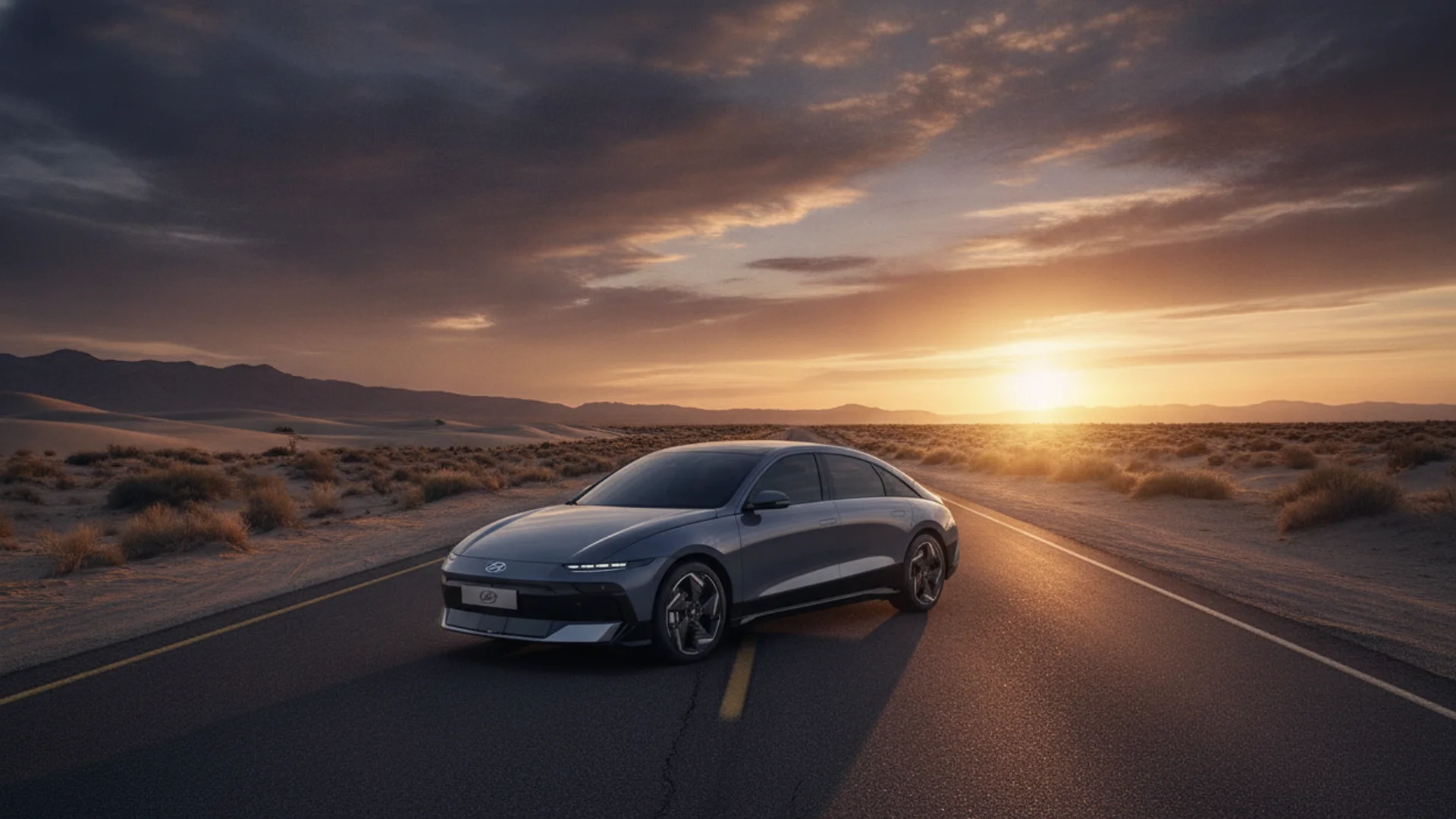
The Ioniq 5 is the clearest all-around recommendation for Canadian winters in 2026. It has a heat pump standard on all trims, which is the single most important feature for winter range. The 800V architecture means ultra-fast charging even when the battery is cold, the car pre-heats the battery automatically when you handle to a DC fast charger, so you arrive ready to charge at near-peak speeds rather than waiting for the cells to warm up. Real-world winter range in the AWD Long Range trim runs around 300–340km at -10 to -15C, which covers the overwhelming majority of Canadian driving scenarios without a second thought. The interior heats up quickly thanks to the heat pump, and the seat and steering wheel heaters (which draw very little power compared to the climate system) let you reduce cabin heating demand while staying comfortable.
The Model Y is the most practical winter EV in Canada for reasons beyond just cold-weather performance: the Supercharger network is the most reliable fast-charging network in the country. In deep winter, knowing you can pull off the highway anywhere between Toronto and Vancouver and find a working charger matters enormously. The Model Y has had a heat pump since the 2021 refresh, and Tesla's pre-conditioning through the app works well. Real-world winter range in the Long Range AWD runs around 380–420km at moderate cold, dropping to around 320km in genuinely cold conditions. The OTA (over-the-air) update capability means Tesla can and does refine winter performance over time. One note: the Standard Range Model Y uses LFP chemistry, which performs worse in cold, see the LFP section below.
The EV6 shares its platform with the Ioniq 5 (both are Hyundai Motor Group's E-GMP architecture), so it inherits the same 800V charging and heat pump. The EV6 is slightly sportier in profile and driving character, and the GT-Line and GT trims have a more performance-oriented tune that Canadian drivers tend to respond well to. Winter performance is essentially equivalent to the Ioniq 5, heat pump, battery pre-conditioning en route to fast chargers, and real-world cold weather range that holds up well. If you prefer the EV6's styling and driving feel, you're not giving anything up in winter capability.
Polestar 2
The Polestar 2 deserves special mention because it holds a specific distinction in CAA's own cold-weather testing: only 14% range loss in sub-zero conditions, which is the best result in that test. The heat pump is standard, and Polestar's thermal management is genuinely excellent. The tradeoff is that the Polestar 2 doesn't have 800V charging, it tops out at 155 kW DC, and the Polestar charging network isn't as extensive as Tesla's. But if your primary concern is maximizing range retention in cold conditions, the Polestar 2's thermal management is class-leading.
Chevrolet Equinox EV
The Equinox EV is the newer entry that's changed the math for Canadians who want a practical, affordable, made-in-North-America winter EV. It has a heat pump, the range is competitive, and GM's Ultium platform handles cold weather reasonably well. For Canadian buyers who want something familiar and domestically produced, the Equinox EV has proven itself capable through the 2025–26 winter season. Charging network access through Plug & Charge compatibility with multiple networks adds practical flexibility.
Volvo EX30 and EX40
Volvo EVs have strong winter credentials by lineage, the company has been engineering for Nordic winters for decades. The EX30 and EX40 both have heat pumps, and Volvo's cold-weather calibration reflects that heritage. The EX40 in particular handles cold weather gracefully, and the interior stays warm efficiently. Swedish engineering in a Canadian winter is a natural fit.
The Worst Winter EV Performers: What to Avoid
Not all EVs are equal in winter, and some older or entry-level models have real limitations worth knowing.
Older Nissan LEAFs (pre-2019, non-e+)
This is the most important one to flag. Early generation LEAFs (particularly the 24 kWh and 30 kWh models) do not have active thermal management for the battery pack. There is no liquid cooling or heating, the battery just sits at ambient temperature.
In Canadian winters, this is a genuine problem. The cells degrade faster, cold performance is significantly worse than in heat-managed batteries, and repeated fast charging in cold weather accelerates long-term capacity loss. The 2019+ LEAF Plus with the 62 kWh battery added liquid thermal management, which is a substantial improvement. But if you're looking at an older used LEAF at a tempting price point, do the math on battery health first, many of these have significant degradation from years of unmanaged thermal cycling.
Any EV Without a Heat Pump Running Long Commutes
Resistive heating works.
It's reliable. But at -20 to -30C over a 45-minute highway commute each way, the sustained draw from a resistive heater will carve meaningful range out of your day. For city drivers who can charge daily and rarely exceed 80km total, a non-heat-pump EV is manageable. For longer commuters or those who live in genuinely cold regions like Saskatchewan, Manitoba, or northern Ontario, the absence of a heat pump is a real-world limitation worth paying to avoid.
LFP-Battery EVs in Deep Cold
LFP (lithium iron phosphate) batteries are excellent in many ways, they're more stable, can be charged to 100% regularly without degrading, and are less expensive to produce.
But they lose more capacity in cold weather than NMC (nickel manganese cobalt) chemistries. If you're in a region that regularly sees -20C and below, the extra cold-weather loss from LFP is worth factoring in. The Tesla Model 3 Standard Range and Model Y Standard Range use LFP. The BYD Atto 3 uses LFP. This doesn't make them bad EVs, but it makes them more sensitive to extreme cold, and you should account for that in your range planning.
Heat Pumps: Why This Feature Matters More Than Range
If you take one technical concept away from this post, make it this one: the presence or absence of a heat pump is the single most impactful variable in real-world Canadian winter EV performance, more than battery size, more than drivetrain, and more than rated range.
A resistive heater converts one unit of electricity into one unit of heat. It's 100% efficient, in the technical sense, which sounds impressive until you understand what a heat pump does: it moves heat from the outside air (or from waste heat in the powertrain) into the cabin.
Even at -15C, there is heat in the outside air, not much, but enough to work with. A heat pump extracts that ambient heat and concentrates it inside, delivering two to four units of heating for every one unit of electricity consumed.
At -20C and below, heat pump efficiency drops, the temperature differential becomes large enough that the pump has to work harder and the advantage narrows.
Most modern heat pump EVs include a resistive backup element for exactly this scenario, automatically switching to or supplementing with resistive heating when ambient temperatures are too low for the pump to operate efficiently. This means you get the best of both: heat pump efficiency for the bulk of Canadian winter temperatures (-5 to -20C is the most common range in most populated areas), and resistive backup for the genuinely extreme days.
The Ioniq 5, EV6, Model Y (2021+), Polestar 2, Volvo EX30/EX40, and Equinox EV all have heat pumps.
The list of current-generation EVs without heat pumps is shrinking, but it's still worth verifying on any specific trim before purchasing, some base trims in certain markets have shipped without them.
LFP vs NMC in Cold: The Battery Chemistry Breakdown
Battery chemistry is a topic that often gets oversimplified into "LFP bad in cold, NMC good in cold", which is close to true but misses important nuance.
Gear worth having
As an Amazon Associate, ThinkEV earns a small commission from qualifying purchases — at no extra cost to you.

EcoNour 27-inch Snow Brush and Ice Scraper
An aluminum brush and scraper combo that clears a windshield fast without scratching. Non-negotiable for Canadian mornings.
As an Amazon Associate, ThinkEV earns from qualifying purchases — at no extra cost to you.
NMC batteries (nickel manganese cobalt) have higher energy density and better cold-weather performance. The chemistry stays more electrochemically active at low temperatures, meaning the battery can deliver more of its rated capacity in the cold.
This is why long-range EVs from Hyundai, Kia, Porsche, and premium Tesla trims use NMC.
LFP batteries (lithium iron phosphate) have a flatter voltage curve and are more thermally stable at high states of charge. They can be charged to 100% regularly (unlike NMC, which benefits from charging to 80% for daily use to preserve longevity). They're cheaper to produce and have longer cycle life.
But their energy density is lower, and in cold weather, the voltage drop is more pronounced. At -20C, an LFP battery may deliver 30–40% less usable capacity than at room temperature, compared to 20–30% for NMC in similar conditions.
The practical implication: if you're set on a Standard Range Tesla or a BYD model, pre-conditioning becomes even more important than it would be for an NMC-equipped vehicle.
Warming an LFP battery before you drive, ideally while still plugged in, reduces the cold-induced capacity limitation significantly. And parking in a garage, even an unheated one, makes a measurable difference because the battery retains residual heat from the previous drive.
Norway Has the Answer: Cold Weather Is Not an Obstacle
Norway is the single most compelling counter-argument to Canadian EV winter anxiety, and it's worth sitting with the numbers.
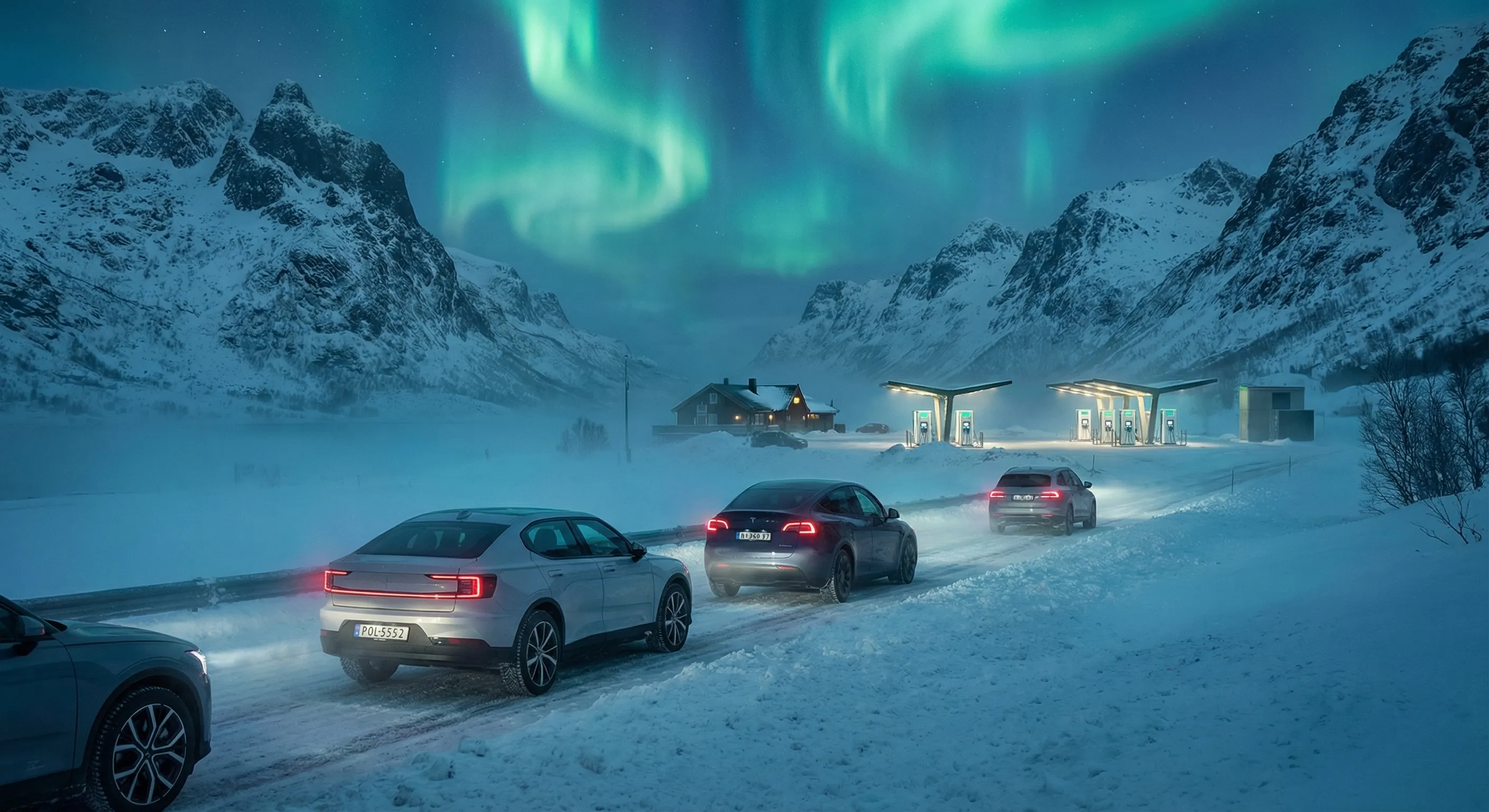
Norway has an EV market share above 90%, more than nine out of ten new cars sold there are fully electric. Norway has winters. Real winters. Bergen gets snow. Oslo gets cold. The far north of Norway, Tromso, Narvik, Hammerfest, experiences Arctic conditions that rival anything southern Canada sees, and far exceed what most Canadians encounter in their daily lives.
Norwegian drivers are not doing anything exotic.
They're not pre-conditioning for hours, hauling generators, or avoiding highway travel. They're doing what EV drivers anywhere do: charging at home, occasionally using fast chargers, and adjusting expectations slightly for cold days. The adjustment is real, they know winter range is lower, they plan accordingly, but it hasn't stopped 90% of the new car buying public from choosing electric.
The Norwegian experience tells us something important about the Canadian situation: the barrier isn't the weather.
Norway proves that cold-weather EV ownership is not just viable but dominant. The barriers in Canada are infrastructure density in rural areas, public charging reliability, and purchase price, all real issues, but different issues from the ones winter range anxiety focuses on. As charging infrastructure continues to improve across Canada, the Norwegian outcome is not just possible but predictable.
Practical Winter EV Tips That Actually Make a Difference
There are things you can do that collectively recover significant winter range. These aren't gimmicks, each one has real, measurable impact.
Pre-condition the car while plugged in. This is the single highest-return habit for winter EV driving. If your car is plugged into a Level 2 charger (or even a 120V outlet) overnight, you can use the app to start cabin heating 15–20 minutes before you leave. The car heats the interior to your preferred temperature and warms the battery, all using grid power, not battery power. You leave the driveway at 100% charge AND with a warm cabin. This alone can recover 10–15% of projected winter range loss.
Install proper winter tires. This is not optional in Canada anyway, most provinces have legislation or strong recommendations around winter tires. But beyond the mandatory safety argument, winter tires on an EV reduce the energy wasted to rolling resistance and improve the accuracy of your range estimates, because the tires are behaving predictably rather than fighting the road surface.
Use seat and steering wheel heaters instead of cabin air. Seat heaters warm your body directly and draw a fraction of the power that heating the entire cabin air volume requires. On most EVs, running seat heaters and reducing the climate target temperature by 3–5C can save meaningful range on longer drives. The steering wheel heater draws even less power. Get in the habit of using these as your primary warmth source and treating the cabin air temperature as a secondary supplement.
handle to fast chargers to trigger battery pre-heating. Most modern EVs (Ioniq 5, EV6, Model Y, Polestar 2, among others) will automatically begin warming the battery when you set a DC fast charger as your navigation destination. Arrive with a warm battery and you'll charge at significantly higher speeds. Without pre-heating, arriving at a fast charger with a cold battery can mean starting at 20–30 kW and slowly ramping up, with pre-heating, you arrive at 150+ kW-capable rates. For long Canadian highway trips in winter, this distinction can save 20–30 minutes per charging stop.
Park in a garage. Even an unheated garage in a Canadian winter is meaningfully warmer than the outdoor ambient temperature. The difference between -25C outside and -8C in an unheated garage can preserve several percentage points of battery capacity overnight, simply by keeping the cells above the worst cold-weather performance threshold.
Keep the battery above 20% state of charge. Cold batteries perform worse, and a cold, depleted battery is at its worst. Keeping the charge above 20% in winter gives the BMS more capacity to work with and ensures the battery has enough charge to run thermal management if needed.
Check tire pressure weekly. Cold air compresses, and tire pressure drops roughly 1 PSI for every 6C of temperature decrease. An EV with significantly underinflated tires is losing range to rolling resistance that doesn't need to be there. This takes two minutes with a good gauge.
Pre-Conditioning: A Step-by-Step Guide
Pre-conditioning is the most talked-about winter EV tip and also the one with the most confusion around it. Here is exactly how it works and how to do it right.
Pre-conditioning means using grid power (while the car is plugged in) to bring the battery and cabin to optimal temperature before you disconnect and drive. The goal is to start your drive with a warm battery and warm cabin without having spent any of your battery charge to achieve either.
The process is straightforward:
First, make sure the car is plugged in the night before.
This is the critical prerequisite, pre-conditioning while on grid power costs you nothing from your driving range. Pre-conditioning on battery power is still better than not doing it, but it does draw from the pack you're trying to preserve.
Second, set a departure time or trigger pre-conditioning manually from the app. Every major EV has an app (Tesla, Hyundai Bluelink, Kia Connect, Volkswagen ID, Volvo Cars) that lets you either schedule a departure time or trigger immediate pre-conditioning.
Schedule it 20–30 minutes before your typical departure. The car will handle everything automatically.
Third, pay attention to the battery temperature readout if your car shows it. You want to see the battery temperature above roughly 15–20C before driving in very cold conditions. In moderate cold (-10 to -15C), 15 minutes of pre-conditioning is usually sufficient.
In severe cold (-25C and below), 25–30 minutes gives you the best result.
Fourth, on road trips, use navigation. When you plug in a DC fast charger destination in the native nav system of an Ioniq 5, EV6, Model Y, or Polestar 2, the car automatically begins battery pre-heating as you approach the charger. You don't have to think about it. This is one of the strongest arguments for using the native navigation rather than CarPlay or Android Auto maps for long winter drives, the car can't pre-heat the battery if it doesn't know where you're going.
For Canadian drivers who commute daily: set a scheduled departure time in the app.
Do it once. The car wakes up before you do, heats itself, and is ready when you are. It is the closest thing to a "set it and forget it" winter range solution currently available.
Using the ThinkEV Winter Range Estimator
The considerations above are useful as general principles, but your specific situation, your car, your commute distance, your typical winter temperatures, whether you have home charging, determines your actual winter range in a way that general percentages can't fully capture.
The ThinkEV Compare tool includes a Winter Range Estimator that lets you input your specific model, trim, typical temperature range, and charging setup, and returns a realistic daily and per-trip range estimate for Canadian winter conditions. It's the fastest way to translate "20–30% loss at -15C" into a number that's actually relevant to your commute.
If you're planning longer winter highway trips and want to know where charging stops are, the ThinkEV Charging Map covers charging stations across Canada with filtering by network, connector type, and power level. In winter, knowing the distance between DC fast chargers on a given route, and whether any of them have reported issues recently, is the kind of practical information that turns a stressful trip into a routine one.
If you're earlier in your EV research and winter performance is one of your key concerns, the First EV Buyer's Guide for Canada covers heat pumps, battery types, and charging infrastructure in the context of a full purchase decision.
The Recommended Gear for Canadian EV Winters
Beyond the car itself, a few equipment choices make a real difference for Canadian EV owners in winter.
WeatherTech EV Floor Mats. Canadian winters mean salt, slush, and mud tracked into the vehicle constantly from November through April. EV interiors are expensive to repair and difficult to clean properly if you let moisture and grit accumulate. WeatherTech's EV-specific floor mats are deep-channel, full-coverage, and laser-measured for specific vehicle fitments. They protect the carpet and the underflooring, and they clean out completely with a rinse. For any EV you plan to keep for more than a year in Canada, these pay for themselves.
EV Tire Inflator. Tire pressure drops in cold weather, and an EV with properly inflated tires is meaningfully more efficient than one running low. A compact, 12V-powered tire inflator that lives in the car means you can top up pressure wherever you are, no gas station compressor required, no waiting. Look for one with a digital gauge and auto-shutoff at target pressure.
NOCO Boost GB40. This one is specifically for the cold-weather scenario that EV owners sometimes forget about: the 12V auxiliary battery. Every EV has a small 12V lead-acid (or sometimes LFP) auxiliary battery that powers the lights, locks, and accessory systems, separate from the main traction battery. In very cold weather, this 12V battery can be slow to respond or, in older EVs, can fail entirely. A NOCO Boost GB40 is a compact lithium jump starter that can revive a dead 12V in seconds. Fits in a jacket pocket, charges via USB-C, and has rescued more than a few stranded EV owners who discovered that their main 80 kWh pack was fine but the 12V was flat.
Gear worth having
As an Amazon Associate, ThinkEV earns a small commission from qualifying purchases — at no extra cost to you.

Magnetic Windshield Snow Cover
Skip the scraping. Magnets hold it on, peel it off with the snow, and your defroster stops draining range on cold mornings.
As an Amazon Associate, ThinkEV earns from qualifying purchases — at no extra cost to you.
Related Reading
- First EV Buyer's Guide for Canada: Everything You Need to Know (2026)
- Compare EVs with the ThinkEV Winter Range Estimator
- Find Charging Stations Across Canada
- We Tested 14 EVs in a Canadian Winter, Here's How They Really Perform
- Norway's -27°C Winter EV Test: Chinese Cars Beat Tesla on Range
- What BYD's Solid State Battery Actually Means for Canadian EV Buyers
Gear worth having
As an Amazon Associate, ThinkEV earns a small commission from qualifying purchases — at no extra cost to you.

Extendable 3-in-1 Snow Brush and Scraper
Telescopes to 46 inches so you can sweep a whole roof and windshield without climbing on the car.
As an Amazon Associate, ThinkEV earns from qualifying purchases — at no extra cost to you.

Founder & Chief Editor
Vlad Pereira is the founder and chief editor of ThinkEV.ca, the Canadian electric-vehicle publication he writes and edits from Courtenay, British Columbia. He covers EV pricing, federal and provincial rebates, charging costs, and the Chinese manufacturers now entering Canada, from the buyer's side rather than the press-fleet side. ThinkEV is a venture of Vlad Pereira Online; his writing on health, income and the long game lives at vladpereira.com.
Frequently asked questions
How much range do EVs actually lose in a Canadian winter?
Which EVs have heat pumps in 2026?
Should I charge the EV to 100% in winter?
Is fast charging slower in cold weather?
Are EVs safe to drive in deep Canadian snow and ice?
More EV & road-trip finds
Affordable upgrades worth a look — tap any to check the price on Amazon.
 ★ 68
★ 68WeatherTech FloorLiner for Tesla Model 3
View on Amazon ★ 8,681
Chemical Guys Complete Car Wash Kit
View on Amazon ★ 55
★ 55LED Car Door Logo Projector Light
View on Amazon ★ 4,626
HoogaLife Hanging Car Diffuser (2-Pack)
View on Amazon ★ 865
★ 865Collapsible Trunk Organizer
View on Amazon ★ 297
★ 297360-Degree One-Hand Dashboard Phone Mount
View on Amazon ★ 87
★ 87Car Window Sun Shades for Kids (4-Pack)
View on Amazon ★ 268
★ 268Anti-Slip Leather Steering Wheel Cover
View on AmazonRead, Plan, Then Stay Current
Explore our expert articles to understand incentives and ownership costs, use the map to pressure-test charging reality, then subscribe so new EV coverage comes straight to you.
Continue Reading
EV Winter Range Canada 2026: 14 EVs Tested in Sub-Zero
Why Cold Weather Cuts EV Range, the Real Reasons
Norway's -27C Winter EV Test: Chinese Cars Beat Tesla
EV Battery Degradation: 22,700 Vehicles Analysed
The Best Electric SUVs in Canada (2026): Ranked by Value