The EV salesperson hands you a brochure. "Lower fuel costs. Minimal maintenance. No oil changes." You run the numbers, the math checks out, and you sign. Three months later, your first insurance renewal arrives and you feel like you got ambushed.
The brochure skips all of it.
Four years of EV ownership data tells a consistent story. The fuel savings are real. The "no oil changes" thing is real. But the costs that catch new owners off guard add up to close to $6,000 in year one that most buyers never budgeted for. This isn't a hit piece on EVs. But if you're about to buy one, or you already did and you're trying to figure out where your money went, this is the full accounting.
Every dollar figure below comes from documented owner reports, real quotes, provincial government sources, or manufacturer pricing. Where ranges exist, they're explained. No estimates plucked from thin air.
Key takeaways
- EV insurance costs $200-$600 more per year than equivalent gas vehicles, with Ontario and BC drivers hit hardest by repair-cost surcharges.
- EV-specific tires cost $1,400-$1,800 per set versus $700-$1,000 for gas car tires, and EVs wear through them 20-30% faster due to instant torque.
- A Level 2 home charger costs $800-$2,500 installed, but an electrical panel upgrade can add another $2,000-$4,000. Dealers never mention this.
- Public fast charging costs 3-5 times more than home charging and carries idle fees that compound fast if you don't move your car after charging.
- Every EV has a 12V accessory battery that most owners don't know exists. It fails every 3-5 years and leaves you stranded just like any gas car battery.
- EVs lose 20-40% of their value faster than gas vehicles in years 1-3, meaning your trade-in will be lower than the brochure math assumed.
- A windshield on an EV with cameras costs $800-$1,500 to replace, not the $200-$400 you'd pay on a basic gas car, because sensor recalibration adds $400-$600.
- Tesla, BMW, and other makers now charge monthly fees for features that used to ship standard. Those add $150-$800 per year to what you already paid.
- In Canadian winters, EV range drops 20-40% and energy use goes up 30-40%, turning a $50/month charging bill into $80-$90 from December through February.
- When you add it all up, real EV ownership costs $3,500-$7,500 more per year than the brochure shows, though fuel savings offset much of that for high-mileage drivers.
Insurance and Tires: The Two Big Surprises
These two costs alone add $1,200-$2,000 per year beyond what most buyers budget. Most EV owners know they exist in the abstract. The dollar gap only becomes real on the first renewal.
Insurance: Why Your Premium Goes Up
Consider a typical Ontario driver switching from a 2019 Volkswagen Jetta to a 2022 Hyundai Ioniq 5. The insurance jump is bigger than most buyers expect.
A Jetta running $1,480 per year with TD Insurance in Ontario with full coverage: comprehensive, $1 million liability, $500 deductible collision. The same driver's Ioniq 5 quote from the same insurer for the same coverage comes back at $2,180. That's $700 more per year, about $58 extra every month, for a driver with a solid record. That $700 is roughly what you'd spend on a weekend road trip.
Shopping around helped a little. Intact quoted $2,040. Aviva came in at $2,260. The best quote available was Economical at $1,890. None of it matched the gas car rate. In other words, the cheapest quote available was still $410 more per year than the Jetta, which means the premium gap exists regardless of which insurer you choose.
Canadian buyers should know the provincial breakdown before they commit. EV insurance premiums run 15-25% higher than equivalent gas vehicles on average across Canada (Insurance Bureau of Canada, 2026). Ontario EV owners pay $300-$600 more per year than drivers with equivalent gas cars. British Columbia drivers pay $200-$400 more because ICBC's rate structure is more controlled. Alberta EV owners pay $250-$500 more in the open market. Quebec drivers pay $150-$300 more because SAAQ's public auto insurance keeps the gap narrower. Atlantic provinces run $200-$450 more, with Nova Scotia and New Brunswick on the higher end (IBC, 2026).
Three compounding reasons drive that premium. First, repair costs. A fender bender on a 2024 Tesla Model 3 that costs $3,200 on a Honda Civic runs $8,500-$12,000 on the Tesla. Battery proximity sensors, camera array recalibration, and parts sourced only from authorised suppliers push that number up. Insurers price premiums to cover expected claim costs. When claim costs are higher, premiums follow. Second, parts scarcity. Tesla operates 14 authorised service centres in Canada for 120,000-plus Teslas on the road. That's a real bottleneck. In Lethbridge or Sudbury, your car may sit at a storage lot for three to six weeks waiting for a service slot. The rental car coverage your insurer provides during that wait costs $60-$90 per day. Those costs go back into your premium pool.
Third, specialised labour. EV high-voltage system work requires certified technicians. Standard body shop rates in Ontario run $120-$145 per hour. Certified EV technicians at authorised service centres bill $190-$240 per hour. That gap is priced into your annual premium before you file a single claim.
Which vehicles get hit hardest? Based on 2026 data, Tesla Model Y and Model 3 carry the steepest surcharges, often 35-45% above comparable gas SUV premiums. The Hyundai Ioniq 5 and Kia EV6 run about 15-25% higher than their gas equivalents. The Chevrolet Equinox EV, with its established GM repair network, runs only 8-12% higher. Choosing a mainstream-brand EV over Tesla can save you $200-$400 per year on insurance alone.
The most useful thing you can do is call a broker rather than going direct. Brokers access multiple insurers at once and know which ones are pricing EVs aggressively versus which are trying to build EV market share. In 2026, Economical, Wawanesa, and Co-operators are mostly more competitive on EV premiums than TD or Intact in Ontario. Call three brokers, not one. Quotes can vary by $300-$500 for the same coverage and the same driver profile.
Usage-based insurance programmes from Desjardins (Ajusto) and Intact (MyDrive) can cut premiums 10-25% for clean drivers. If your driving is mostly off-peak highway commuting, you'll score well. These programmes collect driving data, so make your own call on that tradeoff. The simplest win is raising your deductible. Going from $500 to $1,000 can drop an Ioniq 5 premium by $210 per year. Put that $210 into a dedicated emergency fund. After two years without a claim, you're $420 ahead.
One factor most buyers don't check is the difference in insurance costs between EV trim levels. A Tesla Model 3 Standard Range and a Tesla Model 3 Performance are not priced the same by insurers. The Performance's higher repair costs and more powerful drivetrain push its premium up by $300-$600 per year in Ontario versus the base model. The same is true for the Hyundai Ioniq 5 AWD versus the RWD version. Dual-motor AWD variants carry higher premiums across almost every brand because they cost more to repair after a drivetrain incident. If you're choosing between trim levels and budget is a concern, run insurance quotes on both before you decide. The annual difference can close the gap between what looks like a small trim upgrade and what is actually a meaningful ongoing cost difference.
Multi-vehicle discounts are also underused by EV buyers. If your household has a gas vehicle on the same policy, adding the EV to that policy often carries a 10-15% multi-vehicle discount that partially offsets the EV surcharge. Ask your insurer specifically about this. Many EV buyers get separate quotes and miss the bundled rate entirely.
Telematics data from Desjardins Ajusto and similar programmes also track hard-acceleration events. EVs with instant torque delivery make it easy to rack up hard-acceleration flags even at legal speeds. If you're enrolling in a usage-based programme with your EV, be conscious of your acceleration style in the first few months when the insurer is profiling your driving. A heavy foot early in the programme can lock in a worse discount tier for the full year.
Gear worth having
As an Amazon Associate, ThinkEV earns a small commission from qualifying purchases — at no extra cost to you.

Grizzl-E Classic Level 2 EV Charger (40A)
Canadian-made and rated for minus 40C winters. 40A / 9.6 kW, NEMA 14-50, indoor/outdoor, 24-ft cable. The charger built for Canadian weather.
As an Amazon Associate, ThinkEV earns from qualifying purchases — at no extra cost to you.
Tires: More Expensive and They Wear Faster
This one blindsides EV owners more than insurance. The tradeoff is real physics, not manufacturer pricing tricks. You can't opt out of it, but you can make smarter choices once you understand what's driving the cost.
EVs need specific tires for two real reasons. Load weight is the first. A 2024 Ford F-150 Lightning weighs 2,810 kg. A 2024 Hyundai Ioniq 6 weighs 2,098 kg. Both are much heavier than their gas versions. The regular F-150 comes in at 2,120 kg. The Ioniq sedan equivalent weighs roughly 1,520 kg. That extra weight demands higher load ratings than standard all-season tires provide. Running underrated tires on an EV is a safety issue. Your tire's load rating tells you the maximum weight it can carry. If the tire isn't rated for your vehicle's weight at highway speed, a blowout becomes much more likely.
Rolling resistance is the second reason. EVs benefit from low rolling resistance tires because there's no engine braking and you're running efficiency calculations on every kilometre. Low-rolling-resistance tires improve range by 4-8% on average. That's 15-30 km more range per charge on a 400 km vehicle.
For a Hyundai Ioniq 5, the OEM tire is the Michelin Pilot Sport EV (235/55R19). A set of four from Canadian Tire in spring 2026 costs about $1,580 compared to $850-$1,050 for an equivalent all-season on a comparable gas SUV. That's roughly $530 more per set, approximately what you'd spend on a weekend camping trip with the family. For a Tesla Model 3, you're looking at $1,640-$1,780 for four OEM Michelin Pilot Sport 4S or Continental ProContact RX (245/45R18) tires, versus $700-$950 for an equivalent gas sedan set. For a Ford F-150 Lightning, the Michelin Defender LTX (275/65R20) costs $1,900-$2,200 for four, compared to $1,200-$1,500 for a standard F-150 with the same wheel size.
You also replace EV tires more often, which compounds the cost. EV motors deliver full torque the instant you press the accelerator. No ramp-up, no RPM build. A 2024 Tesla Model Y Performance delivers 660 Nm of torque from zero. The rear tires feel every Newton-metre. Studies from Michelin and Goodyear show EV tires wear 20-30% faster than equivalent tires on gas vehicles driven with the same habits. If a gas car gets 60,000 km from a set of tires, the EV driver under the same conditions gets 42,000-48,000 km.
Over 200,000 km of ownership, a gas car driver buys 3-4 sets of tires at $900 average, totalling $2,700-$3,600. An EV driver buys 4-5 sets at $1,600 average, totalling $6,400-$8,000. The difference is $2,800-$4,400 over the vehicle's lifetime.
that Quebec law requires winter tires from December 1 to March 15, with a grace period to November 15. Every other province strongly recommends them. Most EV owners in Canada carry two sets of wheels and tires: roughly $1,600 for summers and $1,400 for winters, which means $3,000 total sitting in the garage. Annual tire rotation costs $160-$240 for two seasonal swaps. Storage at a tire shop, if you don't have space, runs another $200-$300 per season. In practice, the annual prorated tire cost for a two-set EV owner works out to $600-$1,140 per year, compared to $250-$400 for a comparable gas car driver. That gap adds up to real money over a few years of ownership (Canadian Automobile Association, 2026).
EV-compatible winter tires are a newer category with fewer options than gas car winters, but Michelin X-Ice Snow (EV variant), Bridgestone Blizzak LM005, and Continental VikingContact 8 work well for most EVs. You can save money on summer tires without sacrificing much. Continental, Hankook, and Nexen all make EV-rated tires at 20-35% below Michelin and Goodyear pricing. The rolling resistance difference is small in real-world driving. For winters, Nokian and Sailun offer EV-rated options at $900-$1,100 for a set of four.
See how tire care fits into the full home charging picture at our best Level 2 EV chargers guide.
Home Charging Setup: The Cost Nobody Mentions
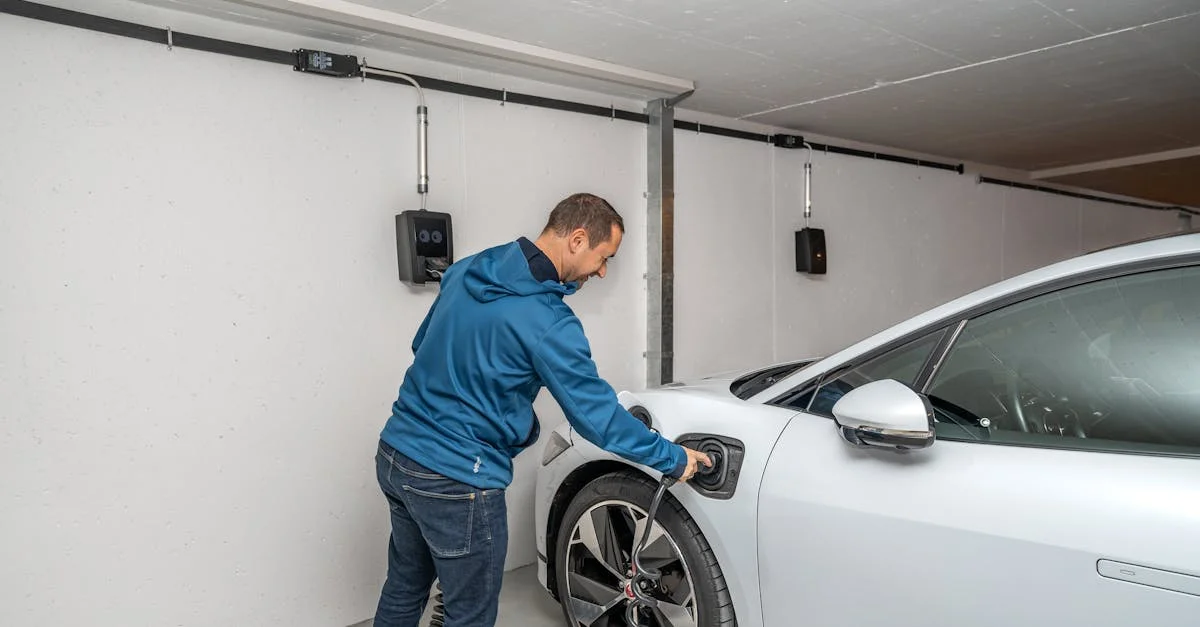
Every EV comes with a Level 1 portable charging cable. It plugs into a standard 120V outlet and delivers about 8-10 km of range per hour of charging. For a 400 km battery, that's 40-plus hours from empty to full.
Six weeks into owning an Ioniq 5, many owners report the same experience with the Level 1 cable: the car tops out at around 60-70% by morning after driving 80-100 km during the day. That leaves roughly 250-280 km of range each morning, which feels like plenty until it doesn't. The third time you leave the house with 55% charge and have to mentally calculate whether you'll make it to a fast charger on the way to a client meeting, the Level 2 charger order goes in that afternoon. That mental math every morning is its own hidden cost that doesn't show up in any spreadsheet.
Level 2 runs on 240V, the same outlet your dryer or range uses, and delivers 25-60 km of range per hour depending on the charger's output and your car's onboard charger speed. Full charge overnight, every night, with range to spare in the morning. The stress disappears.
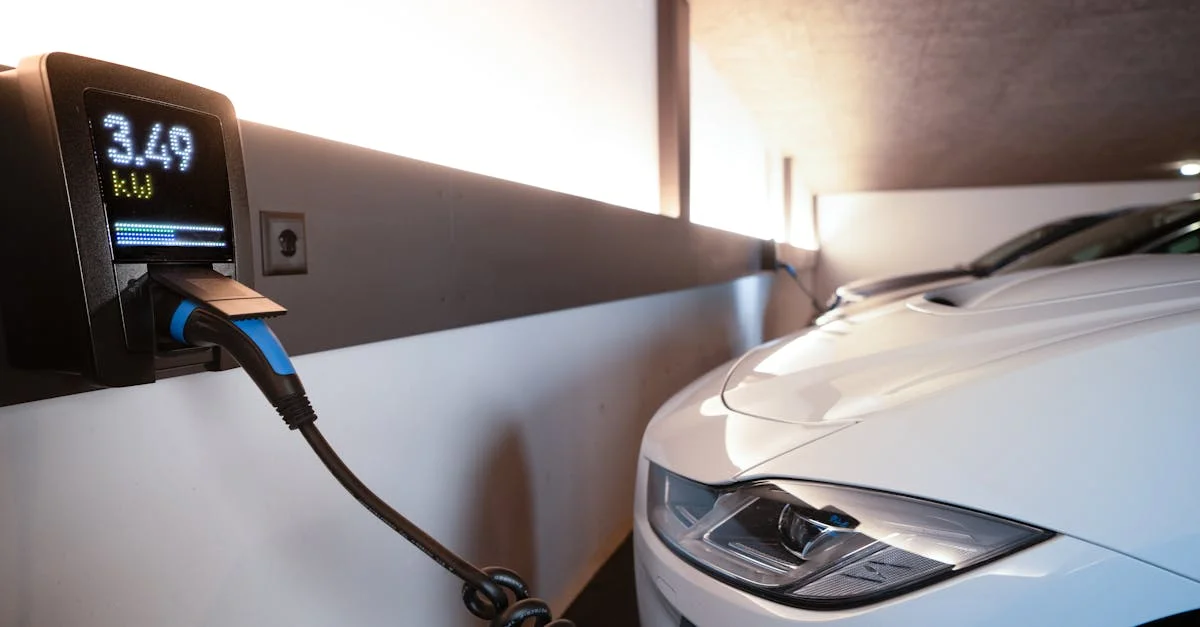
Charger units themselves cost $400-$800. The Grizzl-E Classic at $389 is the workhorse choice for budget-conscious buyers. It runs on a 40-amp circuit, charges at up to 40 km of range per hour, has no subscription, and has survived five prairie winters based on reports from Alberta and Saskatchewan owners. The ChargePoint Home Flex runs $699 and adds scheduling, app integration, energy monitoring, and a longer 7.5-metre cord.
The Wallbox Pulsar Plus at $769 offers load management features useful for homes with limited electrical capacity. In practice, the difference between a $389 Grizzl-E and a $769 Wallbox saves you $380 upfront but costs you smart-home features that may matter if you have time-of-use rates. Best overall for most suburban Canadians: the Grizzl-E Classic.
Best for smart home integration and energy monitoring: ChargePoint Home Flex. Best for older homes with electrical constraints: Wallbox Pulsar Plus. Best for budget-first buyers who want a no-subscription unit: also the Grizzl-E at $389.
Installation labour runs $300-$600 for a straightforward job. "Straightforward" means your electrical panel has capacity for a 240V, 40-50 amp circuit, the charger mounts within 6-8 metres of the panel, and you're in a detached home with a garage. Most suburban Canadian homes built after 1990 fit this description. Add the permit, and a standard install lands at $800-$1,500 total.
Most Canadian cities require an electrical permit for a new 240V circuit. Permits run $75-$250 depending on the city. Toronto charges $172. Calgary charges $95. Vancouver costs $165. You can skip the permit. However, an unpermitted electrical installation becomes a serious problem if your insurer discovers it after a fire or electrical incident. Some insurers will refuse claims for damage connected to unpermitted work. The permit isn't bureaucracy for its own sake.
According to the Ontario Electrical Safety Authority, permits and inspections for EV charger installations are required for all new circuits in Ontario. Other provinces have similar requirements. The OESA publishes a clear guide for homeowners on what the permit process involves and why it matters.
Older homes are where costs get serious. Houses built before 1980 often have 100-amp service panels. A 40-amp EV charger circuit draws 40 amps continuously. Add your dryer at 30A, your electric range at 50A, and your water heater at 30A, and you're regularly over capacity. A panel upgrade from 100A to 200A service runs $2,000-$4,000 in Ontario and BC, roughly the same as a few months of car payments. Alberta is cheaper at $1,600-$2,800. Quebec runs $1,800-$3,200. Some homes need both a panel upgrade and a sub-panel for the garage. That pushes total costs to $4,000-$6,500 before you buy the charger itself. (Source: OESA HomeWiring Guide)
A dealer will quote you the price of the car and mention the $5,000 federal rebate. They won't mention that your 1970s home needs a panel upgrade that costs $3,000 before you can charge. That omission is why so many buyers feel blindsided in year one.
Money is available to offset some of these costs. The federal Greener Homes Grant covered up to $600 for home EV charger installation, but that programme ended in 2024. BC Hydro's EV charger rebate of $350 is still active as of 2026. Some utilities including Hydro-Quebec, BC Hydro, and Enbridge offer smart charging rebates of $100-$200 for enrolling in time-of-use management programmes. Call your utility before you schedule the installation. The rebates don't advertise themselves and most people leave money on the table.
Condo and rental situations present a harder problem. In British Columbia, condo corporations can no longer legally block EV charger installation in dedicated parking stalls under the Strata Property Act amendments of 2021. But you still need board approval, a licensed electrician, and coordination with building management. The process takes 60-180 days in most buildings and costs $1,500-$3,500 because you're running dedicated conduit from panel to stall rather than a simple garage installation. The legal right exists. The practical reality is still slow and expensive.
Renters have fewer protections. BC and Ontario have added language requiring landlords to "reasonably accommodate" EV charger requests, but enforcement is inconsistent. Most renters who ask still get told no. If you're renting, assume you'll rely on public charging and price that into your ownership cost before you sign anything at the dealership.
Public fast charging on ChargePoint, Flo, or FLO networks in Ontario costs $0.29-$0.49 per kWh. That's 3-5 times the home rate. A full charge on the Flo network at $0.38 per kWh costs $28.50 for a 75 kWh battery. DC fast charging on Tesla Superchargers runs $0.50-$0.64 per kWh. Electrify Canada runs $0.49-$0.69 per kWh. A 30-minute fast charge that adds 200 km of range costs $22-$30. If you don't have home charging and rely on public networks, your "cheap electricity" advantage mostly evaporates.
Idle fees compound this further. Every major charging network charges idle fees once your car is fully charged and you haven't moved it. Tesla Supercharger charges $0.50-$1.00 per minute when idle at a busy station. Electrify Canada's idle fee of $0.40 per minute starts 5 minutes after charging completes. FLO charges $0.10 per minute starting 10 minutes after full charge. In practice, a 20-minute overstay on a Tesla Supercharger during a lunch stop costs you $10-$20 in idle fees on top of what you already paid for the charge. That's roughly what you'd pay for the meal. Set a timer. Every time.
See the full provincial breakdown of charging costs in our dedicated guide: EV charging costs by province in Canada for 2026.
The Small Stuff That Adds Up
The 12V battery, the windshield, the software subscriptions. Each feels manageable alone. Together they add $1,000-$2,000 per year that most buyers never see coming, and they have a habit of arriving together.
The 12V Battery Nobody Told You About
No EV cost produces more surprised forum posts than this one. "I thought EVs didn't have batteries that died!" They do. A different one, but the same failure mode.
Every EV has two battery systems. The main high-voltage traction battery is what everyone thinks of when they think "EV battery." It powers the motor. But every EV also has a small 12V accessory battery, the same type used in gas cars for decades. It powers your car's computers, interior lights, door locks, power windows, and infotainment system.
In a gas car, the 12V battery is recharged by the alternator while the engine runs. In an EV, a DC-DC converter steps down voltage from the main traction battery to keep the 12V charged. Same battery chemistry. Same vulnerability to failure. Same consequences when it dies.
When the 12V battery fails in an EV, you can't unlock the car with the door handle. The infotainment won't boot. The car won't enter drive mode. Your phone app loses connection to the vehicle. It presents exactly like a dead battery in any gas vehicle. The difference is that EV owners don't expect it. There are posts on Tesla forums where owners called Tesla roadside support convinced their $80,000 car was bricked. It was a $200 battery.
Standard lead-acid 12V batteries in EVs last 3-5 years, about the same as in gas cars. Lithium 12V batteries used in some newer models last 6-8 years and cost more upfront. Replacement costs vary by vehicle. At a Tesla service centre, you're looking at $280-$380 parts and labour for a Model 3/Y, though independent shops that carry compatible batteries can do the same job for $170-$220. That's roughly $100-$160 in savings for a call before you book. The Hyundai Ioniq 5/6 runs $240-$320 at a Hyundai dealer versus $180-$250 at an independent shop. The Ford Mustang Mach-E uses a larger AGM battery, so dealer cost runs $310-$420. The Chevrolet Bolt EV is relatively accessible at $190-$260 total. The Rivian R1T/R1S runs $350-$480 because the design is proprietary and dealer-only.
Watch for these symptoms: your touchscreen takes longer to boot than usual, key fob range drops noticeably, headlights dim when accessories activate, or the car wakes slowly when you approach. None of these are dramatic. By the time you notice them, battery failure is typically 2-6 months out. Keep the purchase date in your car file and budget for a 12V replacement at year 3-4 as routine maintenance, not as an emergency.
Over 200,000 km of ownership (roughly 15-16 years), expect two 12V battery replacements at $250-$380 average, totalling $500-$760. Not catastrophic. But invisible to anyone who bought an EV believing the "no batteries to replace" pitch.
Windshield: A $200 Job Becomes $1,500
On a 2014 Toyota Corolla, a windshield replacement with comprehensive insurance and a $200 deductible costs you $200. The glass shop bills your insurer $280-$350. Done in two hours.
On a 2024 Tesla Model 3 with the same coverage and deductible? The job costs $1,100-$1,500 and takes 4-6 hours. The reason isn't the glass itself, though Tesla's panoramic front windshield is larger and more expensive to source than a standard windshield. The real reason is the ADAS calibration requirement.
Modern EVs mount forward-facing cameras, radar sensors, and LiDAR modules directly to or immediately behind the windshield. When the windshield is replaced, these sensors lose their factory calibration. A windshield replacement without recalibration means your automatic emergency braking doesn't trigger at the right distance, your lane-keeping assist drifts, and your adaptive cruise control holds the wrong following distance. These are safety systems. Driving on uncalibrated ADAS equipment is driving on defective safety equipment. Every shop that does EV windshields legally must recalibrate before the car leaves the bay.
Static calibration, performed in a controlled shop environment with specialised targets, costs $300-$500 at a dealer or ADAS-certified shop and takes 2-3 hours. Dynamic calibration, performed by driving the vehicle at specific speeds on clear roads while software recalibrates sensors in motion, adds $150-$300 more. Some vehicles require both.
Total windshield replacement costs tell a clear story. A 2024 Tesla Model Y costs $850-$1,200 for glass plus $400-$600 for calibration, which means you're looking at $1,250-$1,800 total. The Hyundai Ioniq 5 runs $700-$950 for glass plus $350-$500 calibration, so roughly $1,050-$1,450 total. The Ford Mustang Mach-E runs $780-$1,050 for glass plus $300-$450 calibration, so $1,080-$1,500 total. For context, a 2024 Toyota Corolla without ADAS costs $280-$420 for glass with no calibration required, which means an EV owner pays 3-5 times more for the same repair.
Your comprehensive insurance covers windshield replacement in most policies, but your deductible applies. A $500 deductible means you pay $500 on a $1,400 job. Many Canadians carry a $1,000 deductible to lower premiums. On a $1,400 windshield job, you pay the full amount. Some insurers like Intact and Aviva offer glass coverage riders with no deductible for $60-$120 per year. For EV owners facing $1,000-plus replacement costs, this addition pays for itself after one chip fill. A stone chip that costs nothing to fill under a no-deductible glass endorsement can become a full windshield replacement if you leave it until winter cold spreads the crack. If you park outdoors in hail-prone areas like Southern Alberta or parts of Saskatchewan, comprehensive glass coverage isn't optional.
Software Subscription Creep
This is the newest cost category and it's growing the fastest. Automakers spent a decade building connected services divisions to generate recurring revenue after the one-time car sale. EVs accelerated this because over-the-air update capability makes it possible to enable or disable features remotely. Once that capability exists, the business logic follows.
Tesla's Premium Connectivity runs $13.99 CAD per month, about $168 per year. That's roughly the cost of a couple of grocery trips. Without it, you get basic Bluetooth and offline navigation. Most Teslas come with a 30-day free trial. After that, you pay or downgrade to a stripped experience. Full Self-Driving is $199 CAD per month or $10,000-$15,000 to purchase outright.
This is the feature set formerly called "Autopilot Enhanced. " It includes highway auto-steering, Autopark, Summon, and Traffic Light Control. Without it, you still have basic Autopilot lane centring and adaptive cruise, but everything beyond that requires the subscription. Most Tesla owners don't take FSD at the subscription rate. But Premium Connectivity at $167.88 per year is a quiet line item that most owners pay without thinking.
BMW charges $20-$35 per month for ConnectedDrive Services tiers, and additional fees for Remote Software Upgrade packages and performance enhancements. The heated seat controversy in 2022-2023, where BMW tried to charge $28 per month for seats that were physically installed in the car, resulted in customer backlash and a reversal for existing owners. But the infrastructure for that kind of monetisation remains.
Volkswagen's We Connect Plus runs $17.99 CAD per month after a 3-year free period included with the vehicle purchase. This covers remote app control, route planning, and parking information. For pre-2023 vehicles, the free period ends after 2026. Rivian's Connected Services subscription at $14.99 CAD per month includes software navigation, Alexa integration, and the full Rivian app feature set. Without it, the app is limited to basic lock and unlock. Ford's BlueCruise hands-free highway driving runs $800 CAD per year after a 3-year included period on qualifying vehicles. GM's Super Cruise operates the same way.
Gear worth having
As an Amazon Associate, ThinkEV earns a small commission from qualifying purchases — at no extra cost to you.

NOCO Boost Plus GB40 Jump Starter
A 1000A lithium jump starter that fits in your glovebox and works on any 12V battery. Your insurance against a dead 12V in a parking lot.
As an Amazon Associate, ThinkEV earns from qualifying purchases — at no extra cost to you.
Canadian buyers should audit what they actually use before automatically renewing. The tradeoff is clear: ignore the subscriptions and you lose features you thought you bought with the car. Subscribe and you pay $150-$800 per year that never appeared in your purchase agreement's total cost of ownership. If you're not road-tripping or streaming music through the car's system, most of these services add nothing meaningful to daily driving.
The more important thing to understand is the subscription trajectory. Every major automaker with an EV on the market has a connected services revenue team. The current subscription costs are the floor, not the ceiling. BMW's heated seat experiment, even though it was reversed after backlash, showed exactly where the industry wants to go: charging monthly for hardware that already exists in your car. Mercedes-Benz briefly sold a $1,200 per year subscription to unlock additional rear-axle steering angle on the EQS. That feature was physically present in the hardware. The software key was the product.
When you're comparing total cost of ownership, the approach is to budget for subscription costs increasing 15-25% over your ownership period. A $168-per-year connectivity package in 2026 may be $200 by 2029. Factor that into a 5-year cost model rather than assuming static pricing.
For buyers who use their phone for everything, the best strategy is to skip OEM subscriptions entirely and use third-party apps for what you actually need. Tessie, TeslaFi, and similar third-party tools provide data logging, remote commands, and trip tracking for Tesla owners at $10-$30 per year. They do everything the $168-per-year Premium Connectivity package covers, except native Tesla in-car navigation streaming. For drivers who pre-plan routes with a phone app, that exception doesn't matter.
Winter Energy: The 30-40% You Didn't Budget For
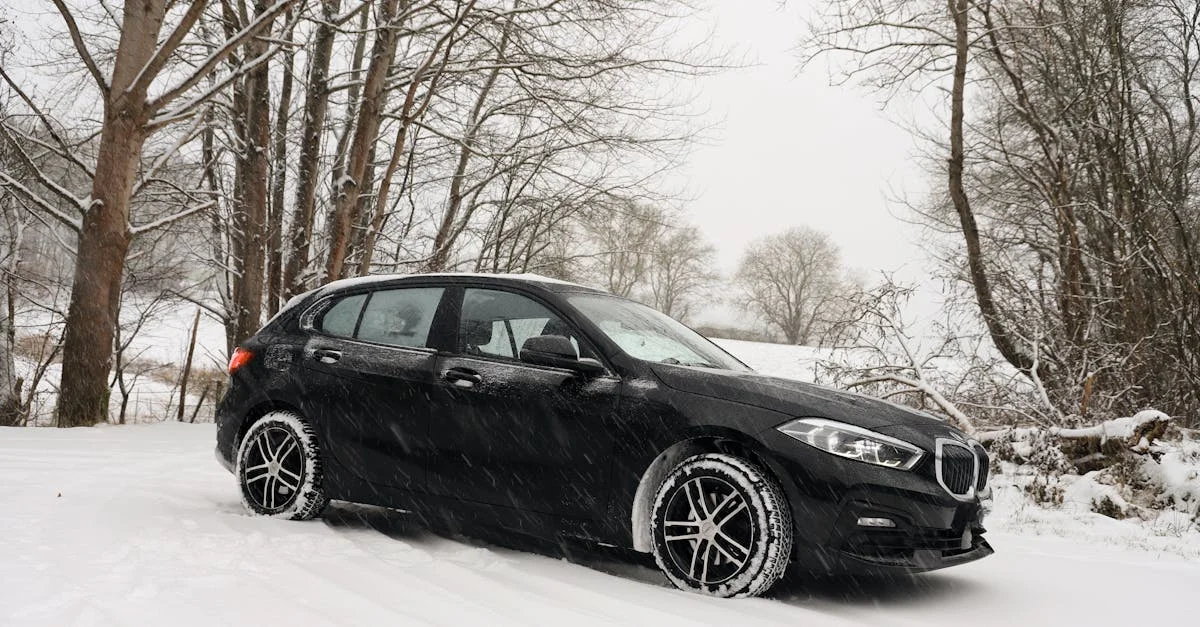
Most published EV range figures are rated at 22-25 degrees Celsius. In Canada, that temperature exists for maybe five months of the year in Southern Ontario. In Calgary, Winnipeg, or Edmonton, it exists for three months. In Whitehorse or northern BC, barely at all.
Cold weather increases EV energy consumption for three connected reasons. Understanding each one helps you plan for the real cost rather than just accepting the bill.
Battery chemistry is the first factor. Lithium-ion batteries lose capacity to deliver current as temperature drops. At -10 degrees Celsius, most EV batteries deliver 80-85% of their rated capacity. At -20 degrees, 65-75%. At -30 degrees, 55-65%. This isn't permanent damage. When the battery warms up, capacity returns. But while you're driving in -25 degree weather, you have about 60% of your rated range available. A car rated for 450 km of range effectively gives you 270 km in severe cold before you need to charge. That's a different vehicle for four months of the year.
Cabin heating is the second factor. Gas cars use waste heat from the engine to warm the cabin. That heat is free because the engine produces it regardless. EVs use electricity to run a resistance heater or heat pump to warm the cabin. A resistance heater at full blast on a cold January morning draws 5-7 kW continuously. A heat pump is more efficient at 1.5-3 kW, but heat pumps lose efficiency below -15 degrees Celsius. Most EVs below -15 switch from heat pump to resistance backup anyway. On a vehicle with a 300 watt average highway draw at comfortable temperatures, adding 5 kW of heating multiplies that one consumption category many times over. Total consumption in severe cold increases 30-50% over rated figures.
Regenerative braking is the third factor. In cold weather, EVs limit regen to protect cold batteries from accepting rapid charge currents. You get less energy recovery from braking and more mechanical brake wear over the winter months. This doesn't change your monthly electricity bill directly, but it means you're covering more distance on battery power with less energy returning from deceleration.
Here's what this costs in real dollars. Using a Hyundai Ioniq 5 AWD (77.4 kWh battery, 488 km rated range) as the baseline, with figures consistent with NRCan energy use data for Canadian drivers.
In summer in Ontario at off-peak rates of $0.087 per kWh, average consumption runs 18.5 kWh per 100 km. Driving 1,500 km in a month costs about $24. That's cheaper than a couple of takeout dinners. In January in Ontario at -15 degrees average, consumption jumps to 26-29 kWh per 100 km. The same 1,500 km month costs $33-$38, an increase of $9-$14. In January in Winnipeg at -22 degrees average, consumption hits 30-34 kWh per 100 km, and the monthly cost rises to $39-$44 using Manitoba Hydro's residential rate of $0.087 per kWh. In Alberta in January at ENMAX's rate of $0.097 per kWh, with -15 degree average temperatures and 27-31 kWh per 100 km consumption, the monthly cost runs $39-$45.
On a monthly basis, the winter premium over summer home charging runs $15-$20 for mild winter provinces like BC's Lower Mainland and Southern Ontario, and $25-$45 per month for Prairie provinces. Annually, that adds $180-$540 in extra energy costs, roughly the same as two to four months of a streaming subscription combined. It's not catastrophic. But it's real, and it's missing from every dealer brochure.
Pre-conditioning is the single best thing you can do to cut winter costs. Almost every modern EV includes a scheduled departure feature. Set the car to be ready at 7:30 AM and it begins warming the battery and cabin at 6:45 AM while still plugged in. It draws power from the grid rather than from the battery's driving range. Pre-conditioning cuts cold-weather range loss by 30-40% and reduces battery stress from driving cold. Most owners who complain about winter range have never set up scheduled departure. The feature is free and takes five minutes to configure. Use it before the first hard frost.
A few province-specific realities are worth knowing before you buy. Quebec EV owners face some of the harshest winters in Canada but also have access to the cheapest electricity in the country at about $0.061 per kWh in the first tier through Hydro-Quebec. Even with a 40% winter consumption jump, a typical Quebec driver doing 1,500 km per month in January pays roughly $28-$35 for home charging. That's less than what most Ontario drivers pay in summer. The low electricity rate turns the cold-weather penalty into a minor line item.
Saskatchewan is the toughest province for winter EV ownership. SaskPower's residential rate of $0.108 per kWh sits above the national average, and Saskatoon and Regina regularly hit -30 degrees for weeks at a time. At those temperatures, a 75 kWh battery vehicle might deliver only 250-300 km of real range. A driver doing 1,500 km per month in January could see a charging bill of $48-$58, roughly double the summer cost. If you live in Saskatchewan and drive long rural routes, range planning every trip is not optional.
Nova Scotia and New Brunswick have higher electricity rates at $0.151-$0.171 per kWh through Nova Scotia Power and NB Power respectively. Winter cold in Atlantic Canada is milder than the Prairies, typically -10 to -15 degrees rather than -25, so range loss is less severe. But the high electricity cost still makes winter charging noticeably more expensive per kilometre than in central and western Canada.
One cost many EV owners miss in winter is the overnight trickle-charging needed to keep the battery warm in extreme cold. Some EVs, particularly older Nissan Leafs and early Chevrolet Bolts, draw 200-400 watts continuously overnight just to maintain battery temperature when plugged in at -20 or below. Over an eight-hour night, that's 1.6-3.2 kWh of electricity used while the car sits still. Over a full Prairie winter month, this phantom draw adds $4-$10 to your bill depending on your utility rate. Newer vehicles with better thermal management reduce this, but it's worth checking your specific model's documentation before assuming overnight draw is zero.
For a deeper look at real winter range versus manufacturer claims, see our full analysis: how much range EVs lose in Canadian winter cold.
Depreciation and Roadside: The Exit Costs
Depreciation: The Biggest Hidden Cost Most People Ignore
Depreciation isn't a monthly bill. But it's a real cost. For most car owners, it's the largest single cost of ownership, bigger than fuel, bigger than insurance. EVs depreciate faster than the industry advertises, and the gap is wide enough to matter for every buying decision.
Gas car depreciation averages 35-45% of purchase price over three years. EVs depreciate 40-55% over the same period, with real variation by brand. The numbers tell a different story than the typical sales pitch.
A 2023 Tesla Model 3 Standard Range bought at $58,990 has a 3-year residual value of $29,500-$33,000 based on Canadian Black Book's 2026 residual value data (Canadian Black Book, 2026). That's a loss of roughly $26,000-$29,500 in three years, which means you'd pay $8,500-$10,000 per year in depreciation on the purchase price alone. A 2023 Hyundai Ioniq 5 AWD bought at $57,499 holds slightly better at $29,000-$33,000 residual. A 2023 Volkswagen ID.4 bought at $59,995 retains only $25,000-$28,000 after three years, approximately the worst in class. A 2023 Toyota bZ4X at $54,990 holds $28,000-$32,000 because Toyota's brand trust helps residuals. A 2023 Chevrolet Bolt EV at $38,998 holds $18,500-$21,000.
Compare those figures to gas car equivalents. A 2023 Honda CR-V bought at $38,250 holds $26,000-$28,500 after three years. That's 68-74% retained. A 2023 Toyota RAV4 at $39,850 holds $28,000-$30,500, about 70-77% retained. A 2023 Ford F-150 gas at $51,500 holds $37,000-$41,000, about 72-80% retained. Gas SUVs hold 15-25 percentage points more of their value than EVs over the same three-year period.
Battery degradation concerns drive used EV buyers to discount hard. A 2023 EV with 80,000 km might show 8-12% battery capacity loss on onboard diagnostics. That's a measurable, quantifiable reduction in performance the buyer can put a number on. Used gas car buyers can't quantify engine wear the same way. The measurability of EV battery health works against used EV prices. Technology obsolescence compounds the problem. When a 2025 model offers 100 km more range and a much better charging experience than a 2023 model, the 2023 model loses used value faster than a gas car experiences from a comparable model update.
Government incentive structures also push values down. When a new EV qualifies for a $5,000 federal rebate plus provincial incentives, the effective new car price drops. That pulls down used car values. The 2024-2025 influx of new EV models at more competitive base prices has put further pressure on used residuals across all brands.
And here's the honest tradeoff for buyers: the depreciation picture is improving, not worsening. EVs from Toyota, Lexus, and Hyundai's Genesis brand are holding value better than the segment average. The gap is closing as used EV demand grows and range anxiety fades. But in 2026, if you're buying an EV and planning to sell in three years, budget for 45-55% depreciation rather than the 35-40% you'd expect from a comparable gas vehicle.
If you're leasing, residual values matter even more. Leases are priced on the expected residual value at lease end. Lower residuals mean higher monthly payments for the same vehicle. Some Canadians who leased EVs in 2021-2022 are now seeing turn-in values well below what was projected, and new lease quotes on replacements are higher as lenders adjust their residual assumptions. Before you sign a lease, ask the dealer what the residual value is and compare it against current used car listings for the same model year. If the residual is higher than actual market values, you're building extra cost into every month.
For most buyers, the smartest money move is buying a 2023 used EV in 2026. You can buy a $55,000 car for $32,000-$36,000 and ride the flatter portion of the depreciation curve. The only sacrifice is the first-owner federal incentive, and the used price often comes in below what the incentive-adjusted new price was anyway. A used Ioniq 5 with 30,000 km and a battery health report in hand is a better financial decision than a brand-new one for most buyers who aren't keeping the car for 10 years.
One thing worth checking on any used EV purchase is the warranty transfer terms. Most EV battery warranties are transferable to subsequent owners. Hyundai's battery warranty covers 10 years or 160,000 km on the Ioniq 5/6, and it transfers to the second owner. Tesla's battery warranty covers 8 years or 160,000-192,000 km depending on the variant, and it also transfers. Chevrolet's Bolt EV battery warranty transfers too. These are real protections worth factoring into your used car offer price. A 2023 Ioniq 5 with 30,000 km has 130,000 km or 7 years of battery warranty remaining. That substantially reduces your risk compared to buying a used gas car with no drivetrain warranty at all.
The resale market for EVs is also shifting. In 2023, used EV prices were falling quickly as the initial wave of lease returns hit the market. By 2026, that initial supply wave has mostly cleared and used EV prices have stabilised in most segments. The used Ioniq 5 market, in particular, is tightening because new Ioniq 5 production has shifted more toward the N performance variant, reducing supply of the standard long-range version. That supply tightening is partially why the Ioniq 5 holds residuals slightly better than the VW ID.4 or Toyota bZ4X in the 2026 used market.
Roadside Assistance: A Real Gap You Should Know About
Your current roadside assistance plan probably covers EVs. But "covers" and "handles EVs well" are different things. That difference matters most when you're stranded.
Most EV manufacturers require flatbed-only towing. Towing an EV with a dolly, where the front wheels are lifted and the rear wheels contact the road, can damage the drivetrain and stress the transmission. Tesla, Rivian, Hyundai, and most others say flatbed-only in their service manuals. But flatbed trucks are less common than standard tow trucks, especially in rural and northern areas. A standard CAA dispatch might be declined once the driver arrives and realises it's an EV without a flatbed. This has happened to multiple EV owners across Canadian forums. One paid $380 out of pocket for a private flatbed because the CAA driver couldn't accommodate the car.
If your gas car runs dry, roadside assistance brings a jerry can. Two minutes. Done. If your EV runs to zero, there's no equivalent solution. A very limited number of CAA regions and private providers offer mobile EV charging. FLO's electric van can charge your car at $3.99 per minute at 40 kW. On the 401 between Toronto and Kingston, you might wait 2-4 hours for that service or for a flatbed to take you to a charger. CAA's mobile EV charging coverage is inconsistent by region as of 2026.
CAA Plus or CAA Premier at $139-$185 per year is the best overall option for EV owners. It covers 200 km of towing and some regions now include EV-specific mobile charging coverage. Tesla Roadside Assistance is included with new Tesla vehicles for 4 years. It covers flatbed towing to the nearest Tesla service centre but not mobile charging. Intact Insurance's roadside add-on at $79 per year covers flatbed and mobile charging in covered service areas. AMA in Alberta has a premium tier with EV-specific service and flatbed availability in more communities than the national average.
All told, gaps in EV roadside coverage cost an average owner $0-$200 per year in plan upgrades and $0-$400 in out-of-pocket incidents. The variance is high depending on where you live and how remote your driving tends to be. Urban drivers with home charging are rarely stranded. Rural drivers and road-trip regulars face meaningfully higher risk.
Practically speaking, the best protection is never running below 20% in areas without dense charging coverage. Use PlugShare or your car's built-in charger map before you leave for any highway trip. Many EV apps let you set a low-charge alert at 25% so you have enough runway to reach a charger without risking zero. This habit costs nothing and eliminates the worst-case scenario entirely. A bit of planning at the start of a trip is much cheaper than a $380 flatbed tow on a dark stretch of the Trans-Canada.
Total Hidden Cost Reality Check
The annual accounting the dealership brochure never shows you. Real numbers, explained in full.
The baseline comparison: a 2026 Hyundai Ioniq 5 Standard Range AWD at $55,499 MSRP before rebates versus a 2026 Hyundai Tucson Hybrid at $40,999. The Ioniq 5 qualifies for the $5,000 federal EVAP rebate, bringing effective cost to $50,499. The EV starts at about $9,500 more out of pocket. That gap matters for depreciation calculations.
Annual costs for the Ioniq 5 in Ontario at 20,000 km per year work out like this. Insurance runs $2,180, versus $1,520 for the Tucson Hybrid, which means you're looking at a $660 gap per year. Tires prorated for a two-set summer/winter setup run $820 per year. Home charging electricity at $540 is roughly $45 per month on average across seasons, approximately half the cost of a cell phone plan. A public charging supplement of 10% of total charging adds $210. Annual maintenance runs $290. The 12V battery amortised over 4 years adds $75. Software subscriptions for basic connectivity with no FSD add $170. CAA Plus roadside assistance adds $155. Year 1 depreciation at 26% of a $53,000 effective purchase price costs about $14,000. That puts the Ioniq 5 Year 1 total at about $19,100.
Year 1 for the Tucson Hybrid looks different. Insurance at $1,520. Tires at $550 per year. Fuel costs $2,640 based on $1.68 per litre and 9L per 100 km for 20,000 km, which means roughly $220 per month at the pump. Annual maintenance at $420. CAA Standard roadside at $120. Year 1 depreciation at 21% of $51,500 net drive-out cost equals $10,800. Total Year 1: about $16,050.
So the Ioniq 5 costs about $3,050 more per year than the Tucson Hybrid in Year 1. That's about $250 more every month. Over three years, accounting for depreciation across both vehicles, the EV total cost of ownership is about $51,000 versus $43,000 for the hybrid. The gap is about $8,000 over three years, roughly the price of a decent used car.
High-mileage drivers narrow this gap fast because fuel savings compound with distance. At 40,000 km per year, the fuel savings flip the equation and the Ioniq 5 becomes cheaper over three years by about $2,000-$4,000. The break-even point for most Canadian EV purchases versus equivalent hybrids is roughly 30,000-35,000 km per year. Below that threshold, the EV costs more over a three-year ownership period. Above it, the EV wins.
that driver type changes the equation significantly. For urban commuters driving 15,000-20,000 km per year with home charging, the real hidden cost premium is $2,500-$3,500 per year. Insurance, tires, and depreciation are the biggest surprises. For suburban drivers without home charging who rely heavily on public networks, the real premium runs $4,000-$6,000 per year. For rural or northern drivers who face winter range loss, roadside gaps, and cold weather energy in combination, the premium can run $3,500-$7,500 per year.
None of these numbers mean you shouldn't buy an EV. For the right driver in the right situation, EVs make strong financial sense by year 4-5. But years 1, 2, and 3 require more financial planning than the brochure suggests.
Budget $2,000-$7,000 upfront beyond the purchase price for one-time surprises. This covers charger installation, potential panel upgrade, and winter tire set. These hit hard in year one and mostly don't recur. Budget $1,500-$3,000 per year more than a comparable gas vehicle for ongoing costs. This covers the insurance gap, higher tire costs, winter energy, subscriptions, and roadside plan upgrades.
Maintenance savings are also real, but smaller than advertised. No oil changes saves $200-$360 per year for a driver doing 24,000 km. No spark plugs, timing belts, or air filter services add roughly $100-$150 per year in amortised savings. Brake wear savings are real because regenerative braking handles 80-90% of stopping. Most EV owners go 100,000 km before touching brake pads. Gas car brake pads typically last 40,000-70,000 km. The genuine annual maintenance saving versus a properly maintained gas vehicle is $100-$200 per year, not the $1,000 some sources suggest. That's still money in your pocket, but it doesn't come close to covering the insurance and tire premium on its own.
Some savings are real but invisible until they aren't. EVs have cooling circuits but far fewer engine components than gas vehicles. Less to fail, less to service over time. There's no transmission fluid to change, no timing belt to snap at 160,000 km, no catalytic converter to replace. These aren't costs you'll track week to week, but over a 10-year ownership period they reduce your unexpected repair exposure. An EV that's been well maintained is more predictable in its long-term costs than a gas car. That predictability has real financial value even if it doesn't show up in a year-by-year comparison.
The tradeoff is clearest for high-mileage drivers who charge at home, live in provinces with low electricity rates and strong incentives like Quebec and BC, and plan to keep the vehicle for 8-10 years. It's weakest for low-mileage drivers, renters without home charging, and people who trade vehicles every 3 years. None of that is a reason not to buy an EV. The driving experience is better in ways that don't show up in spreadsheets: instant torque, near-silent operation, and never visiting a gas station. Those quality-of-life gains are real. But so are the costs.
For a complete look at what you actually pay for scheduled and unscheduled maintenance, see EV maintenance costs Canada - the real numbers.
Gear worth having
As an Amazon Associate, ThinkEV earns a small commission from qualifying purchases — at no extra cost to you.

TP-Link Kasa Smart Plug with Energy Monitoring
Track exactly how much electricity your Level 1 charger uses and schedule it for off-peak hours. Know your real cost per kWh.
As an Amazon Associate, ThinkEV earns from qualifying purchases — at no extra cost to you.
Gear worth having
As an Amazon Associate, ThinkEV earns a small commission from qualifying purchases — at no extra cost to you.

P3 Kill A Watt Electricity Usage Monitor
Plug in your charger and see exactly what you spend in kWh, cost, and watts. Settle the is-my-EV-really-cheaper debate with data.
As an Amazon Associate, ThinkEV earns from qualifying purchases — at no extra cost to you.
FAQ
Go in with honest numbers, budget year one generously, and you won't be surprised. The numbers tell a different story than the brochure, but that story isn't a bad one. It just needs to be the one you plan for.
Gear worth having
As an Amazon Associate, ThinkEV earns a small commission from qualifying purchases — at no extra cost to you.

PULIDIKI Car Cleaning Gel (Detailing Putty)
Press it into vents, buttons, and seams and it lifts out dust you did not know was there. Weirdly satisfying, genuinely useful.
As an Amazon Associate, ThinkEV earns from qualifying purchases — at no extra cost to you.

Founder & Chief Editor
Vlad Pereira is the founder and chief editor of ThinkEV.ca, the Canadian electric-vehicle publication he writes and edits from Courtenay, British Columbia. He covers EV pricing, federal and provincial rebates, charging costs, and the Chinese manufacturers now entering Canada, from the buyer's side rather than the press-fleet side. ThinkEV is a venture of Vlad Pereira Online; his writing on health, income and the long game lives at vladpereira.com.
Frequently asked questions
Do EVs cost more to insure than gas cars in Canada?
Can I use regular all-season tires on the EV to save money?
What's the real payback period for a Level 2 home charger?
How much does a typical EV winter cost me in extra electricity compared to summer?
What happens if the EV runs out of charge on the highway?
Is the 12V battery replacement something I can do myself to save money?
Are Tesla's software subscriptions worth paying for?
Which Canadian province makes EV ownership most expensive when you include all hidden costs?
More EV & road-trip finds
Affordable upgrades worth a look — tap any to check the price on Amazon.
 ★ 401
★ 401Crochet Daisy Rear-View Mirror Charm
View on Amazon ★ 12,396
K KNODEL Car Trash Can with Lid
View on Amazon ★ 308
★ 308Coiled Lightning Car Cable for iPhone (2-Pack)
View on Amazon ★ 61
★ 61Toddler Car Seat Snack and Cup Tray
View on Amazon ★ 17,839
Qifutan Vent Phone Mount (Military-Grade Clip)
View on Amazon ★ 2,941
Microfiber Cleaning Cloths (Multi-Pack)
View on Amazon ★ 537
★ 537USB Star Projector Roof Light
View on Amazon ★ 900
★ 900Personalized Photo Car Air Freshener
View on AmazonRead, Plan, Then Stay Current
Explore our expert articles to understand incentives and ownership costs, use the map to pressure-test charging reality, then subscribe so new EV coverage comes straight to you.
Continue Reading

EV Maintenance Costs Canada 2026: What You Pay
EV Charging Costs Canada 2026: Home vs Public
Level 2 EV Charger Installation: Real Costs in Canada
How Much Will EVs Cost in Canada? The Complete Pricing Guide
Which EVs Should Be Charged to 100%? The LFP Exception