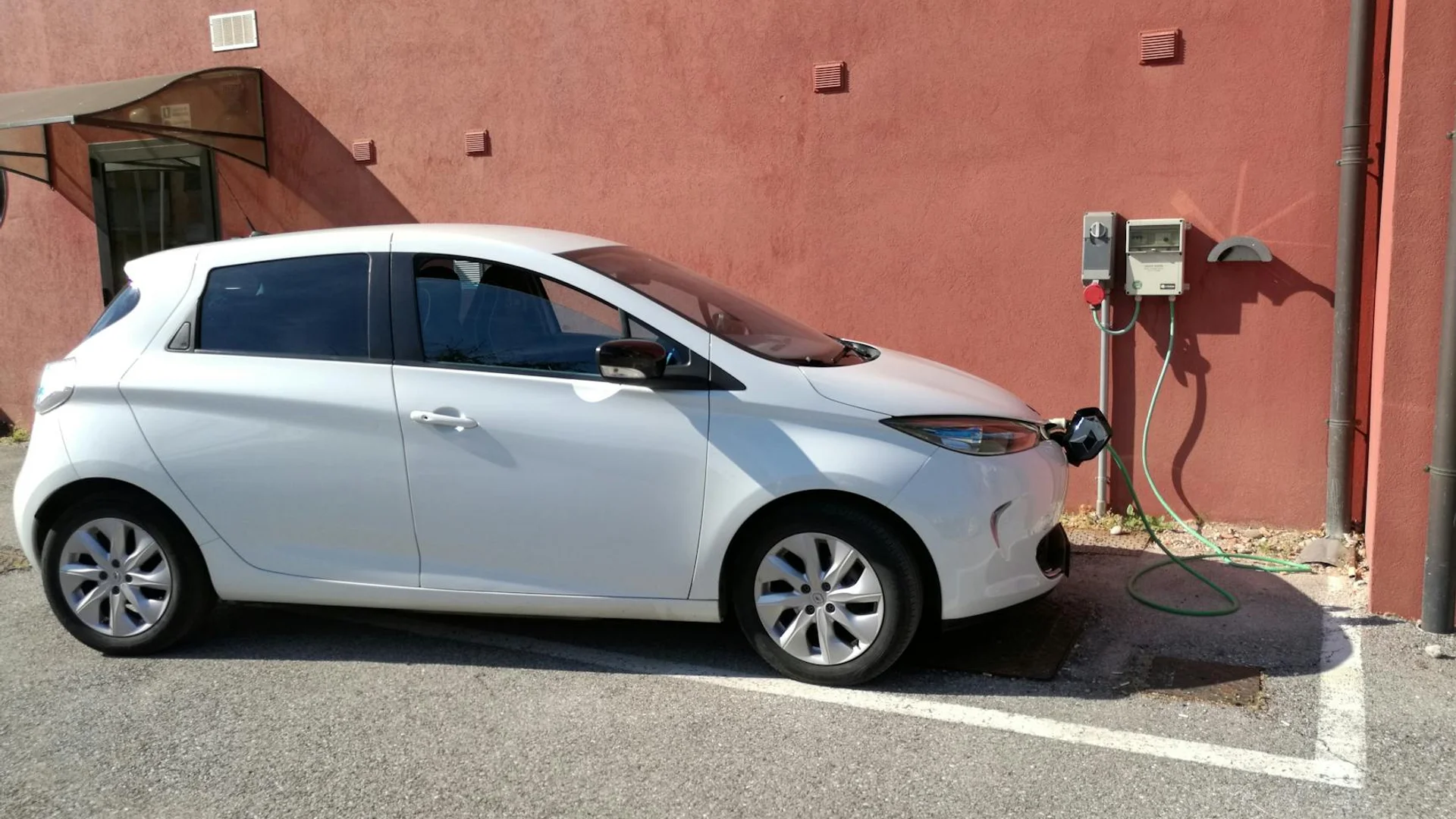
Your dryer outlet is already pulling 240V. Your EV needs 240V. So why are you still charging on 120V?
Sharing a NEMA 14-30 dryer circuit with your Level 2 charger is one of the most contested home-charging hacks in the EV community. The short answer: yes, you can do it, and for many Canadian apartment dwellers, townhouse owners, and renters, it's the most practical Level 2 setup available. The longer answer involves smart splitters, the 80% continuous-load rule, and one important distinction between "a setup that works" and "a setup that's safe."
For most Canadian households that already have an in-suite dryer, a certified smart splitter and the right portable EVSE will get you from 120V trickle-charging to a real Level 2 experience for under $400 CAD. The math is straightforward: a 30A dryer circuit at 80% continuous load gives you 24A of charging current, which translates to roughly 5.7 kW, enough to add 300 to 350 km of range during a typical overnight session. That covers the vast majority of Canadian daily driving without touching the panel.
But this is also where the safety question gets real. A factory-built smart splitter from a recognized brand is one thing. An extension cord run through a basement wall to a homemade switch is something else entirely. The same hardware category contains both the safest possible solution to apartment EV charging and some of the most dangerous wiring decisions you'll see on the internet. Knowing the difference matters.
Key takeaways
- A certified NeoCharge or Splitvolt smart splitter costs under $400 CAD and delivers 5.7 kW overnight charging from your existing 30A dryer circuit.
- The 80% continuous-load rule limits a 30A dryer circuit to 24A of charging current, adding 300–350 km of range per overnight session.
- Smart splitters use a current transformer and relay to automatically throttle EV charging the moment your dryer fires up, preventing overloads.
- Extension cords through wall penetrations are a code violation in Canada, the splitter's own cable and the EVSE's own cable are the only acceptable run.
- A NEMA 14-50 stove circuit enables 40A continuous charging at roughly 9.6 kW, doubling the speed of a standard 14-30 dryer setup.
What Is a Dryer-Share L2 Setup and How Does It Work?
A standard Canadian dryer outlet is a NEMA 14-30 receptacle: 240 volts, 30 amps, four-wire (two hot legs, neutral, ground). That same 240V is exactly what an EV needs for Level 2 charging, the difference between sipping at 120V and actually filling up overnight. The voltage is already there. The wiring is already there. The breaker is already there. The only missing piece is a way to share that circuit between two appliances safely.
There are two paths to sharing it. The first is the manual approach: a 240V DPDT (Double Pole Double Throw) switch wired so that the dryer and the EVSE can never both draw power at the same time. One forum user has been sharing a dryer circuit this way for over 15 years using a 240V DPDT switch, dryer on or charge station on, never both, which means manually switching between dryer or EVSE, with no power to dry clothes while charging the car and vice versa. It works, but it's a hand-operated solution. You forget to flip the switch, your car doesn't charge. You flip it the wrong way mid-cycle, the dryer stops.
The second path is the one that's become standard since 2023: a smart splitter. Brands like NeoCharge and Splitvolt make plug-and-play devices that sit between the dryer outlet and both appliances. The splitter constantly monitors current draw. When the dryer fires up, the EV charger automatically throttles down or pauses entirely. When the dryer stops, the EVSE ramps back to full Level 2 speed.
Smart adapters and socket splitters can protect your system, prevent overloads, and give you peace of mind. The mechanism is straightforward, a current transformer on the dryer leg, a relay on the EV leg, and firmware that makes sure the combined draw never exceeds the breaker rating. Cost is far lower than installing a new circuit, but a dedicated EV charger line is the most future-proof solution.
For a typical setup, here's what you're looking at:
- A NEMA 14-30 dryer outlet within reach of where you park (most often a basement or attached-garage wall)
- A certified smart splitter (NeoCharge Smart Splitter or Splitvolt are the two main names in Canada)
- A portable EVSE with a NEMA 14-30 adapter, your car probably came with one, or the adapter is a $40–$60 accessory
- The cord run from splitter to EVSE handled by the manufacturer's own cable, not improvised with extension cords
That last point is where most of the trouble starts. Smart splitters work because they're integrated, certified hardware. The moment you start extending the run with extension cords or DIY connections, you've left the engineered safety envelope and you're freelancing with a 30A circuit. For more context on how home charging fits into the broader Canadian charging picture, the EV Charging in Canada 2026 complete network and home setup guide walks through every alternative.
Certified Hardware vs. DIY: Where the Safety Line Actually Sits
The dryer-share conversation splits into two very different setups. One is among the safer ways to get Level 2 charging into an apartment or townhouse. The other will burn your house down. The hardware looks superficially similar; the engineering is not.
A certified smart splitter from NeoCharge or Splitvolt is, by most working electricians' assessments, a reasonable solution. The device is UL-listed (and CSA-equivalent for Canadian sale), it actively monitors load, and it physically cannot allow combined draw to exceed the breaker rating. The continuous 24A draw an EV pulls from a 30A circuit complies with the 80% continuous-load rule that both the National Electrical Code in the US and the Canadian Electrical Code apply to circuits running for more than three hours. The wiring is doing exactly what it was designed to do.
The danger lies in everything that gets bolted onto a clean splitter setup after the fact. Risks include loose plug connections, overloading, and running your dryer and EV charger at the same time. A loose plug on a 30A circuit pulling 5.7 kW continuous for ten hours generates heat. Heat at a poor connection point is how electrical fires start. The "running both at once" failure mode is exactly what smart splitters prevent, but only if you actually use one, not a manual splitter or an extension cord.
The community reaction to homemade setups is consistently sharp for good reason. A widely shared dryer-share setup drew comments calling out an unexplained cut in the video where an extension cord appears to pass through a wall, a textbook code violation in both Canada and the US. Continuous high-current loads through extension cords, through wall penetrations, or through ungrounded splitters are exactly the failure pattern that gives this category a bad name.
A defensible setup clears all five of these bars:
- The splitter must be a certified, factory-built product, not a homemade junction box, not a manual switch you wired yourself unless you're a licensed electrician
- The dryer outlet must be in good condition, no scorch marks, no loose blades, no aluminum wiring from the pre-1972 era still in service
- No extension cords, ever, the splitter's own cable plus the EVSE's own cable, full stop
- No wall penetrations, if the splitter is in the laundry room and you park in the garage, the answer is to relocate one of them, not to drill a hole
- The dryer circuit breaker must match the wire gauge, a 30A breaker on 10 AWG wire is correct; anything else is a problem worth fixing before you add load
If your home has a stove circuit at NEMA 14-50 (240V/50A) and you can share that one instead, the math gets even better, 40A continuous charging at roughly 9.6 kW, doubling the speed of a 14-30 setup. But the same safety rules apply. For Canadian apartment dwellers without in-suite hookups, the EV charging guide for condos and apartments walks through what to do when you don't have a dryer outlet to share at all.
Certified hardware from NeoCharge or Splitvolt is genuinely safe. The DIY alternatives, extension cords, unlisted manual switches, wall penetrations, are not. Pay the $300 for the certified product. It is not the place to cut costs.
Gear worth having
As an Amazon Associate, ThinkEV earns a small commission from qualifying purchases — at no extra cost to you.

Portable Level 2 EV Charger (40A, NEMA 14-50)
Throw it in the trunk and charge anywhere with a 240V outlet. 40A portable with NEMA 14-50 plug. Your road-trip insurance policy.
As an Amazon Associate, ThinkEV earns from qualifying purchases — at no extra cost to you.
What Charging Speed Can You Actually Expect?
The numbers on dryer-share charging are unambiguous and they tell a more flattering story than most EV-curious Canadians expect. A NEMA 14-30 circuit at 240V drawing 24A continuous delivers approximately 5.7 kW of power to the car. That's real Level 2 charging, not as fast as a dedicated 40A or 48A installation, but in a different league from Level 1.
What does 5.7 kW translate to in actual range? For most modern EVs with efficiency in the 17–20 kWh per 100 km range, you're adding 28 to 33 km of driving for every hour of charging. An eight-hour overnight session covers roughly 240 to 280 km. A ten-hour session, plugging in at 9 pm, unplugging at 7 am, adds 300 to 350 km. Statistics Canada's commuter data puts the average Canadian daily driving distance well under 50 km, which means a dryer-share setup recovers a full day's range in well under two hours.
There's useful precedent from manufacturer-supplied EVSE units that already publish charge-time tables for exactly this scenario. The VW ID.Buzz Canadian review notes the included portable charger delivers 4.8 kW on a 240V/20A outlet for a roughly 19-hour full charge from empty, versus 38 hours on a standard 120V outlet, and the 14-30 we're discussing here actually runs faster than that 20A reference point.
When the dryer fires up mid-charge, a smart splitter throttles the EV side down to maintain total circuit load within the 24A continuous limit. Depending on your dryer's actual draw (most electric dryers pull 18–24A during the heating cycle), the EVSE drops to somewhere between 6A and 16A, roughly 1.4 to 3.8 kW. That's still adding range, just more slowly. A typical 45-minute dryer cycle costs you maybe 15–20 km of charging you would have otherwise gotten. Most owners find this completely invisible because they're asleep through both events.
For comparison, dryer-share stacks up against the alternatives like this:
- Level 1 (120V at 12A): ~1.4 kW, 8 km range per hour, 80+ hours for a full charge on most EVs
- NEMA 14-30 dryer-share (240V at 24A): ~5.7 kW, 30 km range per hour, 12–15 hour full charge
- NEMA 14-50 stove-share (240V at 40A): ~9.6 kW, 50 km range per hour, 7–9 hour full charge
- Dedicated 48A hardwired EVSE (240V at 48A): ~11.5 kW, 60 km range per hour, 6–8 hour full charge
Cold weather changes these numbers in Canada, and not by a small amount. Idaho National Laboratory research on cold-soak conditions found efficiency drops of an additional 5–8% just from temperature, and Natural Resources Canada's monitoring puts northern-climate charger uptime at 82% in winter versus 96% in summer. For dryer-share users, this means the comfortable 300 km overnight figure in July becomes more like 250–270 km in January. Still enough for almost any Canadian daily driver, but worth budgeting into your charging routine.
What Does It Cost vs. Running a Dedicated Circuit?
The cost math is where dryer-share moves from "interesting workaround" to "actually the right answer for a lot of Canadian households." Here are the working numbers as of mid-2026.
A NeoCharge Smart Splitter retails for $299 USD direct from the manufacturer, which lands at roughly $420–$450 CAD shipped with exchange and duty. The Splitvolt Splitter Switch runs $349 USD, putting it in the $480–$510 CAD range for Canadian buyers. Both products include the splitter unit itself and accept any standard portable EVSE on the EV side. You'll need a portable EVSE if your car didn't come with one, the Lectron 240V at $329 CAD and the Grizzl-E Mini at $499 CAD are the two most common Canadian-market options.
Total all-in for a complete dryer-share setup: roughly $400 to $1,000 CAD, depending on whether you already own a portable EVSE.
Compare that to a dedicated 240V/40A circuit installation. The hardware, a quality EVSE, runs $600–$900 CAD for popular Canadian-market units. The electrical work depends entirely on how far your panel is from your parking spot, whether you have panel capacity, and your local labour rates. A short conduit run with available breaker space might be $500–$700 in labour. A long run requiring a panel upgrade, trenching, or a sub-panel can easily reach $2,500 CAD or more. Quebec and BC tend to come in lower; Ontario and Alberta higher.
Gear worth having
As an Amazon Associate, ThinkEV earns a small commission from qualifying purchases — at no extra cost to you.

TP-Link Kasa Smart Plug with Energy Monitoring
Track exactly how much electricity your Level 1 charger uses and schedule it for off-peak hours. Know your real cost per kWh.
As an Amazon Associate, ThinkEV earns from qualifying purchases — at no extra cost to you.
Realistic budget ranges:
- Dryer-share with smart splitter: $400–$1,000 CAD total, no electrician required
- Dedicated EVSE, easy install: $1,100–$1,600 CAD total
- Dedicated EVSE, hard install: $2,000–$3,500 CAD total
- Dedicated EVSE with panel upgrade: $3,500–$6,000+ CAD total
The federal iZEV rebate covers vehicle purchases only, it does not apply to home charging hardware or installation. The federal EVAP charging-infrastructure rebate, which previously offered up to $600 toward dedicated EVSE installations, is paused at the federal level as of mid-2026 pending program renewal. Several provinces still run their own top-ups: BC's CleanBC program offers up to $350 for a Level 2 home charger, Quebec's Roulez vert provides up to $600, and Nova Scotia's program offers $500. Critically, every one of these rebates requires a dedicated circuit and a licensed electrician's invoice. Smart splitters are explicitly excluded because they don't involve new circuit installation. For the current state of all Canadian EV incentives, see the EVAP rebate analysis.
The payback math is straightforward. If your panel is right next to your parking spot and the install is cheap, the dedicated circuit wins on long-term value, you get full Level 2 speed, you can charge while drying clothes, and you may capture a provincial rebate. If your panel is far from your garage or you're renting, the splitter pays for itself the day you install it.
Gear worth having
As an Amazon Associate, ThinkEV earns a small commission from qualifying purchases — at no extra cost to you.

Grizzl-E Classic Level 2 EV Charger (40A)
Canadian-made and rated for minus 40C winters. 40A / 9.6 kW, NEMA 14-50, indoor/outdoor, 24-ft cable. The charger built for Canadian weather.
As an Amazon Associate, ThinkEV earns from qualifying purchases — at no extra cost to you.
Which EVs and Chargers Work With a NEMA 14-30 Outlet?
The compatibility question is easier than most people expect because the bottleneck isn't the car, it's the circuit. Almost every EV sold in Canada can accept 24A of AC input. The onboard charger inside the vehicle is what converts AC to DC for the battery, and even budget trims now come with chargers rated for 7.2 kW or higher, which is well above what a 14-30 circuit can deliver. You're not asking the car to do anything close to its limit.
Confirmed-working pairings on a NEMA 14-30 dryer-share setup include:
- Tesla Model 3 / Model Y, accepts up to 11.5 kW AC; 5.7 kW dryer-share is no issue
- Chevy Equinox EV, 11.5 kW onboard charger, well within the 14-30 envelope
- Hyundai IONIQ 5 / Kia EV6, both accept 10.9 kW; dryer-share works at the lower 5.7 kW
- Ford Mustang Mach-E, Select trim has a 7.2 kW charger, Premium and GT trims handle 11 kW
- VW ID.4 / ID.Buzz, both accept up to 11 kW
- BYD Atto 3, Seal, and other Chinese imports arriving under the 49K-unit Canada quota, onboard chargers range 7–11 kW, all compatible
The Ford Mustang Mach-E numbers illustrate the general pattern. Ford's Canadian-market Mach-E specs confirm the Select has a 7.2 kW onboard AC charger while Premium and GT trims accept up to 11 kW, a typical Level 2 full charge takes 8 to 11 hours at full power. On a dryer-share at 5.7 kW, you're looking at 11 to 15 hours for a full charge, but again, you almost never need a full charge overnight.
On the EVSE side, the requirement is simple: a portable (plug-in) unit with a NEMA 14-30 plug or a NEMA 14-30 adapter. Most automakers either include a portable EVSE with the car or sell one as an accessory. Tesla's Universal Mobile Connector ($425 CAD) accepts swappable adapters and the NEMA 14-30 adapter sells for $55 CAD separately. Aftermarket options from Lectron, Grizzl-E, and Webasto run $300–$500 CAD and typically ship with multiple adapter plugs.
One firm exclusion: hardwired EVSE units. Devices like the Grizzl-E Classic in hardwired configuration, the Tesla Wall Connector, or the ChargePoint Home Flex when wired directly into a junction box cannot be used with a smart splitter, they have no plug to connect. If you want dryer-share, you need a plug-in EVSE.
The other firm exclusion is shared laundry. A NEMA 14-30 outlet in a building's common laundry room is not yours to splice into, no matter how convenient it looks. That's the building's circuit, the building's liability, and almost certainly a violation of your lease or strata bylaws.
Canadian-Specific Gotchas: Permits, Cold Weather, and Condo Rules
The permit question is one of the cleanest answers in this entire guide: in most Canadian jurisdictions, plugging a certified appliance into an existing receptacle does not require a permit. You're not modifying wiring. You're not adding a circuit. You're using an outlet for its rated voltage and current with a product that was designed and certified for that purpose.
That said, "most jurisdictions" is doing work in that sentence. The Canadian Electrical Code is adopted with provincial amendments, and a handful of municipalities, notably in parts of Alberta and Saskatchewan, have local interpretations that classify any "dedicated load device" as requiring permit review. The right answer is always to check with your local Authority Having Jurisdiction (AHJ) before installation. A five-minute phone call to your provincial electrical safety body resolves the question definitively.
Insurance is the related question that comes up constantly. Standard Canadian homeowner and tenant policies cover certified electrical appliances used as designed. A smart splitter from a CSA-recognized manufacturer used with an EV is exactly that. What insurance does not cover is jury-rigged equipment, modified wiring without permits, or hardware not certified for Canadian sale. If your splitter has only US UL listing and no CSA or cTUVus mark, you're in a gray zone with your insurer.
Cold weather affects this setup in two ways worth planning for. First, charging efficiency drops in the cold, battery preconditioning, thermal management, and resistance losses all eat into the energy actually reaching your cells. Second, cold-soak conditions can reduce charging efficiency by an additional 5–8% on top of normal losses. For dryer-share users in Winnipeg, Edmonton, or northern Ontario, this stacks: slower base charge rate plus cold-weather efficiency loss means winter overnight sessions might add 220–250 km instead of the summer 300–350. Plan around it by plugging in immediately when you park, not waiting until bedtime.
The condo and strata reality is harder. Dryer-share is only viable when:
- You have in-suite laundry with a NEMA 14-30 outlet
- That outlet is physically near your parking spot, or you have an attached private garage
- Your strata bylaws don't prohibit modifications to electrical use (uncommon, but check)
- Your parking spot is assigned and the splitter cable won't cross common areas
For Canadian apartment dwellers without in-suite laundry, dryer-share simply isn't available, and the broader EV charging condo and apartment guide covers what actually works in those buildings, shared Level 2 installations through services like Swtch, building-level fleet retrofits, and the slow march toward EV-ready building code requirements in BC and Quebec.
For new builds, the regulatory landscape is shifting fast. BC, Quebec, and parts of Ontario now require EV-ready rough-in for all new residential construction, meaning the next decade of housing will increasingly come with dedicated 240V circuits at the parking spot. Dryer-share is a 2020s solution for the existing housing stock that wasn't built with EVs in mind.
Gear worth having
As an Amazon Associate, ThinkEV earns a small commission from qualifying purchases — at no extra cost to you.

Magnetic EV Charger Plug Cover
A magnetic cap that keeps rain, road salt, and grit out of your home charger handle between sessions.
As an Amazon Associate, ThinkEV earns from qualifying purchases — at no extra cost to you.
Should You Do This?
Buy a smart splitter if: You have in-suite NEMA 14-30 access within reasonable cable reach of your parking spot. You drive under 200 km on a typical day. A panel upgrade isn't in this year's budget or your panel is awkwardly located. You're renting or in a strata where dedicated circuit installation is complicated. You're moving in the next few years and the splitter will travel with you.
Skip the splitter and go dedicated if: Your dryer circuit shows any signs of age, old aluminum wiring, scorched outlets, a breaker that has tripped under dryer load. You routinely drive 300+ km per day and need consistent fast home recharge. You own an EV with a 19.2 kW onboard charger (currently the Hyundai IONIQ 6 and select Lucid trims) and want to use that capacity. Your provincial rebate program is currently active and your install would qualify.
Skip dryer-share entirely if: You're in a shared-laundry building. Your dryer is gas (no 240V circuit to share). Your local AHJ has flagged splitters specifically. You're not comfortable with any electrical setup you can't explain to an electrician in one sentence.
For most Canadian apartment-dwelling, townhouse-owning, or single-family-home buyers with in-suite laundry, the certified smart splitter is the right answer for now. It's the lowest-cost path to real Level 2 charging, it doesn't touch your panel, and it doesn't require permits in most jurisdictions. The $400 you don't spend on an electrician this year is still in your pocket when the next round of provincial EV charging rebates opens.
What I'd watch next: whether Canadian provincial rebate programs eventually include smart splitter hardware as eligible expenses (none currently do, but the argument is strengthening as splitters become mainstream), whether new construction code finally makes this whole question obsolete in the late 2020s, and whether 19.2 kW onboard chargers, currently a luxury feature, trickle down to mainstream trims. The first one would change the cost math; the third would change which households should consider dedicated circuits a priority. Until then, the dryer outlet you already have is a more useful asset than most Canadian EV buyers realize.
Dryer-share Level 2 charging is real, it's safe with certified hardware, and for hundreds of thousands of Canadian households in existing housing stock, it's the most practical EV charging upgrade available. Pay for the certified splitter. Skip the extension cords. Plug in when you park, not when you go to bed. Revisit the dedicated-circuit question when your provincial rebate program reopens.
Gear worth having
As an Amazon Associate, ThinkEV earns a small commission from qualifying purchases — at no extra cost to you.

Lectron Level 2 J1772 Charger (40A, WiFi)
Smart WiFi charger with real-time energy monitoring. 40A / 9.6 kW, J1772 with a NEMA 14-50 plug, schedule charging right from your phone.
As an Amazon Associate, ThinkEV earns from qualifying purchases — at no extra cost to you.

Founder & Chief Editor
Vlad Pereira is the founder and chief editor of ThinkEV.ca, the Canadian electric-vehicle publication he writes and edits from Courtenay, British Columbia. He covers EV pricing, federal and provincial rebates, charging costs, and the Chinese manufacturers now entering Canada, from the buyer's side rather than the press-fleet side. ThinkEV is a venture of Vlad Pereira Online; his writing on health, income and the long game lives at vladpereira.com.
Frequently asked questions
Does the dryer outlet's 30A limit your overnight charge meaningfully?
Will the smart splitter slow charging every time laundry runs?
Is a DPDT manual switch a safe alternative to a certified splitter?
Which Canadian provinces have electrical codes that affect this setup?
Can you use any EVSE, or does it need a specific plug type?
More EV & road-trip finds
Affordable upgrades worth a look — tap any to check the price on Amazon.
 ★ 61
★ 61Toddler Car Seat Snack and Cup Tray
View on Amazon ★ 17,839
Qifutan Vent Phone Mount (Military-Grade Clip)
View on Amazon ★ 12,051
Windex Electronics Screen Wipes
View on Amazon ★ 537
★ 537USB Star Projector Roof Light
View on Amazon ★ 4,055
6-Speed Manual Shift Knob Display
View on Amazon ★ 979
★ 979Leather Headrest Purse Hook
View on Amazon ★ 17,242
LISEN Mini USB-C Car Charger (54W)
View on Amazon ★ 87
★ 87Car Window Sun Shades for Kids (4-Pack)
View on AmazonRead, Plan, Then Stay Current
Explore our expert articles to understand incentives and ownership costs, use the map to pressure-test charging reality, then subscribe so new EV coverage comes straight to you.
Continue Reading
Public EV Chargers in Canada: Which Count Is Right
Magic Dock for Non-Tesla Chargers: What to Know
Rivian's Charging Network Hits 1,007 Stalls in 2026
Which EVs Should Be Charged to 100%? The LFP Exception
First-Time EV Buyer Mistakes Worth Avoiding in Canada