Key takeaways
- EVAP launched February 16, 2026, $5,000 for BEVs, $2,500 for PHEVs, no income test.
- The claims portal opens March 31, 2026, purchases made after Feb 16 are retroactively eligible.
- $2.3 billion is allocated through March 31, 2031, but incentive amounts step down starting 2027-28.
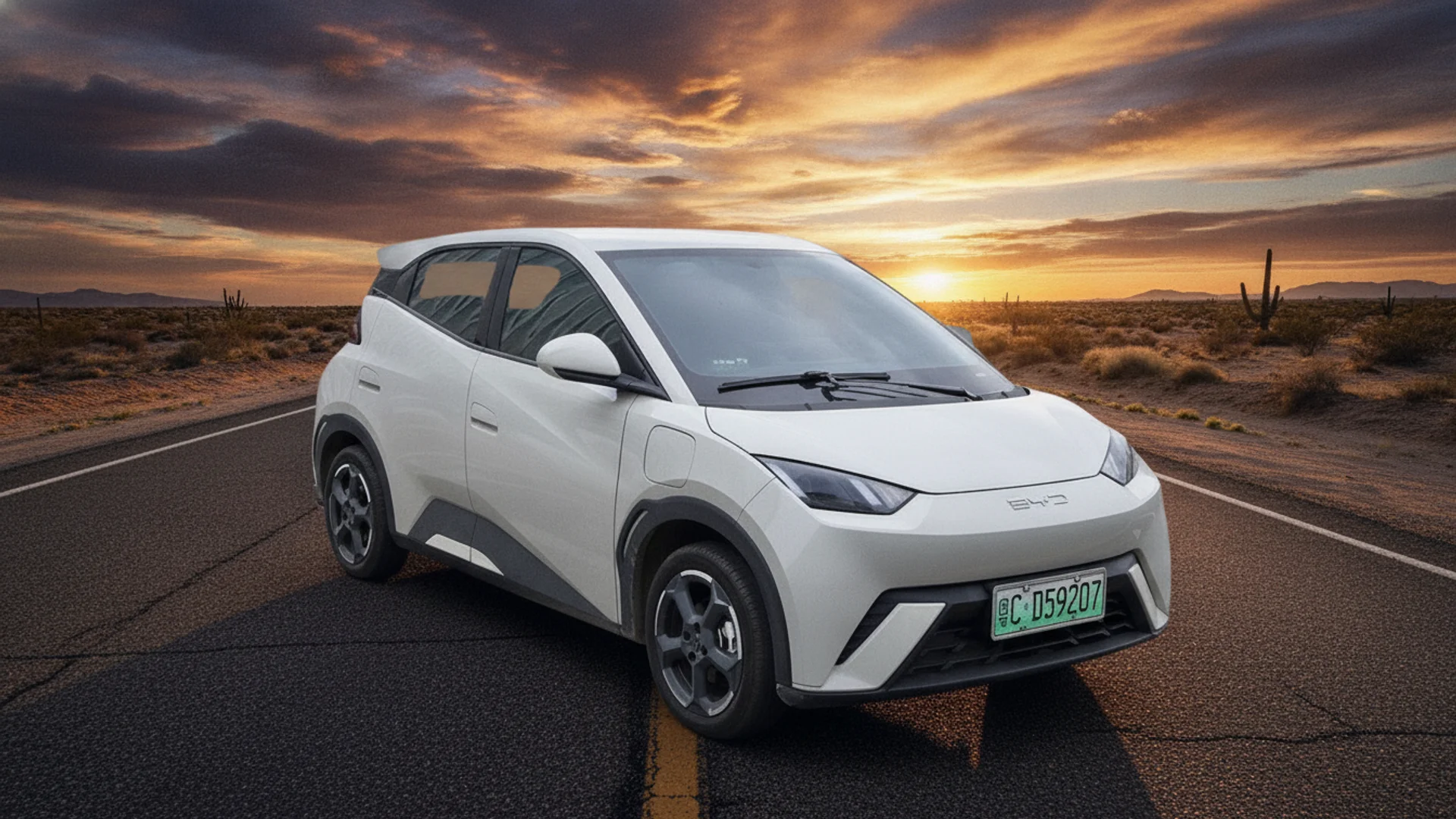
- 22 models qualify right now, all under $50,000 MSRP (Canadian-made vehicles have no cap), and Chinese-made EVs are excluded for lack of a free trade agreement.
- Provincial stacking can push your total rebate to $12,000 or more, New Brunswick and PEI each add $5,000, and BC's CleanBC adds up to $4,000 on top of the federal EVAP.
The EVAP rebate is $5,000 off a new BEV, stacks with provincial programs to $12,000 or more in some provinces, and runs through March 2031, but the incentive amounts step down starting 2027-28, and Quebec buyers lose Roulez vert's top tier on December 31, 2026. Every dealer in the country is going to tell you to rush. Some of them are right. Most of them are oversimplifying.
Here's the actual answer to whether you should be hurrying.
What the EVAP Rebate Actually Is
The Electric Vehicle Availability Program, EVAP, is the federal government's replacement for the iZEV program, which ran from 2019 until it was temporarily suspended in late 2025. EVAP launched on February 16, 2026, and it carries forward the same basic logic as iZEV: a point-of-sale discount applied directly to qualifying vehicle purchases.
The rebate amounts are straightforward:
- $5,000 for battery electric vehicles (BEVs)
- $2,500 for plug-in hybrid electric vehicles (PHEVs)
There is no income test. You do not need to prove you make under a certain amount to qualify. You do not need to be a first-time EV buyer. Any Canadian resident who buys a new qualifying vehicle from a participating dealer after February 16, 2026, is eligible.
The rebate is applied at the dealership, not as a tax credit you wait to claim at the end of the year. When you sign papers, the dealer reduces your purchase price by the rebate amount and then recovers that money directly from the federal government. You don't file anything. You don't wait.
The program is funded to the tune of $2.3 billion and runs through March 31, 2031. That is a five-year runway. This is not a flash program that disappears in a few months.
So where does urgency actually come into the picture? Two places: the claims portal opening, and the incentive step-down schedule that kicks in starting 2027-28.
The March 31 Portal Date, What It Actually Means
Here is the one thing dealers are going to misrepresent, and you need to understand it clearly.
The EVAP claims portal opens March 31, 2026. That is the date dealers gain access to submit claims for rebates they have already issued. It is a back-end administrative date for dealers. It is not a date after which the rebate disappears. It is not a funding deadline.
Purchases made after February 16, 2026, are retroactively covered. If you bought on March 15, your dealer will submit that claim on or after March 31. If you buy on April 12, your dealer submits it then. The portal opening is not a cliff you need to jump before.
That said, there is a real administrative nuance here: dealers cannot issue the rebate at point of sale until they are registered in the claims system. Some dealers were already registered under the old iZEV system and transitioned automatically. Others needed to register fresh. If you walk into a dealership before March 31 and they are not yet registered, they may ask you to sign paperwork acknowledging the rebate will be applied retroactively once the portal opens.
This is not a scam and it is not a problem, as long as it is documented in your purchase agreement. Get the rebate amount written into the contract before you sign. Do not let a dealer tell you verbally that you'll get the $5,000 later without putting it in writing.
After March 31, this complication goes away. The portal is live, dealers are active, rebates flow normally.
How Much Money Is Actually on the Table: Provincial Stacking
The federal $5,000 is just the floor if you live in the right province. Canada has patchwork provincial EV incentive programs, and most of them stack directly on top of EVAP. Let's look at where you can stack right now:
British Columbia: The CleanBC Go Electric rebate offers up to $4,000 for new BEVs. Combined with EVAP, BC buyers are looking at $9,000 off before any dealer negotiation. BC has additional rebates for low- and moderate-income households that can push the total even higher.
Quebec: This is where it gets complicated and time-sensitive. The Roulez vert program currently offers up to $7,000 for BEVs. Stack that with EVAP and you're at $12,000 federal-plus-provincial off a qualifying vehicle. However, and this is the real urgency signal for Quebec buyers, Roulez vert is being phased out. It drops to a maximum of $2,000 by December 31, 2026. If you are in Quebec and you are planning to buy an EV in 2026, buying before December 31 is not manufactured urgency. It is a $5,000 difference.
Nova Scotia: $3,000 provincial rebate stacks on top of EVAP. Nova Scotia buyers are at $8,000 total on a qualifying BEV.
New Brunswick: $5,000 provincial rebate. Combined with EVAP, NB buyers are at $10,000 off. This is one of the strongest stacking combinations in the country outside Quebec.
Prince Edward Island: $5,000 provincial rebate, same as NB. PEI buyers also benefit from $1,000 toward home EV charger installation separately. Total BEV rebate: $10,000 plus charger support.
If you live in Ontario, Alberta, Saskatchewan, or Manitoba, there is currently no provincial EV rebate stacking on top of EVAP. The federal $5,000 is what you get.
The gap between provinces is significant. A BC or NB buyer getting $9,000 to $10,000 off is in a fundamentally different position than an Ontario buyer getting $5,000. If you are cross-border shopping, say, you live near the BC-Alberta border, it is worth understanding that the rebate stays with your province of residence, not where you buy the car.
Which Models Qualify: The Current List
As of February 2026, there are 22 qualifying models under EVAP. The MSRP cap is $50,000 for most vehicles. Canadian-manufactured vehicles have no MSRP cap.
The $50,000 cap is calculated on the base MSRP of the vehicle, not the final transaction price. If a vehicle's base trim starts at $48,500 but you add options that push it to $54,000, the vehicle still qualifies, the cap is checked against base MSRP, not your specific configuration. Dealers who tell you otherwise are wrong.
The 22-model list is not static. New models can be added as manufacturers submit applications and meet the requirements. The list has historically grown over time as more affordable EVs enter the market.
Key models currently qualifying include the Chevrolet Equinox EV, Chevrolet Blazer EV, Volkswagen ID.4, Hyundai Ioniq 6, Kia EV6, Kia Niro EV, Nissan LEAF, Nissan Ariya, Mitsubishi Outlander PHEV, Ford F-150 Lightning (Canadian-manufactured, no MSRP cap), Tesla Model 3 (select trims), Toyota bZ4X, and Honda Prologue.
The Chinese EV exclusion matters here. Several vehicles that are sold in other markets, including some BYD models and certain MG variants, are assembled in China. Because Canada does not have a free trade agreement with China, these vehicles are categorically excluded from EVAP regardless of price or specs. This is not a gray area, it is a hard policy line, and it is separate from the 100% tariff on Chinese-made EVs that Canada imposed in 2025. Even if the tariff situation changed, the FTA requirement would still apply to EVAP eligibility.
The 49,000-unit Chinese EV quota that sometimes comes up in EV discussions is an entirely separate policy instrument. It does not affect EVAP funding. It does not compete with EVAP allocations. They are independent programs.
The Incentive Step-Down: Why 2026 Is Better Than 2027
This is the piece that actually matters for long-term decision-making, and it is not talked about enough.
The $2.3 billion EVAP program is not a flat $5,000 for five years. The incentive amounts are scheduled to decrease on an annual basis starting in the 2027-28 program year. The government has not published the exact step-down schedule in full detail yet, but the structure mirrors how the iZEV program was designed before it was suspended, with the logic being that as EVs become cheaper and more mainstream, the incentive support should taper.
What this means practically: a $5,000 rebate in 2026 is likely to become a $4,000 or $3,500 rebate in 2027-28, and step down further in subsequent years. The full $5,000 amount is most available right now, in this program year. If you are planning to buy in either 2026 or 2027, and price is a factor, 2026 math is better.
This is not manufactured urgency by dealers. This is the actual program structure. The money does not run out, but the per-vehicle amount goes down over time. You are not racing a deadline; you are choosing between a better or worse rebate amount.
Combined with the Quebec step-down on Roulez vert at year-end, and March dealer discounts that are genuinely significant right now, the case for moving in early-to-mid 2026 is real. The case for panicking by March 31 specifically is not.
The March Dealer Discounts: What Is Happening Right Now
Separate from government incentives, there is a manufacturer and dealer-level discount cycle happening in March 2026 that is creating some of the best EV deals seen in Canada in years.
The Hyundai Ioniq 6 has discounts reaching $16,000 off on certain trim levels in some markets. This is a combination of manufacturer incentives, dealer cash, and the competitive pressure created by an oversupplied EV inventory situation that has been building since late 2024. The Ioniq 6 is an exceptional vehicle, it holds the record for lowest drag coefficient of any production car, and at these discounts, it is one of the most compelling purchases in the Canadian market right now.
The Honda Prologue is seeing approximately $12,000 off in some configurations. The Prologue is Honda's first North American EV, built on the GM Ultium platform, and it has been slower to move off lots than Honda anticipated. Dealers are motivated.
The Toyota bZ4X has approximately $10,000 off available in some markets. The bZ4X had a rough launch due to a wheel hub recall, but the issues have been resolved for more than a year and the vehicle is now well-regarded. At $10,000 off plus the $5,000 federal rebate, a bZ4X purchase represents up to $15,000 off MSRP before provincial incentives.
Gear worth having
As an Amazon Associate, ThinkEV earns a small commission from qualifying purchases — at no extra cost to you.

Grizzl-E Classic Level 2 EV Charger (40A)
Canadian-made and rated for minus 40C winters. 40A / 9.6 kW, NEMA 14-50, indoor/outdoor, 24-ft cable. The charger built for Canadian weather.
As an Amazon Associate, ThinkEV earns from qualifying purchases — at no extra cost to you.
These discounts are not guaranteed to persist. They are tied to inventory levels, end-of-quarter targets, and manufacturer incentive programs that run on their own schedules. March tends to be a strong month for car deals because dealers are closing Q1 books. Some of these deals will extend into April. Some will not.
The combination of generous March dealer discounts plus the full $5,000 EVAP rebate plus provincial stacking is a window. It is a real window. It is just not a one-week window that closes March 31, it is a broader 2026 window with March being a particularly good moment inside that window.
Should You Actually Rush?
Let's answer the question directly.
You should move in the near term if:
You are in Quebec. Roulez vert drops to $2,000 max on January 1, 2027. If you are planning to buy before the end of 2026 anyway, buying in the first half of 2026 is better than the second half, and buying in 2026 at all is significantly better than buying in 2027. The Quebec math is the strongest urgency case in the country.
You are actively considering one of the models with exceptional March discounts. The Ioniq 6 at $16,000 off is not a normal market condition. If it fits your life, waiting six months to "see what happens" may mean waiting for a $5,000 to $8,000 worse deal on the same car.
You have been waiting for iZEV to come back. It is back. If you were sitting on a purchase decision because there was no federal rebate, that reason is gone.
You live in NB, NS, or PEI and have been on the fence. The stacking math at $8,000-$10,000 off is strong and those provincial programs are not permanent either.
You should not rush if:
You are not financially ready. A $5,000 rebate on a car you cannot comfortably afford is still a car you cannot comfortably afford. The program runs until 2031. The step-down in 2027-28 is real, but $4,500 on a well-timed purchase in 2027 might still be better math than $5,000 now with financial strain.
The model you want does not qualify yet. Some vehicles are in the process of being added to the qualifying list. Rushing to buy a vehicle that is almost-but-not-yet qualifying does not get you the rebate. Confirm your specific model and trim is on the list before you sign anything.
You are being pressured by a dealer who is conflating the portal-opening date with a rebate-expiry date. That is a sales tactic. The rebate does not expire March 31. The portal opens March 31. Those are different things.
You are waiting for a specific vehicle that is expected later in 2026. The 2026 rebate amount is $5,000 for the full program year. You do not lose the full rebate amount just because you buy in October instead of March.
The summary: There is genuine value in acting in 2026, with extra value in acting in the first half of 2026 if you are in a stacking province. There is not a compelling reason to panic-buy before March 31 specifically. March deals are real and worth moving on if your situation is ready. The March 31 portal date is administrative, not a funding cliff.
What Changes in 2027 and Beyond
The EVAP program's five-year horizon gives you a planning frame. Here is what the trajectory looks like:
The incentive step-down starting 2027-28 will reduce the per-vehicle rebate on a schedule the government has not yet fully published. Based on past Canadian EV incentive program design, expect something like a $500-$1,000 annual reduction. That would put the 2027-28 rebate at $4,000-$4,500 for BEVs.
More qualifying models will be added over time. The 22-model list from February 2026 will grow as more vehicles hit the Canadian market under $50,000. This is good for buyers who are waiting for a specific model.
Provincial programs will continue to evolve. Quebec's phase-out of Roulez vert is the most significant near-term change. BC's program is strong but has faced budget pressure. Ontario has repeatedly shown no interest in reinstating a provincial EV rebate. The federal program is the floor; provincial programs add to it unpredictably.
By 2028-29, the EV market in Canada will look substantially different from today. Battery costs have been falling at roughly 15-20% annually. Vehicles that cost $45,000 today are likely to cost $35,000-$38,000 in 2028 without accounting for inflation. It is reasonable to expect new qualifying models at lower price points that do not exist yet, combined with a lower federal rebate than today.
The 2026 calculation optimizes for: maximum rebate amount (before step-downs), maximum provincial stacking (particularly Quebec), and current dealer discounts on specific models. The 2028 or 2029 calculation might optimize for: lower base vehicle prices, more model choice, and still-meaningful incentive support even if smaller.
Neither is objectively wrong. What is wrong is buying now purely because of dealer pressure on a March 31 administrative date.
Charging at Home: What to Set Up When You Buy
An EV rebate gets you into the car. Getting the full value out of the car means having Level 2 charging at home.
A standard 120V outlet (Level 1 charging) will add 5-8 km of range per hour. That is functional for low-mileage drivers but impractical as your primary charging solution if you drive 50+ km a day. Level 2 charging, which requires a 240V circuit, will add 30-60 km of range per hour depending on the charger and your vehicle's onboard charger capacity.
The Grizzl-E Level 2 home charger is one of the most popular choices in Canada for good reason. It is Canadian-made, handles our winters without complaint, delivers up to 40A of charging power, and its straightforward design means fewer failure points. It is hard-wired rather than plug-in, which is the right choice for a permanent home install.
The ChargePoint Home Flex is the more flexible option if you want app-based scheduling, energy tracking, and the ability to adjust amperage between 16A and 50A. The ChargePoint ecosystem integrates with most North American utility time-of-use programs, so if your utility offers off-peak rates (BC Hydro, Hydro-Québec, and many others do), the Home Flex pays for that savings in scheduling convenience.
Both units are eligible for the Canada Greener Homes Grant charger rebate where applicable. Your province may have additional charger-specific rebates on top. In PEI, $1,000 toward home charger installation is part of the provincial EV incentive package. Check your utility's website, many offer additional rebates on top of government programs.
Install costs vary by how far your panel is from your planned charger location, whether your panel needs upgrading, and local electrician rates. Budget $400-$1,200 for most installations in a standard home. If your panel needs upgrading to accommodate the 240V circuit, add $1,500-$3,000.
Some dealers will offer charger installation as part of a package deal when you purchase. This is worth negotiating, it is a real value add, and dealers who have service departments often have electrician partnerships with faster scheduling than going to the open market in the current high-demand environment.
If you want a tool to calculate your total incentive picture before you walk into a dealership, use the ThinkEV Incentives Calculator. It layers federal, provincial, and utility rebates together so you know what your actual out-of-pocket looks like before you are sitting across from a finance manager.
Gear worth having
As an Amazon Associate, ThinkEV earns a small commission from qualifying purchases — at no extra cost to you.

ChargePoint Home Flex Level 2 Charger (50A)
Premium 50A / 12 kW charger with the best app ecosystem. Hardwired or NEMA 14-50, with real-time energy tracking and smart scheduling.
As an Amazon Associate, ThinkEV earns from qualifying purchases — at no extra cost to you.
Gear worth having
As an Amazon Associate, ThinkEV earns a small commission from qualifying purchases — at no extra cost to you.
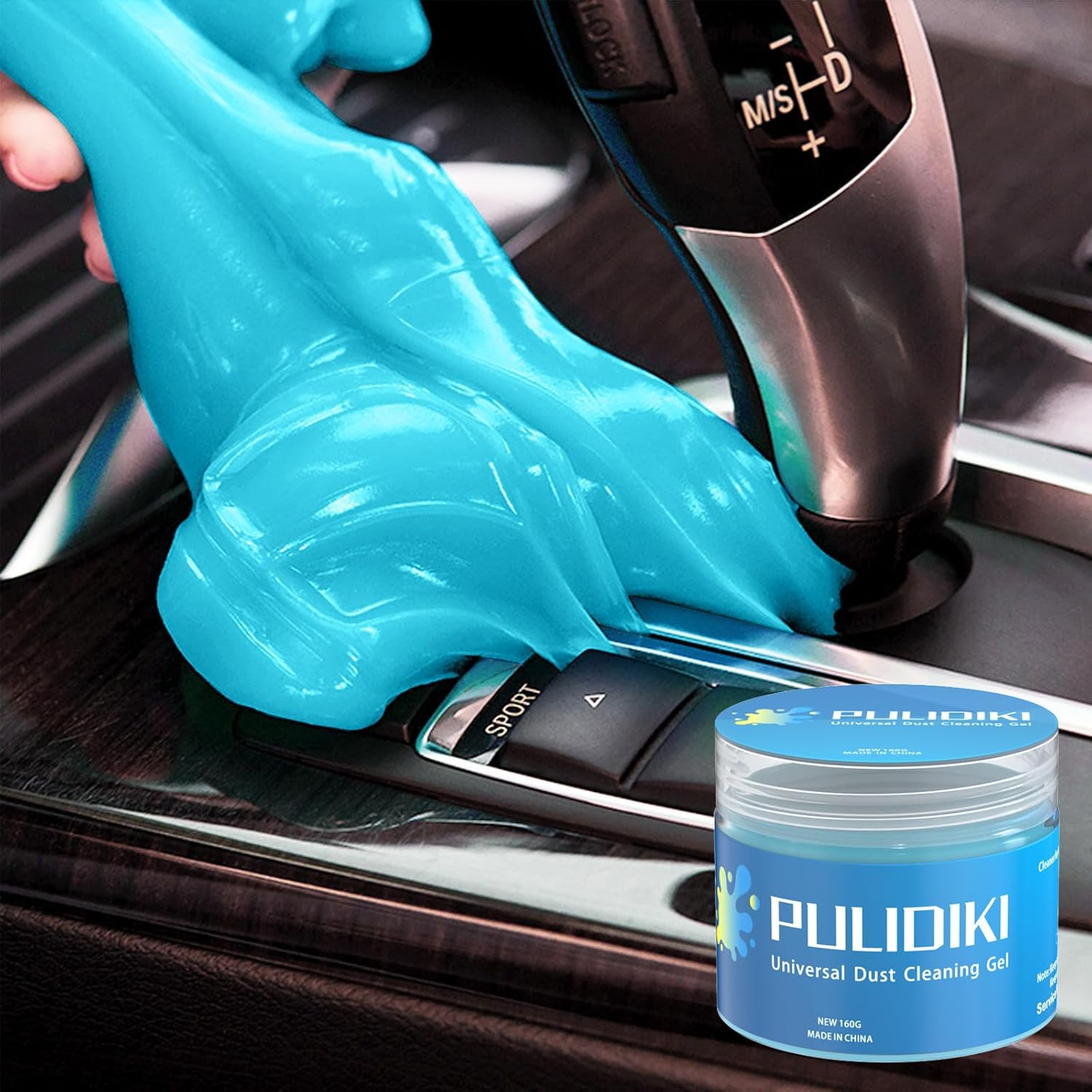
PULIDIKI Car Cleaning Gel (Detailing Putty)
Press it into vents, buttons, and seams and it lifts out dust you did not know was there. Weirdly satisfying, genuinely useful.
As an Amazon Associate, ThinkEV earns from qualifying purchases — at no extra cost to you.
Related Reading
- Canada's New $5,000 EV Rebate (EVAP), The Complete 2026 Guide
- Canada's EVAP EV Rebate: Every Update and Change Tracked (2026)
- Why Tesla Doesn't Qualify for Canada's New EV Rebate, And What to Buy Instead If you are in the early stages of the EV buying process and want a fuller picture of the first-year experience, the Complete First EV Guide for Canada covers everything from range anxiety to the real cost of ownership numbers. It is written for people who are not yet committed, no assumed knowledge, no glossing over the real tradeoffs.
For the full up-to-date incentive picture in your province, the ThinkEV Incentives Calculator layers federal, provincial, and utility rebates together in real time. It is the fastest way to get your actual number before you walk into a dealership.
The EVAP rebate is a real, substantial program backed by $2.3 billion in committed federal funding with a five-year runway. The March 31 date is administrative. The program-year incentive amounts are highest right now. March dealer discounts on specific models are creating genuinely good buying windows. Quebec buyers face a hard December 31 deadline for their provincial stacking advantage.
None of that adds up to panic. All of it adds up to: if your situation is ready, sooner in 2026 beats later in 2026, and 2026 beats 2027 on the incentive math. Make the decision based on your situation, not a dealer's quarter-end pressure.
Gear worth having
As an Amazon Associate, ThinkEV earns a small commission from qualifying purchases — at no extra cost to you.

WixGear Magnetic Air Vent Phone Mount (2-Pack)
A magnet strong enough that your phone never flinches over potholes or rail crossings. Two in the box, one for each car.
As an Amazon Associate, ThinkEV earns from qualifying purchases — at no extra cost to you.
Gear worth having
As an Amazon Associate, ThinkEV earns a small commission from qualifying purchases — at no extra cost to you.
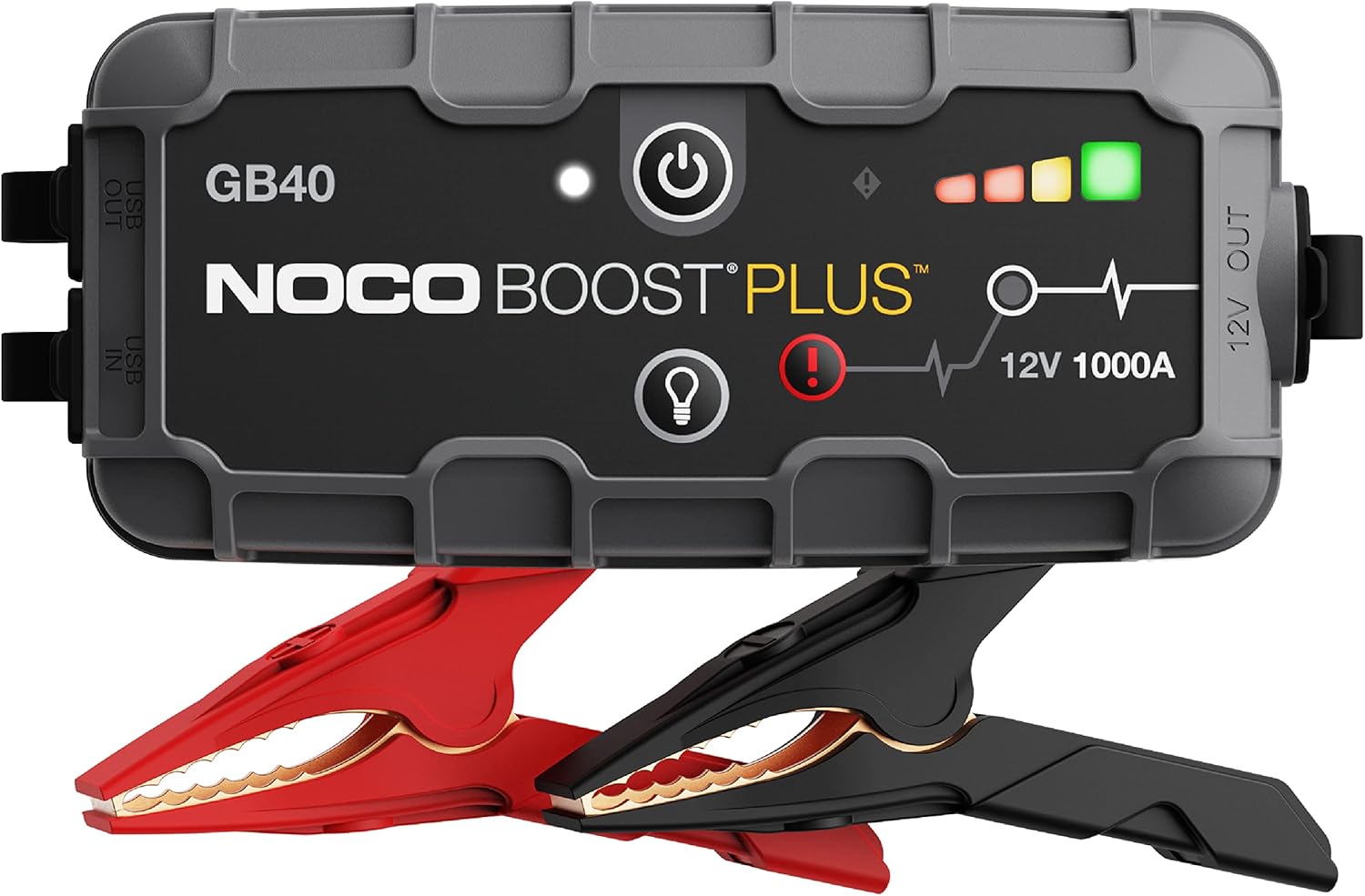
NOCO Boost Plus GB40 Jump Starter
A 1000A lithium jump starter that fits in your glovebox and works on any 12V battery. Your insurance against a dead 12V in a parking lot.
As an Amazon Associate, ThinkEV earns from qualifying purchases — at no extra cost to you.

Founder & Chief Editor
Vlad Pereira is the founder and chief editor of ThinkEV.ca, the Canadian electric-vehicle publication he writes and edits from Courtenay, British Columbia. He covers EV pricing, federal and provincial rebates, charging costs, and the Chinese manufacturers now entering Canada, from the buyer's side rather than the press-fleet side. ThinkEV is a venture of Vlad Pereira Online; his writing on health, income and the long game lives at vladpereira.com.
Frequently asked questions
Can I claim the EVAP rebate on a vehicle I bought between February 16 and March 31?
Yes. Purchases made on or after February 16, 2026, are eligible for EVAP regardless of when the claims portal opened. Your dealer will submit the claim on your behalf once the portal is live on March 31. Make sure the rebate amount is documented in your purchase agreement if you bought before March 31, get it in writing before you sign, not as a verbal promise after.
Does the $50,000 MSRP cap apply to my specific configuration or to the base price?
The MSRP cap is checked against the manufacturer's suggested retail price for the base model, not your specific transaction price with options added. If the base trim of a vehicle has an MSRP under $50,000, it qualifies even if your configured price goes higher. Canadian-manufactured vehicles, currently including the Ford F-150 Lightning, have no MSRP cap at all.
I live in Quebec. Is there any reason to wait on my purchase?
Almost certainly not if you are serious about buying. The Roulez vert program drops to a maximum of $2,000 on January 1, 2027, down from up to $7,000 currently. If you buy before December 31, 2026, you can stack up to $7,000 Roulez vert on top of $5,000 EVAP for a $12,000 combined rebate on a qualifying BEV. After January 1, 2027, that same combination drops to $7,000 at best. That is a $5,000 difference, and it is a hard deadline that does not extend.
Are any Tesla models eligible for EVAP?
Select Tesla Model 3 trims qualify, specifically those with a base MSRP under $50,000. The Model 3 Rear-Wheel Drive and Long Range AWD trims have qualified under previous versions of the federal rebate program. The Model Y and Model S/X do not qualify due to MSRP. Check the official EVAP qualifying vehicle list, Transport Canada maintains the current list, because Tesla's Canadian pricing changes periodically and eligibility can shift accordingly.
What happens to the EVAP rebate if my purchase falls through after I sign?
EVAP rebates are tied to completed vehicle purchases. If a purchase is cancelled, rescinded, or the vehicle is returned within the program's cooling-off provisions, the rebate is reversed. The dealer is responsible for managing this with the claims portal. If you are financing and the financing falls through after you have signed but before delivery, work with the dealer immediately, the rebate cannot be held in reserve for a future purchase, it is attached to a specific transaction.
More EV & road-trip finds
Affordable upgrades worth a look — tap any to check the price on Amazon.
 ★ 121
★ 121Foldable Windshield Sun Umbrella
View on Amazon ★ 268
★ 268Anti-Slip Leather Steering Wheel Cover
View on Amazon ★ 9,349
Auto Detailing Brush Set (10-Piece)
View on Amazon ★ 314
★ 314Mini USB LED Ambient Lamps (4-Pack)
View on Amazon ★ 1,349
Cool Swinging Duck Dashboard Ornament
View on Amazon ★ 979
★ 979Leather Headrest Purse Hook
View on Amazon ★ 692
★ 692USB-A to USB-C CarPlay Adapter (3-Pack)
View on Amazon ★ 119
★ 119Foldable Waterproof Trunk Organizer
View on AmazonRead, Plan, Then Stay Current
Explore our expert articles to understand incentives and ownership costs, use the map to pressure-test charging reality, then subscribe so new EV coverage comes straight to you.
Continue Reading
Canada's $5,000 EVAP EV Rebate: The 2026 Guide

Rivian Canada 2026: R1T, R1S Prices and R2 Release Date
Why Cold Weather Cuts EV Range, the Real Reasons

Are Canada's Repair Shops Ready for Chinese EVs?
How to Test-Drive an EV: What Gas-Car Buyers Miss