Key takeaways
- At $2.03/L and 15,000 km/year, the annual gas bill is $2,892.75. EV home charging on BC Hydro costs $311.36. The gap is $2,581 a year.
- Gas costs 19.3 cents per kilometre in BC right now. Home-charged electricity on BC Hydro costs 2.1 cents. The ratio is 9.3 to 1.
- A Level 2 home charger nets out to roughly $1,300 after the BC Hydro rebate. At $215/month in fuel savings, it pays back in six months.
- Five-year savings (fuel plus maintenance): $14,007. Ten-year: $28,014.
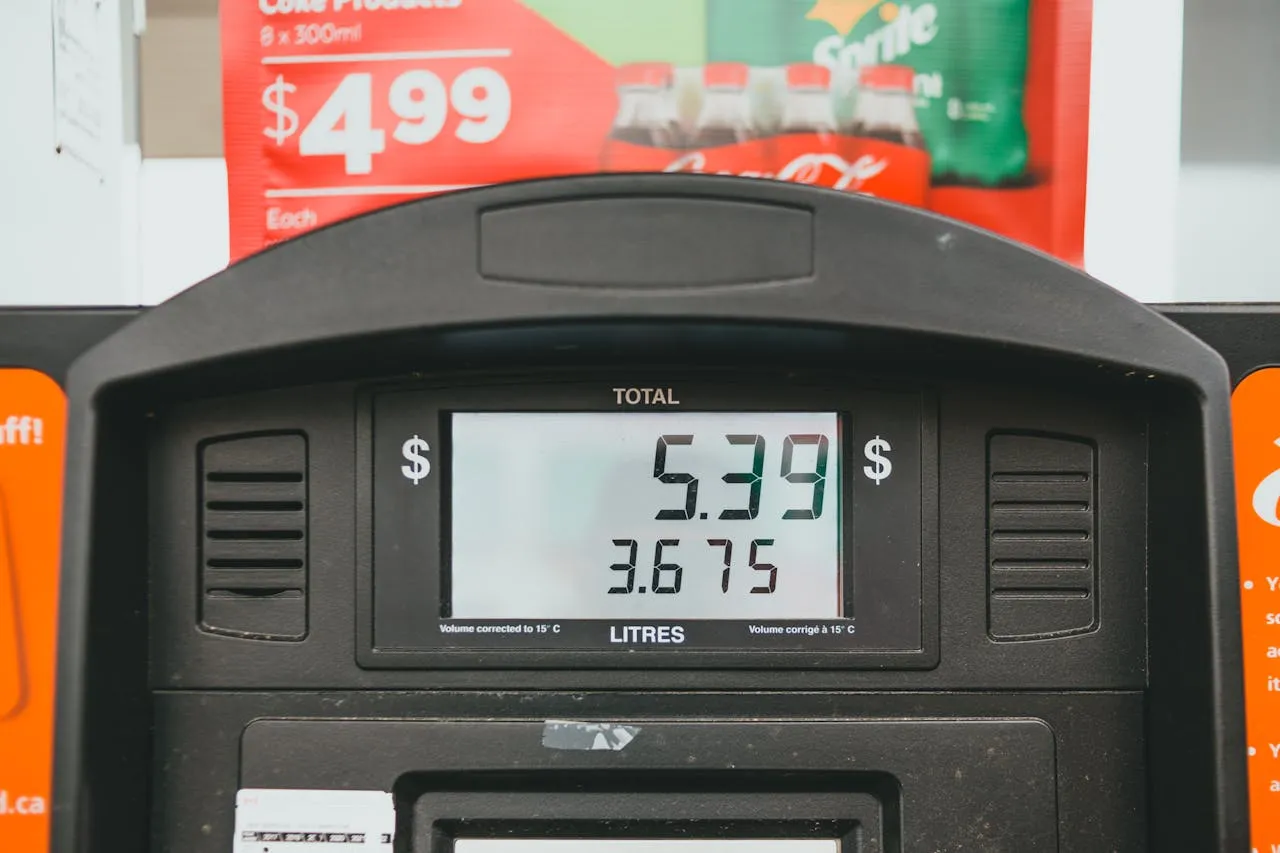
I filled up my car today in Courtenay, BC. The pump read $2.03 per litre for regular unleaded.
I stood there watching the total climb and did some quick mental math. Forty litres cost me $81.20. I drive about 15,000 kilometres a year, which puts me right at the Canadian average according to Natural Resources Canada. My car burns about 9.5 litres per 100 kilometres, which is typical for a compact sedan or small SUV on Canadian roads. That means I burn through roughly 1,425 litres of gasoline every year.
At $2.03 a litre, my annual fuel bill is $2,892.75.
I don't own an electric vehicle. I don't have a home charger. But I do have a calculator, an internet connection, and a strong opinion about paying nearly three thousand dollars a year to move a metal box from point A to point B. So I sat down and ran the numbers on what it would cost to do the same driving in an EV, charged at home, on BC Hydro residential rates.
The results made me angry at my gas tank.
The Annual Gas Bill, Broken Down
The math on gasoline is painfully straightforward. You burn fuel, you buy more fuel, you burn that fuel too. The price per litre fluctuates, but the trend over the past decade in British Columbia has pointed in one direction: up. Vancouver hit $2.02 a litre on March 16. The BC average peaked at $2.05 that same week. Courtenay, where I live on Vancouver Island, matched Vancouver today at $2.03.
Here are the inputs I used, all sourced from publicly available Canadian data.
Annual distance driven: 15,000 km (Natural Resources Canada, Canadian Vehicle Survey average). Average fuel consumption: 9.5 L/100 km (NRCan combined rating for a typical 2022-2025 compact sedan or small crossover SUV). Current gas price: $2.03/L (pump price, Courtenay, BC, March 29, 2026).
Fuel burned per year: 15,000 km multiplied by 9.5 litres per 100 km equals 1,425 litres.
Annual fuel cost: 1,425 litres multiplied by $2.03 equals $2,892.75.
Monthly: $241.06. Daily: $7.93.
Every single day, whether I drive or not, the average works out to $7.93. That buys a large Tim Hortons coffee and a breakfast sandwich, every morning, for a year. Instead, it goes into a combustion engine that converts about 25% of that fuel into motion and dumps the rest as heat.
And BC gas prices aren't coming down. The federal carbon levy, provincial carbon tax, TransLink transit tax (for Metro Vancouver), and global crude oil prices all push in the same direction. Even the Canadian national average sat at $1.73 a litre on March 26 according to GasBuddy, which is high by historical standards. BC residents pay a premium on top of that.
The EV Equivalent: Charging at Home on BC Hydro
Now the comparison. An average electric vehicle consumes about 17 kWh per 100 kilometres. That number includes real-world Canadian driving conditions: winter cold, highway speeds, heating, and battery conditioning. Some EVs do better (a Tesla Model 3 in summer sits around 14 kWh/100 km). Some do worse (a large electric SUV in a Saskatchewan January might hit 22 kWh/100 km).
I used 17 kWh/100 km as a conservative, four-season Canadian average.
BC Hydro's flat residential rate sits at 12.21 cents per kWh as of April 2025. A 3.75% increase takes effect April 1, 2026, which will push it to about 12.67 cents. I used the current 12.21 cents per kWh for this analysis because it applies right now. The numbers only get marginally different with the increase.
Electricity consumed per year: 15,000 km multiplied by 17 kWh per 100 km equals 2,550 kWh.
Annual charging cost at home: 2,550 kWh multiplied by $0.1221 per kWh equals $311.36.
Monthly: $25.95.
Daily: $0.85.
Eighty-five cents a day. Compared to $7.93 for gasoline. I checked this calculation three times because the gap looked too large. It isn't an error. It costs $0.85 per day to drive an EV the same distance that costs $7.93 in gasoline.
The difference: $2,581.39 per year.
That's $215.12 per month sitting in my pocket instead of evaporating through an exhaust pipe. Or, if you prefer the Tim Hortons metric, that's 39 large coffees per month at $5.50 each.
The Cost Per Kilometre, Side by Side
Gasoline cost per kilometre: $2.03 multiplied by 9.5 divided by 100 equals 19.3 cents per km.
EV cost per kilometre on BC Hydro: $0.1221 multiplied by 17 divided by 100 equals 2.1 cents per km.
Gasoline costs 9.3 times more per kilometre than home-charged electricity in British Columbia.
Nine point three times. I need to repeat that because it sounds absurd until you check the arithmetic. A kilometre in a gas car costs 19.3 cents. A kilometre in an EV charged at home costs 2.1 cents. The ratio is 9.3 to 1.
British Columbia has some of the cheapest electricity in North America, thanks to hydroelectric generation. That advantage compounds every single day against some of the most expensive gasoline in Canada. BC drivers sit in a uniquely punishing position when they choose combustion: they pay premium gas prices while sitting next to some of the cheapest electrons on the continent.
The Home Charger Investment
I don't have a Level 2 home charger. I don't have an EV. But I priced out what a Level 2 installation would cost in my area, because the question that follows the fuel math is always "what about the charger?"
A Level 2 home charger (240V, 40-48 amp) with professional installation in BC runs between $1,500 and $3,000 depending on the distance from your electrical panel, whether you need a panel upgrade, and which charger unit you pick. The mid-range is about $2,000 all-in: $600-$800 for the charger itself, $700-$1,200 for an electrician, plus permit fees.
BC Hydro offers a rebate of up to $700 for residential customers installing a Level 2 EV charger at home. That brings the net cost to roughly $1,300.
Payback period from fuel savings alone: $1,300 divided by $215.12 monthly savings equals 6.0 months.
Six months. The home charger pays for itself in fuel savings in half a year. After that, every dollar of savings goes straight into your account. By month seven, you're ahead.
I keep staring at that number. Six months. Most home renovations take years to pay back. Solar panels take 8-12 years in most Canadian provinces. A heat pump takes 5-7 years. A Level 2 EV charger, measured against fuel savings, takes six months.
Gear worth having
As an Amazon Associate, ThinkEV earns a small commission from qualifying purchases — at no extra cost to you.

Grizzl-E Classic Level 2 EV Charger (40A)
Canadian-made and rated for minus 40C winters. 40A / 9.6 kW, NEMA 14-50, indoor/outdoor, 24-ft cable. The charger built for Canadian weather.
As an Amazon Associate, ThinkEV earns from qualifying purchases — at no extra cost to you.
Five Years and Ten Years of Savings
Short-term thinking keeps people at gas pumps. The day-to-day cost of filling up feels manageable because you do it in $60-$80 chunks. But those chunks stack.
Five-year fuel savings: $2,581.39 multiplied by 5 equals $12,906.97.
But fuel isn't the only cost difference. Gas cars need oil changes, typically twice a year at about $80 each. That's $800 over five years. Brake pads wear faster because gas cars rely entirely on friction braking, while EVs use regenerative braking that captures energy and reduces pad wear by 50-70%. Budget $400 for one brake job in five years for a gas car versus minimal brake work on an EV. Add a transmission service around the four-year mark at $200.
Total gas car maintenance over five years: roughly $1,400. Total EV maintenance over five years: roughly $300 (cabin air filter replacements, brake inspection, tire rotation). The maintenance savings add another $1,100 to the EV advantage.
Five-year total savings (fuel plus maintenance): $14,007.
Ten-year total savings: $28,014.
That's a down payment on a house in some Canadian markets. Or it's the entire purchase price of a used Chevy Bolt, which means the car could pay for itself through fuel savings alone over a decade compared to running a gas vehicle.
The Counterarguments
I run a publication about EVs, and I still drive a gas car. That should tell you something about the real barriers.
Gear worth having
As an Amazon Associate, ThinkEV earns a small commission from qualifying purchases — at no extra cost to you.

Portable Level 2 EV Charger (40A, NEMA 14-50)
Throw it in the trunk and charge anywhere with a 240V outlet. 40A portable with NEMA 14-50 plug. Your road-trip insurance policy.
As an Amazon Associate, ThinkEV earns from qualifying purchases — at no extra cost to you.
The purchase price gap is real. The cheapest new EV in Canada starts around $38,000 for a base Chevrolet Equinox EV or about $35,000 for a Nissan LEAF. A comparable gas car starts at $25,000-$28,000. The federal EVAP rebate covers $5,000, and some provinces add more (BC offers up to $4,000 through the Go Electric program, bringing the gap down significantly). But you still need to qualify, and you still need the upfront cash or financing.
Used EVs change the math dramatically. A 2022 Chevy Bolt with 40,000 km can be found for $22,000-$26,000 in Canada right now. The battery degradation on Bolts has been minimal after GM's battery replacement program. At that price, with $2,581 in annual fuel savings, the premium over a comparable used gas car disappears in two to three years.
Range anxiety matters less than people think but more than EV advocates admit. A 400 km rated range EV gives you about 300 km of real-world winter range in BC. That covers 95% of daily driving, but it requires planning for road trips. The charging infrastructure along the Trans-Canada and Highway 97 has improved, with DCFC stations every 50-100 km on major routes. But on Vancouver Island's west coast or in northern BC, gaps remain.
Apartment and condo dwellers face a different equation entirely. Without home charging, you rely on public Level 2 or DCFC stations where electricity costs 3-5 times more than BC Hydro residential rates. The fuel savings still exist, but they shrink from $2,581 to roughly $1,200-$1,800 per year depending on your charging mix. Strata councils in BC are required under provincial law to accommodate EV charging requests, but the process moves slowly and installation costs in shared parking structures run higher.
Cold weather reduces EV range by 20-35% depending on the vehicle and temperature. Courtenay rarely drops below -5 C, so this matters less on Vancouver Island than in Winnipeg or Edmonton. But it matters, and anyone buying an EV should factor winter range into their expectations.
These are real considerations. None of them change the core fuel math: at $2.03 a litre, gasoline costs 9.3 times more per kilometre than home-charged electricity in BC. The question is whether the other factors (purchase price, charging access, range needs) make sense for your specific situation.
For a homeowner with a driveway, driving 15,000 km a year in a province with $2.03 gas and $0.12 electricity? The math doesn't whisper. It screams.
What If Gas Keeps Climbing?
I used $2.03 per litre for these calculations because that's what I paid today. Gas prices in BC have touched $2.30 in the past. The federal carbon price continues to rise under current policy. Global oil supply disruptions (Iran, Russia, OPEC production cuts) push prices higher without warning.
At $2.25 per litre, the annual gas bill climbs to $3,206.25. The savings versus EV home charging become $2,894.89 per year. The charger payback drops to 5.4 months.
At $2.50 per litre, the annual gas bill hits $3,562.50. Savings reach $3,251.14 per year. That's $271 per month, or the equivalent of a modest car payment.
Meanwhile, BC Hydro rates are regulated and rise at a predictable 3-4% annually. Even with the April 2026 increase to about 12.67 cents per kWh, the annual EV charging cost only moves from $311 to $323. A twelve-dollar increase. Gas volatility versus electricity stability isn't a close comparison. One swings by 30% on a geopolitical crisis. The other moves 3.75% on a scheduled annual adjustment approved by the BCUC.
The Investment Frame
A $1,300 net cost sounds like an investment, and the math justifies calling it one.
A $1,300 net investment (after the BC Hydro rebate) returns $2,581 in annual fuel savings. That's a 199% annual return on investment. No GIC, no TFSA contribution, no stock portfolio delivers 199% annually with zero risk and zero volatility.
The home charger is the highest-ROI purchase available to a BC homeowner who drives a gas car and can switch to electric. It returns its cost in six months and keeps returning $215 per month for as long as you drive. Over a 10-year vehicle ownership period, the $1,300 investment generates $25,814 in fuel savings alone, before maintenance savings.
I've never seen a household investment with numbers like this. And I write about EVs for a living.
Why I Still Drive a Gas Car
I don't own an EV. I rent. I don't have a dedicated parking spot with a plug. The barriers that keep people in gas cars keep me in one too. But I can see the numbers clearly, and so can you now.
With a home in Courtenay and a driveway, I would install a Level 2 charger this month. I would buy a used Chevy Bolt or wait for the Equinox EV to hit the used market. And I would stop paying $241 a month to burn gasoline at $2.03 a litre.
The math isn't complicated. The barriers are logistical, not mathematical. And the logistical barriers are shrinking every year as used EV prices drop, charging infrastructure expands, and strata laws catch up to reality.
Meanwhile, gas prices only move in one direction over time. You know this. I know this. The pump at the Courtenay Shell station confirmed it today at $2.03.
If you have a driveway and you're still driving gas, you're leaving $2,581 a year on the pavement.
Run the numbers yourself. I showed my work.
Gear worth having
As an Amazon Associate, ThinkEV earns a small commission from qualifying purchases — at no extra cost to you.

TP-Link Kasa Smart Plug with Energy Monitoring
Track exactly how much electricity your Level 1 charger uses and schedule it for off-peak hours. Know your real cost per kWh.
As an Amazon Associate, ThinkEV earns from qualifying purchases — at no extra cost to you.
Sources and Calculations
All calculations below use verified, publicly available Canadian data. Sources: Natural Resources Canada (driving distance, fuel consumption), BC Hydro (electricity rates), GasBuddy/CAA (gas prices), and manufacturer specifications (EV energy consumption).
Annual driving distance: 15,000 km (Canadian average per NRCan). Gas vehicle consumption: 9.5 L/100 km (NRCan combined rating, typical sedan/small SUV). EV consumption: 17 kWh/100 km (four-season Canadian average including winter). Gas price: $2.03/L (Courtenay, BC, March 29, 2026). BC Hydro flat rate: $0.1221/kWh (current as of April 2025).
Gas car fuel cost: 1,425 L/year at $2.03/L = $2,892.75/year ($241.06/month, $7.93/day).
EV charging cost at home: 2,550 kWh/year at $0.1221/kWh = $311.36/year ($25.95/month, $0.85/day).
Annual fuel savings: $2,581.39. Monthly: $215.12. Daily: $7.07.
Cost per km: gas = 19.3 cents. EV = 2.1 cents. Gas costs 9.3x more.
Level 2 charger net cost after BC Hydro rebate: $1,300. Payback period: 6.0 months.
5-year savings (fuel + maintenance): $14,007. 10-year savings: $28,014.
Related reading: An EV Charged With Coal Power Is Still Cleaner Than a Gas Car and How to Choose an EV Under $50K in Canada
Gear worth having
As an Amazon Associate, ThinkEV earns a small commission from qualifying purchases — at no extra cost to you.

P3 Kill A Watt Electricity Usage Monitor
Plug in your charger and see exactly what you spend in kWh, cost, and watts. Settle the is-my-EV-really-cheaper debate with data.
As an Amazon Associate, ThinkEV earns from qualifying purchases — at no extra cost to you.
Related Reading
Gear worth having
As an Amazon Associate, ThinkEV earns a small commission from qualifying purchases — at no extra cost to you.

Lectron Level 2 J1772 Charger (40A, WiFi)
Smart WiFi charger with real-time energy monitoring. 40A / 9.6 kW, J1772 with a NEMA 14-50 plug, schedule charging right from your phone.
As an Amazon Associate, ThinkEV earns from qualifying purchases — at no extra cost to you.

Founder & Chief Editor
Vlad Pereira is the founder and chief editor of ThinkEV.ca, the Canadian electric-vehicle publication he writes and edits from Courtenay, British Columbia. He covers EV pricing, federal and provincial rebates, charging costs, and the Chinese manufacturers now entering Canada, from the buyer's side rather than the press-fleet side. ThinkEV is a venture of Vlad Pereira Online; his writing on health, income and the long game lives at vladpereira.com.
Frequently asked questions
How much does it cost to charge an EV at home in BC?
How much do Canadians spend on gas per year in 2026?
How long does it take for a home EV charger to pay for itself?
Is it cheaper to drive an EV or gas car in Canada?
More EV & road-trip finds
Affordable upgrades worth a look — tap any to check the price on Amazon.
 ★ 17,839
Qifutan Vent Phone Mount (Military-Grade Clip)
View on Amazon ★ 8,681
Chemical Guys Complete Car Wash Kit
View on Amazon ★ 419
★ 419RGB Car Interior LED Strip Light
View on Amazon ★ 4,055
6-Speed Manual Shift Knob Display
View on Amazon ★ 865
★ 865Collapsible Trunk Organizer
View on Amazon ★ 297
★ 297360-Degree One-Hand Dashboard Phone Mount
View on Amazon ★ 61
★ 61Toddler Car Seat Snack and Cup Tray
View on Amazon ★ 68
★ 68WeatherTech FloorLiner for Tesla Model 3
View on AmazonRead, Plan, Then Stay Current
Explore our expert articles to understand incentives and ownership costs, use the map to pressure-test charging reality, then subscribe so new EV coverage comes straight to you.
Continue Reading
Rivian R2 Canada Price: $66,500 Base Misses the Rebate

BYD Now Outsells Hyundai in Brazil. Canada Is Next
BYD Canada Price: The C$25K Floor and What It Means
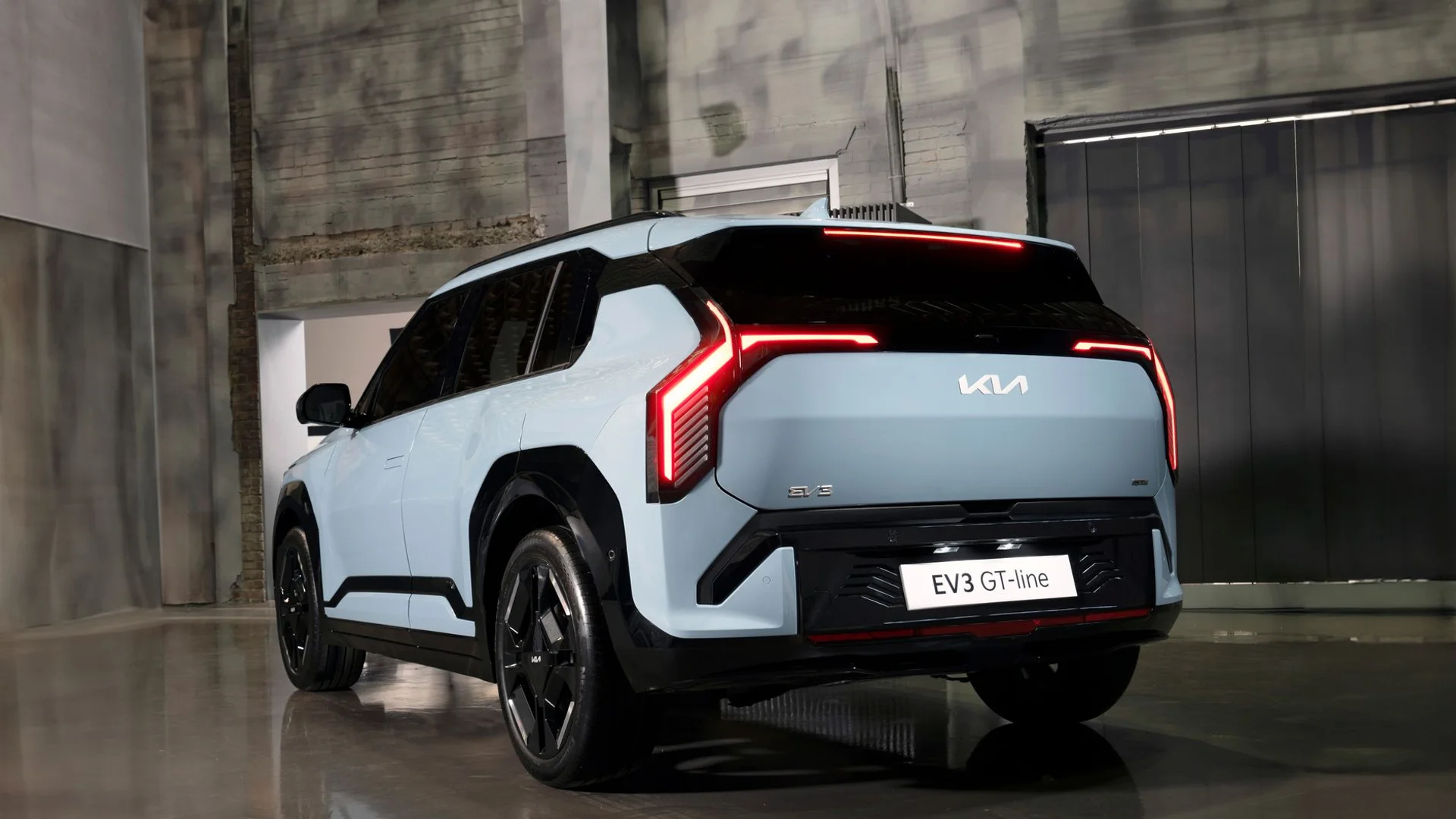
Kia EV3 Canada Price: $36,995 Makes It the Cheapest New BEV
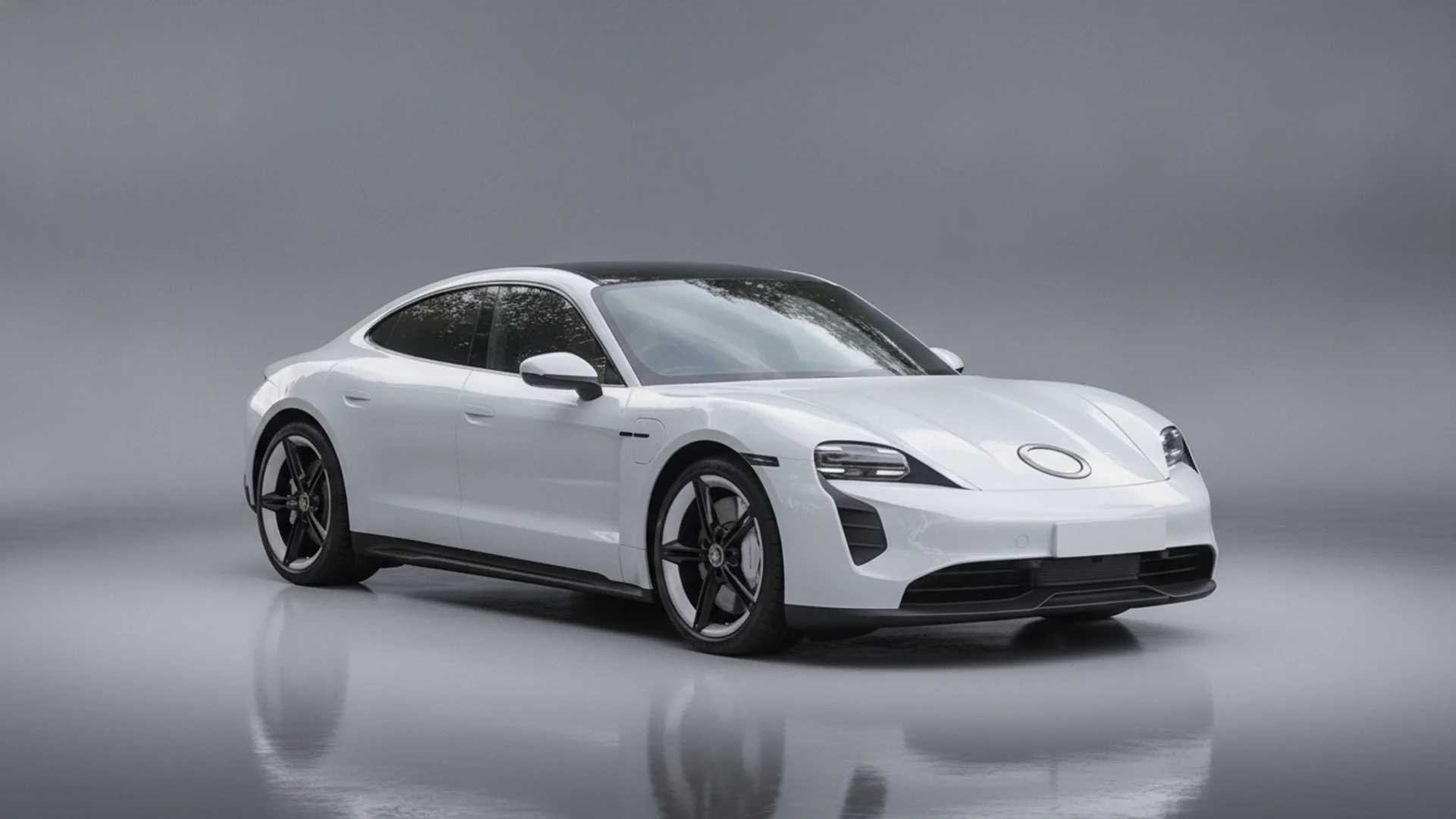
The MG07, the Taycan, and Why Fast EVs Share a Silhouette