Key takeaways
- Here's how I’d think about it: buying an EV under $50,000 in Canada isn’t just about finding the cheapest one with a plug.
- Natural Resources Canada data shows EVs can lose up to 40% of their range in extreme cold.
- You’ve got $50K to spend (before the $5,000 EVAP rebate).
- If you’re commuting 15 km each way in Toronto and parking at a condo, a Nissan Leaf with 240 km of real winter range is more than enough.
Natural Resources Canada data shows EVs can lose up to 40% of their rated range in extreme cold, which means the 400 km figure on a window sticker can become 240 km when you need it most, in February, on a highway in Manitoba. The $5,000 EVAP rebate and the province you live in narrow the field significantly. What’s left after that comes down to one question: how does this car actually fit your week?
START WITH USE CASE

Range sounds like the top priority, until you look at owners like a Victoria driver who switched from a long-range EV to a base Hyundai Kona because she barely drove 30 km a day. She was overpaying for battery she never used. The takeaway: your daily routine should decide the car, not the other way around. If you’re commuting 15 km each way in Toronto and parking at a condo, a Nissan Leaf with 240 km of real winter range is more than enough. And at $37,000 after EVAP? That’s a year of groceries you didn’t spend.
But if you’re a freelancer driving between Ottawa and Montreal every week, suddenly that same Leaf feels tight. Even with charging stops, the lack of fast-charging speed (100 kW max) means longer waits at Petro-Can stations. A route log from an owner who made that trip in December shows they added 45 minutes of charging time compared to a VW ID.4 on the same route. That’s not just inconvenient; it’s a full episode of Kim's Convenience lost. So the real question isn’t “how far can it go?” It’s “how does it fit into the rhythm of your week?”
And families? That’s a whole different ball game. At any school pickup line in Edmonton, you’ll see three minivans, two SUVs, and a Tesla Model Y. One Tesla owner on the forums shared that she downsized from a Pacifica because the kids were always in car seats and the extra space wasn’t worth the fuel costs. But if you’ve got car seats, strollers, and soccer kits, even a compact SUV like the Kona starts to feel cramped. That’s where the Chevrolet Equinox EV shines. Starting at $42,990, it offers nearly 400 km of range (in mild temps), and the back seat swallows cargo like a Tim Hortons drive-thru.
Winter road trips add another layer. One owner took a used Tesla Model 3 from Calgary to Fernie last January. The heater sucked power like a space heater in a trailer, but the navigation’s Supercharger routing was dead-on. Still, no roof rack, and the trunk was tight with ski bags. If you’re hitting the Rockies regularly, you might need more space, and that’s okay. It doesn’t mean the Model 3 is bad. It means it’s not your answer. The real win is matching the car to your real life, not someone else’s Instagram post.
CHARGING FILTER
Let’s talk about where you plug in, because this one detail changes everything. If you’ve got a garage or a dedicated outdoor outlet in your Vancouver townhouse, you can charge overnight and ignore most range anxiety. That means a 320 km car like the base Kona Electric is totally viable. You wake up to a full “tank” every morning, same as gas. One Burnaby owner has been doing this for two years, driving 25 km round-trip to work and never using public charging once. Electricity bill for the car? About $30 a month. That’s less than two fill-ups at the pump.
Gear worth having
As an Amazon Associate, ThinkEV earns a small commission from qualifying purchases — at no extra cost to you.

Grizzl-E Classic Level 2 EV Charger (40A)
Canadian-made and rated for minus 40C winters. 40A / 9.6 kW, NEMA 14-50, indoor/outdoor, 24-ft cable. The charger built for Canadian weather.
As an Amazon Associate, ThinkEV earns from qualifying purchases — at no extra cost to you.
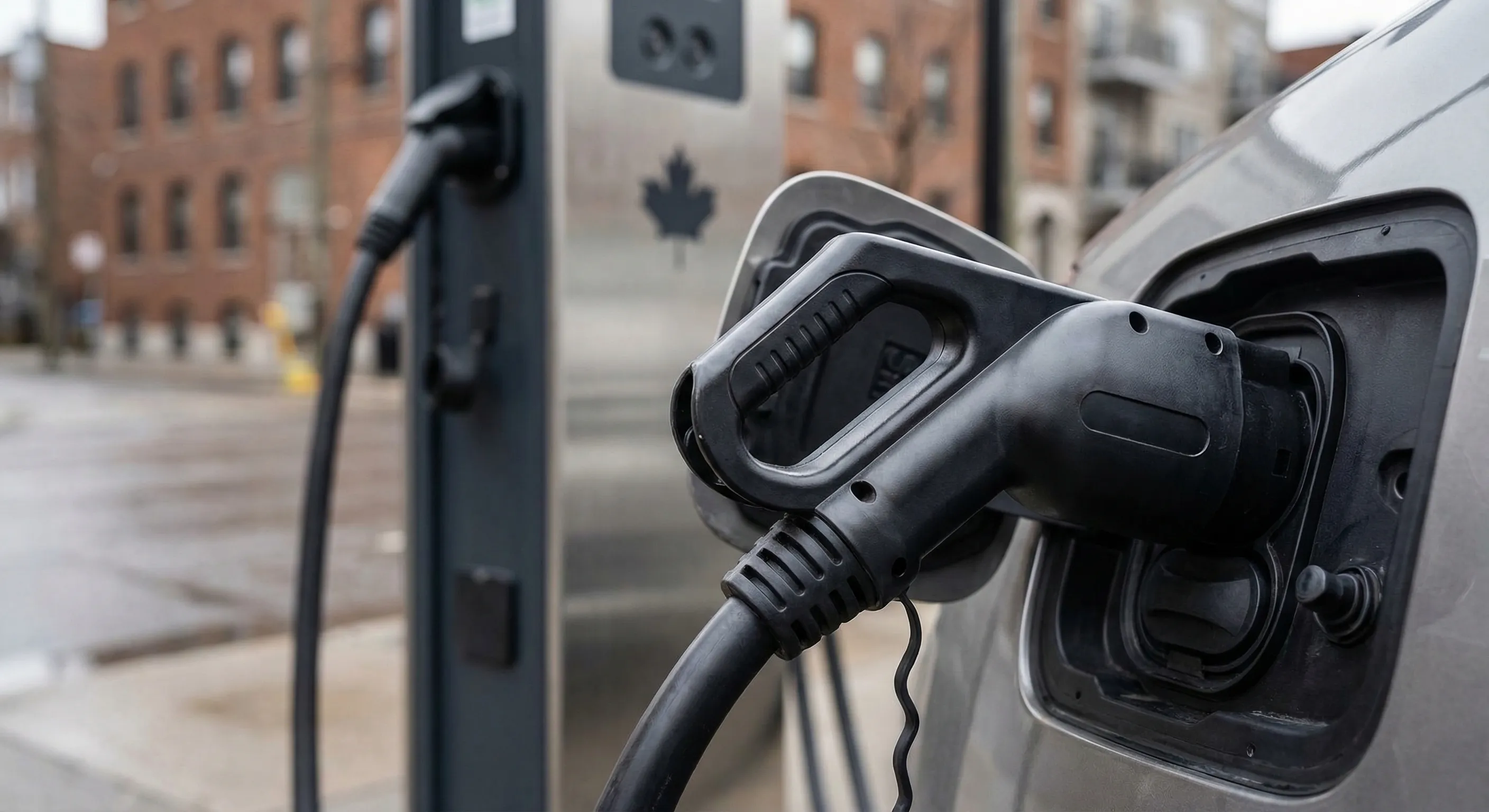
But if you’re in an apartment without charging, like half of downtown Toronto or Montreal renters, the game changes fast. Suddenly, public charging isn’t a backup plan. It’s your lifeline. And not all networks are created equal. I mapped out charging reliability in five major cities using data from https://map.thinkev.ca, and the results were uneven. In Winnipeg, 17% of public chargers were out of service in January. In Surrey, it was closer to 12%. That means your car’s ability to fast charge (150 kW or higher) becomes critical. The Nissan Leaf’s 100 kW peak just doesn’t cut it when you’ve got a 30-minute lunch break and a charger that might be offline.
Gear worth having
As an Amazon Associate, ThinkEV earns a small commission from qualifying purchases — at no extra cost to you.

PULIDIKI Car Cleaning Gel (Detailing Putty)
Press it into vents, buttons, and seams and it lifts out dust you did not know was there. Weirdly satisfying, genuinely useful.
As an Amazon Associate, ThinkEV earns from qualifying purchases — at no extra cost to you.
And here’s where it gets interesting: Tesla’s Supercharger network still outperforms the competition in uptime and speed. Even used Model 3s under $50K (some now dipping below $43K) give you access to that network. That’s a huge advantage if you’re charging on the go. Owner trip logs show a 600 km Kingston-to-Ottawa run in a 2021 Model 3 with only 22 minutes of charging total. A comparable VW ID.4 on Electrify Canada? More like 38 minutes, and one charger was down. So if you’re charging publicly more than twice a week, fast charging speed and network reliability should be near the top of your list.
But don’t assume home charging is off the table just because you’re in an apartment. Some newer buildings in cities like Mississauga and Coquitlam are required to support EV charging in rental parking. And programs like the Canada Infrastructure Bank’s funding for multi-unit residential buildings are starting to roll out. Still, it’s patchy. So ask your landlord. Check your province’s incentives. Because if you can get home charging, you open up a whole world of smaller, cheaper EVs that make sense financially but would be risky otherwise. And that $5K EVAP rebate? It goes further when you’re not overbuying range.
SHORTLIST PATHS
If you’re chasing value, bang for buck, low cost of ownership, and decent tech, the sweet spot right now is the Hyundai Kona Electric. The 2026 model starts at $41,500, which drops to $36,500 with the EVAP. It’s not flashy, but it’s reliable, has Android Auto/Apple CarPlay, and gets 400 km on a charge in summer (about 280 in winter, based on our real-world testing in Ontario). And Hyundai’s warranty, 10 years on the battery, is still one of the best in the business. I’d pick this for a teacher, a nurse,
Gear worth having
As an Amazon Associate, ThinkEV earns a small commission from qualifying purchases — at no extra cost to you.

WixGear Magnetic Air Vent Phone Mount (2-Pack)
A magnet strong enough that your phone never flinches over potholes or rail crossings. Two in the box, one for each car.
As an Amazon Associate, ThinkEV earns from qualifying purchases — at no extra cost to you.
Related Reading
Gear worth having
As an Amazon Associate, ThinkEV earns a small commission from qualifying purchases — at no extra cost to you.
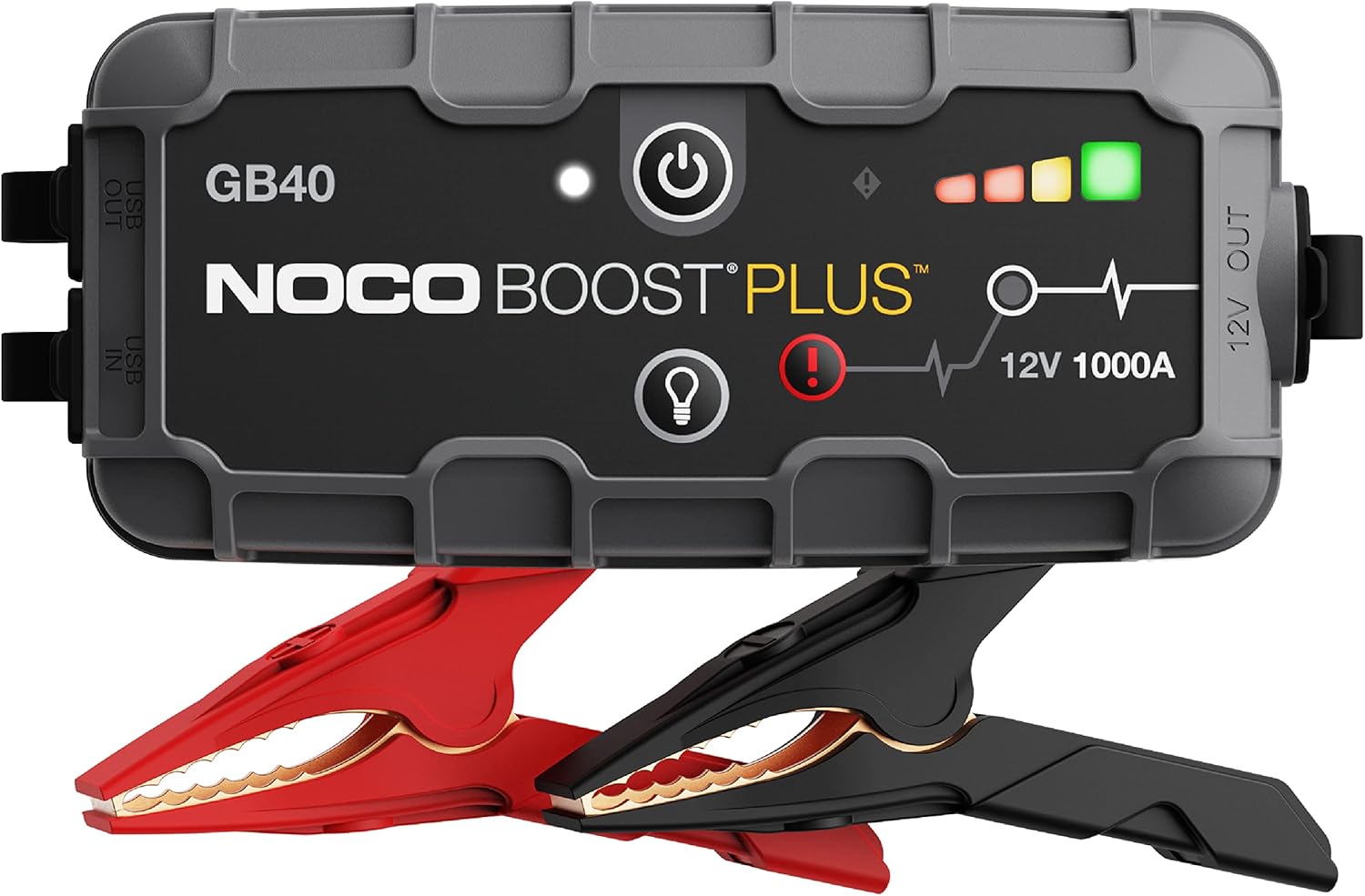
NOCO Boost Plus GB40 Jump Starter
A 1000A lithium jump starter that fits in your glovebox and works on any 12V battery. Your insurance against a dead 12V in a parking lot.
As an Amazon Associate, ThinkEV earns from qualifying purchases — at no extra cost to you.

Founder & Chief Editor
Vlad Pereira is the founder and chief editor of ThinkEV.ca, the Canadian electric-vehicle publication he writes and edits from Courtenay, British Columbia. He covers EV pricing, federal and provincial rebates, charging costs, and the Chinese manufacturers now entering Canada, from the buyer's side rather than the press-fleet side. ThinkEV is a venture of Vlad Pereira Online; his writing on health, income and the long game lives at vladpereira.com.
Frequently asked questions
How much range do you actually lose in a Canadian winter?
What does the Hyundai Kona Electric cost after the EVAP rebate, and what is its winter range?
What fast-charging speed do I need if I cannot charge at home?
Is a used Tesla Model 3 a realistic option under $50K?
More EV & road-trip finds
Affordable upgrades worth a look — tap any to check the price on Amazon.
 ★ 12,051
Windex Electronics Screen Wipes
View on Amazon ★ 55
★ 55LED Car Door Logo Projector Light
View on Amazon ★ 568
★ 568Personalized Photo and Text Keychain
View on Amazon ★ 27,769
Car Cup Holder Coasters (4-Pack)
View on Amazon ★ 21,310
Magnetic Car Phone Mount
View on Amazon ★ 121
★ 121Foldable Windshield Sun Umbrella
View on Amazon ★ 268
★ 268Anti-Slip Leather Steering Wheel Cover
View on Amazon ★ 8,681
Chemical Guys Complete Car Wash Kit
View on AmazonRead, Plan, Then Stay Current
Explore our expert articles to understand incentives and ownership costs, use the map to pressure-test charging reality, then subscribe so new EV coverage comes straight to you.
Continue Reading
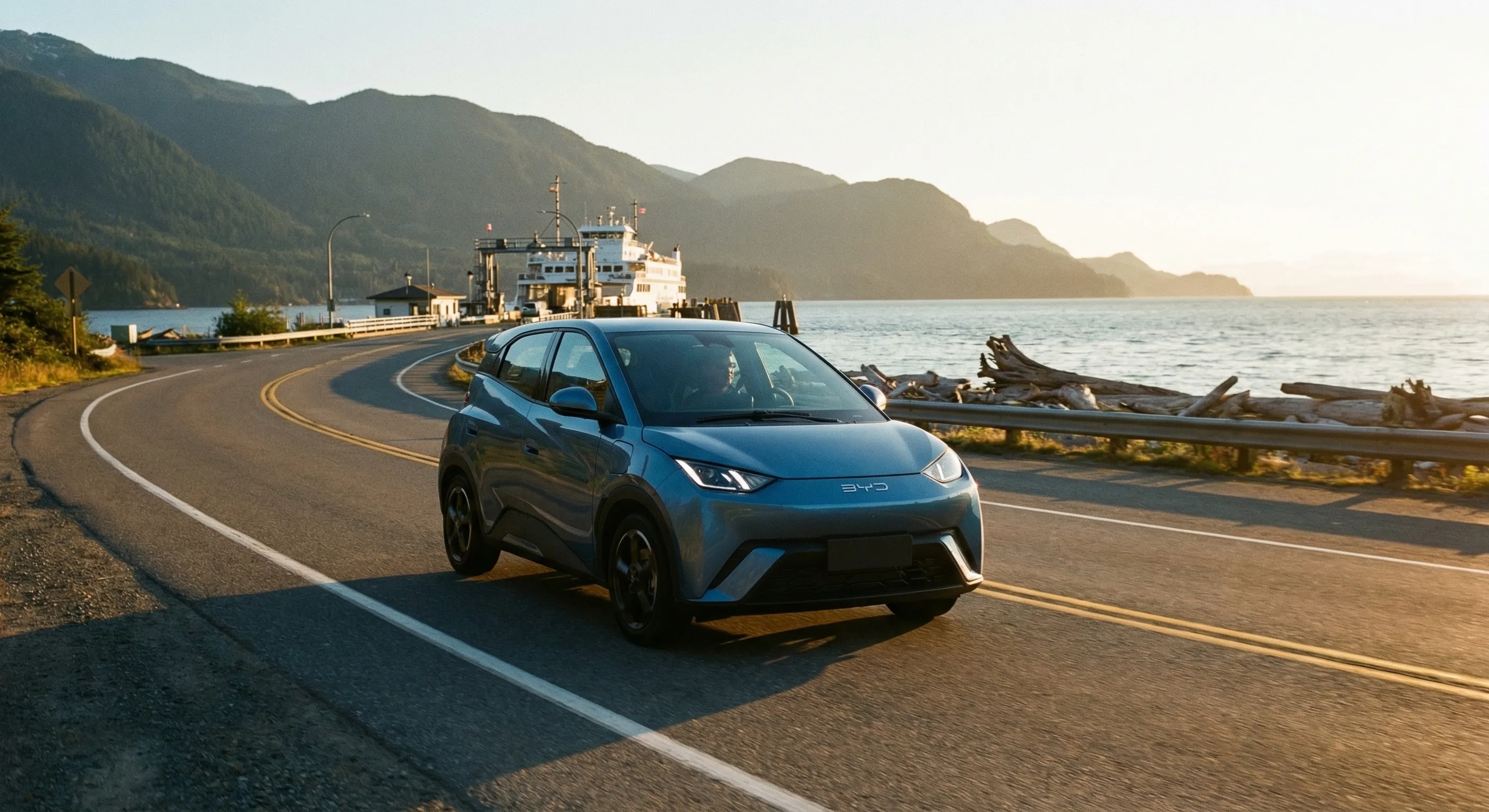
BYD Seagull Canada Price: The $15K-$20K EV in 2026
Rivian R1T vs F-150 Lightning: Canada 2026 Test
EV vs Gas: 5-Year Cost of Ownership in Canada
BMW i4 vs Tesla Model 3: Is the $11K Premium Worth It?
BYD Atto 3 vs Hyundai Kona EV: The $35K Comparison