Key takeaways
- Mercedes covers the EQE and EQS battery for 10 years or 250,000 km, the longest of any brand selling in Canada, while Hyundai's Canadian battery warranty runs 8 years or 160,000 km, shorter than its US terms.
- Some manufacturers guarantee the battery won't drop below 70% capacity, but Geotab's 2025 study of 22,700 EVs found the average pack still holds 81.6% after 8 years, well above that floor.
- When you're spending $42,999 or more on an EV, those differences aren't footnotes.
- Nissan's warranty includes a cold-storage clause that voids battery coverage if the vehicle sits below -25°C for seven or more consecutive days, a restriction no other manufacturer in Canada imposes.
- Only 0.3% of EVs built from 2022 on have ever needed a battery replacement, per Recurrent's fleet data, against a $15,000–$30,000 cost to replace a pack out of warranty.
Eight years. That's the minimum battery warranty on every electric vehicle sold in Canada. You'll see it on spec sheets, in press releases, plastered across dealership windows from Halifax to Victoria. And it sounds reassuring until you realise that "8 years" means wildly different things depending on which badge sits on the hood.
One manufacturer caps coverage at 160,000 km. Another stretches it to 250,000 km. Some guarantee your battery won't drop below 70% capacity. Others only cover outright failure, leaving gradual degradation as your problem. When you're spending $42,999 or more on an EV, those differences aren't footnotes. They're the difference between a decade of worry-free driving and an unexpected five-figure repair bill in year seven.
Most buyers glance at the 8-year figure and move on. That's a mistake. The warranty terms between Tesla, Hyundai, Chevrolet, and Mercedes vary more than the vehicles themselves. Mileage limits range from 160,000 km to 250,000 km. Degradation thresholds are mostly 70%, but not universally. And some brands tuck in clauses about storage temperature or software updates that could quietly void your coverage.
This guide does what dealership brochures won't. It breaks apart the warranty packages from all 12 major EV manufacturers selling in Canada, compares them side by side, explains what the 70% capacity threshold actually means in real-world kilometres, and maps out your legal protections province by province. If you're buying, leasing, or even thinking about a used EV, the next 15 minutes could save you thousands.
The Three Layers of EV Warranty Coverage
Every EV warranty in Canada stacks three distinct layers of protection. Understanding how they overlap (and where they don't) is the difference between confident ownership and unpleasant surprises.
The first layer is bumper-to-bumper coverage. This is the broadest net, catching everything from power windows to the infotainment screen to the climate control system. Duration varies considerably by brand. Chevrolet, Ford, and Nissan offer 3 years or 60,000 km. Tesla, Volkswagen, BMW, Volvo, Polestar, and Rivian give you 4 years or 80,000 km. Hyundai and Kia lead the pack at 5 years or 100,000 km. Wear items like tires, brake pads, and wiper blades aren't included, and that's standard across the industry. Think of bumper-to-bumper as your shield against manufacturing defects and early failures. Once it expires, every non-powertrain repair comes out of your pocket.
For used EV buyers, this layer matters even more. A 2023 model purchased in 2026 might have only months of bumper-to-bumper coverage remaining, depending on the brand. Worth checking before you sign.
The second layer is the powertrain or drivetrain warranty. On an EV, this covers the electric motor, inverter, and associated drive components. Most manufacturers offer 5 years or 100,000 km, though Hyundai and Kia fold it into their broader coverage. Chevrolet is the outlier worth flagging: the motor and drivetrain aren't covered beyond the 3-year bumper-to-bumper period. That's a meaningful gap, since inverter replacements alone can run into the thousands.
If you're comparing two EVs with similar battery warranties but different powertrain terms, don't overlook the second layer. A motor failure at year four with no powertrain coverage is an expensive lesson in fine print.
The third layer is the high-voltage battery warranty, and it's the one that dominates the conversation. Every manufacturer offers a minimum of 8 years and 160,000 km. Some extend well beyond that (Tesla's Model S and X reach 240,000 km; Mercedes covers the EQE and EQS for 10 years and 250,000 km). This layer typically covers the battery pack, battery management system, onboard charger, and DC-to-DC converter.
The battery is the single most expensive component in an EV. A full pack replacement can cost $15,000 to $30,000 depending on the model. That's why this third layer is the one you should scrutinise most carefully. Not just the years and kilometres, but the degradation threshold, the claim process, and whether the manufacturer replaces individual modules or the entire pack.
Beyond these three, most brands include corrosion protection (ranging from 5 years at Hyundai to 12 years at BMW, Volvo, Polestar, and Tesla) and roadside assistance (ranging from Nissan's meagre 2 years or 40,000 km up to Ford's EV-specific towing that'll get you to the nearest charger). Useful perks, but secondary to the core trio.
All three layers work together. The bumper-to-bumper catches early defects. The powertrain guards the motor and inverter through mid-life. The battery warranty protects your biggest investment for the long haul. Drop any one of them and you've got a blind spot.
Manufacturer-by-Manufacturer Breakdown
Not all 8-year warranties are created equal. The gap between the most generous and most restrictive coverage among the 12 major EV brands in Canada is wider than most buyers expect.
Tesla leads in battery distance coverage but not in every other category. Bumper-to-bumper runs 4 years or 80,000 km, which is middle of the road. Battery and drive unit coverage is 8 years across the board, but the kilometre cap depends on the model. The Model S and Model X get 240,000 km. Model 3 and Model Y Long Range and Performance variants get 192,000 km. Standard Range or RWD versions drop to 160,000 km. All models carry a 70% capacity retention guarantee. Tesla also offers a Battery Extended Service Agreement for $2,800 CAD, which adds 24 months or 48,000 km of coverage with a $700 deductible. Corrosion protection runs 12 years with no mileage limit. Worth noting: Tesla is not a CAMVAP participant, so warranty disputes go through their internal process or the courts.
Hyundai provides one of the strongest bumper-to-bumper warranties in the market at 5 years or 100,000 km. The battery warranty is 8 years or 160,000 km with a 70% capacity threshold. A common misconception trips up Canadian buyers: the US Hyundai battery warranty runs 10 years and 100,000 miles. The Canadian version is shorter at 8 years and 160,000 km. If you've seen the 10-year figure online, it doesn't apply north of the border. Powertrain coverage is included at 5 years or 100,000 km.
Kia mirrors Hyundai's structure closely. Five years or 100,000 km bumper-to-bumper, 8 years or 160,000 km on the battery with a 70% threshold. Kia's EV battery coverage extends to the motor, inverter, onboard charger, and regenerative braking components, which is a slightly broader scope than some competitors. One detail to verify: the EV9 may carry 150,000 km instead of the standard 160,000 km, so check your specific purchase agreement.
Chevrolet keeps things short on the general warranty at 3 years or 60,000 km. The battery gets the standard 8 years or 160,000 km with a 70% degradation threshold. But there's a gap that catches people off guard: the drivetrain and motor aren't covered beyond the 3-year bumper-to-bumper period. If your motor develops a fault in year four, that's your bill. GM uses modular battery replacement, swapping individual cells or modules rather than the entire pack. This can be an advantage (faster turnaround, potentially lower cost) or a disadvantage (the manufacturer decides whether to replace modules or the full pack). Chevrolet does extend roadside towing coverage to 8 years or 160,000 km, matching the battery period.
Ford splits its coverage into three clear tiers. Bumper-to-bumper is 3 years or 60,000 km. Powertrain steps up to 5 years or 100,000 km. Battery and drive coverage runs 8 years or 160,000 km with a 70% capacity guarantee. Ford distinguishes itself with EV-specific roadside assistance that includes towing to the nearest charger, not just the nearest dealer. For anyone who's experienced range anxiety on a rural highway, that's a practical benefit.
Volkswagen offers 4 years or 80,000 km bumper-to-bumper and 8 years or 160,000 km on the high-voltage system, including the battery. The 70% degradation threshold applies. Corrosion protection runs 7 years with unlimited kilometres, which is shorter than some competitors (BMW and Volvo both offer 12 years). Otherwise, Volkswagen's coverage is straightforward and competitive.
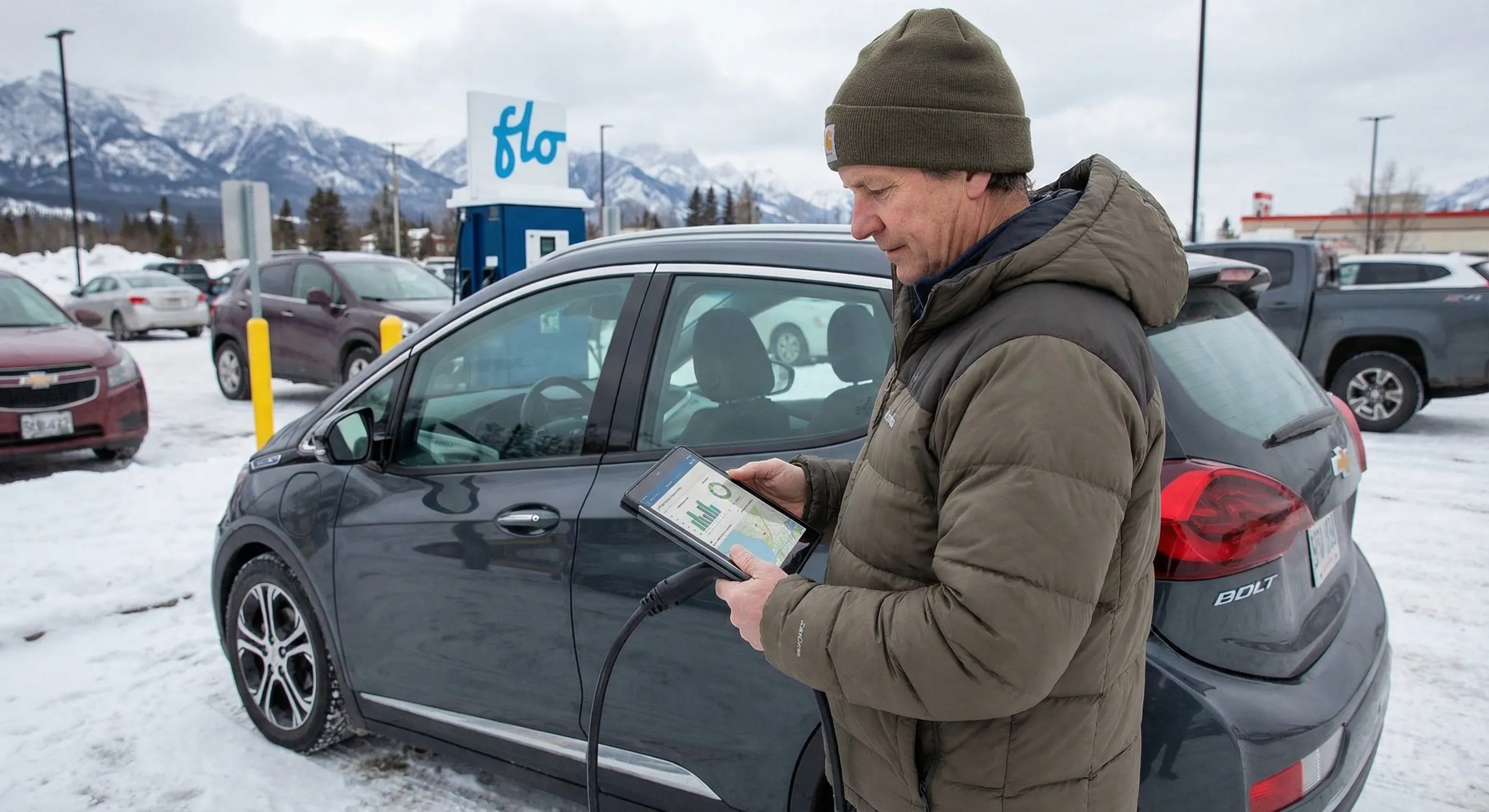
Nissan is where you need to read the fine print carefully. Bumper-to-bumper is 3 years or 60,000 km. The battery warranty is 8 years or 160,000 km with a 70% capacity threshold (the Leaf uses a 9-out-of-12 capacity bar system, which translates to roughly the same benchmark). Roadside assistance is only 2 years or 40,000 km, the shortest in the industry. And there's a clause that matters enormously for Northern Canadians: if your Nissan EV is stored below -25C for seven or more consecutive days, the battery warranty can be voided. In Winnipeg, Edmonton, or Yellowknife, that's not a hypothetical scenario. It's January.
BMW provides 4 years or 80,000 km bumper-to-bumper and 8 years or 160,000 km on the battery. The 70% threshold applies, and BMW's approach to degradation claims is noteworthy: if a BMW service workshop confirms your battery has dropped below 70%, the portion below that threshold gets repaired at no charge. Corrosion protection extends to 12 years with unlimited kilometres. Like Tesla, BMW is not a CAMVAP participant.
Volvo matches BMW on most fronts: 4 years or 80,000 km bumper-to-bumper, 8 years or 160,000 km battery coverage, 12 years corrosion protection. The capacity threshold sits around 70% for current models. One wrinkle to be aware of: older 2022 Volvo EVs used a lower 55% threshold, which is significantly less protective. Volvo doesn't prominently advertise the exact percentage in their marketing materials, so if you're buying a used Volvo EV, confirm which threshold applies to your model year.
Polestar, as Volvo's performance offshoot, carries a similar structure. Four years or 80,000 km bumper-to-bumper, 8 years or 160,000 km on the battery and motors, 70% capacity guarantee, and 12 years of corrosion protection. Polestar introduced battery health certificates for used Polestar 2 vehicles in May 2025, which gives prospective buyers a manufacturer-verified snapshot of battery condition. If you're shopping for a used Polestar, ask for this document. It removes a lot of guesswork.
Rivian offers 4 years or 80,000 km bumper-to-bumper and 8 years on the battery, but the kilometre cap varies by configuration. Dual Standard battery models get 192,000 km. Dual Large, Dual Max, Tri Max, and Quad Max configurations all get 240,000 km, placing them alongside Tesla's Model S and X for the highest distance coverage in the industry. The 70% capacity threshold is standard. Rivian's overall package is among the most competitive, especially for the larger battery configurations.
Mercedes rounds out the group and makes the strongest case for long-haul coverage. Bumper-to-bumper is 4 years or 80,000 km. The EQB carries 8 years or 160,000 km on the battery. But the EQE and EQS get 10 years or 250,000 km, the longest battery warranty of any manufacturer selling in Canada. If you plan to keep your EV for a decade or drive significant distances, Mercedes offers the most protection on paper. Like Tesla and BMW, Mercedes is not a CAMVAP participant.
The 70% Capacity Threshold
Gear worth having
As an Amazon Associate, ThinkEV earns a small commission from qualifying purchases — at no extra cost to you.

Grizzl-E Classic Level 2 EV Charger (40A)
Canadian-made and rated for minus 40C winters. 40A / 9.6 kW, NEMA 14-50, indoor/outdoor, 24-ft cable. The charger built for Canadian weather.
As an Amazon Associate, ThinkEV earns from qualifying purchases — at no extra cost to you.
Almost every EV manufacturer in Canada guarantees that your battery will retain at least 70% of its original capacity during the warranty period. That number sounds straightforward. In practice, it's more nuanced than most buyers realise.
Start with what 70% actually means in daily life. If your EV had a rated range of 400 km when new, 70% capacity means roughly 280 km of range. That's still more than enough for the overwhelming majority of daily driving in Canada, where the average commute is about 25 km each way. You'd need to be on your fifth year of ownership, driving a car that's degrading faster than average, before the 70% threshold becomes a practical concern.
Geotab's 2025 study of 22,700 EVs found that the average battery retains 81.6% of its original capacity after 8 years. That's well above the 70% warranty floor. Degradation isn't linear, either. Batteries tend to lose a few percentage points in the first year as the chemistry settles, then slow down considerably. A typical degradation curve looks roughly like this: 95 to 97% after year one, 92 to 95% after year three, 88 to 92% after year five, and 80 to 88% after year eight.
Average degradation runs about 2.3% per year according to Geotab's data. That might sound significant in isolation, but consider the math: at 2.3% annually, an EV battery would take roughly 13 years to hit the 70% threshold. Most warranties expire at 8 years. The gap between typical real-world degradation and the warranty floor is substantial.
Replacement rates reinforce this picture. Only 1.5% of batteries in Recurrent's tracking fleet have ever needed replacement. For EVs built from 2022 onward, that figure drops to 0.3%. Fewer than one in 300 modern EV batteries fails. That's a remarkable track record, and it explains why manufacturers are comfortable offering 8-year guarantees.
So where does the 70% threshold actually matter? It's protection against defective batteries, not normal ageing. If your 400 km EV drops to 320 km after six years, you've lost 20%, but you're still above the 70% line. No warranty claim. The threshold only triggers when something has gone genuinely wrong: a manufacturing defect, a failed cell group, abnormal chemical degradation. It's a safety net for catastrophic failure, not a performance guarantee for gradual range loss.
Even if your battery does eventually dip below 70%, that doesn't render the vehicle unusable. Many EVs continue to operate reliably at 60 to 70% capacity. The driving experience barely changes at that level. What matters is whether degradation is accelerating, which would point to a deeper problem. A steady decline of 2 to 3% per year is normal chemistry. A sudden drop of 5% or more in a single year is a red flag worth investigating.
For anyone on the fence about buying an EV because of battery concerns, the data is overwhelmingly reassuring. Real-world degradation runs slower than the warranty floor, replacement rates are vanishingly small, and the 70% threshold functions as catastrophic-failure insurance rather than a ceiling you're likely to bump against.
What Actually Voids Your EV Warranty
Your EV warranty is a contract, and like any contract, it has boundaries. Knowing what crosses those boundaries (and what doesn't) can save you from both unnecessary worry and genuinely costly mistakes.
Start with the good news. Using a third-party charger with proper certification does not void your warranty. Any UL or CSA listed charger with an SAE J1772 or NACS connector is fine. Canadian consumer protection law, which mirrors the principles of the US Magnuson-Moss Act, prevents manufacturers from requiring you to use only their branded equipment. A manufacturer can only deny a claim if it proves that a specific third-party charger directly caused the damage. Plugging into a certified Level 2 charger at a friend's house or a public network station won't jeopardise your coverage.
Now the bad news. Salvage or rebuilt titles void the warranty across every manufacturer. No exceptions, no appeals. If the vehicle's title reads "salvage" or "rebuilt," the warranty is gone. This is worth keeping in mind when shopping for used EVs at steep discounts. The price cut might look attractive until you factor in the complete absence of manufacturer backing.
Unauthorized battery repairs or high-voltage modifications are another firm line. The battery pack and its management system are engineered as an integrated unit. Aftermarket tampering, whether it's swapping cells, modifying cooling systems, or altering charge parameters, gives the manufacturer grounds to deny any related claim. Independent shops can handle brakes, suspension, and most mechanical work without affecting your warranty. But the high-voltage system is effectively off-limits unless you're at a certified dealer or manufacturer-approved facility.
Software tampering with the battery management system carries similar risks. The BMS controls charging rates, thermal management, cell balancing, and safety cutoffs. Hacking or bypassing it can trigger warranty denial. That said, federal Bill C-244, passed in November 2024, legalized circumventing digital locks for diagnosis, maintenance, and repair purposes. You're now legally allowed to access diagnostic data using third-party tools. The distinction matters: reading data is protected; modifying safety-critical software is not.
OTA software updates sit in a grey area. GM asks owners to install updates within 45 days. Ford's window is 30 days. But those are guidelines, not automatic warranty voidance triggers. Consumer protection law requires the manufacturer to prove that a missed update directly caused the problem being claimed. Skipping a map update won't affect your battery warranty. Skipping a critical thermal management patch and then experiencing a battery failure is a different conversation. The safest approach is to install updates promptly, but missing one by a few weeks isn't an automatic death sentence for your coverage.
Environmental factors can also play a role. Nissan's cold storage clause, which voids the battery warranty if the vehicle sits below -25C for seven or more consecutive days, is the most notable example. No other manufacturer has a comparable restriction in their Canadian warranty terms, but it's a reminder to read the full document for your specific brand and model.
The practical takeaway: use certified chargers, keep your software current, don't modify the battery or BMS, and avoid salvage-title vehicles if warranty coverage matters to you. Those four rules cover nearly every real-world scenario.
Your Legal Protections in Canada
Beyond manufacturer warranties, Canadian law provides several layers of consumer protection that apply specifically to EV ownership. These protections exist whether the dealership mentions them or not.
CAMVAP, the Canadian Motor Vehicle Arbitration Plan, offers free binding arbitration for warranty disputes. The process typically resolves within 70 days, and since 1994, it has resulted in 2,082 vehicle buybacks. CAMVAP covers 14 manufacturers representing roughly 85% of annual Canadian vehicle sales. The gap, though, is significant: Tesla, BMW, Mercedes-Benz, Stellantis, and all Chinese manufacturers are not participants. If you own one of those brands and hit a warranty wall, your options are provincial consumer protection agencies or small claims court. Given that Tesla is Canada's top-selling EV brand, that's a meaningful hole in the safety net.
Quebec stands alone in having a genuine lemon law. Bill 29, enacted in October 2023, gives owners clear grounds for a buyback, price reduction, or sale cancellation. The triggers are specific: three unsuccessful repair attempts for the same defect, or 12 total repair attempts, or 30 or more days at the dealer within 3 years or 60,000 km. Penalties for non-compliance reach $125,000 in fines or 5% of a corporation's worldwide turnover. No other province offers anything this structured or punitive. Quebec buyers have a level of protection that the rest of the country can only envy.
Every province does, however, maintain implied warranty protections under its Sale of Goods Act. These laws guarantee that a vehicle is merchantable (fit for its intended purpose) and of acceptable quality. You cannot waive these protections, even if you sign a contract that says "as is" or "no warranty." Ontario's OMVIC confirms this explicitly. New Brunswick's Consumer Product Warranty and Liability Act provides the strongest statutory warranty framework outside Quebec. These laws don't replace manufacturer warranties. They sit underneath them, ensuring a baseline of protection regardless of what any contract says.
The right to repair is advancing in Canada. Federal Bill C-244, passed in November 2024, legalized circumventing digital locks for vehicle diagnosis, maintenance, and repair. Independent mechanics and technically inclined owners can now legally access diagnostic data using third-party tools. Quebec's Bill 29 pushes further, requiring manufacturers to provide free access to diagnostic data and to ensure parts and repair services remain available through October 2025. These provisions reduce manufacturer control over the repair process and create space for competition in EV servicing.
One protection that applies universally across all brands: EV battery warranties transfer to subsequent owners. Tesla requires an ownership update in their system. BMW's warranty follows the VIN automatically. Hyundai and Kia transfer the full battery warranty, though other warranty components may shorten for second owners. This transferability is critical for resale value and for the growing used EV market in Canada. When you buy a three-year-old EV, you're still covered by the remaining battery warranty, which could mean five more years of protection at no additional cost.
Gear worth having
As an Amazon Associate, ThinkEV earns a small commission from qualifying purchases — at no extra cost to you.
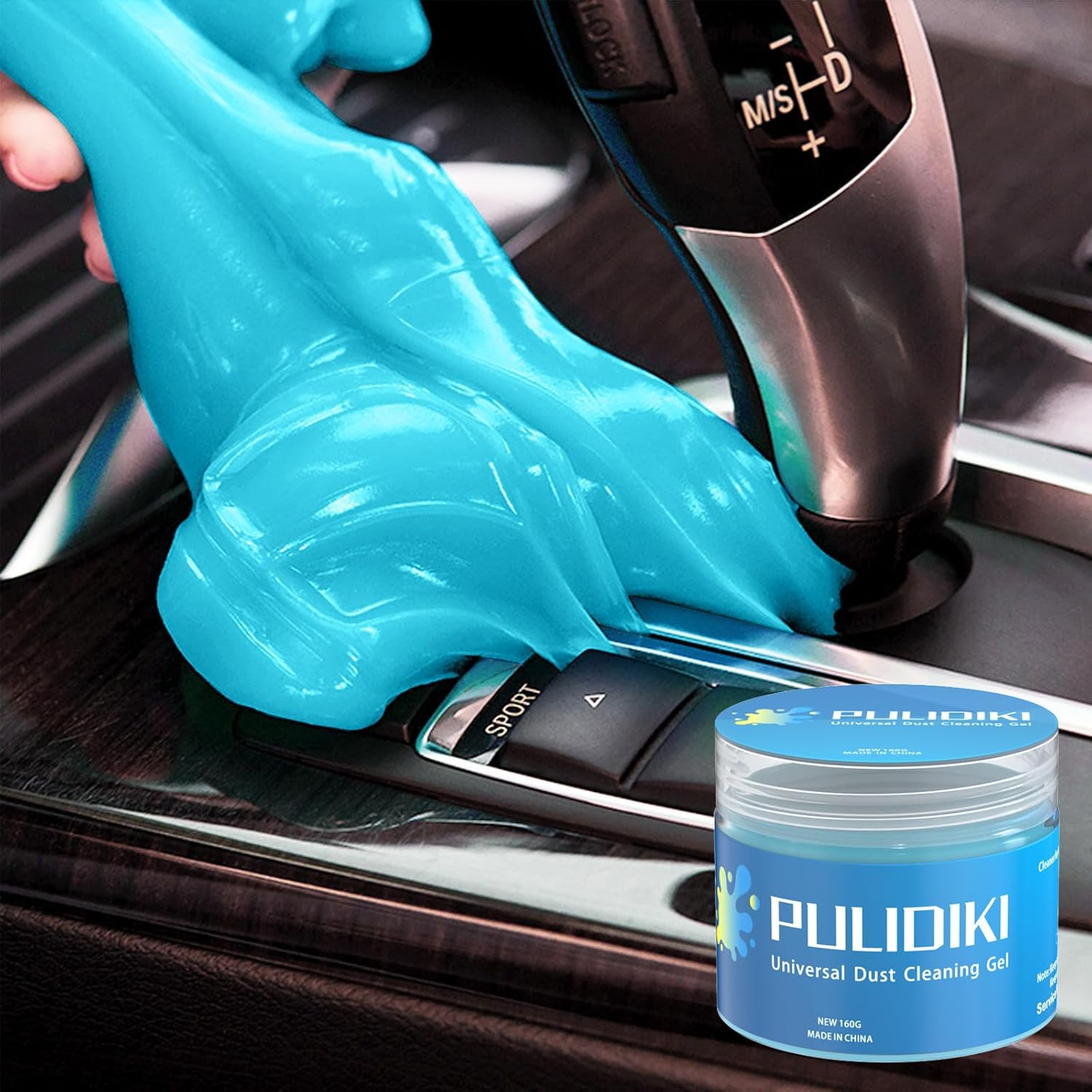
PULIDIKI Car Cleaning Gel (Detailing Putty)
Press it into vents, buttons, and seams and it lifts out dust you did not know was there. Weirdly satisfying, genuinely useful.
As an Amazon Associate, ThinkEV earns from qualifying purchases — at no extra cost to you.
Related Reading
Gear worth having
As an Amazon Associate, ThinkEV earns a small commission from qualifying purchases — at no extra cost to you.

WixGear Magnetic Air Vent Phone Mount (2-Pack)
A magnet strong enough that your phone never flinches over potholes or rail crossings. Two in the box, one for each car.
As an Amazon Associate, ThinkEV earns from qualifying purchases — at no extra cost to you.

Founder & Chief Editor
Vlad Pereira is the founder and chief editor of ThinkEV.ca, the Canadian electric-vehicle publication he writes and edits from Courtenay, British Columbia. He covers EV pricing, federal and provincial rebates, charging costs, and the Chinese manufacturers now entering Canada, from the buyer's side rather than the press-fleet side. ThinkEV is a venture of Vlad Pereira Online; his writing on health, income and the long game lives at vladpereira.com.
Frequently asked questions
Does the EV battery warranty transfer to a second owner?
What happens if my battery drops below 70% capacity?
Can using a non-Tesla charger void my warranty?
How long do EV batteries actually last in Canada?
More EV & road-trip finds
Affordable upgrades worth a look — tap any to check the price on Amazon.
 ★ 297
★ 297360-Degree One-Hand Dashboard Phone Mount
View on Amazon ★ 61
★ 61Toddler Car Seat Snack and Cup Tray
View on Amazon ★ 17,839
Qifutan Vent Phone Mount (Military-Grade Clip)
View on Amazon ★ 12,051
Windex Electronics Screen Wipes
View on Amazon ★ 164
★ 164Solar-Powered LED Ambient Light
View on Amazon ★ 4,055
6-Speed Manual Shift Knob Display
View on Amazon ★ 4,424
Sun Visor Card and Document Organizer
View on Amazon ★ 1,944
VIOFO A229 Pro 4K Dash Cam
View on AmazonRead, Plan, Then Stay Current
Explore our expert articles to understand incentives and ownership costs, use the map to pressure-test charging reality, then subscribe so new EV coverage comes straight to you.
Continue Reading
Your Rights When an EV Warranty Claim Goes Wrong in Canada
The Best Electric SUVs in Canada (2026): Ranked by Value
How to Buy a Used EV: What to Check Before You Sign

EV Charging on Road Trips Across Canada, Is It Viable Yet?

Should I Wait for BYD to Come to Canada?