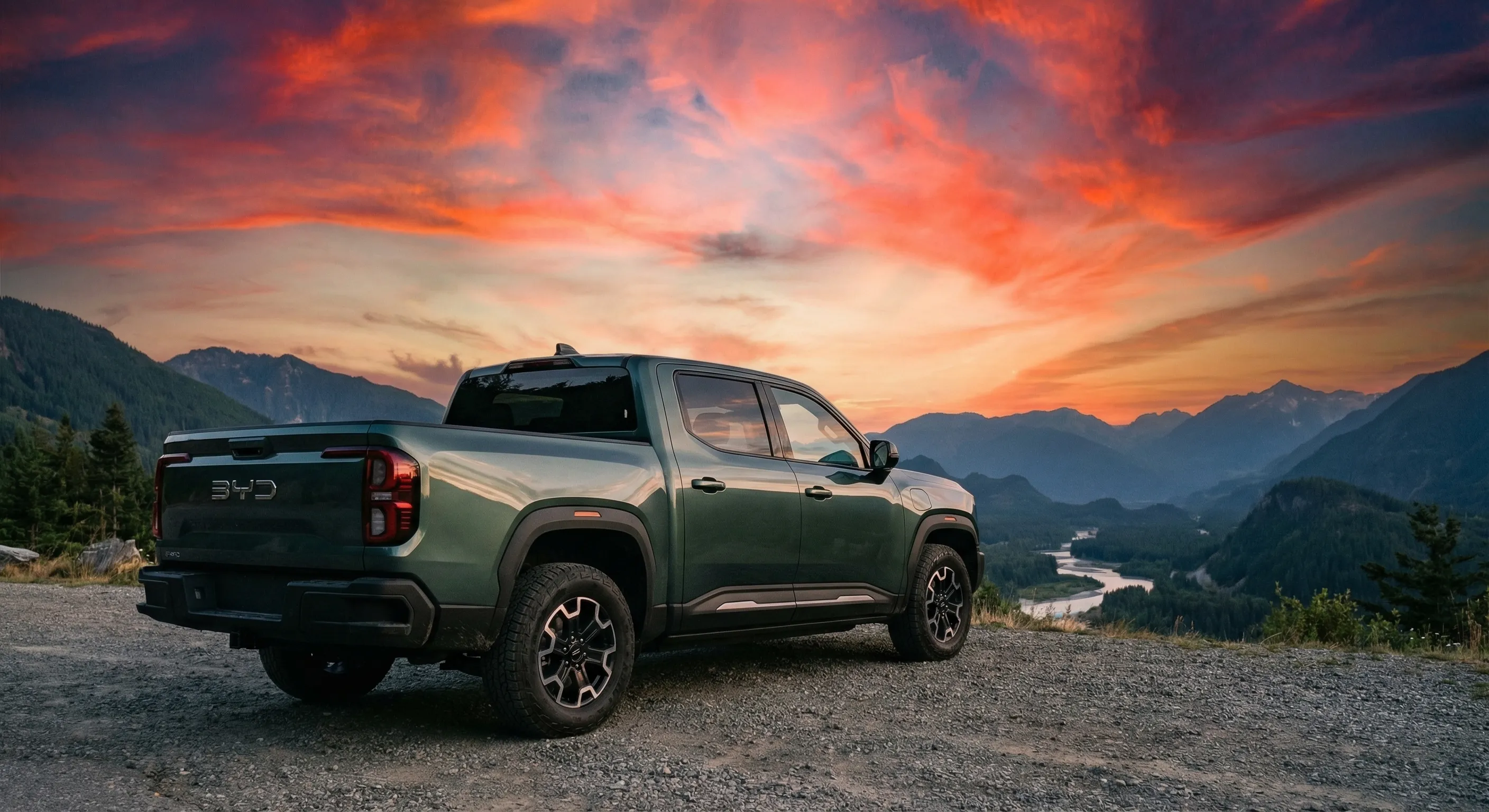
No confirmed Canadian price exists for the BYD Shark 6. Every number circulating online is an estimate, including this one. I'll put the defensible mid-trim band at $55,000 to $62,000 CAD and refuse to round it to a single figure, because the two variables that would let anyone round it, BYD Canada's confirmed MSRP and its quota allocation for the model, do not yet exist.
Key takeaways
- No official Canadian price exists. Every figure circulating is an estimate; the defensible mid-trim band is $55,000–$62,000 CAD, and it won't narrow until BYD Canada names an MSRP and a quota allocation.
- The cut from a 100% surtax to 6.1%, effective January 16, 2026, inside a 49,000-unit annual quota, is what makes any of this pricing possible: roughly $3,700 CAD in tariff on a $45,000 USD base.
- Chinese-origin vehicles are excluded from the $5,000 federal EVAP rebate. The Shark 6 fights on sticker alone against trucks pre-discounted by federal money.
- BYD's Seal export precedent runs about $10,000 above the Chinese domestic figure. The Shark 6 rides the same cost stack from Shenzhen to a Canadian floor.
- The 20-store Canadian dealer footprint is the under-discussed risk, a $55K truck stops being a deal when the nearest warranty service is in another province.
What the tariff math actually says about Canadian pricing
The surtax on Chinese-built EVs dropped from 100% to 6.1% on January 16, 2026, inside a 49,000-unit annual quota. Above the quota, the rate reverts to 100%. That is the arithmetic frame every Shark 6 estimate has to survive. The January 16 framework moved the ceiling, not the floor.
The cleanest real-world anchor is Australia, where BYD entered the Shark 6 at roughly AUD $59,900 for the base Premium trim, call it about CAD $52,000 at spot. The Australian pricing and specifications sheet for the 2025 Shark 6 launch confirms the entry trim landed there in late 2024 with the DM-O powertrain unchanged from the Chinese domestic-market car. Canada is not Australia, in several relevant respects: different homologation costs, a smaller dealer footprint, a colder-climate warranty profile, and a currency that behaves differently against the yuan. The Seal export precedent fills in the rest. Comparable Canadian premiums against BYD's cheapest western export market have historically run $8,000 to $12,000 higher for the mid-trim.
Stack that on the Australian anchor and the band comes in at $55,000 to $62,000 CAD for a mid-trim Shark 6. That is my number, and it is an estimate, the price sheet does not exist yet, and the quota allocation for the model has not been drawn.
The strongest objection to this band is that BYD will price aggressively below it to buy market share, the same way it did in Thailand and Mexico. I don't think that survives contact with the quota. When your import ceiling is 49,000 units across the entire lineup, you don't discount to move volume, you allocate to protect margin, because you cannot restock past the cap without paying 100%. Aggressive pricing is a strategy for markets where you can ship more. Canada isn't one.
Even at the top of the band, the Shark 6 opens below a base Ford Ranger Tremor and well below a Honda Ridgeline Sport. The federal rebate does not enter this equation. BYD is a Chinese multinational manufacturing conglomerate headquartered in Shenzhen, Guangdong, China, and EVAP excludes China-built vehicles on country-of-origin grounds regardless of price. No BYD model qualifies. Every Canadian Shark 6 estimate that pencils in a $5,000 rebate is arithmetically wrong.
Gear worth having
As an Amazon Associate, ThinkEV earns a small commission from qualifying purchases — at no extra cost to you.

Lectron Level 2 J1772 Charger (40A, WiFi)
Smart WiFi charger with real-time energy monitoring. 40A / 9.6 kW, J1772 with a NEMA 14-50 plug, schedule charging right from your phone.
As an Amazon Associate, ThinkEV earns from qualifying purchases — at no extra cost to you.
Why the number matters less than the engineering margin behind it
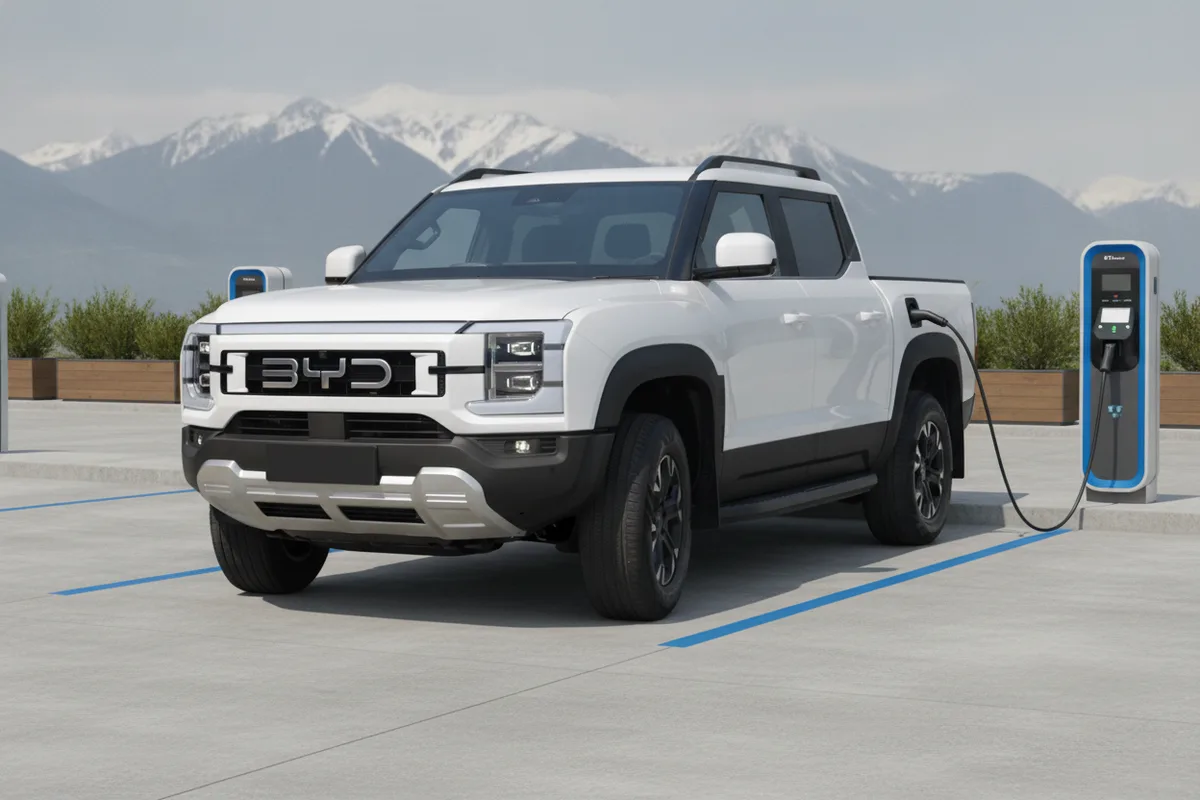
The Shark 6 is a plug-in hybrid pickup with BYD's DM-O powertrain, a 2.0-litre turbocharged engine paired with dual motors, roughly 85 to 100 km of electric-only range depending on cycle, and a 3,500 kg tow rating on the Performance trim. Those are numbers the F-150 Hybrid does not match at anything close to $62,000 CAD.
That is the part the price band understates. A Ford Maverick Hybrid is the closest domestic answer on efficiency, and it tows a quarter of what the Shark does. A Ranger Tremor tows the weight but drinks fuel at the rate the Ranger has always drunk fuel. There is no incumbent at this price point with this spec sheet. The incumbents have quarters, not years, to produce one.
The reason BYD can price the Shark 6 where it does is not a subsidy. The April 2026 Shark 6 price and specs update, the Australian Shark 6 configurator including the new Dynamic Cab Chassis and Performance trims, and BYD's broader vehicle range all point to the same underlying structural advantage: vertical integration across cells, motors, and chips. That is a permanent cost floor, not a promotional one. BYD makes the battery. BYD makes the motor. BYD makes the silicon. Three margins that Ford, GM, and Toyota each pay to a supplier are folded back into BYD's bill of materials.
The instructive comparison isn't with a domestic incumbent, it's with the Toyota Tacoma i-FORCE MAX. Toyota's hybrid pickup answer arrived to a segment that had waited a decade for it, tows less than the Shark, uses more fuel than the Shark, and starts about $10,000 higher than the middle of my band. Toyota built it with a supplier stack. BYD built the Shark with its own stack. That's the delta the price sheet is really measuring.
Gear worth having
As an Amazon Associate, ThinkEV earns a small commission from qualifying purchases — at no extra cost to you.

WeatherTech FloorLiner for Tesla Model 3
Deep-channel liners that trap every drop of slush and salt. The difference between a ruined interior and a showroom-fresh cabin after a Canadian winter.
As an Amazon Associate, ThinkEV earns from qualifying purchases — at no extra cost to you.
The Seal precedent tells the residual story. It landed in Canada at a premium against its Chinese domestic price, still undercut its segment, and moved residuals in the Model 3's neighbourhood within about six months, the pattern clear inside two quarters. For the full breakdown of why the engineering philosophy behind the Shark 6 is the actual competitive threat, and the Shark 6 Canadian preview covering specs and towing, the case does not rest on price alone.
Gear worth having
As an Amazon Associate, ThinkEV earns a small commission from qualifying purchases — at no extra cost to you.

Grizzl-E Classic Level 2 EV Charger (40A)
Canadian-made and rated for minus 40C winters. 40A / 9.6 kW, NEMA 14-50, indoor/outdoor, 24-ft cable. The charger built for Canadian weather.
As an Amazon Associate, ThinkEV earns from qualifying purchases — at no extra cost to you.
Twenty dealerships: the infrastructure bet that outweighs the MSRP
The number that decides Shark 6 ownership isn't the sticker, it's the dealer count. BYD has flagged roughly 20 stores for Canada. For scale: Ford runs about 440 Canadian dealers, Toyota 290, Hyundai 220. Twenty locations, even placed perfectly across the major metros, leave a buyer in Halifax, Saskatoon, or Kelowna hundreds of kilometres from the nearest authorized service centre, and a plug-in hybrid pickup's powertrain is more complex to service than either a gas truck or a pure EV.
The Australian rollout is the cleanest analog. BYD launched there in 2022 and reached about 35 stores by 2024, and owners still report service-wait and parts friction on non-routine work. If Canada tracks that arc, and the regulatory environment here is harder, not easier, realistic first deliveries land late 2026 into 2027, with service-network maturity closer to 2028. Twenty is the number a manufacturer picks for optionality, not commitment: enough to claim national availability in a press release, few enough to walk away from quietly if the volumes disappoint. Within 100 km of Vancouver, Toronto, Montreal, or Calgary, that trade is easy to make. In Thunder Bay or Saint John, it isn't, not yet.
The rebate gap and the 49,000-unit quota: who actually pays sticker
The federal EVAP rebate is the largest single variable in the comparison, and the Shark 6 doesn't qualify, Chinese-origin vehicles fall outside the eligibility list. That's a $5,000 gap before any provincial layer, and the provincial layer is thinner than it looks. BC's main CleanBC rebate is paused. Quebec's Roulez Vert has wound down to roughly $2,000 and excludes vehicles from countries without a free-trade agreement, which rules out a China-built Shark. Ontario, the largest pickup-buying province in the country, offers no provincial EV offset at all. An Ontario buyer pays the full $55,000–$62,000 sticker with nothing on top.
Scarcity compounds the gap. The 49,000-unit quota covers every Chinese-origin vehicle, not just BYD, and when supply is capped against real demand the importer keeps the margin, there is no structural reason to discount. A plausible year-one Shark allocation is a few thousand units spread across those 20 dealerships, concentrated where dealer density is highest, in BC and Ontario. Alberta and Saskatchewan, the biggest pickup markets per capita, may find themselves on waitlists or driving west to take delivery. Watch the allocation number, not the MSRP press release, the allocation is the leading indicator of whether BYD prices the Shark to win the segment or to harvest it.
Gear worth having
As an Amazon Associate, ThinkEV earns a small commission from qualifying purchases — at no extra cost to you.
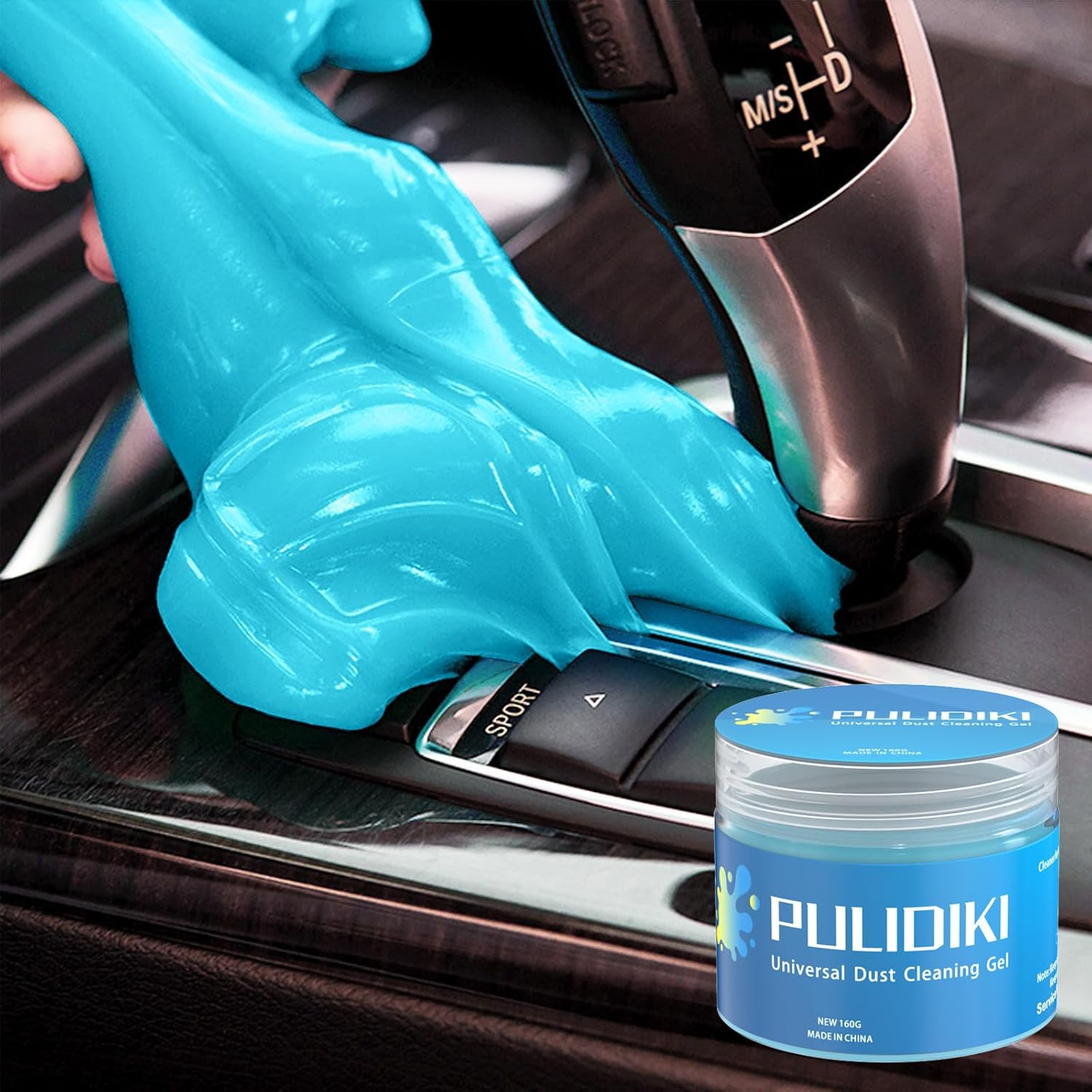
PULIDIKI Car Cleaning Gel (Detailing Putty)
Press it into vents, buttons, and seams and it lifts out dust you did not know was there. Weirdly satisfying, genuinely useful.
As an Amazon Associate, ThinkEV earns from qualifying purchases — at no extra cost to you.
Two things that would break the band
I have not driven the Shark 6. The spec sheet, the Australian owner reports, and the Seal residual data tell a consistent story anyway.
Two variables can still move the number:
- No confirmed launch. BYD Canada has not named a launch date, trim structure, or MSRP as of July 2026. The dealer footprint is still assembling. Every week without an announcement widens the band, not narrows it.
- Quota allocation risk. The 49,000-unit annual ceiling is hard. If BYD's Canadian allocation prioritises the Seal U and Sealion 7 over the Shark 6 for volume reasons, both are higher-margin models with faster inventory turn, the Shark launch could slip into 2027.
If Transport Canada's Q3 2026 quota draw lists the Shark 6 and BYD Canada names a price at or under $60,000 for a mid-trim, the Tacoma TRD Pro's value case collapses on a spreadsheet the same afternoon. If neither happens by the end of Q4 2026, the band is academic until the 2027 model year and every estimate in this post resets.
The conditional bet: at $58,000 mid-trim with confirmed 2026 delivery, the Shark 6 does to the mid-size pickup segment what the Seal did to the compact-sedan segment. Not overnight, not on volume, on residuals. Which is where the incumbents actually get hurt.
Gear worth having
As an Amazon Associate, ThinkEV earns a small commission from qualifying purchases — at no extra cost to you.

WixGear Magnetic Air Vent Phone Mount (2-Pack)
A magnet strong enough that your phone never flinches over potholes or rail crossings. Two in the box, one for each car.
As an Amazon Associate, ThinkEV earns from qualifying purchases — at no extra cost to you.

Founder & Chief Editor
Vlad Pereira is the founder and chief editor of ThinkEV.ca, the Canadian electric-vehicle publication he writes and edits from Courtenay, British Columbia. He covers EV pricing, federal and provincial rebates, charging costs, and the Chinese manufacturers now entering Canada, from the buyer's side rather than the press-fleet side. ThinkEV is a venture of Vlad Pereira Online; his writing on health, income and the long game lives at vladpereira.com.
Frequently asked questions
What will the BYD Shark 6 actually cost in Canada?
Does the federal EV rebate apply to the BYD Shark 6 in Canada?
Why won't BYD just discount the Shark 6 to grab market share?
How much does the 6.1% tariff actually add to the price?
How does the Shark 6's range compare to the F-150 Lightning?
How many BYD dealerships will be open in Canada at launch?
When will BYD announce an official Canadian price?
More EV & road-trip finds
Affordable upgrades worth a look — tap any to check the price on Amazon.
 ★ 164
★ 164Solar-Powered LED Ambient Light
View on Amazon ★ 4,055
6-Speed Manual Shift Knob Display
View on Amazon ★ 21,304
Car Headrest Hooks (4-Pack)
View on Amazon
TP-Link Kasa Smart Plug with Energy Monitoring
View on Amazon ★ 61
★ 61Toddler Car Seat Snack and Cup Tray
View on Amazon ★ 268
★ 268Anti-Slip Leather Steering Wheel Cover
View on Amazon ★ 9,349
Auto Detailing Brush Set (10-Piece)
View on Amazon ★ 419
★ 419RGB Car Interior LED Strip Light
View on AmazonRead, Plan, Then Stay Current
Explore our expert articles to understand incentives and ownership costs, use the map to pressure-test charging reality, then subscribe so new EV coverage comes straight to you.
Continue Reading
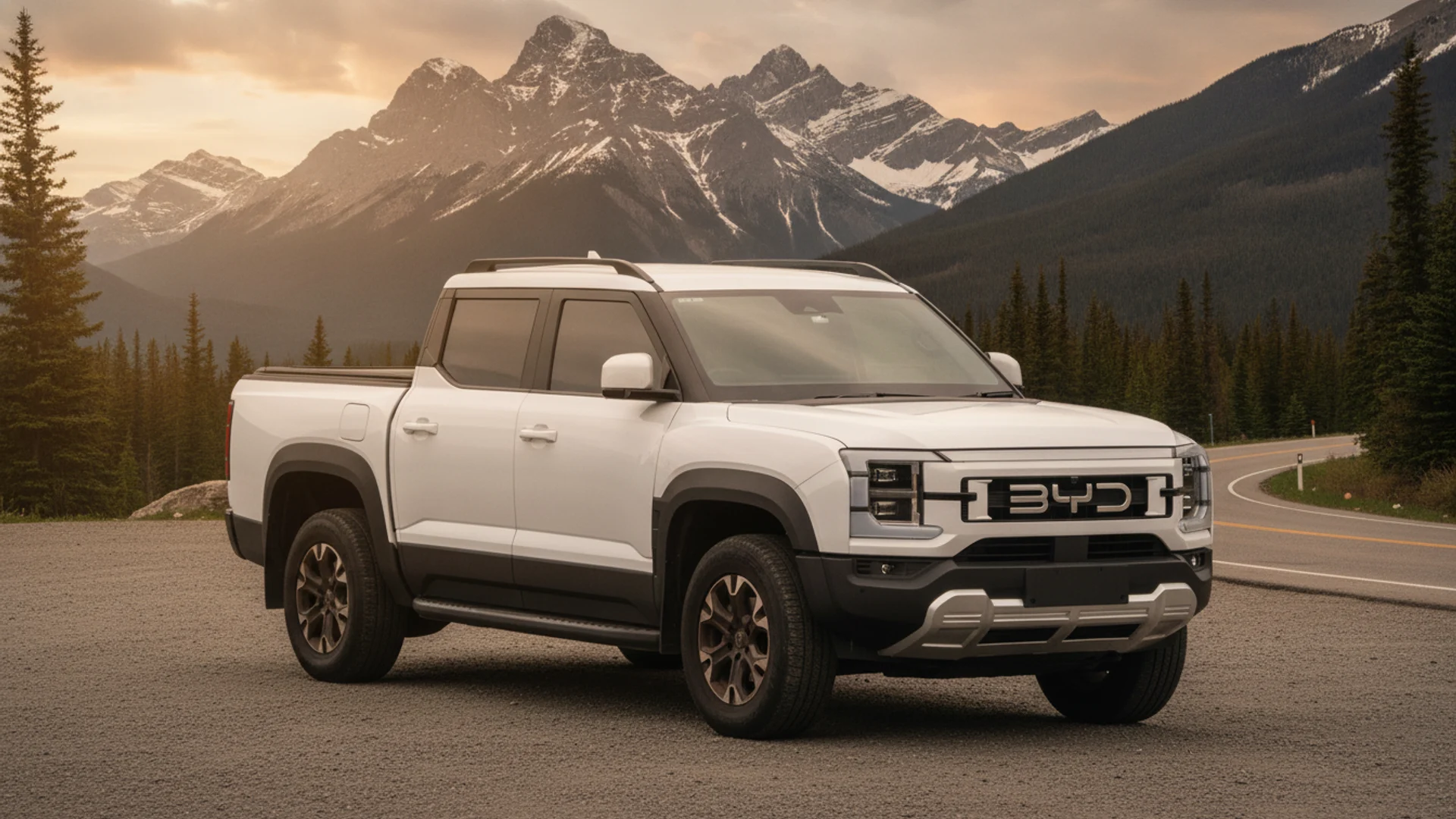
BYD Shark 6 Canada: Specs, Price Band & 2026 Lineup Guide
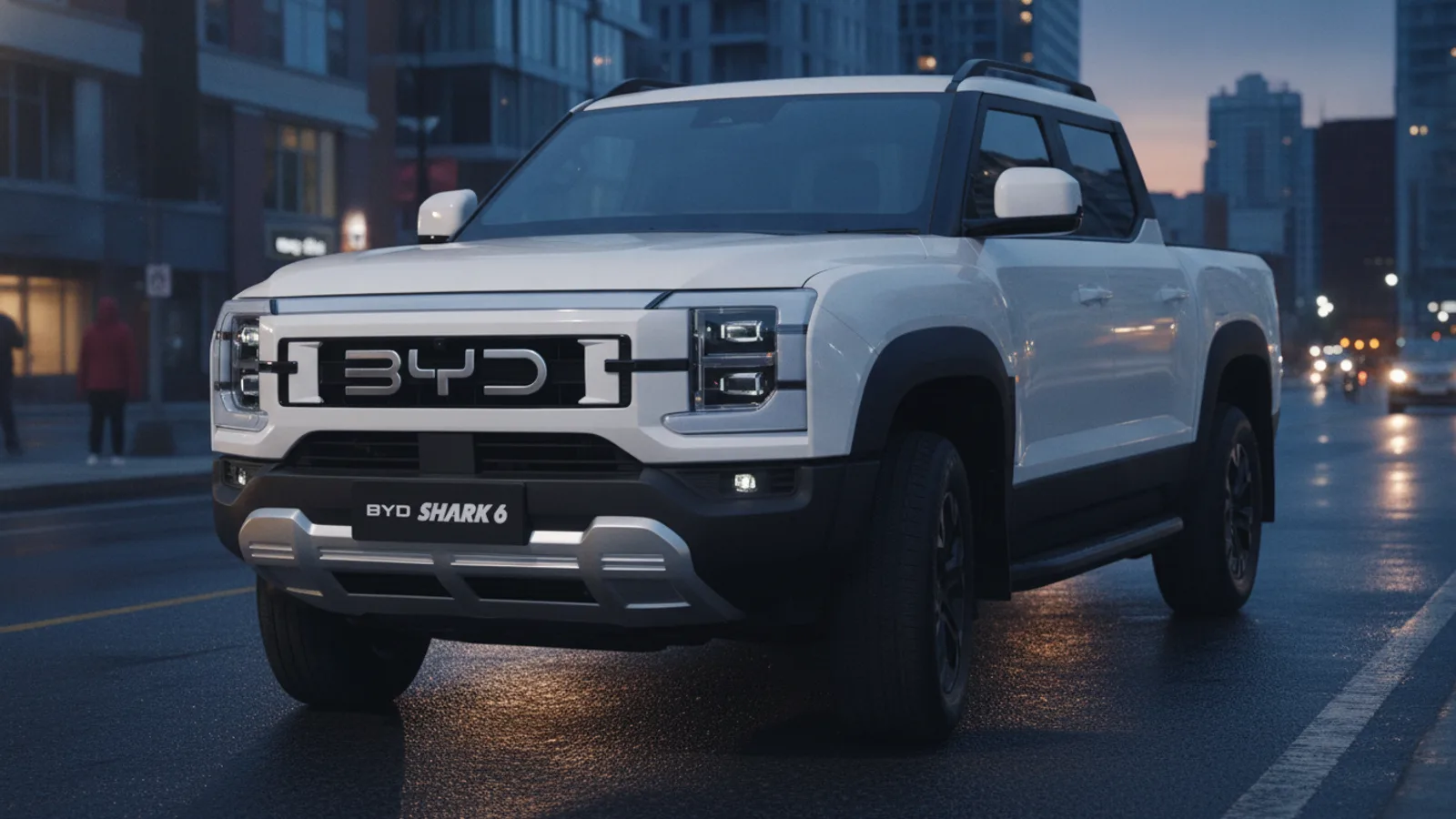
BYD Shark 6 Canada, The Direct Answer
BYD Truck Canada 2026: Shark 6 Specs, Price & What to Know
BYD Atto 3 Price Canada 2026, The Real Number, Banded
BYD Truck Canada Price: The Number That Matters