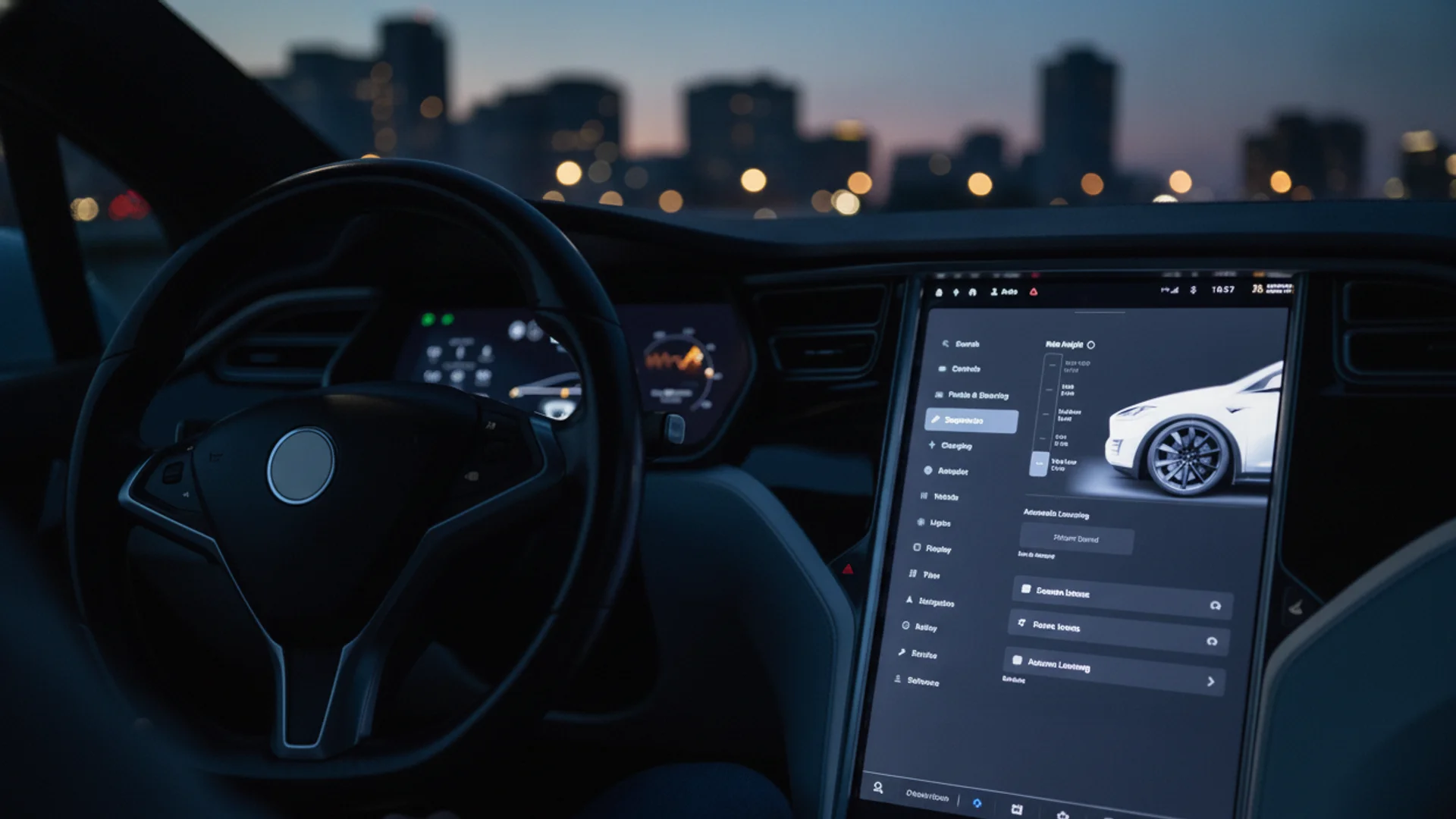
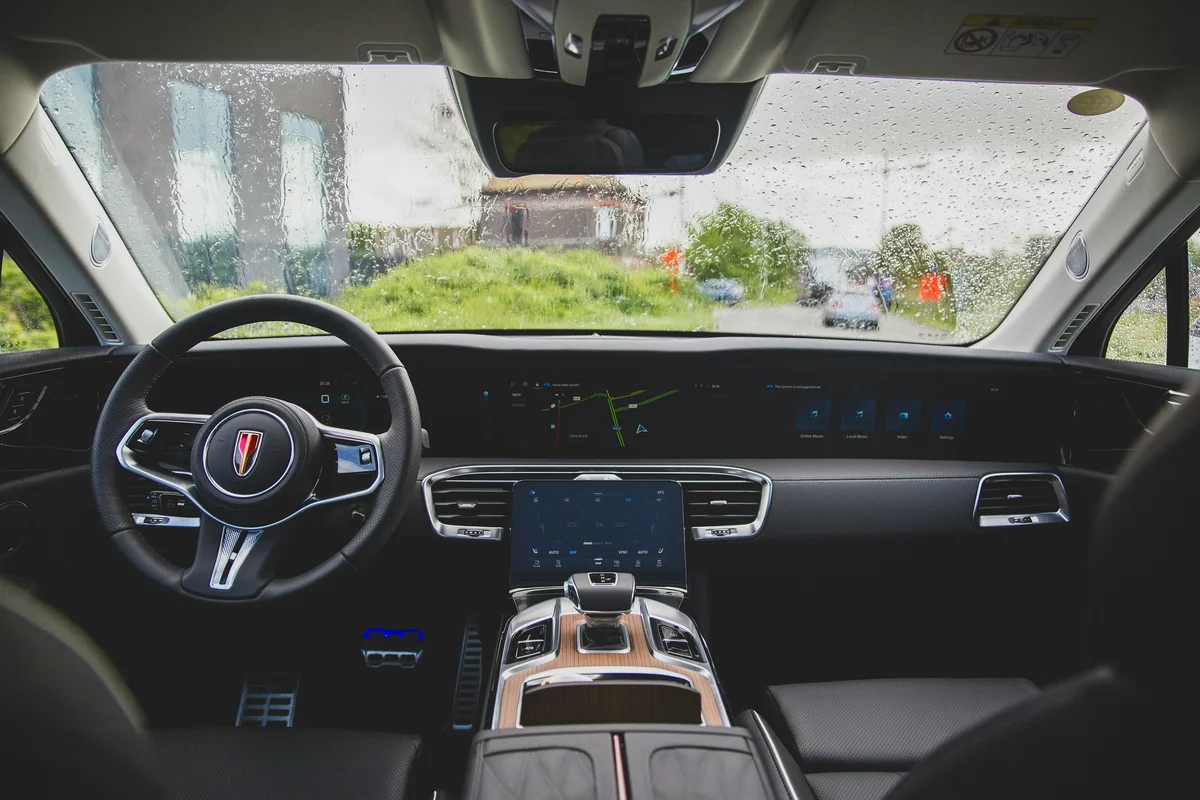
A rotating central screen, a full-width ambient strip, a 23-speaker sound system, and Nappa leather on the base trim, standard equipment on a BYD Seal that lists below a loaded Honda Civic in its home market. The interior gap between mid-range Chinese EVs and their Western equivalents is not aesthetic preference or reviewer hype. It is a structural budget allocation, made visible in silicon, screen inches, and material grades. The Canadian buyer will meet this gap through side doors, Volvo, Polestar, MG, long before BYD dealerships open, and the entry point matters less than understanding what changed.
Key takeaways
- Chinese EV makers spend 30–40% of R&D on software versus 10–15% at legacy German and American OEMs.
- BYD's DiLink 5.0 runs on a Snapdragon 8295 while most Western infotainment still uses a 2016-era Qualcomm 820A chip.
- NIO's NOMI processes voice commands on-device in under 200ms; cloud-routed Western alternatives take 600–1,200ms.
- The Li Auto L9 deploys 50 inches of total display at roughly C$85,000, no Western equivalent exists at that price.
- Long-term durability past four years and Canadian residual value data for Chinese EVs are essentially nonexistent.
Quick Answer: Software Budget, Not Labour Cost
The reason Chinese EV interiors feel newer is that they are running newer software on newer silicon, funded by an R&D split that Western OEMs cannot easily replicate. Chinese EV makers allocate roughly 30 to 40 percent of R&D to software and user-experience work. Legacy German and American OEMs sit closer to 10 to 15 percent, with the balance going to powertrain, chassis, and safety validation that Chinese EV-native manufacturers get to skip.
Interior feature differentiation is the primary domestic competitive axis in China. When a market carries more than a hundred EV brands, none of them can win on drivetrain, everyone has a competent electric drivetrain now. They win on the thing the buyer sits inside. Rotating screens, ultra-wide dashboards, in-car karaoke, and voice assistants that actually respond are not gimmicks in that context. They are how a Zeekr distinguishes itself from a Xpeng distinguishes itself from an Aito on the showroom floor. The features escalated because the pressure to escalate them was ferocious.
The Western competitive frame never demanded this. A BMW 3 Series buyer was not walking away over a fifth-generation infotainment stack, so BMW did not build one. Chinese EV buyers were, so BYD did.
Gear worth having
As an Amazon Associate, ThinkEV earns a small commission from qualifying purchases — at no extra cost to you.

WeatherTech FloorLiner for Tesla Model 3
Deep-channel liners that trap every drop of slush and salt. The difference between a ruined interior and a showroom-fresh cabin after a Canadian winter.
As an Amazon Associate, ThinkEV earns from qualifying purchases — at no extra cost to you.
The Display Architecture Gap Is Real and Measurable
BYD's DiLink 5.0 runs on the Qualcomm Snapdragon 8295, the same class of silicon Samsung and Xiaomi ship in current flagship phones. Most legacy-OEM infotainment systems still run the Qualcomm 820A, a chip that hit the market in 2016. That is a decade of Moore's Law compounding in favour of the Chinese cabin, and the reader can feel it the moment they scroll a map or split-screen a video call. Menus render at 60 frames per second, not 24. Cold-boot is under three seconds, not fifteen.
The refresh cadence matters more than the peak spec. Chinese OEMs push in-car software updates quarterly, sometimes monthly. Volkswagen and GM update annually when they update at all, and each release cycle has to survive a Tier 1 supplier's regression testing before it ships. A BYD, a NIO, or a Xpeng ships to production the way a phone maker ships to production: fast, iterative, occasionally buggy, always improving.
NIO's NOMI in-car assistant processes voice commands on-device with sub-200-millisecond latency. Comparable cloud-routed voice systems in Western cars, the ones piggybacking on Siri or Alexa integrations, sit between 600 and 1,200 milliseconds, and that is on a good LTE connection. On-device inference is a design choice that costs silicon at the bill of materials and saves the driver two seconds every time they ask for the temperature to drop.
Screen real estate per dollar tells the same story from a different angle. The Li Auto L9 deploys three displays totalling roughly 50 inches of diagonal at a price point around C$85,000-equivalent. There is no Western equivalent at that price. The Lucid Air comes closest on screen ambition, and the Lucid Air starts well above six figures in Canada. The Chinese playbook is to put phone-grade compute behind big glass at mid-market prices, and no one else in the world is doing it at that scale.
For the underlying pricing arithmetic, the currency-versus-production breakdown of why Chinese EVs cost what they do explains why the interior spend is affordable without gutting the drivetrain.
Materials and Fit: Where the Spec Sheet Meets the Hand
Nappa leather, suede headliners, and full-width ambient lighting appear as standard or near-standard equipment on mid-range models like the BYD Han and Zeekr 001. The European segment equivalents, an Audi A6 e-tron, a Mercedes EQE, bundle the same materials into option packs that add C$4,000 to C$8,000 to the sticker. The Chinese version is not necessarily better leather; it is the same grade of leather delivered as a default rather than an upcharge. That is a pricing decision, not a manufacturing miracle.
Panel-gap tolerances have closed the historical gap almost completely. Zeekr and BYD published sub-1-millimetre body-panel targets several years ago, and Sandy Munro's teardown of the BYD Seal confirmed the fit quality was competitive with German benchmarks, the kind of finding that would have been laughable a decade ago and is now boring. Sound deadening investment per kilogram of vehicle weight is measurably higher in the BYD Seal than in the similarly-priced Tesla Model 3 Highland. Tesla has been iterating on cabin cost structure since the second-generation Toyota RAV4 EV collaboration was unveiled at the 2010 Los Angeles Auto Show, and the pattern is consistent: Tesla optimizes cabin cost down, BYD optimizes cabin content up. Two different bets on where the buyer's attention goes.
Gear worth having
As an Amazon Associate, ThinkEV earns a small commission from qualifying purchases — at no extra cost to you.

Digital Tire Pressure Gauge
Low tires quietly cost 5 to 10 percent of your range. A 10-second check with an accurate digital gauge keeps every kWh on the road.
As an Amazon Associate, ThinkEV earns from qualifying purchases — at no extra cost to you.
I have not sat inside a Zeekr 001 or a Li Auto L9. The spec sheets, the teardown data, the owner reports, and the residual-value curves tell a consistent story anyway. The one honest limitation is time. Long-term durability data beyond three or four years is thin because most of these vehicles have not existed for longer than that. The dashboard that looks and feels premium at delivery has not yet had to survive a decade of Prairie winters. Canadian residual value curves for Chinese-branded EVs are essentially blank pages, which is a real risk buried under all the interior praise.
The warranty on a BYD Han's battery in China is eight years or 150,000 kilometres, whichever comes first. It is, to be fair, a number.
Gear worth having
As an Amazon Associate, ThinkEV earns a small commission from qualifying purchases — at no extra cost to you.
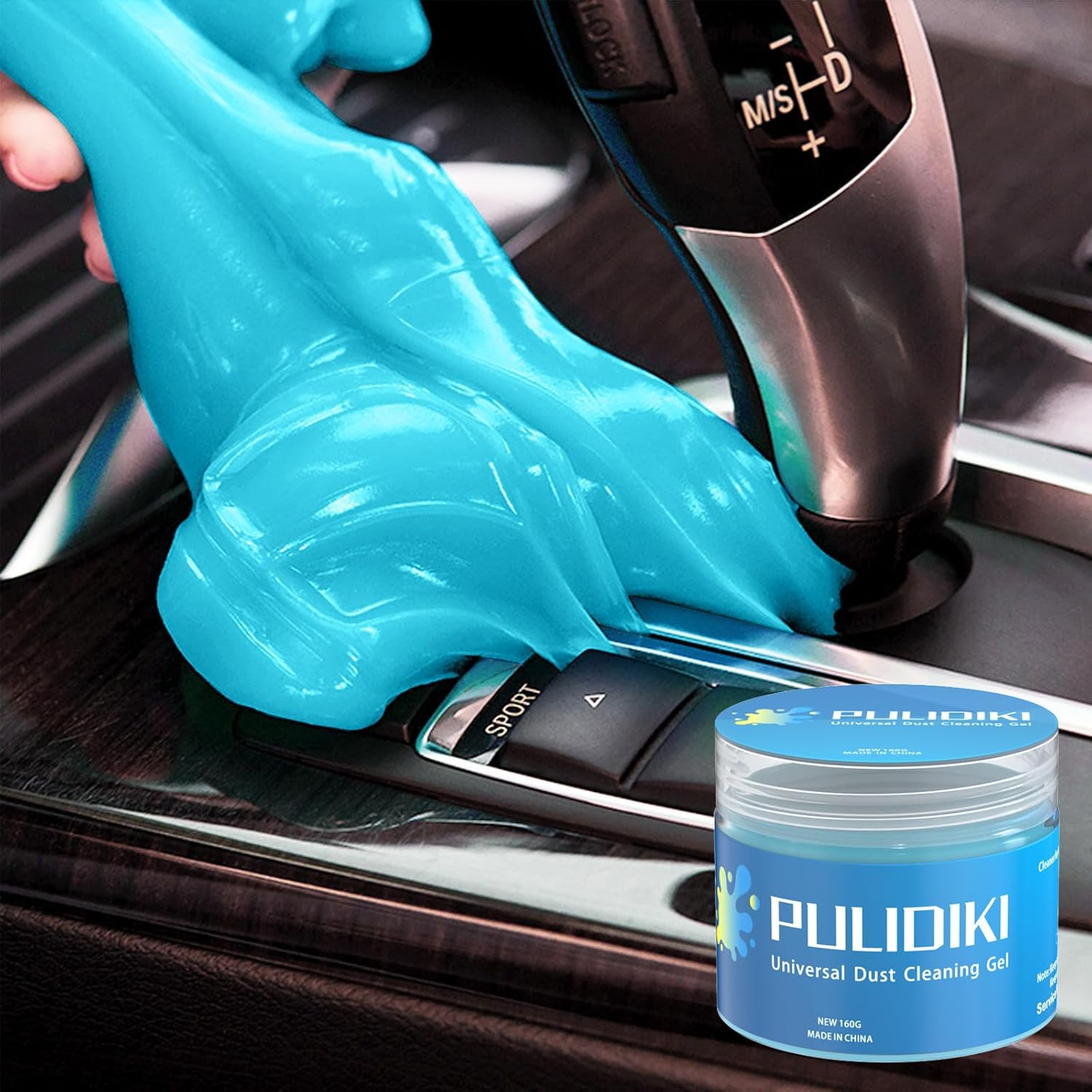
PULIDIKI Car Cleaning Gel (Detailing Putty)
Press it into vents, buttons, and seams and it lifts out dust you did not know was there. Weirdly satisfying, genuinely useful.
As an Amazon Associate, ThinkEV earns from qualifying purchases — at no extra cost to you.
Why Western Brands Didn't Get Here First
Legacy OEMs are locked into Tier 1 supplier contracts with Bosch, Continental, Harman, and a handful of others, and those contracts run on three-to-five-year hardware cycles. When a BMW infotainment head unit is specified in 2022, it ships in the 2025 model year and gets replaced in the 2028 model year. Chinese OEMs vertically integrate the head unit, BYD makes its own, or swap suppliers annually. The Chinese cabin is not smarter because the engineers are smarter. It is newer because the procurement contract that produced it is younger.
Profit margin structure compounds the problem. A BMW 3 Series interior budget has to compete with a straight-six engine budget, an eight-speed ZF transmission budget, and a dealer margin structure that a Munich accountant will defend to the last cent. A BYD Seal saves on drivetrain complexity, one electric motor, one gearbox, one battery, and redirects that saved capital to the cabin, which is the part of the car the buyer touches every day. It is a rational allocation given the physics of an EV drivetrain. Chinese EV-native brands made it first because they had no legacy drivetrain to defend.
Domestic Chinese market competition among more than a hundred EV brands forced interior feature escalation as the primary battleground. No equivalent pressure existed in North America or Europe until roughly 2024, when Chinese exports started showing up in Australia, Southeast Asia, and continental Europe and the incumbents finally noticed. The response cycle from a Volkswagen or a Stellantis is a five-year platform program. The response cycle from a BYD is a quarterly software drop. Those two clocks are not going to synchronize.
Tesla's minimalism was a deliberate cost trade-off, not a design philosophy that incumbents should have copied wisely. Stripping the dashboard down to one screen was the correct move for a manufacturer that needed to hit a gross margin target in 2018 with unproven manufacturing scale. It was the wrong move for a Mercedes or an Audi trying to justify a premium price against a competitor putting three screens and a rotating one at half the money. The Western industry read Tesla's cost-cut as a design language. Chinese OEMs read it as a cost-cut and did the opposite.
Gear worth having
As an Amazon Associate, ThinkEV earns a small commission from qualifying purchases — at no extra cost to you.

Car Cup Holder Coasters (4-Pack)
Drop-in coasters that catch spills and crumbs so your cup holders stay clean. Rinse and reuse forever.
As an Amazon Associate, ThinkEV earns from qualifying purchases — at no extra cost to you.
What This Means If You're Buying in Canada Right Now
BYD is not yet selling through Canadian dealers, and the timing is not incidental, the tariff and permit stack decides which Chinese-branded metal reaches the country and when. For the permit-quota mechanics, Canada's 49,000-unit import system explainer covers what qualifies and what does not. For BYD's specific Canadian rollout math, the quota-versus-dealership arithmetic behind BYD Canada's expansion walks through why 20 planned dealerships and a 49,000-unit annual ceiling are in tension.
The federal Chinese-EV surtax dropped from 100 percent to 6.1 percent on January 16, 2026, inside a 49,000-unit annual quota. Above that quota, the rate reverts to 100 percent. Chinese-built EVs are excluded from EVAP, the federal purchase rebate that replaced iZEV in February 2026, on country-of-origin grounds, regardless of price. That exclusion applies to a BYD Seal, a BYD Atto 3, a Zeekr X, and every other China-assembled model, and it does not depend on the tariff quota status. A BYD landed in Canada at the 6.1 percent rate is still a BYD ineligible for the federal rebate.
The accessible on-ramps to Chinese interior engineering in Canada today are the ones wearing Western badges. The Volvo EX30 is China-built (Zhangjiakou), the Polestar 2 is China-built (Luqiao), and both are sold through established Canadian dealer networks. Both benefit from Volvo/Polestar's tariff exposure being calculated separately from mainland Chinese brands under CBSA classification, and provincial rebate eligibility varies, Quebec's Roulez vert programme treats them differently than British Columbia's CleanBC. Check the specific model year and trim against your province before signing.
The number to watch is the quota fill rate on that 49,000-unit allocation. Publicly-tracked import data from CBSA and Transport Canada should show whether the quota fills in Q2, Q3, or not at all in 2026. If it fills, the 100 percent tariff snaps back and the window closes for anything not already on Canadian soil. If it does not fill, either demand is softer than Ottawa expects or the model mix is dominated by higher-margin trims that use the quota inefficiently. Either outcome moves the market. Both are worth tracking through the fall.
Gear worth having
As an Amazon Associate, ThinkEV earns a small commission from qualifying purchases — at no extra cost to you.

RGB Car Interior LED Strip Light
A 24-LED strip that tucks under the dash and washes the footwells in any color. Five-minute upgrade, big mood shift.
As an Amazon Associate, ThinkEV earns from qualifying purchases — at no extra cost to you.

Founder & Chief Editor
Vlad Pereira is the founder and chief editor of ThinkEV.ca, the Canadian electric-vehicle publication he writes and edits from Courtenay, British Columbia. He covers EV pricing, federal and provincial rebates, charging costs, and the Chinese manufacturers now entering Canada, from the buyer's side rather than the press-fleet side. ThinkEV is a venture of Vlad Pereira Online; his writing on health, income and the long game lives at vladpereira.com.
Frequently asked questions
Will Canadian buyers actually get access to these Chinese interiors?
Is the Snapdragon 8295 chip actually that much better than older systems?
Does Nappa leather standard mean it's actually better quality leather?
How do Chinese EVs hold up long-term in harsh Canadian winters?
Why didn't BMW or GM just match these specs when they had the chance?
More EV & road-trip finds
Affordable upgrades worth a look — tap any to check the price on Amazon.
 ★ 4,055
6-Speed Manual Shift Knob Display
View on Amazon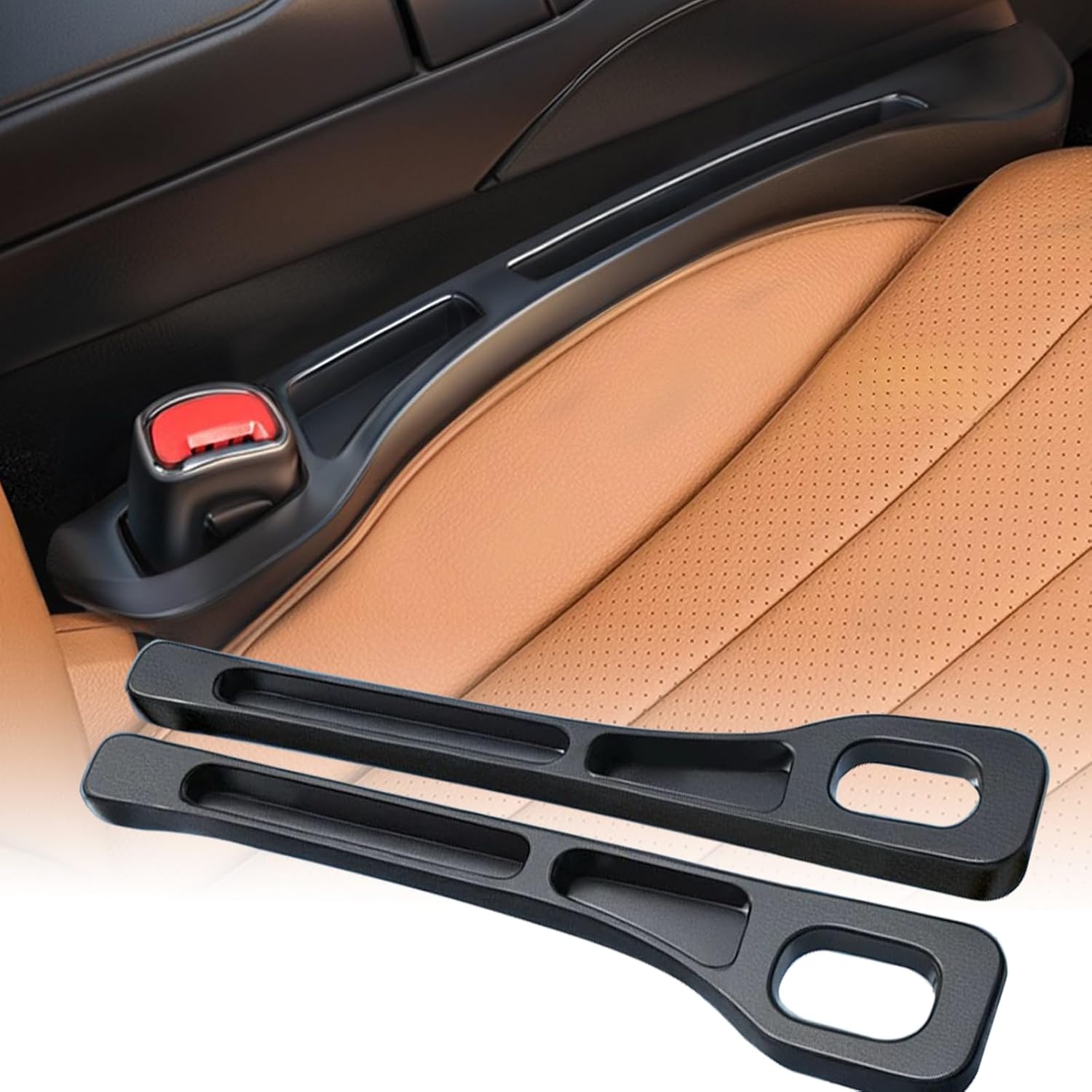 ★ 1,340
Car Seat Gap Filler (Universal)
View on Amazon ★ 848
★ 848Coiled USB-C to USB-C Car Cable (2-Pack)
View on Amazon ★ 61
★ 61Toddler Car Seat Snack and Cup Tray
View on Amazon ★ 268
★ 268Anti-Slip Leather Steering Wheel Cover
View on Amazon ★ 9,349
Auto Detailing Brush Set (10-Piece)
View on Amazon ★ 164
★ 164Solar-Powered LED Ambient Light
View on Amazon ★ 4,626
HoogaLife Hanging Car Diffuser (2-Pack)
View on AmazonRead, Plan, Then Stay Current
Explore our expert articles to understand incentives and ownership costs, use the map to pressure-test charging reality, then subscribe so new EV coverage comes straight to you.
Continue Reading
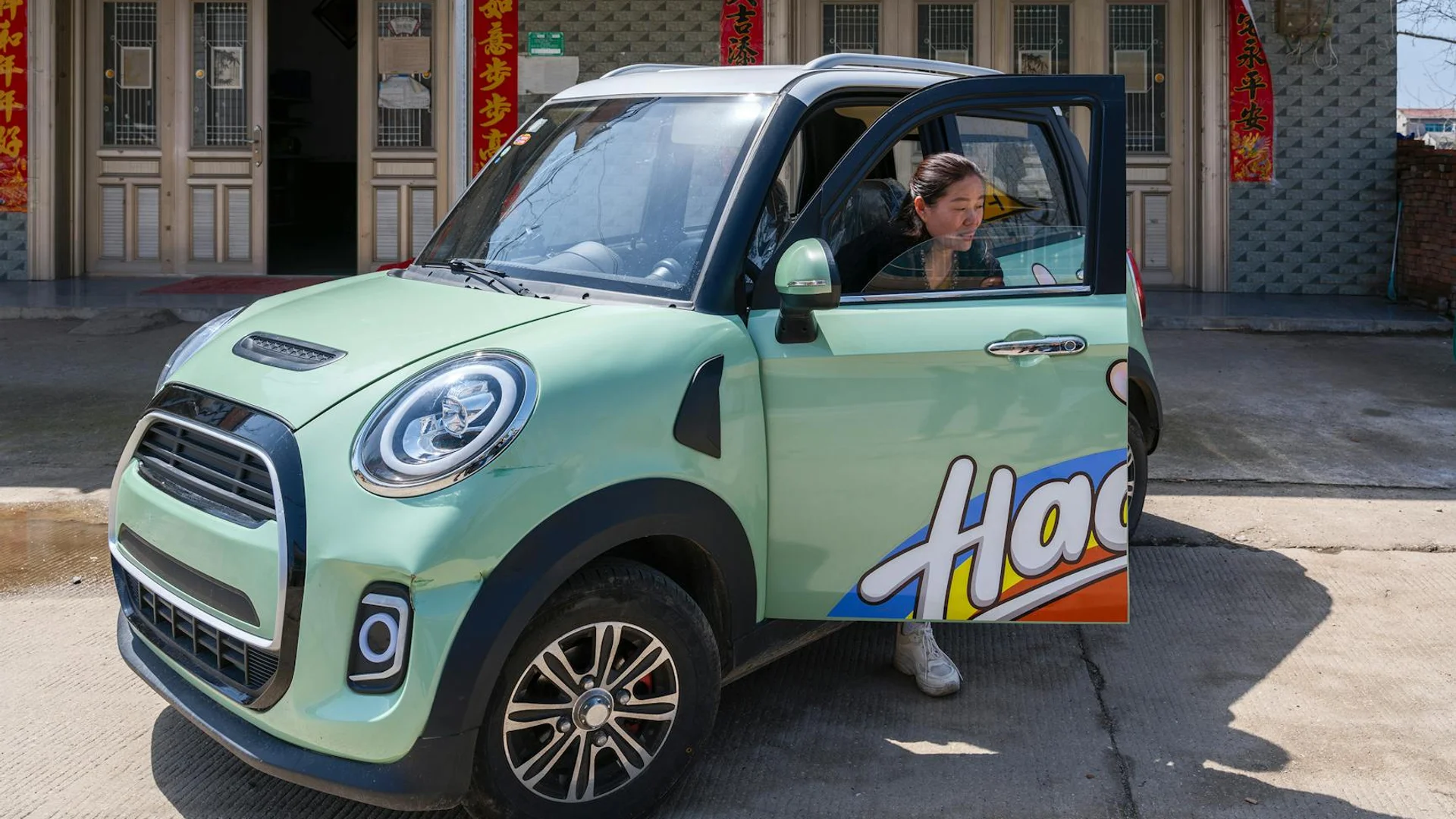
Chinese EVs Canada 2026: Complete Buyer's Guide & Market Map
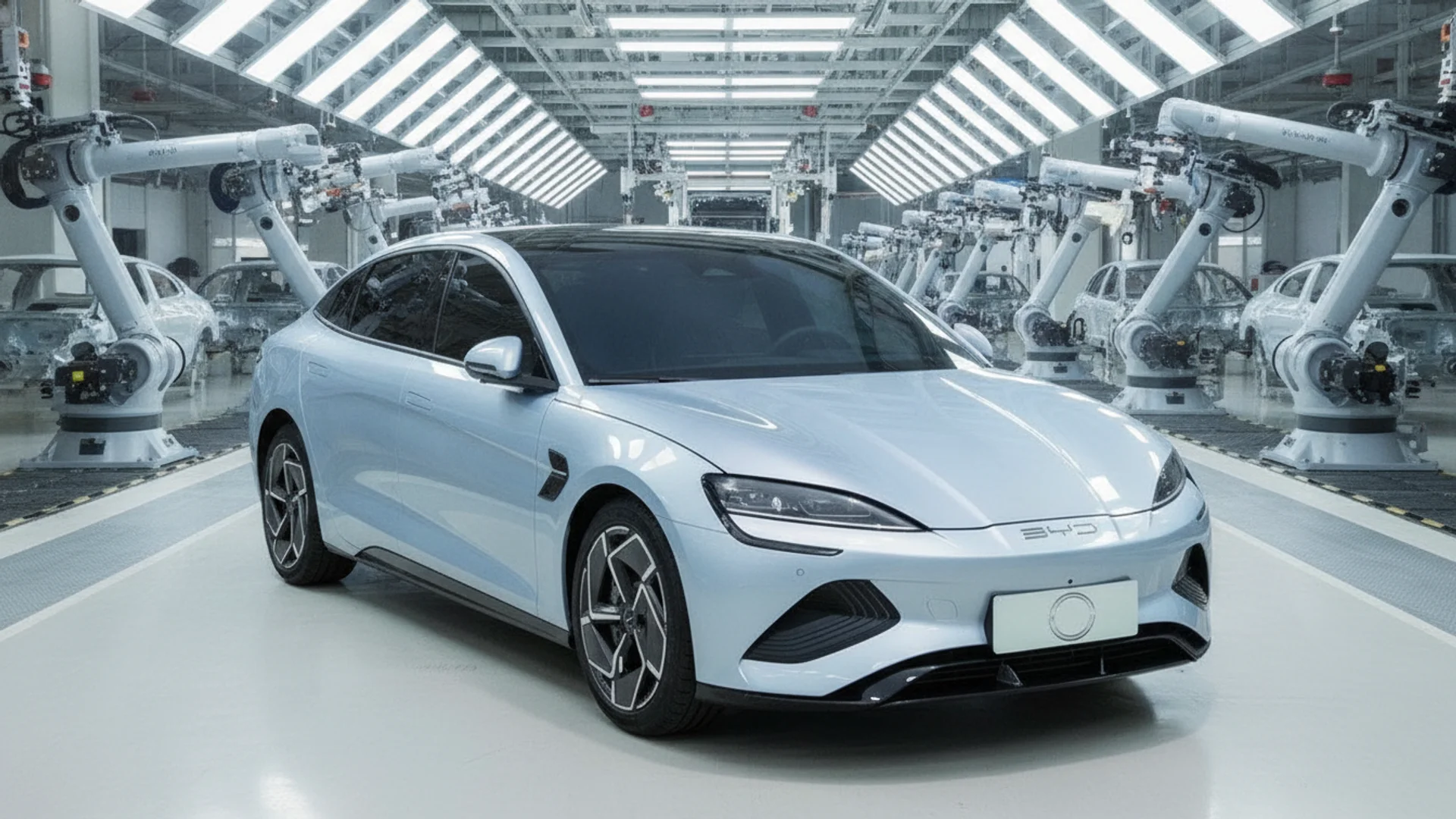
How BYD Builds EVs So Cheaply: The Vertical Integration Playbook
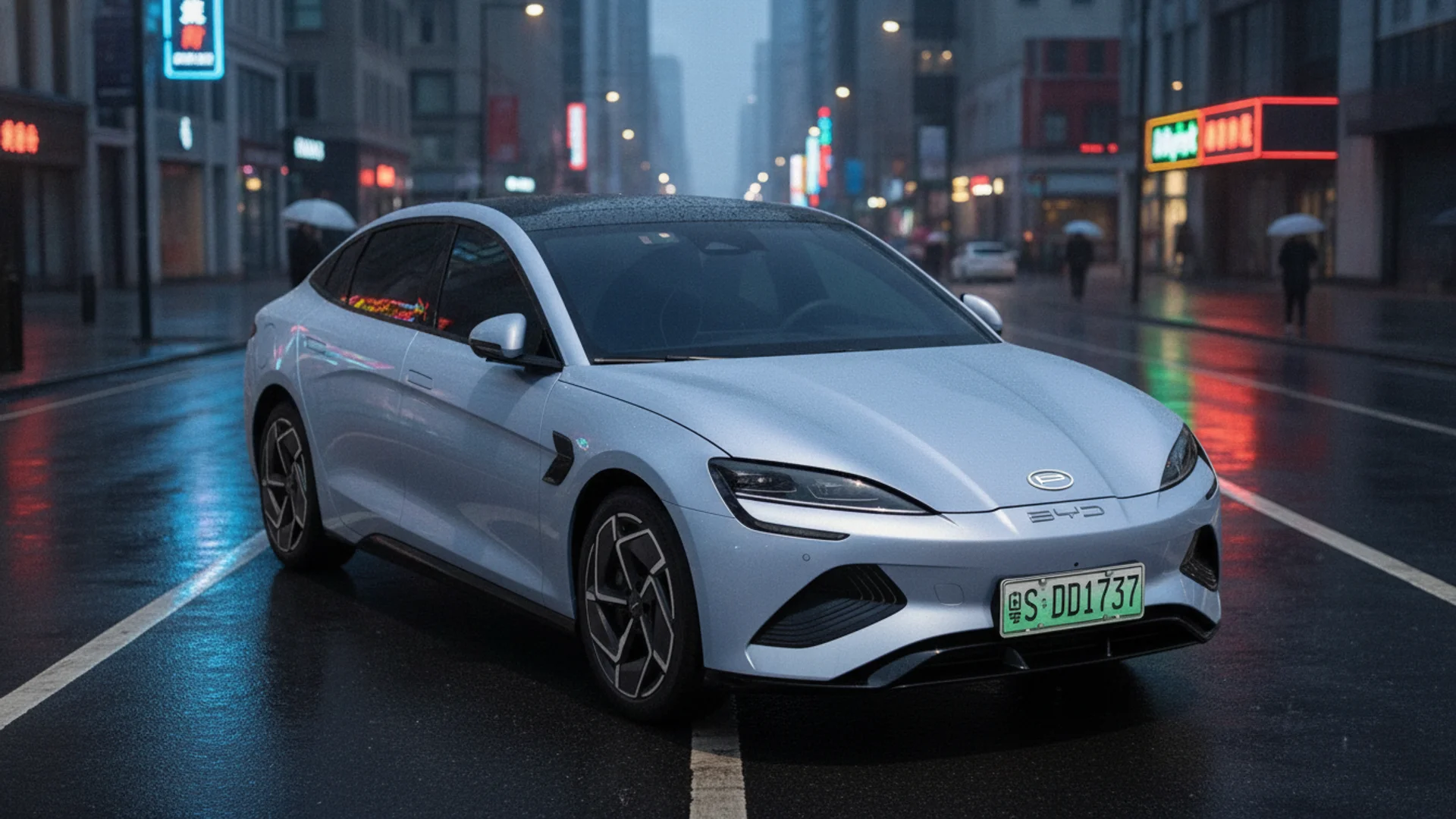
BYD Seal 06 DM-i: 128 km EV Range, $14K USD Starting Price
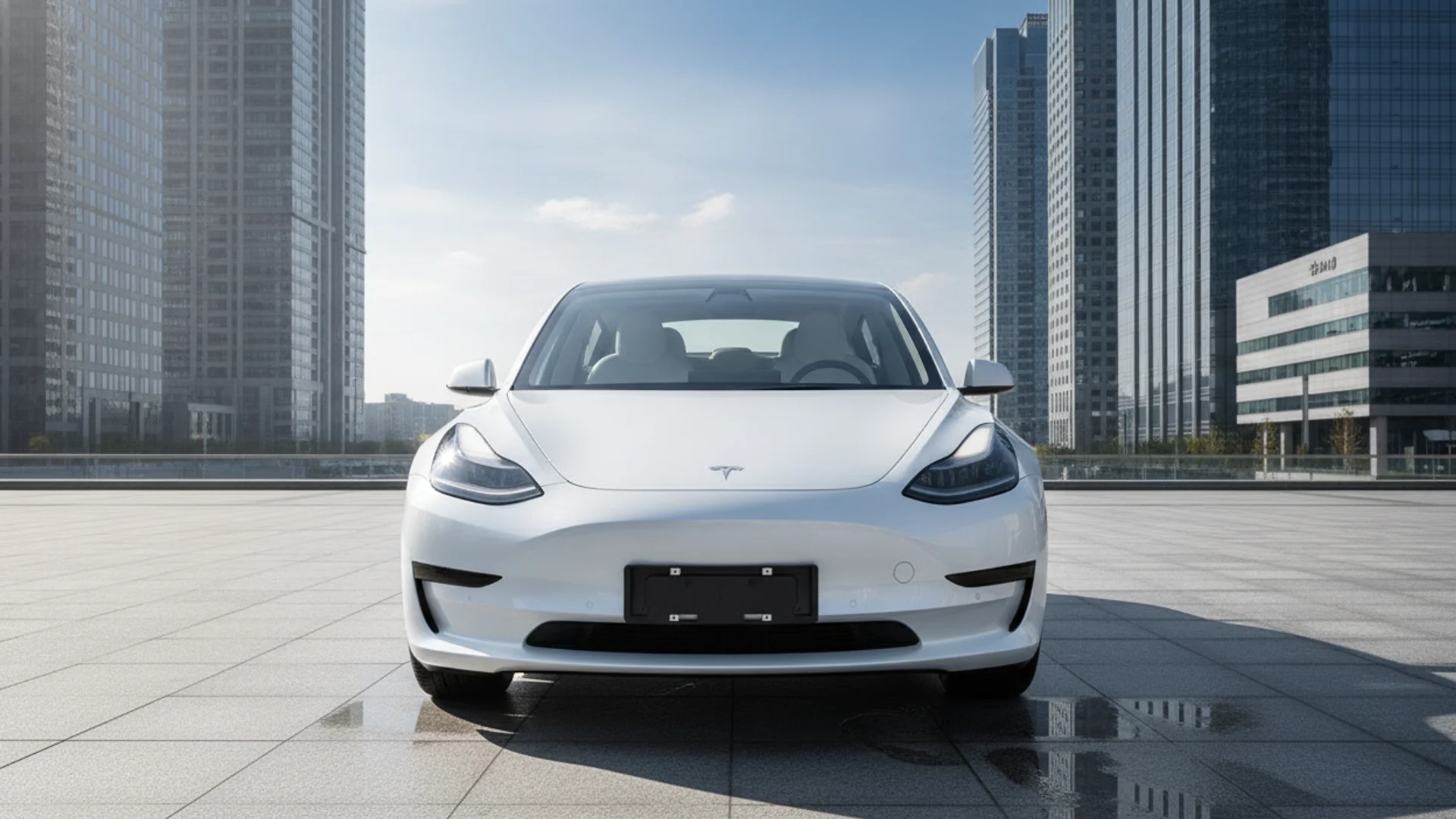
How Chinese Automakers Became Global EV Leaders
BYD Canada: The Quota Math Behind Ottawa's Bet