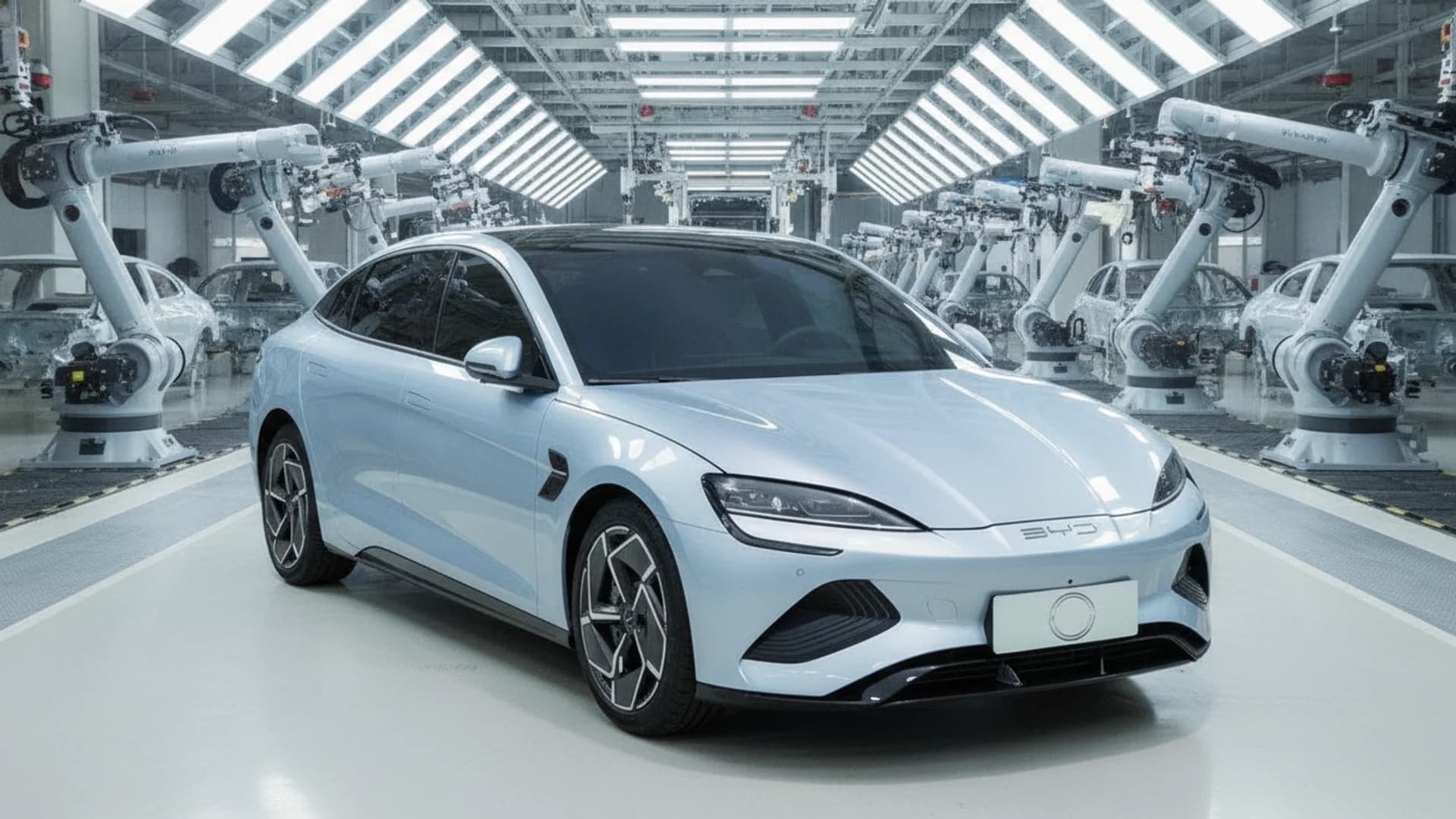
The BYD Seagull starts at roughly $10,000 USD in China. Ford's cheapest EV costs about four times that. The gap is not a rounding error, and it is not primarily about labour rates, Hyundai and Kia build cars in South Korea at Chinese wage differentials that are shrinking every year and still cannot land a $10,000 EV. The gap is structural, and the structure is called vertical integration.
The short version: BYD owns almost every meaningful input into one of its cars. Cells. Packs. Motors. Chips. Software. Even the ships that move finished vehicles across oceans. Each layer of ownership removes a supplier margin. Stack twenty of those savings on top of each other, multiply by two million vehicles a year, and the sticker price does what the sticker price does.
Key takeaways
- BYD's Blade battery doubles as a structural chassis component, eliminating a layer of parts no separate-supplier design can match.
- BYD started as a battery company in 1995, giving it a two-decade head start compounding at two million vehicles annually.
- When semiconductor shortages idled Ford plants in 2021–2023, BYD kept building because it supplied its own IGBT and silicon-carbide chips.
- BYD's own roll-on/roll-off cargo fleet cuts per-vehicle logistics costs roughly 30–40 percent versus rivals leasing third-party shipping.
- Canada's tariff on Chinese EVs dropped to 6.1% in January 2026, but even at 100% BYD's base cost undercut Western OEMs at zero tariff.
Quick Answer: It Starts and Ends With Batteries
The battery pack eats roughly forty cents of every dollar spent building an EV. Own the battery and you have already won most of the cost fight before you bolt on a wheel.
BYD is characterised by its extensive vertical integration, leveraging the group's expertise in producing batteries and other related components. That expertise is not recent, BYD started as a battery company in 1995 and built its first car in 2003, meaning the cell chemistry and the vehicle architecture were designed in the same building by people who talked to each other over coffee. Most legacy OEMs are still learning to have that conversation.
The Blade battery, BYD's lithium iron phosphate (LFP) cell, is where the arithmetic gets uncomfortable for competitors. There is no royalty paid to CATL. No supplier margin on the single most expensive part of the car. No delivery premium, because the pack often rolls out of a factory owned by the same holding company that builds the car it goes into. The saving flows directly into the sticker price rather than into another quarter's operating income at a supplier three tiers up the chain.
There is a bonus. The Blade pack doubles as a structural component of the chassis, which removes a layer of parts, weight, and assembly labour that a conventional pack-and-frame design still carries. It is the sort of design decision only available to a company that owns the pack, the platform, and the assembly line simultaneously. For the deeper technical breakdown, see how the Blade battery reshaped the industry's cost floor.
Gear worth having
As an Amazon Associate, ThinkEV earns a small commission from qualifying purchases — at no extra cost to you.

USB Star Projector Roof Light
Casts a drifting starfield across the headliner from a single USB port. The cheapest way to make the cabin feel special.
As an Amazon Associate, ThinkEV earns from qualifying purchases — at no extra cost to you.
The Full Stack: What BYD Actually Makes In-House
Batteries are the headline. The rest of the stack is the story.
BYD makes its own electric motors, its own power electronics, its own HVAC systems, and, through BYD Semiconductor, its own IGBT and silicon-carbide chips. That last one matters more than it sounds. When the global semiconductor shortage flattened Western auto production between 2021 and 2023, BYD kept building because it was supplying itself. Ford idled plants. BYD ran overtime.
The list of things BYD does not make in-house is short: tires, glass, and a handful of specialty electronics. Everything else is internal. Software is written internally. Moulds and tooling are cast internally. The Ocean and Dynasty platform architectures are engineered internally. Each of those is a supplier margin that never gets paid.
Rare-earth magnets are the geopolitical wildcard, and BYD's domestic supply is a genuine advantage. China restricts exports of the rare-earth magnets used to build EV motors, which hurts Western OEMs sourcing from Chinese suppliers far more than it hurts a Chinese OEM sourcing from itself. Domestic mining and processing gives BYD what a trade lawyer would call supply-chain sovereignty. What it actually gives BYD is a stable cost line while rivals renegotiate contracts every quarter.
Then there is the shipping. BYD operates its own roll-on/roll-off cargo fleet, the Explorer No. 1 and its sister vessels, and industry estimates put the per-vehicle logistics saving at roughly 30 to 40 percent versus rivals leasing space on third-party carriers. When you are exporting to Europe, Southeast Asia, Latin America, and Australia simultaneously, that saving compounds fast. Ford's own CEO has publicly conceded Chinese makers hold a structural cost advantage. He was not talking about wages.
Scale as a Multiplier: Why the Math Gets Lopsided at Volume
Vertical integration without scale is an interesting hobby. Vertical integration at two million vehicles a year is a moat.
In early 2024, BYD overtook Tesla as the world's top EV maker, and on January 2, 2026, BYD became the bestselling automaker on several major global metrics. Volume of that order changes what every internal saving is worth. A $50 per-component cost improvement across two million units is $100 million a year back into the cost structure, money that gets reinvested into the next generation of cell chemistry, chip design, or factory automation, which lowers the cost floor further, which sells more vehicles, which funds the next round. This is what a flywheel looks like when it has been spinning for two decades.
Rivals buying batteries from CATL, LG Energy Solution, or Panasonic pay a supplier margin on their single most expensive component every quarter. Tesla still sources cells externally for many of its models. Volkswagen's PowerCo battery joint venture is years away from anything resembling BYD's current cost floor. The gap is not closing on its own; the gap is a two-decade head start compounding at industrial scale.
Gear worth having
As an Amazon Associate, ThinkEV earns a small commission from qualifying purchases — at no extra cost to you.

WixGear Magnetic Air Vent Phone Mount (2-Pack)
A magnet strong enough that your phone never flinches over potholes or rail crossings. Two in the box, one for each car.
As an Amazon Associate, ThinkEV earns from qualifying purchases — at no extra cost to you.
Fixed-cost dilution is the quieter half of the story. Every internal factory, cell, chip, motor, assembly, has fixed overhead. Spread it across half a million vehicles, and each car carries a punishing amount. Spread it across two million, and each car barely notices. The competitive question is not whether Western OEMs can copy BYD's playbook. The question is whether they can copy it fast enough to matter, and the volume math says no.
Gear worth having
As an Amazon Associate, ThinkEV earns a small commission from qualifying purchases — at no extra cost to you.
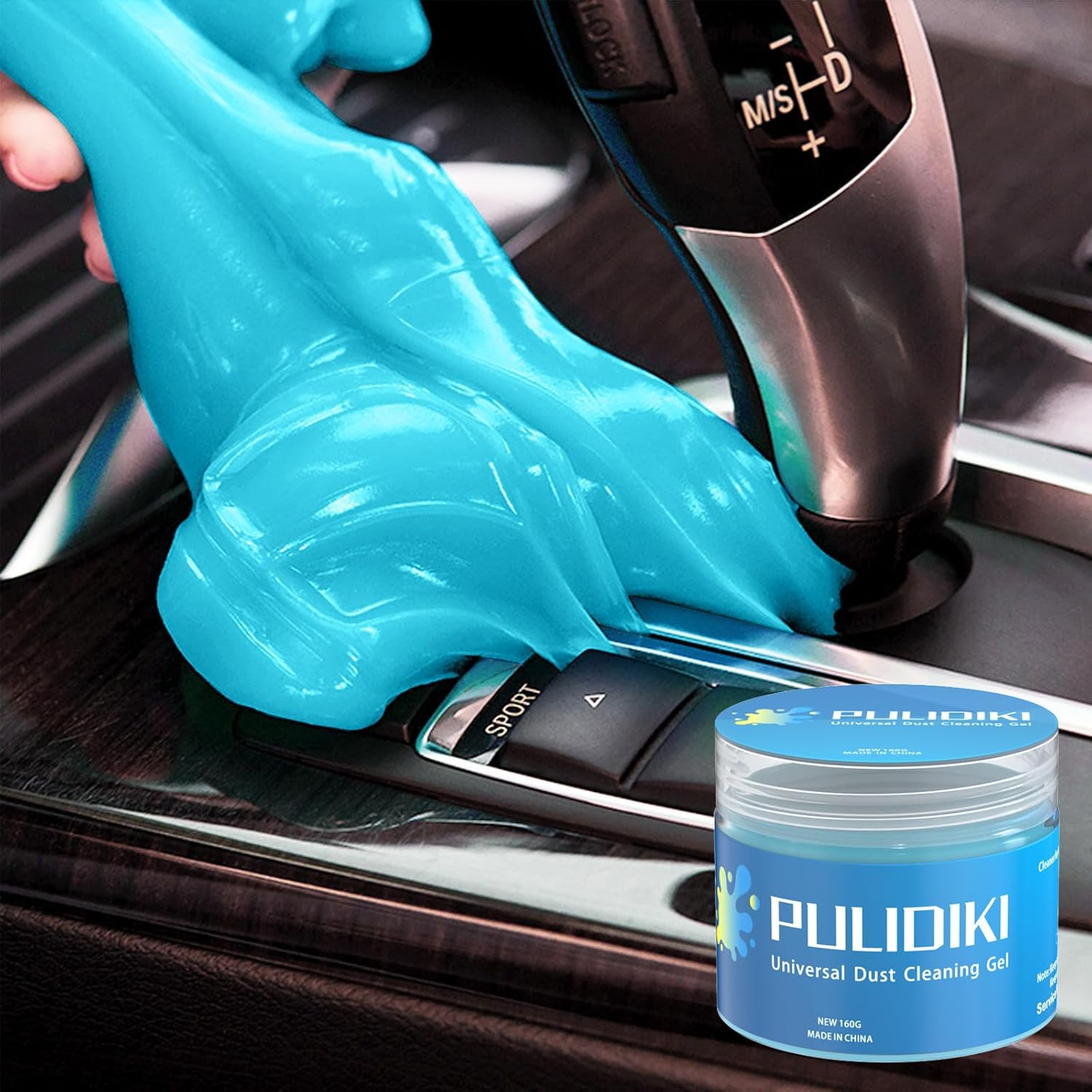
PULIDIKI Car Cleaning Gel (Detailing Putty)
Press it into vents, buttons, and seams and it lifts out dust you did not know was there. Weirdly satisfying, genuinely useful.
As an Amazon Associate, ThinkEV earns from qualifying purchases — at no extra cost to you.
What Competitors Are Actually Paying For That BYD Isn't
The cost gap has two halves. BYD is genuinely cheaper to build. Western OEMs are also carrying costs BYD never had to shoulder.
Legacy manufacturers carry ICE platform debt: retooling costs to convert assembly lines built for internal combustion, dealer network subsidies to maintain a franchise system that predates the transistor, and pension obligations that trace back to union contracts signed when the Beatles were still touring. None of that shows up on a spec sheet. All of it shows up on a sticker price. A GM or Ford EV is not just paying for its own battery, it is paying for a century of accumulated overhead the finance department politely calls legacy cost structure.
Then there are tariffs. Canada's tariff on Chinese-built EVs dropped from 100% to 6.1% on January 16, 2026, inside a 49,000-unit annual quota; above the quota, the rate reverts to 100%. That tariff sits on top of an already lower BYD base price, which is why even at 100% Chinese EVs were landing at prices Western OEMs could not match at zero tariff. The currency-versus-production debate is a useful sanity check here, the yuan's purchasing-power gap explains part of the delta, but the vertical-integration cost structure explains most of it, and no amount of currency revaluation would close it.
Ford's CEO said the quiet part out loud. Chinese makers have a structural cost advantage, not a quality shortcut. That framing matters, because it separates the debunkable narrative (they cut corners) from the load-bearing one (they own the stack). The full arc of how Chinese automakers built this position over fifteen years of policy and industrial strategy is the wider context for why this is not a phase.
Gear worth having
As an Amazon Associate, ThinkEV earns a small commission from qualifying purchases — at no extra cost to you.
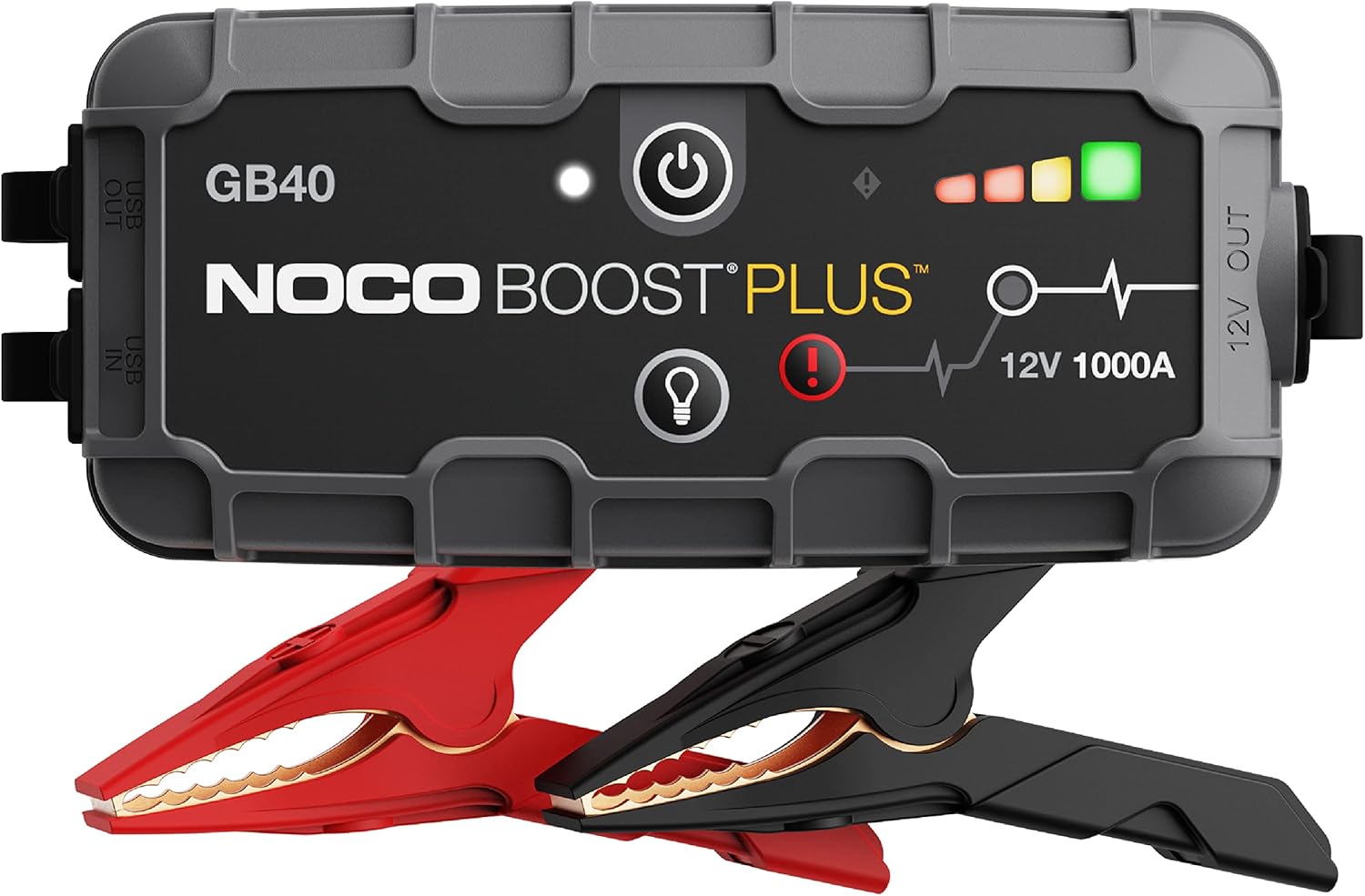
NOCO Boost Plus GB40 Jump Starter
A 1000A lithium jump starter that fits in your glovebox and works on any 12V battery. Your insurance against a dead 12V in a parking lot.
As an Amazon Associate, ThinkEV earns from qualifying purchases — at no extra cost to you.
The Ceiling: Where Vertical Integration Has Limits
Vertical integration is not a cheat code. It is an architecture, and every architecture has failure modes.
The first is R&D risk. BYD has targeted solid-state battery commercialisation for around 2027, aiming to boost energy density and safety. Until that lands at industrial volume, Blade LFP remains the cost-floor anchor, and LFP has real energy-density ceilings that make it a hard fit for long-range flagship vehicles competing with the top of Tesla's or Lucid's ranges. Vertical integration means BYD carries the full weight of that solid-state bet on its own balance sheet. If the timeline slips, the flywheel slows.
The second is geopolitical exposure. Rare-earth export policy is set by Beijing, not by BYD. Domestic mining is a hedge, but a policy that helps BYD today can be tightened tomorrow, and the same industrial-policy stack that built the cost advantage also concentrates political risk. A single decree can reshape the input cost of every motor BYD builds.
The third is software. This is the limitation. BYD's in-house chip capability does not automatically equal Tesla-class autonomy, the software-defined vehicle layer is where BYD trails, and hardware ownership is necessary but not sufficient. The Xuanji A3 chip and God's Eye autonomy platform are BYD's answer to that gap, and they are serious, but shipping capable driver-assistance hardware on cheap cars is not the same as leading on autonomy. It is the difference between manufacturing scale and software depth, and it will take another product cycle or two to know which side wins.
The fourth is access. Western markets remain largely closed to Chinese EVs by tariff, quota, or outright prohibition. BYD's vertical-integration advantage is currently a domestic-plus-friendly-export story, dominant in China, growing fast in Southeast Asia, Latin America, and Australia, constrained in North America and increasingly Europe. Canada's 49K quota is a foothold, not a floodgate; BYD is not yet quota-eligible for the current EVAP rebate on country-of-origin grounds anyway. The cost architecture is real. The market it can reach is politically bounded.
The number to watch through 2027 is BYD's landed price on the first quota-eligible unit into a Canadian dealership. If it lands within $2,000 of a comparable Hyundai or Kia after tariff, quota admin, and dealer margin, the vertical-integration thesis is intact and the incumbents have a problem. If it lands closer to parity, the thesis still holds, the tariff is simply doing more of the work than the cost structure. Either way, the arithmetic is decided at the dock, not in the boardroom.
Gear worth having
As an Amazon Associate, ThinkEV earns a small commission from qualifying purchases — at no extra cost to you.

Car Cup Holder Coasters (4-Pack)
Drop-in coasters that catch spills and crumbs so your cup holders stay clean. Rinse and reuse forever.
As an Amazon Associate, ThinkEV earns from qualifying purchases — at no extra cost to you.

Founder & Chief Editor
Vlad Pereira is the founder and chief editor of ThinkEV.ca, the Canadian electric-vehicle publication he writes and edits from Courtenay, British Columbia. He covers EV pricing, federal and provincial rebates, charging costs, and the Chinese manufacturers now entering Canada, from the buyer's side rather than the press-fleet side. ThinkEV is a venture of Vlad Pereira Online; his writing on health, income and the long game lives at vladpereira.com.
Frequently asked questions
Does BYD's cost advantage shrink if the yuan strengthens?
Can Volkswagen or GM just copy this model eventually?
Why don't Western automakers just buy from the same Chinese suppliers?
Does the 6.1% Canadian tariff actually make BYD competitive here?
Are BYD's cheaper cars lower quality than European or Japanese EVs?
More EV & road-trip finds
Affordable upgrades worth a look — tap any to check the price on Amazon.
 ★ 848
★ 848Coiled USB-C to USB-C Car Cable (2-Pack)
View on Amazon ★ 87
★ 87Car Window Sun Shades for Kids (4-Pack)
View on Amazon ★ 68
★ 68WeatherTech FloorLiner for Tesla Model 3
View on Amazon ★ 47,507
HOMEXCEL Microfiber Cloths (12-Pack)
View on Amazon ★ 419
★ 419RGB Car Interior LED Strip Light
View on Amazon ★ 4,626
HoogaLife Hanging Car Diffuser (2-Pack)
View on Amazon ★ 12,396
K KNODEL Car Trash Can with Lid
View on Amazon ★ 692
★ 692USB-A to USB-C CarPlay Adapter (3-Pack)
View on AmazonRead, Plan, Then Stay Current
Explore our expert articles to understand incentives and ownership costs, use the map to pressure-test charging reality, then subscribe so new EV coverage comes straight to you.
Continue Reading
Why Chinese EVs Are Cheap: Production or the Yuan?
Chinese EVs Canada 2026: Complete Buyer's Guide & Market Map
BYD God's Eye: The Next Self-Driving Generation
BYD Seal 06 DM-i: 128 km EV Range, $14K USD Starting Price
Why Chinese EV Interiors Feel a Generation Ahead