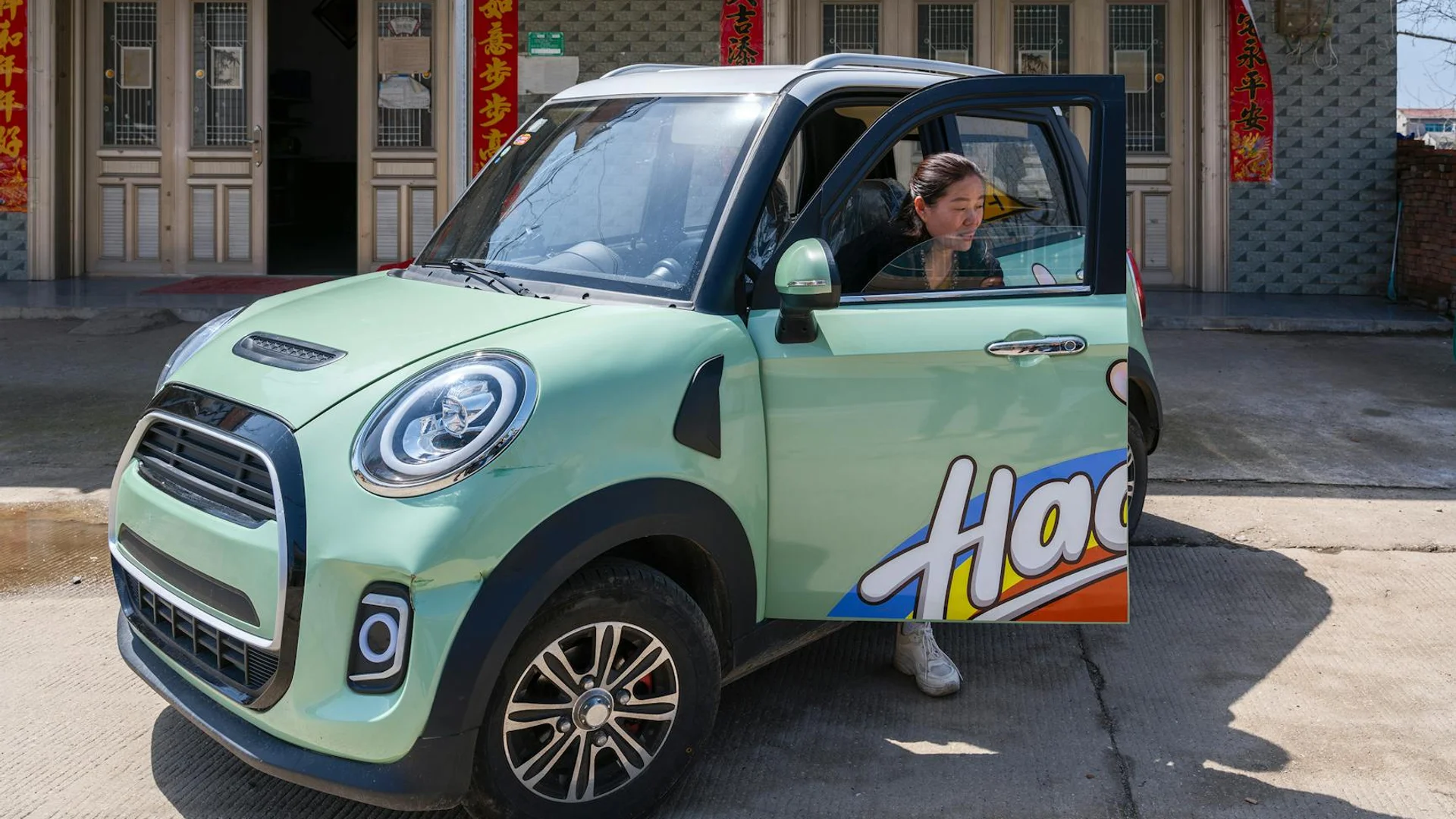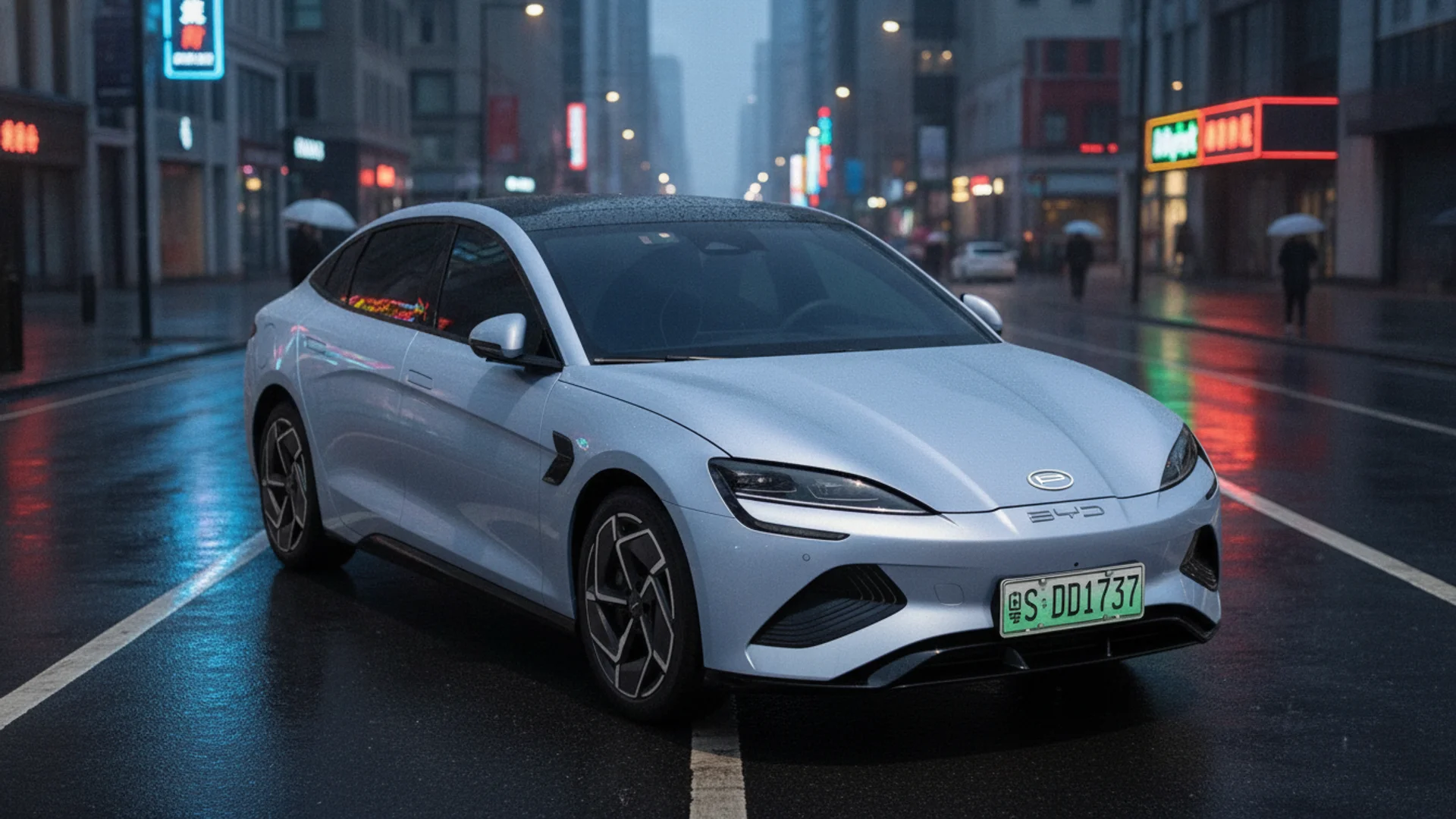
128 kilometres of pure-electric range in a mid-size sedan starting under $14,000 USD. That number alone collapses most PHEV comparisons before they start, and it is the specification the rest of the industry now has to answer to.
The Seal 06 DM-i is not the car most Western readers picture when they hear "BYD Seal." It is a different vehicle on a different platform for a different buyer, and the naming, as usual with BYD, does the reader no favours. Sort that out first, and the rest of the story lands cleanly: a Camry-class plug-in hybrid at a price that reframes what a PHEV is supposed to cost.
Key takeaways
- BYD's DM-i architecture keeps the 74 kW engine off entirely until battery depletion forces it on.
- The 128 km CLTC range realistically drops to 70–85 km in Canadian winter conditions.
- Entry price of 93,800 yuan (~$13,600 USD) makes this a Camry-class PHEV at a fraction of the cost.
- Five different vehicles share the Seal 06 name across three drivetrains, a spec sheet is mandatory.
- The Seal 06 DM-i is front-wheel-drive only, sharing nothing mechanical with the rear-drive BYD Seal EV.
Quick Answer: What the Seal 06 DM-i Actually Is
The Seal 06 DM-i is a plug-in hybrid mid-size sedan (and station wagon) built on BYD's fifth-generation DM-i platform. It is a sister model of the BYD Qin L DM-i, part of the Ocean Series line-up distributed through Ocean Network dealerships, positioned between the smaller Seal 05 DM-i and the larger Seal 07 DM-i.
It is front-wheel-drive only. That single fact separates it entirely from the rear-drive BYD Seal EV covered in earlier ThinkEV price analysis, which is a battery-electric performance sedan on a different platform. The Ocean-Series naming stitches the two together for marketing reasons; the engineering does not.
BYD's own naming compounds the confusion. BYD Seal 06 or BYD Seal 6 can refer to five different vehicles by BYD Auto: the Seal 06 DM-i (also marketed as the Seal 6 DM-i), a plug-in hybrid sedan and station wagon; and the BYD Qin L EV, a battery electric sedan marketed as the BYD Seal 6 EV in Malaysia, Singapore, and Thailand. Five vehicles, one name family, three drivetrains. A spec sheet is not optional here.
The powertrain: a 1.5-litre engine paired with an electric motor, running BYD's fifth-generation DM hybrid system, with a claimed 128 km of pure-electric range on the CLTC cycle. Launch price in China: 93,800 yuan, roughly $13,600 USD.
Gear worth having
As an Amazon Associate, ThinkEV earns a small commission from qualifying purchases — at no extra cost to you.

Lectron Level 2 J1772 Charger (40A, WiFi)
Smart WiFi charger with real-time energy monitoring. 40A / 9.6 kW, J1772 with a NEMA 14-50 plug, schedule charging right from your phone.
As an Amazon Associate, ThinkEV earns from qualifying purchases — at no extra cost to you.
The DM-i System: Why the Powertrain Architecture Is the Story
DM-i is not a conventional plug-in hybrid. In a Toyota-style PHEV, the internal combustion engine and the electric motor share driving duties routinely. In BYD's DM-i architecture, the electric motor does the primary work, and the ICE spends most of its life as a range-extender feeding the battery under load. The result is a car that behaves like an EV in daily use and quietly ignores its fuel tank until the commute goes long.
The engine specifications underline the philosophy. The 1.5-litre unit produces 74 kilowatts, modest on paper, and deliberately so. It is not there to move the car quickly; it is there to keep the battery in a healthy state of charge when the driver is beyond plug-in range. This is a different engineering argument than a Prius Prime makes: Toyota's system optimises for engine-electric handoff efficiency across a wide range of driving states, while BYD's optimises for keeping the engine off entirely until it absolutely cannot be. Those are different design goals, and they produce different cars at the kerb.
BYD frames the system in its own marketing as an EV-first proposition. On the European market page, BYD describes how fast DC charging combined with Super Hybrid with DM Technology provides excellent electric-only range on a single charge, and positions the DM system as offering a complete electric driving experience with a combustion backstop rather than a hybrid that occasionally plugs in.
The 2026 model year adds meaningful hardware. BYD launched the 2026 Seal 06 GT and Seal 06 DM-i Touring in April 2026, with the all-electric Seal 06 GT available in four configurations priced from 128,900 to 169,900 yuan (18,700 to 24,600 USD). The GT is the pure-electric derivative, and it carries BYD's second-generation Blade Battery and flash charging technology, allowing for rapid replenishment of range on the DC network.
Two operational caveats. First, CLTC is the most optimistic test cycle in active use anywhere on Earth. A 128 km CLTC number will translate to something closer to 90–105 km on WLTP in European testing, and lower again in a Canadian winter that the CLTC procedure never contemplates. Second, the flash-charging capability is a 2026-model-year feature; earlier Seal 06 DM-i trims sold in China do not carry it, and export-market specification sheets require careful reading.
A fair objection to the DM-i-as-EV framing is that any PHEV can be driven as an EV if the owner disciplines themselves to plug in nightly, and that the real-world fleet data on PHEVs from the past decade shows most owners do not. The rebuttal is that DM-i's engine sizing and control logic actively punishes the not-plugging-in owner with rougher NVH and worse fuel economy than a proper hybrid would deliver. The car is designed to make plug-in behaviour the path of least resistance, not just the option. Whether owners actually do it is a question the second-year telemetry will answer, and it is the right question to ask.
Specs That Matter: Range, Charging, and the Numbers Worth Committing To
Here are the numbers I will commit to, with the uncertainty labelled where it matters.
Electric range. 128 km CLTC on the current Chinese-market trim, powered by a fifth-generation DM hybrid system combining a 1.5L engine with an electric motor at 74 kilowatts. Expect 90–105 km WLTP in Europe and Australia, and 70–85 km in Canadian winter conditions if the car ever arrives here. The CLTC-to-WLTP gap on BYD PHEVs typically runs 20–25%; that band is where I would put my money.
Charging. DC fast charging on the 2026 flash-charge variant and the Seal 06 GT; standard AC charging on the base DM-i trims. Specific kW ratings for the 2026 flash-charge trim have not been independently verified against BYD's export-market documentation, and I will not invent a number to fill the slot. If the specific charging speed matters to your purchase decision, wait for the WLTP homologation data.
Gear worth having
As an Amazon Associate, ThinkEV earns a small commission from qualifying purchases — at no extra cost to you.

P3 Kill A Watt Electricity Usage Monitor
Plug in your charger and see exactly what you spend in kWh, cost, and watts. Settle the is-my-EV-really-cheaper debate with data.
As an Amazon Associate, ThinkEV earns from qualifying purchases — at no extra cost to you.
Price. 93,800 yuan (~$13,600 USD) as the entry point in China. The Seal 06 DM-i Touring wagon launched at prices starting around 16,200 USD equivalent. European pricing via BYD Europe's dedicated Seal 6 DM-i page has not been publicly confirmed for the standard sedan; UK reviewer Electrifying has previewed the car ahead of a full UK launch, noting that BYD has seen big success with its plug-in hybrid models in the UK and that the Seal-U DM-i SUV has been the best-selling PHEV at certain times. Expect European MSRP to run three to four times the Chinese number once tariffs, VAT, dealer margins, and homologation costs are baked in.
Size and dynamics. Reviewers place the exterior footprint in the Skoda Superb class, a large mid-size sedan, generous by North American standards. Interior packaging draws more mixed notes. A first-drive review from Car Enthusiast on the DM-i Touring flags that the car is far from BYD's finest dynamic hour. That is a real signal from a real driver, and one I take seriously even though I have not driven the car myself. A buyer chasing driving engagement should read the Superb iV comparison twice; a buyer chasing quiet, cheap kilometres will not care.
Gear worth having
As an Amazon Associate, ThinkEV earns a small commission from qualifying purchases — at no extra cost to you.

Grizzl-E Classic Level 2 EV Charger (40A)
Canadian-made and rated for minus 40C winters. 40A / 9.6 kW, NEMA 14-50, indoor/outdoor, 24-ft cable. The charger built for Canadian weather.
As an Amazon Associate, ThinkEV earns from qualifying purchases — at no extra cost to you.
Who It Competes With, and Where the Price Gap Gets Uncomfortable for Rivals
The natural size comparisons are the Toyota Camry PHEV, the Hyundai Sonata PHEV where sold, and the Skoda Superb iV. On the interior-space axis, the Seal 06 DM-i sits comfortably alongside them. On the electric-range axis, it embarrasses them: most European PHEVs in this class deliver 55–80 km WLTP, not 90–105. The Superb iV, the closest European sibling on footprint, is rated in the low-60s WLTP, the Seal 06 DM-i, adjusted for the same cycle, arrives with roughly 50% more usable electric range at a fraction of the sticker price.
On price, the comparison stops being a comparison. At Chinese domestic pricing, the Seal 06 DM-i undercuts every comparable European PHEV by 30 to 50 percent. Even accounting for export-market markup, tariffs, dealer margins, homologation, warranty reserves, the cost floor BYD has established for a mid-size PHEV is dramatically below what European and Japanese OEMs have been quietly agreeing was possible.
UK and Australia are the live Western markets. BYD has an established PHEV foothold in the UK; the Seal-U DM-i SUV has topped UK PHEV sales charts on individual months, and the Seal 6 DM-i sedan and wagon are the follow-through. Australia gets the car through BYD Automotive, marketed as the Seal 6 with the same DM Super Hybrid architecture and 17-inch multi-spoke alloy wheels positioned in a quietly luxurious design brief.
The competitive question in those markets is not whether the Seal 06 DM-i undercuts on price, it does. The question is whether BYD's dealer network, warranty support, and residual values reach parity with the incumbents fast enough to matter. That is an operational question, not an engineering one, and it is the one European and Australian OEMs are quietly betting BYD cannot answer at scale. The counter-view, that residuals are the last moat and BYD is three product cycles from breaching it, is the more read of the last five years of Chinese-brand progress in Norway and the UK. The moat is real. It is also visibly narrowing every quarter.
Gear worth having
As an Amazon Associate, ThinkEV earns a small commission from qualifying purchases — at no extra cost to you.

AstroAI Portable Tire Inflator
One tap, it inflates to your exact PSI then stops automatically. Low tires cost 5 to 10 percent of your range, so this pays for itself in a week.
As an Amazon Associate, ThinkEV earns from qualifying purchases — at no extra cost to you.
The Canadian Angle: What This Car Signals Even If You Can't Buy It Yet
You cannot buy the Seal 06 DM-i in Canada, and current policy makes it commercially non-viable for BYD to try. The 100% surtax imposed on Chinese-built EVs in October 2024 dropped to 6.1% on January 16, 2026, inside a 49,000-unit annual quota, above which the rate reverts to 100%. That quota is national, cross-brand, and shared. BYD's Canadian entry would compete with every other Chinese OEM for the same 49K slots.
Chinese-built vehicles are also excluded from EVAP, the federal rebate program that replaced iZEV in February 2026, on country-of-origin grounds, regardless of price. So the Seal 06 DM-i would land in Canada with no federal rebate support, competing against Canadian-market PHEVs that qualify for up to $5,000 in EVAP incentives.
The vehicle still matters for the Canadian market, even absent. Here is why.
Canadian-market PHEVs currently sit in a $45,000–$55,000 CAD price band for comparable size and electric range. The Seal 06 DM-i's Chinese launch price establishes what a fifth-generation DM-i drivetrain actually costs to build at scale, before the tariff, before the dealer margin, before the marketing budget. That number is now visible to every Canadian buyer with an internet connection and a currency converter.
The policy conversation follows the price gap. When Canadian buyers see what Chinese EVs cost in their home market, the political question shifts from "should we let them in?" to "why does the same drivetrain cost triple here?" The answer involves tariffs, safety homologation, warranty reserves, and dealer economics, all legitimate, all measurable, and none of which fully close a 3× price gap. That gap is now a public number, and it will not un-become one.
The most credible pushback on this framing comes from the incumbent-defence side: the Canadian pricing premium is not pure protectionism, it reflects a fundamentally smaller market with harsher climate testing requirements, mandatory bilingual documentation, and dealer-network economics that spread fixed costs across fewer units than any European market delivers. All true. None of it explains a factor of three. It explains a factor of 1.5 to 2, which leaves the remainder sitting exactly where the tariff-and-quota architecture put it.
The number to watch is the January 2027 quota utilization report. If Chinese OEMs use the full 49K units in year one, Canadian PHEV pricing has to move. If they do not, if dealer networks, EVAP exclusion, and consumer hesitation keep quota utilization below 30K, the incumbents can hold their price bands for another cycle. Watch the CBSA quarterly import filings through Q3 2026 for the leading indicator; the January 2027 total is the settled scoreboard. That is the checkpoint that decides whether the Seal 06 DM-i becomes a reference point or a footnote in Canadian EV policy.
Gear worth having
As an Amazon Associate, ThinkEV earns a small commission from qualifying purchases — at no extra cost to you.

Digital Tire Pressure Gauge
Low tires quietly cost 5 to 10 percent of your range. A 10-second check with an accurate digital gauge keeps every kWh on the road.
As an Amazon Associate, ThinkEV earns from qualifying purchases — at no extra cost to you.

Founder & Chief Editor
Vlad Pereira is the founder and chief editor of ThinkEV.ca, the Canadian electric-vehicle publication he writes and edits from Courtenay, British Columbia. He covers EV pricing, federal and provincial rebates, charging costs, and the Chinese manufacturers now entering Canada, from the buyer's side rather than the press-fleet side. ThinkEV is a venture of Vlad Pereira Online; his writing on health, income and the long game lives at vladpereira.com.
Frequently asked questions
What does 128 km CLTC actually mean in a Canadian winter?
Is this the same Seal EV that reviewers were raving about?
What happens if you never plug it in?
Will Canada actually get this car?
Does the flash charging come standard or only on certain trims?
More EV & road-trip finds
Affordable upgrades worth a look — tap any to check the price on Amazon.
 ★ 61
★ 61Toddler Car Seat Snack and Cup Tray
View on Amazon ★ 17,839
Qifutan Vent Phone Mount (Military-Grade Clip)
View on Amazon ★ 12,051
Windex Electronics Screen Wipes
View on Amazon ★ 419
★ 419RGB Car Interior LED Strip Light
View on Amazon ★ 401
★ 401Crochet Daisy Rear-View Mirror Charm
View on Amazon ★ 979
★ 979Leather Headrest Purse Hook
View on Amazon
TP-Link Kasa Smart Plug with Energy Monitoring
View on Amazon ★ 87
★ 87Car Window Sun Shades for Kids (4-Pack)
View on AmazonRead, Plan, Then Stay Current
Explore our expert articles to understand incentives and ownership costs, use the map to pressure-test charging reality, then subscribe so new EV coverage comes straight to you.
Continue Reading
BYD Dolphin G: Inside the 1,000 km PHEV Design
How BYD Builds EVs So Cheaply: The Vertical Integration Playbook
Why Chinese EV Interiors Feel a Generation Ahead
How Chinese Automakers Became Global EV Leaders
Why Chinese EVs Are Cheap: Production or the Yuan?