Your car can brake for a pedestrian at 40 km/h. At 80 km/h on a wet highway, that same system may do nothing, and the manual won't say which. That gap between what the feature list promises and what the sensor stack can actually deliver is the whole story of advanced driver-assistance systems in 2026. The marketing has run ahead of the physics, and the price of catching up is paid in driver attention.
The systems work. They also fail in specific, knowable ways that almost no dealer will walk you through before you sign. The goal here is to make those failure modes legible before the contract, not after the collision.
Key takeaways
- Most production vehicles sold in Canada today, including those marketed as 'Autopilot' or 'Full Self-Driving', are SAE Level 2.
- AEB effectiveness drops sharply above roughly 70 km/h, shifting from crash avoidance to crash mitigation.
- LiDAR-equipped vehicles like NIO's premium trims maintain object detection in conditions where camera-only systems like Tesla's FSD have already given up.
- Lane keep assist breaks silently when it loses lane markings, snow, faded paint, and construction zones all trigger invisible failure.
- GM's Super Cruise uses an infrared eye-tracking camera, unlike torque-sensor systems that drivers have defeated with weighted clips since launch.
The Quick Answer: What ADAS Actually Controls
ADAS is not one intelligence. It is a stack of discrete systems, automatic emergency braking, lane keep assist, adaptive cruise control, blind spot monitoring, each with its own sensor, its own threshold, and its own definition of "working." Modern cars have ADAS integrated into their electronics, and these systems react quickly to multiple inputs and prioritize incoming information to prevent crashes. The word "prioritize" is doing a lot of work in that sentence. Triage is not omniscience.
The Society of Automotive Engineers' Level 0 through Level 5 framework is the only honest map. Level 0 to Level 2 is driver-assist, the human is driving, the car is helping. Level 3 and above is autonomy, the car is driving, the human is supervising or absent. Almost every production vehicle on sale in Canada today, including the ones marketed with the word "Autopilot" or "Full Self-Driving" on the window sticker, is Level 2.
The Quick Answer: ADAS intervenes in narrow, pre-defined scenarios. It does not monitor the full driving envelope, and it is not designed to. Radar sees one thing, cameras see another, ultrasonics see a third, and a software layer fuses the three into a partial picture of the road. The partial picture is the product.
An optimistic reading says the partial picture is enough, because the cases ADAS handles well, rear-end avoidance, lane drift on dry tarmac, parking-lot collisions, are precisely the cases that dominate the insurance claims data. There is something to that. The actuarial wins are real and they show up in premiums. But the optimistic reading slides quickly into complacency: a driver who believes the partial picture is the full picture is a driver who has handed off attention the car never asked for. The 2026 product cycle is the first one in which manufacturers themselves are walking the language back, MotorTrend's survey of the 2026 model year frames the new generation as smarter cruise controls, lane keep assist, and self-parking features aimed at winning drivers over, which is industry shorthand for "we tuned the old ones too aggressively and lost driver trust."
Once you accept that ADAS is a collection of bounded tools rather than a co-pilot, the feature list reads very differently. The question stops being "what can this car do?" and becomes "in which specific conditions does each of these specific systems remain inside its specification?"
Gear worth having
As an Amazon Associate, ThinkEV earns a small commission from qualifying purchases — at no extra cost to you.

Lectron Level 2 J1772 Charger (40A, WiFi)
Smart WiFi charger with real-time energy monitoring. 40A / 9.6 kW, J1772 with a NEMA 14-50 plug, schedule charging right from your phone.
As an Amazon Associate, ThinkEV earns from qualifying purchases — at no extra cost to you.
What the Core Systems Actually Do (Feature by Feature)
Automatic emergency braking (AEB) detects stationary or slow-moving objects in the vehicle's forward path and applies the brakes when the driver does not. It is the single highest-value ADAS feature by every actuarial measure. It is also speed-sensitive: most production implementations are tuned for urban and suburban speeds, and effectiveness drops sharply above roughly 70 km/h. The system is still active at highway speed, but the physics of stopping distance versus reaction time push it from "crash avoidance" into "crash mitigation", meaning the impact still happens, just at a lower delta-v.
Adaptive cruise control (ACC) maintains a set following distance using forward-facing radar, which on most platforms reaches roughly 300 metres, a figure consistent with the radar-range specifications surveyed in this ADAS sensor breakdown. It is a highway feature first. In stop-and-go traffic, behaviour diverges sharply by manufacturer: some systems will follow the lead vehicle to a complete stop and resume; others disengage below a threshold and hand the car back. The owner's manual specifies the threshold. Almost no one reads it.
Lane keep assist (LKA) applies steering correction when the lane markings are visible and high-contrast. The phrase doing the work is "visible and high-contrast." Faded paint, snow cover, construction-zone diversions, and the seam between repaved and unrepaved asphalt all break it. On a Canadian highway in February, LKA is closer to a suggestion than a system. The vehicle does not announce this; the sensor simply stops seeing the line. A reasonable objection here is that newer LKA implementations use map data to fill in where the cameras fail, high-definition maps refreshed via OTA do extend the operating envelope past the painted line. They also degrade silently when the map is stale, which on a road network that repaves seasonally is most of the time. A feature that quietly downgrades itself is a feature whose failure mode is invisible until the failure.
Blind spot monitoring (BSM) is radar-based, and it is the quiet workhorse of the stack. It is reliable at highway speeds in essentially all weather, and it carries the strongest insurance-actuarial backing of any single ADAS feature. Cross-traffic alert, the parking-lot variant, uses the same sensor at low speed and is meaningfully less reliable, because the radar is now resolving small movements against cluttered backgrounds.
Read those four descriptions again. Notice how often the word "threshold" appears, and how rarely the brochure does.
Where These Systems Break Down
The failure envelope is where the sensor stack matters more than the feature name. Camera-only systems, Tesla's vision-only Full Self-Driving stack, the base trims of most competitor brands, degrade in heavy rain, in direct low-angle sun, in glare off wet pavement, and any time the lane markings drop out. ADAS are considered real-time systems that use preemptive priority scheduling to organize which task needs to be done first. A real-time system that has stopped receiving usable inputs is no longer prioritising anything; it is waiting.
LiDAR-equipped vehicles maintain object detection in conditions where cameras have given up. NIO ships LiDAR as standard on its premium trims, and some Lucid configurations include it. That is a meaningful gap at highway speed and a meaningful gap in winter, see the LiDAR-versus-cameras breakdown in the NIO and Tesla comparison for the sensor-stack details. The strongest argument against paying for LiDAR is straightforward: the cost premium can run several thousand dollars, the Canadian winters that justify it represent four months of the year, and Tesla's vision-only stack has logged more autonomous-mode kilometres than any other system on the road. That argument holds until the morning the sun comes in at four degrees above the horizon on a freshly salted 401 and the cameras white out for ninety seconds. The LiDAR car still sees the truck. The vision-only car relies on the driver to see it instead, which is the entire premise the marketing was trying to relax.
Gear worth having
As an Amazon Associate, ThinkEV earns a small commission from qualifying purchases — at no extra cost to you.

TP-Link Kasa Smart Plug with Energy Monitoring
Track exactly how much electricity your Level 1 charger uses and schedule it for off-peak hours. Know your real cost per kWh.
As an Amazon Associate, ThinkEV earns from qualifying purchases — at no extra cost to you.
Driver monitoring is the other quiet failure mode. Hands-on-wheel torque sensors, the default on most platforms, are gameable. Drivers have been defeating them with weighted clips since the first system shipped. GM's Super Cruise uses an infrared camera trained on the driver's eyes, and as one ADAS systems primer puts it, camera-based monitoring is more reliable because it checks where you're actually looking, not just whether your hands are on the wheel. If you take your hands off for too long under a camera-based system, the car escalates warnings and may eventually slow down and stop, a degradation path that a torque sensor cannot match because a torque sensor cannot tell a distracted driver from a weighted clip. The Chevy Blazer EV ships Super Cruise on the RS and SS trims; the engineering choice is real, and so is the trim wall. Huawei's ADS, deployed across iCar and Luxeed vehicles in China and now landing in adjacent markets, takes the same architectural bet, driver-attention cameras as a first-class sensor rather than a compliance afterthought. The competitive read is that the brands willing to put a camera on the driver are signalling something about what they think the failure mode actually is. The brands relying on a torque sensor are signalling something too.
The Dodge Charger EV's connected-car data tells the most useful single story I have seen on ADAS: eleven active driver-assist systems, an average of 1.3 interventions per vehicle per year across the fleet. Most drivers never see a system fire in anger. That is not a sign the systems are useless, it is a sign that the value is in the cases you never experience, which is exactly the case the marketing struggles to describe. The insurance breakdown in our piece on EV insurance costs covers how those rare interventions translate into premium math.
Gear worth having
As an Amazon Associate, ThinkEV earns a small commission from qualifying purchases — at no extra cost to you.
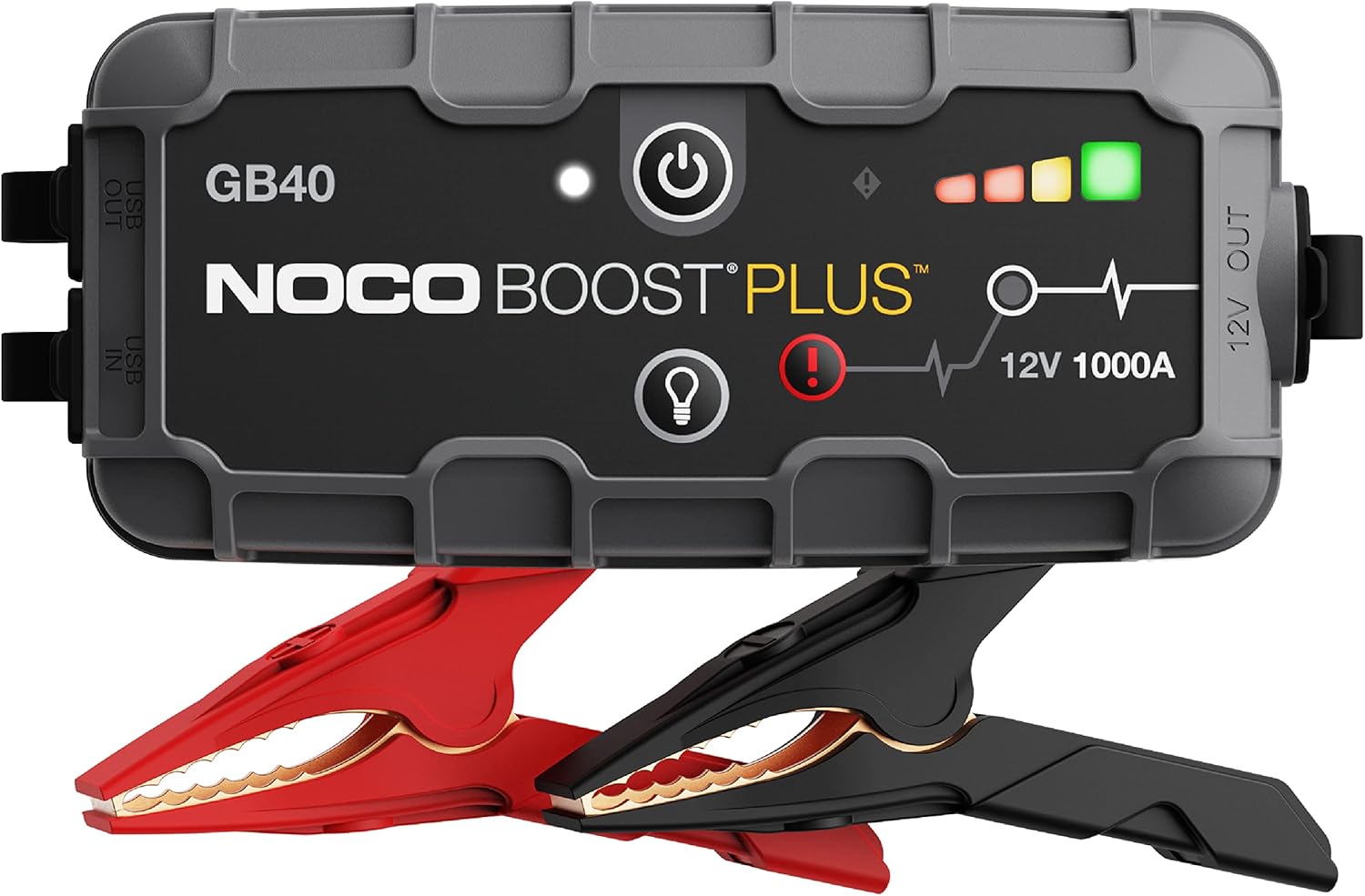
NOCO Boost Plus GB40 Jump Starter
A 1000A lithium jump starter that fits in your glovebox and works on any 12V battery. Your insurance against a dead 12V in a parking lot.
As an Amazon Associate, ThinkEV earns from qualifying purchases — at no extra cost to you.
What the Marketing Language Is Hiding
"Autopilot" is Level 2. "Full Self-Driving" is Level 2. "Pilot Assist" is Level 2. "DriverAssistance Plus" is Level 2. The driver is legally and physically responsible at all times, in all of these systems, on every public road in Canada. The naming convention is a marketing decision, not an engineering one, and Transport Canada has flagged the resulting consumer confusion repeatedly.
Feature packaging is the second hiding place. Super Cruise is standard on Blazer EV RS and SS trims, the Blazer EV Canadian review walks the trim wall in detail. Comparable hands-free capability costs $3,000 to $8,000 extra on most competitor platforms, sometimes as a subscription. The same nominal feature, "hands-free highway driving", can be a no-cost inclusion, a one-time upgrade, or a recurring charge, and the brochure rarely makes the distinction obvious until the final price walk. Compare two trims with identical feature labels, the Blazer EV RS with Super Cruise included and a similarly priced competitor that lists "hands-free highway" as a $5,000 option plus a $25/month data tier, and the five-year cost of the same nominal capability diverges by something like $6,500 before insurance discounts are factored in. The feature list will not tell you that. The subscription footer will.
Over-the-air updates are the third. Manufacturers can add new ADAS features during the design process or after production via over-the-air updates. Tesla, Lucid, and Hyundai/Kia have all materially altered ADAS performance after delivery, sometimes improving it, sometimes constraining a previously-shipped behaviour. The car you take delivery of in March is not necessarily the car you own in October. This is genuinely novel, and it cuts both ways: a software path means the worst version of the system you will ever own is the one in the driveway today, but it also means a feature you paid for can be quietly retuned. The objection here is that retuning is usually a safety win, the manufacturer has seen fleet-wide data the individual owner has not, and a conservative recalibration after a pattern of incidents is the system working as designed. Granted. But "working as designed" and "the capability I paid for at signing" are not the same contract, and there is no Canadian disclosure regime that distinguishes the two.
Insurance impact is real but uneven. BSM and AEB have documented premium reductions across Canadian carriers, the actuarial case is settled. Lane-keep assist has weaker backing; the data is noisier and the discounts smaller. The discount math is not the reason to buy these features, but it does explain why the cheaper ones are spreading down-market faster than the expensive ones.
Gear worth having
As an Amazon Associate, ThinkEV earns a small commission from qualifying purchases — at no extra cost to you.

Amazon Basics Seat Belt Cutter and Window Hammer
The 10-dollar tool you hope to never use: cuts a jammed belt and shatters a window in an emergency. Mount it within reach.
As an Amazon Associate, ThinkEV earns from qualifying purchases — at no extra cost to you.
How to Read a Feature List Before You Buy
Check the sensor stack, not the feature name. Camera-only, camera-plus-radar, and camera-plus-radar-plus-LiDAR are three different cars with three different failure envelopes, even when the brochure prints the same feature label across all three. Ask the dealer which sensors are physically present on the trim you are looking at. If the dealer does not know, the brand's media kit will. If the media kit will not say, that is information.
Ask which software version ships at delivery and whether the OTA roadmap is public. For Tesla, Lucid, and certain Hyundai/Kia trims this matters more than for legacy brands, because the gap between the launch version and the current version can be substantial. A vehicle on an old build is not the same vehicle that gets reviewed by the press, and a vehicle that ships near the end of a model year may be several builds behind the same VIN shipping in another market.
For used vehicles, the question is calibration. ADAS sensors need to be aligned to the vehicle's geometry, and that alignment resets after collision repair. A used car with replaced sensors and no recalibration is not the car it was before the collision. Ask for the calibration record. If there isn't one, assume the worst case and budget for a calibration appointment, $300 to $900 in most Canadian markets, depending on the sensor count.
For Canadian buyers specifically: iZEV-eligible models sometimes strip ADAS packages from the base trim to keep the MSRP under the federal rebate cap. The model is iZEV-eligible. The trim with the safety suite often is not. Confirm the trim, not the model name, before assuming the discount and the driver-assist package travel together. The same logic applies to provincial programmes layered on top, see the Canadian charging-network coverage on Rivian's Adventure Network for how trim-level differences cascade into the ownership experience.
The number to check before you sign is the sensor count on the spec sheet. Two cameras and one radar is a different car from six cameras, five radars, and a roof-mounted LiDAR puck. Both will have "lane keep assist" on the feature list. Only one of them will keep the lane in February rain on Highway 401, and the brochure will not tell you which. The marker to watch through the rest of 2026 is whether Transport Canada follows California and the EU in requiring standardised ADAS naming on the window sticker, a rule with teeth would force "Autopilot" and "Super Cruise" and "Pilot Assist" onto the same SAE-level label and end the brochure shell game in a single regulatory stroke. If that label is on a 2027 model-year sticker in a Canadian dealership before December 2026, the buying calculus in this guide simplifies considerably. If it isn't, the sensor count on the spec sheet is still the only number that doesn't lie.
Gear worth having
As an Amazon Associate, ThinkEV earns a small commission from qualifying purchases — at no extra cost to you.

Roadside Emergency Safety Kit
Jumper cables, a portable air compressor, tow strap, first aid, and more for when something goes wrong between chargers. Canadian winters do not forgive the unprepared.
As an Amazon Associate, ThinkEV earns from qualifying purchases — at no extra cost to you.

Founder & Chief Editor
Vlad Pereira is the founder and chief editor of ThinkEV.ca, the Canadian electric-vehicle publication he writes and edits from Courtenay, British Columbia. He covers EV pricing, federal and provincial rebates, charging costs, and the Chinese manufacturers now entering Canada, from the buyer's side rather than the press-fleet side. ThinkEV is a venture of Vlad Pereira Online; his writing on health, income and the long game lives at vladpereira.com.
Frequently asked questions
Does my insurance rate actually drop if my car has ADAS?
Is Tesla's vision-only system safe for Canadian winters?
Can I trust adaptive cruise control in Toronto stop-and-go?
What actually separates Level 2 from real self-driving?
Does lane keep assist work on Canadian highways in February?
More EV & road-trip finds
Affordable upgrades worth a look — tap any to check the price on Amazon.
 ★ 1,340
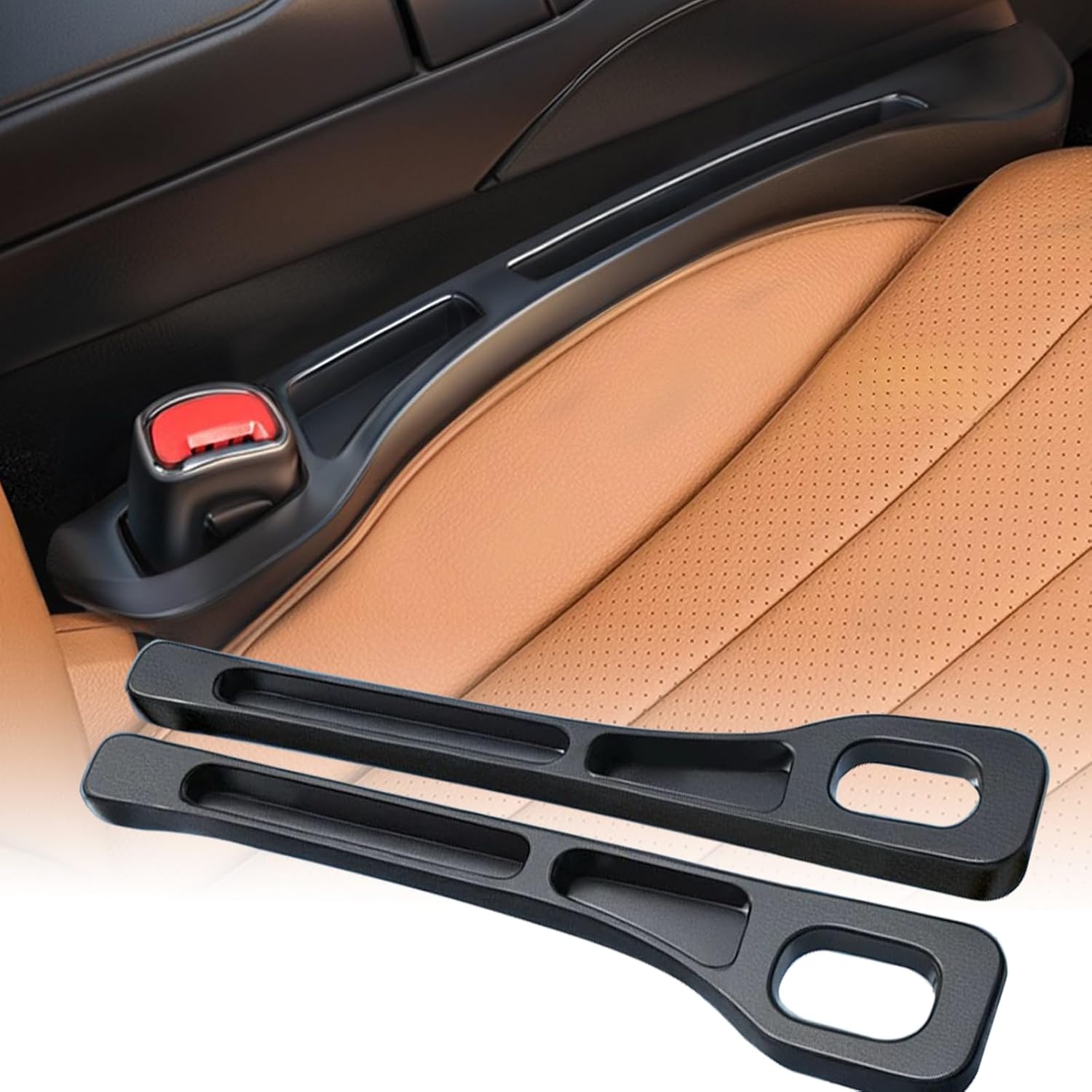
Car Seat Gap Filler (Universal)
View on Amazon ★ 1,944
VIOFO A229 Pro 4K Dash Cam
View on Amazon ★ 87
★ 87Car Window Sun Shades for Kids (4-Pack)
View on Amazon ★ 68
★ 68WeatherTech FloorLiner for Tesla Model 3
View on Amazon ★ 9,349
Auto Detailing Brush Set (10-Piece)
View on Amazon ★ 55
★ 55LED Car Door Logo Projector Light
View on Amazon ★ 900
★ 900Personalized Photo Car Air Freshener
View on Amazon ★ 4,424
Sun Visor Card and Document Organizer
View on AmazonRead, Plan, Then Stay Current
Explore our expert articles to understand incentives and ownership costs, use the map to pressure-test charging reality, then subscribe so new EV coverage comes straight to you.
Continue Reading

EV Battery Replacement: What a Failed Pack Actually Costs
EREVs Explained: The Backup Engine Comeback for 2026

Are EV Batteries Safe in Floods and Deep Water?
Level 1 vs Level 2 EV Charging: Which to Choose
Are EVs Safe? Crash Structure and Battery Safety Explained