Tesla calls it Full Self-Driving. It still requires your hands on the wheel. That gap between the name and the spec is exactly what the SAE J3016 scale was built to close, and a decade after publication, the scale is still doing more honest work than the marketing departments using it.
The taxonomy matters because the words don't. "Autopilot," "Super Cruise," "BlueCruise," "Pilot Assist," "ProPilot," "Drive Pilot", six different brand names, two different SAE levels, one legal reality: in almost every case, you are still the driver. The SAE level tells you who is responsible when something goes wrong. The brand name tells you what the marketing team wants you to feel. Only one of those is admissible in a courtroom.
Key takeaways
- SAE J3016 defines six levels where L2 still requires driver supervision, covering Tesla FSD and GM Super Cruise.
- The L2-to-L3 jump shifts legal liability from driver to manufacturer, which is why only Honda and Mercedes have crossed it.
- Canada lacks finalized federal AV regulations, leaving provinces with pilot programs that have approved roughly a dozen test vehicles total.
- Waymo's 700 L4 vehicles across San Francisco, Phoenix, and Austin represent the entire commercial driverless deployment worldwide as of 2026.
- Level 5, no ODD, no steering wheel, drives anywhere, has zero production deployments and no credible timeline from anyone.
Quick Answer: What Level Is Your Car Right Now?
Almost certainly Level 2. Tesla's systems currently operate at Level 2 automation, which requires continuous driver supervision and does not constitute "Full" self-driving capability. The same applies to GM Super Cruise, Ford BlueCruise, Hyundai Highway Driving Assist, and every other ADAS suite shipping in 2024–2026 production vehicles. The driver is monitoring the road, the driver is legally liable, and the marketing brochure is not.
Level 3 exists in production, barely, Honda Legend in Japan and Mercedes Drive Pilot in Germany and a handful of US states. Level 4 is geofenced robotaxis: Waymo in San Francisco, Phoenix, and Austin. Level 5, a car that drives itself anywhere a human can, with no steering wheel required, has zero production deployments anywhere on Earth, and nobody credible has put a date on when that changes.
L0 to L2: The Driver Still Does the Work
The bottom three rungs of the SAE ladder are where 99% of cars on the road actually live, and the distinctions matter because they map onto what the car will and won't do without you.
Level 0 is warnings only. Lane-departure beep, blind-spot indicator, automatic emergency braking, the car alerts or intervenes momentarily, but it does not steer or accelerate on a sustained basis. Your 2008 Corolla with no electronics is L0. So is a 2025 base-trim pickup with AEB. The label is about sustained vehicle control, not about which features are fitted.
Level 1 is one axis of control. Adaptive cruise control manages your speed and following distance, but you steer. Or lane-centring manages your steering, but you control the throttle. One or the other, never both at once. This is where most mainstream cars sat from roughly 2015 through 2020.
Level 2 combines both axes simultaneously. The car holds its lane and manages its speed. You take your hands off the wheel for a few seconds at a time, the car keeps going. This is where Tesla Autopilot lives. This is where Tesla Full Self-Driving lives. This is where GM Super Cruise, Ford BlueCruise, Mercedes Distronic with Active Steering Assist, BMW Driving Assistant Professional, and roughly every premium-trim ADAS package shipping today all live. Different brand names, identical SAE level.
The load-bearing word in the L2 definition is OEDR, object and event detection and response. At L2, OEDR stays with the human. The car can steer and brake on its own, but it is the driver's job to watch for the pedestrian, the merging truck, the lane-closure cone. If the car fails to see what you should have seen, you are the one responsible. The hands-on-wheel requirement is not a quirk of immature software. It is the legal architecture of the level.
Gear worth having
As an Amazon Associate, ThinkEV earns a small commission from qualifying purchases — at no extra cost to you.

Lectron Level 2 J1772 Charger (40A, WiFi)
Smart WiFi charger with real-time energy monitoring. 40A / 9.6 kW, J1772 with a NEMA 14-50 plug, schedule charging right from your phone.
As an Amazon Associate, ThinkEV earns from qualifying purchases — at no extra cost to you.
The L2-to-L3 Jump Is the Hardest Line in Automotive Regulation
The step from L2 to L3 is the steepest in the entire scale, and it is the reason the deployment chart for autonomous driving looks the way it does, full at the bottom, almost empty in the middle, sparse at the top.
At L3, OEDR responsibility shifts from the human to the machine within a defined operational design domain. Legally and technically, the car is driving itself. The human can read, watch a film, look at their phone, until the system asks for a handover, at which point the human must take control within a defined response time, usually around ten seconds.
That shift in OEDR responsibility is also a shift in liability. At L2, every crash is the driver's crash. At L3, with the system engaged inside its operational design domain, the crash is the manufacturer's problem. This is not a small distinction. It is the single largest legal exposure an automaker can voluntarily take on.
Which is why, as of mid-2026, the certified L3 list reads: the Honda Legend in Japan (2021, limited build), and the Mercedes-Benz Drive Pilot in Germany and select US states including California and Nevada. That is the entire list. Stellantis, Toyota, Hyundai, Ford, GM, and Tesla have all kept their flagship ADAS systems carefully on the L2 side of the line. The technology gap to L3 is real but tractable; the legal exposure is the harder line to cross.
Canada's regulatory position compounds the deployment lag. Transport Canada has not finalised federal autonomous-vehicle regulations, leaving provinces to set their own pilot frameworks. Ontario's pilot programme has approved roughly a dozen autonomous test vehicles in total, a fraction of California's caseload over the same period. The result is that even when L3-capable hardware ships in cars sold here, the legal scaffolding to activate the feature does not yet exist. The same regulatory drag is why robotaxi deployment in Canadian cities trails the US by years, not months.
Gear worth having
As an Amazon Associate, ThinkEV earns a small commission from qualifying purchases — at no extra cost to you.

WeatherTech FloorLiner for Tesla Model 3
Deep-channel liners that trap every drop of slush and salt. The difference between a ruined interior and a showroom-fresh cabin after a Canadian winter.
As an Amazon Associate, ThinkEV earns from qualifying purchases — at no extra cost to you.
L4: Where Robotaxis Live (and Why It Stays Geofenced)
Level 4 is where the driver disappears, within boundaries. An L4 system operates without human fallback inside a defined operational design domain: specific streets, specific weather windows, specific speed envelopes, specific times of day. Step outside the ODD and the system either refuses to operate or hands back to a remote human supervisor.
Waymo runs the largest commercial L4 deployment in the world: roughly 700 vehicles in active service across San Francisco, Phoenix, and Austin as of 2026, with a paid ride-hail service that has carried millions of trips without a human in the driver's seat. The ODD is mapped down to individual intersections. The vehicles know which left turns they will and will not attempt. This is not a limitation grafted on to a general-purpose system, the ODD is the product.
XPeng's XNGP system runs in 243 Chinese cities, sitting somewhere between a high-end L2+ and a city-wide L4 depending on which feature is active. BYD's vertically-integrated approach to the same problem is building the chip, the sensors, and the software stack in-house, a thesis that intelligent driving becomes a commodity, not a luxury option. None of these systems are available in Canada, and the regulatory pathway to import them is not a near-term conversation.
The ODD boundary, in other words, is the feature. It is what lets the system be honest about what it can and cannot do. The day a manufacturer claims an L4 system with no ODD restrictions is the day to read the fine print three times, because at that point the claim is L5, and L5 does not yet exist.
Gear worth having
As an Amazon Associate, ThinkEV earns a small commission from qualifying purchases — at no extra cost to you.
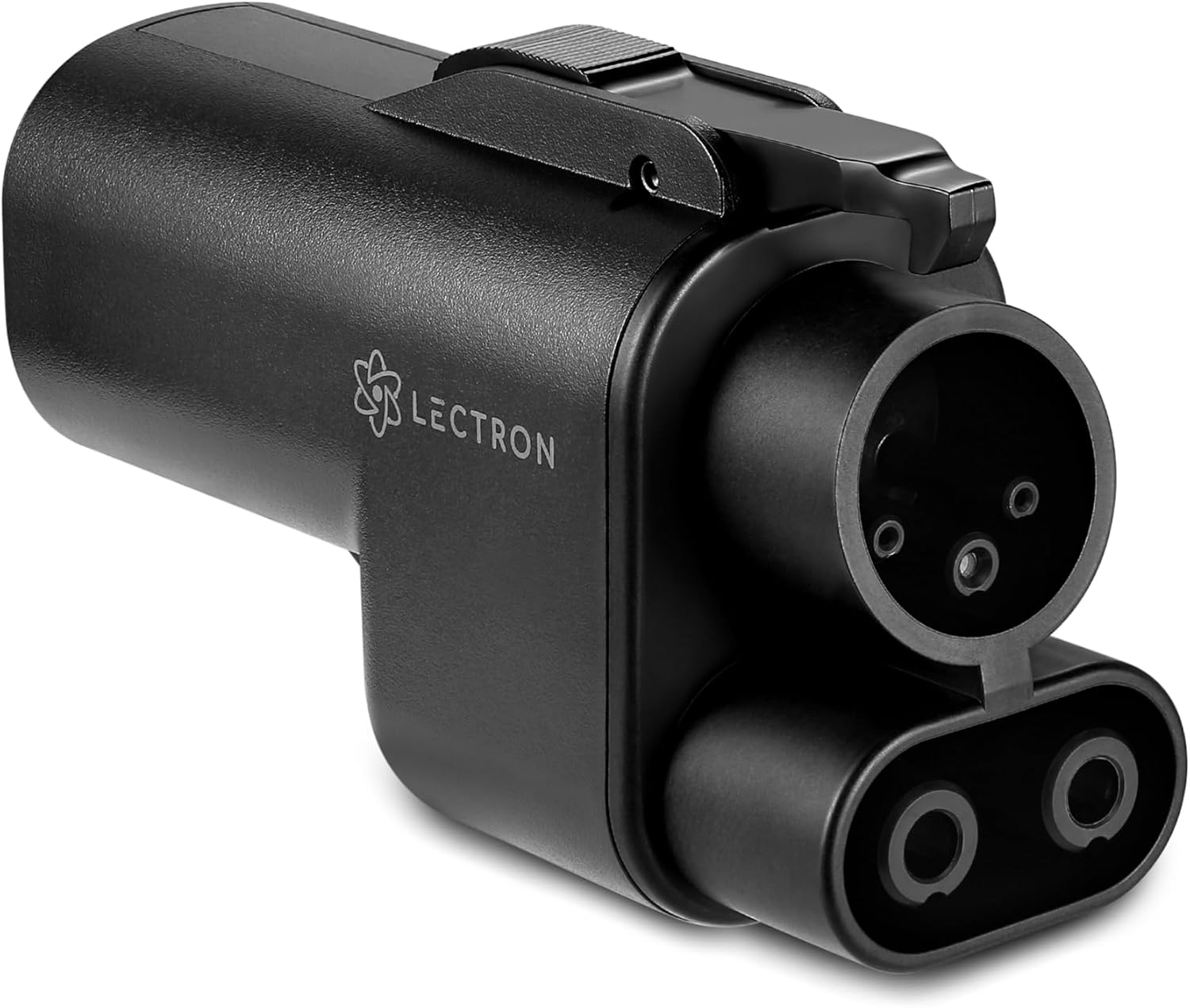
Lectron NACS to CCS Fast-Charge Adapter
Unlock every CCS fast charger for your Tesla, up to 500A DC. Never get stranded at a non-Tesla DC station again.
As an Amazon Associate, ThinkEV earns from qualifying purchases — at no extra cost to you.
L5 and the Honest State of "Full Self-Driving"
Level 5 is a car that operates anywhere a human driver could, in any weather, on any road type, with no ODD restrictions and no requirement for a steering wheel or pedals. As of 2026, no production vehicle from any manufacturer in any market qualifies. There are research prototypes. There are demonstrations. There is no L5 product.
Which makes the naming of Tesla's L2 system, Full Self-Driving, a marketing decision rather than a technical claim. The 2026 community telemetry on FSD on highways averages roughly one required driver intervention every 27 minutes of operation. That is meaningful progress over the 2020 numbers, and it is genuinely useful as a driver-assist feature. It is also, by SAE definition, Level 2: the human is monitoring, the human is liable, the human is the driver. Cameras-only versus lidar-heavy versus the now-defunct Cruise approach are three very different bets on the same problem, and the safety data is starting to favour the architectures with redundant sensing.
The industry is moving on two tracks. Legacy automakers are climbing incrementally, L2, then L2+, then carefully towards L3 with narrow ODDs (highway only, sub-60 km/h, daytime). Tech-led firms, Waymo, the surviving Chinese players, the post-Cruise field, are skipping L3 entirely and going directly to geofenced L4. Both paths are reasonable. Neither path leads to L5 on any timeline a buyer should be planning around.
Tesla's own published FSD data shows roughly a 52% crash reduction when the system is active versus when it is not, a real safety gain, achieved at Level 2. That is the read. L2 safety improvements are valuable. They are not the same thing as L4 autonomy, and the gap between the two is not closing as fast as the marketing departments imply.
Gear worth having
As an Amazon Associate, ThinkEV earns a small commission from qualifying purchases — at no extra cost to you.

Tesla Key Card Holder with AirTag Slot
Stop fishing the keycard out of your wallet, and slot an AirTag in case the car wanders off in a lot.
As an Amazon Associate, ThinkEV earns from qualifying purchases — at no extra cost to you.
What to Check Before You Trust the Label
Three questions cut through every ADAS spec sheet: Who monitors the road? Who is liable if it fails? What is the ODD?
Hands-free is not mind-free. Super Cruise and BlueCruise both allow hands off the wheel on pre-mapped highways, but both require eyes-on-road monitoring via a driver-facing infrared camera. Look at your phone for more than a few seconds and the system disengages. That is L2 operating exactly as designed, the hands-off ergonomics are a comfort feature, not a transfer of responsibility.
For Canadian buyers, the regulatory gap matters more than the spec sheet. Federal autonomous-vehicle regulations remain in draft form at Transport Canada, and provincial pilot programmes are narrow. A car sold here may carry hardware capable of L3 operation in another market and ship with that feature dormant or restricted. Confirm with the manufacturer what is actually enabled on Canadian VINs.
Insurance is the last check. At L2, you are the driver, your policy covers the crash. At certified L3 with the system engaged inside its ODD, liability shifts to the manufacturer. The number of Canadian policies that have been updated to reflect this distinction is, as far as the published data shows, approximately zero. If you ever do end up driving an L3-certified vehicle here, that conversation with your broker is worth having before you need it.
Gear worth having
As an Amazon Associate, ThinkEV earns a small commission from qualifying purchases — at no extra cost to you.
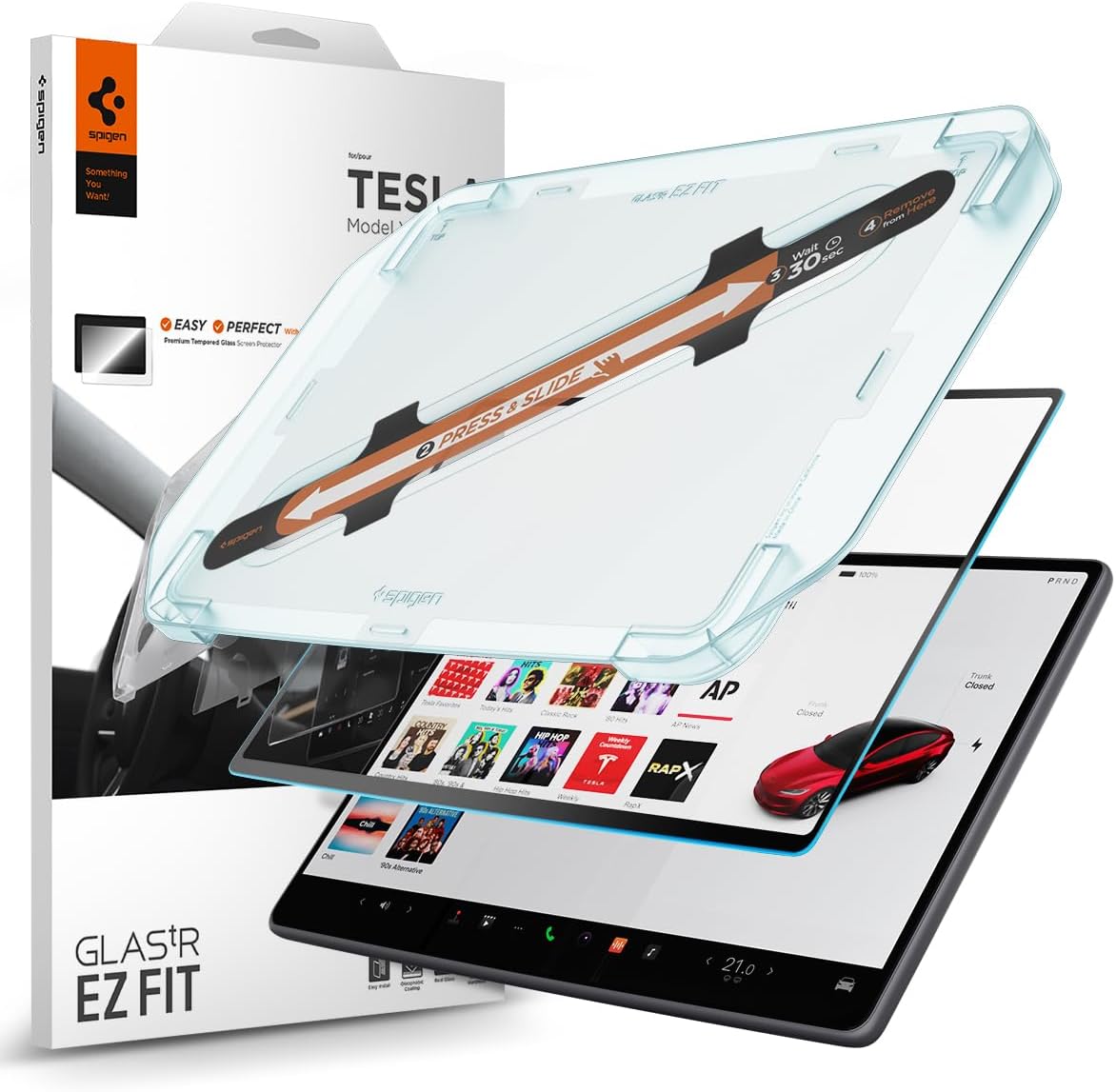
Spigen Tempered Glass for Tesla Model 3/Y
Tempered-glass protection for the touchscreen that kills fingerprints and scratches. Two minutes to install, lasts the life of the car.
As an Amazon Associate, ThinkEV earns from qualifying purchases — at no extra cost to you.

Founder & Chief Editor
Vlad Pereira is the founder and chief editor of ThinkEV.ca, the Canadian electric-vehicle publication he writes and edits from Courtenay, British Columbia. He covers EV pricing, federal and provincial rebates, charging costs, and the Chinese manufacturers now entering Canada, from the buyer's side rather than the press-fleet side. ThinkEV is a venture of Vlad Pereira Online; his writing on health, income and the long game lives at vladpereira.com.
Frequently asked questions
Why can't I legally look at my phone with Super Cruise?
Which cars actually qualify as Level 3 right now?
Can I buy a Waymo-style robotaxi experience in Canada?
Does Tesla FSD move between SAE levels depending on the feature?
Has any manufacturer shipped a production Level 5 vehicle?
More EV & road-trip finds
Affordable upgrades worth a look — tap any to check the price on Amazon.
 ★ 87
★ 87Car Window Sun Shades for Kids (4-Pack)
View on Amazon ★ 17,839
Qifutan Vent Phone Mount (Military-Grade Clip)
View on Amazon ★ 12,051
Windex Electronics Screen Wipes
View on Amazon ★ 537
★ 537USB Star Projector Roof Light
View on Amazon ★ 900
★ 900Personalized Photo Car Air Freshener
View on Amazon ★ 979
★ 979Leather Headrest Purse Hook
View on Amazon ★ 848
★ 848Coiled USB-C to USB-C Car Cable (2-Pack)
View on Amazon ★ 121
★ 121Foldable Windshield Sun Umbrella
View on AmazonRead, Plan, Then Stay Current
Explore our expert articles to understand incentives and ownership costs, use the map to pressure-test charging reality, then subscribe so new EV coverage comes straight to you.
Continue Reading
What Driver-Assist Features Actually Do, and What They Don't
Tesla Cybercab Launch Draws NHTSA Probe, Stock Slide
Tesla Cybercab Employee Rides: A Parking-Lot Shuttle
Tesla Cybercab Specs Confirmed by EPA, Autonomy Still Missing
Tesla, Caterpillar and the EV Tech Training Gap