No new battery-electric vehicle in Canada lists below $35,000. The used lot is where the math starts working, and in BC, the math starts working earlier than anywhere else in the country.
Electric cars represented about 5% of the global car stock in 2025, and electric car sales exceeded 20 million that year, up 20% from 2024, accounting for 25% of new sales. BC sits well ahead of that curve: new EV share here runs at roughly 18–20%, the highest in Canada, and the used supply follows adoption with a lag of about three to four years. That lag is finally delivering inventory worth writing about.
This guide is the short version of what to check, what to pay, and what to walk away from.
Key takeaways
- BC's EVAP rebate of up to $5,000 disappears entirely once the purchase price exceeds $20,000.
- Coastal BC's cool, damp climate is the best-case scenario for degradation-prone Leaf batteries.
- A LeafSpy scan or OBD-II dongle under $50 reveals State of Health, the number odometer can't tell you.
- A 2016 Leaf at $12,500 can stack PST exemption and EVAP for an effective discount approaching $6,000–$7,000.
- The 2018–2020 Hyundai IONIQ Electric holds SoH better than its Leaf contemporaries and is nearly impossible to overpay for.
Quick Answer: What to Expect From BC's Used EV Market
The province's used EV stock concentrates in the Lower Mainland and Greater Victoria. Kelowna, Nanaimo, and the smaller Interior centres carry thinner inventory and longer wait times, if you're flexible on location, a short ferry or a weekend drive opens the catalogue by an order of magnitude.
Rough price bands, each labelled as an estimate, each with about ±$2,000 of uncertainty depending on trim, mileage, and battery health:
- 2015–2017 Nissan Leaf (24 kWh): $8,000–$14,000
- 2018–2020 Hyundai IONIQ Electric: $16,000–$22,000
- 2019–2021 Tesla Model 3 Standard Range+: $24,000–$32,000
- 2020–2022 Chevy Bolt EV: $18,000–$26,000 (post-recall units only)
Those are bands, not point estimates. A Leaf with a tired pack sells near the floor; one with a battery replacement under warranty sells near the ceiling. Odometer is a weak proxy for either case.
Establish your minimum real-world range before you browse. Browsing before you've named your floor is how buyers end up with a 24 kWh Leaf and a 60-kilometre commute in January. A common objection here is that you should just buy the biggest pack you can afford and let the range question solve itself, and in Alberta or northern BC that might be the right instinct. On the coast it isn't. A 40 kWh Leaf for a 20-kilometre round-trip to a SkyTrain station is capital you've lit on fire; the interest on the extra $8,000 buys a lot of Modo hours for the one weekend a month you'd actually drive to Whistler.
PST Exemption, EVAP Cap, and What BC Actually Saves You
Two subsidy layers apply in BC, and both have moved recently. Verify the current thresholds with your dealer or directly with the program before quoting a number to anyone.
BC PST exemption on used EVs. The province exempts qualifying used zero-emission vehicles from provincial sales tax, which on a $20,000 purchase is worth roughly $1,400. The eligibility threshold has shifted more than once since the exemption launched, confirm the current rule at purchase, because it is the difference between a line-item discount and no discount at all.
Federal EVAP on used EVs. The Electric Vehicle Availability Program, the federal rebate that replaced iZEV earlier this year, pays up to $5,000 on a qualifying used EV, with a transaction-price ceiling around $20,000 as of the October 2, 2026 modification. The $50,000 final-transaction cap that applies to new EVAP purchases is irrelevant on the used side; the binding constraint is the lower used-market ceiling.
The arithmetic: most sub-$20,000 Leafs clear the EVAP threshold. Most Model 3s and most Bolts do not. A 2016 Leaf at $12,500 can stack the PST exemption and EVAP for an effective discount approaching $6,000–$7,000; a $28,000 Model 3 gets neither. Compared to Quebec, where the Roulez vert program layers $2,000 provincial on top of $5,000 federal for new EVs, BC's used-EV stack is actually the more generous deal on a per-dollar-of-vehicle basis, provided you stay under the ceiling. Cross $20,001 and the federal piece vanishes entirely, which is why the pricing cluster at $19,500–$19,900 on BC dealer lots is not a coincidence.
ICBC vehicle claims history. Non-optional. BC Ferries runs 358-car Spirit-class ferries, and all of the vessels in use by BC Ferries official routes are roll-on/roll-off car ferries, which is to say vehicles move freely between the mainland, the island, and the Gulf Islands, and flood-damaged cars from elsewhere in the province circulate. ICBC's report distinguishes salvage, rebuilt, and flood status. Pull it. A $35 report is cheaper than a ruined battery pack.
For broader national context on the sub-$30,000 market, see the Canada-wide analysis of the Bolt, Model 3, and Leaf as used buys.
Gear worth having
As an Amazon Associate, ThinkEV earns a small commission from qualifying purchases — at no extra cost to you.

AstroAI Portable Tire Inflator
One tap, it inflates to your exact PSI then stops automatically. Low tires cost 5 to 10 percent of your range, so this pays for itself in a week.
As an Amazon Associate, ThinkEV earns from qualifying purchases — at no extra cost to you.
Battery Health Is the Only Number That Matters at the Inspection
A used EV's odometer tells you how far it has driven. It tells you almost nothing about how much pack capacity remains. The number you want is State of Health, SoH, expressed as a percentage of the original usable capacity.
A 60,000 km Leaf can carry worse SoH than a 90,000 km IONIQ Electric. Cell chemistry, charging history, climate exposure, and the number of DC fast-charge cycles matter more than kilometres. The gap between a 92% SoH pack and a 78% SoH pack on the same model is roughly 30 kilometres of real-world range, and about $3,000 of fair market value.
The 8-year warranty floor. Every electric vehicle sold in Canada carries a minimum 8-year battery warranty, typically with a 160,000 km ceiling. That's the federal floor, not the ceiling. Confirm transfer terms before you buy on the private market, some manufacturers transfer automatically, some require paperwork, and a few restrict coverage on the second owner.
The Leaf-in-BC exception. The first- and second-generation Leaf (24 kWh and 30 kWh packs) lacks active thermal management. In hot climates, Arizona, Texas, inland California, those packs degrade fast. Coastal BC is the opposite climate: cool, damp, temperate. It is the best-case scenario for a Leaf battery. That does not excuse you from scanning the pack; a Leaf with three previous owners and a Vancouver-to-Phoenix road trip on its history is still a Leaf with an unknown thermal past.
The scan itself. LeafSpy for the Nissan, OBD-II dongles with model-specific software for most others, dealer printouts where the manufacturer supports them. Under $50 for the tool, or free if the seller or dealer runs it for you. A seller who refuses a scan is telling you the answer.
Gear worth having
As an Amazon Associate, ThinkEV earns a small commission from qualifying purchases — at no extra cost to you.

Lectron Level 2 J1772 Charger (40A, WiFi)
Smart WiFi charger with real-time energy monitoring. 40A / 9.6 kW, J1772 with a NEMA 14-50 plug, schedule charging right from your phone.
As an Amazon Associate, ThinkEV earns from qualifying purchases — at no extra cost to you.
For why used EV depreciation runs differently than used-ICE depreciation, the structural forces behind steeper EV depreciation curves matter more than the sticker gap.
The Short List: Models Worth Chasing at Each Price Band
Under $15,000: 2015–2017 Nissan Leaf (24 kWh). Urban and suburban only. Real-world range of 100–130 km on a healthy pack, less in winter. The right car for a second-vehicle household with a predictable commute and a home charger. The wrong car for anything else. Buy on SoH, not year.
$15,000–$22,000: 2018–2020 Hyundai IONIQ Electric. The most defensible pick in this band. Passive cooling like the Leaf, but a gentler cell chemistry and better SoH retention over five-year-old examples. Real-world range of about 200 km, efficient to the point of being the benchmark for small EVs. Quiet, unflashy, and almost impossible to overpay for.
$22,000–$30,000: 2019–2021 Tesla Model 3 Standard Range+. The Supercharger network is the differentiator. Rated range of 350 km, real-world closer to 300. Residuals above the segment average, which cuts both ways, you pay more going in and recover more going out. Software-defined, which some buyers love and others find intrusive. For scale on the resale pool: electric car sales exceeded 20 million in 2025, up 20% from 2024, and Tesla alone accounts for a meaningful share of what's cycling through used lots globally, which is why BC Model 3 inventory is deeper and more honestly priced than Model Y inventory, where supply still lags demand.
$22,000–$30,000: 2020–2022 Chevy Bolt EV. A 65 kWh pack with active cooling and the recall behind it, provided the specific unit's recall work is documented. Pre-recall units carry a software-limited charge ceiling; post-recall units run at full capacity. Verify the recall completion paperwork before you sign. Nothing else at this price offers this much battery.
Honourable mentions. The Hyundai Kona Electric and Ford Mach-E Premium show up in BC dealer inventory with regularity, both worth a look as mid-range alternatives, though the Kona's recall history and the Mach-E's software quirks deserve their own inspection time.
The obvious objection to this whole shortlist is that the entire used-EV category is a dead end once sub-$30,000 Chinese EVs land in Canada, the federal tariff dropped from 100% to 6.1% effective January 16, 2026, and BYD's lineup is building out dealer networks right now. The rebuttal is timing. Even on an aggressive schedule, Canadian BYD inventory in volume is a 2027–2028 story, and the first allocations will clear at MSRP with waiting lists. A verified-SoH IONIQ Electric at $18,500 you can drive home this week is not competing with a theoretical $28,000 Dolphin you might be able to order next spring; it's competing with a $45,000 Kona Electric on the new-car lot. For a national read on which used EVs are moving and at what price, the sub-$30,000 Canada-wide picks line up closely with what BC inventory is clearing.
Gear worth having
As an Amazon Associate, ThinkEV earns a small commission from qualifying purchases — at no extra cost to you.
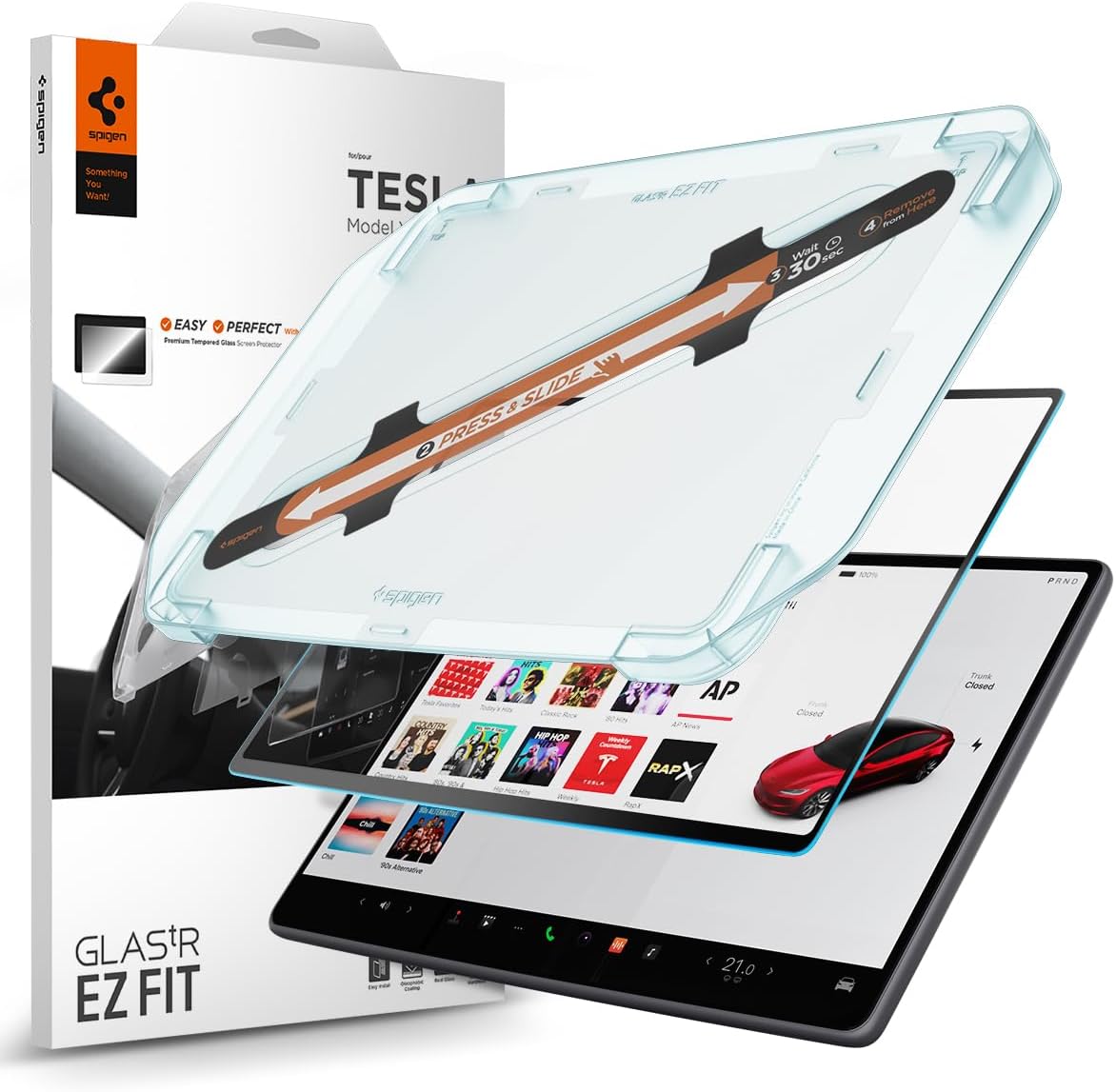
Spigen Tempered Glass for Tesla Model 3/Y
Tempered-glass protection for the touchscreen that kills fingerprints and scratches. Two minutes to install, lasts the life of the car.
As an Amazon Associate, ThinkEV earns from qualifying purchases — at no extra cost to you.
Charging Infrastructure and Real-World Range in BC Conditions
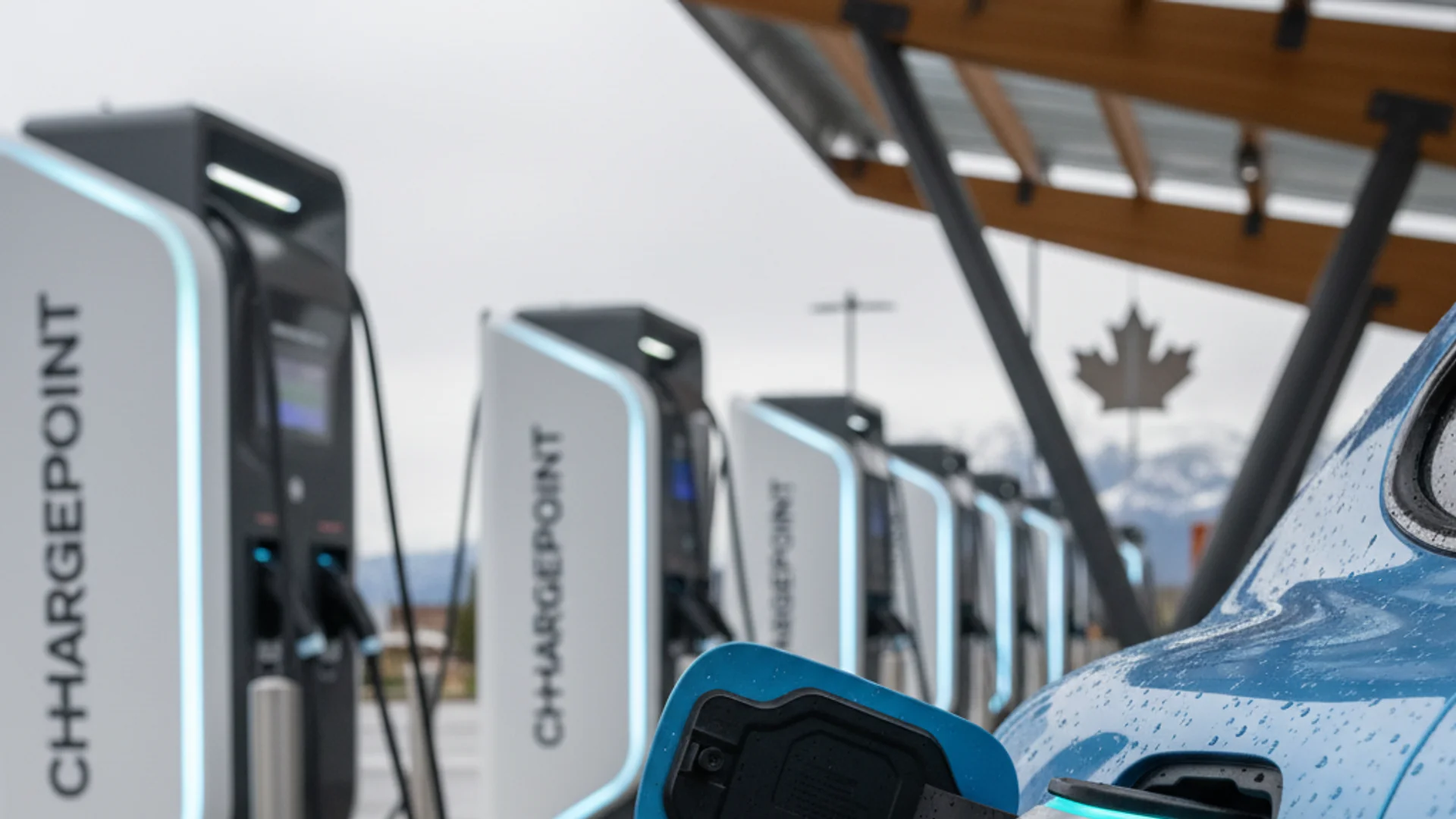
BC Hydro's EV fast-charging network covers the major corridors, Highway 1 from Victoria to the Alberta border, Highway 97 up the Okanagan, the Sea-to-Sky. FLO and ChargePoint fill in the metro gaps, and Tesla's Supercharger network is now open to non-Tesla vehicles with the appropriate adapter.
Rural coverage is the binding constraint for anything under 150 km of real-world range. A 24 kWh Leaf is not a vehicle for the Kootenays; it is a vehicle for East Van and Saanich.
Cold-weather range penalty. Coastal BC is the easiest Canadian climate on a battery. Interior and northern buyers face a steeper tax: a Leaf rated at 150 km should be planned around 100–110 km in January, and the heater draws real energy from a small pack. Larger packs absorb the penalty; small packs don't. The winter gap between a heat-pump-equipped IONIQ 5 and a resistive-heater Leaf is wider than the marketing admits, the models that actually hold their rated range through a Canadian February are a short list, and most of them are not in the under-$20,000 band.
Home charging. Level 2 at 240 volts and 32 amps is the practical baseline. Installation runs $800–$1,500 in most BC homes with modern panels, more if a panel upgrade is required. Factor it into the acquisition math. A $12,000 Leaf with a $2,000 charger install is a $14,000 Leaf.
Gear worth having
As an Amazon Associate, ThinkEV earns a small commission from qualifying purchases — at no extra cost to you.

WeatherTech FloorLiner for Tesla Model 3
Deep-channel liners that trap every drop of slush and salt. The difference between a ruined interior and a showroom-fresh cabin after a Canadian winter.
As an Amazon Associate, ThinkEV earns from qualifying purchases — at no extra cost to you.
Five Checks Before You Sign
- ICBC vehicle history report. Flood, salvage, rebuilt, odometer rollback. $35. No exceptions.
- Battery SoH scan. OBD-II tool or dealer printout. If the seller refuses, walk.
- Warranty transfer confirmation. The 8-year federal minimum is the floor; manufacturer terms govern transfer on private sales.
- Charging equipment inventory. EVSE cable, J1772-to-Tesla adapter if applicable, any model-specific dongles. Replacements cost $300–$600.
- Insurance quote before offer. ICBC rates vary by vehicle class and postal code. A Model 3 in Surrey insures differently than a Leaf in Oak Bay.
The used EV market in BC is the best it has been, more inventory, more variety, and a subsidy structure that genuinely favours the sub-$20,000 buyer. The posts that regret their purchase six months in almost always skipped the battery scan or the history report. Both together cost less than a tank of gas.
Watch the $20,000 EVAP ceiling: if Ottawa raises it to $25,000 in the 2027 federal budget, the Model 3 Standard Range+ and the post-recall Bolt both come into the subsidy net overnight, and the pricing cluster that currently sits at $19,900 on BC lots will reprice upward within a quarter. If the ceiling holds, the IONIQ Electric stays the quietest great buy in the province. At $18,500 with a verified 93% SoH and a clean ICBC report, it still is.
Gear worth having
As an Amazon Associate, ThinkEV earns a small commission from qualifying purchases — at no extra cost to you.
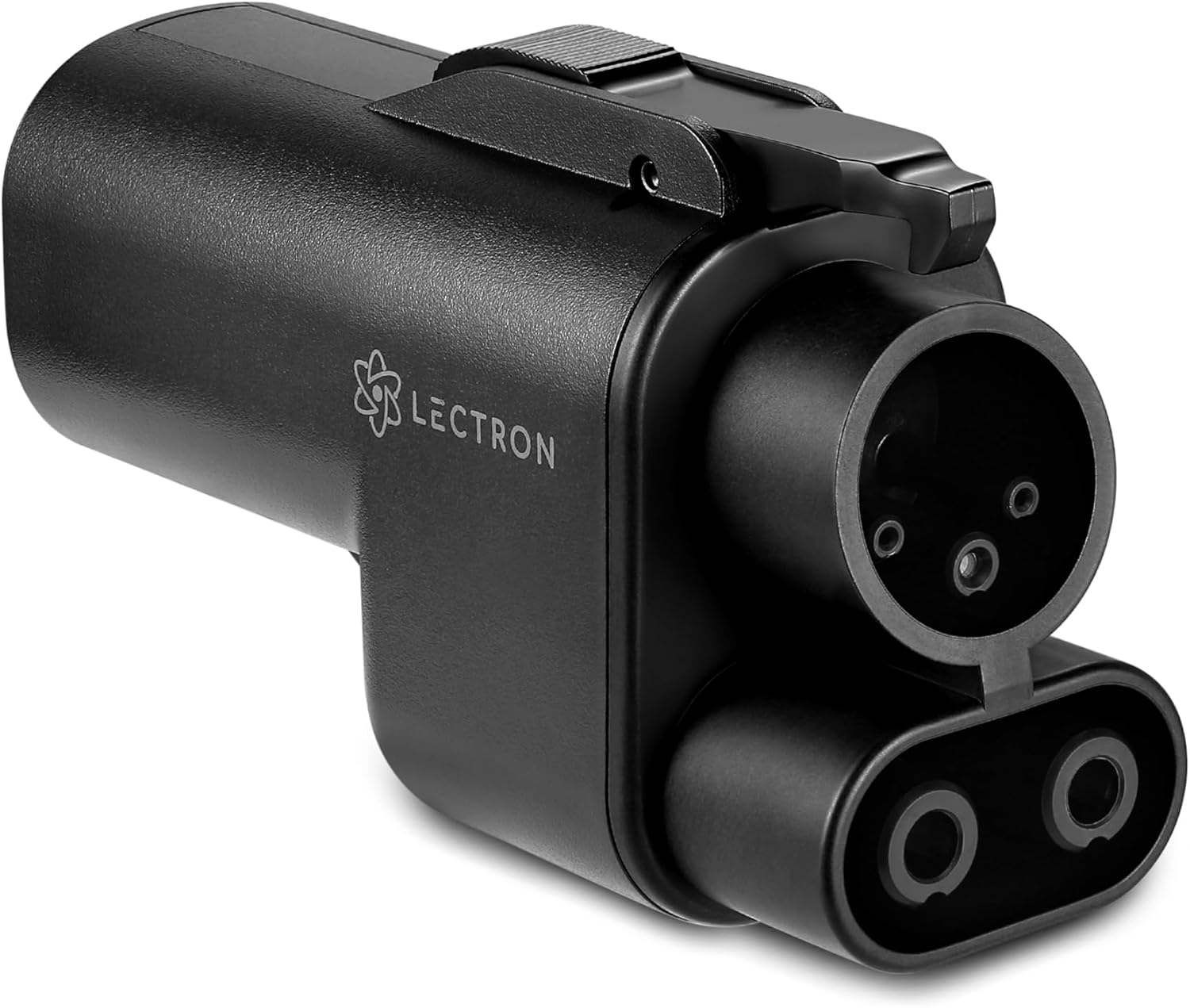
Lectron NACS to CCS Fast-Charge Adapter
Unlock every CCS fast charger for your Tesla, up to 500A DC. Never get stranded at a non-Tesla DC station again.
As an Amazon Associate, ThinkEV earns from qualifying purchases — at no extra cost to you.

Founder & Chief Editor
Vlad Pereira is the founder and chief editor of ThinkEV.ca, the Canadian electric-vehicle publication he writes and edits from Courtenay, British Columbia. He covers EV pricing, federal and provincial rebates, charging costs, and the Chinese manufacturers now entering Canada, from the buyer's side rather than the press-fleet side. ThinkEV is a venture of Vlad Pereira Online; his writing on health, income and the long game lives at vladpereira.com.
Frequently asked questions
Does the EVAP rebate apply if I buy privately, not from a dealer?
Can I stack the PST exemption and EVAP on a $19,500 Bolt?
How badly does winter cut range on a used IONIQ Electric?
Is a rebuilt-status EV ever worth buying in BC?
Does the 8-year battery warranty transfer to a second owner automatically?
More EV & road-trip finds
Affordable upgrades worth a look — tap any to check the price on Amazon.
 ★ 119
Foldable Waterproof Trunk Organizer
View on Amazon ★ 392
Large Cup Holder Adapter (32-40oz)
View on Amazon ★ 12,051
Windex Electronics Screen Wipes
View on Amazon ★ 55
LED Car Door Logo Projector Light
View on Amazon ★ 546
Funny Headrest Face Covers (2-Pack)
View on Amazon ★ 979
Leather Headrest Purse Hook
View on Amazon ★ 308
Coiled Lightning Car Cable for iPhone (2-Pack)
View on Amazon ★ 61
Toddler Car Seat Snack and Cup Tray
View on AmazonRead, Plan, Then Stay Current
Explore our expert articles to understand incentives and ownership costs, use the map to pressure-test charging reality, then subscribe so new EV coverage comes straight to you.
Continue Reading
BYD Seal Canada: 2026 Price, Rebates & Model 3 Comparison

Used Electric Cars in Canada: Best Buys for 2026
First-Time EV Buyer Mistakes Worth Avoiding in Canada
BYD Seagull Price Canada 2026, Estimated Layer by Layer
Best GM EVs in Canada for Budget Families 2026