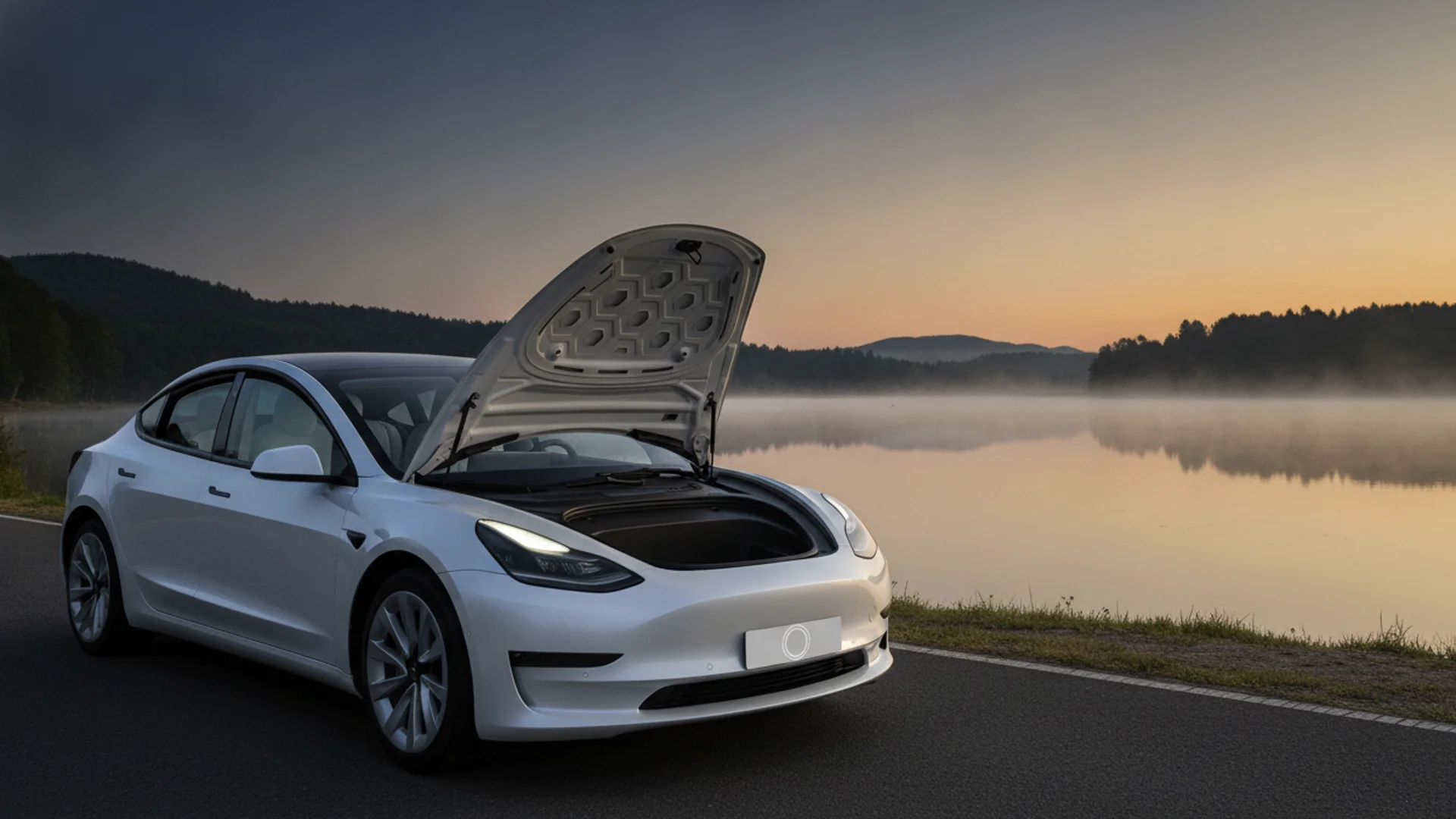
A clean 2022 Chevrolet Bolt EV lists at $23,000 in Alberta and $26,500 in Metro Vancouver, and both numbers are defensible, the car is the same, the market around it is not. That spread is the whole story of used EVs in Canada right now. The federal iZEV program for used vehicles ended before EVAP replaced it in February 2026, and used EVs do not qualify for the new federal rebate; the deal has to come from the depreciation curve, from a provincial program if your province still runs one, or from both. A used EV in Canada can save you real money in 2026, but only if you match the car to your charging reality, and only if you buy the battery, not the body.
Key takeaways
- A 2022 Chevrolet Bolt EV spans $23,000–$26,500 depending on province, same car, different market.
- Used EVs get zero federal rebate in 2026; your savings come entirely from the depreciation curve.
- Skip pre-2019 Nissan Leafs, no thermal management means steep capacity loss past 80,000 km.
- At −20°C, real-world range drops 20–40%; a 417 km Bolt EV delivers roughly 240–300 km in January.
- Demand an OBD-II state-of-health report on any used EV, if the seller refuses, walk.
Quick Answer: What to Buy and What to Skip
The 2021–2023 Chevrolet Bolt EV is the strongest value in the Canadian used market at $20,000–$28,000, depending on province, mileage, and whether the LG recall-era battery pack has been replaced (ask; get it in writing). The Bolt EUV sits roughly $2,000 above the Bolt EV for the same model year.
A clean 2020–2021 Tesla Model 3 Standard Range lands at $28,000–$35,000. It depreciates slower than anything comparable from a legacy automaker, which cuts both ways: you pay more up front and recover more at resale.
Skip pre-2019 Nissan Leafs. The 24 kWh and 30 kWh packs have no active thermal management, and real-world capacity loss after about 80,000 km is steep enough that the sticker price stops being a bargain. A 2019+ Leaf Plus (62 kWh) is a different conversation, still no liquid cooling, but the larger pack absorbs the loss.
LFP chemistry degrades more predictably than NMC, the late-2021 and later Tesla Model 3 Standard Range is the cleanest example in the Canadian used market. That predictability matters when you're buying a battery you can't see.
Gear worth having
As an Amazon Associate, ThinkEV earns a small commission from qualifying purchases — at no extra cost to you.

Lectron Level 2 J1772 Charger (40A, WiFi)
Smart WiFi charger with real-time energy monitoring. 40A / 9.6 kW, J1772 with a NEMA 14-50 plug, schedule charging right from your phone.
As an Amazon Associate, ThinkEV earns from qualifying purchases — at no extra cost to you.
The Depreciation Curve Is the Deal, If You Read It Right
The federal iZEV rebate for new vehicles, up to $5,000, ended in early 2025 and was replaced by EVAP in February 2026. For a used-EV buyer in 2026, both programs are indirectly relevant: the original owner captured one of them, and the car in front of you already has that discount baked into its depreciated price. You capture it at the second transaction, which is where used-EV value lives.
EV depreciation front-loads. Years 1–3 absorb roughly 40–50% of MSRP on most non-Tesla models, a 2022 Hyundai Ioniq 5 that stickered at $55,000 is listing at $31,000–$34,000 three years later, give or take trim. That is not a market failure; that is the subsidy rolling off plus the normal first-owner discount plus the EV-specific anxiety premium that compresses after the warranty box is checked.
Tesla is the outlier. A 2021 Model 3 Standard Range that stickered around $48,000 is still asking $30,000–$33,000 in late 2026, closer to a 35% three-year drop than 50%. Nissan Leaf and early Hyundai Ioniq (the sedan, not the Ioniq 5) sit at the other end: 50–60% off MSRP by year three is not unusual. The spread between fastest and slowest depreciators is roughly $8,000–$12,000 on a $50,000 original car, which is large enough to flip which model is the better buy depending on how long you plan to hold it.
The practical move: if you plan to sell in three years, the Tesla's residual advantage covers most of its premium. If you plan to drive it into the ground, the Bolt's depreciation IS the deal, see the full brand-by-brand residual comparison for where every major badge lands.
Range Reality: Spec Sheet vs. Canadian Winter vs. Your Commute
NRCan's rated range is a laboratory number. Canadian winter is not a laboratory. At −20°C, real-world range drops 20–40% versus the sticker, a 2020 Bolt EV rated 417 km delivers roughly 260–300 km in January in Toronto, and closer to 240 km in Winnipeg if you preheat on battery rather than on shore power. This is the single most underestimated factor in the used-EV decision, and it is why "spec sheet range minus 100 km" is a safer mental model than any manufacturer figure.
Match the battery to the worst-case day, not the average day. If your January commute is 60 km round trip and you have no workplace charging, a 40 kWh Leaf with 9 of 12 health bars will technically make it, and will spend the entire winter at 10% state of charge in the parking lot, which is the fastest way to accelerate the degradation you were trying to avoid. Buy for the margin.
On used Leafs specifically: check the battery health bars on the dash cluster. 12/12 is new. 11/12 is normal for a three-year-old car. 10/12 is acceptable. 9/12 is a warning. 8/12 or lower means the Leaf's internal capacity model has already written off a quarter of the pack, and the real figure is often worse. Pair this with a Leaf Spy OBD-II readout, the free dash reading rounds generously.
Gear worth having
As an Amazon Associate, ThinkEV earns a small commission from qualifying purchases — at no extra cost to you.

WeatherTech FloorLiner for Tesla Model 3
Deep-channel liners that trap every drop of slush and salt. The difference between a ruined interior and a showroom-fresh cabin after a Canadian winter.
As an Amazon Associate, ThinkEV earns from qualifying purchases — at no extra cost to you.
The charging-at-home question matters as much as the car. Level 2 at 7.2 kW covers a 300 km battery overnight; a standard 120 V outlet (Level 1) adds roughly 8 km per hour, which is a philosophy more than a charging solution for anything larger than a plug-in hybrid. If you rent, if you street-park, if your building's electrical panel can't accommodate a dedicated 40 A circuit, the math changes entirely, and a used EV may be the wrong tool regardless of price.
Gear worth having
As an Amazon Associate, ThinkEV earns a small commission from qualifying purchases — at no extra cost to you.

Spigen Tempered Glass for Tesla Model 3/Y
Tempered-glass protection for the touchscreen that kills fingerprints and scratches. Two minutes to install, lasts the life of the car.
As an Amazon Associate, ThinkEV earns from qualifying purchases — at no extra cost to you.
Where to Buy and What the Inspection Must Cover
Certified-used programs, Clutch, Carnex, GoElectric in Calgary, Kaizen Auto, EVnet.ca, bundle multi-point inspections, limited warranties, and in some cases a battery state-of-health report into the sticker. Private sale skips all of that. Price accordingly: a private-sale Bolt should list $2,000–$4,000 under the equivalent certified-used Bolt, or the certified lot is doing you a favour.
Non-negotiable inspection items on any used EV:
- A battery state-of-health (SOH) report pulled via OBD-II. Leaf Spy for Nissan, ScanMyTesla for Tesla, Torque Pro with the right PIDs for Bolt. If the seller refuses an OBD-II scan, walk, the pack is the car.
- Charge port condition. Pin wear, corrosion, and any evidence of a slow-charging workaround (electrical tape near the port is diagnostic).
- 12V auxiliary battery age. Yes, EVs have one, and a tired 12V is the single most common cause of a dead-in-the-driveway EV. Replacement is $200 and ten minutes; a seller who hasn't done it is a seller who hasn't maintained the car.
- Collision and flood history. Both affect pack integrity in ways that may not surface for months. In BC, ICBC Autoplan history is publicly accessible via a VIN search; in Ontario, the seller is legally required to provide a Used Vehicle Information Package.
The pre-signature checklist walks the full three-check inspection, battery SOH, warranty transfer, charge port, in detail; print it before you visit the lot.
One encouraging data point: used EVs are passing roadworthiness tests at higher rates than petrol cars of the same age in the UK's MOT data. That is not a free pass, but it does suggest the mechanical case for a well-inspected used EV is stronger than the ambient anxiety implies, the full UK MOT breakdown is worth the ten minutes.
Gear worth having
As an Amazon Associate, ThinkEV earns a small commission from qualifying purchases — at no extra cost to you.
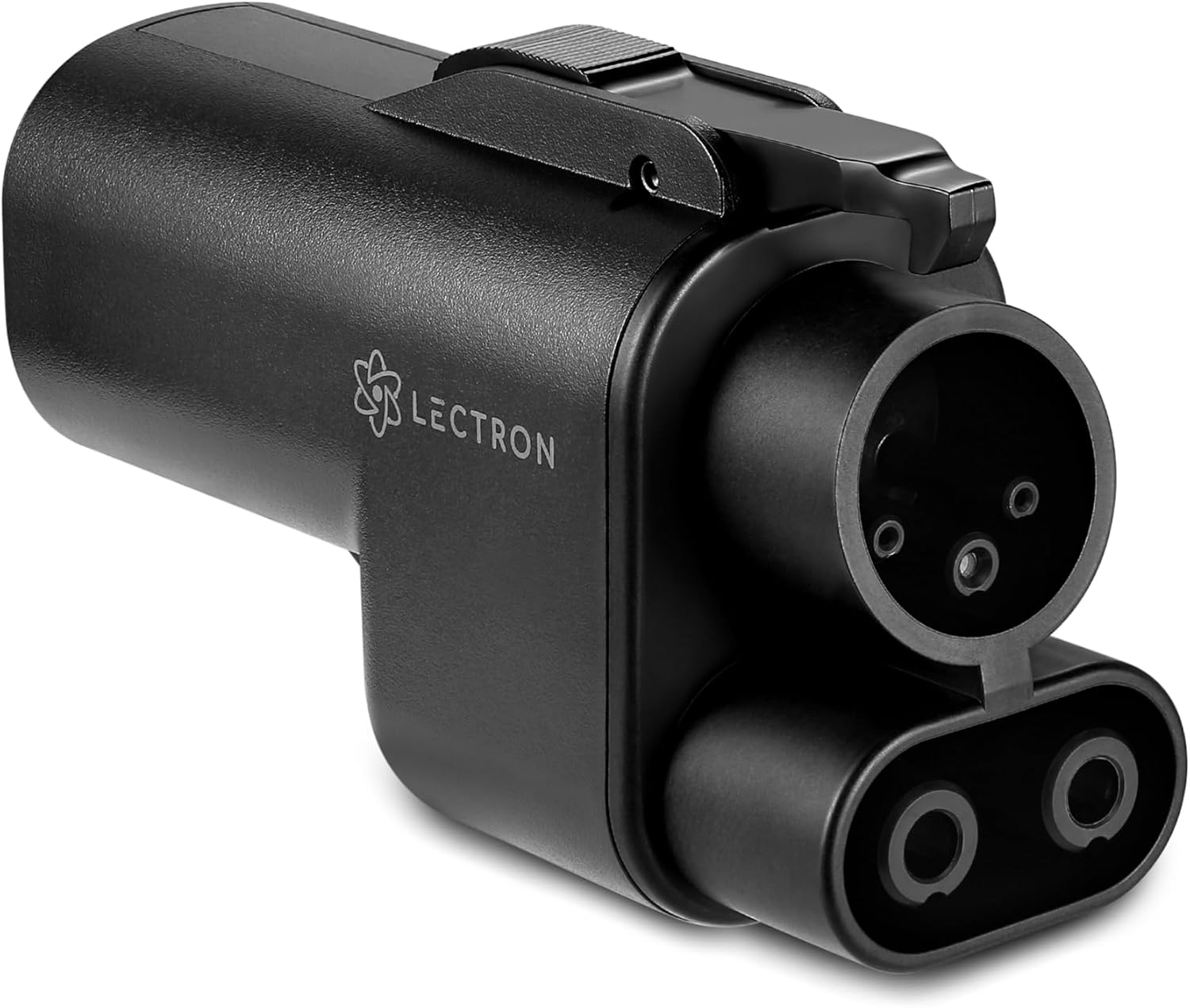
Lectron NACS to CCS Fast-Charge Adapter
Unlock every CCS fast charger for your Tesla, up to 500A DC. Never get stranded at a non-Tesla DC station again.
As an Amazon Associate, ThinkEV earns from qualifying purchases — at no extra cost to you.
The Province Makes the Decision as Much as the Car Does
Canadian used-EV pricing is a provincial map, not a national one. The same 2022 Bolt EUV is a different financial proposition in Vancouver, Montreal, Toronto, and Calgary, and the reason is almost entirely rebate structure.
British Columbia, CleanBC Go Electric offers up to $4,000 on qualifying used EVs with an original MSRP under $55,000, subject to vehicle age and odometer caps. Confirm eligibility on the program portal before you sign, the list of qualifying models updates, and dealer paperwork sometimes lags the official list by a few weeks.
Quebec, the Roulez vert used-EV incentive pays up to $4,000, income-tested, with a declining schedule as the program winds down toward its sunset date. The waitlist at some high-volume dealers runs 6–8 weeks between purchase and rebate deposit, which is a cash-flow consideration if you're financing the full purchase price.
Ontario, no provincial used-EV incentive as of October 2026, and the federal iZEV used-vehicle rebate was discontinued before EVAP replaced new-vehicle iZEV in February 2026. EVAP does not extend to used vehicles. Ontario buyers are buying on raw depreciation and electricity cost, which, at Ontario off-peak rates, is still a strong argument on its own. If a provincial used-EV incentive returns in the next six months, the Toronto market compresses toward Vancouver pricing within a quarter, that is the live variable to watch.
Alberta, no provincial EV incentive, no residual federal rebate on used, and nevertheless an active EV-specialist dealer market in Calgary (GoElectric, Kaizen Auto) that keeps clearing inventory. Demand exists without subsidy. If the market works unsubsidized in Calgary, the economics of the vehicles themselves are sound; the rebates in BC and Quebec are a tailwind, not the whole case.
For a sense of where this is heading nationally, Norway is the country where annual sales of all-electric cars outsold the combined volume of all passenger cars with internal combustion engines. That is the mature end of the curve. Canadian city-by-city adoption data shows which markets are tipping first, Metro Vancouver and Montreal lead; Edmonton and Winnipeg trail. Used-EV supply follows the same curve a year or two behind the new-car registration data, which means the best private-sale inventory in 2027 will be in the provinces with the highest new-EV sales in 2025.
Gear worth having
As an Amazon Associate, ThinkEV earns a small commission from qualifying purchases — at no extra cost to you.

Tesla Key Card Holder with AirTag Slot
Stop fishing the keycard out of your wallet, and slot an AirTag in case the car wanders off in a lot.
As an Amazon Associate, ThinkEV earns from qualifying purchases — at no extra cost to you.

Founder & Chief Editor
Vlad Pereira is the founder and chief editor of ThinkEV.ca, the Canadian electric-vehicle publication he writes and edits from Courtenay, British Columbia. He covers EV pricing, federal and provincial rebates, charging costs, and the Chinese manufacturers now entering Canada, from the buyer's side rather than the press-fleet side. ThinkEV is a venture of Vlad Pereira Online; his writing on health, income and the long game lives at vladpereira.com.
Frequently asked questions
Do any provincial rebates apply to used EVs in 2026?
How do I check a Bolt's battery after the LG recall?
Is a Nissan Leaf Plus meaningfully better than the original?
Can I buy a used EV if I rent and street-park?
What's a fair private-sale discount versus a certified-used listing?
More EV & road-trip finds
Affordable upgrades worth a look — tap any to check the price on Amazon.
 ★ 1,083
Crystal Push-Start Button Ring (2-Pack)
View on Amazon ★ 12,396
K KNODEL Car Trash Can with Lid
View on Amazon
TP-Link Kasa Smart Plug with Energy Monitoring
View on Amazon ★ 119
★ 119Foldable Waterproof Trunk Organizer
View on Amazon ★ 17,839
Qifutan Vent Phone Mount (Military-Grade Clip)
View on Amazon ★ 47,507
HOMEXCEL Microfiber Cloths (12-Pack)
View on Amazon ★ 164
★ 164Solar-Powered LED Ambient Light
View on Amazon ★ 401
★ 401Crochet Daisy Rear-View Mirror Charm
View on AmazonRead, Plan, Then Stay Current
Explore our expert articles to understand incentives and ownership costs, use the map to pressure-test charging reality, then subscribe so new EV coverage comes straight to you.
Continue Reading

EV Rebates in Canada: How EVAP and Provincial Stacking Work

EV Depreciation Explained: Why It Differs From Gas Cars

What Nobody Tells You Before Buying Your First EV in 2026
EV Incentives Canada 2026: Federal and Provincial

New or Used EV: Which Is the Smarter Buy in 2026?