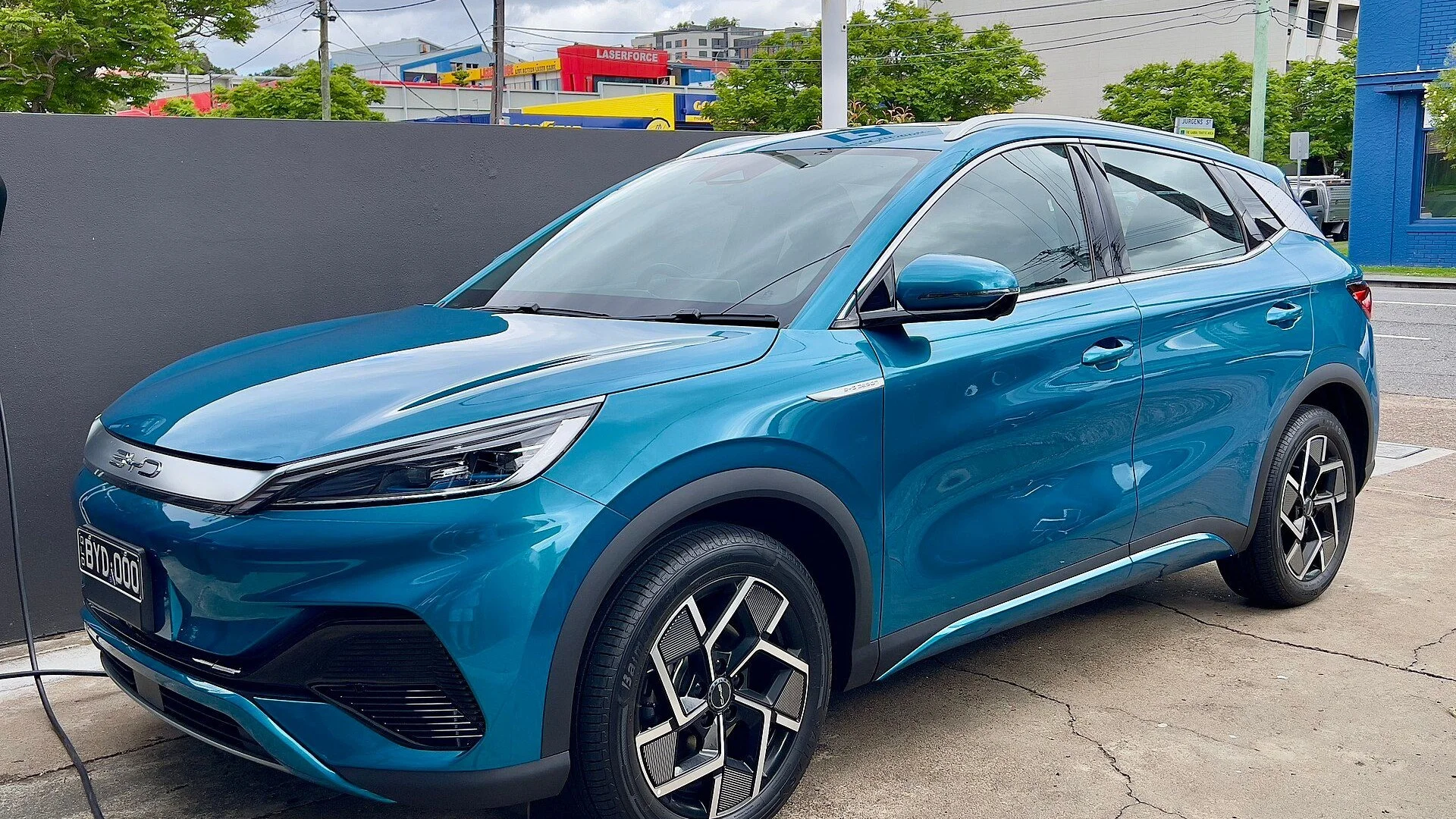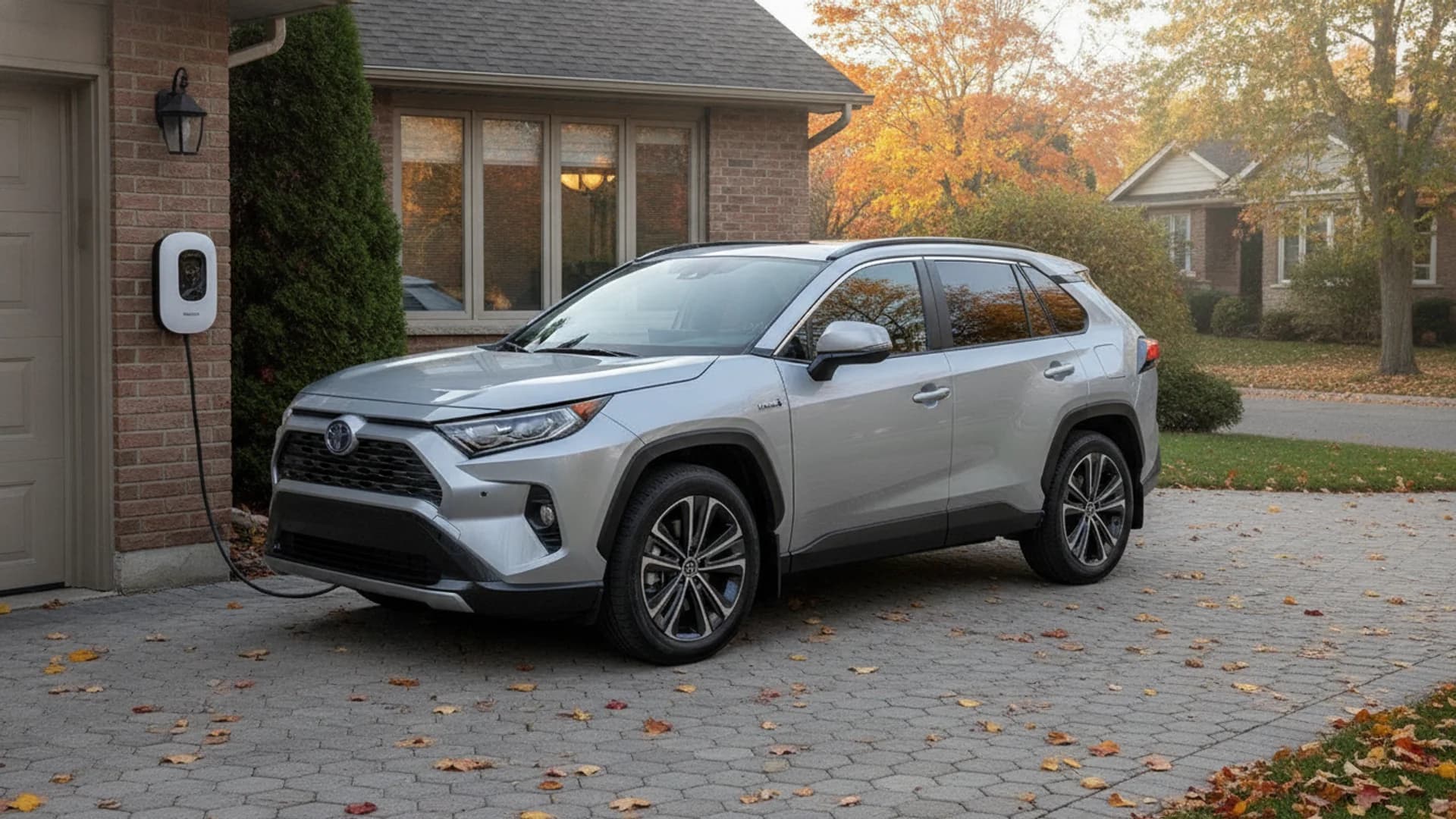
Buy the 2026 RAV4 PHEV. Wait on the next-generation Hyundai and Kia plug-ins until they add DC fast charging. Skip any PHEV whose all-electric range falls below 60 km on the Canadian test cycle.
The "PHEVs never get plugged in" critique that dominated EV discourse from 2021 through 2024 was geography-bound, and the people who exported it onto the North American market owe Toyota an apology. The data that upended the debate didn't come from a lab, it came from millions of ordinary charging sessions in American and Canadian driveways, and the gap between what European fleet studies predicted and what North American owners actually do is wide enough to drive a RAV4 through.
Toyota has been publicly accusing rivals of selling "fake hybrids" to mislead drivers, a fight that only makes sense if the underlying technology is suddenly worth defending. It is. North American PHEV owners plug in at rates that bear no resemblance to the European fleet data the greenwashing narrative was built on, and the strategic implication for Canadian buyers, Canadian policy, and the entire EV transition timeline is bigger than the auto press is currently treating it.
The multi-pathway electrification bet Toyota was mocked for is the one the data now supports, and the 2026 RAV4 PHEV's most underrated feature isn't its battery: it's the company's willingness to put DC fast charging on a plug-in hybrid when nobody else thinks the math works.
Key takeaways
- Canada registered 132,742 plug-in passenger cars in 2020, 101,628 BEVs and 31,114 PHEVs, giving PHEVs roughly a 24% share of plug-in registrations, a plug-in rate Europe's fleet studies called impossible.
- Morgan Stanley analyst Adam Jonas publicly reversed his 'Toyota is a laggard' call this month, citing alignment with actual market data.
- The ICCT greenwashing finding came from European company-car fleets where fuel was free and home charging required landlord approval, it never applied here.
- The 2026 RAV4 PHEV's most underrated feature is Toyota adding DC fast charging to a plug-in hybrid when no competitor thinks the math justifies it.
- Skip any PHEV with under 60 km Canadian-cycle electric range, below that threshold, the real-world charge economics stop making sense.
The Charge Rate That Changed the Argument
132,742 plug-in passenger cars registered in Canada in 2020-101,628 BEVs and 31,114 PHEVs. That ratio, roughly 76/24, is the registration baseline. The behavioural data layered on top of it is what flipped the argument: North American PHEV owners plug in at rates the imported European studies said were impossible.
Start with the behavioural data, because everything downstream depends on it. The dominant critique of plug-in hybrids, articulated most loudly by European regulators and the International Council on Clean Transportation, was that owners drove them on gasoline, ignored the plug, and pocketed the tax credit. That critique was real. It was also drawn almost entirely from European company-car and fleet datasets, where the driver doesn't pay for the fuel and has no behavioural incentive to charge.
North American PHEV owners are a different cohort entirely. They are owner-drivers, they pay for their own fuel, and the overwhelming majority charge at home in a single-family garage. The result, when you actually measure it, is a charging-rate gap between continents that is not a rounding error, it is the entire argument.
Morgan Stanley's reversal arrived this month: analyst Adam Jonas acknowledged Toyota's hybrid strategy was correct, as the automaker's cautious approach to electrification proved more aligned with market realities than aggressive EV-only strategies. When the sell-side analyst who spent two years calling Toyota the laggard of the transition publicly reverses, the conversation has moved.
The case against making too much of this reversal is clear. One analyst flipping is not a paradigm shift; sell-side calls track stock-price momentum at least as much as they track underlying technology trajectories, and Jonas in particular has a history of recalibrating loudly when the wind changes. A single endorsement doesn't vindicate a decade-long strategy. What it does do is mark the moment when the cost of defending the EV-pure-play timeline became higher than the cost of admitting Toyota's segmentation model fit the data better. That's a different and more durable signal than a price-target upgrade.
The story isn't that PHEVs are cleaner than BEVs over a vehicle's life cycle in every driving pattern, they aren't, and the math still favours full battery-electric for buyers who can charge reliably at home and rarely drive more than 400 km in a day. The story is that the universal indictment, the line that PHEVs are greenwashing regardless of who owns them, was a finding from one continent dressed up as a law of nature.
The strategic consequence: a buyer cohort exists, large and identifiable, for whom a plug-in hybrid is the highest-emissions-reduction vehicle they will actually plug in and drive every day. Pretending that cohort doesn't exist, or that they'd buy a $58,000 BEV instead if only the incentive structure pushed them harder, is the kind of policy fantasy that has cost the Canadian transition three years of progress.
For context on how this fits into the broader Canadian EV pricing landscape and where PHEVs slot against BEVs at comparable price points, the 2026–2027 Canadian EV pricing breakdown maps the trim-by-trim picture.
Why the 'PHEVs Are Greenwashing' Consensus Was Always Geography-Dependent
The ICCT studies that gave the greenwashing narrative its credibility were rigorous in their context. They drew from European leasing fleets and company-car programmes where the employer paid the fuel card, the driver had no exposure to pump prices, and charging at home was often impossible because the housing stock is dense apartment-block inventory without dedicated parking.
Of course those drivers didn't plug in. Why would they? The fuel was free to them and the plug was on the other side of a multi-unit building. The ICCT measured exactly the behaviour the incentive structure produced.
The mistake wasn't the European study. The mistake was the policy-class assumption that the result would generalize. It didn't. North America has a fundamentally different housing pattern, a large single-family-home majority with attached or adjacent parking, a higher rate of private home charger installation, and an owner-driver buyer base that pays its own fuel bill. Canadian cold-weather and long-haul use cases are exactly the scenarios the PHEV value proposition is engineered for, and Albertans who have trusted Toyota for decades to handle everything from the icy ruts on the Whitemud to the long, summer hauls down the Yellowhead already know it. That's a description of the buyer-segmentation problem the universal critique ignored, not a marketing pitch.
Three structural reasons the European finding never should have been pasted onto Canada:
- Home charging access is not comparable. Canadian suburban single-family homes routinely add a Level 2 charger for under $1,500 installed. European apartment-block tenants face landlord negotiations, body-corporate approvals, and shared-circuit limits that turn a six-month project into a permanent excuse to keep filling up at the pump.
- Fuel-cost exposure is not comparable. A Canadian owner watching gasoline cross $1.80/L in Vancouver or Toronto has direct behavioural incentive to use the electric range. A European fleet driver on a fuel card does not.
- Vehicle-use patterns are not comparable. The North American daily-commute distribution sits comfortably within a 60–80 km PHEV battery's electric range. European urban driving patterns are shorter on average but more often pure-electric-capable on smaller city BEVs, which is why the PHEV value proposition is genuinely weaker there.
The "fake hybrids" line Toyota has been firing at rivals lands because the term applies to a specific kind of vehicle, high curb weight, optimistic test-cycle electric range, real-world battery rarely cycled, that the European data correctly identified. Owners can tell which PHEVs are designed to be plugged in and which are designed to be marketed, and they've been saying so loudly enough that the distinction is now part of the buyer vocabulary.
Name the specific comparison the European data has been used to indict: the previous-generation BMW X3 30e and similar German PHEVs running 40–50 km of WLTP-cycle electric range on a fleet driver who never plugs in. That's the archetype the "fake hybrid" critique was built around, and it's a legitimate target. The 2026 RAV4 PHEV running 80 km of real-world range to an owner-driver paying their own electricity bill is a different vehicle in a different market with a different utility factor, and folding them into the same indictment is the analytical sleight of hand that propped up the policy consensus for three years.
What this means for the policy conversation in Canada: when Transport Canada and provincial programme designers cite ICCT findings to justify excluding or de-rating PHEVs in incentive structures, they are citing European behaviour to set Canadian policy. That isn't evidence-based regulation. It's evidence imported from a market with a different housing pattern, a different fuel-cost regime, and a different fleet-versus-owner buyer mix.
Gear worth having
As an Amazon Associate, ThinkEV earns a small commission from qualifying purchases — at no extra cost to you.

Lectron Level 2 J1772 Charger (40A, WiFi)
Smart WiFi charger with real-time energy monitoring. 40A / 9.6 kW, J1772 with a NEMA 14-50 plug, schedule charging right from your phone.
As an Amazon Associate, ThinkEV earns from qualifying purchases — at no extra cost to you.
Toyota Held the Line While Analysts Called It Wrong
There is a version of this story where Toyota's hybrid-first strategy is a stubborn legacy automaker refusing to read the room. That was the dominant analyst framing from roughly 2021 through late 2024. The competing version, the one the data supports, is that Toyota was running a different model of the transition, weighted toward what buyers would actually adopt rather than what regulators wanted them to adopt, and refused to abandon it under sell-side pressure.
The pivot point is this: Toyota and BMW argued that technical one-sided regulations would limit supply and risk jobs, that sustainable mobility has to include a variety of different energy sources rather than a single target, and the future plan was to create fully versatile platforms that could accommodate gas, hybrid, plug-in hybrid, or full electric propulsion, so BMW would be able to supply EVs if a particular market favoured them and go down the traditional gas route if it did not. Strip the corporate language out and the position is a market-segmentation bet: that the transition would happen unevenly across geographies, that the optimal powertrain for any given buyer would depend on where they lived and how they drove, and that the manufacturer that could supply all four would beat the manufacturer that bet everything on one.
The counter-argument deserves a hearing. Critics of Toyota's strategy weren't all wrong, they argued that platform optionality is expensive, that hedging across four powertrains dilutes engineering focus, and that the manufacturers who committed earliest to BEV-only architecture (Tesla, BYD, Hyundai-Kia's E-GMP) would build cost advantages that hedgers couldn't match. That critique still has teeth in the segments where it matters: at the high-volume affordable BEV tier, Tesla and BYD have unit-economics that Toyota's BEV programme can't touch, and pretending otherwise would be dishonest. What Toyota's strategy bought wasn't superiority in the BEV segment, it was the ability to keep selling profitable cars to the 60% of buyers the BEV-only timeline was asking to wait.
The financial outcome speaks louder than the strategy memo. Toyota's hybrid volume and margin data through 2024 and into 2026 has outperformed the consensus EV-pure-play timelines that analysts were modelling. Hybrids carry margin that early BEV programmes have struggled to match, and Toyota's manufacturing base, engineered for high-volume hybrid output for two decades, gives it a unit-economics advantage that GM, Ford, and the Korean OEMs are still trying to engineer their way into. Why legacy automakers keep losing to Chinese EV brands covers the structural side of that gap from the opposite direction, the part where the traditional Western OEMs that DID go all-in on BEV got their margin compressed.
The retrospective question for every analyst who spent 2022 calling Toyota's strategy wrong: what assumption in your model produced that call, and what data would have changed it earlier? In most cases the answer is the universalized ICCT finding, the assumption that PHEV owners wouldn't plug in regardless of geography. That single assumption, baked into transition models that fed sell-side calls, is what made Toyota look like a laggard when it was running a different and more accurate behavioural model.
Gear worth having
As an Amazon Associate, ThinkEV earns a small commission from qualifying purchases — at no extra cost to you.

TP-Link Kasa Smart Plug with Energy Monitoring
Track exactly how much electricity your Level 1 charger uses and schedule it for off-peak hours. Know your real cost per kWh.
As an Amazon Associate, ThinkEV earns from qualifying purchases — at no extra cost to you.
What the RAV4 PHEV's DC Fast Charging Decision Actually Signals
Most plug-in hybrid vehicles don't offer DC fast charging, because that's what makes sense for them. However, the soon-to-be most popular plug-in hybrid in the country, the 2026 Toyota RAV4 PHEV, can be charged on Level 3 fast chargers. A 15–20 kWh battery can be Level 2 filled overnight, so why pay for the more expensive fast-charge hardware and the thermal-management overhead it requires? Toyota broke its own segment's cost discipline anyway, and the decision tells you what they expect the next decade of buyer behaviour to look like.
Three signals embedded in the RAV4 PHEV's fast-charging spec:
- Trust positioning. A PHEV with DC fast charging belongs in the same conversation as a BEV. Without it, the PHEV is structurally a "near-EV", present at the charging station only via Level 2 cables that the rest of the EV ecosystem has moved beyond. Toyota is saying, in hardware: this vehicle is a real participant in the electrification infrastructure, not a tourist.
- Road-trip viability. The standard PHEV value proposition is "electric for commuting, gasoline for long trips." DC fast charging changes that equation. A 30-minute splash at a Petro-Canada Electric Highway stall mid-road-trip means the second half of the drive can also be electric, which is exactly the use case Canadian buyers in BC, Alberta, and Ontario keep telling researchers they want.
- Margin confidence. Adding DC fast charging hardware to a PHEV is not free. Toyota is willing to absorb that cost because it expects the segment volume to support the unit economics. That's a company doubling down on PHEVs, not hedging out of them. The emerging versus established EV brands comparison covers the broader question of how that confidence reads against the rest of the field.
The relevant named comparison sits across the Pacific: the BYD Seal, fully BEV, supports Apple CarPlay and Android Auto, built on a dedicated electric platform, is the kind of vehicle the BEV-only theorists pointed to as the future the RAV4 PHEV was holding back. The RAV4 PHEV with DC fast charging doesn't compete with the Seal on pure-electric efficiency, and it shouldn't try. It competes for a different buyer: the one who wants the Seal's electrification ceiling without giving up the long-trip flexibility a single-vehicle Canadian household needs. Two valid answers to two different questions, and the policy framework that treats them as competitors for the same incentive dollar is the framework that's been getting it wrong.
There's a buyer cohort this decision is engineered for: dual-vehicle Canadian households where one vehicle does the commute and the other does the longer trips and the occasional towing. For these buyers, a $48,000–$56,000 RAV4 PHEV with electric daily-driver capability and gasoline-plus-fast-charging long-trip capability is a more useful vehicle than a comparably-priced BEV that asks them to manage charging logistics on every trip beyond 400 km. That's the segment Toyota is selling into, and the DC fast charging spec is the trust signal that closes the deal.
The competitive pressure this creates is real. The next-generation Hyundai, Kia, and Stellantis PHEVs that ship without DC fast charging will look immediately dated against the RAV4 PHEV, and the segment is going to have to follow Toyota's lead. The same dynamic the Chevy Equinox EV's range-vs-price positioning created in the affordable-BEV segment is about to play out in PHEVs, Toyota just reset the floor.
Gear worth having
As an Amazon Associate, ThinkEV earns a small commission from qualifying purchases — at no extra cost to you.

Grizzl-E Classic Level 2 EV Charger (40A)
Canadian-made and rated for minus 40C winters. 40A / 9.6 kW, NEMA 14-50, indoor/outdoor, 24-ft cable. The charger built for Canadian weather.
As an Amazon Associate, ThinkEV earns from qualifying purchases — at no extra cost to you.
The Market Signal Canada and the US Are Sending
The behavioural data tells a story about the buyer the policy class has been ignoring. High North American plug-in rates aren't evidence that PHEVs are a permanent solution. They're evidence that a large, identifiable cohort of buyers is ready for electrification but constrained by charging-infrastructure gaps on long routes, and that this cohort will adopt electric driving aggressively when given a vehicle that doesn't force them to choose between their daily commute and their summer road trip.
The Canadian incentive structure has not caught up to this. Federal iZEV treats PHEVs as a junior partner to BEVs, and several provincial programmes have either de-rated PHEVs entirely or capped them out of meaningful rebates. The implicit logic is the universalized ICCT finding: PHEVs don't get plugged in, so don't subsidize them. The behavioural data from North American owners says that logic is wrong on this continent.
The policy gap is specific. Canadian plug-in vehicle registrations crossed six figures back in 2020-132,742 plug-in electric passenger cars (101,628 BEVs and 31,114 PHEVs), and the PHEV share of that count was already roughly a quarter. Excluding the segment from meaningful incentives means leaving emissions reduction on the table. The share has compounded since. If a quarter or more of plug-in registrations are PHEVs, and those PHEVs are getting plugged in at meaningfully higher rates than the policy assumption predicted, the incentive structure is calibrated to the wrong continent's data.
What policy that actually reflects the data would look like:
- iZEV should re-rate PHEVs on the basis of measured Canadian plug-in behaviour, not imported European fleet data. The threshold for full versus partial rebate should be tied to all-electric range AND real-world utility factor for the Canadian buyer cohort.
- Provincial programmes that excluded PHEVs in 2024–2025 should reconsider. The behavioural assumption they relied on doesn't hold.
- Public Level 2 infrastructure investment, particularly workplace and multi-unit-residential charging, is the highest-leverage spend for accelerating PHEV emissions-reduction in dense Canadian urban cores, because the constraint there is parking access, not vehicle capability.
The pushback from BEV advocates is anticipated: re-rating PHEVs upward in iZEV risks slowing BEV adoption by giving buyers a "good enough" alternative that lets them defer the harder transition. That's a coherent concern and pretending otherwise would be dishonest. The response is that incentive structures should be calibrated to measured emissions reduction per dollar spent, not to a preferred vehicle category. If a re-rated PHEV incentive moves a buyer out of a pure-ICE crossover and into a vehicle they actually plug in for 70% of their kilometres, that's a better emissions outcome than the same dollar nudging a marginal BEV buyer who was already going to buy a BEV anyway. Policy should chase the marginal kilometre electrified, not the preferred drivetrain.
This isn't an argument against BEV-first incentives. BEVs are still the right answer for the largest segment of new-vehicle buyers, the Tesla Model Y Long Range RWD at 531 km of rated range is the obvious benchmark, and Canadian policy should continue to weight that tier. It's an argument against treating PHEVs as a category mistake, which is what current policy implicitly does, and which the data no longer supports.
Gear worth having
As an Amazon Associate, ThinkEV earns a small commission from qualifying purchases — at no extra cost to you.

ChargePoint Home Flex Level 2 Charger (50A)
Premium 50A / 12 kW charger with the best app ecosystem. Hardwired or NEMA 14-50, with real-time energy tracking and smart scheduling.
As an Amazon Associate, ThinkEV earns from qualifying purchases — at no extra cost to you.
What Would Change This Picture, And What's Worth Watching
The PHEV-is-right thesis does not hold forever. There are specific triggers that would invalidate it, and naming them is better than hiding behind vague optimism.
Three thresholds that would flip the position:
- Public Level 2 charging density reaching European urban levels in Canadian cities. If multi-unit residential charging access becomes standard in Toronto, Vancouver, and Montréal, the PHEV's home-charging advantage erodes and BEVs become viable for the cohort that currently can't charge at home. Watch federal NRCan and provincial energy-utility build-out plans through 2027.
- BEV range past 600 km EPA-rated at sub-$45,000 CAD. This is the specific threshold where the PHEV value proposition loses its road-trip rationale for the RAV4-buyer cohort. We're not there yet, most BEVs at that price point are 450–530 km, but the trajectory is closing. Two model cycles, three at the outside.
- Toyota's PHEV volume slipping below 60% of its electrified mix. If Toyota itself starts pivoting volume from PHEVs to BEVs faster than its public strategy suggests, that's the company telling the market the bet is changing. Q3 2026 sales mix is the next read. Hold above 60% PHEV share of electrified volume and the thesis is intact.
The forecast worth committing to, with stakes attached: PHEV share of Canadian electrified vehicle sales holds above 25% through 2027, then begins a slow decline as BEV range and charging infrastructure close the gap. Toyota's RAV4 PHEV becomes the segment's anchor and forces Hyundai, Kia, Honda, and Stellantis to add DC fast charging to their next-generation PHEV platforms within 24 months. Canadian incentive policy adjusts, slowly, reluctantly, to reflect actual plug-in behaviour rather than imported European assumptions, but the adjustment lags the data by at least one election cycle.
The over/under on whether a major Canadian provincial programme re-rates PHEVs upward before the end of 2027: take the under. The political cost of being seen to "weaken" climate policy by adding PHEVs back into the rebate stack is higher than the political reward for chasing marginal emissions reduction, and provincial environment ministers know it. The data will be right and the policy will lag, and Canadian buyers in the meantime will continue to buy the vehicles the data already vindicated, paying full sticker, plugging them in anyway, and quietly proving the analyst class wrong one driveway at a time.
The bottom line: critics claimed PHEVs don't make sense, and they were right about one continent and wrong about another. Toyota refused to abandon the segment when the analyst consensus said it should, and the buyers who actually plug their vehicles in proved the company correct. The 2026 RAV4 PHEV's DC fast charging isn't a curiosity, it's Toyota doubling down on a bet that's already won the first round. The question now is whether Canadian policy catches up to the data before the next federal mandate review locks the wrong assumption into another five years of rules.
Gear worth having
As an Amazon Associate, ThinkEV earns a small commission from qualifying purchases — at no extra cost to you.

Magnetic EV Charger Plug Cover
A magnetic cap that keeps rain, road salt, and grit out of your home charger handle between sessions.
As an Amazon Associate, ThinkEV earns from qualifying purchases — at no extra cost to you.

Founder & Chief Editor
Vlad Pereira is the founder and chief editor of ThinkEV.ca, the Canadian electric-vehicle publication he writes and edits from Courtenay, British Columbia. He covers EV pricing, federal and provincial rebates, charging costs, and the Chinese manufacturers now entering Canada, from the buyer's side rather than the press-fleet side. ThinkEV is a venture of Vlad Pereira Online; his writing on health, income and the long game lives at vladpereira.com.
Frequently asked questions
Does the RAV4 PHEV qualify for Canada's federal EV rebate?
What makes 60 km the cutoff for a worthwhile Canadian PHEV?
Why don't Hyundai and Kia PHEVs get the same endorsement here?
Is a PHEV still worse than a BEV over its full lifetime?
What changed Morgan Stanley's view on Toyota's hybrid strategy?
More EV & road-trip finds
Affordable upgrades worth a look — tap any to check the price on Amazon.
 ★ 17,839
Qifutan Vent Phone Mount (Military-Grade Clip)
View on Amazon ★ 8,681
Chemical Guys Complete Car Wash Kit
View on Amazon ★ 314
★ 314Mini USB LED Ambient Lamps (4-Pack)
View on Amazon ★ 4,055
6-Speed Manual Shift Knob Display
View on Amazon ★ 865
★ 865Collapsible Trunk Organizer
View on Amazon ★ 12,834
P3 Kill A Watt Electricity Usage Monitor
View on Amazon ★ 61
★ 61Toddler Car Seat Snack and Cup Tray
View on Amazon ★ 68
★ 68WeatherTech FloorLiner for Tesla Model 3
View on AmazonRead, Plan, Then Stay Current
Explore our expert articles to understand incentives and ownership costs, use the map to pressure-test charging reality, then subscribe so new EV coverage comes straight to you.
Continue Reading
Tesla Q3 2026 Earnings: Flat Revenue, Falling Profits
BYD Denza B8 Suspension Trick Defeats Traffic Boot in Viral Clip

Zenos E10 Returns at £115,000, A Different Car Entirely
Jaecoo J5 EV Uber Discount: $31,500 Fleet Math Changes
VW ID.4 80% Charge Cap Rolls Out This Week, With Opt-Out