Key takeaways
- The Tesla Model Y RWD base starts at $49,990 CAD and is also on the official EVAP eligible list, it qualifies for the $5,000 rebate, bringing it to $44,990.
- After rebates, you're looking at $39,690 for the Mach-E Select versus $44,990 for the Model Y, a $5,300 gap in the Mach-E's favour.
- The Model Y Long Range RWD is rated at 531 km, which translates to roughly 430-470 km in real-world Canadian summer driving.
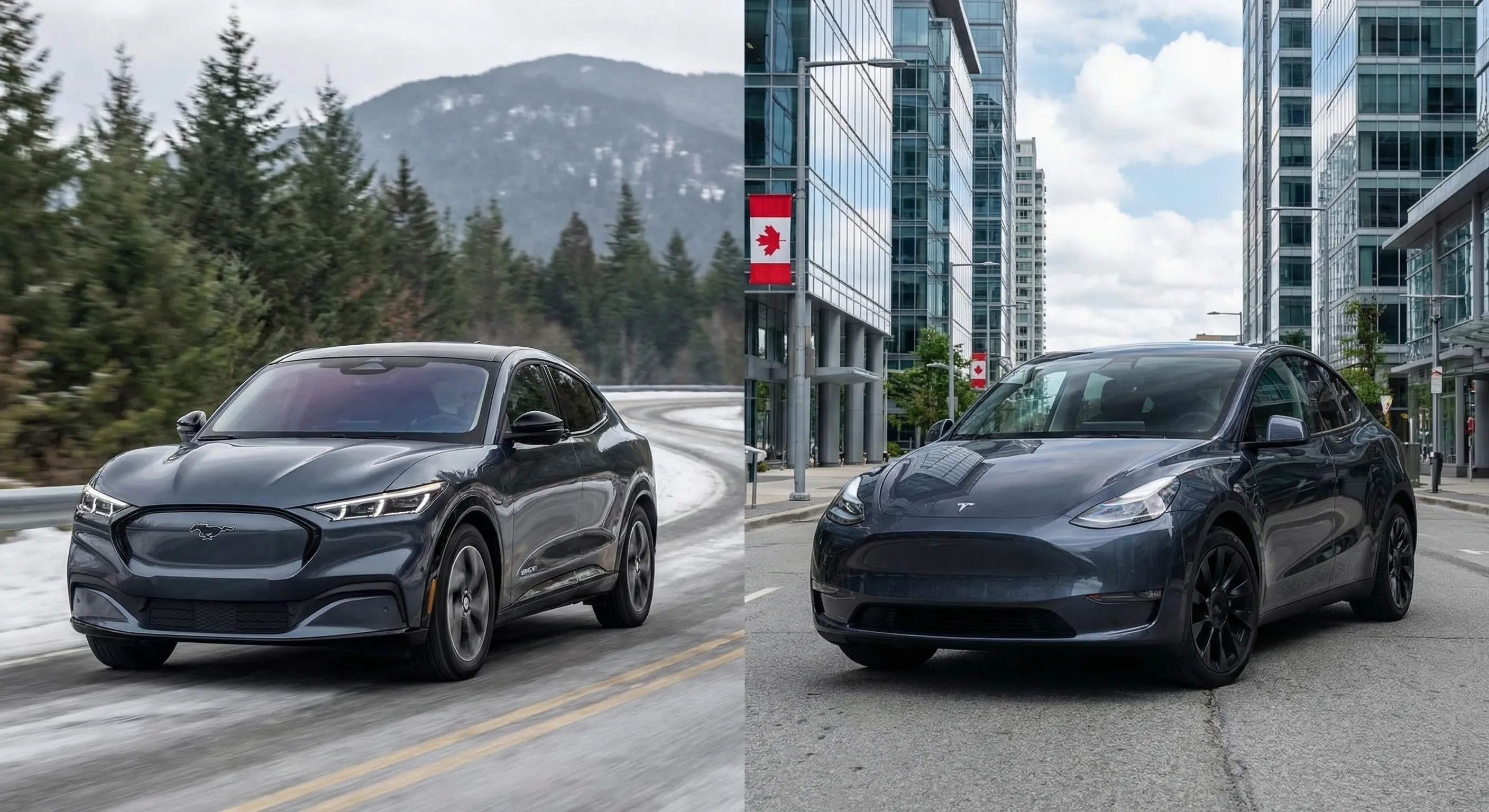
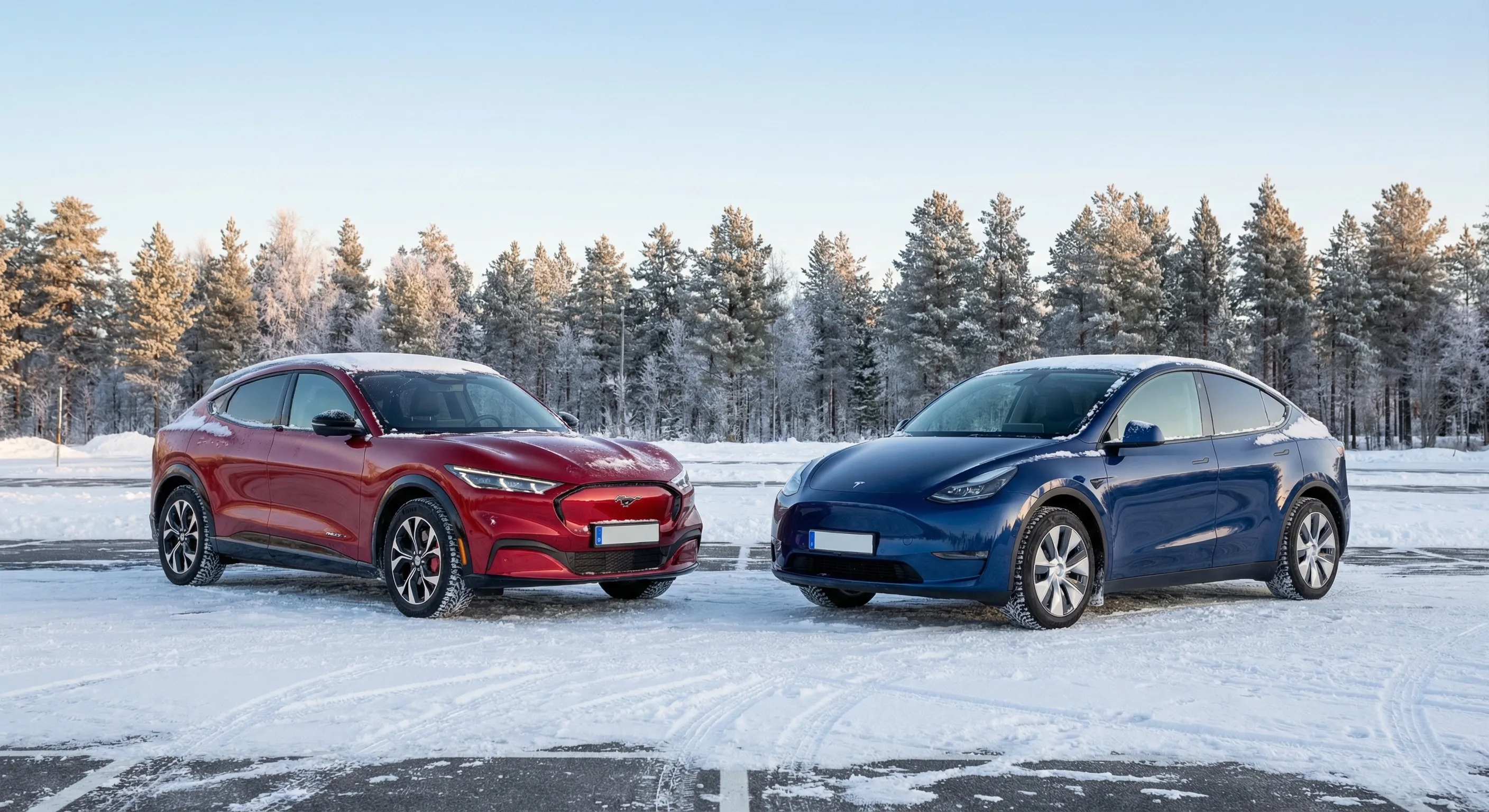
The Ford Mustang Mach-E and Tesla Model Y have been circling each other since 2021. Five years in, both have been refined, repriced, and updated enough that the comparison is worth doing again from scratch. The short version: the Mach-E drives better, the Model Y charges better, and the price gap between them has shrunk to almost nothing. The longer version requires looking at what each car actually delivers for Canadian drivers in 2026, not what the brochures promise.
The Ford Mustang Mach-E Select RWD starts at $44,690 CAD and is on the official EVAP eligible vehicle list, it qualifies for the $5,000 federal rebate, bringing the effective price to $39,690. The Tesla Model Y RWD base starts at $49,990 CAD and is also on the official EVAP eligible list, it qualifies for the $5,000 rebate, bringing it to $44,990. Both vehicles now qualify for EVAP at their base trims, which changes the comparison considerably. After rebates, you're looking at $39,690 for the Mach-E Select versus $44,990 for the Model Y, a $5,300 gap in the Mach-E's favour. This is a decision that should be made on driving experience, charging, and which car fits your life better.
RANGE AND BATTERY
The Model Y Long Range RWD is rated at 531 km, which translates to roughly 430-470 km in real-world Canadian summer driving. The Mach-E Select RWD is rated at 402 km, or roughly 330-360 km real-world. If you step up to the Mach-E Premium Extended Range AWD at approximately $66,695, the rated range climbs to 515 km, closer to the Model Y, but at a higher price and with the energy penalty of AWD.
In winter, expect both cars to lose 25-35% of their rated range. The Model Y drops to roughly 350-390 km and the Mach-E Select to roughly 260-290 km. That winter gap matters. If your daily commute is 60 km round trip, both cars handle it easily with weekly charging. But if you regularly drive 200+ km in a day during winter, the Model Y's larger effective range gives you more breathing room.
Both use NMC battery chemistry, which has higher energy density than LFP but is more sensitive to heat over the long term. Tesla has shifted some Model Y variants to LFP in other markets, but the Canadian Long Range models still use NMC packs. The Mach-E uses an 88 kWh usable battery (91 kWh gross) for the Extended Range and roughly 72 kWh usable for the Standard Range.
CHARGING
This is where the Model Y has a structural advantage that Ford can't fully close. The Tesla Supercharger network in Canada is the largest, most reliable, and fastest DC fast charging network in the country. Over 1,000 Supercharger stalls across Canada, with consistent 250 kW speeds, automated billing, and route planning built into the navigation system.
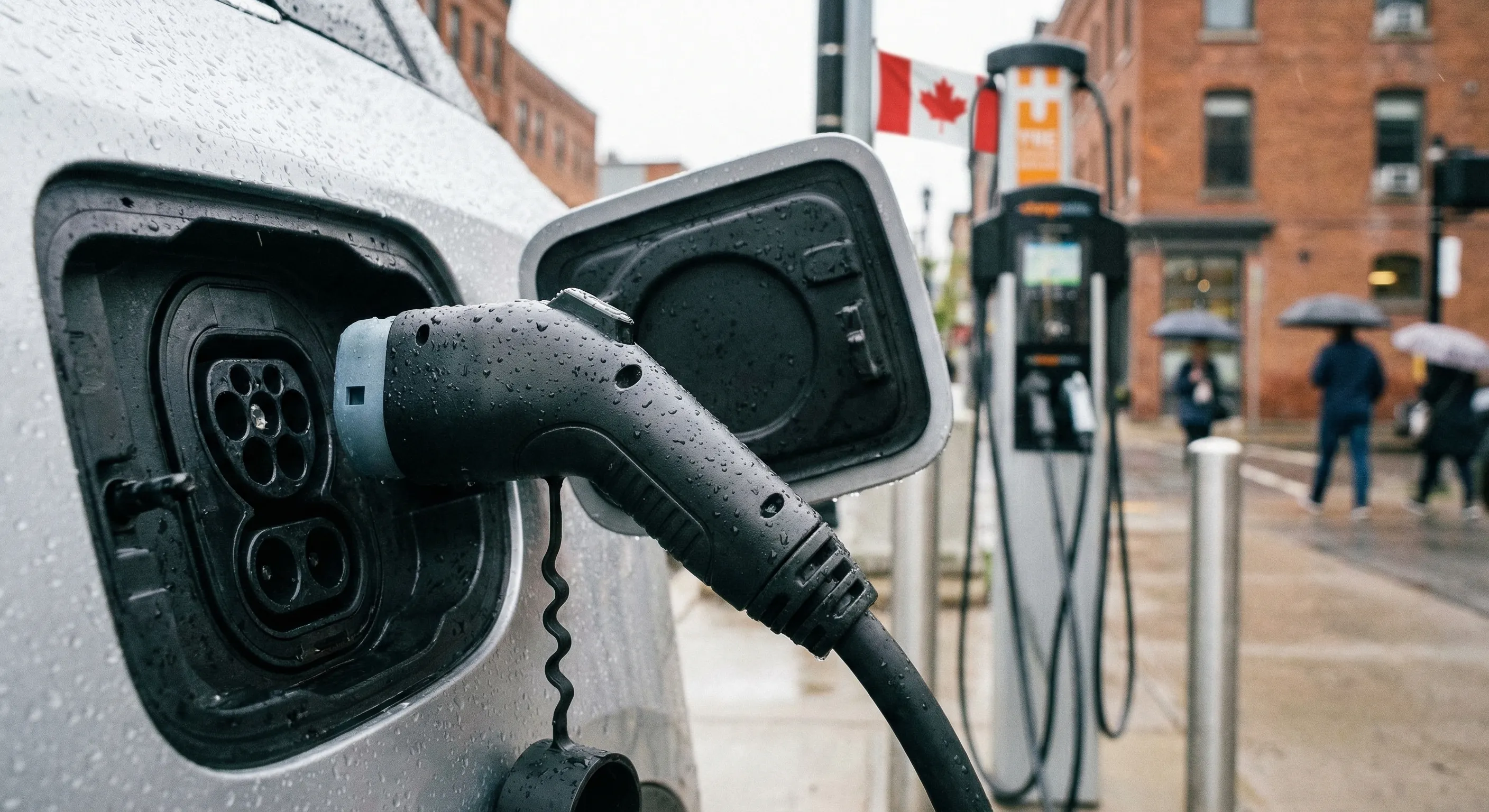
The Mach-E now has access to Tesla Superchargers via the NACS adapter, which Ford provides to owners. In practice, this works, but it adds a step. You need the adapter, you need the Tesla app linked to your Ford account, and occasionally a stall doesn't recognize the adapter on the first try. It's functional but not smooth. The Mach-E's native DC fast charging peaks at about 150 kW on CCS/NACS stations, compared to the Model Y's 250 kW on Superchargers. That translates to roughly 38 minutes for 10-80% on the Mach-E versus about 27 minutes on the Model Y.
Gear worth having
As an Amazon Associate, ThinkEV earns a small commission from qualifying purchases — at no extra cost to you.
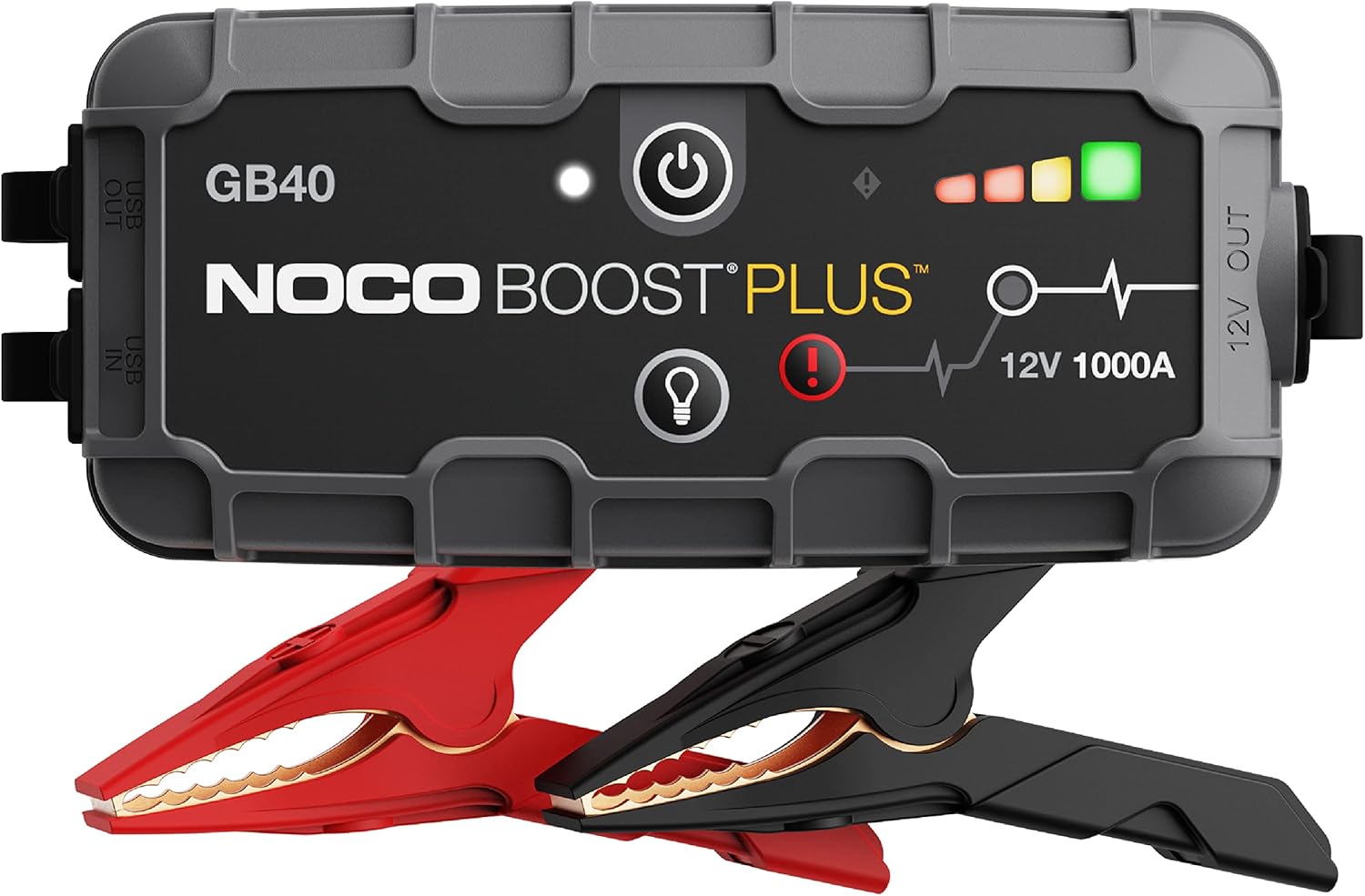
NOCO Boost Plus GB40 Jump Starter
A 1000A lithium jump starter that fits in your glovebox and works on any 12V battery. Your insurance against a dead 12V in a parking lot.
As an Amazon Associate, ThinkEV earns from qualifying purchases — at no extra cost to you.
For home charging, both cars are equally good. Level 2 on a 48A circuit fills the Mach-E Extended Range in about 10 hours and the Model Y Long Range in about 8 hours. Plug in after dinner, full by morning. If 90% of your charging happens at home, and for most Canadian EV owners it does, the Supercharger advantage matters less than you'd think.
DRIVING
The Mach-E is the better driver's car. Ford's chassis engineers did excellent work here, the Mach-E has a lower centre of gravity feel, more communicative steering, and a suspension that handles Canadian potholes without punishing you. The steering has weight and feedback that the Model Y simply doesn't match. Through corners, the Mach-E rotates more willingly and feels more planted. It's not a sports car, but it's a crossover that rewards engaged driving.
The Model Y prioritizes comfort and efficiency over engagement. The ride is smooth, the steering is light, and the car does everything competently without asking for driver involvement. For a daily commuter who wants to get from home to work without thinking about the car, the Model Y is ideal. For someone who actually enjoys driving, who takes the scenic route through the Laurentians or the Sea-to-Sky Highway, the Mach-E is more rewarding.
Gear worth having
As an Amazon Associate, ThinkEV earns a small commission from qualifying purchases — at no extra cost to you.

Grizzl-E Classic Level 2 EV Charger (40A)
Canadian-made and rated for minus 40C winters. 40A / 9.6 kW, NEMA 14-50, indoor/outdoor, 24-ft cable. The charger built for Canadian weather.
As an Amazon Associate, ThinkEV earns from qualifying purchases — at no extra cost to you.
The Mach-E GT is the performance variant, producing 480 hp and hitting 0-100 km/h in about 3.7 seconds. The Model Y Performance makes approximately 456 hp with a similar sprint time. Both are absurdly fast for crossovers, but the Mach-E GT has the edge in handling composure through corners, while the Model Y Performance has the edge in straight-line acceleration response.
INTERIOR AND TECH
The Mach-E's interior is more conventional and, frankly, easier to use. Physical buttons for volume, a dedicated climate control panel, and an infotainment system that doesn't require three screen taps to adjust the mirror. The 15.5-inch centre screen is large and responsive, and Ford's SYNC 4 system supports wireless Apple CarPlay and Android Auto. The materials quality is good, soft-touch surfaces where your hands land, solid panel gaps, and a cabin that feels well-built.
Gear worth having
As an Amazon Associate, ThinkEV earns a small commission from qualifying purchases — at no extra cost to you.
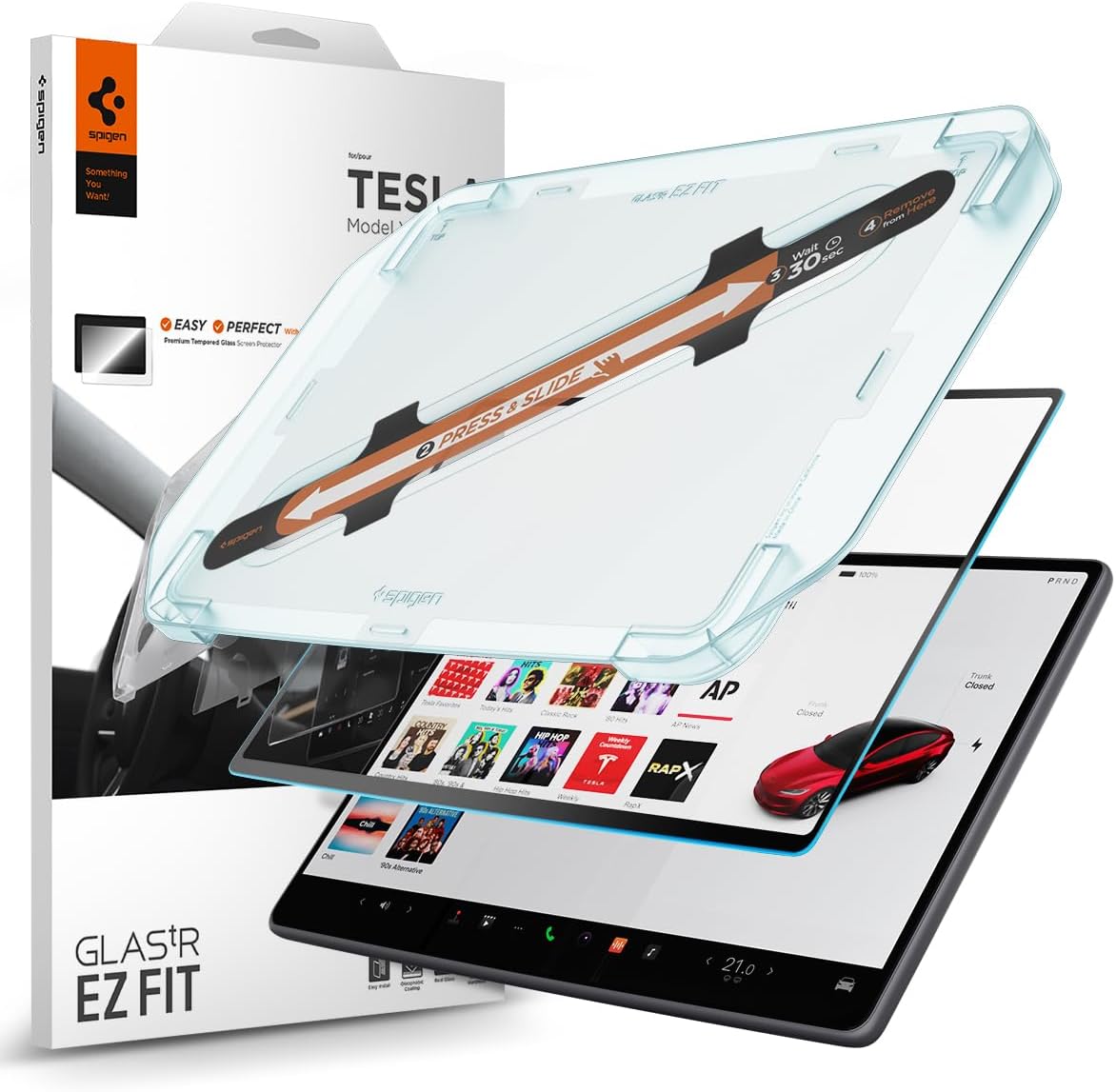
Spigen Tempered Glass for Tesla Model 3/Y
Tempered-glass protection for the touchscreen that kills fingerprints and scratches. Two minutes to install, lasts the life of the car.
As an Amazon Associate, ThinkEV earns from qualifying purchases — at no extra cost to you.
The Model Y's interior is Tesla's minimalist approach: a single 15-inch centre screen controls everything. No instrument cluster, no physical buttons beyond the steering wheel scroll wheels and window switches. The materials are decent but not outstanding, the seats are comfortable, but the door panels and some trim pieces feel plain for the price. What Tesla does better than anyone is over-the-air software updates. The car genuinely improves over time, and the navigation system's Supercharger integration is the best in the industry.
Cargo space favours the Model Y slightly. The Model Y offers about 2,158 litres with the rear seats folded, plus a front trunk. The Mach-E offers about 1,690 litres with seats folded, plus a smaller front trunk. For families hauling hockey equipment, the Model Y has a practical edge.
WINTER PERFORMANCE
Both cars handle Canadian winters competently with proper tires. The AWD versions of both are confident on snow and ice, and both have heat pumps for efficient cabin heating. The Model Y's heat pump has been refined over several iterations and is now very effective at preserving range in cold weather. The Mach-E's heat pump is also good, though some earlier model years had issues that have since been resolved.
Preconditioning, warming the battery and cabin while plugged in before departure, is available on both cars through their respective apps. This is the single most impactful thing you can do for winter range and charging speed. Both apps work reliably for this purpose.
One practical winter advantage for the Model Y: Tesla's Supercharger route planning preconditions the battery automatically when you work through to a Supercharger, so the battery arrives at optimal temperature for fast charging. The Mach-E can precondition too, but it's less integrated into the navigation system.
Verdict
For most Canadian buyers, the Model Y is the safer choice. Better range, faster charging, the Supercharger network, more cargo space, and Tesla's OTA update ecosystem add up to a car that's hard to argue against on paper.
But the Mach-E is the more satisfying car to drive, and that matters. If your daily driving includes winding roads, if you prefer an interior with physical controls, if you value Ford's dealer network for service and warranty work over Tesla's service centre model, the Mach-E earns its price. The Ford dealer network across Canada is massive, virtually every town has one, while Tesla service centres are concentrated in major cities.
The decision comes down to priorities. Charging convenience and range: Model Y. Driving experience and dealer access: Mach-E. Both are excellent crossover EVs that will serve Canadian drivers well for years.
Gear worth having
As an Amazon Associate, ThinkEV earns a small commission from qualifying purchases — at no extra cost to you.
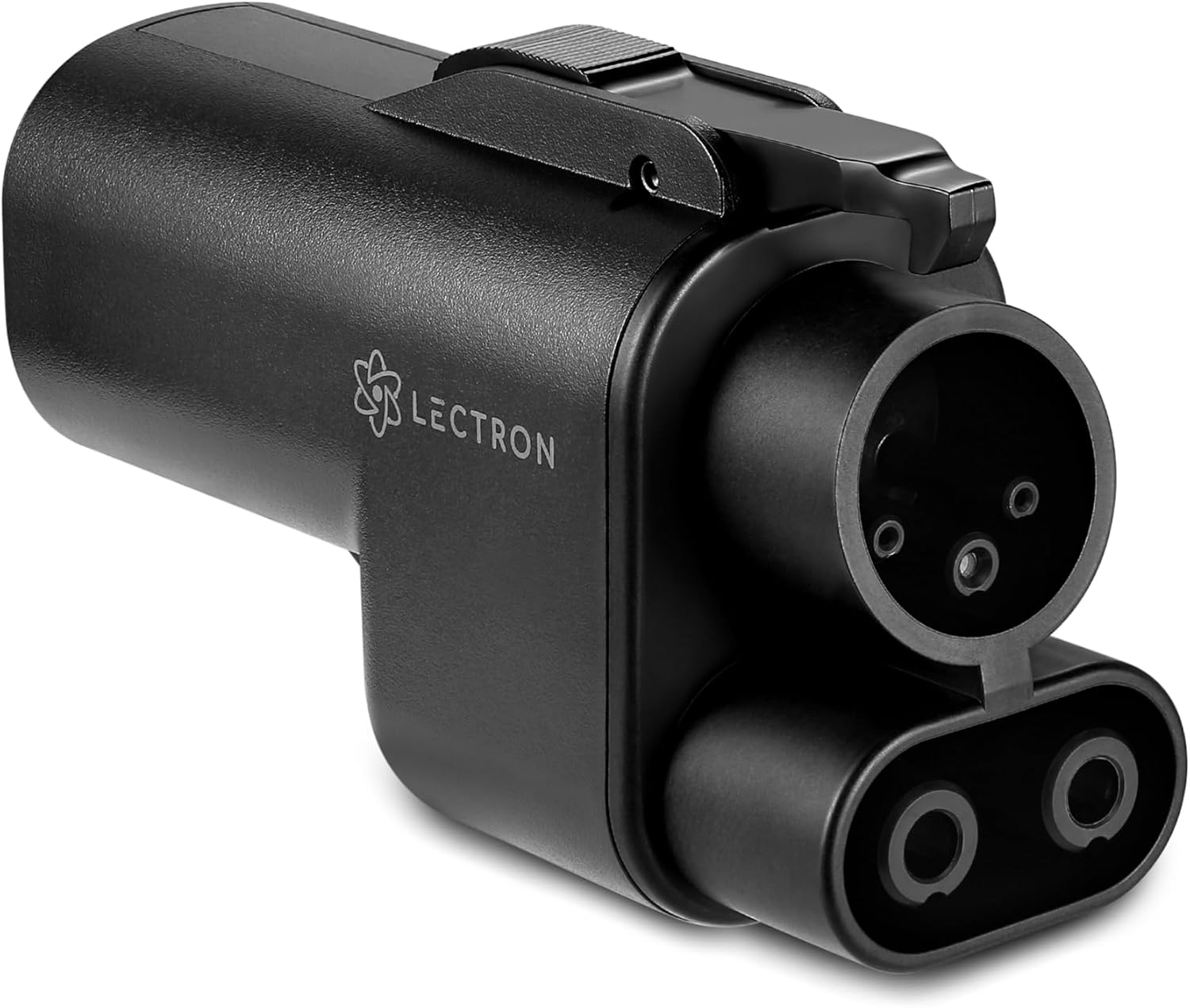
Lectron NACS to CCS Fast-Charge Adapter
Unlock every CCS fast charger for your Tesla, up to 500A DC. Never get stranded at a non-Tesla DC station again.
As an Amazon Associate, ThinkEV earns from qualifying purchases — at no extra cost to you.
Related Reading
- Ford Mustang Mach-E Canada Review 2026, Full standalone review of the Mach-E.
- Tesla Model Y Juniper Canada Review 2026, The refreshed Model Y reviewed for Canadian roads.
- Equinox EV vs Tesla Model Y Canada 2026, The affordable challenger compared.
Gear worth having
As an Amazon Associate, ThinkEV earns a small commission from qualifying purchases — at no extra cost to you.

Tesla Key Card Holder with AirTag Slot
Stop fishing the keycard out of your wallet, and slot an AirTag in case the car wanders off in a lot.
As an Amazon Associate, ThinkEV earns from qualifying purchases — at no extra cost to you.

Founder & Chief Editor
Vlad Pereira is the founder and chief editor of ThinkEV.ca, the Canadian electric-vehicle publication he writes and edits from Courtenay, British Columbia. He covers EV pricing, federal and provincial rebates, charging costs, and the Chinese manufacturers now entering Canada, from the buyer's side rather than the press-fleet side. ThinkEV is a venture of Vlad Pereira Online; his writing on health, income and the long game lives at vladpereira.com.
Frequently asked questions
Do both qualify for the $5,000 EVAP rebate?
Can the Mach-E use Tesla Superchargers in Canada?
Which is better for Canadian winters?
Which has lower maintenance costs?
More EV & road-trip finds
Affordable upgrades worth a look — tap any to check the price on Amazon.
 ★ 55
★ 55LED Car Door Logo Projector Light
View on Amazon ★ 4,626
HoogaLife Hanging Car Diffuser (2-Pack)
View on Amazon ★ 21,304
Car Headrest Hooks (4-Pack)
View on Amazon ★ 1,944
VIOFO A229 Pro 4K Dash Cam
View on Amazon ★ 87
★ 87Car Window Sun Shades for Kids (4-Pack)
View on Amazon ★ 68
★ 68WeatherTech FloorLiner for Tesla Model 3
View on Amazon ★ 96,686
PULIDIKI Car Cleaning Gel (Detailing Putty)
View on Amazon ★ 164
★ 164Solar-Powered LED Ambient Light
View on AmazonRead, Plan, Then Stay Current
Explore our expert articles to understand incentives and ownership costs, use the map to pressure-test charging reality, then subscribe so new EV coverage comes straight to you.
Continue Reading
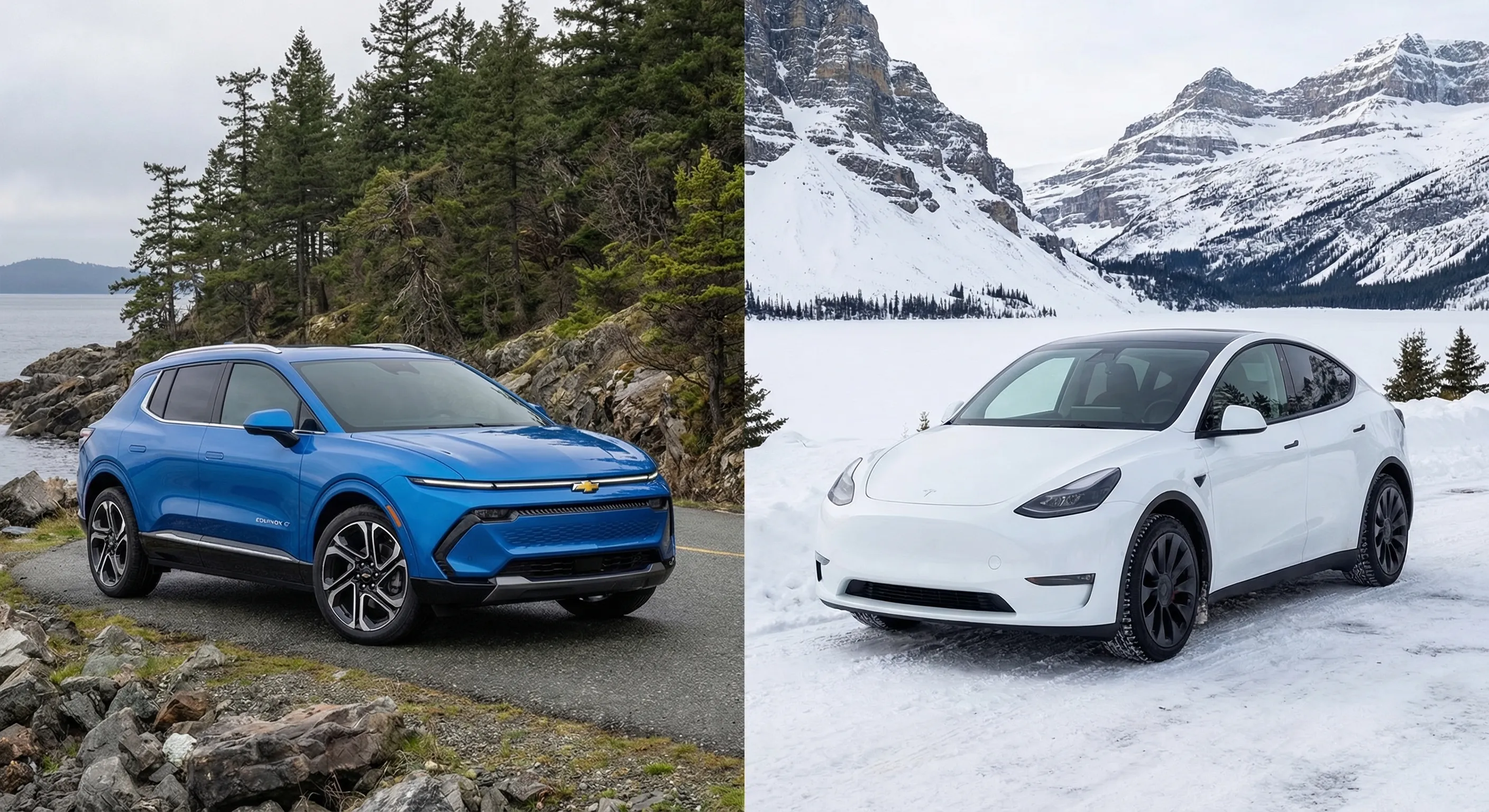
Chevy Equinox EV vs Tesla Model Y: $15K Cheaper
Tesla Model Y vs Toyota RAV4: 5-Year Cost Canada
Rivian R1T vs F-150 Lightning: Canada 2026 Test
EV vs Gas: 5-Year Cost of Ownership in Canada
BMW i4 vs Tesla Model 3: Is the $11K Premium Worth It?