Waiting one more year to buy an EV costs the average Canadian driver roughly $3,800, in fuel, maintenance, and rebates that run on finite budgets. The argument for waiting was right exactly twice in six years: briefly in 2021 and 2022, when dealers charged $5,000 to $10,000 over sticker and inventory was near zero. In 2026, with new EVs under $45K available in volume and federal plus provincial incentives stacked, waiting is the expensive choice.
Key takeaways
- New EVs under $45K CAD are now available in volume. The Chevrolet Equinox EV sits at $44K, the Kia EV5 at $43K, and the BYD Dolphin at about $35K.
- Federal EVAP ($5,000) stacked with provincial rebates (BC $4,000, Quebec $7,000) creates the richest incentive environment Canada has ever seen. Some programs run on finite budgets.
- Used EVs (Model Y, Bolt, Leaf, Kona EV) are selling at 40 to 60 percent off original sticker price. Battery data shows 85 to 95 percent capacity at 100,000 km.
- LFP battery chemistry has solved the cold-weather and longevity concerns. Affordable solid-state batteries won't arrive until 2031 to 2033 at the earliest.
- Canada now has 15,000 public chargers coast to coast. The Petro-Canada Electric Highway and the fully open Tesla Supercharger network cover most major routes.
- Every 12 months you wait costs roughly $3,800 in fuel, maintenance, and lost rebate value, assuming about $280 a month in current gas-car running costs.
Prices Collapsed and Incentives Are Stacking
The short answer: new EVs with real range now cost about $40,000 before rebates. Five years ago, you were paying $55,000 or more for the same capability. And the incentives on top are the best Canada has ever offered.
For three years, the loudest knock on EVs in Canada was price. The critics weren't wrong. In 2022, a battery-electric vehicle with decent range cost at least $55,000. The base Tesla Model 3 sat at $58,990. The Hyundai Ioniq 5 started at $54,999. The Kia EV6 was $47,995, and dealers charged $5,000 to $10,000 over sticker on top of that.
That floor collapsed.
Chevrolet launched the Equinox EV at $44,998 CAD. Kia brought the EV5 to market at $43,995. BYD's Dolphin entered Canada through its licensed import quota at about $35,000. The Kia EV4, which ThinkEV covered in the cheapest EV under $50K Canada guide, starts at $39,000 in base trim. The Bolt EV returned at $38,998. These aren't stripped-down city cars. The Equinox EV does 483 km of EPA-estimated range. The EV5 does 436 km with a 77.4 kWh battery. The Bolt does 417 km.
In practice, this means a new EV with enough range to drive Vancouver to Kelowna, Toronto to Montreal, or Calgary to Edmonton and back now costs under $45,000 before rebates. That sentence was science fiction for the Canadian mass market in 2021.
Manufacturers didn't lower prices out of generosity. Chinese makers entered with sharp pricing. Inventory piled up at dealerships after the 2023-2024 EV adoption slowdown. GM, Hyundai, Kia, and Ford needed to move units. Dealers offered $3,000 to $8,000 loyalty discounts on vehicles sitting 60 to 120 days. At some Ontario lots in early 2026, a Chevrolet Equinox EV was going out the door with $6,000 in stacked discounts, bringing the pre-rebate price under $39,000.
People waiting for prices to drop further are playing a game of shrinking returns. The big drop happened. From $55,000 average to $40,000 average is a $15,000 swing. The next drop, if it comes, will be $3,000 to $5,000, and it may take two or three more years. Every month you keep a gas car, you spend money on fuel and maintenance at a rate that outpaces any future price improvement.
The math on this is worth running specifically. Say you're waiting for prices to fall another $4,000. At your current gas car cost of $280 per month in fuel and maintenance, you'll spend $3,360 over 12 months waiting for that drop. By month 13, you've spent almost as much waiting as you would have saved. By month 24, you've spent $6,720 waiting for a $4,000 discount. The math only works if you believe prices will fall by more than your current monthly operating costs. They won't. Not in the next 12 to 24 months. The floor is close to where it is now.
Now look at what the government adds on top.
The federal EVAP program, administered by Transport Canada, pays $5,000 at point-of-sale. The dealer reduces the purchase price at signing. No paperwork, no waiting for a cheque. It applies to vehicles under $55,000 MSRP (or under $65,000 for larger vehicles). Nearly every affordable EV qualifies.
Then the provinces add more. British Columbia's CleanBC program adds $4,000. Quebec's Roulez Vert adds $7,000. Nova Scotia offers $3,000. New Brunswick and PEI each offer $5,000. Manitoba restored its program in late 2025 at $4,000. According to NRCan, federal and provincial rebates together represent the most generous EV incentive environment Canada has ever seen.
For a Kia EV5 in Quebec: MSRP is $43,995. Subtract the $5,000 federal EVAP and the $7,000 Roulez Vert. Effective price: $31,995. That's less than a base Honda Civic. For a Chevrolet Equinox EV in BC: MSRP is $44,998. Subtract $5,000 federal and $4,000 CleanBC. Effective price: $35,998. For a $44,000 crossover SUV with 483 km of range.
These programs run on finite budgets. EVAP's annual allotment runs until it runs out. The current minority government situation in Ottawa means future EVAP funding is not certain. Quebec's Roulez Vert has been trimmed twice in five years. BC's CleanBC is under budget review in 2026. Every analyst watching this space flags 2026 as the peak incentive year. The programs that exist today are more generous than what will likely exist in 2028 or 2029. You can wait. But the rebates may not.
Incentive Stacking Math by Province
Let's go province by province with real numbers. These are the stacked amounts for a $43,995 Kia EV5 purchased in early 2026.
British Columbia: $5,000 EVAP plus $4,000 CleanBC. Net price: $34,995. BC also offers an income-tested top-up of $2,000 for households under $100,000 gross income. If that applies, net price drops to $32,995. The CleanBC Low Carbon Homes program adds $350 toward a Level 2 charger. Total possible value from BC incentives on a $44,000 EV: $11,350.
Quebec: $5,000 EVAP plus $7,000 Roulez Vert. Net price: $31,995. Quebec also offers $600 toward home charger installation through Hydro-Quebec. Total possible incentive value in Quebec: $12,600. Quebec has the richest incentive stack of any province. A buyer in Montreal buying a Kia EV5 in 2026 gets a vehicle with 436 km of range for under $32,000. That number is hard to argue with.
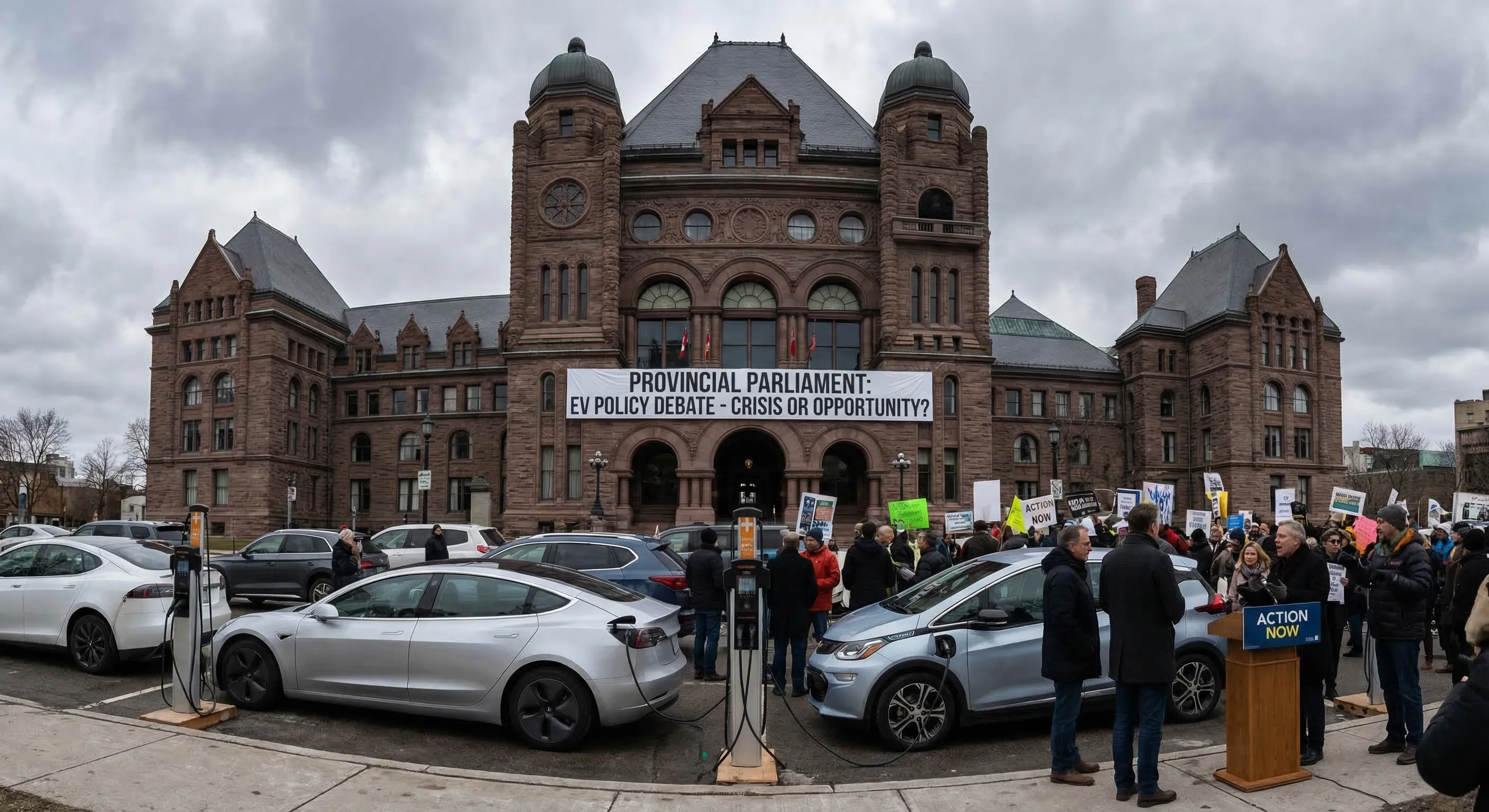
Ontario: $5,000 EVAP only. Ontario cancelled its provincial EV rebate program in 2018. Net price on the EV5: $38,995. Ontario does offer a $1,000 home charger rebate through the Home Efficiency Rebate Plus program on some utilities. Toronto Hydro's EV Rate gives customers a discounted overnight charging tariff. Total effective Ontario incentive: around $6,000 to $7,000 depending on utility.
Alberta: $5,000 EVAP only. No provincial EV rebate. Net price: $38,995. Alberta Municipal Climate Change Action Centre offers up to $500 toward charger installation for residents of some municipalities. Edmonton and Calgary both have municipal charging rebate pilots in 2026. Total Alberta incentive: $5,000 to $5,500. Alberta's lack of a provincial program is the biggest gap in Canada. It's also a reason the used EV market makes especially strong sense there.
Nova Scotia: $5,000 EVAP plus $3,000 Electrify NS. Net price: $35,995. Nova Scotia Power offers a $500 bill credit for EV owners who enrol in managed charging. Total Nova Scotia incentive: around $8,500. New Brunswick and PEI both offer $5,000 provincial rebates stacked with EVAP, creating $10,000 combined incentives in Atlantic Canada outside Nova Scotia.
Manitoba: $5,000 EVAP plus $4,000 Manitoba EVIP (restored October 2025). Net price: $34,995. Manitoba Hydro runs a Time-of-Use pilot rate that saves EV drivers about $350 per year versus flat rate charging. Total Manitoba incentive: around $9,350.
Saskatchewan: $5,000 EVAP only. No provincial rebate. Net price: $38,995. SaskPower offers a $500 bill credit for new EV owners. Total Saskatchewan incentive: $5,500.
For the full breakdown on stacking these programs, read the EV incentives Canada 2026 guide.
Used EVs: The Golden Age Is Right Now
For most people, the used EV market in 2026 offers the best deal in Canadian automotive history. A three-year-old electric car, built on solid technology, with a battery that still works like new, for 40 to 60 percent off the original price.
The reason is math and timing. The Tesla Model Y was Canada's best-selling vehicle in 2023. Thousands entered the market in 2022 and 2023. A three-year-old Model Y Long Range now shows up on AutoTrader in Ontario for $38,000 to $44,000. Original MSRP when many were purchased: $74,990. That's a 41 to 47 percent drop. And the battery? Independent testing consistently shows 87 to 93 percent of original capacity at 100,000 km. You're buying a car that drives 360 to 380 km per charge instead of 400. Not a disaster.
Bolt EVs tell the same story. A 2021 or 2022 Chevrolet Bolt EV originally sold for $44,998. Now it lists for $18,000 to $24,000 with 60,000 to 90,000 km on it, which means you're looking at roughly half the original price for a car that still works. Batteries in these cars test at 88 to 96 percent capacity at 100K km, per Recurrent's longitudinal fleet data.
That's a used car with 90 to 100 percent of the capability for about half the price. A 2020 to 2022 Hyundai Kona Electric (Long Range, original $45,499) now goes for $21,000 to $27,000, saving you $18,000 to $24,000 versus original MSRP. Its battery degradation profile is one of the best in the industry. A 2019 to 2021 Nissan LEAF (40 kWh) is available for $14,000 to $19,000, that's about 60 to 70 percent off original retail. At 240 km of range, it covers most urban daily drives with room to spare.
Battery degradation fear was the main EV objection five years ago. Real data has answered it. Recurrent tracks 15,000 EVs across North America. Properly managed lithium-ion batteries in modern EVs retain 85 to 95 percent capacity at 100,000 km under typical conditions. A Tesla Model Y that did 400 km new will typically do 360 to 380 km at 100K. A Bolt rated at 417 km new will do 370 to 400 km at 80K. Real numbers from real cars, not manufacturer estimates.
Used EV Prices: Model-by-Model in Canada
The specific numbers tell the story better than any general statement. These are real used EV prices from AutoTrader Canada and Kijiji Autos listings pulled in March 2026.
Tesla Model Y Standard Range (2021-2022): you're looking at $34,000 to $42,000 for a car with 60,000 to 90,000 km on it. Battery typically 88 to 94 percent. Original MSRP around $63,000. That's a 33 to 46 percent discount versus new, which means you save $21,000 to $29,000 on purchase price alone.
Tesla Model Y Long Range (2021-2022): costs $38,000 to $46,000 with 50,000 to 85,000 km on the odometer. Battery typically 87 to 93 percent. Original MSRP around $74,990. Discount of 39 to 49 percent compared to what early buyers paid. You'd save roughly $29,000 to $37,000 versus buying new in 2022.
Chevrolet Bolt EV (2020-2022): saves you the most compared to original retail, at $18,000 to $24,000 with 50,000 to 90,000 km. Battery typically 90 to 96 percent. Original MSRP around $44,998. Discount of 47 to 60 percent. In practice you're buying a fully functional car for $20,000 less than its original sticker.
Hyundai Kona Electric Long Range (2020-2022): worth $21,000 to $27,000 in the current used market, with 40,000 to 80,000 km on the clock. Battery typically 89 to 95 percent. Original MSRP around $45,499. Discount of 41 to 54 percent, which means you save $18,000 to $24,000 compared to the original retail price. Battery health on these is among the best in the segment.
Nissan LEAF Plus (62 kWh, 2020-2022): costs roughly $18,000 to $23,000 with 40,000 to 75,000 km. Battery typically 84 to 92 percent. Original MSRP around $49,998. Discount of 54 to 64 percent, which means you're paying roughly $27,000 less than the original buyer did. Good value for urban driving.
Ford Mustang Mach-E Standard Range (2021-2022): costs $28,000 to $35,000 with 40,000 to 75,000 km. Battery typically 87 to 93 percent. Original MSRP around $54,495. Discount of 36 to 49 percent. You save $19,000 to $26,000 compared to what these sold for new.
Hyundai Ioniq 5 Standard Range (2022-2023): you'd pay $32,000 to $40,000 for one with 30,000 to 70,000 km. Battery typically 91 to 96 percent. Original MSRP around $54,999. Discount of 27 to 42 percent compared to original retail. You'd pay $15,000 to $23,000 less than the original buyer, for a battery that's still near-new condition.
For a budget buyer in Manitoba or Saskatchewan, where no provincial rebate exists on new vehicles, a used EV is the stronger play. Consider this: a $22,000 used Chevy Bolt with 65,000 km on it, a certified battery at 94 percent capacity, and a Level 2 home charger for $800 costs roughly $23,000 all-in. That means total cost of ownership over 5 years works out to under $10,000 after fuel savings. Annual fuel savings versus a comparable gas car: about $2,200. The charger pays for itself in five months. That math works for almost any household with garage access.
What to Look for When Buying Used
Getting a battery health report is non-negotiable. Services like Recurrent, EV Battery Report (evbatteryreport.com), or a dealer using GEOTAB diagnostic data can pull the real-world battery state of health (SOH). Any EV with a SOH below 80 percent deserves a significant price discount. Between 80 and 87 percent, negotiate hard. Above 88 percent, you're buying a functional battery that will serve you well for another 100,000 km of typical driving.
Ask the seller for the charging history if available. A battery that spent three years charging to 100 percent every day degrades faster than one managed to 80 percent daily. Tesla's built-in charge statistics, visible in the car's app history, show daily charge limits. Bolt EV owners can pull a service report through any Chevrolet dealer. Hyundai dealers can retrieve the battery report through their diagnostic tool.
Buy before this window closes. As more Canadians buy EVs, used ones carry less stigma and prices firm up. Massive depreciation that early adopters absorbed is now your gain, but only if you move before the broader market figures out that these batteries last.
This shift has already started. In early 2025, a 2022 Tesla Model Y Long Range sat on AutoTrader for 45 days at $42,000, roughly $33,000 less than its original MSRP. A year later, the same year and trim is moving in under two weeks. The market is learning. The buyers who move in 2026 will benefit from pricing that won't exist in 2027 or 2028. Used EV buyers in Alberta and Saskatchewan especially should pay attention to this. A province with no provincial incentive on new vehicles is exactly the place where a certified used Bolt at $21,000 makes the most financial sense, costing under $600 per year to fuel and virtually nothing in maintenance.
Used EV Ownership: The Real First-Year Numbers
Let's take the $22,000 Bolt example and run the full first-year picture. You buy a 2021 Chevy Bolt EV with 68,000 km and a battery at 93 percent. You install a Grizzl-E Level 2 charger for $450 in hardware and $300 in installation. Your total day-one outlay is $23,050 including the charger.
Month one: you charge overnight at the Ontario off-peak Hydro rate of $0.087 per kWh. Driving 1,700 km that month at 18 kWh per 100 km costs $26 in electricity. Your old Honda Civic was costing you $210 per month in gas for the same distance. You're $184 ahead in month one.
Month three: no oil change due. Your gas car would have gone in at $130 including filter and labour. Month six: no transmission service due. Your gas car needed a brake fluid flush at $120. Month twelve: you get the Bolt's annual inspection for $80. Your gas car would have cost $900 in accumulated maintenance over the same year. Total 12-month maintenance savings: $820.
End of year one: you spent $26 per month times 12 months = $312 in electricity. You saved $2,208 in fuel versus the Civic. You saved $820 in maintenance. Net first-year operating savings: $3,028. The charger hardware and installation ($750) paid itself off by month three. The $23,050 purchase price looks very different when you factor $3,028 per year in ongoing savings. At that rate, the operating savings alone cover the charger cost in under three months and reduce the effective vehicle cost by $15,140 over the first five years.
A used Bolt for $22,000 with five years of $3,028 annual savings works out to an effective vehicle cost of $6,860 over five years of ownership. A $22,000 used Honda Civic covering the same ground costs $22,000 plus about $14,750 in fuel and maintenance over five years. Total cost: $36,750. The Bolt's total five-year cost: $22,000 minus $15,140 in savings = $6,860. The gap between these two numbers is $29,890.
This is not a close comparison. It's a category difference.
Charging and Battery Tech Are Ready
The short answer: the infrastructure excuse expired in 2024. Current battery technology is good enough to last 300,000 km. Solid-state batteries are a decade away from being affordable. Stop waiting for them.
Canada had about 5,000 public charging points in 2019. Most were in city centres. Gaps between cities were real. Cross-country EV travel required careful planning. Range anxiety was rational back then.
Today Canada has over 15,000 public charging points, a number that tripled since 2021, according to data tracked by NRCan. Petro-Canada's Electric Highway runs coast to coast along the Trans-Canada route. DC fast chargers at existing Petro-Canada stations cover the gaps. The stations run at 50 kW minimum, with newer ones at 100 to 150 kW, and the network hit 97 percent uptime through 2025.
Tesla opened its Supercharger network to non-Tesla vehicles in Canada in 2023 and completed the rollout by mid-2024. Every Tesla Supercharger now takes any CCS2-equipped EV through the Tesla app. That adds about 1,800 high-speed locations for Hyundai, Kia, Ford, Chevrolet, BMW, and Rivian drivers. A 250 kW Supercharger adds 200 km of range in under 15 minutes. FLO and ChargePoint together operate over 4,500 Level 2 and DC fast chargers across Canada. SWTCH Energy has wired over 3,000 condo units.
Charging Numbers That Matter
The growth rate is what changed the conversation. Canada added roughly 1,200 new public charging ports in the first quarter of 2026 alone. The federal government committed $1.2 billion to charging infrastructure through the Zero Emission Vehicle Infrastructure Program (ZEVIP). Natural Resources Canada's interactive map shows charger locations updated in near-real time. As of March 2026, provinces with the densest public charging per capita are BC, Quebec, and Ontario. But even Saskatchewan and Manitoba now have sufficient coverage for highway travel between their major cities.
By specific corridor, here's what the 2026 network looks like. The Toronto-Ottawa corridor has 23 DC fast charge stations in the 450 km stretch, most between 50 and 150 kW, which means roughly one fast charger per 20 km on a route 9 million Canadians drive regularly. The Montreal-Quebec City corridor has 18 DC fast stations in 250 km. The Calgary-Edmonton corridor has 12 fast charge stations in 300 km. The Vancouver-Kamloops corridor has 11 stations in 360 km. The Trans-Canada from Winnipeg to Thunder Bay, historically the biggest gap, now has 8 fast chargers covering the 700 km stretch, with two more sites under construction.
The Banff-to-Vancouver route on a Kia EV6 and Ottawa-to-Montreal on a Model Y are both well-documented by Canadian EV owners. Neither requires emergency planning. Both required the same thing: knowing where two or three fast chargers are along the route. The same way a gas driver knows where gas stations are.
For most people, the 85 percent of Canadians who live in metro or suburban areas with a driveway, garage, or workplace charger, the infrastructure argument expired in 2024. The people still citing it are using 2019 data.
What actually matters for real-world charging is this: if you can plug in at home or at work for your daily 50 to 80 km of driving, you only need public fast charging on road trips. Road trips in Canada are manageable in 2026. The Petro-Canada Electric Highway means you stop every 200 to 250 km on the Trans-Canada, eat a meal, add 300 km of range in 30 minutes, and continue. That's the same stop you'd make in a gas car to stretch your legs. The charging takes longer than a gas fill-up but fits naturally into the break you were going to take anyway.
Home Charging: The Numbers Behind the Convenience
Home charging is where EV economics become dramatically different from gas. The comparison isn't just cost. It's about the behaviour of refuelling itself.
When you own a gas car, you go out of your way to buy fuel. You stop at a station. You stand in the cold. You pay whatever the pump shows. You do this every week or two, depending on your driving. Over a year, that's 25 to 50 stops at a gas station consuming 20 to 30 minutes of your time each visit, which means 8 to 25 hours per year spent doing nothing but buying gas. That's 8 to 25 hours per year spent refuelling.
When you own an EV with home charging, you plug in when you park. You unplug when you leave. You start every morning with a full battery. The actual act of refuelling takes 10 seconds. Over a year, an EV driver with home charging spends roughly 60 seconds per day on refuelling. The gas driver spends 8 to 25 hours. Time has value. For a professional making $40 per hour, 8 to 25 hours of time recovered is worth $320 to $1,000 per year on top of the fuel savings.
A Level 2 charger at 7.2 kW can add 40 to 50 km of range per hour, which means a typical overnight session of 6 to 8 hours adds 240 to 400 km while you sleep. Plug in at midnight. Wake up to 300 km of range added. For most Canadians driving 50 to 80 km per day, a few hours of overnight charging is more than enough. The charger runs for two to four hours and shuts off. Your electricity meter logs the usage. The monthly bill for 1,700 km of driving in Ontario comes to about $22 to $30 depending on your utility and rate plan.
Time-of-use rates in Ontario, BC, and Manitoba offer off-peak electricity prices between $0.074 and $0.092 per kWh from 11 PM to 7 AM, which saves roughly 30 to 40 percent compared to daytime rates. A Kia EV5 with its 77.4 kWh battery, charged from 20 percent to 80 percent (the ideal range for LFP chemistry longevity), pulls 46 kWh at that rate. Cost: $3.40 to $4.24 to add about 248 km of range. You can drive from downtown Toronto to Kingston for under $5 in electricity, charged at home the night before.
Winter Driving: Real Data from Real Canadians
Range anxiety in winter is real, but it's misunderstood. The question isn't "do EVs struggle in winter?" Every vehicle struggles slightly in extreme cold. The question is "does the struggle affect my daily life?" For almost every Canadian driver, the answer is no.
Real cold-weather data from Recurrent and fleet operators across Canada tells the story clearly. A Kia EV5 (77.4 kWh, heat pump standard) loses roughly 20 to 28 percent of rated range at -15 degrees C. Its summer range is 436 km. In a hard Canadian winter, expect 314 to 349 km. That's still enough to drive from Ottawa to Montreal (200 km) without a charge stop.
A Hyundai Ioniq 5 loses about 22 to 30 percent in similar conditions. Its summer range of 385 km drops to 270 to 300 km in deep cold. A Chevrolet Bolt EUV (no heat pump, resistive heating) loses more, roughly 30 to 38 percent. Summer range of 405 km drops to 251 to 284 km. Still enough for most city drivers' weekly needs.
The pre-conditioning feature eliminates most of the real-world pain. You set a departure time in the app. The car warms the cabin and battery pack while plugged in. You leave the house with a warm interior and a battery at full operating temperature. Your effective cold-weather range is better than if you started cold. A driver who pre-conditions their EV in Edmonton winters consistently beats the theoretical cold-weather range estimates by 8 to 12 percent.
The anxiety is about a cold start in a parking lot after eight hours at -25 degrees C. It's a real scenario. It's also one that pre-conditioning (via timer charging) fully addresses. Set the heater to start 30 minutes before you return to the car. The battery warms while the car is plugged in at work or at a public charger. This is standard practice for experienced EV drivers in Winnipeg, Edmonton, and Thunder Bay.
Battery Technology: What's Real vs.
What's Coming
Now on batteries. There's a conversation You hear every quarter from someone who read a press release about a battery breakthrough. "I'm waiting for solid-state." Sometimes it's "I want to see what happens with the silicon anode tech." This conversation has been happening for five years. It will still happen five years from now. Every person waiting for solid-state is burning $2,500 a year in gasoline while they wait.
Gear worth having
As an Amazon Associate, ThinkEV earns a small commission from qualifying purchases — at no extra cost to you.

Grizzl-E Classic Level 2 EV Charger (40A)
Canadian-made and rated for minus 40C winters. 40A / 9.6 kW, NEMA 14-50, indoor/outdoor, 24-ft cable. The charger built for Canadian weather.
As an Amazon Associate, ThinkEV earns from qualifying purchases — at no extra cost to you.
Current LFP (lithium iron phosphate) chemistry has already solved the problems that worried people about EVs five years ago. LFP batteries contain no cobalt, which removes the main supply chain concern. They tolerate more charge cycles before degrading. BYD's Blade Battery (LFP chemistry) is rated for 3,000 full charge cycles before hitting 80 percent capacity. At 3,000 cycles and 400 km per charge, that's 1.2 million km of theoretical driving before the battery reaches 80 percent, roughly 50 years of average Canadian driving at 20,000 km per year. No Canadian driver will ever exhaust it. They'll sell the car five times first.
LFP also handles cold better than early NMC cells. The old complaint about EVs losing 40 percent range in a Canadian winter came from 2019-era batteries without thermal management. Current LFP with active thermal management (BYD Dolphin, Kia EV4 and EV5, Chevrolet Bolt EUV) loses 15 to 25 percent of range at -20 degrees C. That's about what a gas car loses in fuel economy in deep cold. Not zero, but manageable.
Solid-state batteries are real. Toyota has been working on them since 2020. Samsung SDI and QuantumScape have demo cells. But the path from lab to affordable consumer vehicle is longer than press releases suggest. Toyota's initial timeline targeted 2025 for limited production. That date slipped to 2027 to 2028, and even those dates refer to premium vehicles above $80,000 CAD. Affordable solid-state for mass-market vehicles is a 2031 to 2033 realistic target, based on current production ramp economics. Anyone who says otherwise is reading company press releases, not manufacturing cost curves.
Batteries in the 2024 to 2026 generation of vehicles will last 300,000 km under normal use. They handle winter. They charge fast. They've been tested in millions of vehicles for five or more years. If you're waiting for better batteries, you're waiting for something that is already good enough, while spending money on something that is definitively worse.
The Cost of Waiting: Your Gas Car Is Bleeding Money
Numbers don't care about procrastination. Here's what waiting 12 months costs a typical Canadian driver.
Picture a driver in a 2019 Toyota RAV4 with 100,000 km on it, driving 20,000 km per year. Average fuel consumption of 9.5L per 100 km. Canadian average gas price of $1.62 per litre (Q1 2026 national average, per Statistics Canada). Standard maintenance schedule.
Annual gas cost: 20,000 km at 9.5L per 100 km burns 1,900 litres. At $1.62 per litre, that's $3,078 per year in fuel. A comparable EV, the Chevrolet Equinox EV, at 20 kWh per 100 km on average Canadian electricity pricing of $0.15 per kWh, costs $600 per year in electricity. Annual fuel savings: $2,478. That's $206 a month, or about what a Netflix subscription and two restaurant meals cost.
Annual maintenance: a 2019 RAV4 at 100,000 km needs oil changes (three per year at $120 each, $360), brake service ($400 to $700), transmission fluid ($150), coolant flush ($120), and spark plugs approaching replacement ($200). Conservative annual maintenance total: $1,100. An EV at the same mileage needs tire rotations ($100), an annual inspection ($80), and washer fluid and cabin air filter ($40). Annual maintenance total: $220. Annual maintenance savings: $880.
Depreciation: a 2019 RAV4 with 100,000 km continues to lose value. At this mileage and age, expect $1,500 to $2,500 in depreciation per year. Mid-cycle gas vehicle values are softening as EV adoption picks up. The RAV4 worth $26,000 today may be worth $23,500 in 12 months.
Total annual cost of staying in the gas car: $2,478 in fuel savings forgone, plus $880 in maintenance savings forgone, plus $2,000 in ongoing depreciation. That's $5,358 before accounting for any interest rate or incentive changes.
Subtract the depreciation on the EV you would have purchased (a new EV depreciates roughly $3,000 to $4,500 in year one), and the net cost of waiting is about $2,200 to $3,500 per year. That's $183 to $292 per month you're paying to not have an EV.
And that's before incentive risk. If EVAP gets trimmed by $2,000 in next year's federal budget (plausible given fiscal pressure, per Bank of Canada rate outlook data), the cost of waiting jumps by another $2,000. A Quebec buyer today captures $12,000 in stacked incentives. That number is not guaranteed to exist in 2027.
Gas Price Projections and Carbon Tax Trajectory
For most people, the "I'll wait" calculation compares next year's car against this year's car. It almost never counts what the current car costs each month. When you run the full picture, waiting is expensive.
Some buyers count on gas prices falling to make their current car economics work. That hope has weak foundations. Canada's federal carbon pricing adds to the cost of gasoline every year. The federal carbon levy is scheduled to increase through 2030 under current policy. Canadian refinery capacity has been declining, not growing. New refinery investment in Canada is at zero. The crude oil price depends on decisions made in Riyadh, Moscow, and Beijing. A buyer anchoring to "$1.60 per litre forever" is taking geopolitical risk onto their household budget in a way most financial advisors would not recommend.
The carbon levy alone tells a specific story. In 2023, the federal carbon price was $65 per tonne. It rose to $80 per tonne in 2024 and $95 per tonne in 2025, which means the levy added roughly 6 to 7 cents per litre versus the 2023 price at the pump. The scheduled 2026 rate is $110 per tonne. By 2030, the legislated rate is $170 per tonne. Each dollar per tonne of carbon pricing adds roughly 0.22 cents per litre to gasoline costs. Going from $110 to $170 per tonne between 2026 and 2030 adds another 13 cents per litre on top of today's pump price. If your gas costs $1.62 today, carbon pricing mechanics alone point toward $1.75 per litre by 2030, before any oil market fluctuation.
That's a meaningful number. A driver doing 20,000 km per year at 9.5L per 100 km burns 1,900 litres. Moving from $1.62 to $1.75 per litre costs $247 more per year in fuel. Not devastating on its own. But combined with oil market volatility, Canadian refinery shutdowns, and the global trend toward higher carbon costs, the direction of gasoline pricing is firmly upward.
Electricity is different. BC Hydro's residential rate hasn't moved more than 3 percent in any year since 2020. Hydro-Quebec, which offers some of the cheapest electricity in the world at about $0.06 per kWh, has approved increases under 3 percent annually through 2028. You can predict your EV fuel cost with high confidence for five years. You cannot do that with gasoline.
Monthly Cost Comparison: Real Dollars
The monthly cost picture, side by side with real 2026 numbers, makes the case better than any general argument.
Gas car monthly fuel: 1,667 km per month at 9.5L per 100 km = 158 litres. At $1.62 per litre: $256 per month. EV monthly charging: 1,667 km per month at 20 kWh per 100 km = 333 kWh. At $0.15 per kWh: $50 per month. Monthly fuel difference: $206.
Gas car monthly maintenance (annualised): oil, filters, brakes, fluids = $92 per month. EV monthly maintenance: tires, washer fluid, annual inspection = $18 per month. Monthly maintenance difference: $74.
Total monthly operating cost advantage of EV over gas car: $280. Over one year: $3,360. Over five years: $16,800. That's the operating cost gap alone, before you factor in purchase price differences after rebates.
Gear worth having
As an Amazon Associate, ThinkEV earns a small commission from qualifying purchases — at no extra cost to you.

PULIDIKI Car Cleaning Gel (Detailing Putty)
Press it into vents, buttons, and seams and it lifts out dust you did not know was there. Weirdly satisfying, genuinely useful.
As an Amazon Associate, ThinkEV earns from qualifying purchases — at no extra cost to you.
A Grizzl-E Level 2 charger installed in your garage for $400 to $600 in hardware plus installation, on a time-of-use rate for off-peak charging, brings your effective fuel cost per kilometre to about $0.02 to $0.03 CAD. Compare that to $0.15 to $0.17 per km for a typical gas car. The gap is not closing. It's growing.
Interest Rate Window
Eight Bank of Canada rate cuts between June 2024 and March 2026 brought the overnight rate from 5.00 percent to 2.75 percent, which means a total reduction of 2.25 percentage points over 21 months, per Bank of Canada policy announcements (Bank of Canada, 2026). Average auto loan rates peaked at 7.2 percent in late 2023. As of Q1 2026, major bank auto loan rates sit at 5.4 to 6.1 percent for qualified buyers. Manufacturer-subsidised financing (Ford Credit, GM Financial, Hyundai Motor Finance) offers rates as low as 3.9 percent on select EV models.
In practice, this means the difference between financing a $45,000 EV at 7.2 percent and at 4.9 percent over 72 months is about $3,700 in total interest paid. That's real money. The Bank of Canada's rate-cutting cycle is now fully priced into the market. Additional cuts are not forecast for 2026. If inflation concerns push rates back up in 2027, that financing window closes. The buyer who finances today at 4.9 percent versus one who waits and finances at a potential 5.8 to 6.5 percent pays about $3,000 to $5,000 more for the same vehicle over ownership.
Let's make that concrete. A Kia EV5 at $34,995 effective price (Quebec after rebates), financed at 4.9 percent over 72 months: monthly payment of approximately $561. Total interest paid over the loan: about $5,392. The same vehicle financed at 6.5 percent over 72 months: monthly payment of approximately $588. Total interest paid: about $7,336. The rate difference alone costs $1,944 over the life of the loan. Add the $2,000 potential EVAP reduction risk, and the financial case for moving now versus waiting is around $3,000 to $4,000 stronger today than it will likely be in 18 months. In practice, that difference covers a winter tire set and roughly two years of insurance payments.
What to Buy Right Now

The short answer: for most Canadian buyers in 2026, the Kia EV4, Kia EV5, and Chevrolet Bolt EV are the three strongest choices. The numbers back that up.
For the budget-focused buyer in BC or Quebec, the Kia EV4 at about $30,000 effective (in BC after stacked rebates) and the Kia EV5 at $31,995 effective (in Quebec) represent the best value in Canadian automotive history at their post-rebate price points. Both qualify for EVAP. Both have Canadian dealer networks with parts and service available. Both carry excellent battery warranty coverage and enough range for 99 percent of Canadian driving days.
For buyers who want the most proven platform, the Tesla Model Y remains the benchmark. Four generations of refinement. Enormous Supercharger network. Over-the-air updates that improve the car continuously. Its MSRP puts some trims above the $55,000 EVAP cap, so check which specific version qualifies before you sign.
For buyers who want maximum range without spending over $60,000 CAD, the Hyundai Ioniq 6 RWD Standard Range at $48,999 is worth a close look. Its 800V architecture charges faster than almost anything at its price point. That's 200 km of added range in 18 minutes at a compatible DC fast charger.
For buyers comfortable with a Chinese brand, the BYD Dolphin changes the conversation at about $35,000. It doesn't qualify for EVAP (Chinese EVs are excluded under current federal policy), but the base price is low enough that the math still works in provinces with provincial rebates. In Quebec, the Dolphin with the $7,000 Roulez Vert brings the effective price to about $28,000 for a 390 km range vehicle with LFP battery chemistry.
Three years ago, there were three affordable EVs in Canada: the Kia EV6, the Hyundai Ioniq 5, and the Tesla Model 3. Dealers had all the negotiating power. Waitlists were real.
Count today's options under $50,000, compared to 2022 when three choices existed: Chevrolet Equinox EV, Chevrolet Bolt EV, Kia EV4, Kia EV5, Kia EV6 Standard Range, Hyundai Kona Electric, BYD Dolphin, BYD Atto 3, Volkswagen ID.4 Standard Range, Nissan ARIYA Venture+, Ford Mustang Mach-E Standard Range, Tesla Model 3 RWD. That's twelve vehicles with real inventory and dealers who will negotiate on every one.
Model-by-Model Value Assessment: What Makes Sense in 2026
Different buyers have different priorities. Budget, province, driving patterns, and brand preference all change the ranking. But some models offer clear value over the competition at their price points.
The Chevrolet Bolt EV at $38,998 MSRP ($33,998 effective in most provinces after EVAP) is the clearest all-around value in Canada. Its 417 km of range covers most Canadian driving needs. The platform is mature, five model years proven in Canadian winters. Parts availability through any Chevrolet dealer is strong. Battery warranty covers 8 years or 160,000 km, with a replacement trigger at 60 percent capacity. Bolt owners in Canada report average ownership satisfaction scores among the highest in any EV segment, according to J.D. Power's 2025 Canada survey data.
The Kia EV4 at $39,000 base is strong if you want a crossover form factor. Its 80 kWh battery delivers 430 km of EPA-estimated range. Heat pump is standard. NACS port is available as an option, giving access to Tesla's Supercharger network without an adapter. Canadian service through Kia's dealer network now includes trained EV technicians at most major city dealerships. The EV4 is the model most comparable to a Honda CR-V or Toyota RAV4 in size and utility, which means it works for families.
The Kia EV5 at $43,995 adds 77.4 kWh of battery and a more refined interior. Its one practical advantage over the EV4 is the larger cargo area. For families moving gear for hockey, camping, or weekend trips, the EV5 fits those needs better. In Quebec with the full $12,000 incentive stack, the EV5 at $31,995 effective is the single strongest value in Canadian automotive history at this post-rebate price point.
The Hyundai Kona Electric at $40,999 is worth considering for urban buyers who don't need a large vehicle. Its 64 kWh battery delivers 415 km of range. The car fits in tight parking. Fuel cost over 20,000 km per year is $600, same as the larger EVs. The lower sticker price means lower financing cost and faster payback on operating savings.
For buyers with a bigger budget, the Hyundai Ioniq 6 AWD Long Range at $60,000 delivers 506 km of range with the fastest charging in the segment. Its 800V architecture adds 200 km of range in 18 minutes at compatible DC fast chargers. That charging speed matters for frequent highway drivers. It does not qualify for the EVAP $5,000 rebate on the AWD Long Range trim due to price. But the Standard Range RWD at $48,999 does qualify.
The Tesla Model 3 RWD at $54,990 sits just under the EVAP cap for standard-range variants. It qualifies for the $5,000 rebate. Access to Tesla's 1,800-location Canadian Supercharger network is a real infrastructure advantage. OTA updates continue improving range and efficiency. Tesla's 2026 Q1 inventory in Canada shows delivery wait times of two to three weeks, not two years like 2022.
Why Dealer Inventory Favours You Right Now
A Kia EV5 dealer in Calgary knows the buyer across the table also has the Equinox EV brochure. That knowledge compresses margins. BYD's entry into Canada has functioned as a price anchor pulling the whole segment down. When BYD prices the Dolphin at $35,000, a $43,000 EV4 looks expensive, which puts pressure on Kia to compete. You benefit regardless of which car you buy.
Dealer behaviour in three cities over the past six months shows a consistent pattern. A vehicle that sat 90 days on the lot gets a $3,000 to $5,000 price adjustment, and then the sales manager is willing to throw in a Level 2 home charger, free first-year service, or winter floor mats to close the deal, which means total concessions worth roughly $4,500 to $7,000 compared to what you'd have paid in 2022. That wasn't the EV market in 2022. In 2022, the sales manager told you there was a two-year wait and handed you a brochure. The balance of power has shifted entirely.
For buyers negotiating right now, the strongest position is to have quotes from two or three dealers on competing models. Walk in with a competitor's offer on paper. The EV market in Canada has more vehicles than buyers. That dynamic should not last forever, but it exists today.
For most people, the best move is to calculate your specific situation: your province, your current vehicle, your mileage, your home charging situation. Use actual fuel receipts and actual maintenance bills. The direction of the calculation almost always favours buying sooner.
The "Wait for a Better Model" Trap
For those waiting on a better model next year, consider this. In 2023, people waited for the Chevrolet Equinox EV. In 2024, they waited for the Kia EV5. In 2025, they waited for the Kia EV4 and 2026 Bolt. Some are now waiting for the Kia EV3, which arrives in 2027, or a BYD product they read about in a Chinese auto blog. There will always be a better model. The Honda Civic 2027 will be better than the 2026. Waiting for technology to peak is not a strategy. It's a way of never buying anything.
Year-to-year improvements right now are price (going down slowly) and software features (OTA-updatable on most modern EVs anyway). Neither justifies a 12-month delay that costs $2,800 to $4,200 in gas and maintenance while you wait.
The Five-Year Ownership Comparison
The five-year ownership scenario, side by side, shows exactly why the waiting calculation fails.
Buyer A purchases a 2026 Kia EV5 in BC today. MSRP: $43,995. Subtract federal EVAP ($5,000) and CleanBC ($4,000). Net purchase price: $34,995. Financed at 4.9 percent over 72 months, that's about $561 per month. Annual electricity: $600. Annual maintenance: $220. Monthly total cost of ownership, excluding depreciation: about $870.
Buyer B waits 24 months, buys a 2028 EV in 2028. Projected price assuming 3 percent annual market reduction: about $41,500. Federal EVAP at reduced value: assume $4,000. CleanBC at reduced value: assume $3,000. Net purchase price: about $34,500. Financed at 5.5 percent over 72 months: about $570 per month. Annual electricity: $650 with modest rate increase. Monthly total cost of ownership: about $878.
Monthly cost difference: $8. But Buyer B also paid, during the 24-month wait: 24 months of gas at about $6,156 (at $1.62 per litre for 20,000 km per year), 24 months of higher maintenance at about $2,200, and depreciation on their continuing gas vehicle at about $4,000. Total cost of waiting 24 months: about $12,356.
Subtract marginal future savings and the net cost of waiting 24 months is about $8,000 to $11,000. That's not a small number to be casual about.
For the full guide on choosing your first EV, read the first EV Canada complete buying guide.
Gear worth having
As an Amazon Associate, ThinkEV earns a small commission from qualifying purchases — at no extra cost to you.

WixGear Magnetic Air Vent Phone Mount (2-Pack)
A magnet strong enough that your phone never flinches over potholes or rail crossings. Two in the box, one for each car.
As an Amazon Associate, ThinkEV earns from qualifying purchases — at no extra cost to you.
What "Waiting" Actually Looks Like in Practice
The people who kept saying "not yet" in 2022 were partly right. Prices were too high. Supply was too tight. But the same people said it in 2023 when the Ioniq 5 and EV6 became available below $55K. They said it again in 2024 when the Equinox EV launched. They said it in 2025 when the Bolt came back and the EV4 was announced.
At some point, "not yet" becomes a habit rather than a calculation. The goalposts move. First it was price. Then it was charging. Then it was winter range. Then it was solid-state batteries. Then it was tariffs. Each argument was reasonable in isolation. Together, they added up to three more years of gas bills.
The people who bought in 2023 with the Ioniq 5 at $49,999 effective after EVAP have now saved about $8,000 in operating costs over three years. Their battery is at 93 percent capacity. Their car improved via three OTA updates. They've driven roughly 60,000 km on electricity. Their only regret, almost universally, is that they didn't buy sooner.
That pattern is going to repeat. The buyers who purchase in 2026 will tell the same story in 2029. The ones still waiting will be three more years behind. Three more years of gas receipts. Three more years of oil changes. Three more years of incentive programs that may no longer exist.
The math is clear. The technology is ready. The infrastructure is in place. The incentives are at their peak.
Waiting for EVs to improve has been a reasonable argument in some years. In 2021, buying an EV at $10,000 over sticker because of supply shortages was a bad move. In 2022, paying $74,990 for a Model Y that would be worth $44,000 three years later was a hard lesson for early adopters.
2026 is not that environment.
Prices are at their lowest in Canadian history. Incentives are at their richest. Infrastructure is at its most capable. Battery technology is at its most proven. Financing is at its most accessible since pre-pandemic rates. The used market is at its most favourable for buyers. Dealer inventory is high and negotiating power sits with you, not the dealer, for the first time in years.
Every year you wait from this baseline costs real money. The fuel savings you forgo, the maintenance bills you rack up, the rebates that may shrink. These aren't abstract opportunity costs. They're dollars you spend on a category of vehicle that is definitively going away.
You will buy an EV eventually. For most Canadian drivers, the math already says now. You can buy during the best window of the decade, or wait until the window narrows and do the same math with worse inputs.
2026 is the window. Not next year. Now.
For the full guide to buying your first EV in Canada, see the complete first EV buying guide. For current incentive stacking calculations by province, see the EV incentives Canada 2026 guide.
Gear worth having
As an Amazon Associate, ThinkEV earns a small commission from qualifying purchases — at no extra cost to you.
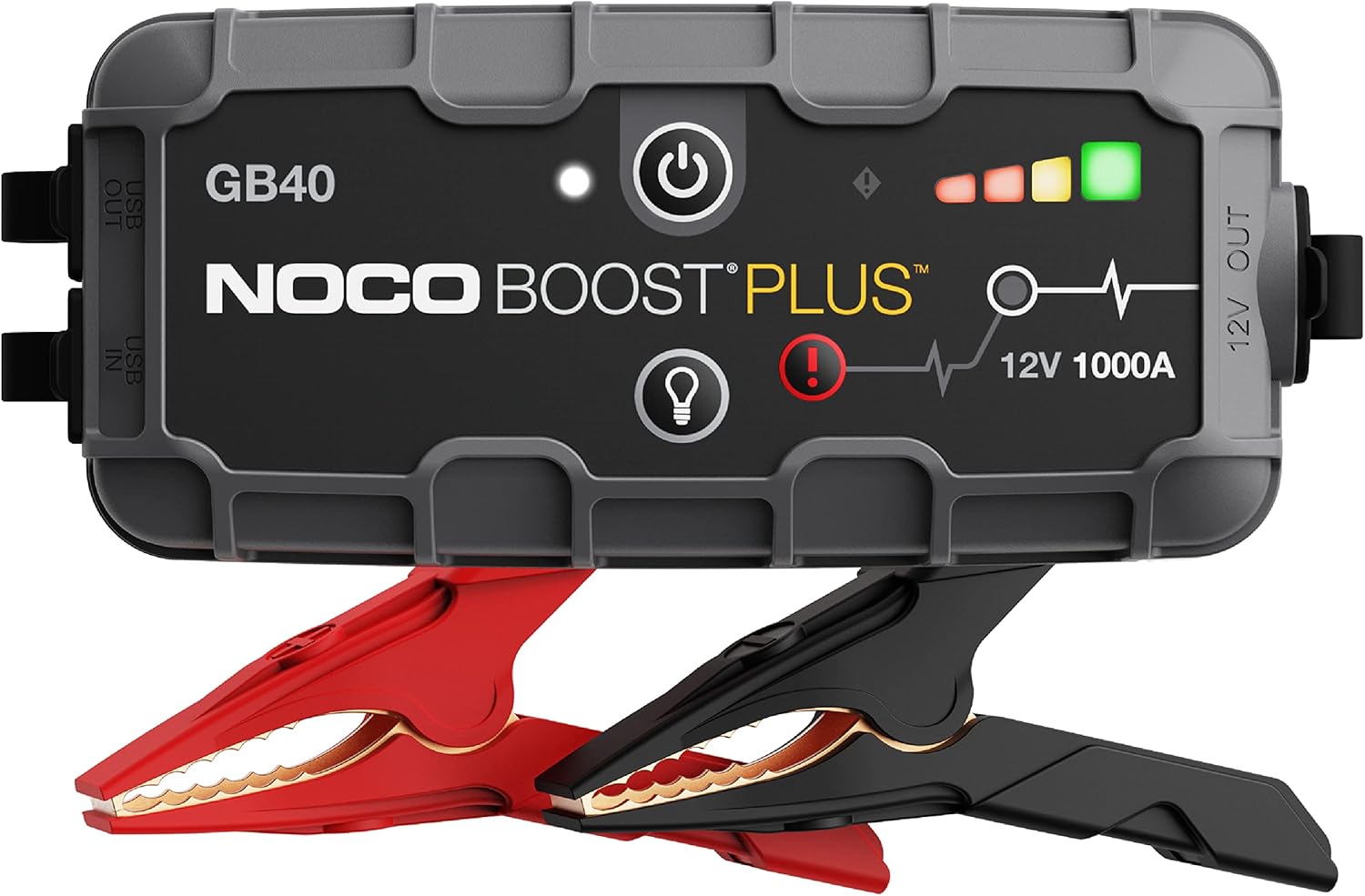
NOCO Boost Plus GB40 Jump Starter
A 1000A lithium jump starter that fits in your glovebox and works on any 12V battery. Your insurance against a dead 12V in a parking lot.
As an Amazon Associate, ThinkEV earns from qualifying purchases — at no extra cost to you.

Founder & Chief Editor
Vlad Pereira is the founder and chief editor of ThinkEV.ca, the Canadian electric-vehicle publication he writes and edits from Courtenay, British Columbia. He covers EV pricing, federal and provincial rebates, charging costs, and the Chinese manufacturers now entering Canada, from the buyer's side rather than the press-fleet side. ThinkEV is a venture of Vlad Pereira Online; his writing on health, income and the long game lives at vladpereira.com.
Frequently asked questions
Is 2026 really the best time to buy an EV in Canada, or is this just hype?
What if solid-state batteries make current EVs obsolete in a few years?
Can I really stack federal and provincial incentives?
What about apartment dwellers with no home charging?
Do EVs actually perform in Canadian winters?
Are the EVAP incentives at risk of being cut?
What's the best EV for under $40,000 effective price in Canada right now?
Should I buy new or used in 2026?
How do I verify a used EV battery before buying?
What is the carbon tax doing to Canadian gas prices?
More EV & road-trip finds
Affordable upgrades worth a look — tap any to check the price on Amazon.
 ★ 1,944
VIOFO A229 Pro 4K Dash Cam
View on Amazon ★ 87
★ 87Car Window Sun Shades for Kids (4-Pack)
View on Amazon ★ 68
★ 68WeatherTech FloorLiner for Tesla Model 3
View on Amazon ★ 8,681
Chemical Guys Complete Car Wash Kit
View on Amazon ★ 537
★ 537USB Star Projector Roof Light
View on Amazon ★ 4,626
HoogaLife Hanging Car Diffuser (2-Pack)
View on Amazon ★ 4,424
Sun Visor Card and Document Organizer
View on Amazon ★ 1,866
70mai A810 4K Dual Dash Cam
View on AmazonRead, Plan, Then Stay Current
Explore our expert articles to understand incentives and ownership costs, use the map to pressure-test charging reality, then subscribe so new EV coverage comes straight to you.
Continue Reading

EV Adoption Is Not Slowing Down: What the Data Says

Chinese EVs in Canada: Security Politics vs Value
Ontario EV Rebate 2026: $0 Provincial Since 2018

New or Used EV: Which Is the Smarter Buy in 2026?
The Best Electric SUVs in Canada (2026): Ranked by Value