Key takeaways
- The short version: the federal government offers $5,000 for battery electric vehicles under $50,000 final transaction value through the new EVAP program.
- Your province might add another $2,000-$5,000 on top.
- In Quebec, you can save up to $7,000 on an EV.
- A $30,000 EV costs about $23,000 in Quebec and about $25,000 in Ontario.
I get asked about EV incentives constantly, and I understand why. The information is scattered across federal, provincial, and municipal programs with different rules, different caps, and different application processes. Let me give you everything in one place.
The short version: the federal government offers $5,000 for battery electric vehicles under $50,000 final transaction value through the new EVAP program. Your province might add another $2,000-$5,000 on top. In Quebec, you can save up to $7,000 on an EV. In Ontario and Alberta, you're stuck with just the federal rebate. A $30,000 EV costs about $23,000 in Quebec and about $25,000 in Ontario. Where you live matters a lot.
The Federal EVAP Program
This is money everyone gets, regardless of province.
The Electric Vehicle Affordability Program (EVAP), which replaced the old iZEV program in February 2026, provides $5,000 for battery electric vehicles and $2,500 for plug-in hybrids. The vehicle's final transaction value (including all fees before tax) must be $50,000 or less. Canadian-made vehicles have no price cap.
Most affordable EVs qualify comfortably. The Chevy Equinox EV, Kia EV4, Hyundai Kona Electric, and VW ID.4 all fit. Note: EVAP requires vehicles to be made in Canada or FTA countries, Chinese-manufactured vehicles like BYD are currently excluded.
Here's the good news about claiming it: you don't do anything. The dealership applies the rebate at point of sale. You pay the reduced amount. Your only job is confirming with your salesperson that the EVAP rebate is being applied, it should appear as a line item on your purchase agreement. Note: you can only claim EVAP once per person for the entire five-year program, so choose wisely.
Where Your Province Falls
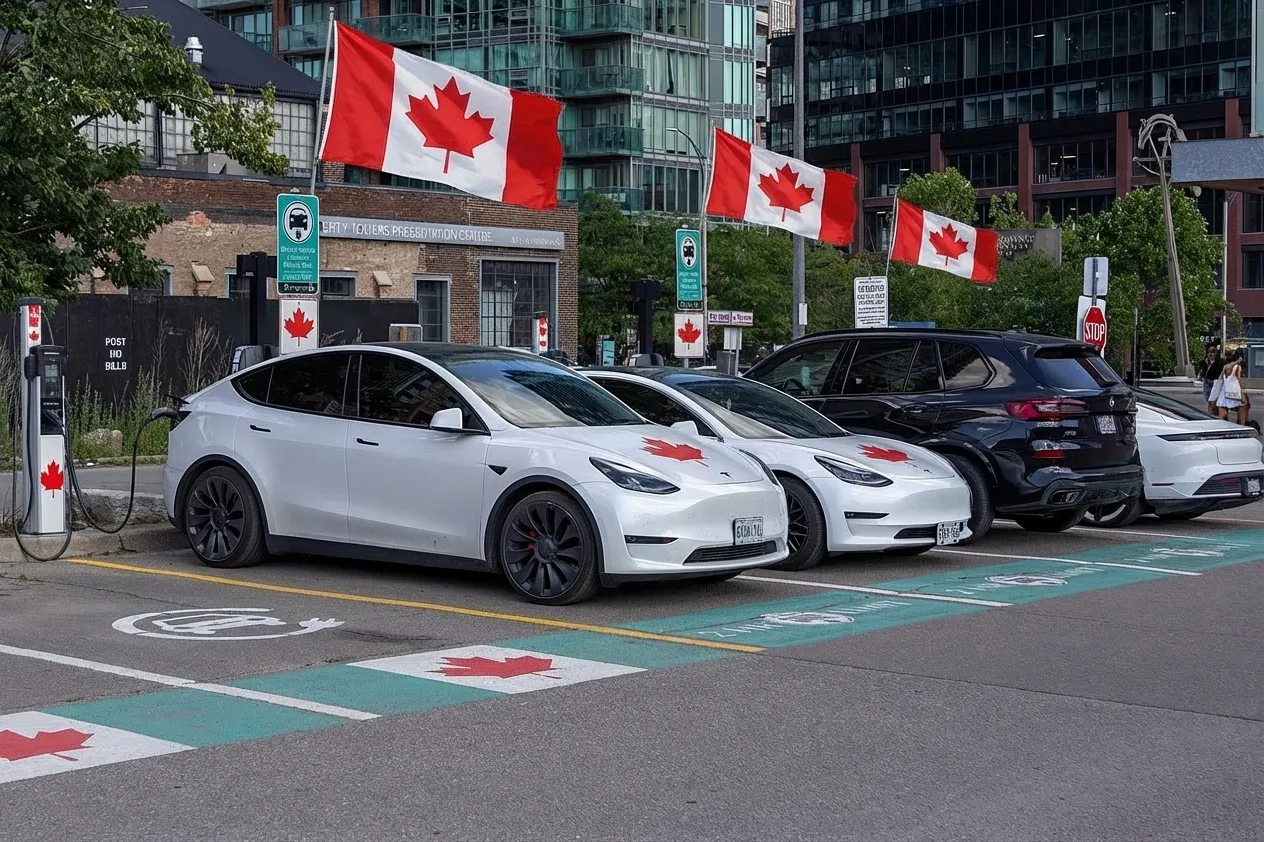
This is where things vary dramatically.
Quebec gives you $2,000 on new EVs through Roulez vert (down from $4,000 in 2025, the amounts have been declining steadily from a peak of $8,000). Combined with the federal $5,000, you're looking at $7,000 off your purchase price. Quebec also offers $600 for home charger installation.
Take a Chevy Equinox EV at $44,995. Subtract $5,000 federal EVAP. Subtract $2,000 Quebec. You're at $37,995 before taxes. That's a brand new midsize EV SUV for well under the price of a comparably equipped gas SUV. (Note: BYD vehicles don't qualify for EVAP, Chinese manufacturing excludes them from the federal rebate.)
British Columbia's CleanBC Go Electric passenger vehicle rebate has been paused since late 2024 and has not been replaced. As of now, there's no active provincial EV purchase rebate in BC. You get the $5,000 federal EVAP and that's it. BC Hydro still offers up to $350 toward Level 2 charger installation.
Prince Edward Island offers $4,000 (reduced from $5,000 in June 2025), putting it at $9,000 combined with federal. New Brunswick's Plug-In NB program ended July 1, 2025, so NB residents now get only the $5,000 federal EVAP. Note: PEI excludes Tesla from its provincial rebate.
Nova Scotia's rebate program ended in 2025. You're limited to the $5,000 federal EVAP there.
Manitoba offers a $4,000 EV rebate through MPI (Manitoba Public Insurance) for vehicles under $70,000 MSRP, running through March 31, 2026. That makes Manitoba's combined savings up to $9,000. Ontario, Alberta, and Saskatchewan offer nothing at the provincial level. You get the federal $5,000 and that's it. A $30,000 EV costs $25,000 in those provinces. Thanks, Queen's Park.
Home Charger Installation Rebates
Don't forget about these. A Level 2 charger installed at home typically costs $1,500-2,500. Many provinces help offset this.
Quebec offers up to $600 through Roulez vert. BC Hydro offers up to $350. Ontario has utility-run programs that can provide up to $1,000, though you need to check with your specific utility.
The pro tip here: check with your electricity provider directly. Many run charger rebate programs separate from provincial incentives. You might be able to stack them.
Gear worth having
As an Amazon Associate, ThinkEV earns a small commission from qualifying purchases — at no extra cost to you.

Grizzl-E Classic Level 2 EV Charger (40A)
Canadian-made and rated for minus 40C winters. 40A / 9.6 kW, NEMA 14-50, indoor/outdoor, 24-ft cable. The charger built for Canadian weather.
As an Amazon Associate, ThinkEV earns from qualifying purchases — at no extra cost to you.
Used EVs and Leases
As more EVs enter the used market, Quebec leads with used vehicle rebates: up to $2,000 on a used BEV or $1,000 on a used PHEV, provided the vehicle is under 5 years old and wasn't previously rebated. Other provinces have limited used EV programs, check NRCan and your provincial websites for current offerings.
Gear worth having
As an Amazon Associate, ThinkEV earns a small commission from qualifying purchases — at no extra cost to you.

Lectron Level 2 J1772 Charger (40A, WiFi)
Smart WiFi charger with real-time energy monitoring. 40A / 9.6 kW, J1772 with a NEMA 14-50 plug, schedule charging right from your phone.
As an Amazon Associate, ThinkEV earns from qualifying purchases — at no extra cost to you.
For purchases, the math is straightforward, rebates reduce your purchase price. Leases are slightly more complex. The federal EVAP applies fully regardless of lease term, with the rebate applied to the capitalized cost. Quebec requires a 48-month minimum lease for the full Roulez vert rebate. If you lease a Kia EV6 in Quebec on a 48-month term, you get the $2,000 provincial Roulez vert applied to your capitalized cost. (Note: BYD vehicles don't qualify for the federal EVAP rebate since they're manufactured in China.)
The Step-by-Step Process
Before you walk into a dealership, know your numbers. Look up your province's current rebate amount. Confirm the vehicle's final transaction value is under the EVAP $50,000 cap. Check for charger installation rebates.
At the dealership, ask three questions: Is this vehicle eligible for the federal EVAP rebate? Are you applying the provincial rebate at point of sale? Is there anything I need to do separately?
Check your paperwork carefully. Your purchase agreement should show the full MSRP, the federal EVAP rebate as a line item deduction, the provincial rebate if applicable, and your net purchase price before taxes.
After purchase, apply for charger installation rebates through your provincial program. Keep all your documents, purchase agreement, rebate confirmation, and charger installation receipts.
Real Numbers for Real Buyers

Let me run the math for someone buying a Kia EV4 at $38,995. (Note: BYD vehicles are manufactured in China and excluded from EVAP, so don't count on that rebate for a BYD Seal.)
In Quebec: $38,995 minus $5,000 federal minus $2,000 provincial equals $31,995 net. Add about $4,800 in taxes, and you're out the door at approximately $36,800.
In PEI: $38,995 minus $5,000 federal minus $4,000 provincial (Tesla excluded) equals $29,995 net. Add $4,500 taxes, out the door around $34,500.
In Ontario: $38,995 minus $5,000 minus nothing equals $33,995 net. Add $4,400 taxes, out the door around $38,400.
The difference between PEI and Ontario on the same car is $4,000 in rebates alone. That's significant enough to consider where you're registering your vehicle.
Confirm The Terms Before You Buy
A few things worth knowing before you finalize anything. These programs have budgets, provincial rebate programs can run out of funding mid-year, so if you're planning to buy, don't wait indefinitely. Requirements change too: governments adjust MSRP caps and rebate amounts regularly, so confirm current terms before purchasing. Tariffs are already baked into the MSRP at the dealership, incentives apply to that Canadian price. And government rebates on vehicle purchases are not taxable income, so you don't need to report them.
On common questions: you can't get the federal EVAP buying privately, it's dealer-applied only (Quebec's used EV rebate may apply for private sales). Do incentives apply to leases? Yes, with conditions on some provincial programs requiring minimum lease terms. Can you stack provincial rebates? No, you claim from the province where you register, but you can stack provincial plus federal. What if the vehicle is over $50,000? You don't qualify for federal EVAP unless it's Canadian-made, in which case there's no price cap. Some provincial programs have higher thresholds, Quebec's Roulez vert goes to $60,000.
If you're buying an EV in Canada, you're leaving money on the table if you don't claim every available incentive. The federal $5,000 is automatic if your dealer does their job correctly. Provincial rebates require you to be in the right province. For most buyers, the practical takeaway is simple: confirm your eligibility, verify the rebates appear on your paperwork, and keep your documentation.
Gear worth having
As an Amazon Associate, ThinkEV earns a small commission from qualifying purchases — at no extra cost to you.

TP-Link Kasa Smart Plug with Energy Monitoring
Track exactly how much electricity your Level 1 charger uses and schedule it for off-peak hours. Know your real cost per kWh.
As an Amazon Associate, ThinkEV earns from qualifying purchases — at no extra cost to you.
For PEI residents, the stacking math is surprisingly generous. For Ontario residents... at least you get HOV lane access.
Gear worth having
As an Amazon Associate, ThinkEV earns a small commission from qualifying purchases — at no extra cost to you.

P3 Kill A Watt Electricity Usage Monitor
Plug in your charger and see exactly what you spend in kWh, cost, and watts. Settle the is-my-EV-really-cheaper debate with data.
As an Amazon Associate, ThinkEV earns from qualifying purchases — at no extra cost to you.
Related Reading
- EVAP Rebate Guide, Step-by-step guide to claiming your federal rebate.
- EV Rebates by Province, Every provincial incentive explained.
- EV Pricing Guide Canada 2026-2027, The real cost of every EV after incentives.
Gear worth having
As an Amazon Associate, ThinkEV earns a small commission from qualifying purchases — at no extra cost to you.
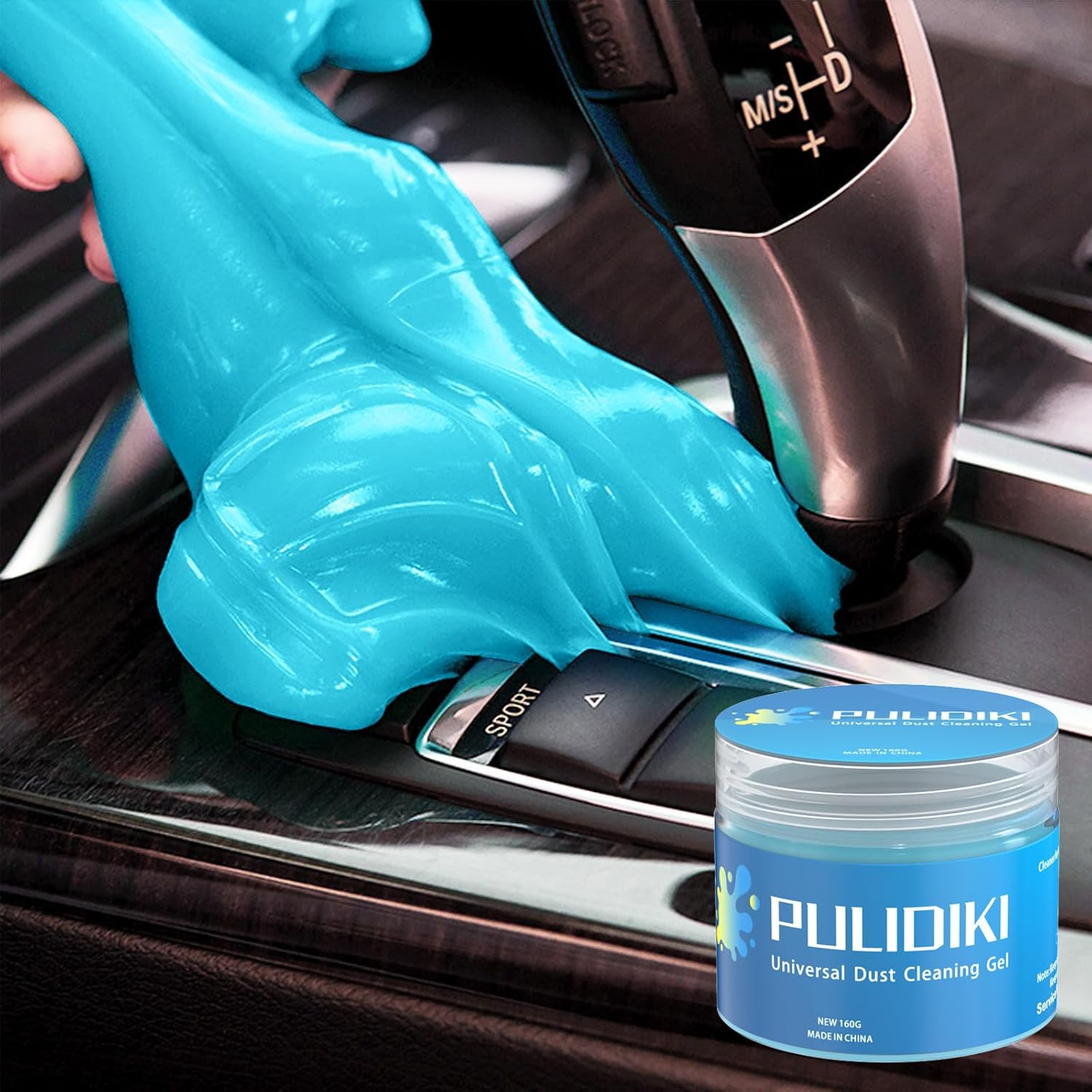
PULIDIKI Car Cleaning Gel (Detailing Putty)
Press it into vents, buttons, and seams and it lifts out dust you did not know was there. Weirdly satisfying, genuinely useful.
As an Amazon Associate, ThinkEV earns from qualifying purchases — at no extra cost to you.

Founder & Chief Editor
Vlad Pereira is the founder and chief editor of ThinkEV.ca, the Canadian electric-vehicle publication he writes and edits from Courtenay, British Columbia. He covers EV pricing, federal and provincial rebates, charging costs, and the Chinese manufacturers now entering Canada, from the buyer's side rather than the press-fleet side. ThinkEV is a venture of Vlad Pereira Online; his writing on health, income and the long game lives at vladpereira.com.
Frequently asked questions
What is the federal EVAP rebate?
Can I stack federal and provincial rebates?
Which province has the best EV incentives?
What is the maximum EV rebate you can get in Canada?
Which EVs qualify for the federal EVAP rebate in Canada?
More EV & road-trip finds
Affordable upgrades worth a look — tap any to check the price on Amazon.
 ★ 308
★ 308Coiled Lightning Car Cable for iPhone (2-Pack)
View on Amazon ★ 87
★ 87Car Window Sun Shades for Kids (4-Pack)
View on Amazon ★ 68
★ 68WeatherTech FloorLiner for Tesla Model 3
View on Amazon ★ 8,681
Chemical Guys Complete Car Wash Kit
View on Amazon ★ 164
★ 164Solar-Powered LED Ambient Light
View on Amazon ★ 900
★ 900Personalized Photo Car Air Freshener
View on Amazon ★ 4,424
Sun Visor Card and Document Organizer
View on Amazon ★ 297
★ 297360-Degree One-Hand Dashboard Phone Mount
View on AmazonRead, Plan, Then Stay Current
Explore our expert articles to understand incentives and ownership costs, use the map to pressure-test charging reality, then subscribe so new EV coverage comes straight to you.
Continue Reading

New Brunswick EV Incentives 2026: What's Available
NWT EV Incentives 2026: Driving Electric at -40C
Ontario EV Incentives 2026: The Complete Picture

Alberta EV Rebates 2026: What You Actually Get
BC EV Rebates 2026: What's Left After the Cuts