Key takeaways
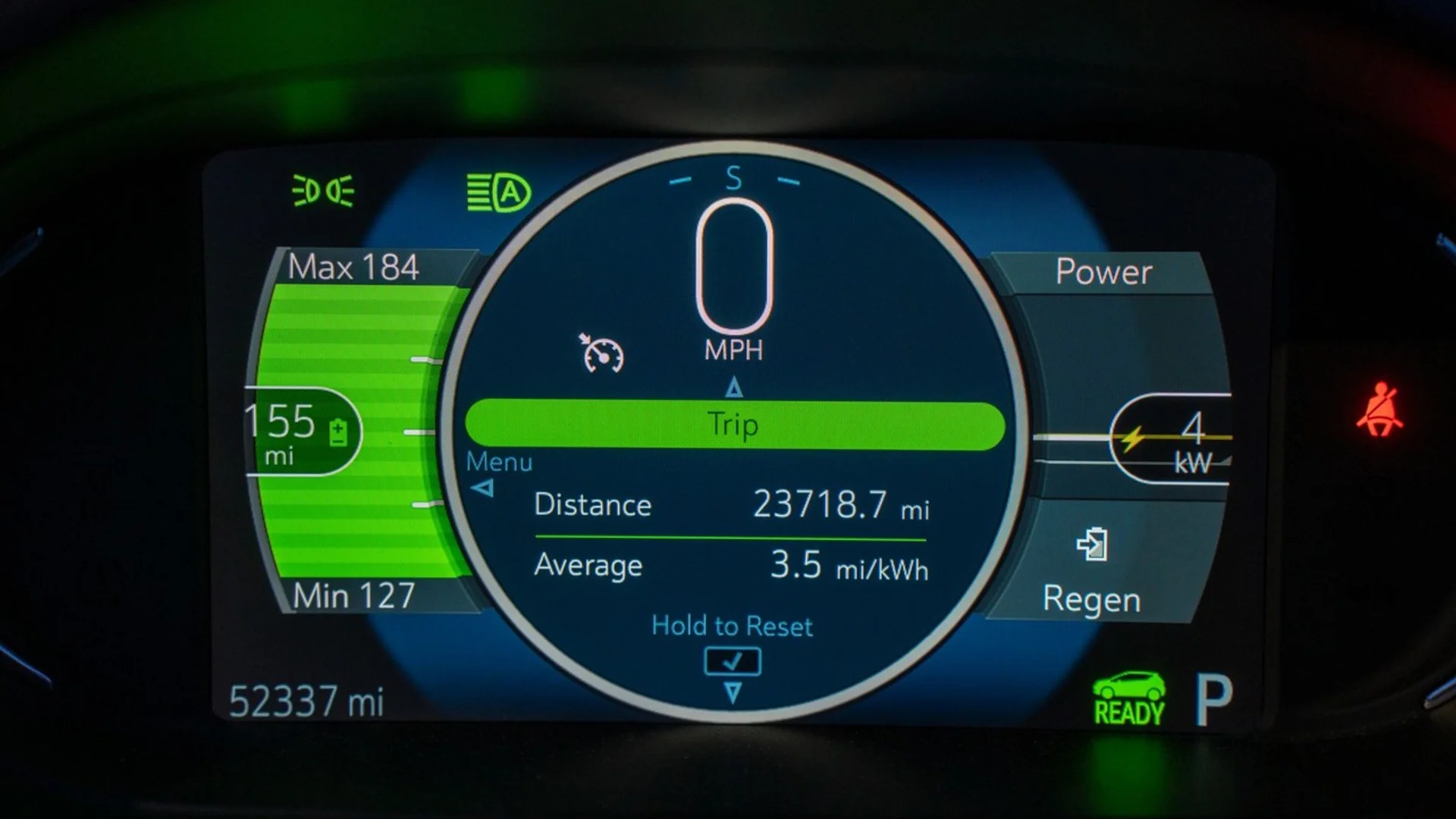
- Run those numbers through a mid-size sedan with a reasonably sized pack and you're looking at potential range exceeding 1,200 kilometres on a single charge.
- On a 1,200-kilometre pack, 15 percent loss gives you 1,020 kilometres in extreme cold.
- Toyota has been in the solid-state game since 2008 and holds about 1,790 patents in the space, more than anyone else on the planet.
I was just talking with a friend of mine who works at Kal Tire. He's been there four years now and he's halfway through his Red Seal mechanic certification. This guy tears apart braking systems and balances wheels on everything from F-150s to Model Ys, and when he started asking me about solid-state batteries, specifically what BYD has been doing with them, I realized we were having a conversation that a lot of Canadians are about to start having. The kind of conversation that right now mostly lives inside engineering conferences and Chinese-language press releases that nobody outside the industry reads.
So I did what I always do. I went down the rabbit hole. Patent filings, investor disclosures, industry reports, academic papers, the MIT research from just a few days ago. I spent the better part of a week on this. And what I found is, one of the most interesting things happening in the automotive world right now. Whether you already drive electric or you're still waiting for the right moment to switch, what I'm about to walk you through matters. It changes the math on the entire EV decision.
Why This Matters for Canadian Buyers
If BYD is a new name for you, here's the quick version. They started in 1995 making rechargeable batteries in Shenzhen, China, before they ever built a car. Today they're the world's largest electric vehicle manufacturer by unit sales, and the thing that makes them different from almost every other automaker on the planet is that they design and produce their own battery cells, their own semiconductor chips, their own power electronics, and their own vehicles.
All under one corporate roof. Toyota doesn't do that. Volkswagen doesn't do that. Tesla buys cells from Panasonic and CATL. BYD makes everything themselves. When they say they're developing a new battery chemistry, they're not issuing a press release about a supplier's roadmap. They're doing the science, building the production line, and designing the vehicle it goes into simultaneously.
That kind of vertical integration isn't just a business strategy. It's a development speed advantage that compounds over time.
So what is a solid-state battery, and why should you care? My buddy actually gave me the simplest explanation I've heard and it stuck with me. Picture the battery in your phone or the one sitting under the floor of a current EV. Inside every cell there's a liquid electrolyte, kind of like a thin gel or chemical solution, that lets lithium ions shuttle back and forth between two electrodes when you charge and discharge.
That liquid does the job, but it comes with baggage. It's flammable, which is why you hear about rare but scary battery fires. It limits how much energy you can physically pack into a given volume because the liquid takes up space and adds weight. And in cold weather, it gets sluggish. The ions move slower, internal resistance spikes, and the battery management system throttles power output to protect the cells.
That's why your EV range drops when it's minus 25 outside. It's not a software bug or a design flaw. It's physics.
A solid-state battery replaces that liquid with a solid material. That's the fundamental change. One material swap. But what follows from that single substitution is a cascade of potential improvements that, if they actually work at scale, would reshape the entire electric vehicle equation. Higher energy density because you can use more aggressive electrode chemistries without the liquid catching fire.
Faster charging because ions can move through certain solid electrolytes with less resistance at the electrode interfaces. Better cold-weather performance because a solid doesn't get viscous the way a liquid does. And improved safety because you've removed the flammable component entirely. That's the promise. The question, and it's a real one, is whether the promise holds up when you move from a lab bench to a factory floor producing tens of thousands of cells a day.
BYD has been quietly working on this since 2013. Let that sit for a second. Over a decade of R&D, happening in the background while the rest of the world was watching them dominate the lithium iron phosphate market with their Blade Battery. The Blade Battery was itself a breakthrough when it launched in 2020. It used a long, thin cell design in an LFP chemistry that delivered respectable range while being exceptionally safe, famously passing a nail penetration test where a nail was driven through the cell and the surface temperature barely rose above 60 degrees.
It was good. It was reliable. And it powered BYD's rise to the top of the global sales charts. They followed it with the Blade Battery 2.0 in March 2026, switching to a lithium manganese iron phosphate chemistry that pushed energy density to 190 to 210 watt-hours per kilogram with 8C fast charging and improved thermal management. That's the current state of the art from BYD. It's impressive.
And the solid-state battery they're working on makes it look like a warm-up act.
In 2024, at their Chongqing Bishan facility, BYD produced pilot cells on an actual production line. Not hand-assembled lab prototypes. Production line cells. They made both 20 amp-hour and 60 amp-hour versions, and the numbers they're reporting are what first caught my attention: 400 watt-hours per kilogram at the cell level and over 800 watt-hours per litre in volumetric density. The current Blade Battery 2.0 sits at about 190 to 210 watt-hours per kilogram. So the solid-state cell is roughly double. Double the energy in the same weight. Or the same energy in half the weight. Either way, that's enormous.
Their approach uses something called a sulfide composite electrolyte, specifically LPSC, which stands for lithium phosphorus sulfur chloride. This was disclosed for the first time when BYD's battery subsidiary, FinDreams, updated its website in November 2025 to formally add solid electrolyte to its product portfolio. They pair the sulfide electrolyte with a high-nickel ternary cathode using single-crystal particles and a silicon-based anode designed for low expansion during charge and discharge cycles.
The engineering here is clever. The composite electrolyte uses sulfide glass microbeads dispersed in an oxide glass matrix, where the sulfide component delivers high ionic conductivity and the oxide glass provides mechanical strength. An oxide additive bridges the two material networks to prevent phase separation. It's a belt-and-suspenders approach to a material science problem that has stumped labs around the world for years.
BYD's CTO, Sun Huajun, said publicly that they chose the sulfide route for "cost and process stability considerations." That phrasing matters. He didn't say it's the highest performing option. He didn't say it's the most novel. He said it's practical. And from a company that's already manufacturing 286 gigawatt-hours of battery capacity annually across eleven facilities, practical is exactly the right word.
Now let me translate the specs into something you actually care about: your driving experience.
400 watt-hours per kilogram at the cell level translates, after you account for pack-level overhead like the casing, cooling system, and battery management electronics, to over 280 watt-hours per kilogram at the pack level. Run those numbers through a mid-size sedan with a reasonably sized pack and you're looking at potential range exceeding 1,200 kilometres on a single charge. Think about what that means geographically. Vancouver to Jasper. Toronto to Thunder Bay. Montreal to Halifax. In one shot. No planning around charging stops. No range anxiety calculations. No winter buffer math where you mentally subtract 30 percent and hope it's enough. Just drive.
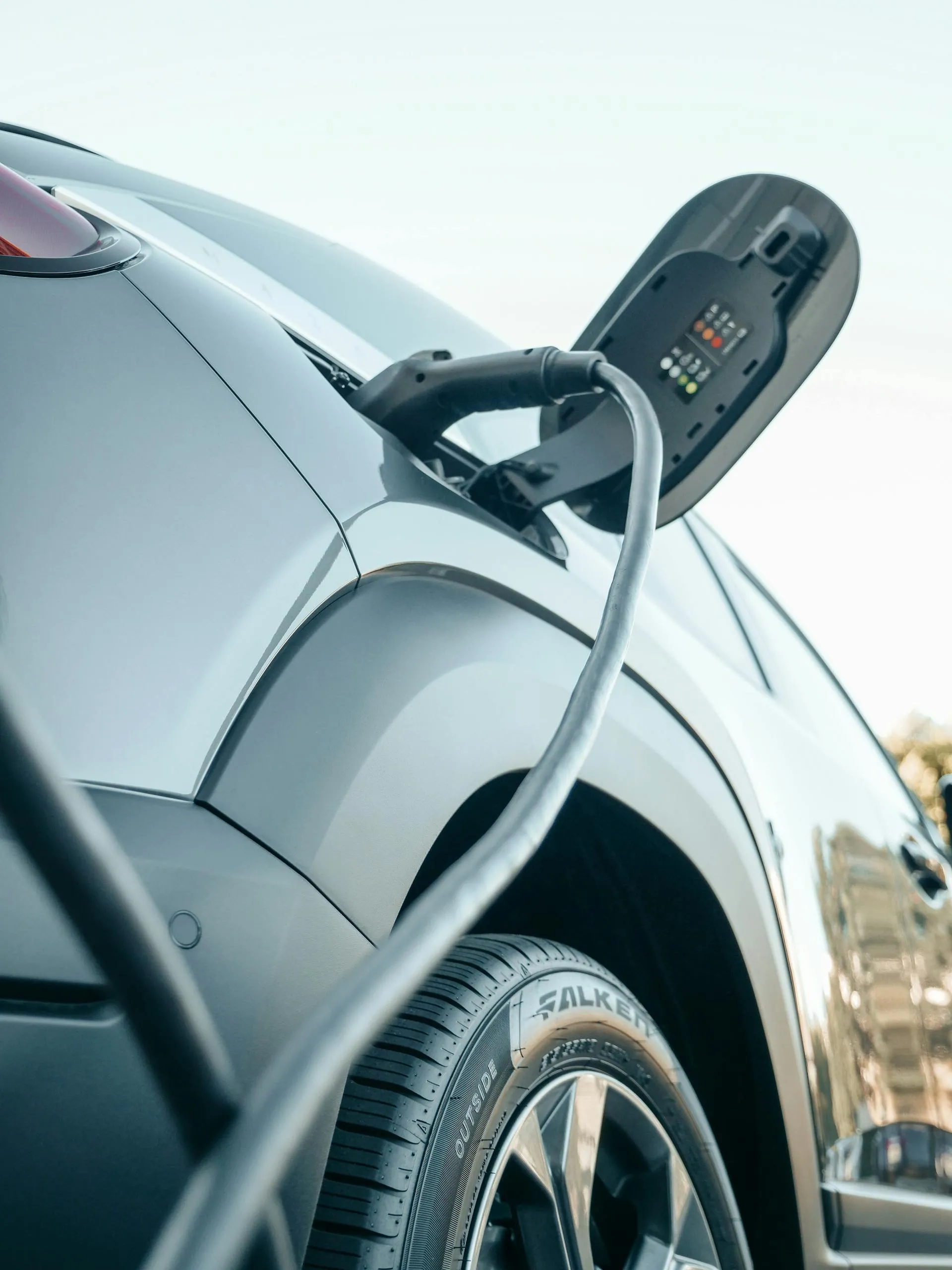
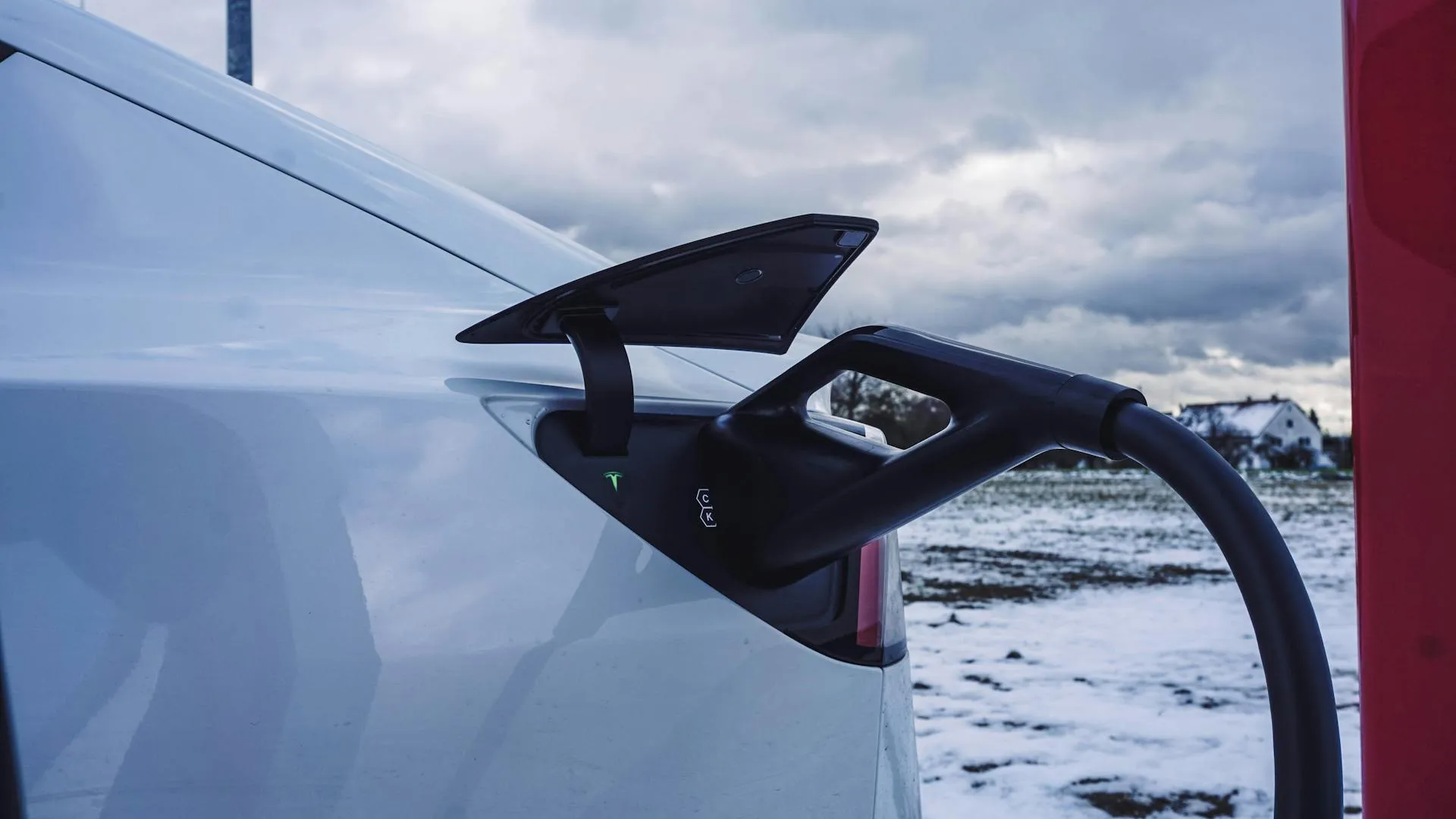
And the charging speed claim is equally wild. BYD says the solid-state cell supports 5C charging, which in practical terms means going from nothing to 80 percent in about 10 minutes. Right now, the fastest DC fast chargers with current battery chemistry give you 20 to 30 minutes for the same result under ideal conditions, and anyone who's actually used a fast charger in Canada in January knows "ideal conditions" is a generous description. Ten minutes. That's the time it takes to walk into a gas station, use the washroom, grab a coffee, and walk back. That's not an inconvenience. That's barely a pause.
Gear worth having
As an Amazon Associate, ThinkEV earns a small commission from qualifying purchases — at no extra cost to you.

Grizzl-E Classic Level 2 EV Charger (40A)
Canadian-made and rated for minus 40C winters. 40A / 9.6 kW, NEMA 14-50, indoor/outdoor, 24-ft cable. The charger built for Canadian weather.
As an Amazon Associate, ThinkEV earns from qualifying purchases — at no extra cost to you.
Even with public charging speeds improving, having a Level 2 charger at home is still the foundation. You wake up with a full battery every morning, regardless of what happens out there. If you live in Canada, and especially if you live somewhere with proper winters, the Grizzl-E is the one that keeps coming up in every recommendation list. It's Canadian-made, rated for minus 40 degrees, and it just works. It's been the default recommendation on ThinkEV for a reason.
Here's the part that really stopped me in my tracks, because it hits closest to home for anyone reading this from Canada.
BYD claims their solid-state cells maintain 85 percent discharge efficiency at minus 30 degrees Celsius. And they claim cold-start capability down to minus 40. Let me put that in context. Current lithium-ion EV batteries routinely lose 30 to 40 percent of their range in deep winter cold. If you bought an EV with a rated range of 450 kilometres, you're getting 270 to 315 in January in Edmonton or Winnipeg or Sudbury. That gap between the number on the sticker and the number on the dashboard is the single biggest source of frustration for Canadian EV owners. Every winter, the EV forums light up with the same complaints: "I was promised 400 kilometres and I'm getting 260."
If BYD's numbers hold, and I need to stress that this is still a big if, you'd lose 15 percent instead of 35 or 40. On a 1,200-kilometre pack, 15 percent loss gives you 1,020 kilometres in extreme cold. That's still more range than any current EV delivers in summer. Think about how fundamentally that changes the purchase decision for someone in Regina or Yellowknife or Corner Brook who wants to go electric but can't stomach the winter penalty. This is the single most important improvement for Canadian EV adoption, period. More important than price. More important than charging infrastructure. Range confidence in winter is what's holding back the next wave of buyers, and solid-state batteries could unlock it.
My buddy at Kal Tire said something that confirmed this. He works on EVs regularly now, and the number one complaint he hears from owners during the cold months isn't about charging infrastructure or tire wear or brake dust. It's about range. They bought the car expecting one number and they live with a different one from November to March. It's not a dealbreaker for most of them, they still love the cars, but it erodes the experience in a way that people don't forget when they talk to friends and family about whether to go electric. A battery that genuinely performs in cold weather fixes the thing that word-of-mouth is currently working against.
What BYD Is Claiming and What Still Needs Proof
BYD isn't working alone on this, and that's part of what makes me optimistic. If it were just one company making bold claims, I'd be sceptical. But the convergence is striking.
Toyota has been in the solid-state game since 2008 and holds about 1,790 patents in the space, more than anyone else on the planet. They've partnered with Idemitsu Kosan for lithium sulfide mass production, broke ground on a pilot plant in January 2026, and they're targeting a vehicle launch in 2027 or 2028. The Japanese government has committed roughly 7 billion dollars to the effort.
CATL, the world's largest battery manufacturer by market share, is running a dual-track strategy with their "condensed matter" semi-solid battery already flying in aviation applications at 500 watt-hours per kilogram, alongside a parallel all-solid-state program using sulfide electrolytes. Samsung SDI has had a pilot line running in Suwon, South Korea since 2022, targeting 900 watt-hours per litre in volumetric density, with mass production planned for 2027.
ProLogium in Taiwan has shipped over 600,000 cells, more than any other pure solid-state company, and they're building a gigafactory in Dunkirk, France that could scale to 48 gigawatt-hours. Even QuantumScape in California just inaugurated their Eagle Line pilot facility in February 2026, using a proprietary ceramic separator process.
When Toyota, BYD, CATL, Samsung SDI, and half a dozen other well-funded companies independently arrive at similar production timelines, all pointing to 2027 for small-batch and 2030 for mass production, it's not hype. It's convergence. That many independent engineering teams don't hallucinate the same schedule.
And the government backing reinforces the signal. China has committed 6 billion yuan, about 830 million dollars, to a national solid-state battery R&D initiative. BYD is one of six companies eligible for that funding, alongside CATL, CALB, EVE Energy, and Gotion. The China All-Solid-State Battery Collaborative Innovation Platform, established in January 2024, unites BYD and CATL with government agencies, universities, and automakers in an unprecedented collaboration.
Competitors pooling resources because the prize is too big for any single player. Japan has its NEDO program, South Korea has invested 191 million in next-gen batteries, and the United States allocated 6 billion through the Bipartisan Infrastructure Law with solid-state as a key focus. The global solid-state battery market was valued at 1.67 billion dollars in 2025, and projections put it at 30.5 billion by 2035. A 32 percent compound annual growth rate. That kind of money doesn't chase fantasies.
Where BYD specifically stands out is the combination of scale, spending, and execution capability. In 2024 alone they invested 54.2 billion yuan in R&D. That's about 7.47 billion Canadian dollars, more than Tesla spent on R&D that year. They employ over 120,000 R&D engineers across 11 research institutes. They file an average of 45 patent applications per day. And here's the detail that struck me most: in 13 of the past 14 years, BYD spent more on research and development than they earned in annual net profit. Read that again. They consistently invest more than they make. That's not a company chasing quarterly earnings. That's a company building toward something.
Gear worth having
As an Amazon Associate, ThinkEV earns a small commission from qualifying purchases — at no extra cost to you.

Portable Level 2 EV Charger (40A, NEMA 14-50)
Throw it in the trunk and charge anywhere with a 240V outlet. 40A portable with NEMA 14-50 plug. Your road-trip insurance policy.
As an Amazon Associate, ThinkEV earns from qualifying purchases — at no extra cost to you.
Now I want to be straight with you, because keeping it real is the whole point of ThinkEV. Everything I've described so far about BYD's solid-state battery specs, the 400 watt-hours per kilogram, the 10,000 cycle life, the 5C charging, the minus 30 cold-weather performance, none of it has been independently verified. Not by a third-party testing lab. Not by a peer-reviewed journal. Not by an independent certification body. These are BYD's own numbers from their own investor relations disclosures.
And the 10,000 cycle life claim, which is extraordinary, is the one that makes me most cautious. Some industry sources suggest that number might actually come from BYD's sodium-ion battery program, not their solid-state work. The distinction matters enormously. Across the entire industry, actual tested all-solid-state cells today achieve somewhere between 300 and 1,000 full cycles before significant capacity loss. If BYD has genuinely reached 10,000, the absence of independently published data is conspicuous. You'd want to shout that from the rooftops with verification in hand.
The cost picture is equally sobering. Current all-solid-state batteries cost between 400 and 800 dollars per kilowatt-hour to produce. For reference, conventional lithium-ion packs hit about 108 dollars per kilowatt-hour in 2025, according to BloombergNEF. BYD's pilot line was running at about 1,200 yuan per kilowatt-hour in mid-2025, roughly 165 dollars, which was already a 33 percent reduction from 2023 sample costs. Their target is 70 dollars per kilowatt-hour by the time the first 20-gigawatt-hour production line at Chongqing Bishan comes online. That would be remarkable. But the gap from current costs to that target is steep, and no one has publicly explained the specific pathway to get there.
There are also fundamental science challenges that remain unsolved. In March 2026, literally days ago, researchers at MIT published a paper in Nature showing that dendrites, the tiny metallic filaments that grow inside batteries and cause short circuits, form at only 25 percent of the mechanical stress everyone previously assumed was the safety threshold. The reason turns out to be chemical, not just mechanical: high electrical currents during fast charging decompose the solid electrolyte itself, weakening it from the inside. One of the researchers described the electrolyte during charging as becoming "closer to the brittleness of a lollipop." That's a vivid and concerning image, and it applies directly to BYD's sulfide-based approach.
I'm not sharing this to be discouraging. Not even close. I'm sharing it because I believe you deserve the full picture, not just the press-release version. Every significant technology goes through a phase where the promises run ahead of the proof, and solid-state batteries are squarely in that phase right now. But the trajectory is real. The investment is real. The pilot cells rolling off production lines are real. And the convergence of timelines across independent programs gives me genuine confidence that the remaining problems are engineering problems, not physics problems. Engineering problems get solved. It takes money, time, and talented people. BYD has all three.
On the topic of range and road trips, this is a product I've recommended before and I'll keep recommending it. A portable Level 2 charger that you throw in your trunk and forget about until you need it. You're visiting family in a small town with no public chargers, or the one station you planned around is broken, and suddenly having a 40-amp charger in your trunk that plugs into any 240-volt outlet feels like the best purchase you ever made. Current EVs benefit from this. Future solid-state EVs with massive range will benefit too, because even 1,200 kilometres runs out eventually on a long enough trip.
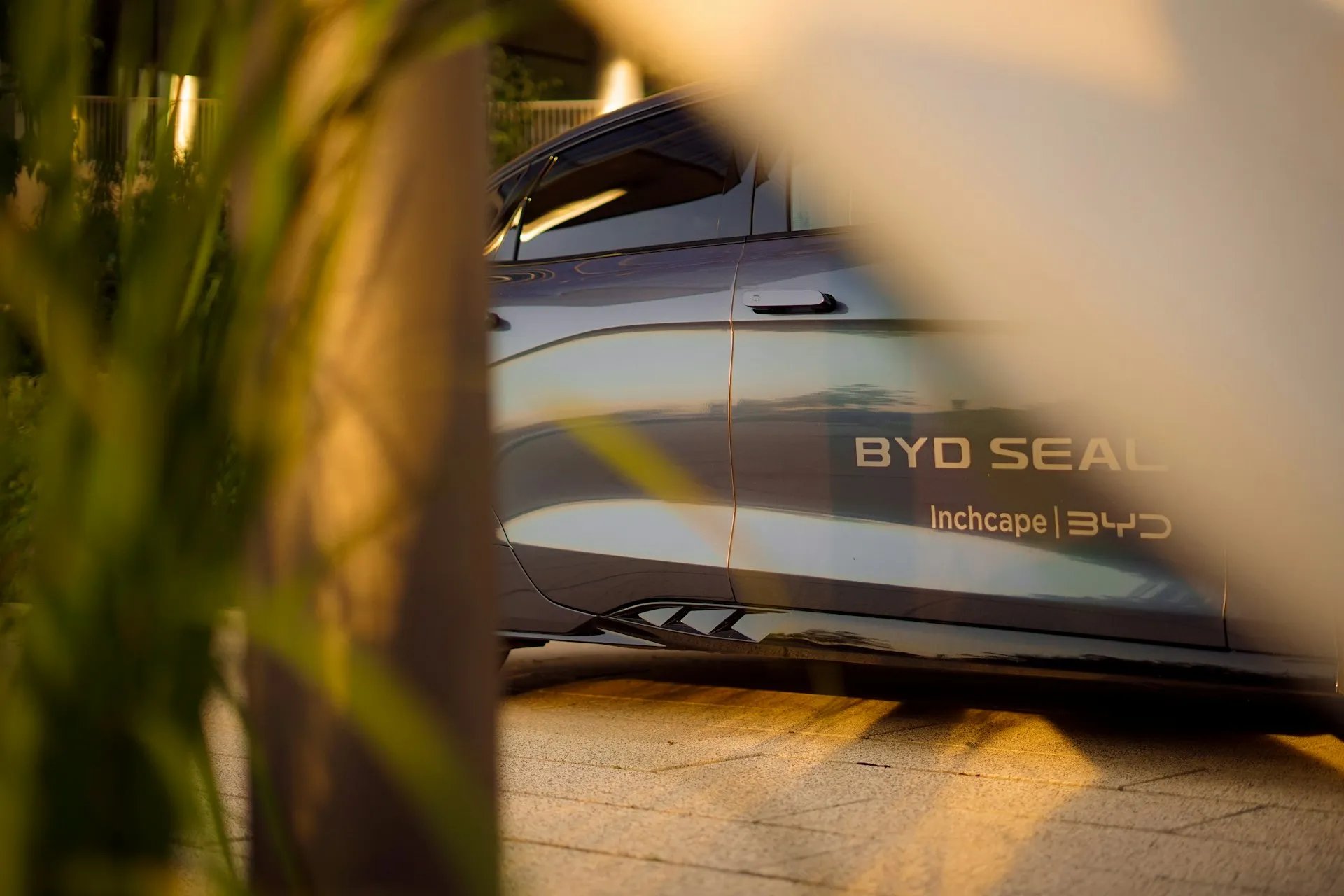
For Canada specifically, the timing of solid-state availability gets interesting when you layer in the tariff picture. In October 2024, Canada imposed a 100 percent tariff on Chinese-made EVs. That effectively slammed the door on BYD, NIO, and every other Chinese manufacturer. But in January 2026, that tariff was reduced to 6.1 percent under a quota system allowing 49,000 vehicles per year. It's still a barrier, but it's not a wall anymore. At 6.1 percent, a BYD Seal that retails for around 35,000 dollars in China could potentially land in Canada in the low-to-mid 40,000 dollar range after tariff, shipping, homologation, and dealer margin. That puts it in direct competition with a Tesla Model 3 or a Hyundai Ioniq 6.
Now imagine that scenario a few years down the road. A BYD vehicle with a solid-state battery offering 1,200 kilometres of range, 10-minute fast charging, minimal winter range loss, and a competitive price point. Arriving into a Canadian market where the federal government is pushing toward 100 percent zero-emission vehicle sales by 2035 and provincial rebates make the upfront cost even more manageable. That combination creates genuine market disruption, not in the hypothetical sense that tech journalists love to write about, but in the practical sense of a regular person in Saskatoon or Moncton looking at a BYD and looking at a Hyundai and choosing the one that offers twice the range for a similar price.
I'm genuinely positive about Chinese EVs coming to Canada, and I know not everyone shares that sentiment. Some people have concerns about data privacy, supply chain dependence, or market competition with domestic brands. Those are fair conversations to have. But from a pure product standpoint, what BYD, NIO, Xpeng, and others have built in the last five years is extraordinary. Competition makes everyone better. When BYD pushes range to 1,200 kilometres, Toyota and Hyundai and Tesla have to respond. That benefits every Canadian EV buyer regardless of which brand they choose. The rising tide lifts every boat, and solid-state technology is going to be a very big tide.
BYD's specific roadmap, as confirmed by their investor relations department in February 2026, goes like this: around 1,000 demonstration vehicles in 2027, likely in their premium Yangwang brand. Then gradual expansion to mid-range models in the Dynasty and Ocean series through 2028 to 2030, aiming for 40,000 vehicles by 2030. By 2033, they plan to open solid-state battery supply to external automakers.
The first 20-gigawatt-hour production line at Chongqing Bishan is targeted for 2026 to 2027, as part of a 100-gigawatt-hour master plan for that site. Post-2030, they're talking about transforming existing factories in Hefei, Xi'an, and other locations for solid-state production, with a global shipment target of 556 gigawatt-hours. Those are ambitious numbers, and the post-2030 goals are aspirational by any measure.
But the near-term milestones, demo vehicles in 2027 and initial production scaling through 2028, feel achievable given where they are today.
IDTechEx, a respected technology research firm, assessed BYD's plan as "realistic but gradual," and flagged the 2027 to 2030 window as the make-or-break period for validating uptime, scrap reduction, and process control at scale. Argus Media described the timeline as providing "clearer" guidance than competitors, even though it's "later than earlier predictions by some domestic automakers.
" Miao Wei, a former Chinese Minister of Industry, expressed measured confidence: small-scale production around 2027 is realistic, but the technology to support massive production "is yet to mature. " These aren't cheerleaders. These are pragmatic assessments from people who follow the industry closely, and they're all saying the same thing: it's real, it's happening, and the next four years will tell us whether it happens on schedule.
Something my buddy at Kal Tire brought up during our conversation, and this applies equally to current EVs and future solid-state ones, is that battery technology is only half of the range equation. He sees it every day in the shop. Tire pressure, rolling resistance, driving habits, and basic vehicle maintenance determine a huge portion of the range you actually experience.
He told me the number of EVs that come through with tires underinflated by 5 to 10 PSI is way higher than people would expect. And on an electric vehicle, where every watt-hour matters, that can cost you 5 to 10 percent of your total range. On a 400-kilometre battery, that's 20 to 40 kilometres evaporating because of lazy tire maintenance. On a future 1,200-kilometre solid-state pack, you're looking at 60 to 120 kilometres left on the table because you didn't check your tires this month.
Gear worth having
As an Amazon Associate, ThinkEV earns a small commission from qualifying purchases — at no extra cost to you.

AstroAI Portable Tire Inflator
One tap, it inflates to your exact PSI then stops automatically. Low tires cost 5 to 10 percent of your range, so this pays for itself in a week.
As an Amazon Associate, ThinkEV earns from qualifying purchases — at no extra cost to you.
This thing costs less than a tank of gas used to and it pays for itself in the first week. Set your target PSI, press the button, it inflates to that exact pressure and stops. EV owners who keep one in the trunk report it takes 30 seconds per tire. If you're spending 40, 50, 60 thousand dollars on an electric vehicle, spending 44 dollars to protect the range you paid for is the easiest decision you'll make.
I started this piece because of a conversation over coffee with a friend who works on vehicles for a living. What I found after a week of research was so much bigger than either of us expected. We're looking at a technology that could double the range of current EVs, charge in the time it takes to walk through a Tim Hortons drive-through, survive a Prairie winter with minimal losses, and potentially reach cost parity with the batteries we use today. The demonstration vehicles are targeted for next year. Mass production by 2030. That's not science fiction. That's an engineering timeline with billions of dollars and hundreds of thousands of people behind it.
Expect Setbacks Before The Headline Numbers Hold
Will there be setbacks? Almost certainly. The dendrite problem isn't solved. Manufacturing yields at scale are unproven. The cost targets require reductions that nobody has publicly explained how to achieve. And as I've said throughout this post, a lot of the headline numbers still lack independent verification. I wouldn't be honest with you if I didn't say that.
But I've been following this space closely for years now and I've never seen this level of convergence. This many independent companies, this many government programs, this much money, all pointing at the same technological moment. That means something. When BYD, Toyota, CATL, and Samsung SDI, companies that compete fiercely for every percentage point of market share, all say "2027 to 2030," that's not coordinated marketing. That's parallel arrival at the same technical reality.
For Canadian EV buyers, whether you're driving your first electric vehicle or you're still watching from the sidelines, solid-state batteries represent the moment where the last major objections get answered. Range. Charging time. Winter performance. Not hypothetically. Practically. The generation of EVs coming in the next three to five years will be fundamentally different from what's available today, and Canada, with its cold climate and long distances, stands to benefit from that change more than almost any other market on earth.
That's worth paying very close attention to.
Gear worth having
As an Amazon Associate, ThinkEV earns a small commission from qualifying purchases — at no extra cost to you.

EcoNour 27-inch Snow Brush and Ice Scraper
An aluminum brush and scraper combo that clears a windshield fast without scratching. Non-negotiable for Canadian mornings.
As an Amazon Associate, ThinkEV earns from qualifying purchases — at no extra cost to you.
Related Reading
Gear worth having
As an Amazon Associate, ThinkEV earns a small commission from qualifying purchases — at no extra cost to you.

Magnetic Windshield Snow Cover
Skip the scraping. Magnets hold it on, peel it off with the snow, and your defroster stops draining range on cold mornings.
As an Amazon Associate, ThinkEV earns from qualifying purchases — at no extra cost to you.

Founder & Chief Editor
Vlad Pereira is the founder and chief editor of ThinkEV.ca, the Canadian electric-vehicle publication he writes and edits from Courtenay, British Columbia. He covers EV pricing, federal and provincial rebates, charging costs, and the Chinese manufacturers now entering Canada, from the buyer's side rather than the press-fleet side. ThinkEV is a venture of Vlad Pereira Online; his writing on health, income and the long game lives at vladpereira.com.
Frequently asked questions
When could Canadians actually buy a BYD with a solid-state battery?
What does BYD claim its solid-state battery does in deep cold?
Have those solid-state specs been independently verified?
Is BYD alone on solid-state, or is the whole industry moving?
More EV & road-trip finds
Affordable upgrades worth a look — tap any to check the price on Amazon.
 ★ 392
★ 392Large Cup Holder Adapter (32-40oz)
View on Amazon ★ 8,681
Chemical Guys Complete Car Wash Kit
View on Amazon ★ 164
★ 164Solar-Powered LED Ambient Light
View on Amazon ★ 1,083
Crystal Push-Start Button Ring (2-Pack)
View on Amazon ★ 865
★ 865Collapsible Trunk Organizer
View on Amazon ★ 17,242
LISEN Mini USB-C Car Charger (54W)
View on Amazon ★ 119
★ 119Foldable Waterproof Trunk Organizer
View on Amazon ★ 17,839
Qifutan Vent Phone Mount (Military-Grade Clip)
View on AmazonRead, Plan, Then Stay Current
Explore our expert articles to understand incentives and ownership costs, use the map to pressure-test charging reality, then subscribe so new EV coverage comes straight to you.
Continue Reading
Chinese EVs in Canada: Security Politics vs Value

Should I Wait for BYD to Come to Canada?
Chinese EV Resale Value in Canada: What to Expect
Are Chinese EVs Safe? What Euro NCAP Ratings Show
EV Fires vs Gas Cars: What the Safety Data Shows