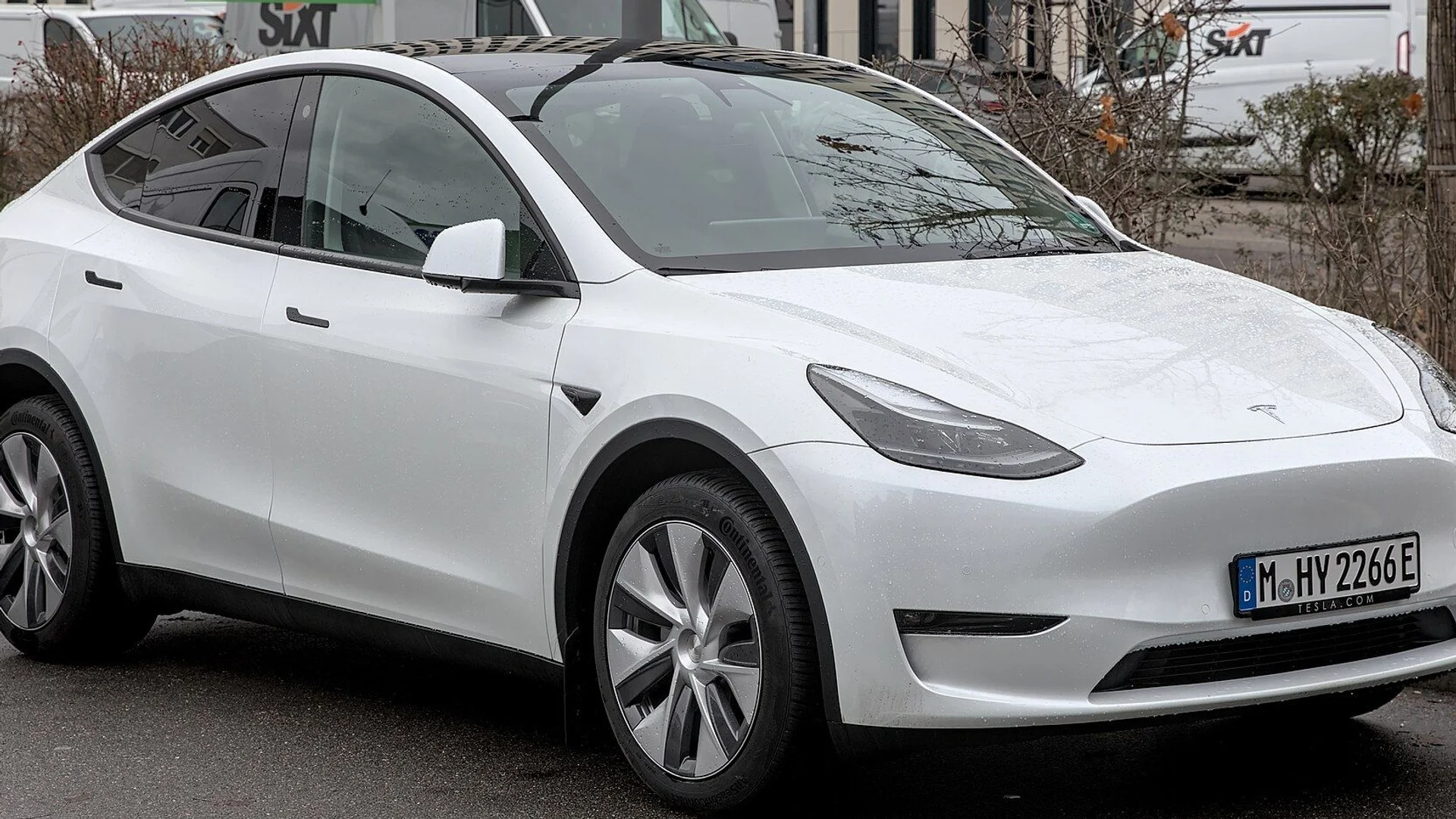
XPeng's head of global business called Canada a long-term plan in July 2026. That is not a launch date. It is a sentence, delivered to a reporter, with no filing, no dealer, no model list, and no price behind it. Everything else written about XPeng Canada this year is extrapolation from that one quote.
What the record actually shows, and what would need to change before a Canadian buyer could put money on a hood, is a much shorter list than the headlines suggest.
Key takeaways
- XPeng's entire Canada case rests on one July 2026 quote, no Transport Canada filing, no dealer, no model list.
- China-built XPengs would face the same barrier as BYD: no EVAP rebate, 6.1% surtax, and a $5,000 price penalty versus USMCA rivals.
- The 49,000-unit annual import quota has room, roughly 15,600 units used through August 2026, but quota isn't the obstacle.
- Minister Joly met Chery, BYD, and Geely in June 2026; XPeng wasn't in the room, signalling it's further back in the queue.
- NRCan has zero XPeng range ratings for any model year 2012–2026, the clearest proof no Canadian launch is imminent.
What XPeng Has Actually Said About Canada
The July 2026 comment from XPeng's global business lead is the entire public record. The company is reportedly scouting North America and weighing Canada before the United States, with Germany and southern Germany as its current European priority. That sequencing matters: Europe first, North America later, and within North America, Canada is being studied rather than scheduled.
The absence signals are more informative than the quote. The industry's running catalogue of battery electric vehicles tracks the brand's global footprint, and Canada isn't on it. There is no Transport Canada type approval. There is no dealer-search consultant story, the kind that surfaced for BYD in March 2026, when a Markham consultant told The Globe and Mail the automaker wanted roughly 20 Canadian dealerships within a year, starting in the Greater Toronto Area. XPeng has no equivalent signal.
The cleanest proxy for market absence is the federal fuel economy database. NRCan has no XPeng range rating for any model year from 2012 to 2026. The same is true of NIO and Zeekr. A Chinese brand that intended to retail in Canada within the next model year would, by this point, have vehicles in the certification queue. None do. The counter-argument from the China-EV optimist camp is that certification can be compressed when a parent company commits engineering resources, Hyundai famously moved the IONIQ 5 N through Canadian approvals in under a year once it had decided. True, but Hyundai had a dealer body, a distribution subsidiary and a decade of claims history behind it. XPeng has none of those scaffolds in Canada, which means a compressed timeline would still start from a cold foundation.
Contrast that with where BYD's Canadian status actually stands: even the most advanced Chinese entrant has no announced delivery date, no Canadian price, and no NRCan rating. If BYD, with a consultant engaged, a dealer-count target leaked, and a federal minister taking the meeting, is not launching, XPeng is further back.
Gear worth having
As an Amazon Associate, ThinkEV earns a small commission from qualifying purchases — at no extra cost to you.

Digital Tire Pressure Gauge
Low tires quietly cost 5 to 10 percent of your range. A 10-second check with an accurate digital gauge keeps every kWh on the road.
As an Amazon Associate, ThinkEV earns from qualifying purchases — at no extra cost to you.
Why Canada Is a Logical Target, and Why That Logic Hasn't Moved Faster
The strategic case for XPeng in Canada is real. XPeng's own Q4 2026 delivery guidance of 169,000 to 174,000 units implies a company with the production volume to supply a second-tier export market without straining its core business. Canada's premium EV segment is underserved relative to Europe's. A bilingual regulatory regime is not harder than Germany's.
The structural case against moving faster is also real.
Canada has no free-trade agreement with China, which is why China-built EVs face a tariff wall. XPeng vehicles entering Canada would sit inside the same quota-and-surtax structure that governs BYD. Canada and China announced the EV arrangement on January 16, 2026; the 6.1% in-quota rate and the 49,000-unit annual quota took effect March 1, 2026, when the 100% surtax was repealed. Beyond the quota, imports are prohibited without a Global Affairs Canada permit, not taxed at 100%, as earlier reporting claimed. The practical effect is the same gating structure: an import licence, a landed cost that assumes the quota holds, and a retail price that has to clear the gap between the sticker and what a Canadian buyer would actually pay.
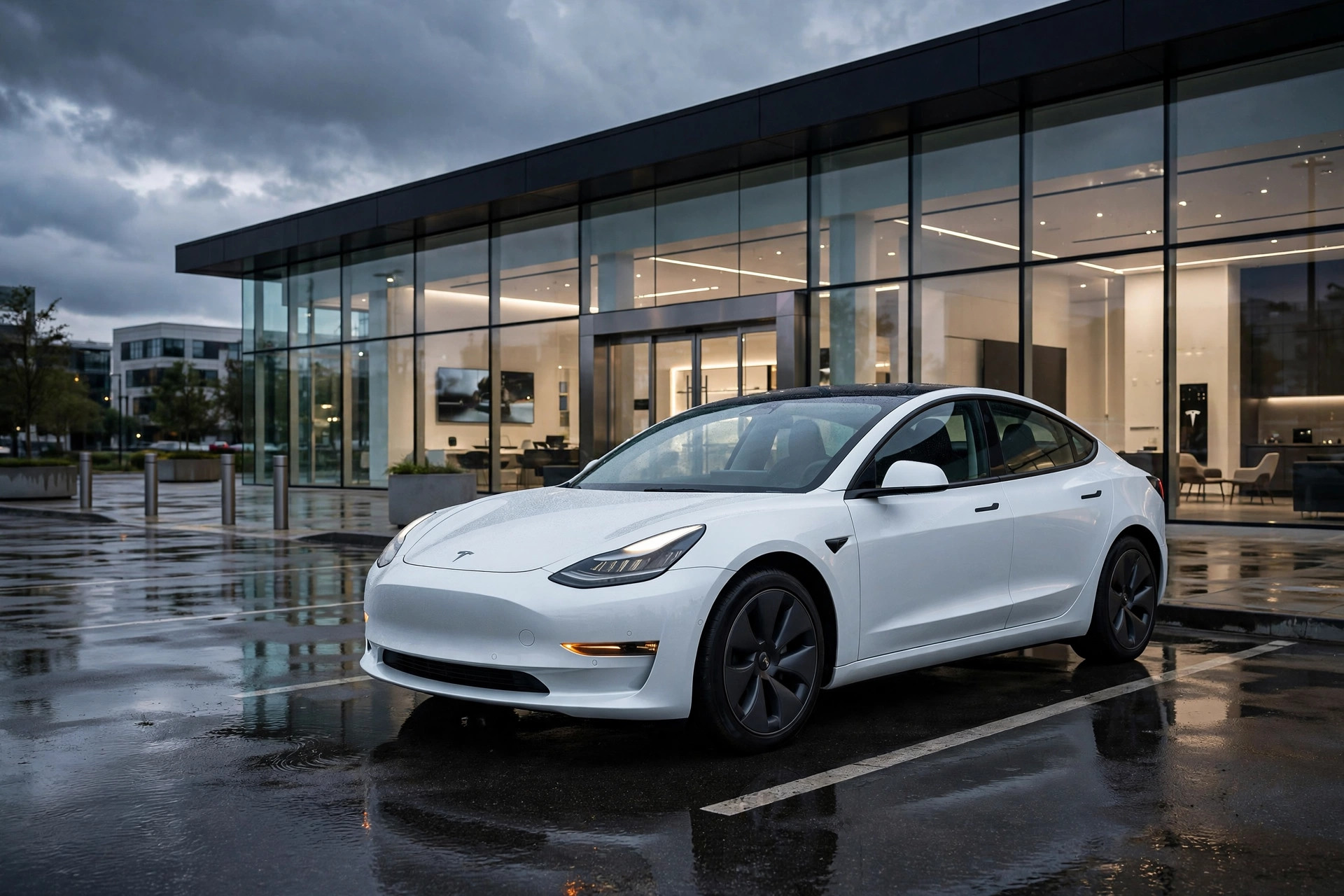
The federal rebate closes the other door. EVAP excludes China-built vehicles on country-of-origin grounds because Canada has no FTA with China. The Shanghai-built Tesla Model 3 Premium RWD, a $39,490 vehicle sold legally in Canada since May 1, 2026, fails the same origin test despite being under the $50,000 cap. XPeng would launch into that same ceiling: no federal rebate, full tariff exposure, and a sticker that has to look reasonable without either lever.
The optimist reply is that XPeng's pricing power in China is so aggressive that it could absorb the gap and still undercut Western competitors. BYD has introduced multiple aggressive price reductions in the Chinese market, which have contributed to heightened competition, and XPeng has followed. But the China sticker is not the Canadian sticker: once you layer the 6.1% surtax, a 15% dealer margin, bilingual compliance costs, and the lost $5,000 rebate, a Chinese $25,000 car lands around $38,000 here. That is Kia EV4 Wind territory at $42,995, close, not crushing. The arbitrage that justifies the entire export narrative narrows fast once it clears the border.
Minister Mélanie Joly met Chery, BYD and Geely in June 2026. XPeng was not in the room. That is not evidence of hostility, it is evidence of who is further along in the conversation.
The Tariff and Rebate Math XPeng Would Have to Solve
The quota numbers tell their own story. For the first period (March 2026 to February 2027), monthly utilization ran at zero in March and April, then 3,510 in May, 621 in June, 5,982 in July, and 5,490 in August 2026. Call it roughly 15,600 units used through August against the first-period cap. Quota exists. It is not full. XPeng could physically import inside it.
Gear worth having
As an Amazon Associate, ThinkEV earns a small commission from qualifying purchases — at no extra cost to you.

Lectron Level 2 J1772 Charger (40A, WiFi)
Smart WiFi charger with real-time energy monitoring. 40A / 9.6 kW, J1772 with a NEMA 14-50 plug, schedule charging right from your phone.
As an Amazon Associate, ThinkEV earns from qualifying purchases — at no extra cost to you.
The problem is not quota, it is price positioning without a rebate. EVAP pays up to $5,000 on eligible BEVs. XPeng gets none of it. Quebec's Roulez vert is the one provincial outlier: $2,000 for a new BEV registered in 2026, with no country-of-origin rule, the eligible list includes the Shanghai-built Model 3. So a Quebec-registered XPeng would stack $2,000 in provincial support against zero federal support.
Everywhere else, the map fragments. Manitoba has excluded Teslas and EVs made in China from its rebate since March 19, 2025, the earliest provincial preview of the eligibility patchwork a Chinese brand will face at launch. British Columbia's rebate is currently paused entirely. Saskatchewan has no provincial EV rebate and has added a registration fee. An XPeng model priced to undercut the Canadian electric-SUV field still has to absorb the $5,000 gap against every FTA-origin competitor.
Consider the direct comparison in bullet form:
- XPeng G6 (hypothetical): $45,000 sticker, 6.1% surtax built in, no EVAP, no claims history, Transport Canada approval not filed.
- Chevrolet Equinox EV RWD: 513 km NRCan range, built in Mexico under USMCA, EVAP-eligible (up to $5,000 federal), decade of GM claims history.
- Kia EV4 Wind: $42,995 MSRP, 552 km NRCan range, EVAP-eligible, dealer network nationwide.
- Hyundai IONIQ 5 Long Range RWD: 504 km NRCan range, 84.0 kWh battery, not on Transport Canada's EVAP vehicle list (as of November 2025), established insurance tables.
The Chinese entrant has to be better on range, feature content and warranty by a wide enough margin to justify a $5,000 upfront penalty and an unknown insurance premium. That is a structural price disadvantage, not a marketing problem.
Canadian insurers are the other quiet actuarial fact. They have no claims history for XPeng, Chery, Geely or BYD, because those brands do not sell passenger cars under their own names in Canada. No history means wider pricing bands at underwriting, not a surcharge, which would require a filing, but a conservative default. Early-adopter premiums reflect that. Ontario adds a second wrinkle: since July 1, 2026, income replacement, non-earner, caregiver, death and funeral benefits became optional on auto policies, while medical, rehabilitation and attendant care remained mandatory. A buyer of an unfamiliar brand faces not just a higher baseline premium but a more consequential set of coverage decisions than the equivalent IONIQ 5 driver down the street.
Gear worth having
As an Amazon Associate, ThinkEV earns a small commission from qualifying purchases — at no extra cost to you.

Grizzl-E Classic Level 2 EV Charger (40A)
Canadian-made and rated for minus 40C winters. 40A / 9.6 kW, NEMA 14-50, indoor/outdoor, 24-ft cable. The charger built for Canadian weather.
As an Amazon Associate, ThinkEV earns from qualifying purchases — at no extra cost to you.
What a Real Entry Would Require Before Launch Day
Transport Canada type approval is the gating item. It requires vehicle testing, bilingual labelling, compliance documentation, and, in practice, twelve to eighteen months between application and a car on a dealer lot, assuming no corrective rounds. A 2027 retail launch therefore needs a filing in hand by mid-2026. There is no public evidence XPeng filed.
A dealer network comes next. BYD's consultant-leaked target was around twenty GTA-first locations within a year. XPeng has not engaged a consultant publicly, has not filed trademarks under a Canadian retail entity, and has not posted Canadian recruitment, the three signals Chery began generating in late 2025 before Chinese-brand coverage caught up.
Personnel flow between California and Guangzhou tells us nothing about XPeng's Canadian intent. Hiring in Markham or Richmond would. There is none.
Insurance, charging compatibility, right-to-repair positioning, parts distribution, each of these is a nine-to-twelve-month workstream. BYD has quietly started some of them. XPeng has started none in Canada.
Gear worth having
As an Amazon Associate, ThinkEV earns a small commission from qualifying purchases — at no extra cost to you.

PULIDIKI Car Cleaning Gel (Detailing Putty)
Press it into vents, buttons, and seams and it lifts out dust you did not know was there. Weirdly satisfying, genuinely useful.
As an Amazon Associate, ThinkEV earns from qualifying purchases — at no extra cost to you.
The Realistic Timeline: What to Watch in 2027 and Beyond
A 2027 soft launch is structurally possible only if XPeng filed with Transport Canada by mid-2026. No evidence that happened. A 2028 window is the earliest credible one, assuming the European rollout stabilises first and XPeng begins Canadian regulatory work in 2027. A 2029 window is more realistic.
The markers to watch, in order of how early they would appear:
- A Canadian trademark filing under an XPeng retail entity.
- A job posting for a Canadian country manager or regulatory lead.
- A dealer-search consultant story (the BYD signal).
- A Transport Canada type approval.
- An NRCan five-cycle range rating, Canada's official standard, not EPA or WLTP.
The last one is the point of no return, once a vehicle has an NRCan five-cycle number, a retail launch is weeks away, not years. The single checkpoint worth marking in a calendar: an XPeng model appearing on Natural Resources Canada's Open Government Portal with a published five-cycle range figure before the end of 2027. If that entry appears, the launch is real. If it does not, every "XPeng Canada 2028" headline between now and then is speculation dressed as reporting. Canadian EV sales data will reflect the arrival the month it happens.
Until the first marker appears, XPeng Canada belongs in the same category as BYD Canada: a story the industry keeps writing because the premise is interesting, not because the paperwork has moved. "Door is open" is a comment to a journalist. A filing is a commitment. There isn't one yet.
Gear worth having
As an Amazon Associate, ThinkEV earns a small commission from qualifying purchases — at no extra cost to you.

WixGear Magnetic Air Vent Phone Mount (2-Pack)
A magnet strong enough that your phone never flinches over potholes or rail crossings. Two in the box, one for each car.
As an Amazon Associate, ThinkEV earns from qualifying purchases — at no extra cost to you.

Founder & Chief Editor
Vlad Pereira is the founder and chief editor of ThinkEV.ca, the Canadian electric vehicle publication he writes and edits from Courtenay, British Columbia. A former professional ballet dancer, he also works as a digital artist, graphic designer, and web and systems developer through his studio, Vlad Pereira Online. He covers EV pricing, rebates, charging costs and the brands entering Canada from the buyer's side.
Frequently asked questions
Could XPeng qualify for any Canadian EV rebate?
What would actually trigger a real XPeng Canada launch?
Does the import quota have room for XPeng vehicles?
How far behind BYD is XPeng in the Canadian market?
Will Canadian insurance costs hurt XPeng buyers?
More EV & road-trip finds
Affordable upgrades worth a look — tap any to check the price on Amazon.
 ★ 15,014
Spigen Tempered Glass for Tesla Model 3/Y
View on Amazon ★ 119
Foldable Waterproof Trunk Organizer
View on Amazon ★ 392
Large Cup Holder Adapter (32-40oz)
View on Amazon ★ 47,507
HOMEXCEL Microfiber Cloths (12-Pack)
View on Amazon ★ 537
USB Star Projector Roof Light
View on Amazon ★ 1,083
Crystal Push-Start Button Ring (2-Pack)
View on Amazon ★ 4,424
Sun Visor Card and Document Organizer
View on Amazon
TP-Link Kasa Smart Plug with Energy Monitoring
View on AmazonRead, Plan, Then Stay Current
Explore our expert articles to understand incentives and ownership costs, use the map to pressure-test charging reality, then subscribe so new EV coverage comes straight to you.
Continue Reading
How to Test-Drive an EV: What Gas-Car Buyers Miss

Do Used EVs Qualify for Rebates in Canada? 2026 Guide
Do Teslas Qualify for Canada's EV Rebates in 2026?
XPENG Guides to 169,000+ Deliveries, Up 45% in Q4
Tesla Pauses Model 3 Premium Orders in Canada, Blames the Quota. The Numbers Tell a Different Story