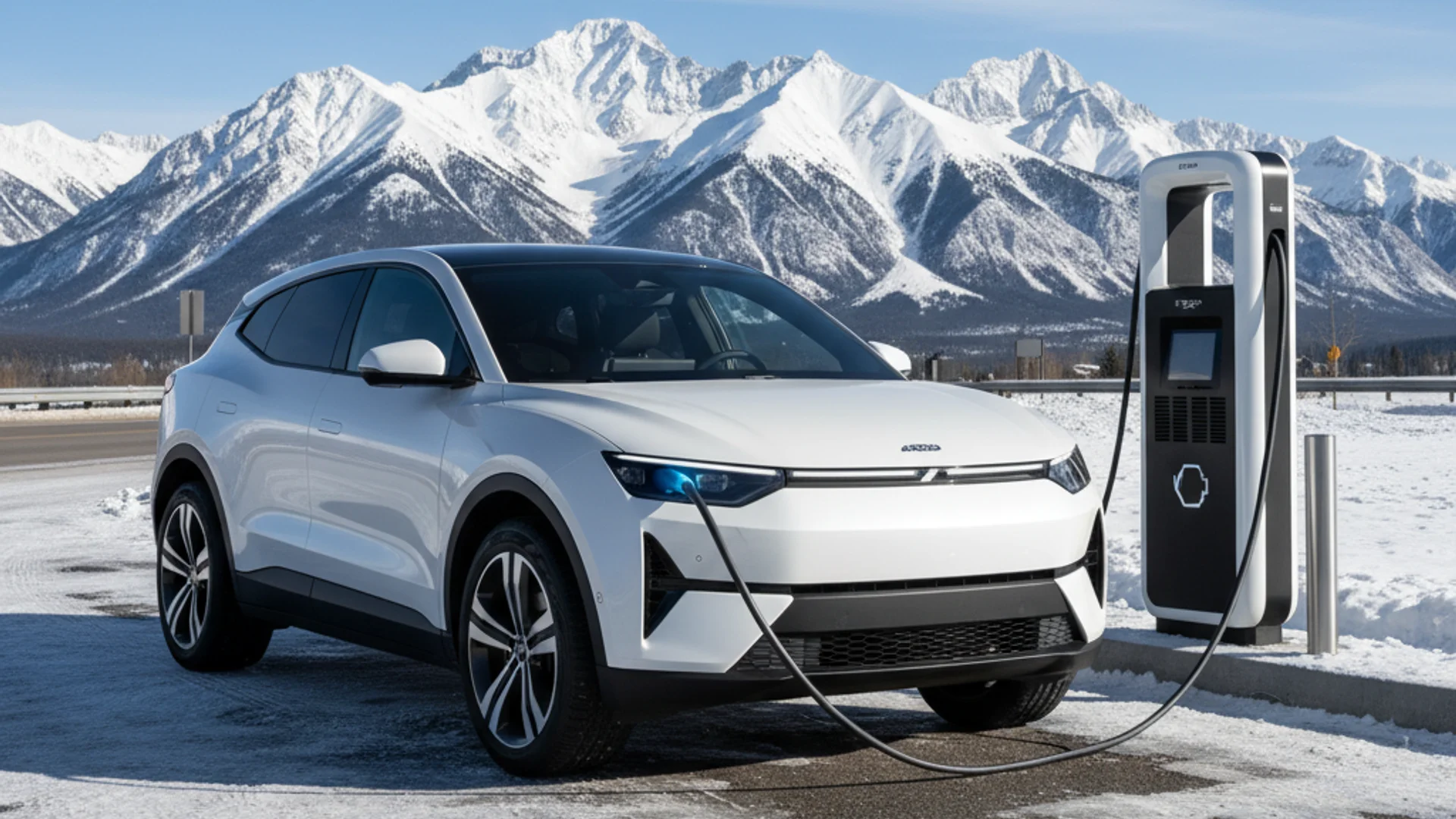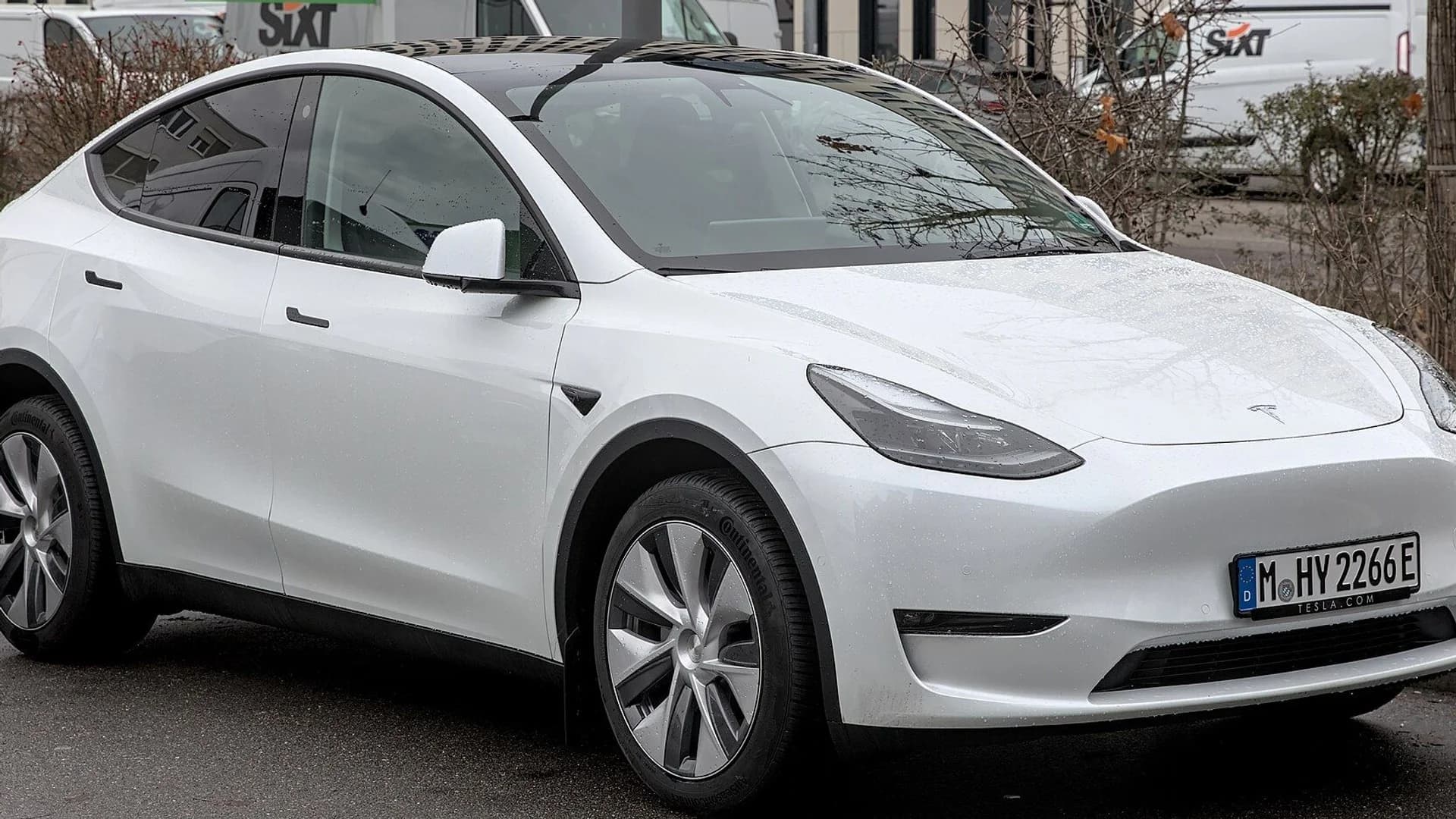
A three-year-old Model Y costs roughly $13,000 less than its new equivalent. The battery is fine. So what exactly are you paying for?
In most cases, not enough to justify the gap. Used EVs win on pure economics for the majority of Canadian buyers in 2026, and the objections that made a used electric car look risky in 2019 have largely dissolved. New EVs still earn the premium in specific, provable circumstances, NACS-native charging, a documented range ceiling, a documented software roadmap the buyer will actually use.
I'll put a band on it: a competent 2021–2023 used EV lands between $28,000 and $42,000 CAD before negotiation, depending on model, mileage, and battery state of health. That band is an estimate, not a promise, used pricing moves faster than new, and I won't round it to a single number.
Key takeaways
- A three-year-old Model Y saves roughly $13,000 CAD versus new, four times the savings of buying used gas.
- Post-2020 EVs carry 8-year/160,000 km battery warranties; state-of-health via OBD dongle is the only check that matters.
- The $5,000 federal EVAP rebate caps at $50,000 transaction value and excludes China-built EVs, it rarely closes the used gap.
- Model year 2024-and-later gets native NACS, unlocking Superchargers without adapters; older used stock needs an OEM-dependent software handshake.
- Used 2021–2023 mainstream trims land at $28,000–$42,000 CAD; even post-rebate, new typically costs $7,000–$11,000 more for the same vehicle.
The Depreciation Gap Is Real and It Favours the Buyer
EVs depreciate faster than gas cars. That is the seller's loss and the buyer's discount, and it is by now large enough to be the whole argument.
As the new-EV market continues to mature, options for a used electric car are expanding as well, and the resale math has moved with the inventory. Green Car Journal, working from a seven-year ownership study, found that buying a three-year-old midsize SUV instead of a new one saves about $3,000 for a conventional gasoline model, $1,000 for a hybrid or plug-in hybrid, and roughly $13,000 for a BEV. The savings on a battery-electric SUV are roughly four times what you would save on the gas equivalent. That is not a rounding error. That is the entire delta between a modest reward for patience and a genuinely different financial decision.
Consumer Reports frames the same math from the buyer's side: because EVs tend to depreciate faster than gas-only or hybrid cars, you may be able to get a newer electric vehicle with more features than if you purchased a comparable gas-powered vehicle for the same price. Trade the badge year for the feature spec and the arithmetic gets uncomfortable for the new-car case.
Two Canadian variables tighten the case further. The federal EVAP rebate, the successor to the retired iZEV, pays up to $5,000, but it applies to new vehicles only, caps at a $50,000 final transaction value, and excludes China-built EVs on country-of-origin grounds. On many mainstream trims the rebate closes some, but not all, of the gap between new and three-year-old used. Run the numbers on the specific trim before assuming new is cheaper post-rebate. It usually isn't.
The used EV inventory situation in Canada has shifted rapidly: supply doubled through 2025, and the price compression that follows a supply shock is doing exactly what a supply shock does. The buyer is on the correct side of that shock.
Gear worth having
As an Amazon Associate, ThinkEV earns a small commission from qualifying purchases — at no extra cost to you.

Lectron Level 2 J1772 Charger (40A, WiFi)
Smart WiFi charger with real-time energy monitoring. 40A / 9.6 kW, J1772 with a NEMA 14-50 plug, schedule charging right from your phone.
As an Amazon Associate, ThinkEV earns from qualifying purchases — at no extra cost to you.
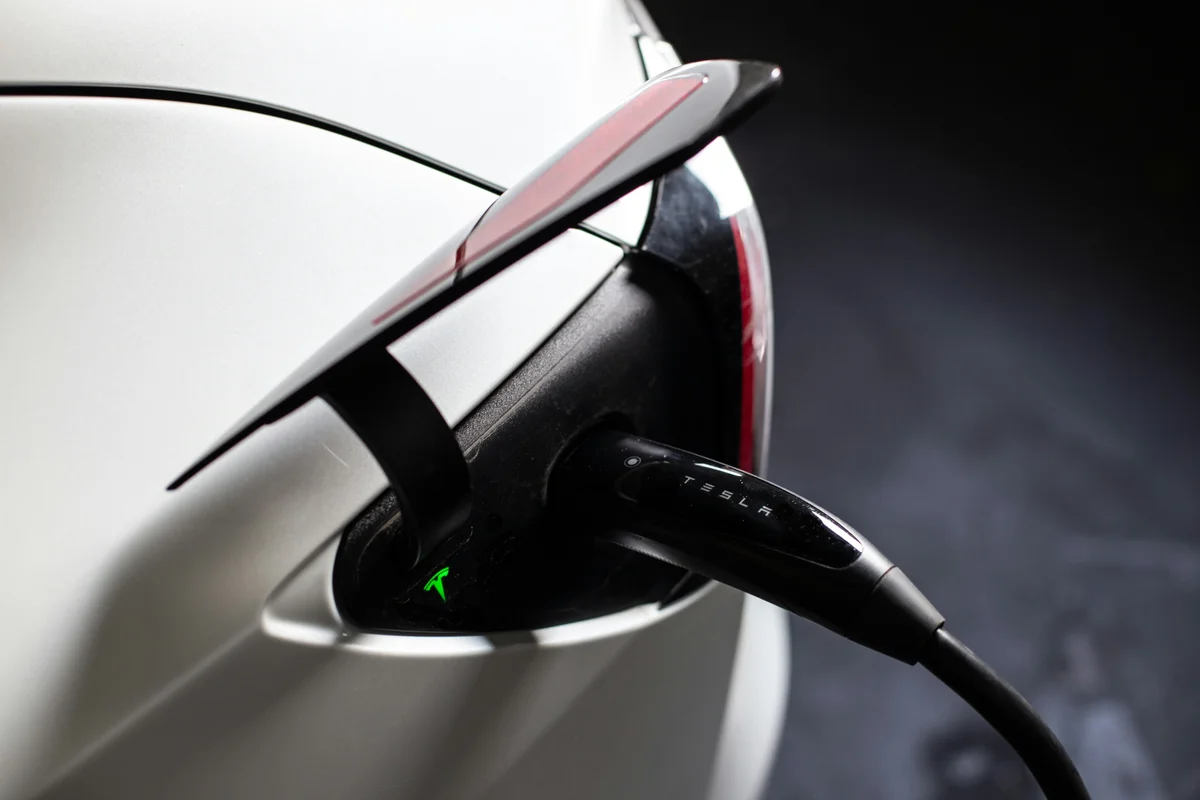
The "battery won't last" claim persists in forum threads and in conversations with people who have not bought an EV recently. The data does not support it for anything built after 2020.
Post-2020 EVs from major manufacturers ship with active liquid thermal management, eight-year or 160,000-kilometre battery warranties as the floor (some longer), and, critically, enough real-world fleet mileage now on the road to distinguish paranoia from pattern. The pattern is: batteries are lasting. Consumer Reports, working from long-term ownership data, notes that most EV batteries last a long time, well past the 100,000-mile mark that used to be the anxious threshold.
The one honest exception is the first-generation Nissan Leaf, which used passive air cooling. Passive thermal management on a battery in a country with real summers and real winters was a design compromise that aged poorly. Treat pre-2018 Leafs as their own asset class; do not treat them as evidence about how modern EVs age. The checks that decide whether a used EV is a deal or a debt start with the state-of-health readout and the warranty transfer paperwork, not with the odometer.
The number to check at sale is the delta between the vehicle's reported range and its original EPA-rated range. If a 2021 model rated at 350 km is still showing 320 km after four winters, that is a healthy battery. If it is showing 240 km, that is either a defective pack or a car that has lived on DC fast charging in extreme heat. The state-of-health readout is a two-minute check with the right OBD dongle. It is the only battery number that matters.
When New Actually Wins: Range, Software, and Charging Network Access
There are three defensible reasons to buy new in 2026, and they are not the ones the dealer will emphasise.
First, NACS. Model years 2024 and later ship with the North American Charging Standard port natively, unlocking the Tesla Supercharger network without an adapter. Older used stock, even excellent used stock, needs an adapter and, in some cases, a software handshake that the OEM has not prioritised. If your driving pattern relies on Supercharger coverage between cities where CCS density is thin, that is a real ergonomic difference, not a spec-sheet flourish.
Gear worth having
As an Amazon Associate, ThinkEV earns a small commission from qualifying purchases — at no extra cost to you.

P3 Kill A Watt Electricity Usage Monitor
Plug in your charger and see exactly what you spend in kWh, cost, and watts. Settle the is-my-EV-really-cheaper debate with data.
As an Amazon Associate, ThinkEV earns from qualifying purchases — at no extra cost to you.
Second, range. A 2026 midrange trim routinely clears 400 kilometres of usable range; the 2021 equivalent often sat at 320–350 km. For a buyer who drives long distances weekly, that 50–80 km gap is one fewer stop on a Toronto–Ottawa run. For a buyer who commutes 40 km round-trip, it is invisible.
Third, the software roadmap. OTA feature updates, driver-assist upgrades, heat-pump retrofits on the models that got them mid-cycle, none of these transfer backward to a used buyer's earlier build. If you actually intend to use the manufacturer's software roadmap (and most buyers do not, as the take rates make clear), the new-car premium buys future features the used buyer will never see.
Without home charging, the case for used tightens further, not looser. Public Level 2 and DC fast charging carry a per-kWh premium that compounds over a seven-year hold, and public reliability, while FLO, Petro-Canada, and BC Hydro's networks have improved, is still meaningfully worse than a wall plug. A Level 2 charger adds roughly 40 kilometres of range per hour, useful for an overnight top-up at home, not a substitute for the working public network the no-home-charging buyer actually needs.
Gear worth having
As an Amazon Associate, ThinkEV earns a small commission from qualifying purchases — at no extra cost to you.

Grizzl-E Classic Level 2 EV Charger (40A)
Canadian-made and rated for minus 40C winters. 40A / 9.6 kW, NEMA 14-50, indoor/outdoor, 24-ft cable. The charger built for Canadian weather.
As an Amazon Associate, ThinkEV earns from qualifying purchases — at no extra cost to you.

Here is what the direct comparison looks like on a mainstream trim in 2026, both bands are estimates, and the used band moves faster than the new one:
- Typical price band (mainstream trim, CAD): New sits at roughly $45,000–$62,000; used 2021–2023 lands at $28,000–$42,000.
- EVAP federal rebate eligibility: New qualifies for up to $5,000 (subject to the $50,000 cap, excludes China-built). Used gets $0 federally.
- Typical range (midrange trim): New delivers 400–500 km; used delivers 320–380 km.
- NACS / Supercharger access: Native on new 2024-and-later stock; adapter required on used, with OEM-dependent software handshake.
- Battery warranty remaining: New ships with the full 8 years / 160,000 km; used typically has 4–5 years and partial kilometres left.
- Depreciation absorbed by buyer: New buyer eats the full curve ahead; used buyer inherits a car with the steepest years already behind it.
The federal rebate line is worth staring at. On a $52,000 new trim it does not apply at all, the $50,000 cap disqualifies it. On a $48,000 new trim it clips $5,000 off, taking effective price to $43,000. A comparable three-year-old version of the same vehicle sits at $32,000–$36,000. Even after the rebate, new is $7,000–$11,000 more expensive for a car with less depreciation runway behind it. There are provincial angles and edge cases on the used side worth checking, but the federal-rebate math almost never rescues the new case on its own.
Gear worth having
As an Amazon Associate, ThinkEV earns a small commission from qualifying purchases — at no extra cost to you.

PULIDIKI Car Cleaning Gel (Detailing Putty)
Press it into vents, buttons, and seams and it lifts out dust you did not know was there. Weirdly satisfying, genuinely useful.
As an Amazon Associate, ThinkEV earns from qualifying purchases — at no extra cost to you.
The Smarter Buy Depends on One Number You Already Know
Annual kilometres driven is the deciding variable. Everything else is texture.
Under 15,000 km per year with home charging, the used case is close to a foregone conclusion. The shorter range of a 2021 model is invisible at that mileage; the depreciation savings are real; the remaining battery warranty is enough runway for a five-year hold. This describes most Canadian buyers. Statistics Canada's household travel survey data has put average annual passenger-vehicle mileage below 16,000 km for years, and there is no evidence EV owners drive dramatically more.
Between 15,000 and 20,000 km per year, the analysis gets closer. Range starts to matter for road trips even if it does not matter for commuting. NACS access starts to matter if your intercity route depends on Supercharger coverage. A certified pre-owned programme, GM, Hyundai, Ford all run them, becomes worth the $2,000–$4,000 premium over private-sale used, because it restores battery-and-drivetrain warranty runway that private sale cannot provide. For a first-time EV buyer without the tooling or confidence to run a state-of-health check, that premium is cheap insurance. For a buyer who can read the OBD data and has worked through the depreciation curves by brand, private sale extracts the last few thousand dollars of value.
Above 20,000 km per year, or with no home charging, the calculation flips more often than not. Public charging costs erode the depreciation savings; range headroom starts to affect daily life; the new-car software roadmap starts to actually be used. Run the specific numbers. Do not assume.
Used is the smarter buy for the majority of Canadian buyers in 2026. New is defensible in three narrow cases, heavy annual mileage, NACS-dependent routing, or a documented plan to use the software roadmap. In every other case, the depreciation curve is doing free work for the buyer, and refusing to accept the discount is a decision that needs its own justification. The number to check before signing anything is your own odometer from last year. That number decides the argument.
Frequently Asked Questions
Gear worth having
As an Amazon Associate, ThinkEV earns a small commission from qualifying purchases — at no extra cost to you.

WixGear Magnetic Air Vent Phone Mount (2-Pack)
A magnet strong enough that your phone never flinches over potholes or rail crossings. Two in the box, one for each car.
As an Amazon Associate, ThinkEV earns from qualifying purchases — at no extra cost to you.

Founder & Chief Editor
Vlad Pereira is the founder and chief editor of ThinkEV.ca, the Canadian electric-vehicle publication he writes and edits from Courtenay, British Columbia. He covers EV pricing, federal and provincial rebates, charging costs, and the Chinese manufacturers now entering Canada, from the buyer's side rather than the press-fleet side. ThinkEV is a venture of Vlad Pereira Online; his writing on health, income and the long game lives at vladpereira.com.
Frequently asked questions
Does the federal EVAP rebate make buying new worth it?
How much battery capacity should I expect to lose after four years?
Can I use a used EV on the Tesla Supercharger network?
Is a first-gen Nissan Leaf a reasonable used EV to buy?
What if I don't have a home charger, does that change anything?
More EV & road-trip finds
Affordable upgrades worth a look — tap any to check the price on Amazon.
 ★ 2,941
Microfiber Cleaning Cloths (Multi-Pack)
View on Amazon ★ 164
★ 164Solar-Powered LED Ambient Light
View on Amazon ★ 401
★ 401Crochet Daisy Rear-View Mirror Charm
View on Amazon ★ 27,769
Car Cup Holder Coasters (4-Pack)
View on Amazon ★ 297
★ 297360-Degree One-Hand Dashboard Phone Mount
View on Amazon ★ 61
★ 61Toddler Car Seat Snack and Cup Tray
View on Amazon ★ 17,839
Qifutan Vent Phone Mount (Military-Grade Clip)
View on Amazon ★ 47,507
HOMEXCEL Microfiber Cloths (12-Pack)
View on AmazonRead, Plan, Then Stay Current
Explore our expert articles to understand incentives and ownership costs, use the map to pressure-test charging reality, then subscribe so new EV coverage comes straight to you.
Continue Reading
Used EV Warranty Check: What to Verify in Canada

Do Used EVs Qualify for Rebates in Canada? 2026 Guide
How to Buy a Used EV: What to Check Before You Sign
Used EVs Just Passed UK Safety Tests Better Than Petrol
How to Test-Drive an EV: What Gas-Car Buyers Miss