Key takeaways
- According to Natural Resources Canada, total EV registrations hit approximately 14,800 units in February, a 12.3% increase from the same month last year.
- Market share came in at approximately 11%, up from 9% in February 2025.
- February's 14,800 represents an 18.4% jump from January, which is unusual seasonal behaviour.
February 2026 EV sales data is in, and winter didn't stop anyone. According to Natural Resources Canada, total EV registrations hit approximately 14,800 units in February, a 12.3% increase from the same month last year. That's a solid gain in a month when people normally buy fewer cars period, and it's the first full month with the EVAP rebate active after its February 16 launch.
Market share came in at approximately 11%, up from 9% in February 2025. One in ten new car sales is now electric. That number will keep climbing once spring buying season kicks in. And I want to be very clear about what February's number means in context: this was not just a continuation of January's organic demand story. This was the EVAP effect hitting a market that already had strong underlying momentum, and the result is a month that exceeded most analyst projections for what winter sales could deliver.
The month-over-month comparison tells its own story. January 2026 logged approximately 12,500 registrations, already a strong winter baseline that happened entirely without federal incentives. February's 14,800 represents an 18.4% jump from January, which is unusual seasonal behaviour. Historically, February car sales in Canada are roughly flat or slightly down from January. The broader auto market followed that typical pattern in 2026. EVs broke from it and went sharply upward. When a product category diverges from the seasonal norm, pay attention, something structural is driving it, not just seasonal noise.
Year-over-year, the story is even more compelling. February 2025 saw roughly 13,200 EV registrations at approximately 9% market share. February 2026's 14,800 units at 11% share represents both absolute unit growth and a meaningful expansion of the EV segment's share of total new vehicle sales. Two percentage points of market share gained in twelve months may not sound dramatic, but in a market the size of Canada's, that represents thousands of additional electric vehicles on the road, and more importantly, thousands of additional Canadian households running the ownership math and deciding the numbers work.
The incentive picture is where it gets interesting for buyers right now. The federal EVAP rebate covers up to $5,000, and 62% of EV buyers in February stacked at least one provincial or federal incentive, up from 55% in the same month last year. If you're in Quebec, that's the federal $5,000 plus $2,000 via Roulez vert. Manitoba and PEI both add $4,000 provincial on top. Ontario has no provincial rebate, but the federal $5,000 still applies to eligible models. If you're not using every incentive available to you, you're leaving real money on the table.
What makes February's incentive data particularly interesting is the EVAP timeline. The rebate launched on February 16, meaning only the back half of the month had the federal $5,000 active. The 62% stacking rate includes buyers from early February who used only provincial incentives and buyers from late February who could access both. March's data, with a full month of EVAP eligibility, will likely push that stacking rate above 70%.
That matters because incentive stacking is the mechanism that's bringing EVs into price ranges that compete directly with mid-trim gasoline crossovers and sedans. A $44,000 Equinox EV in Manitoba becomes $35,000 after stacking federal and provincial incentives. That's Civic territory. That's Corolla territory. And that's a fundamentally different competitive conversation than the one happening two years ago.
The Numbers, February 2026 in Full Context
The top-line figure doesn't capture the complexity of what happened in February.
Approximately 14,800 battery electric vehicles were registered in Canada in February 2026. Total new vehicle sales across all powertrains were roughly 134,500 units, putting the EV share at approximately 11%. That 11% is consistent with January's market share, which is noteworthy because January's share came without any federal incentive, February had EVAP active for half the month, and the share held rather than spiking. What that tells you is that the share gain is structural, not just incentive-driven. The underlying demand was already there; EVAP added volume on top of it rather than artificially inflating a share number that would deflate once the novelty wore off.
The cumulative January-February total sits at approximately 27,300 EV registrations. That two-month figure, annualised, puts Canada on track for approximately 164,000 units if the pace held constant, but it won't hold constant, because spring and summer are when Canadians actually buy cars. Seasonal patterns in the Canadian auto market typically show Q2 and Q3 volumes 25% to 40% higher than Q1. Apply that seasonal acceleration to an EV segment that's already growing year-over-year, and the Natural Resources Canada forecast of 180,000 to 190,000 EV registrations for all of 2026 looks entirely realistic. Some analysts are now suggesting 195,000 to 200,000 is achievable if EVAP-eligible inventory stays adequate through the summer months.
The average transaction price for an EV in February 2026 came in at approximately $52,000, down from $55,000 in January 2026 and down significantly from $62,000 in February 2025. That $10,000 year-over-year decline in average transaction price is the single most important number in this report for buyers who are still on the fence. The EV category is getting cheaper in real terms, not just after-incentive terms.
The vehicles themselves are being priced lower at the factory gate, which means even if incentive programs change, the baseline economics are improving. The compression from $62,000 to $52,000 in twelve months, a 16% decline, reflects the combined impact of affordable model introductions (primarily the Equinox EV), competitive price adjustments by Tesla and Hyundai-Kia, and a market that's shifting from early-adopter premium products toward mass-market volume vehicles.
The used EV market is worth watching. February saw over 3,000 used EVs change hands, a 15% increase year-over-year. If a new EV is still out of reach even with rebates, the used market is maturing fast. You can find a 2022 or 2023 Nissan Leaf or Chevy Bolt for well under $25,000 now. That's the budget-friendly entry point a lot of people have been waiting for.
The used market also serves a function that the new market can't: it brings EVs into price brackets that serve lower-income buyers and younger drivers who are doing their first vehicle purchase. A $15,000 to $20,000 used Bolt is directly competitive with a used Honda Civic or Toyota Corolla, and the fuel savings tilt the total cost of ownership math even further.
Autotrader.ca and Kijiji Autos both report year-over-year increases in used EV listings, which means selection is improving alongside volume.
Provincial Breakdown, Where the Growth Is and Isn't
Ontario led all provinces with 28% of total EV registrations, Quebec came in at 22%, and British Columbia held steady at approximately 18%. Those three provinces continue to account for roughly two-thirds of all Canadian EV sales, which is consistent with their share of the total vehicle market and their combination of charging infrastructure, provincial incentives, and population density.
Toronto saw EV registrations jump 18% year-over-year; Vancouver was up 16%. Even smaller cities like Regina and Halifax are showing real movement, this isn't just a Vancouver-Toronto thing anymore. The regional expansion of EV adoption is one of the most encouraging developments in the 2026 data, because it suggests the category is escaping the "coastal urban tech enthusiast" profile and reaching mainstream buyers in markets that don't look like downtown Vancouver.
The national average conceals significant regional variation.
British Columbia continues to punch above its weight. The province accounts for roughly 13% of Canada's total vehicle market but captured approximately 18% of EV registrations in February. Metro Vancouver's density of public charging, BC Hydro's relatively affordable rates, the provincial CleanBC Go Electric incentives, and a cultural lean toward environmental consciousness all contribute.
The Highway 1 corridor between Vancouver and Kamloops has seen significant DCFC expansion in the past year, and the Sea-to-Sky corridor to Whistler now has enough charging coverage that winter weekend trips don't require careful planning. Victoria and the lower Island are also showing strong adoption. The weak spot remains northern BC, Prince George to Prince Rupert and beyond, where infrastructure gaps are real and population density makes the business case for private charging investment challenging.
Quebec is Canada's EV adoption leader in per-capita terms, and February's data reinforced that position. Hydro-Quebec's rates, among the lowest electricity prices in North America, make the per-kilometre fuel cost comparison devastatingly favourable for EVs. A Quebec driver paying $0.07/kWh to charge at home versus $1.70/litre for gasoline is saving thousands annually before any incentive enters the picture.
The Roulez Vert program, stacking on top of federal EVAP, creates an incentive environment where the effective price of a mid-range EV drops below the sticker price of a comparable gasoline vehicle. Montreal's charging infrastructure is dense and growing. Quebec City, Sherbrooke, and Trois-Rivieres all showed year-over-year registration increases in February.
The province is arguably two to three years ahead of the national curve, and its numbers continue to pull the national average upward.
Ontario drives raw volume because it has the largest population, but its per-capita EV adoption rate remains below BC and Quebec. The absence of a provincial rebate program is the most commonly cited reason, though the federal EVAP partially fills that gap. The GTA is the single largest EV market in Canada by unit volume. The Highway 401 corridor from Windsor through London, Kitchener-Waterloo, Toronto, and Kingston has seen meaningful DCFC infrastructure expansion, the Ontario government's investment in fast chargers at ONroute service centres has been one of the more effective targeted infrastructure deployments.
Ottawa showed a 14% year-over-year increase. Hamilton and Niagara both posted gains. The gap remains in northern Ontario, Sudbury to Thunder Bay is a stretch where charging options are still sparse and winter range anxiety is a legitimate practical concern, not just a talking point.
Alberta and Saskatchewan remain below the national EV adoption average, and the reasons are structural rather than cultural. Both provinces face extreme winter temperatures that reduce battery range by 20% to 30% for several months of the year. Gasoline prices in Alberta have historically been lower than the national average, which compresses the fuel cost advantage.
The vehicle culture leans toward trucks and full-size SUVs, which are only now getting competitive EV options (the Silverado EV and F-150 Lightning are addressing this but are still priced above mainstream budget thresholds). Charging infrastructure outside Calgary, Edmonton, Regina, and Saskatoon is thin. That said, Calgary posted a 12% year-over-year increase in EV registrations in February, and Edmonton was up 9%.
The Equinox EV is showing particular strength in Alberta, the combination of a familiar nameplate, a starting price within EVAP eligibility, and 513 km of range is resonating with buyers who need a vehicle that works in minus-twenty conditions.
Atlantic Canada remains the region where national EV optimism needs the most honest tempering. Nova Scotia showed modest year-over-year growth in February after a 10% decline in January, which suggests that EVAP may be helping, but the fundamental barriers of higher electricity rates, limited infrastructure outside Halifax, and lower average household income persist. New Brunswick, PEI, and Newfoundland each registered small numbers in absolute terms but showed positive year-over-year trends. PEI's $4,000 provincial incentive stacked with EVAP creates one of the best incentive environments in the country on a per-vehicle basis, which may explain why the island's percentage growth has been among the highest nationally despite tiny absolute numbers.
Manitoba is the province to watch in 2026. The $4,000 provincial rebate stacked with the $5,000 EVAP means buyers are accessing $9,000 in combined incentives, the highest combined federal-provincial incentive in the country. A $44,000 Equinox EV in Manitoba becomes $35,000 after incentives. That's mainstream territory. February registration numbers for Manitoba showed a 22% year-over-year increase, the highest provincial growth rate in the country. Small base, yes, but the growth rate suggests the incentive stacking is finding its audience.
By Brand, Who's Winning and Why

The brand story in February 2026 is one of disruption and realignment. The market share dynamics that emerged in late 2025 are deepening, and the competitive picture now looks fundamentally different from where it was eighteen months ago.
Tesla registered approximately 4,740 units in February, capturing roughly 32% of the EV market. That's a significant share, still the largest of any single brand, but it represents a dramatic decline from Tesla's approximately 45% share in February 2025. The trajectory here is unmistakable: Tesla is losing market share in Canada not because it's selling fewer cars, but because competitors are growing faster. Tesla's absolute volume was roughly flat year-over-year while the total EV market grew 12.3%. In a growing market, flat is losing.
EVAP eligibility is a headwind for most Tesla trims in Canada. The 2026 Model Y RWD base ($49,990) is on the official EVAP eligible list and can qualify for the $5,000 rebate if fees are kept under the cap, but the Long Range AWD ($59,990) and Performance ($69,990) do not qualify. The Model 3 at approximately $54,990 also exceeds the cap. For the majority of Tesla buyers choosing higher trims, there is no federal rebate, and in a market where 62% of buyers are stacking incentives, that's a competitive disadvantage that shows up directly in the numbers. A buyer choosing between a Tesla Model 3 at $55,000 with no rebate and a Hyundai IONIQ 6 at $47,000 with a $5,000 EVAP rebate is looking at a $13,000 effective price gap. Brand loyalty covers a lot, but $13,000 is a lot to cover.
Tesla's Supercharger network remains its strongest competitive moat in Canada. The coverage density, the reliability, and the in-car navigation integration make long-distance travel in a Tesla measurably easier than in competing vehicles. The opening of Superchargers to non-Tesla vehicles has eroded some of that advantage, but Tesla owners still get priority access and the smooth plug-and-charge experience. For buyers who do regular inter-city travel, say, the Toronto-Montreal corridor or the Calgary-Edmonton run, the Supercharger advantage is a tangible quality-of-life difference that factors into purchase decisions.
Hyundai-Kia combined for approximately 2,664 units in February, representing roughly 18% of the market. That puts the Korean automaker group in a strong second-tier position, and the breadth of their lineup is the strategic advantage worth paying attention to.
Hyundai moved approximately 2,000 units independently, driven mainly by the IONIQ 6 and Kona Electric. Strong presence in Ontario and Quebec, competitive pricing across the lineup, and both models sit within EVAP eligibility. Hyundai is quietly building a very solid position in the mid-range segment. The IONIQ 5 remains a strong seller in BC and Ontario, particularly among buyers who want 800-volt fast charging capability and a vehicle that feels genuinely different from a traditional crossover. The Kona Electric continues to serve as Hyundai's accessible entry point, a small crossover at a price that makes the EV premium feel manageable for buyers upgrading from a compact car.
Kia's EV6 contributed meaningfully to the combined total, and the EV9, Kia's three-row electric SUV, is finding its market among families who need space and are willing to pay a premium for it. The 800-volt architecture shared across the Hyundai-Kia E-GMP platform is a genuine technical advantage that gets undersold in mainstream coverage. At a compatible 350 kW charger, these vehicles go from 10% to 80% in roughly eighteen minutes. For buyers who do occasional long-distance trips and care about charging stop duration, that spec matters more than almost anything else on the sheet.
Ford registered approximately 2,664 units in February, also roughly 18% of the market. But the composition of Ford's EV sales tells a different story than Hyundai-Kia's. Ford's number is heavily weighted toward the F-150 Lightning, which continues to perform well in provinces where trucks dominate (Alberta, Saskatchewan, rural Ontario). The Mustang Mach-E is still selling, but it faces increasingly stiff competition from the IONIQ 5, the EV6, and the Equinox EV in the crossover segment.
Ford's broader EV push hasn't found its footing in Canada the way GM's has. The company has publicly acknowledged that its EV division is operating at a loss, and the product cadence, the gap between announcements and available-at-dealers inventory, has frustrated buyers in Canada who are ready to purchase but can't get allocation.
The F-150 Lightning is Ford's strongest Canadian EV play right now. In Alberta and Saskatchewan, a capable electric pickup that can tow and haul is answering a specific market need that crossovers and sedans can't. The Lightning's Pro trim, starting around $60,000, exceeds the EVAP cap, but buyers in the truck segment are generally less incentive-sensitive than buyers in the mainstream crossover segment. They're buying capability, and the Lightning delivers it.
General Motors is the brand story of 2026 in Canada, and February's data reinforced the narrative. Chevrolet alone registered approximately 3,400 units, about 23% of all EV sales, making it the top-selling EV brand for the month. The GM-Tesla market share inversion that emerged in late 2025 is now a sustained trend rather than a one-month anomaly.
The Equinox EV and Silverado EV are doing the heavy lifting, and GM's strategy of keeping prices in EVAP-eligible range is paying off. The Equinox EV starts under $45,000 before rebates, which means a buyer in Manitoba is looking at sub-$36,000 after stacking federal and provincial incentives. That's a different conversation than it was two years ago. The Equinox EV is the vehicle most responsible for pulling the average EV transaction price downward, every unit sold below the previous average brings the market closer to price parity with gasoline vehicles, which is the economic threshold that unlocks mass adoption.
GM's dealer network is the other advantage that doesn't get enough credit. There are more Chevrolet dealers in Canada than there are Tesla service centres, Hyundai dealerships, or Kia showrooms. For buyers in mid-sized cities, Kelowna, Barrie, Fredericton, Red Deer, a Chevrolet dealer is likely the most accessible EV purchase and service option. That accessibility matters for first-time EV buyers who want the comfort of a local dealer relationship for service and questions.
Volkswagen posted modest but meaningful growth in February, driven by the ID.4 and the arrival of the ID.Buzz. The ID.Buzz, the electric reimagining of the VW Microbus, is a niche product with a passionate audience. Its sales volume won't move the national needle, but it's attracting buyers who wouldn't have considered any other EV. The ID.4 is a more conventional competitor in the mid-size crossover segment, and its pricing within EVAP eligibility gives it a competitive edge in a crowded field. VW's challenge in Canada remains dealer readiness, not all VW dealerships have the infrastructure, training, or inventory to competently sell and service EVs, and buyer reports of inconsistent dealer experiences continue to surface in online forums.
BMW and Mercedes-Benz continue to serve the premium segment with the iX, i4, EQS, and EQE. Neither brand is going to move the national market share needle the way Tesla, Hyundai-Kia, or GM can. But they're serving a different function, they're telling premium vehicle buyers that the EV transition isn't a downgrade. For the buyer coming out of a 5 Series or an E-Class, the i4 or the EQE is a direct replacement that doesn't require compromising on the refinement and features they expect. The luxury segment also signals to dealers that EV expertise and infrastructure investment have upside beyond the value and mid-range tiers.
Gear worth having
As an Amazon Associate, ThinkEV earns a small commission from qualifying purchases — at no extra cost to you.
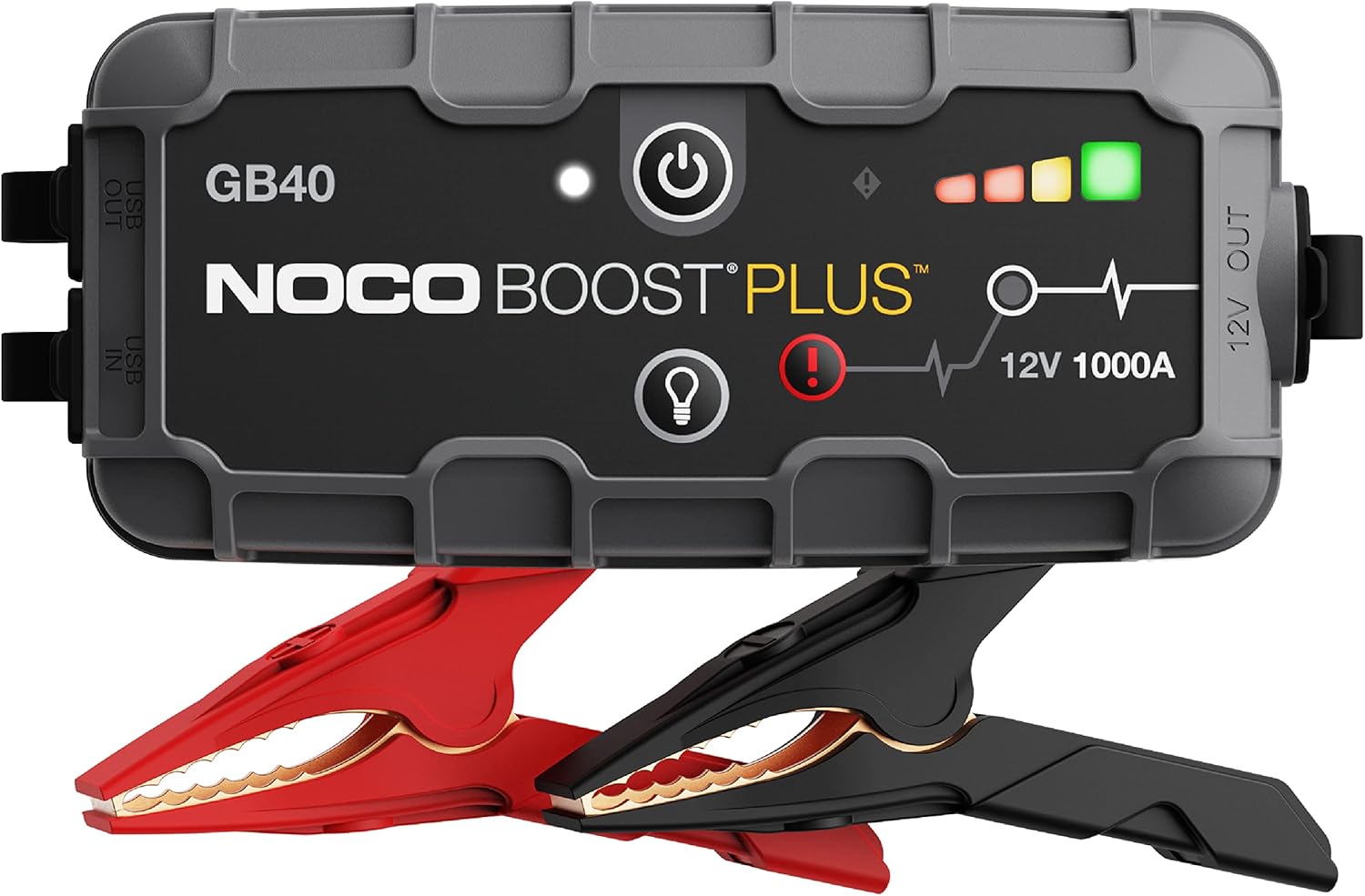
NOCO Boost Plus GB40 Jump Starter
A 1000A lithium jump starter that fits in your glovebox and works on any 12V battery. Your insurance against a dead 12V in a parking lot.
As an Amazon Associate, ThinkEV earns from qualifying purchases — at no extra cost to you.
Top-Selling Models, The Vehicles That Matter
Breaking it down by individual model reveals where buyer demand is actually concentrating, with more specificity than brand-level data provides on its own.
Chevrolet Equinox EV, approximately 2,200 units, the fastest-growing EV model in Canada. This is the vehicle I keep coming back to in every report because it's doing something no other EV has done in Canada: it's selling in volume at a price point that competes directly with mainstream gasoline crossovers. The 513 km of range addresses the practical objection.
The starting price under $45,000 before rebates puts it within EVAP eligibility. The Chevrolet nameplate addresses the brand-trust objection. And the physical form factor, a mid-size crossover that looks like a normal car, addresses the aesthetic objection from buyers who don't want something that screams "I drive an electric vehicle. " Dealers in Ontario and BC are reporting 6-8 week wait times. That wait list tells you everything about where buyer demand actually is right now.
Month over month, the Equinox EV's trajectory is steep. January saw limited inventory as dealer allocations were still being sorted out. February showed a substantial ramp as GM's Ramos Arizpe plant hit its stride and Canadian allocation increased. If GM can sustain inventory availability through spring, the Equinox EV has a realistic path to being the best-selling individual EV model in Canada by Q3.
Tesla Model Y, approximately 2,800 units, still the single highest-volume individual EV model. The Model Y benefits from brand recognition, Supercharger network advantages, and a form factor that fits the Canadian preference for compact crossovers. Its sales are roughly flat year-over-year, which in a growing market means its share is declining, but the absolute volume remains strong.
The Model Y's competitive picture on incentives is nuanced: the 2026 base RWD-B ($49,990) is on the official EVAP eligible list and can qualify for the $5,000 rebate if the final transaction value stays at or under $50,000. The Long Range AWD ($59,990) and Performance ($69,990) do not qualify. Most buyers choosing higher trims are still paying full price without federal support, which means Tesla is increasingly competing on brand and ecosystem rather than subsidised price.
Tesla Model 3, approximately 1,940 units. The Model 3 remains Tesla's sedan play in Canada and continues to attract buyers who prioritise driving dynamics, technology, and the Supercharger network. Like the Model Y, it exceeds the EVAP price cap. The Model 3's competition has intensified, the IONIQ 6 at a lower effective price (after EVAP), the BMW i4 at a premium price but with luxury appeal, and the Polestar 2 in the performance-oriented space. The Model 3 is still selling, but the competitive moat around it is narrower than it was a year ago.
Hyundai IONIQ 5, approximately 1,100 units. The IONIQ 5 has been one of the most consistent performers in the Canadian EV market since its launch. The 800-volt architecture, distinctive design, and practical interior space have given it a loyal following. Its position within EVAP eligibility is a significant competitive advantage versus Tesla. In BC and Ontario, the IONIQ 5 is frequently the vehicle that converts a "Tesla or nothing" shopper into a Hyundai buyer once they see the effective price difference after incentives.
Hyundai IONIQ 6, approximately 650 units. The sedan-shaped IONIQ 6 has found a niche among buyers who want efficiency, 800-volt charging speed, and a vehicle that doesn't look like every other crossover on the road. Its drag coefficient is among the lowest of any production car, which translates to real-world range that frequently exceeds the official estimate. In winter conditions, the IONIQ 6's aerodynamic efficiency means less range penalty than bulkier crossovers, a meaningful practical advantage in a country where five months of the year involve cold-weather driving.
Chevrolet Silverado EV, approximately 1,200 units. The best-selling EV in the truck segment. That matters especially for buyers in Alberta and Saskatchewan who need a truck for actual work, hauling, towing, not just commuting. The fact that a capable electric pickup is outselling alternatives in that use case is a bigger deal than any market share percentage. The Silverado EV's work-truck positioning, combined with the 400+ km range and GM's dealer network, is reaching buyers who would never have considered a Tesla or a Hyundai. These are incremental EV adopters, buyers entering the electric category for the first time from a traditional truck background.
Hyundai Ioniq 9, The Ioniq 9 is new and already drawing attention. It's a full-size three-row electric SUV, one of the few in that category, and early February sales suggest strong demand from families who need real cargo space and a third row without going full luxury pricing. The Ioniq 9 fills a gap that has existed in the Canadian EV market since the category began growing: a family-sized vehicle from a mainstream brand at a price that, while premium, doesn't require luxury-brand financing.
Early sales are concentrated in the GTA and Metro Vancouver, where family-sized vehicles are in high demand and household incomes support the higher price point. Hyundai's three-row electric SUV against Kia's EV9 gives the Korean group two entries in a segment that previously had very few options.
Ford Mustang Mach-E, approximately 800 units. The Mach-E was an early entrant in the electric crossover space and retains brand recognition. The Select RWD now starts at $44,690 and IS on the official EVAP eligible list, a meaningful price adjustment that puts it in direct competition with the Equinox EV and Kona Electric. It's still squeezed by the IONIQ 5 on fast-charging capability, but the incentive-eligible pricing gives it a sharper value argument.
Kia EV6, approximately 600 units. Shares the E-GMP platform with the IONIQ 5 and IONIQ 6, meaning 800-volt fast charging and strong winter performance. The EV6's sportier positioning and distinctive design attract a different buyer profile than the IONIQ 5, slightly younger, more design-conscious, willing to pay a modest premium for a vehicle with more visual personality.
Gear worth having
As an Amazon Associate, ThinkEV earns a small commission from qualifying purchases — at no extra cost to you.

Grizzl-E Classic Level 2 EV Charger (40A)
Canadian-made and rated for minus 40C winters. 40A / 9.6 kW, NEMA 14-50, indoor/outdoor, 24-ft cable. The charger built for Canadian weather.
As an Amazon Associate, ThinkEV earns from qualifying purchases — at no extra cost to you.
Month-Over-Month: January vs. February 2026
The January-to-February comparison is where the EVAP effect becomes visible, and it's worth examining in detail.
January 2026: approximately 12,500 units, 11% market share, no federal incentive active. February 2026: approximately 14,800 units, 11% market share, EVAP active for the second half of the month.
The 18.4% unit increase from January to February is unusual. In a typical year, February auto sales in Canada are roughly flat or slightly below January, buyers are in post-holiday recovery mode, roads are at their worst, and spring buying season hasn't started yet. The broader auto market followed that expected pattern in 2026. EVs broke from it. That divergence is the EVAP signal.
But here's the important nuance: market share stayed flat at 11% despite the unit increase. That tells you the total auto market was also up in February, meaning the EV share gain is holding its position rather than spiking artificially. A spike would have been suspicious, suggesting pull-forward demand that would crater in subsequent months. A stable share with growing absolute volume suggests genuine, sustained demand growth that EVAP is reinforcing rather than creating from scratch.
The brand-level month-over-month changes tell their own story. GM (Chevrolet) grew the fastest, from approximately 2,200 units in January to 3,400 in February, a 55% month-over-month increase. That growth is almost entirely the Equinox EV ramping into available inventory. Tesla grew modestly, from roughly 4,000 units in January to 4,740 in February, consistent with stable demand from a loyal buyer base.
The base Model Y RWD ($49,990) now qualifies for EVAP if fees stay under cap, but higher trims (Long Range AWD, Performance) don't, and most Tesla buyers are choosing those trims. Hyundai-Kia grew approximately 20% month-over-month, benefiting from EVAP eligibility across most of their lineup. Ford declined slightly, from approximately 1,300 units in January to 1,200 in February, a 7.7% drop that reflects the Mustang Mach-E's competitive pressure and the F-150 Lightning's supply constraints.
Year-Over-Year: February 2025 vs. February 2026
The twelve-month comparison paints a picture of a market that has materially transformed.
February 2025: approximately 13,200 EV registrations, 9% market share, average transaction price approximately $58,000. February 2026: approximately 14,800 EV registrations, 11% market share, average transaction price approximately $52,000.
Unit growth: 12.3%. Market share gain: 2 percentage points. Average price decline: $6,000 (10.3%).
The shift in who is buying is as important as how many are buying. February 2025's market was still Tesla-dominated at roughly 45% brand share. February 2026 shows Tesla at 32%, still the leader, but a leader in a market that has genuinely diversified. GM went from roughly 8% of the market in February 2025 to 23% in February 2026. That GM-Tesla inversion is not a blip, it's a market structure change driven by the Equinox EV's price point, EVAP eligibility, and GM's dealer network reach.
The provincial composition also shifted year-over-year. Ontario's share of national EV registrations grew from 26% to 28%, reflecting GTA growth and Ontario's responsiveness to EVAP (no provincial incentive means EVAP is the primary subsidy, and its arrival moved the needle). Quebec's share held steady at 22%, consistent with a market that was already mature and less sensitive to incremental federal incentive changes. BC held at 18%. The prairies collectively grew their share modestly, driven by Calgary and Edmonton gains.
The model-level year-over-year comparison reveals the disruption most clearly. The Equinox EV didn't exist in February 2025 Canadian sales data, it's entirely incremental volume. The IONIQ 9 is new. The ID.Buzz is new. The market isn't just growing in total; it's growing in the number of competitive options available to buyers, which means more buyers can find a vehicle that fits their specific needs, budget, and aesthetic preferences. That model proliferation is a structural driver of adoption growth that's separate from incentives and infrastructure.
Winter Sales Patterns, Why February's Number Is More Impressive Than It Looks
February is historically one of the weakest months for auto sales in Canada. Roads are bad. Temperatures are punishing. Nobody wants to be at a dealership when the parking lot is covered in ice and the windchill is minus twenty-five. The Canadian auto industry has internalized this seasonality for decades, February volumes are expected to be low, and manufacturer incentive programs are typically calibrated to reflect it.
For EVs to post an 18.4% month-over-month increase in February, against the seasonal grain, tells you something about the demand dynamics that conventional seasonal analysis doesn't capture. Specifically, it tells you that EV buying decisions are being driven by economics and planning rather than impulse and seasonality. A buyer who has been running the total-cost-of-ownership calculation, researching models, checking local charging infrastructure, and confirming incentive eligibility doesn't care whether it's February or June. They've done the work, and when the vehicle is available and the rebate is live, they buy. That's rational, planned purchasing behaviour, and it's the kind of demand that's sticky through seasonal fluctuations.
The winter performance story also has a product dimension that's worth addressing directly. The persistent concern about EV battery range in Canadian winters is legitimate, lithium-ion batteries deliver less range in cold temperatures, typically 15% to 30% less depending on conditions and driving patterns. But the current generation of EVs has adapted.
Vehicles with heat pumps (standard on most new EVs from Hyundai-Kia, Tesla, and GM) are dramatically more efficient at cabin heating than the resistive heating systems used in earlier EVs. Battery preconditioning, where the vehicle warms the battery before departure or before arriving at a fast charger, has become standard. And the range of current vehicles, 400 to 500+ km on a full charge, means that even a 25% winter penalty leaves 300 to 375 km of usable range, which covers the daily driving needs of virtually every Canadian commuter.
The fact that 14,800 Canadians bought EVs in February, in the dead of winter, knowing about range penalties and having experienced Canadian winter driving conditions, is a market signal that range anxiety as a category-level objection is diminishing. Individual buyers may still have concerns about specific routes or specific use cases, and those concerns may be entirely valid, but the aggregate data shows that winter is no longer a meaningful deterrent to EV purchase decisions at the market level.
New Entrants, The Models Reshaping the Market
Two new entrants deserve detailed discussion because they're addressing market gaps that have constrained EV adoption in specific buyer segments.
The Chevrolet Equinox EV launched in late 2025 and reached meaningful Canadian inventory levels in February 2026. I've already discussed its sales numbers, but the strategic significance goes beyond units sold. The Equinox EV is the first EV in Canada that simultaneously checks every box on the mainstream buyer's checklist: familiar brand (Chevrolet), familiar form factor (mid-size crossover), competitive range (513 km), EVAP-eligible price (under $45,000 base before incentives), and broad dealer availability.
Previous affordable EVs, the Chevy Bolt, the Nissan Leaf, checked some of those boxes but not all of them. The Bolt was affordable but unfamiliar-looking and had limited range. The Leaf was accessible but range-constrained. The Equinox EV doesn't have an asterisk. It's a normal crossover that happens to be electric, and it's priced like a normal crossover. That simplicity is its killer feature.
The wait times, 6 to 8 weeks at Ontario and BC dealers as of late February, indicate that demand is outstripping supply. GM has signalled that Canadian allocation will increase through Q2 2026, and the company's Ramos Arizpe plant in Mexico is ramping production specifically to serve North American demand. If supply catches up to demand by summer, the Equinox EV could single-handedly account for 15% to 20% of all Canadian EV sales in H2 2026. That would make it the most consequential single model in Canada's EV transition since the original Tesla Model 3 launch.
The Hyundai Ioniq 9 addresses a different gap. The three-row family SUV segment has been poorly served by EVs in Canada. The Tesla Model X is available but priced in luxury territory. The Kia EV9 launched recently but Hyundai's addition gives families a second option from a mainstream brand. The Ioniq 9 offers roughly 480 km of range, seats up to seven, and uses the same E-GMP 800-volt platform as the IONIQ 5 and IONIQ 6, meaning fast charging speeds that make road trips with a family practical rather than punishing.
The family use case is one that EV sceptics have consistently pointed to as a weakness: "EVs are fine for commuting, but they don't work for families who need space and who take road trips." The Ioniq 9 and EV9 directly address that objection. Whether they do so at a price point that attracts mainstream family buyers rather than premium early adopters will depend on how pricing and incentive eligibility evolve through 2026. At current pricing, the Ioniq 9 sits above the EVAP $50,000 cap in most configurations, which limits its incentive-eligible appeal and positions it as a premium-mainstream product rather than a mass-market one.
Gear worth having
As an Amazon Associate, ThinkEV earns a small commission from qualifying purchases — at no extra cost to you.

PULIDIKI Car Cleaning Gel (Detailing Putty)
Press it into vents, buttons, and seams and it lifts out dust you did not know was there. Weirdly satisfying, genuinely useful.
As an Amazon Associate, ThinkEV earns from qualifying purchases — at no extra cost to you.
Infrastructure Growth, Charging Keeps Pace with Sales
Public charging infrastructure grew 22% in the past year, according to Natural Resources Canada. More stations along Highway 401, more coverage in rural areas. Range anxiety is a real concern, but it's a shrinking one.
The 22% headline needs context. Canada now has over 12,000 active public charging stations, a figure that has roughly tripled since 2023. The growth isn't just in quantity; it's in quality and strategic placement. The federal Zero Emission Vehicle Infrastructure Program (ZEVIP) has directed capital specifically toward highway corridor gaps and underserved communities. The most recent round of ZEVIP funding targeted DCFC installations along the Trans-Canada Highway in Northern Ontario, the Yellowhead Highway in Manitoba and Saskatchewan, and key corridors in Atlantic Canada. These are precisely the locations where infrastructure absence has been cited as a barrier to adoption.
DCFC (DC fast charging) availability, the high-speed chargers that add 200+ km of range in 20 to 30 minutes, is the metric that matters most for addressing range anxiety on road trips. Canada's DCFC network has grown faster than its Level 2 network in percentage terms, reflecting a strategic emphasis on the charging use case that public infrastructure most needs to serve: occasional long-distance travel and top-up charging for drivers who can't charge at home.
The private-sector charging ecosystem is also maturing. Petro-Canada's Electric Highway network now covers the Trans-Canada from coast to coast with DCFC stations at Petro-Canada locations. FLO, the Quebec-based charging company, has expanded its network significantly in Ontario and Atlantic Canada. Tesla's Supercharger network, now partially open to non-Tesla vehicles, adds coverage that benefits the entire EV ecosystem. And commercial real estate operators are increasingly installing Level 2 chargers at shopping centres, office buildings, and hotels as an amenity that attracts EV-driving tenants and customers.
Home charging remains the foundation of EV ownership for most Canadians. Roughly 80% to 90% of EV charging happens at home, typically overnight on a Level 2 (240V) charger. The Grizzl-E charger, Canadian-made in Alberta, designed for Canadian winter temperatures, continues to be the most recommended Level 2 unit in Canadian EV owner communities. If you're buying an EV and you have a garage or dedicated parking with electrical access, budgeting $500 to $1,500 for a Level 2 charger installation as part of your purchase process is the single best investment you can make in the quality of your ownership experience. Public infrastructure is important, but home charging is what makes EV ownership feel effortless for daily driving.
The condo and apartment charging challenge remains real. Multi-unit residential buildings represent one of the biggest structural barriers to EV adoption in urban Canada, particularly in Toronto, Vancouver, and Montreal where a significant percentage of the population lives in buildings without dedicated parking with electrical access. Provincial programs in Ontario and BC are targeting this gap with incentives for condo boards to install charging infrastructure, but the pace of adoption in MURBs is substantially behind single-family homes. This is the infrastructure challenge that matters most for expanding EV adoption beyond homeowners into the broader urban population.
What February Signals for the Rest of 2026
February's 14,800 units, combined with January's 12,500, puts 2026 on a trajectory that would have seemed optimistic even six months ago. The 27,300 cumulative units through two months, in the seasonally weakest part of the year, with EVAP only partially active, suggest a full-year total in the 180,000 to 190,000 range is realistic. Several factors support the upper end of that forecast.
The EVAP program will be fully operational for March through December, ten months of consistent federal rebate availability. The February data, with only a half-month of EVAP, already showed the demand uplift. A full month of EVAP in March should push monthly volumes above 15,000 for the first time. Spring buying season typically adds 25% to 40% to monthly auto sales volumes compared to winter. If that seasonal lift applies to EVs proportionally, and February's data suggests EVs may actually see a larger seasonal bump than the overall market, Q2 2026 could see monthly volumes in the 17,000 to 20,000 range.
Model availability is expanding. The Equinox EV is ramping. The Ioniq 9 is arriving at dealers. The refreshed Tesla Model Y is expected to see Canadian deliveries increase through Q2. Volkswagen's ID.Buzz is adding to the small but growing niche segments. Each new model that enters the market at a competitive price point brings in buyers who weren't served by the existing lineup. The total addressable market for EVs in Canada grows with every model that fills a segment gap.
The trajectory comparison between EV and gasoline sales is reaching an inflection point. At 11% market share, EVs are past the early adopter phase and entering early mainstream territory. The diffusion-of-innovation literature suggests that the jump from 10% to 25% market share happens faster than the climb from 0% to 10%, because network effects kick in, more EVs on the road means more word-of-mouth, more visible charging infrastructure, more normalisation of the technology. If Canada follows the adoption curves seen in Norway and the Netherlands (adjusted for later timing), the 2026-2028 period could see rapid share gains.
That said, several risks could slow things down. Supply chain constraints are still affecting availability in some segments, the Equinox EV's wait times indicate demand-supply mismatch, and if GM can't ramp Canadian allocation fast enough, sales could be supply-constrained rather than demand-constrained. The EVAP program has a finite budget, if uptake significantly exceeds the government's forecast, the program could exhaust its allocation before year-end, creating an incentive cliff. And the cost gap between EVs and gas vehicles, even after incentives, is still a real barrier for lower-income buyers who are looking at vehicles in the $20,000 to $30,000 range where very few new EVs compete.
The most credible risk scenario is one where supply constraints and EVAP budget limitations cap the upside rather than one where demand weakens. The underlying demand, driven by economics, environmental concern, and technology maturation, is genuine and growing. Whether the supply side and the policy side can keep pace with it is the open question for the rest of 2026.
Price Trends, The Economics Are Shifting
The average EV transaction price in February 2026, approximately $52,000, represents a fundamental shift in the economics of the Canadian EV market. Let me put this in context with the full trajectory.
February 2024: approximately $64,000 average transaction price. February 2025: approximately $58,000. February 2026: approximately $52,000. That's a $12,000 decline over two years, or roughly an 18.75% reduction. In a period when the average price of a new vehicle across all powertrains in Canada has hovered stubbornly around $48,000 to $52,000, the EV category has gone from a significant premium to near-parity with the overall new vehicle market.
The compression is being driven from the bottom of the market upward. The Equinox EV at under $45,000, the Kona Electric at approximately $42,000, the Nissan Ariya at around $47,000, these vehicles are pulling the average down not by replacing expensive vehicles in the market, but by adding volume below the previous average. Tesla's price stability (the Model 3 and Model Y have been relatively steady in Canadian pricing through early 2026) means the top of the market isn't inflating even as the bottom fills in.
After incentives, the picture shifts even more dramatically. A buyer in Manitoba purchasing an Equinox EV at $44,000, after $5,000 EVAP and $4,000 provincial rebate, has an effective purchase price of $35,000. A buyer in Quebec purchasing a Kona Electric at $42,000, after $5,000 EVAP and $2,000 Roulez Vert, is at $35,000. Those are prices that compete directly with mid-trim Civic, Corolla, and CX-5 sticker prices. For buyers who factor in the $1,500 to $2,500 annual fuel savings, the five-year total cost of ownership on these EVs is below the equivalent gasoline vehicle. That's a genuine economic inflection point, and it's one of the reasons the 2026 adoption curve is steeper than previous years.
The Chinese EV Question, What's Coming
The tariff situation on Chinese-manufactured EVs deserves a mention because it's the elephant in the room for Canadian EV pricing discussions. The 100% tariff imposed in October 2024 has been reduced to 6.1% as of January 16, 2026, with a 49,000-vehicle import quota. Chinese EVs remain excluded from EVAP eligibility.
The practical impact for Canadian buyers right now is limited, BYD, Geely, and other Chinese manufacturers do not have significant dealer networks in Canada, and the 49,000-unit quota caps the volume that can enter the market even at the reduced tariff rate. But the strategic implications are substantial. Chinese manufacturers, particularly BYD, are producing competitive EVs at price points that would be disruptive in the Canadian market. The BYD Seal, the Atto 3, and the Dolphin are all vehicles that, if sold in Canada at their global pricing plus the 6.1% tariff, would undercut every currently available EV in their respective segments.
Whether Chinese EVs become a meaningful part of the Canadian market in 2026 depends on factors beyond tariff rates: dealer network establishment, warranty and service infrastructure, brand awareness and trust, and whether the quota is expanded in future policy revisions. For now, the Chinese EV question is a "watch this space" rather than a "buy this car" story. But for buyers who are patient and price-sensitive, the entry of Chinese manufacturers into the Canadian market, whenever it happens, will push prices lower across the entire segment, benefiting everyone regardless of which brand they ultimately choose.
The Provincial Leaders, Where to Watch in 2026
The three provinces that will define Canada's 2026 EV trajectory are Ontario, Quebec, and BC, but the provinces that will determine whether the national transition broadens or stalls are Manitoba, Alberta, and Nova Scotia.
Ontario's volume is the biggest lever on the national number. If Ontario's EV market share moves from its current ~10% to 13% to 14% by year-end, feasible given the EVAP effect and the Equinox EV's appeal in the GTA's sprawling suburban market, that alone could add 10,000 to 15,000 incremental units to the national total. Ontario's trajectory is the one that determines whether the 180,000 forecast holds or whether Canada exceeds it.
Quebec's trajectory is more about proving what's possible than about adding incremental volume. Quebec is already well ahead of the national average, and its policy environment is supportive. The province's story in 2026 is about whether it can push past 20% EV market share and start approaching the adoption levels seen in Scandinavian countries. If it can, it becomes the proof point that Canadian EV adoption can reach mass-market penetration, which has implications for national policy confidence and investment.
Manitoba is the test case for whether incentive stacking can bootstrap adoption in a province that doesn't have BC's climate advantages or Quebec's electricity prices. The $9,000 combined federal-provincial incentive is the most generous in the country. If Manitoba's EV registrations show sustained growth through 2026, it validates the policy approach of aggressive incentive stacking as a tool for accelerating adoption in markets that would otherwise lag. If it doesn't, if even $9,000 in combined rebates can't move the needle in a cold, sparsely-charged province, that's an important signal about the limits of incentive policy versus infrastructure and climate realities.
Gear worth having
As an Amazon Associate, ThinkEV earns a small commission from qualifying purchases — at no extra cost to you.

WixGear Magnetic Air Vent Phone Mount (2-Pack)
A magnet strong enough that your phone never flinches over potholes or rail crossings. Two in the box, one for each car.
As an Amazon Associate, ThinkEV earns from qualifying purchases — at no extra cost to you.
Related Reading
- Canada EV Sales January 2026: Market Report, How the year started with record numbers and what the January baseline tells us about organic demand
- EV Market Share by Brand in Canada 2026, Full breakdown of how Tesla, GM, Hyundai-Kia, and Ford are competing for Canadian EV buyers
- GM Overtakes Tesla in Canada: What It Means, The Equinox EV changed the competitive picture and what that means for pricing and model selection
- EV vs Gas Sales Trajectory in Canada 2026, The adoption curve comparison and when EVs could reach critical mass in the Canadian market
- Most Popular EV in Each Province: Canada 2026, Provincial preferences, top-selling models by region, and what drives adoption differences across the country
- EV Adoption Rate by City in Canada 2026, Which cities are leading the charge and which are lagging behind
Gear worth having
As an Amazon Associate, ThinkEV earns a small commission from qualifying purchases — at no extra cost to you.

Car Cup Holder Coasters (4-Pack)
Drop-in coasters that catch spills and crumbs so your cup holders stay clean. Rinse and reuse forever.
As an Amazon Associate, ThinkEV earns from qualifying purchases — at no extra cost to you.

Founder & Chief Editor
Vlad Pereira is the founder and chief editor of ThinkEV.ca, the Canadian electric-vehicle publication he writes and edits from Courtenay, British Columbia. He covers EV pricing, federal and provincial rebates, charging costs, and the Chinese manufacturers now entering Canada, from the buyer's side rather than the press-fleet side. ThinkEV is a venture of Vlad Pereira Online; his writing on health, income and the long game lives at vladpereira.com.
Frequently asked questions
How many EVs were sold in Canada in February 2026?
What was the best-selling EV brand in Canada in February 2026?
What is the fastest-growing EV model in Canada?
Is Canada on track for record EV sales in 2026?
What percentage of new car sales in Canada are EVs?
Does Tesla qualify for the Canadian EVAP rebate?
What is the average price of a new EV in Canada in 2026?
Is EV adoption growing in Canada despite winter?
Which Canadian province has the best EV incentives?
More EV & road-trip finds
Affordable upgrades worth a look — tap any to check the price on Amazon.
 ★ 568
★ 568Personalized Photo and Text Keychain
View on Amazon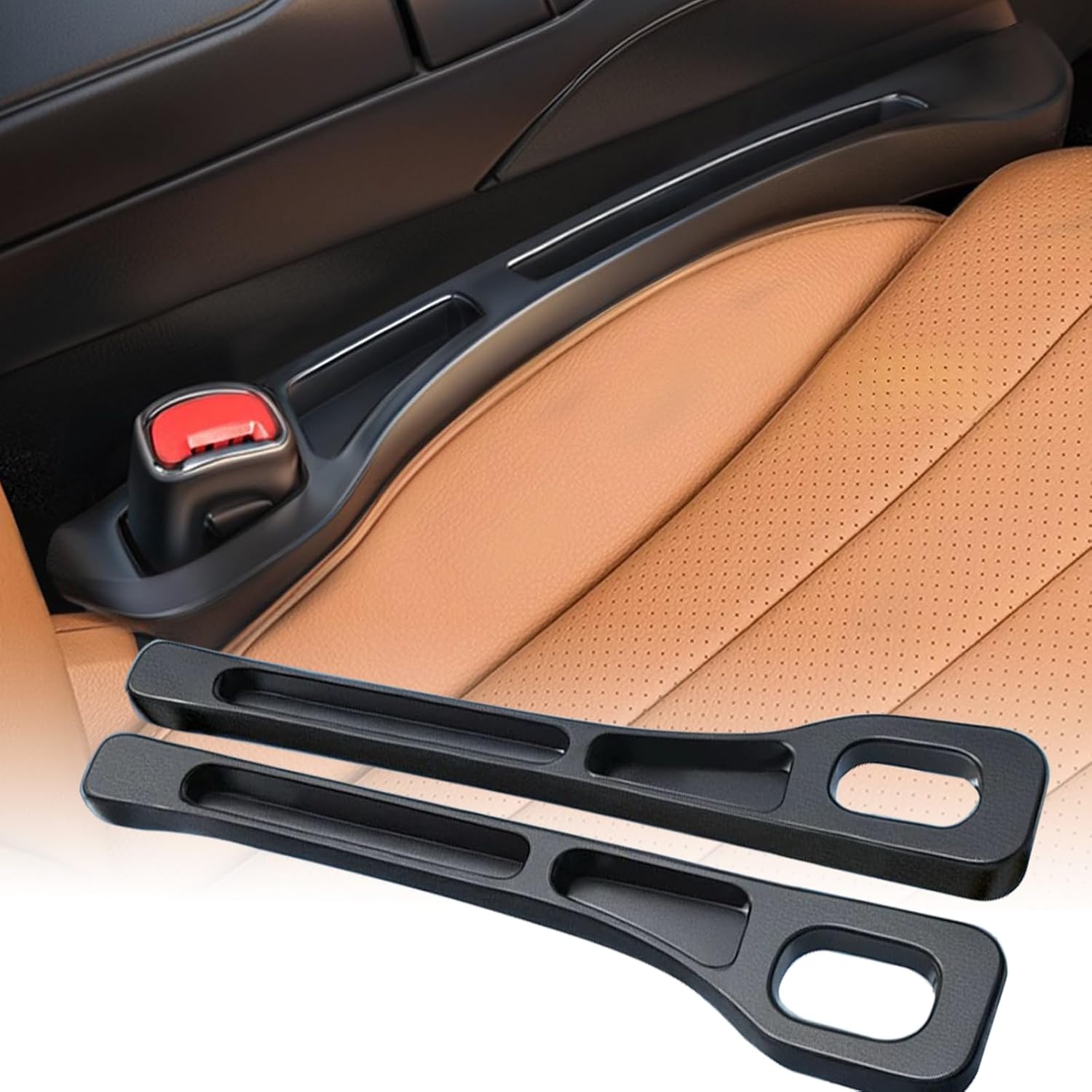 ★ 1,340
Car Seat Gap Filler (Universal)
View on Amazon ★ 692
★ 692USB-A to USB-C CarPlay Adapter (3-Pack)
View on Amazon ★ 121
★ 121Foldable Windshield Sun Umbrella
View on Amazon ★ 268
★ 268Anti-Slip Leather Steering Wheel Cover
View on Amazon ★ 9,349
Auto Detailing Brush Set (10-Piece)
View on Amazon ★ 164
★ 164Solar-Powered LED Ambient Light
View on Amazon ★ 546
★ 546Funny Headrest Face Covers (2-Pack)
View on AmazonRead, Plan, Then Stay Current
Explore our expert articles to understand incentives and ownership costs, use the map to pressure-test charging reality, then subscribe so new EV coverage comes straight to you.
Continue Reading
Canada EV Sales January 2026: The Record Numbers
EV Market Share by Brand in Canada 2026: Who Leads

Electric School Buses Are Changing Canadian Streets

Norway's -27C Winter EV Test: Chinese Cars Beat Tesla
BYD 1.5MW Charging Canada: 400 km in Five Minutes