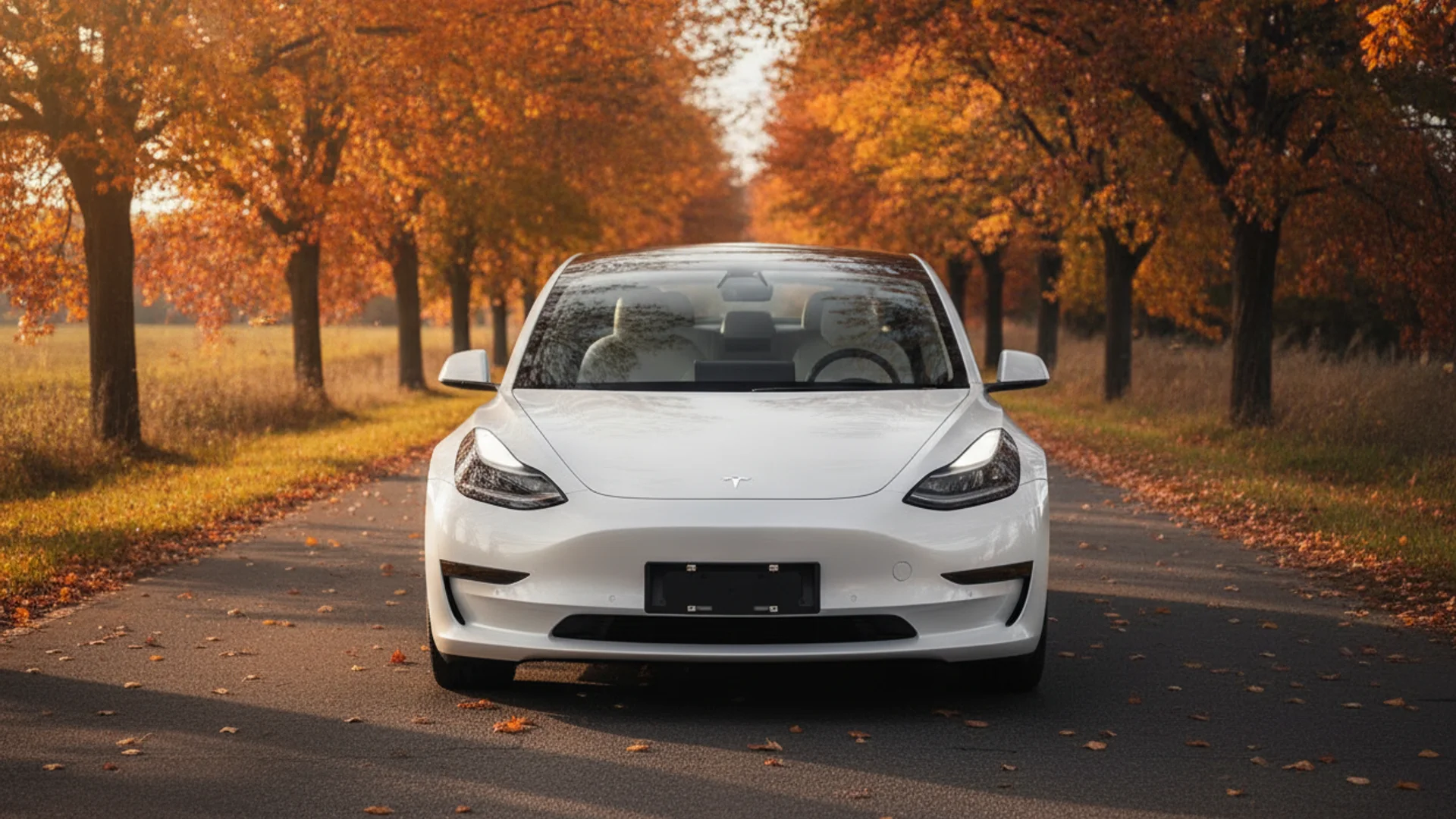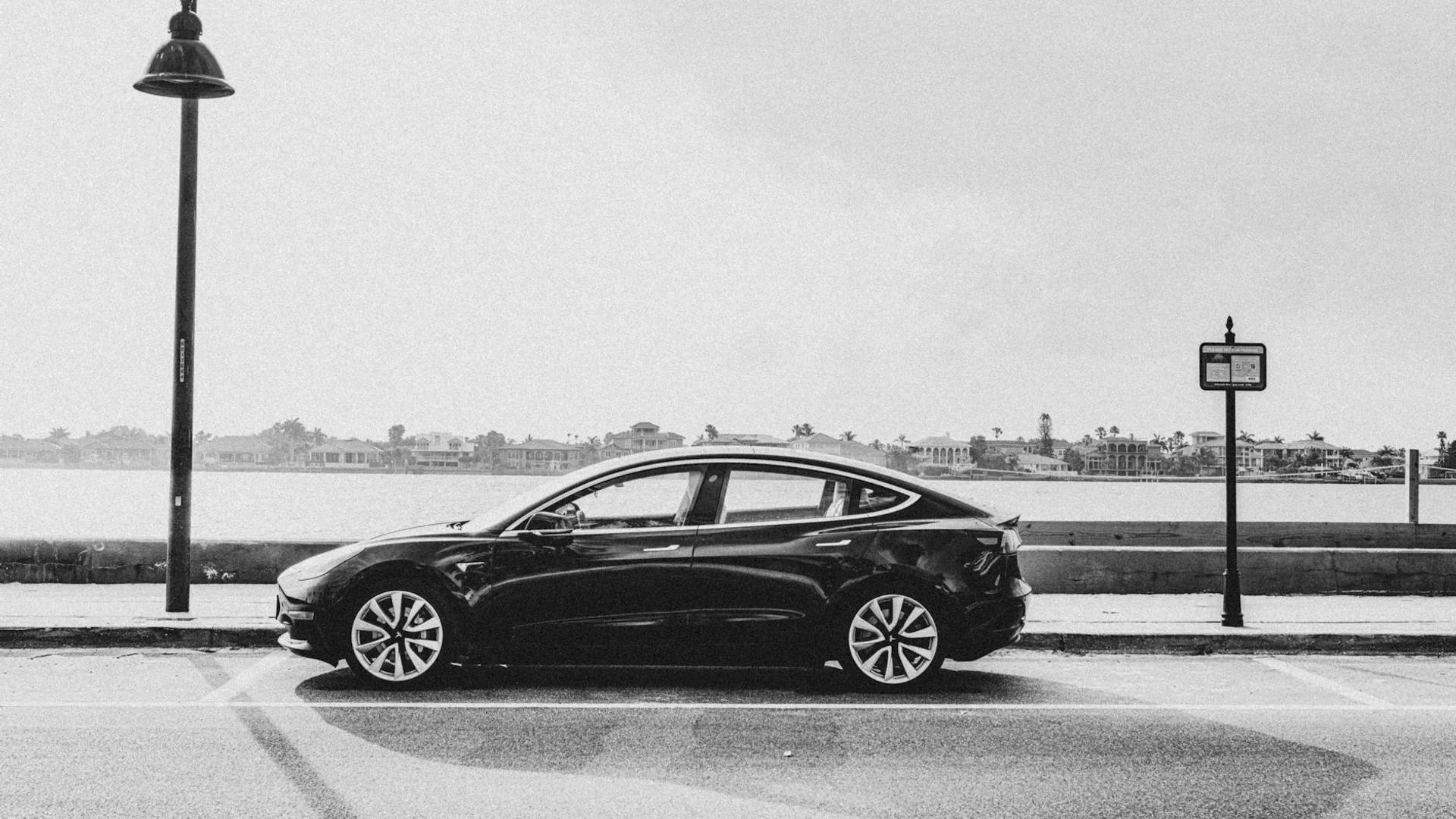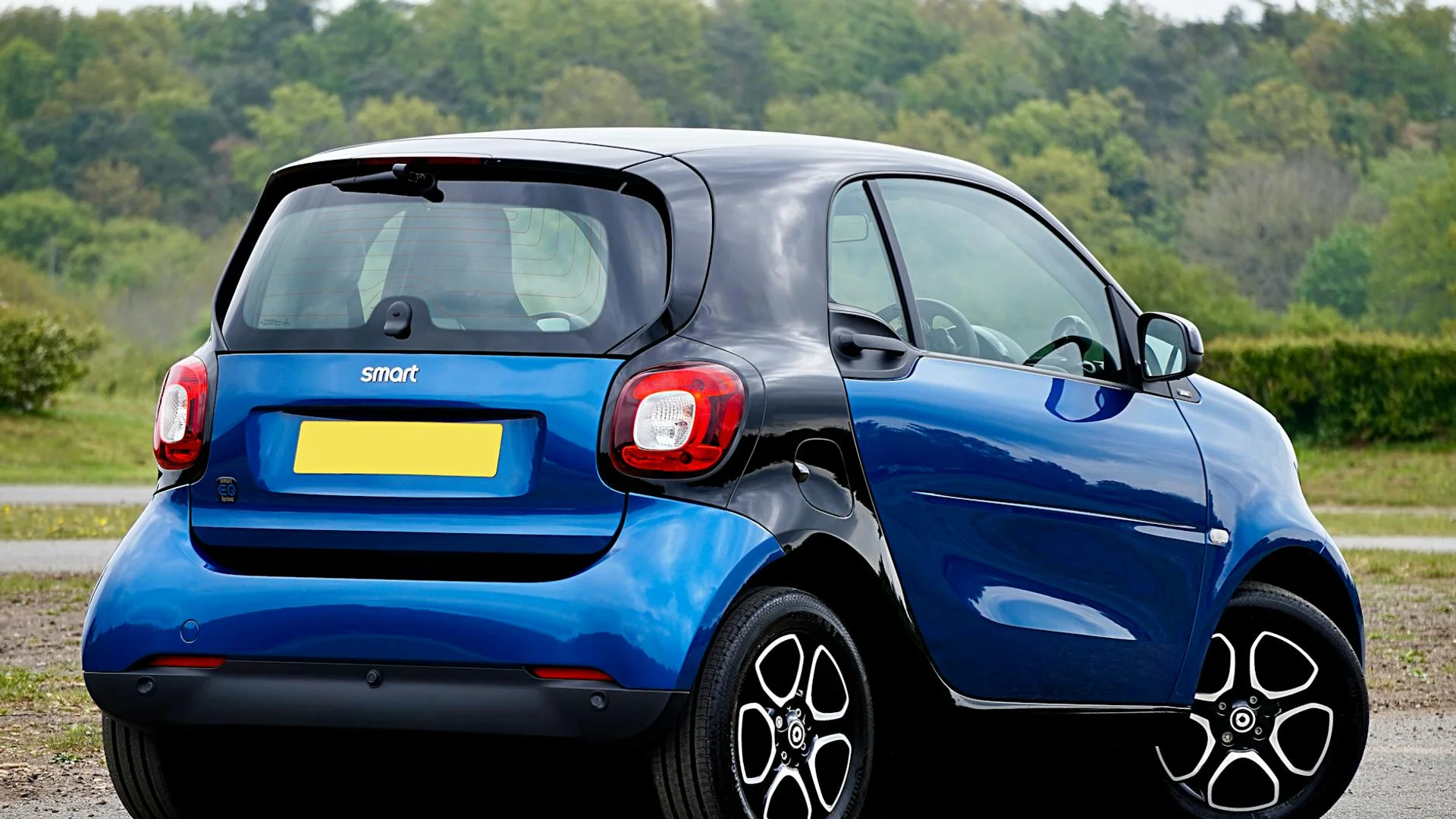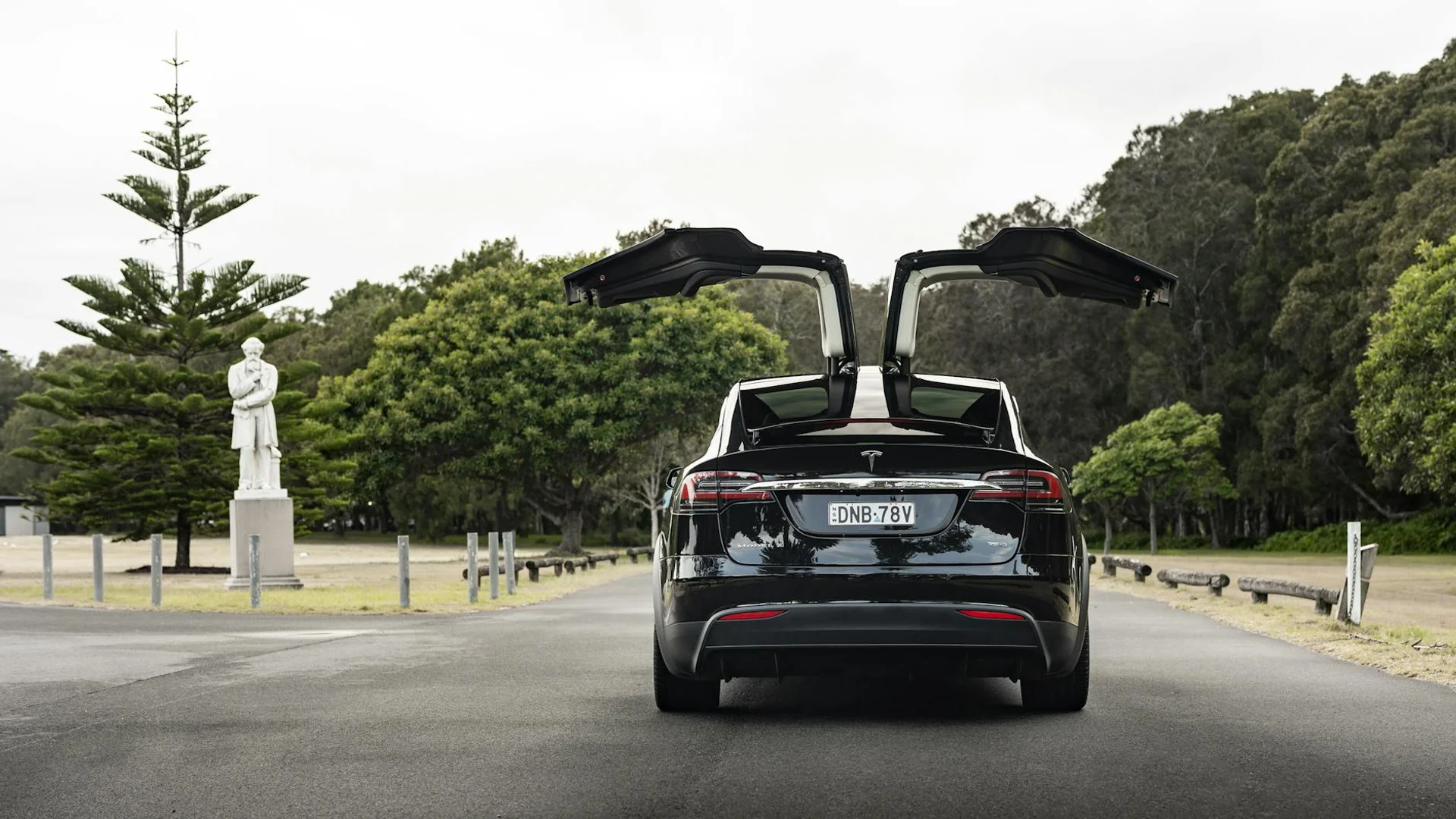
Rear view of a Tesla Model X with falcon doors open, parked in a scenic park setting.
Guides

Most EV Coverage Gets Efficiency Backwards — Here's Our Correction

14 min read
2026-05-04
Share

This article contains affiliate links. We may earn a small commission when you purchase through these links, at no additional cost to you. This helps us keep ThinkEV running.

A reader on Reddit asked why a Chevy Bolt barely edges a Model 3 on the highway. The thread sat at 130 votes and 117 comments before any mainstream Canadian outlet engaged with it. That's the gap this publication exists to close.

I'm Vlad Pereira, publisher of ThinkEV.ca. I don't road-test cars — I run the editorial floor that decides which questions get answered honestly and which get buried under press-release fluff. Some of the firmest views I hold on this topic come out of time I spent at Chinese university and design-centre settings in 2023, where the conversation about EV efficiency had already moved past the size-equals-green shortcut a decade ago. The Reddit question was the right one. The silence around it was the wrong response. So we ran a five-part slate, and this is the editor's note that ties it together.

Key takeaways

  • Recurrent's fleet data shows EV efficiency peaked in 2018 and has declined as SUVs and trucks took over.
  • At 100 km/h on the Trans-Canada, a heavier Hyundai Ioniq 5 matches a Chevy Bolt because aerodynamic shape beats curb weight.
  • Canada's EVAP incentive program is actively steering buyers toward smaller vehicles while the efficiency story attached to them is incomplete.
  • The DOE's 80% powertrain efficiency figure is real but tells you nothing about whether the body shape uses those electrons well.
  • A Reddit thread at 130 votes asking why the Bolt barely edges the Model 3 got more honest answers than any Canadian mainstream outlet provided.

Why We Ran This Series (And Who Pushed Us To)

The thread that started this is straightforward. The reader's framing — that small EVs like the Renault 4 and Chevy Bolt return roughly 3 to 3.5 mi/kWh at 75 mph, not much more than bigger SUVs and lower than sleek sedans like the Model 3 — is the framing the engineering community quietly accepts and the marketing community quietly avoids. The top-voted reply explained that weight matters far less than people assume because most highway energy goes into overcoming drag, not accelerating mass. Recurrent's own market analysis confirms the broader pattern: EV efficiency has actually declined since its peak in 2018, due to market preferences for larger, heavier, and less aerodynamic vehicles such as SUVs, trucks, and boxy crossovers. That's the engineering reality. It is also nowhere in the brochure copy a Canadian buyer reads at a dealership.

ThinkEV's editorial thesis on this topic is narrow and specific: the assumption that small automatically equals efficient is incorrect at highway speeds, and pretending otherwise costs Canadian buyers real money when they're choosing a vehicle they'll keep for a decade. That's not an engineering quibble. That's a consumer-protection issue dressed up as a physics question.

Why does this matter for our audience right now? Because federal policy is actively pushing buyers toward smaller vehicles. The Electric Vehicle Affordability Program is the successor to iZEV, with Transport Canada redirecting the old iZEV page to current EVAP information, and is designed to expand EV adoption with purchase and lease incentives flowing through dealerships and authorized sellers across Canada. The official program page lists program-portal maintenance windows and onboarding rules for the dealer network, which means thousands of sales conversations are happening with EVAP framing in the room. The eligible-vehicle list itself notes that EVs with under 10,000 km on the odometer qualify as demonstrators that buyers can test drive at a dealership — meaning the cars on that list are the cars Canadian shoppers will actually feel under their hands. If the efficiency story attached to those cars is wrong, the financial decision behind them is wrong too.

The other four ThinkEV writers each took a piece. Claudette mapped the engineering contrasts between hatchback and sedan platforms. Geni built the practical Canadian buyer guide — prices, model years, dealer reality. Oppenheimer worked the EVAP policy detail and the cross-jurisdictional comparison with the US, EU, and China. Xavier wrote the hot take on what mainstream automotive press got wrong about the Recurrent rankings. My job, as the publisher, is the part you're reading: why we spent a week on this, and what standard we're holding ourselves to going forward.

The honest version is that I get pushed around by the comments section more than I get pushed around by the press kits. Press kits are scheduled. Reader questions arrive when something the industry said doesn't match what people see in their own driveways. The Reddit post was that kind of arrival.

The Assumption That Quietly Shaped Canadian EV Buying

Most shoppers walk into a dealership carrying a mental model from the gasoline era. Small car burns less fuel. Big car burns more. Engine displacement and curb weight drive consumption. That model is broadly true for internal combustion, where mass and engine size both compound into the fuel-economy figure on the window sticker.

It is mostly wrong for electric vehicles at highway speed. And the people writing about EVs in Canadian mainstream media have not done the work of saying so out loud.

Here is the physics in two sentences. Charging a PEV is not 100% efficient — a small amount of energy is lost through energy conversion and heat.MPGe values assume Level 2, alternating current (AC) charging and account for losses from the charging cable and the on-board vehicle charger, which moves the measurement from the vehicle to the outlet in the wall to better represent how much users would pay to refuel their car — a methodology the EPA documents in its fuel economy and EV range testing notes. So even before you drive, the energy stack already has losses baked in that the size of the car cannot fix. After that, on the road, the dominant variable at highway speeds is aerodynamic drag — a function of frontal area and drag coefficient, not curb weight.

This is why a Chevy Bolt and a much larger Hyundai Ioniq 5 land in the same neighbourhood on a long highway run, a pattern visible in Recurrent's fleet-data efficiency rankings, which document how aerodynamic shape consistently outperforms small footprint at speed. The Bolt is lighter, but it's also taller relative to its length and has a less optimized shape. The Ioniq 5 carries more mass but pushes through the air more cleanly. At 100 km/h on the Trans-Canada, those two effects roughly cancel. That isn't a defect of the Bolt. It's a feature of how electrons behave once a vehicle is up to cruising speed.

The trajectory of the broader fleet makes this worse, not better. The Department of Energy's framing notes that an EV's battery transfers energy to an electric motor, the motor turns a drive train, which then turns the wheels — and that up to 80 percent of the energy in the battery is transferred directly to power the car, a figure documented in the DOE's Energy 101 explainer on electric vehicles. The 80% powertrain efficiency figure is real and it's also incomplete — it tells you nothing about whether the body around that powertrain is shaped to use the electrons well.

Here's what gets lost when "EVs are 80% efficient" becomes the headline. The car around the powertrain still has to push air. A small boxy hatchback with a higher drag coefficient will spend more energy at 110 km/h than a longer, lower sedan with a cleaner shape — even when the sedan weighs more. The marketing language flattens that. The reader pays for the flattening.

The way Tesla solves this — and most legacy compacts don't — is by treating the body as an aero exercise first and an interior package second. That's the choice. It isn't magic. And it isn't a choice that mainstream Canadian EV coverage has been willing to spell out, because spelling it out means telling readers that the cute small EV they were leaning toward might not be the efficient pick they assumed.
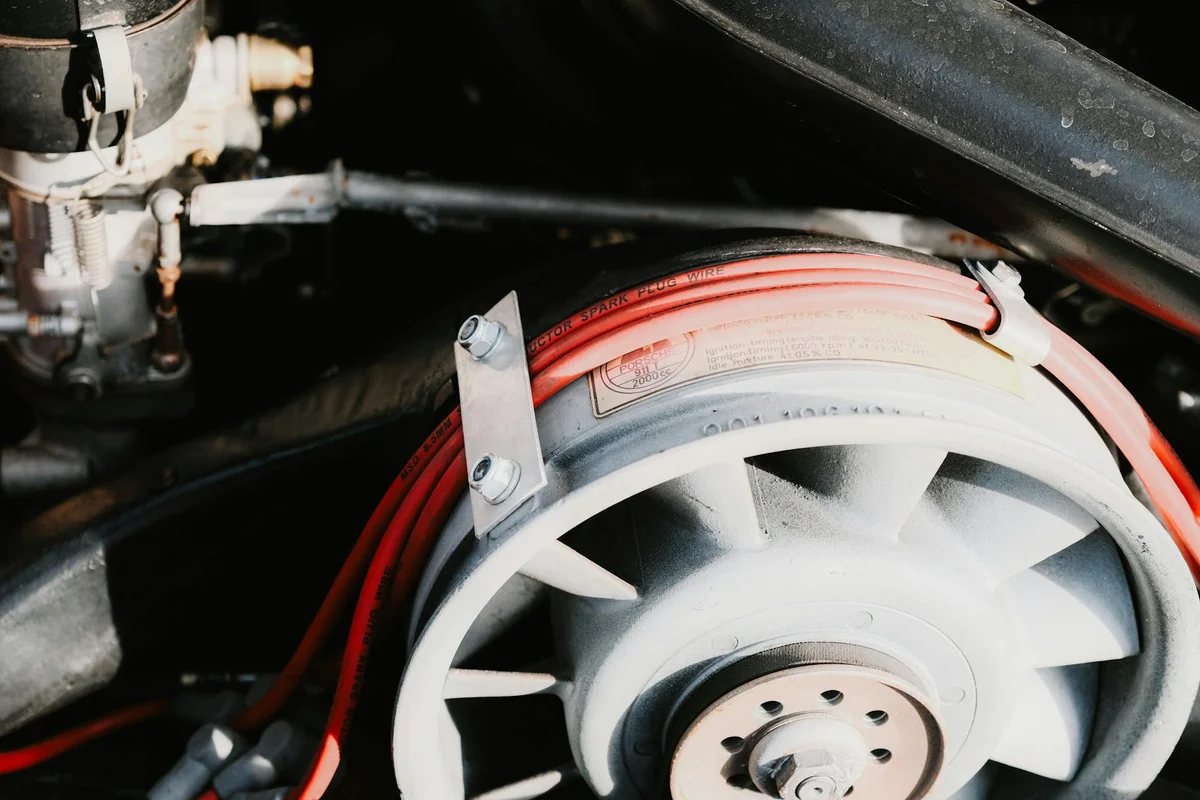
Top view of a modern electric car engine showcasing technical components and design.
Photo: Luke Miller
Charger

ChargePoint Home Flex (50A)

Premium 50A / 12 kW charger with the best app ecosystem. Hardwired or NEMA 14-50. Real-time energy tracking and smart scheduling.

We may earn a commission at no extra cost to you.

What I Saw in China in 2023 Changed How I Read These Numbers

In 2023, I spent time across roughly eleven Chinese cities on a cultural-exchange delegation. My own notes from that trip, never published in English, are the basis for what follows — readers should treat this section as firsthand observation rather than as citable evidence. I am not relating private conversations or briefings, just the texture of a country where EV development is the ambient subject the way hockey is ambient in a Tim Hortons in Sudbury.

The thing that stuck with me — and the reason I'm comfortable being firm in this editor's note — is that the engineering conversations I sat in on at university and design-centre settings in cities like Guangzhou and Shenzhen were not framed around downsizing. They were framed around frontal area and drag coefficient. The shape of the car, not the size of the car. That ordering matters, and it lines up with the broader market reality: Recurrent's industry data shows the global efficiency leaderboard rewarding aerodynamic profile over compact footprint, and the design priorities behind the highest-volume EV programs favour aerodynamics as the primary efficiency lever.

North American coverage has it reversed. Most Canadian outlets still write as if a smaller footprint must produce a smaller energy bill. The engineering preference shaping the highest-volume EV market in the world had stopped having that conversation a decade ago. The question wasn't "how do we make this smaller?" The question was "how do we make this slip through the air with less drag at the speeds urban drivers actually travel?"

This is not a romantic point about Chinese engineering being categorically better. It's a point about which question gets asked first. And it lines up exactly with what the top-voted Reddit reply said independently: weight matters far less than you'd think, because most of the energy spent by the vehicle is spent overcoming drag, not accelerating mass. The buyer-facing implication is straightforward — when the cars built around that design philosophy reach Canadian dealerships under EVAP eligibility, as the federal program documentation lays out, the buyers who understand drag coefficient will negotiate better than the buyers who don't.

I'm not asking ThinkEV readers to memorize aero engineering. I'm asking them to stop using "small" as a shortcut for "efficient." The shortcut is wrong. It was always wrong for EVs. We have a window to correct it before it gets baked into a generation of Canadian purchase decisions.

The Editorial Correction ThinkEV Is Making

I want to be precise here because the audience deserves precision. ThinkEV is not anti-small-EV. The Chevy Bolt is a legitimate Canadian choice where inventory remains, especially for urban drivers with predictable commutes and access to home charging. The Renault 4 — if it reaches Canada in meaningful volume — will be a legitimate choice for the same buyer. Small EVs solve real problems: parking, urban manoeuvrability, lower upfront cost.

The story isn't that small EVs are bad. The story is that the efficiency conversation around them has been lazy.

The correction is structural, and it has three parts that all collapse to one demand: name the conditions.

Start with the unit. Efficiency should be communicated in mi/kWh — or kWh per 100 km, in the metric form Canadian buyers actually need — at a stated speed, under stated conditions. Not as a single number on a window sticker. Not as a size proxy. A figure of 3.5 mi/kWh at 110 km/h on a 5°C day with the heat running tells you something. A figure of "very efficient" tells you nothing.

Then fix the comparison set. Some larger sedans outperform smaller hatchbacks on the highway. That's a true sentence. It deserves plain language in the body of an article, not a footnote three paragraphs from the end. When Canadian outlets bury the comparison, they protect a tidy narrative at the reader's expense.

And finally, name the road. Highway driving on the 401, the Coquihalla, the Trans-Canada through the Prairies — these are the conditions that determine whether the EV in your driveway is the right one. EPA city-cycle figures and brochure WLTP numbers are starting points, not endings. The EPA's electric vehicle label indicates the category of the vehicle (e.g., Small SUV, Station Wagon, Pickup Truck) and the best and worst fuel economy within that category for the given model year — as documented in the EPA's text version of the EV label — which is useful context, but only if the buyer reads the label as a comparative tool rather than as an absolute promise. (Geni's slate piece works through the kWh/100km numbers at Canadian highway speeds in detail; this editor's note flags the standard, her piece supplies the table.)

This is where the EVAP question becomes editorial, not just regulatory. The program is doing exactly what it's designed to do — making EV ownership financially feasible for more Canadian households. That is good. The risk is that incentive eligibility starts functioning as a proxy for efficiency in the buyer's mind, when in fact the eligibility list is shaped by price ceilings, manufacturing, and policy negotiation, not by drag coefficient. EVAP was deliberately designed around a price ceiling rather than a kWh/100km threshold because the program's stated purpose is affordability — making EV ownership financially feasible for Canadian households who would otherwise stay in the used-ICE market — and a price-anchored eligibility list is the simplest mechanism to deliver that. A car can be EVAP-eligible and middling on the highway. It can also be EVAP-eligible and excellent on the highway. The eligibility status doesn't tell you which. (Oppenheimer's slate piece engages the policy-design counterargument in depth; this note simply flags that the design choice was deliberate, not accidental.)

The honest version of the buyer's question is this: "Among the vehicles I can afford after the rebate, which one will actually use the least energy on my commute?" That question deserves a direct answer with numbers and conditions. Not a vibe.

What this slate is trying to do — across all five posts — is hand the reader the vocabulary and the data to ask that question at the dealership and not be talked over. Geni's piece gives the model-by-model walkthrough. Claudette's piece gives the engineering reasoning. Oppenheimer's piece gives the policy and incentive context across jurisdictions. Xavier's piece names the press release that lied with a straight face. This piece — the one you're reading — is the publisher saying out loud that the lazy framing stops here, on this masthead, on this date.

If we land this correction, Canadian buyers walk into showrooms in late 2026 and 2027 asking better questions. If we don't, we keep watching readers buy the wrong car for their commute and blame "EVs" for a mismatch that was actually a coverage failure.

Winter street scene in Toronto with cars driving past McDonald's during snowfall.
Photo: Anurag Jamwal
Accessory

TP-Link Kasa Smart Plug with Energy Monitoring

Track exactly how much electricity your Level 1 charger uses. Schedule charging for off-peak hours. Know your real charging cost per kWh.

We may earn a commission at no extra cost to you.

What This Slate Delivers

The five-angle format exists because one writer making one argument is easy to dismiss. Five writers, five angles, one thesis is harder to wave off — and that's the point.

The thesis is simple and I'll say it plainly: the size-equals-efficiency assumption is broken at highway speeds, aerodynamic drag dominates, Canadian buyers should ask for figures at stated speeds and conditions, and EVAP eligibility is a financial signal rather than an efficiency one. Those four claims are sourced and consistent across all five posts in the slate. They are also, I'd argue, the four sentences any Canadian EV buyer should have memorized before they walk into a dealership in 2026.

I want to push back on a framing I keep seeing in EV coverage — the idea that any criticism of small-vehicle efficiency claims is somehow an attack on the EV transition itself. It isn't. It's the opposite. The EV transition gets stronger when buyers walk away from purchase decisions feeling like the car they bought matches the way they actually drive. It gets weaker when buyers feel they were sold one story and shipped another. The people writing copy for Canadian dealerships have spent five years optimizing for the first sale. Our job is to optimize for the second car the same buyer will recommend to their sister-in-law.

The interesting part is that the engineering community already knows all of this. Look at the top-voted Reddit replies on the thread that triggered this series — the technical answer is well understood. The disconnect lives between engineering reality and the consumer-facing language used to sell the vehicles. That gap is editorial territory. That's our job.

ThinkEV's Canadian editorial lens matters here because the Canadian EV market sits in a particular spot. Federal incentives are pushing demand toward affordability. Provincial top-ups in BC, Quebec, and elsewhere stack on top of that. The buyer is being financially nudged toward the cheaper end of the catalogue, which often means the smaller end of the catalogue. If the efficiency story attached to those cars is misleading, the nudge becomes a bad decision rather than a good one. That's not a hypothetical — that's what readers tell us, and it tracks with what the data shows.

If the only thing this slate accomplishes is that one Canadian buyer asks "what's the kWh per 100 km at 110 km/h?" before signing the lease — and gets a real answer from the salesperson — the week was worth it.

The Standard We Are Holding Ourselves To Going Forward

This is the part of the editor's note that matters most internally. I'm putting it in writing so the masthead and the readers can hold us to it.

Going forward, every ThinkEV efficiency reference will cite a speed and a condition alongside the figure. No more bare mi/kWh or kWh/100km numbers floating in a paragraph with no context. If we say a vehicle returned 4.0 mi/kWh, we will say at what speed, under what temperature, on what surface. That's the standard.

We will also flag when a press release or competing outlet conflates "small" with "green" without supporting data. Not as a gotcha — as service journalism. Readers deserve to know when a claim is being made on vibes rather than measurements.

We will keep treating reader questions — including the kind that arrive via Reddit threads and email forwards rather than press inquiries — as legitimate editorial briefs. The Reddit post that prompted this series is exactly the kind of signal that should keep prompting series. If the audience is asking it and the mainstream outlets aren't answering it, that's our brief.

Internal cross-link discipline is part of this too. We've been running a multi-phase editorial pipeline overhaul — the work of building the pipeline that produces these slates — and one of the standards baked into it is that quantitative claims travel with their sources. That's not a bureaucratic preference. That's how trust survives the next five years of EV coverage, when the volume of misinformation will get worse before it gets better.

Here's what I'd watch over the next eighteen months. First, whether Canadian mainstream automotive coverage starts citing speed and conditions alongside efficiency figures, or whether it stays at the brochure-summary level. Second, whether EVAP eligibility shifts toward vehicles with better demonstrated highway efficiency or stays anchored to price ceilings alone. Third, whether the aerodynamic-first design philosophy that's already shaped the global market starts visibly influencing North American product launches.

I'd bet on all three moving in the right direction, slowly, with the policy piece being the slowest. I'd change my mind if the next federal-program update treats the eligible-vehicle list as a proxy for green choice rather than as a price-anchored affordability tool. That would be a step backwards.

The Reddit post that triggered this slate didn't ask for a manifesto. It asked a sincere technical question. We owe that reader — and the 117 commenters who joined the thread — an honest answer. This slate is our attempt at it. If we got it right, you'll know because the next time you're at a dealership, the salesperson's pitch will sound a little less convincing and your own questions will sound a lot sharper.

That's the correction. That's why we ran the series. That's the masthead from here.

— Vlad Pereira, Publisher, ThinkEV.ca

Frequently asked questions

Does a smaller EV always cost less to charge on a road trip?
Not necessarily. At highway speeds, aerodynamic drag dominates energy consumption — not size or weight. A boxy compact can easily outspend a larger, sleeker sedan at the plug because it's fighting more air resistance the entire run.
Why does the EVAP eligible-vehicle list matter to efficiency?
Because those are the cars in Canadian showrooms right now, with sales conversations happening around them. If the efficiency framing attached to EVAP-eligible vehicles is wrong, the 10-year financial decision behind the purchase is wrong too.
Has EV efficiency been getting better or worse over time?
Worse, actually. Recurrent's market analysis shows EV efficiency peaked in 2018 and has declined since, as buyer preference shifted toward larger SUVs, trucks, and boxy crossovers — vehicles that win on cargo space but lose on aerodynamics.
What does drag coefficient actually mean for my electricity bill?
A higher drag coefficient means your motor works harder at cruising speed to push the car through air. On a 400 km highway run, that difference compounds. Shape matters more than weight once you're above 80 km/h.
Is the 80% efficiency figure you see in EV marketing accurate?
It's real but incomplete. That number describes how efficiently the powertrain converts stored energy to wheel movement — it says nothing about whether the body around that powertrain is shaped to minimize the energy needed in the first place.

Found this helpful? Share it:

Share
USE THE FULL THINKEV FLOW

Read, Plan, Then Charge

Explore our expert articles to understand incentives and ownership costs, use the map to pressure-test charging reality, then grab the Canadian EV Guide for every detail in one place.

Explore articles with Canadian pricing context
Pressure-test charging access on the map
Use the Canadian EV Guide for incentives and ownership math
Keep the decision flow in one ecosystem

Free PDF, instant download. No spam, unsubscribe anytime.

Continue Reading

Thevey

Your EV Assistant

Hey! I'm Thevey, your EV assistant at ThinkEV. I can help with rebates, pricing, charging, winter driving, and anything else about electric vehicles in Canada. What would you like to know?

Quick questions:

Powered by ThinkEV