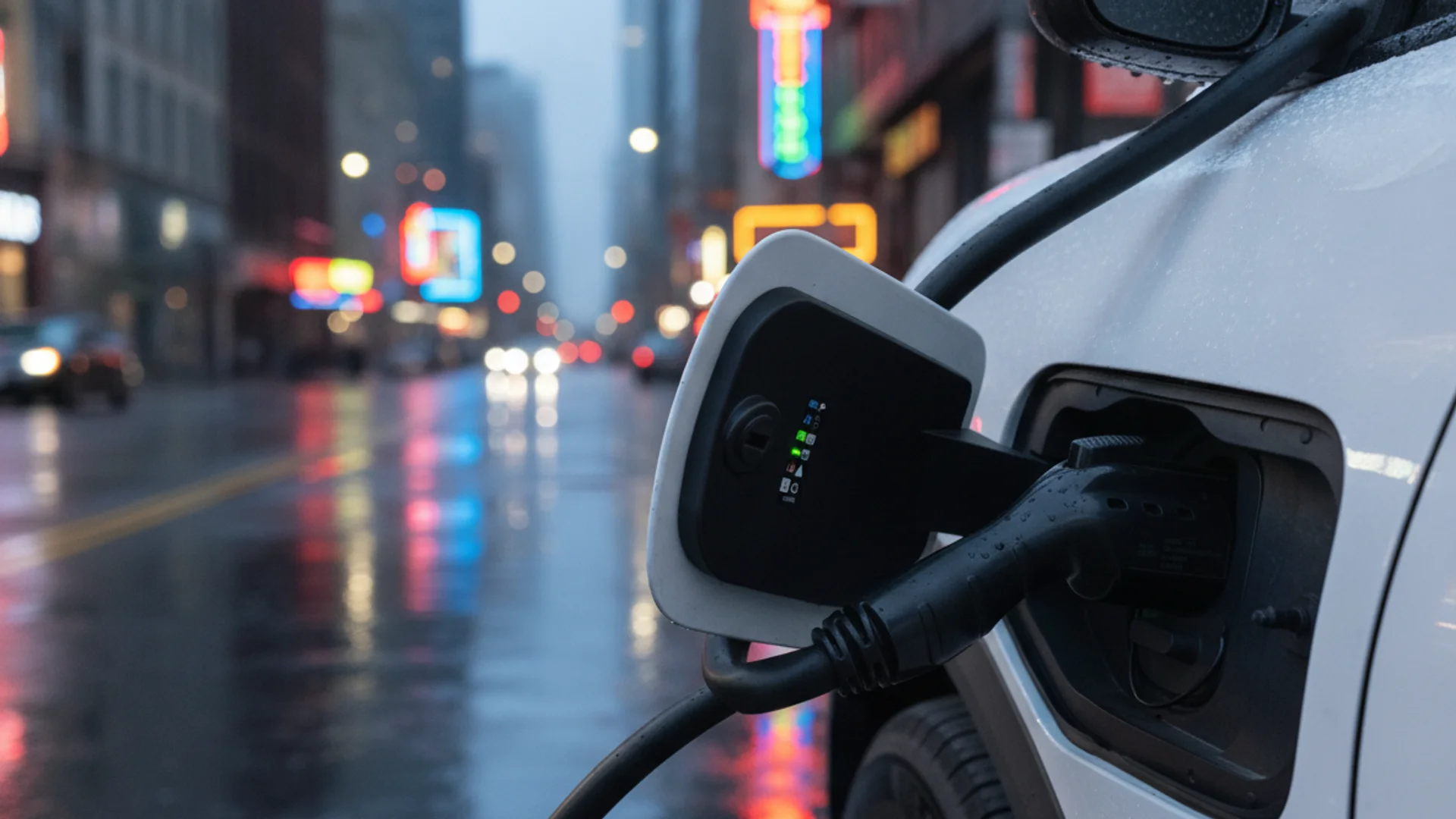
Someone films themselves forgetting to plug in their EV overnight, drives to a fast charger on 8% the next morning, can't figure out the app, and posts the whole sequence as proof the technology is broken. The video gets two million views. The comments agree. None of them describe a vehicle problem.
That structure, confusion, frustration, declaration, is the entire genre. It is not a review. It is not a road test. It is a piece of content with a narrative arc that was decided before the camera turned on, and the EV is a prop in someone else's story about themselves. The arc works because the format flatters the audience that hasn't bought one. The arc works because the algorithm rewards conflict over competence. And the arc works because the engineering choices that would expose the fumble as a fumble, overnight Level 2 charging, 800V architecture, NACS standardization, owner reports of pack longevity past 200,000 miles, never appear in the frame.
Strip the genre back and a different story is underneath it. EVs are designed around a workflow where the car is charged at home, the driver almost never touches a public charger, and the entire refuelling mental model from the gas era is inverted. The fumble video happens at the exact point that inversion fails. That failure isn't random. It's algorithmically selected, culturally amplified, and, increasingly, funded. The viral version of EV ownership has almost nothing to do with the actual one, and the gap between the two is now the most interesting thing to write about EVs in 2026.
Key takeaways
- The fumble video genre emerged around 2021 when EV adoption crossed from early adopters to skeptical mainstream buyers.
- Drivers without home chargers using DC fast charging daily are running EVs in their worst-case workflow, then blaming the car.
- Tesla eliminates the fumble by treating the first plug-in as a software event; Mercedes, BMW, and GM punt that work to the driver.
- Hyundai's 800V E-GMP platform charges 10-to-80% in 18 minutes at a 350kW site, shorter than the fumble video itself.
- The ICE equivalent of the fumble video doesn't exist as a genre because a century of normalcy gives gas cars the benefit of the doubt.
The Fumble Video Is a Genre, Not a Review
Genres have rules. Crime procedurals end with the arrest. Cooking competitions end with the plate. The fumble video ends with a declaration, "this is why EVs aren't ready", and everything in the preceding three minutes is staged to make that declaration land. The driver arrives at a charger with low state of charge. The app doesn't open on the first try. The cable is heavier than expected. The screen requires a payment method the driver doesn't have. Cut to frustration. Cut to verdict.
This isn't a description of a vehicle. It's a description of a content template, and content templates spread because they're easy to replicate. Every fumble video feels like the last one because they share narrative DNA, not because they describe a shared engineering reality. The misconceptions and the reviews are the same artifact, a worldview producing the evidence it expected to find.
The ICE equivalent of the fumble video does not exist as a genre. Drivers pump the wrong octane and damage engines. Drivers leave headlights on and need jumpstarts. Drivers run out of gas on highway shoulders because they trusted the range estimate one mile too far. None of these become viral content because the cultural premise is that the driver erred, not the car. The car gets the benefit of a century of normalcy. The EV does not. Same human error, opposite framing, and the framing is doing all the work.
The genre is also new. Fumble content as a recognizable category emerges around 2021, which is roughly when EV adoption crossed the boundary between early adopters who self-selected into the technology and the skeptical middle that didn't. Before that point, EV content on YouTube and TikTok was almost entirely owner content, range tests, road trips, charging-network reviews, produced by people who had already absorbed the workflow. After that point, the audience for "EV failure" content became large enough to monetize, and the supply followed the demand. The recurring comment-section claims, "You'll need to charge every 50km," "The battery will cost more to replace then the car," "Battery degrades in 2 years," and the thousands of likes that mean real people are actually believing this stuff, are wrong on the technical merits. The engagement is real. That mismatch is the entire economic model.
Three signatures distinguish a fumble video from a genuine review. First, the driver almost never has a home charger, every interaction with the vehicle is at a public station, which is the EV equivalent of judging a car by how it behaves only at gas stations. Second, the timeline is compressed: a process that takes weeks of routine adjustment is staged inside a single afternoon. Third, the verdict is announced before any data is gathered. The driver knows the conclusion at minute zero. Everything that follows is illustration.
The genuine version of this content also exists. Owners post charging-network frustrations, software complaints, build-quality issues, range disappointments at -30°C in northern Alberta. Those videos do not feel like the fumble genre because the author knows the vehicle and is reporting from inside the ownership experience. The fumble video is reporting from outside it, performing an entry that never finishes.
What the Fumble Actually Reveals About How EVs Are Designed
EVs are not gas cars with a different fuel tank. They are designed around the premise that the vehicle returns to a power source every night, that public fast charging is a road-trip tool used a handful of times per year, and that the daily refuelling ritual disappears entirely. The Tesla Model 3 onboarding flow assumes this. The Hyundai IONIQ 6 onboarding flow assumes this. Every legacy OEM EV platform built after 2020 assumes this. The fumble video happens at the precise point this assumption is violated.
Key signatures of the workflow EVs are actually designed around:
- Home charging as the default refuelling event, roughly 80-90% of charging cycles for typical owners.
- DC fast charging as a road-trip tool used 5-15 times per year, not daily.
- 10-to-80% as the meaningful charging window, not 0-to-100%.
- State of charge in the 20-80% band as the default operating range, optimized for battery longevity.
- Software-led onboarding that pre-authenticates payment, sets home location, and routes around charging needs without user intervention.
A driver without a home charger using DC fast charging as a daily fuelling pattern is the worst-case workflow for any EV on the market, and also the most expensive, the most time-consuming, and the most adversarial to battery longevity. It is the equivalent of running a gasoline car exclusively on 100-octane race fuel pumped at a closed marina. The car still runs and the economics break, while the user experience suffers. The fumble video frames this as the car's fault, when the car was never engineered for the workflow the driver chose.
Tesla solves onboarding by treating the first plug-in as a software event, not a hardware event, while the legacy OEMs mostly do not. The car teaches the driver what it expects. Charging defaults to "home" once a home location is set, public-charger payment is pre-authenticated, and navigation auto-routes around state of charge. The driver does not make charging decisions; the car makes them. That level of paternalism eliminates the fumble entirely. Mercedes, BMW, and GM ship competent cars that punt this onboarding work to the driver, and the fumble videos starring those cars are not really about those cars, they are about the experience gap.
The 800V architecture in Hyundai's E-GMP platform, IONIQ 5, IONIQ 6, EV6, GV60, is the engineering response to whatever residual fumble surface remains. Plug in at a 350kW Electrify Canada or IONNA hardware site, and the 10-to-80% charge completes in roughly 18 minutes, which is shorter than a coffee and shorter than the fumble video itself. The scene almost never appears in the genre because it does not fit the arc. A driver who plugs in, walks to a washroom, and returns to a nearly full battery has produced uneventful refuelling, which is what the technology is for and what is structurally invisible to the algorithm.
The legacy OEMs are catching up slowly. Ford's F-150 Lightning, GM's Ultium platform, and Stellantis's STLA Large are 400V architectures with longer charge curves, competitive on absolute range, slower on peak DC speed. The fumble genre features these platforms more than the Hyundai-Kia or Tesla equivalents, partly because the charging experience is more variable and partly because the OEM onboarding is less polished. The fix is software, not chemistry, and Hyundai's 800V advantage is real while the legacy disadvantage is mostly about software philosophy rather than battery physics, which is fixable.
The 2026 IONIQ 6 spec sheet reads as evidence of a worldview: 800V architecture, 18-minute fast charge, 581 km of WLTP range on the Long Range RWD trim, and a 0.22 drag coefficient that is the lowest in the segment. Hyundai's decision to chase aerodynamics instead of bigger battery packs is a quiet thesis about what efficiency means in a power-constrained grid. The fumble video, almost by definition, never engages with any of this, the genre is about confusion at the charger, not philosophy on the highway.
Compare this to the technical breakdown of why BYD overtook Tesla in global sales, same engineering logic, different execution. The companies that are winning at EVs are the ones that treat the entire ownership experience as the product. The ones that ship a competent powertrain bolted to a 2015 dealer experience are the ones whose vehicles end up starring in fumble content. The car isn't the problem. The workflow around the car is. For a deeper look at how that workflow is being re-engineered from the silicon up, see the analysis of EV software stacks and OTA architecture.
Gear worth having
As an Amazon Associate, ThinkEV earns a small commission from qualifying purchases — at no extra cost to you.

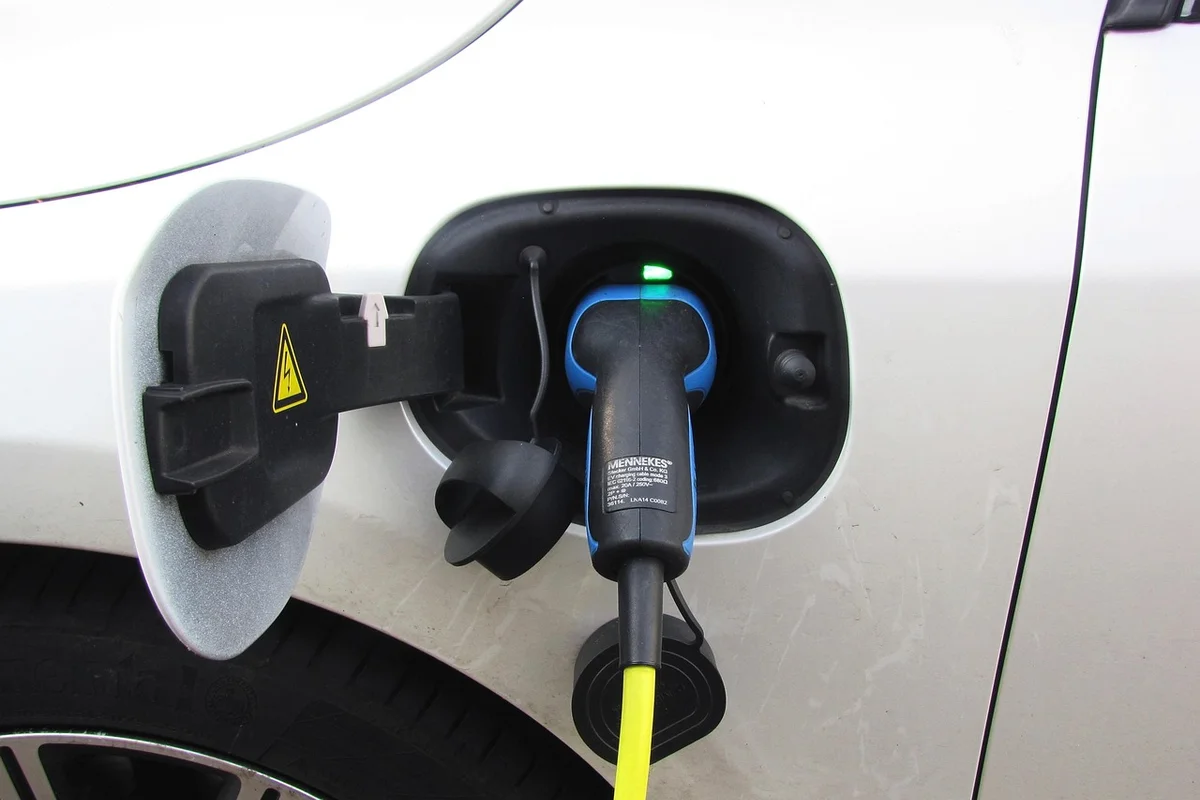
Portable Level 2 EV Charger (40A, NEMA 14-50)
Throw it in the trunk and charge anywhere with a 240V outlet. 40A portable with NEMA 14-50 plug. Your road-trip insurance policy.
As an Amazon Associate, ThinkEV earns from qualifying purchases — at no extra cost to you.
What Range Anxiety Is, and Isn't
Range anxiety is not entirely manufactured. There are corridors in northern Ontario, central Saskatchewan, and northern British Columbia where fast charging is genuinely sparse. There are interstate stretches across Nevada, Wyoming, and the Dakotas where the same is true. Cold-weather range loss is real, a 300-mile EPA pack at -25°C will deliver something closer to 200 miles, and that math matters for drivers who tow trailers, commute long-haul, or live in rural climates where the home charger is the only reliable charger within a hundred kilometres. Reviewers tend to file the same range complaints about a bZ4X and a Tesla. That equivalence is the tell, when every EV gets the same complaint regardless of pack size, the complaint isn't really about pack size.
The manufactured version of range anxiety is the workflow the fumble video stages. Drain the battery to 10%. Ignore the home charger. Drive to a fast charger that may or may not be working. Film the consequence. This is not the experience of EV ownership. It is the experience of someone simulating EV ownership by doing the opposite of what every EV owner does within their first month. A thread on r/electricvehicles with 392 votes and 893 comments asking why people hate EVs consistently surfaces the same finding: actual owners do not behave the way fumble drivers behave, and the videos do not describe a problem actual owners have.
NACS standardization, finalized across Ford, GM, Honda, Toyota, and most of the remaining holdouts in 2025, removed one specific fumble surface, the adapter dance at a Supercharger that used to require a CCS-to-NACS converter or a separate network membership. That's one friction point gone for North American drivers. The reliability gap between Tesla's Supercharger network and the patchwork of Electrify America, EVgo, ChargePoint, and Petro-Canada hardware is a separate problem and a more serious one. Tesla's hardware uptime in 2025 was reported above 99%. The competing networks were closer to 80%. That gap is real. That gap is also being addressed by IONNA, the joint venture between BMW, GM, Hyundai, Honda, Kia, Mercedes, and Stellantis, which began deploying high-reliability charging infrastructure in 2024 and is expected to hit 30,000 stalls by 2030.
The Kia EV6 GT-Line AWD, EPA-rated at 252 miles, will deliver something closer to 180 miles in a Toronto winter at -20°C with the heat on. That is what the conversation actually looks like, and EV owners have it constantly among themselves. The fumble video version of the conversation flattens this into "the car only got 60% of its rated range" without context, without acknowledging that ICE vehicles also lose efficiency in cold weather, without noting that heat pumps in modern EVs claw back significant winter range, without comparing the cold-weather penalty to the cold-weather penalty of a comparable ICE platform. Honest cold-weather data is available. The fumble genre is not interested in it. The Canadian winter range data set, broken down by chemistry and platform, is a more useful starting point than any single fumble video.
A useful frame: 250 miles of real-world winter range covers 95% of Canadian daily driving and does not cover a Calgary-to-Vancouver drive in February without planning. The first use case is the typical one; the second is the photogenic one, and the genre privileges the photogenic, which is the whole story compressed to a sentence.
Battery chemistry is improving 5–7% per year on energy density, solid-state cells are no longer hypothetical, see the latest solid-state battery progress, and the 800V platforms are scaling across Hyundai-Kia, Porsche, Genesis, and now Xpeng's G9 and Lucid's Air refresh. The trajectory is clear. The fumble video, structurally, cannot acknowledge a trajectory; the genre needs the technology to be permanently broken so the verdict can be permanently filmed.
Gear worth having
As an Amazon Associate, ThinkEV earns a small commission from qualifying purchases — at no extra cost to you.

Heavy-Duty Outdoor Timer (Preconditioning)
Schedule your Level 1 charger or block-heater outlet, rated for the outdoors. Warm the battery on grid power before you leave, not on your range.
As an Amazon Associate, ThinkEV earns from qualifying purchases — at no extra cost to you.
The Misinformation Supply Chain Behind the Videos
The fumble video does not exist in isolation. It is the consumer-facing surface of a documented funding and amplification structure, and treating that structure as conspiracy framing is exactly the wrong move. There is nothing speculative in any of this. The Energy and Policy Institute has tracked fossil fuel industry funding of anti-EV advocacy across multiple jurisdictions, Western States Petroleum Association lobbying expenditures are public record, and the American Fuel & Petrochemical Manufacturers ran explicit anti-EV ad campaigns in 2023 and 2024. This is not the CCP hiding microphones in your car; this is industry incumbents protecting margin, which is what industry incumbents have always done.
The amplification layer on top of that funding is the YouTube and TikTok algorithm. Conflict outperforms competence on engagement metrics by margins that have been studied extensively, a video titled "Why I'm Selling This EV" will outperform "Two Years, No Problems" by roughly ten-to-one on click-through rate alone. The platforms do not have an editorial position on EVs; they have an incentive structure that selects for outrage, and the fumble video is the form outrage takes inside the EV niche.
The most-circulated specific claims have all been refuted. Battery replacement costs exceeding vehicle value: refuted by warranty data and actual replacement market pricing, Tesla Model S packs from 2014 routinely show 90% capacity retention in 2025 owner reports. Two-year battery degradation: refuted by every fleet study of every major BEV platform, Hyundai, Kia, Tesla, Ford, GM, and BYD packs all show similar degradation curves trending below 10% loss at 100,000 miles. "Charge every 50km": not a real claim about a real vehicle. The refutations are public, sourced, and replicable; the reach of the refutations is a fraction of the reach of the original claims, and that asymmetry, not the technical disagreement, is the actual problem.
The supply chain is not only Western, either. State media in petroleum-exporting economies, Russia, Iran, parts of the Gulf, runs explicit anti-EV content that gets recycled through Western social platforms with the original sourcing stripped. The same content appears in automotive Facebook groups within days of first publication. The Atlantic Council's Digital Forensic Research Lab has published on the amplification patterns for years; this is open-source intelligence, not conspiracy work.
The structural piece most coverage misses: the fumble video is not bought-and-paid-for content in most cases. The creator is genuinely confused, genuinely frustrated, and genuinely declaring a verdict. The supply chain does not need to script the video; it needs to fund the broader information environment that primes the viewer to interpret confusion as evidence. Once the priming is done, the videos produce themselves. Consumer Reports' 2024 reliability data put EVs roughly 80% less reliable than ICE vehicles on certain metrics, a finding that fuelled a wave of fumble content, and the 2025 data showed the gap closing as the early-adopter platforms aged out of first-generation problems. The 2026 trend is closure, not divergence. The viral narrative is two years behind the data, which is roughly how long it takes any misinformation cycle to update.
Gear worth having
As an Amazon Associate, ThinkEV earns a small commission from qualifying purchases — at no extra cost to you.

Grizzl-E Classic Level 2 EV Charger (40A)
Canadian-made and rated for minus 40C winters. 40A / 9.6 kW, NEMA 14-50, indoor/outdoor, 24-ft cable. The charger built for Canadian weather.
As an Amazon Associate, ThinkEV earns from qualifying purchases — at no extra cost to you.
What a Competent EV Learning Curve Actually Looks Like
The first 30 days of EV ownership are mostly mental, not mechanical. The driver is recalibrating a refuelling model that has been automatic for decades: the car is plugged in at home, the state of charge is at 80% every morning, and the gas station, previously a weekly destination, disappears from the calendar entirely. This recalibration takes roughly two charging cycles. Not two weeks; two cycles. After that, the routine becomes invisible.
The genuine friction points exist, and they are not the ones the fumble video features. They are three: apartment and condo charging access, which is a building-policy problem rather than a vehicle problem; charging etiquette, which is a community-norms problem solved as the user base scales; and trip-planning app fragmentation, which is improving as A Better Routeplanner, Tesla's native nav, and Google Maps' EV routing converge on similar UX. None of these produce viral content because none of them is an individual failure moment. They are logistics problems, and logistics problems are structurally boring.
The apartment-charging problem is the real one. Roughly a third of Canadian households cannot install a Level 2 charger at their primary residence, strata bylaws, electrical-panel constraints, landlord policy, parking-lot ownership disputes, and for those drivers, the EV value proposition changes substantially. They depend on workplace charging or public Level 2, not on the DC fast charging that fumble videos feature, but on the slower, cheaper, more abundant networks the genre ignores. The actual barrier to EV adoption for one in three Canadian households is not the vehicle; it is the cord. The condo-charging policy landscape across Canadian provinces is where the meaningful adoption fight actually happens.
Charging etiquette is a community problem with community-scale solutions: do not ICE a charger, do not pull the cable on a still-charging vehicle, and move within ten minutes of hitting 80%. The norms exist and propagate through owner forums, charging-app review sections, and the kind of word-of-mouth that built early-internet etiquette. The fumble genre rarely encounters this because the fumble genre rarely charges twice.
The actual onboarding gap that legacy OEMs need to close is the first-plug experience. The Tesla flow assumes a software-native driver; the Ford F-150 Lightning, the GM Equinox EV, and the Stellantis platforms still ship onboarding that assumes the dealer will walk the customer through it, and the dealers, in most cases, cannot. Dealer EV training is uneven, dealer incentive structures still favour ICE inventory, and the customer often leaves the lot with a manual they will never read. The fumble video is staging the moment between day zero and day one indefinitely, which is precisely the gap legacy OEMs have not yet closed and Tesla closed in 2017. For the parallel pattern in autonomous deployment, the robotaxi rollout is exposing the same human-interface gap one layer of abstraction up.
Why the Fumble Video Is Winning Right Now
The cultural moment EVs occupy in 2026 is specific and unflattering. Early adopters bought between 2015 and 2022. The skeptical middle is being asked to buy now. The skeptical middle is, by definition, primed to look for reasons not to. The fumble video gives them the permission structure. It validates the decision they were already leaning toward. That's the engagement mechanism, and it's the same mechanism that has always sold reassurance content to people on the edge of a behaviour change they're resisting.
Car culture is identity. The vehicle a person drives is, in much of North America, a self-expression, political, regional, generational. The pickup truck in rural Alberta does work the truck rarely does. The sports car in suburban Ontario carries cultural weight the engineering doesn't require. The EV, in 2026, is increasingly coded as a political object, not because EV engineering is political but because the politics of climate, energy, and industrial policy have made it so. A UK Reddit thread on anti-EV sentiment drew 146 votes and 686 comments and arrives at roughly the same conclusion the Canadian and American threads do: the hostility is cultural, not technical.
Legacy OEM messaging failures created the vacuum the fumble video filled. Ford, GM, Stellantis, and the Japanese majors spent the 2018-2023 period producing EV marketing that hedged. The ads asked customers to consider an EV. They did not state, with confidence, that the EV was the better object. Tesla and BYD did. The hedging communicated doubt. The doubt was filled by the algorithm.
The fumble video flatters its viewer. It says: you were right to wait. It says: the technology isn't ready. It says: your gas-powered choice is the responsible one. None of these claims survive contact with the data, but the data is not the product. The validation is. Even posts that explicitly invite a defence of EVs generate the same engagement-driven pile-on, which is the genre maintaining its own equilibrium.
The genre is also winning because its competition, competent EV content, is structurally disadvantaged. The owner who shoots a calm three-minute video about their two-year Model 3 ownership does not get the same algorithmic lift as the influencer who stages a charging meltdown. The competent video is information. The fumble video is theatre. The algorithm cannot tell the difference, and on the metrics the algorithm optimizes for, theatre wins.
This will turn. Cultural moments don't last forever. As EV penetration crosses 25% of new-vehicle sales in major markets, which is the 2027-2028 trajectory in Norway-adjacent geographies and the 2030 trajectory in Canada and the US, the skeptical middle becomes the skeptical minority, and the fumble video loses its audience. The genre is winning right now because it is harvesting a specific demographic at a specific moment. The harvest has a clock on it.
Gear worth having
As an Amazon Associate, ThinkEV earns a small commission from qualifying purchases — at no extra cost to you.

Lectron Level 2 J1772 Charger (40A, WiFi)
Smart WiFi charger with real-time energy monitoring. 40A / 9.6 kW, J1772 with a NEMA 14-50 plug, schedule charging right from your phone.
As an Amazon Associate, ThinkEV earns from qualifying purchases — at no extra cost to you.
The Genre Has a Clock On It
The fumble video genre will produce another wave through 2026 and 2027, louder around new-launch failures, charging-network outages, and cold-snap range complaints. It will keep outperforming competent EV content on engagement metrics. None of it will reflect the lived experience of the roughly 2 million Canadians and tens of millions of Americans who will be driving EVs by 2028.
The closure of the onboarding gap is the variable that decides when the genre breaks. The OEMs that fix the first-plug experience, Hyundai-Kia has it solved, Tesla has had it solved since 2017, Ford and GM are moving, will see their fumble-video presence collapse. The OEMs that don't will keep starring in the genre indefinitely, because the genre was never about their batteries or motors. It is about the 30 minutes between purchase and competence, and any manufacturer that compresses that window to 5 minutes wins. Compare that closure problem to the way legacy auto dealers handle EV onboarding versus Tesla's direct-sale flow, and the structural disadvantage stops being mysterious.
The misinformation supply chain will outlast the cultural moment. Fossil incumbents have a decade of margin to defend, and they will defend it. The countermeasure is not debate. The countermeasure is the lived experience of the two-cycle learning curve becoming common enough that the fumble video stops feeling true. That happens through volume, not argument, and Canadian EV sales crossing 13% of new registrations in Q1 2026 means the volume threshold is in sight, not on the horizon.
The verdict on the genre is that it is winning a battle that is already structurally lost. EV sales are growing 18% year-over-year globally. Charging networks are densifying, IONNA's deployment plan calls for 30,000 stalls by 2030. Battery costs fell 14% in 2025 alone. The trajectory is settled. The fumble video is the rearguard noise of an industry whose competition is consolidating around a different platform. It is loud. It is effective in the short run. It does not change where the curve goes. The OEM onboarding flows, the IONNA stall counts, and the second-hand EV market are the three indicators that will tell you when the genre breaks. The break is coming sooner than the comment sections suggest. The reason the comment sections suggest otherwise is that they are the genre's most efficient amplifier, and they are also, increasingly, where its credibility expires fastest. For a longer read on the cultural inversion underneath this, see why EV sales numbers are misleading and what the real metric should be.
Gear worth having
As an Amazon Associate, ThinkEV earns a small commission from qualifying purchases — at no extra cost to you.

ChargePoint Home Flex Level 2 Charger (50A)
Premium 50A / 12 kW charger with the best app ecosystem. Hardwired or NEMA 14-50, with real-time energy tracking and smart scheduling.
As an Amazon Associate, ThinkEV earns from qualifying purchases — at no extra cost to you.

Founder & Chief Editor
Vlad Pereira is the founder and chief editor of ThinkEV.ca, the Canadian electric-vehicle publication he writes and edits from Courtenay, British Columbia. He covers EV pricing, federal and provincial rebates, charging costs, and the Chinese manufacturers now entering Canada, from the buyer's side rather than the press-fleet side. ThinkEV is a venture of Vlad Pereira Online; his writing on health, income and the long game lives at vladpereira.com.
Frequently asked questions
Does the fumble video actually reflect how most EV owners charge?
When did EV fumble content become a recognizable genre online?
Why don't ICE driving mistakes go viral the same way?
How do you tell a fumble video from a genuine EV complaint?
Which EVs have largely engineered the public-charger fumble out of existence?
More EV & road-trip finds
Affordable upgrades worth a look — tap any to check the price on Amazon.
 ★ 12,834
P3 Kill A Watt Electricity Usage Monitor
View on Amazon ★ 119
★ 119Foldable Waterproof Trunk Organizer
View on Amazon ★ 392
★ 392Large Cup Holder Adapter (32-40oz)
View on Amazon ★ 4,050
Touchscreen Mist Screen Cleaner Kit
View on Amazon ★ 164
★ 164Solar-Powered LED Ambient Light
View on Amazon ★ 546
★ 546Funny Headrest Face Covers (2-Pack)
View on Amazon ★ 4,424
Sun Visor Card and Document Organizer
View on Amazon ★ 21,310
Magnetic Car Phone Mount
View on AmazonRead, Plan, Then Stay Current
Explore our expert articles to understand incentives and ownership costs, use the map to pressure-test charging reality, then subscribe so new EV coverage comes straight to you.
Continue Reading

EV Road Trip Canada: How to Plan the Charging
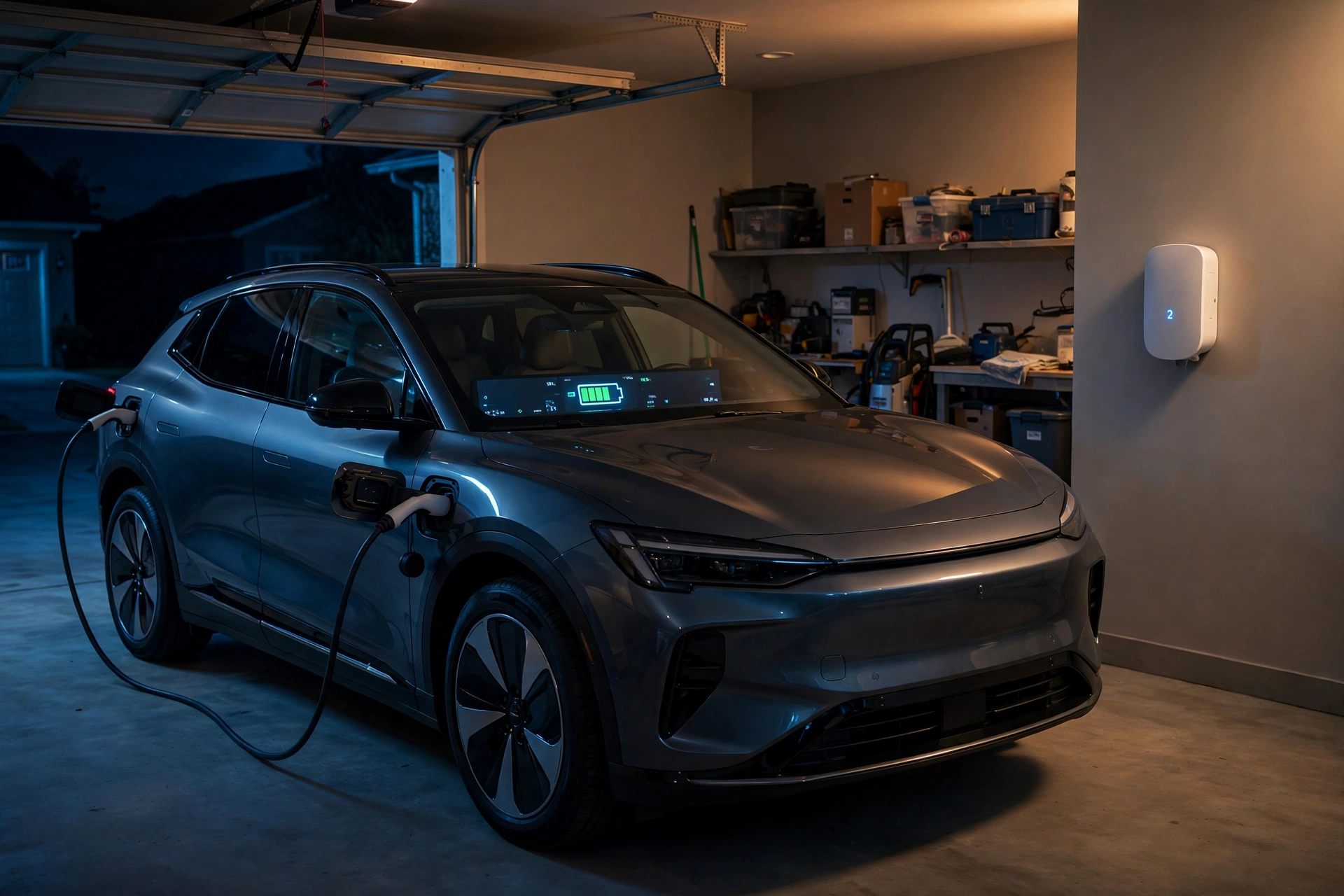
Which EVs Should Be Charged to 100%? The LFP Exception
Hyundai Dealer's $418 EV Charge Exposes Public Charger Loophole
Octopus Charge: One Free App, 211,000 EV Chargers
NIO Battery Swap: How It Works and Why It Scales in China