Key takeaways
- Baidu's Apollo Go completed over 7 million robotaxi rides in 2025, with ridership doubling every 15 months across Beijing, Wuhan, and Chongqing.
- XPeng's Pilot RoboTaxi fleet runs on modified G9 SUVs carrying 43 sensors each, 7 lidar units, 31 cameras, and 5 radars, processing over 8 terabytes of data an hour.
- Apollo Go's AI detects objects up to 200 metres out and predicts pedestrian movement with 97% accuracy, including unprotected left turns in dense traffic.
- China invested over $18 billion CAD in autonomous driving since 2020, while Canada approved just 12 autonomous-vehicle tests nationwide in all of 2025.
- Apollo Go logged a disengagement rate of one human intervention per 4,200 km in Q1 2026, roughly one per round-trip between Vancouver and Halifax.
Robotaxis are already ferrying passengers through the rain-slicked streets of Shenzhen. They're looping around Beijing's 6th Ring Road, handling chaotic merges on Guangzhou overpasses, and idling politely at crosswalks in Hangzhou. In downtown Phoenix, Waymo's silver Chrysler Pacificas with roof-mounted sensors ferry residents to dinner, to doctor appointments, even to airport drop-offs, no steering wheel, no human backup driver. Yet if you live in Toronto, Montreal, or Vancouver, the odds are you've never even seen one, let alone ridden in one. And if you're in most of Calgary or Halifax? You're more likely to spot a moose on the Trans-Canada than a robotaxi. The future isn't evenly distributed. It's clustered. Concentrated.
And it's skipping entire countries while embedding itself in others. You can watch videos of Nuro's delivery pods shuttling groceries in Houston. You can book a driverless ride in parts of San Francisco through Cruise, when they're allowed to operate. But roll up to a Tesla dealership in Mississauga and ask when you can buy a full self-driving robotaxi. " They've been saying that since 2016. The tech isn't the bottleneck anymore. It's regulation, infrastructure, public trust, and the cold economics of scale. The U.S. and Europe, let alone China. Meanwhile, XPeng just launched a refreshed MONA M03 that pulled in 10,000 orders in 37 minutes, 37 minutes, on launch night.
In Beijing, Baidu's Apollo Go robotaxi fleet completed over 7 million rides in 2025, a number that's doubling every 15 months. That's like giving a robot-driven ride to every person in British Columbia and Alberta combined, twice. But in Ottawa? You can't even charge your Nissan Leaf at a public station without fighting with a connector that doesn't quite fit. The disparity isn't just technological. It's cultural, political, and deeply geographical. And yet, robotaxis are already here. They're just not where you live.
The Robotaxi Revolution Is Happening in China, And It's Scaling Fast
If you want to understand where robotaxis are working right now, look at China. Not California. Not Munich. China. Cities like Shenzhen, Chongqing. And Wuhan aren't just testing autonomous vehicles, they're integrating them into daily life at a pace that makes North America look like it's stuck in first gear. Baidu's Apollo Go alone operates in over 10 major cities, with fully driverless services in Beijing, Wuhan, and Chongqing. In 2025 alone, Apollo Go surpassed 2 million rides across those cities, which is the equivalent of giving every resident of Ontario a robotaxi ride to and from work for a full week.
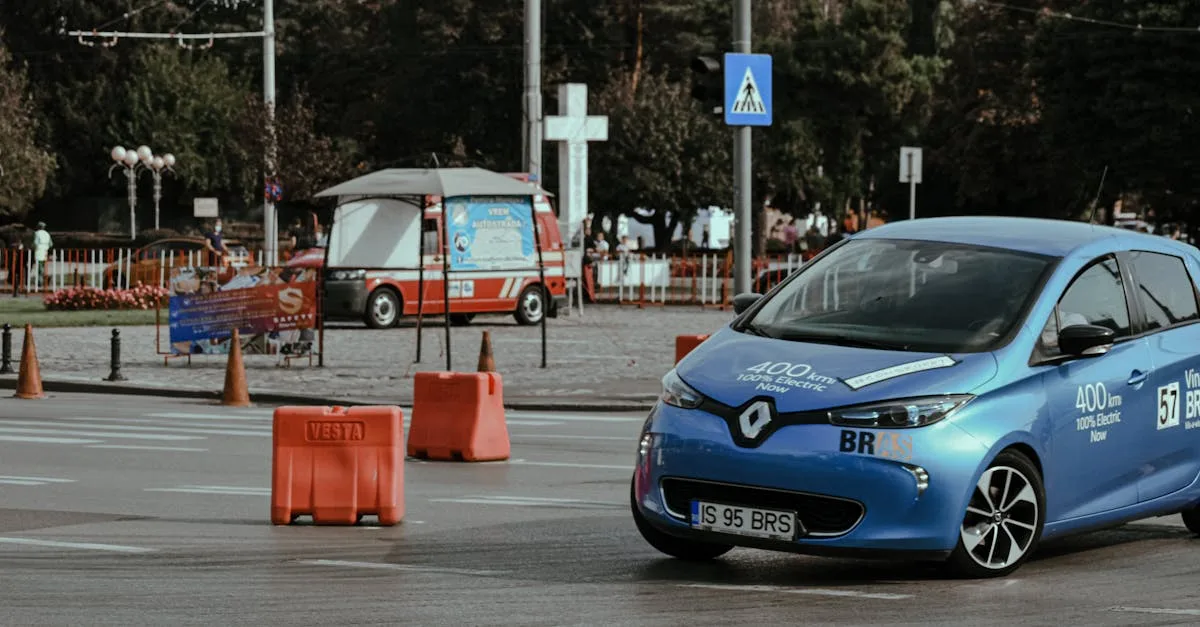
By the end of 2026, they're on track to surpass 15 million annual rides, a number that would require a fleet of over 20,000 vehicles running nearly 24/7. That's not a pilot program. That's a transportation system. And it's not just Baidu. XPeng's Pilot RoboTaxi service is expanding across Guangzhou and Shanghai, using a fleet of modified G9 SUVs equipped with 43 sensors, including 7 lidar units, 31 cameras. And 5 millimetre-wave radars. These aren't glorified test mules, they're production-intent vehicles built on the same line as customer cars, just with extra compute.
Each vehicle processes over 8 terabytes of data per hour, which is roughly the same amount of data the average Canadian household uses in 680 years of continuous 4K streaming. The AI stack can detect objects up to 200 metres away, predict pedestrian movement with 97% accuracy. And handle unprotected left turns in dense urban traffic, something most human drivers still struggle with. ai has launched commercial robotaxi services in both Beijing and Guangzhou, with plans to expand into Shenzhen and Hangzhou. They've partnered with Toyota to produce a custom autonomous vehicle based on the Lexus RX platform, which will be manufactured at a dedicated facility outside Guangzhou.
That factory alone is expected to produce 10,000 robotaxis per year by 2027, or one every 53 minutes of every working day. That's not a side project. That's a full-scale industrial push. And while Canada debates whether to allow electric school buses, China is building entire supply chains for autonomous mobility. The reason this is happening so fast in China comes down to three things: government support, urban density, and public acceptance. Chinese cities are designed for mass transit, not personal car ownership. A typical urban arterial in Shenzhen is just wide enough for two lanes and a bike path, yet carries over 12,000 vehicles per day. That kind of congestion makes robotaxis not just appealing, but necessary.
And the central government has made autonomous driving a national priority, with over $18 billion CAD in direct funding since 2020, or about $2,500 CAD per household in the country. That money goes toward building smart roads, subsidizing sensor development. And creating regulatory sandboxes where companies can test without waiting years for approval. Compare that to Canada, where Transport Canada still hasn't finalized federal rules for Level 4 autonomy. In 2025, only 12 autonomous vehicle tests were approved nationwide, most of them in closed facilities. That's fewer than the number of Tim Hortons in downtown Toronto. And while cities like Edmonton and Waterloo have dabbled in self-driving shuttles, they're limited to low-speed campus routes with human supervisors.
There's no commercial robotaxi service operating anywhere in Canada. Not one. Even pilot programs are stuck in planning phases, delayed by liability concerns, insurance frameworks, and interprovincial regulatory misalignment. But in China, the legal framework is already evolving. In Shenzhen, robotaxis are treated like any other commercial vehicle under the city's intelligent transport regulations. Under Shenzhen's regulations, robotaxis must carry at least 2 million CAD in liability insurance, which is comparable to what a taxi company pays in Vancouver. They're required to report all disengagements, moments when the AI hands control back to a human, but those numbers are dropping fast.
In Q1 2026, Apollo Go reported a disengagement rate of 1 incident per 4,200 km, which means a human only needs to intervene once every time you drive from Vancouver to Halifax and back. That's reliability. That's readiness. And the public is buying into it. In a 2025 survey of Beijing residents, 68% said they'd ridden a robotaxi at least once. And 41% said they preferred it over regular taxis. Apollo Go fares run around $0.10 CAD per km, which is slightly above UberX rates, but rider surveys indicate preference because they're smoother, more consistent. And less prone to aggressive driving. Passengers report fewer sudden stops, better lane discipline, and no arguing over routes. " That kind of trust doesn't come overnight. It comes from volume, repetition, and visibility.
Even the vehicle hardware is ahead. Most Chinese robotaxis use lidar from Hesai or RoboSense, both domestic manufacturers that now supply over 60% of global demand. These units cost as little as $300 USD each in bulk, down from $75,000 a decade ago, making them viable for mass deployment. Compare that to Canada, where even basic EV charging infrastructure is patchy. In Quebec, you can drive 500 km on the 401 without seeing a single 150 kW charger. In Shenzhen, every major intersection has a dedicated robotaxi pickup zone, marked with embedded LED lighting and RFID tags that communicate directly with the vehicle's navigation system. And then there's the energy side.
Most robotaxis in China run on EVs with CATL's Shenxing ultra-fast charging batteries, which can add 400 km of range in 10 minutes. That's like filling a gas tank in the time it takes to order a coffee. These vehicles spend less than 15% of their day charging, compared to 30–40% for early models. That efficiency is critical when you're running a fleet that needs to be profitable. In Beijing, Apollo Go vehicles average 18 rides per day, generating about $220 CAD in revenue each. After electricity, maintenance, and platform fees, that leaves a slim but growing margin. At scale, that's enough. " phase. " phase. And that gap is widening.
Tesla's declining sales may challenge Musk's vision of robotaxis, especially with 50,000 unsold EVs sitting in US lots as of early 2026, a backlog that could take six months to clear at current sales rates. But in China, XPeng, NIO, and BYD are selling every vehicle they can build, many of them destined for fleet use. The infrastructure, the regulatory framework, and the consumer demand are all aligned. The robotaxi revolution isn't coming. It's already here. It's just not in Canada.
Gear worth having
As an Amazon Associate, ThinkEV earns a small commission from qualifying purchases — at no extra cost to you.

Lectron Level 2 J1772 Charger (40A, WiFi)
Smart WiFi charger with real-time energy monitoring. 40A / 9.6 kW, J1772 with a NEMA 14-50 plug, schedule charging right from your phone.
As an Amazon Associate, ThinkEV earns from qualifying purchases — at no extra cost to you.
Waymo and Cruise: The U.S.
Bet on Driverless Taxis, But With Major Roadblocks

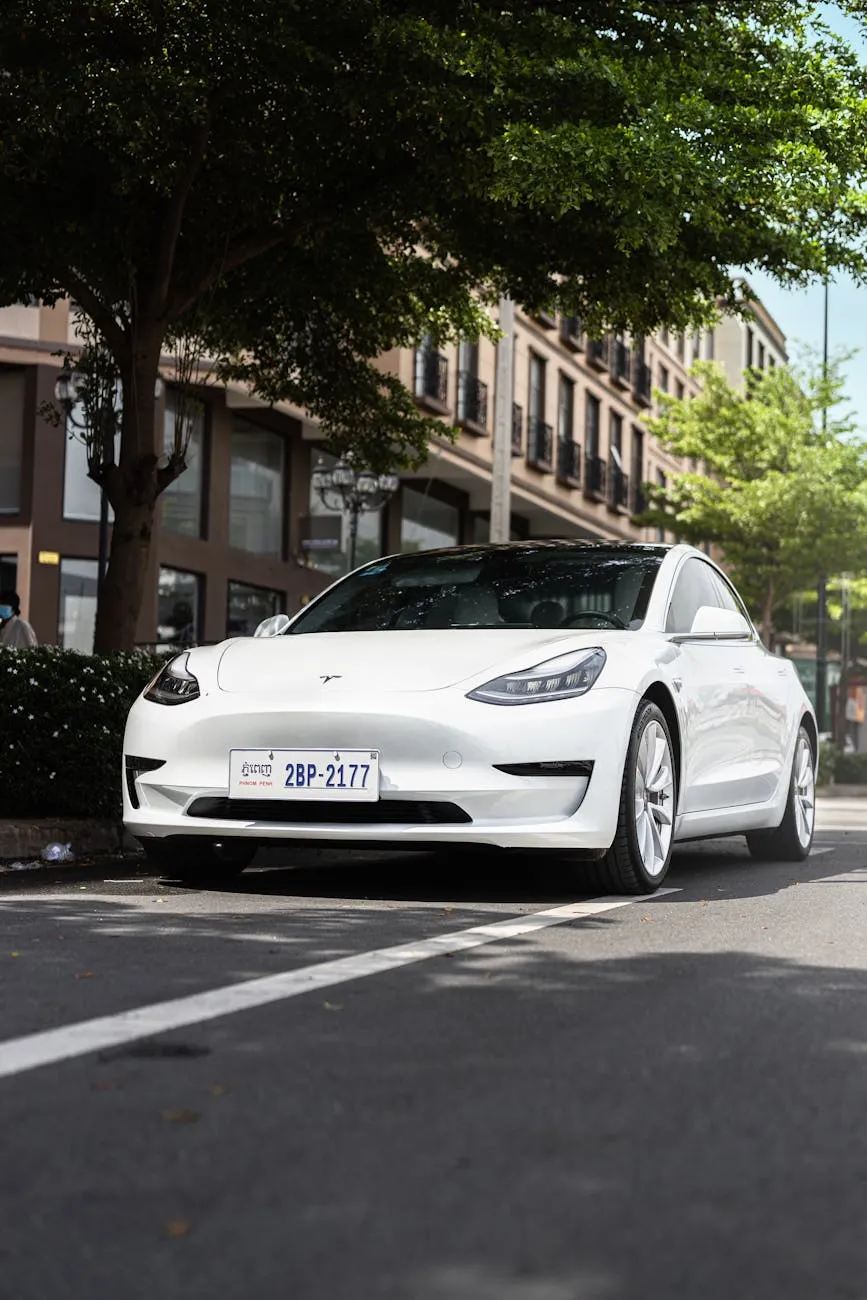
In the United States, the robotaxi dream isn't dead, it's just stuck in traffic. Waymo, owned by Alphabet, has made the most tangible progress outside of China. Since launching its fully driverless service in Phoenix in 2023, the company has expanded into San Francisco, Los Angeles, and Austin. As of April 2026, Waymo has completed over 8 million autonomous rides, a number that represents roughly one free round-trip flight from Toronto to Vancouver for every resident of Newfoundland and Labrador. Their fleet of Jaguar I-Pace and custom-built Waymo Origin vehicles operate without safety drivers in designated zones, handling everything from freeway merges to complex urban intersections. But even with that scale, the rollout has been uneven.
In San Francisco, where Waymo launched in 2024, the service was briefly suspended in late 2025 after a series of incidents involving double-parked vehicles and emergency response interference. One robotaxi was filmed blocking an ambulance on a residential street for 12 minutes, waiting for remote operators to assess the situation. That's longer than it takes to charge a typical EV from 20% to 80% on a 150 kW DC fast charger. The city responded by imposing stricter operating rules, including mandatory right-of-way protocols and real-time coordination with first responders. Waymo complied, but the delays slowed expansion plans. Cruise, backed by GM, has had an even rougher ride.
Once seen as the frontrunner, the company's driverless operations were suspended in San Francisco in late 2023 after a pedestrian was struck and dragged by a vehicle that failed to detect her. The incident, while rare, exposed critical flaws in sensor fusion and emergency response protocols. Regulators grounded the entire fleet for eight months. When limited operations resumed in mid-2024, the service was restricted to daylight hours and lower-speed zones. By 2026, Cruise was still operating fewer than 100 vehicles in San Francisco, compared to over 600 at its peak. That's not enough to make a dent in urban mobility. And expansion beyond California has been minimal.
In Phoenix, where conditions are ideal, wide roads, predictable weather, low population density, Waymo serves about 150 square kilometres, covering roughly half the metro area. That's comparable to the size of Ottawa's urban core, but with far fewer edge cases. In Austin, the service is limited to downtown and the University of Texas campus, an area about the size of downtown Vancouver. There's no presence in cities like Chicago, Miami, or Seattle, where weather, infrastructure, or regulatory hurdles make deployment harder. The fundamental issue is cost. Waymo's latest lidar and sensor suite costs around $75,000 USD per vehicle to install, even after years of downsizing and integration. That's more than the base price of a fully loaded Lucid Air Sapphire.
While the company expects that to drop to $15,000 by 2028, that timeline keeps robotaxis out of reach for mass deployment. The U.S. approach is largely private-sector driven. That means slower progress, more risk aversion, and greater reliance on venture capital. Which brings us to profitability, or the lack of it. 20 CAD per km, which is about 25% more than a traditional taxi in Toronto. The company loses money on every ride, banking on future scale and reduced hardware costs to turn a profit. But with only 100,000 active users across all markets, that scale is distant. For comparison, Uber Canada completed over 100 million rides in 2025. Waymo's entire North American volume is less than 1% of that.
Even if they double their fleet every year, it would take until 2030 to reach meaningful market share. And public trust remains fragile. A 2026 Pew Research survey found that only 38% of Americans would feel safe riding in a fully driverless taxi, down from 46% in 2023. The decline coincides with increased media coverage of malfunctions, vehicles stuck in intersections, misreading construction zones, or making erratic lane changes. In Houston, a Waymo vehicle was filmed driving the wrong way down a one-way street after misreading temporary signage, a mistake that would cost a human driver a $200 fine and two demerit points in Ontario. Regulatory fragmentation is another brake on progress. The U.S.
state sets its own rules for autonomous vehicles. California requires detailed disengagement reports, while Texas has almost no restrictions. Arizona, once a testing haven, tightened rules after a fatal pedestrian incident in 2018. This patchwork makes national scaling nearly impossible. A vehicle certified in Phoenix might not be legal to operate in Dallas, even though the drive between them takes less than a day. And then there's the human factor. In Phoenix, some residents have deliberately tested the AI, standing in front of robotaxis to see if they'll stop, blocking their path, even vandalizing sensors. One man was caught on video jumping into a Waymo's back seat and demanding a free ride.
The car locked the doors and called remote support, which took 17 minutes to respond. That's longer than a full charge on a Grizzl-e Level 2 charger at home. While these incidents are rare, they create headlines and erode confidence. The U.S. still has momentum. Waymo has partnered with Uber to integrate its rides into the Uber app, allowing users to request a robotaxi alongside human-driven options. In Phoenix, over 20% of Uber rides are now fulfilled by Waymo vehicles. That's a small number, but it's growing. The company is also testing freight delivery with its Origin vans, aiming to serve last-mile logistics in dense urban areas.
A single Origin van can carry the equivalent of 12 Amazon delivery packages, or about two weeks' worth of groceries for a family of four. But for Canada, the takeaway is clear: even in the most advanced North American markets, robotaxis are still a niche. They're not replacing personal car ownership. They're not even replacing ride-hailing. They're a supplemental option, limited by geography, cost, and regulation. The U.S. is struggling to scale, Canada, which lacks dedicated testing zones, has colder weather that affects sensor performance. And has lower population density, is even further behind.
Gear worth having
As an Amazon Associate, ThinkEV earns a small commission from qualifying purchases — at no extra cost to you.

Grizzl-E Classic Level 2 EV Charger (40A)
Canadian-made and rated for minus 40C winters. 40A / 9.6 kW, NEMA 14-50, indoor/outdoor, 24-ft cable. The charger built for Canadian weather.
As an Amazon Associate, ThinkEV earns from qualifying purchases — at no extra cost to you.
Tesla's Robotaxi Promise: Big Vision, Bigger Delays
Elon Musk has been promising a Tesla robotaxi since 2016. Back then, he said they'd be on the road by 2020. Then 2022. Then 2024. Tesla's U.S. inventory as of April 2026, a pileup that would stretch from Windsor to Niagara Falls if parked bumper-to-bumper, the company's ability to deliver on any new product is under serious doubt. U.S. sales at current levels, or enough vehicles to outfit every firefighter in Ontario with a Model Y. It's a sign of weakening demand, shifting consumer preferences. And growing competition, not the kind of foundation you build a robotaxi empire on.
Musk's vision has always been audacious: a fleet of autonomous Teslas that drive themselves to pick up passengers, earn their owners money while parked. And eventually eliminate the need for car ownership altogether. The idea hinges on Full Self-Driving (FSD) software reaching Level 4 autonomy, where the vehicle can handle all driving tasks in most conditions without human intervention. But as of 2026, FSD is still classified as Level 2, meaning it requires constant driver supervision. Tesla's own data shows that drivers must intervene once every 27 minutes on average when using FSD on highways, which is about as often as a coffee machine in a busy Tim Hortons needs refilling. That's not autonomy. That's advanced cruise control.
And the delays keep mounting. In 2023, Tesla announced a dedicated robotaxi vehicle, promising a sleek, low-cost pod with no steering wheel or pedals. The target launch date was 2024. Then it was pushed to 2025. Now, sources inside the company suggest it won't debut until late 2027, if at all. The reason? Tesla's prioritization of the Cybertruck over the Semi, and now, apparently, over the robotaxi, has drained engineering resources. The Cybertruck, while , has been a commercial disappointment, with build quality issues, high repair costs. And a starting price of $75,000 CAD that puts it out of reach for most buyers. Delivering 50,000 units in 2025 was ambitious. Hitting 75,000 in 2026 seems unlikely.
Meanwhile, the robotaxi project lacks a clear hardware path. Tesla's current vehicles use cameras and AI processing, skipping lidar, a choice that saves cost but limits reliability in low-visibility conditions. Snow, fog, and heavy rain, common across Canada for half the year, degrade camera performance significantly. A Model 3 driving from Montreal to Quebec City in a January blizzard would struggle to see lane markings, let alone interpret complex intersections. Lidar, used by Waymo, Baidu. And most serious autonomous developers, works in all weather, but Tesla has refused to adopt it, betting that pure vision will eventually catch up. That's a high-stakes gamble. And the software isn't getting there fast enough.
Tesla's FSD v13, released in early 2026, reduced disengagements by 40% compared to v12, which sounds impressive until you realise it still requires driver input once every 19 minutes on city streets. That's like needing to correct your GPS every time you pass two traffic lights. Training the AI requires billions of real-world miles. And while Tesla's fleet has logged over 15 billion autonomous miles globally, equivalent to circling the Earth 375,000 times, the quality of that data is debated. Much of it comes from drivers who are only using Autopilot on highways, not navigating dense urban environments. Worse, Tesla's data advantage is shrinking. Chinese rivals like XPeng and NIO now collect similar volumes of driving data from their fleets.
And they're using it to train more sophisticated models. XPeng's XNGP system, for example, can handle 98% of driving scenarios in Guangzhou without intervention, compared to Tesla's 82% in comparable cities. That gap is closing fast. And unlike Tesla, these companies are building robotaxis from the ground up, not retrofitting consumer vehicles. Then there's the business model. Musk has said the robotaxi will cost less than $30,000 USD. But no one inside or outside the company believes that's possible with current technology. Even if Tesla achieves $15,000 in hardware costs, down from $75,000 today, the software, maintenance, and insurance will push total ownership higher. And the revenue projections are optimistic.
Tesla claims a robotaxi could earn $30,000 CAD per year for its owner, but that assumes 12 hours of daily operation, 90% uptime. And no major repairs. In reality, EVs used for ride-hailing average one major repair every 60,000 km, which for a robotaxi is less than a year of hard use. A single battery replacement costs $15,000 CAD, wiping out two years of earnings. And who will own these vehicles? In China, robotaxis are company-owned fleets, not personal assets. That makes maintenance, updates, and liability easier to manage. Tesla's vision of a decentralized network of owner-operated robotaxis introduces massive complexity. How do you ensure every vehicle is clean, charged, and software-up-to-date?
How do you handle insurance claims when a car is driving itself? Canada's insurance industry isn't ready for that. In Ontario, accident benefits are tied to drivers, not vehicles. Without a legal framework for autonomous liability, the whole model collapses. Worse, Tesla's brand is losing its edge. Once seen as the innovator, it's now viewed by many as stagnant. The Model 3, launched in 2017, still hasn't received a full redesign. Competitors like Hyundai's Ioniq 5 and BYD's Seal offer faster charging, better interiors, and more advanced driver aids. In Quebec, Tesla's market share dropped from 42% in 2022 to 28% in 2025, replaced by Korean and Chinese imports. The U.S.
imposing new tariffs on Chinese EVs, Canadian buyers are turning to European and Asian brands instead. Tesla's declining sales may challenge Musk's vision of robotaxis, but the deeper issue is credibility. The company has cried "full autonomy" too many times. Investors are growing impatient. Employees are leaving. And while Musk talks about a robotaxi ing in 2027, the real question is whether anyone will still be listening.
Why Canada Isn't Ready for Robotaxis, And What It Would Take
Canada isn't just behind on robotaxis. It's structurally unprepared. The conditions that make autonomous driving viable, dense urban cores, supportive regulation, extreme weather resilience. And public charging infrastructure, are either underdeveloped or actively conflicting. Take Toronto, Canada's largest city. Its downtown core covers about 70 square kilometres, or roughly a quarter the size of Beijing's urban area. But it's surrounded by sprawling suburbs, winding country roads, and unpredictable winter conditions that can turn highways into skating rinks overnight. A robotaxi that works in Phoenix would be crippled here by January. Weather is the most obvious barrier. Most autonomous systems rely on cameras, radar, and lidar to perceive the world.
Snow, ice, and slush can obscure lane markings, coat sensors, and reflect lidar beams unpredictably. In a 2025 test by the University of Waterloo, a Level 4 prototype failed to detect a pedestrian in a snowstorm at distances under 30 metres, about the length of a city bus. That's not safe. And while companies like Baidu have started testing in Harbin, where winter temperatures drop to -30°C, Canada lacks equivalent test beds. There's no dedicated autonomous vehicle proving ground in northern Ontario or the Prairies where these systems can be stress-tested. Then there's infrastructure. In Vancouver, only 42% of residents have access to off-street parking, which makes home charging difficult.
And where should I go for a road trip in an EV? Try a weekend in Muskoka with a robotaxi. You can't. There are no charging stations on Highway 11 north of Gravenhurst that support 150 kW+ fast charging. The nearest reliable network is over 150 km away. Robotaxis need constant access to power, and without a dense, reliable charging grid, they can't operate. In China, every major highway has charging every 50 km. In Canada, you're lucky to find one every 100 km, and half of them don't work. And where to install an EV charger at home? " Many buildings lack the electrical capacity. And strata councils resist upgrades.
A Level 2 charger like the Lectron Portable Level 2 adds about 40 km of range per hour, which is enough for daily use. But only if you can install it. In Vancouver, 60% of residents live in multi-unit buildings without private parking. That's not a minor inconvenience. It's a systemic barrier to electrification, let alone autonomy. Regulation is another roadblock. Transport Canada has no federal framework for Level 4 autonomy. Each province sets its own rules, and none allow fully driverless vehicles on public roads. Ontario's Automated Vehicle Pilot Program, launched in 2021, is limited to research and testing with safety drivers present.
As of 2026, only 12 autonomous vehicles have been approved for testing in the entire country, fewer than the number of snowplows in Ottawa. Compare that to California, which has licensed over 700 autonomous test vehicles. Insurance is another missing piece. In Canada, auto insurance is provincial, and no province has adapted its policies for driverless vehicles. Who's liable when a robotaxi hits a cyclist? The manufacturer? The software provider? The fleet operator? Without clarity, companies won't deploy. And municipalities won't permit it. In Montreal, city planners say they'd need at least three years of safety data before allowing commercial robotaxi services, even in a limited zone. But it's not all doom. There are pockets of progress.
The University of Waterloo and the Ontario Centre of Innovation have launched a $25 million CAD initiative to test connected and autonomous vehicles in real-world conditions. The test site, near Stratford, includes a mock urban intersection, highway segment, and weather simulation chamber. It's small, less than 2 square km, but it's a start. And companies like Motional and LoktraLab are running low-speed autonomous shuttles in controlled environments, like the one at Edmonton's Century Park LRT station. Still, the scale is nowhere near what's needed. To build a viable robotaxi ecosystem, Canada would need to invest at least $2 billion CAD in smart infrastructure, harmonize regulations across provinces. And create incentives for fleet deployment.
That's equivalent to building two new Canada Line extensions in Vancouver. It's possible, but only with political will. And public acceptance matters. A 2026 survey by the Canadian Automobile Association found that only 29% of Canadians would ride in a fully driverless vehicle, with trust lowest in Atlantic Canada and highest in British Columbia. That's not a launch-ready market. But with better education, pilot programs, and visible safety records, that number could rise. The key is starting small: designated zones in downtown cores, low-speed shuttles in transit deserts, or airport-to-hotel loops in cities like Calgary or Winnipeg. Canada doesn't need to catch up to China overnight. But it can't afford to wait.
The longer it delays, the more it cedes control to foreign companies. If robotaxis do arrive, they'll be American or Chinese platforms operating under foreign rules, with data flowing to servers outside Canadian jurisdiction. That's not just an economic issue. It's a sovereignty issue.
Gear worth having
As an Amazon Associate, ThinkEV earns a small commission from qualifying purchases — at no extra cost to you.

Portable Level 2 EV Charger (40A, NEMA 14-50)
Throw it in the trunk and charge anywhere with a 240V outlet. 40A portable with NEMA 14-50 plug. Your road-trip insurance policy.
As an Amazon Associate, ThinkEV earns from qualifying purchases — at no extra cost to you.
The Real Bottleneck Isn't Technology, It's Trust, Policy, and Infrastructure
Looking at the technology for robotaxis exists. It's been proven in Beijing, Phoenix, and Shenzhen. The AI can drive. The sensors can see. The software can adapt. But none of that matters if the system around it isn't ready. The real bottleneck isn't engineering. It's trust, policy, and infrastructure, the soft foundations that determine whether a technology spreads or stalls. Take trust. In China, people ride robotaxis because they've seen them work. They pass them on the street. They hear coworkers talk about them. They see the government backing them. In Canada, the default assumption is still that autonomous vehicles are dangerous.
A single incident, a crash, a malfunction, a viral video of a car stuck in a roundabout, could set back adoption by years. And it wouldn't take much. A robotaxi failing to stop for a school bus in a snowstorm, even if it's a one-off, would dominate the news cycle. That's the asymmetry of risk: one failure erases a thousand successful rides. Policy is just as critical. In China, the state owns the roads, sets the standards, and funds the innovation. In Canada, responsibility is split between federal, provincial, and municipal governments, each with different priorities. Transport Canada regulates vehicle safety, but provinces control licensing, insurance, and road rules. Cities manage curbside access, parking, and traffic signals.
No one is in charge of autonomy. There's no interprovincial task force, no national testing corridor, no unified data standard. Without that, progress is fragmented and slow. And infrastructure? It's the silent killer of innovation. A robotaxi is only as good as the network it runs on. It needs reliable charging, continuous connectivity, high-definition maps, and smart traffic signals. In Canada, 5G coverage is spotty outside major cities. HD maps are outdated. Many charging stations are offline or incompatible. A robotaxi trying to from Kitchener to Guelph might lose signal in the rural stretch between them, forcing a disengagement. That's not autonomy. That's frustration. Even the EV supply chain is underdeveloped.
If you're asking where to buy a CATL battery or sodium-ion battery, the answer is: you can't. Not easily. These components are sold in bulk to automakers, not consumers. And while CATL's Shenxing batteries are powering robotaxis in China, Canada has no domestic production. We import the tech, use it, then discard it. Same with heat pump ev efficiency adjustment systems, critical for winter performance, but rarely discussed in Canadian EV conversations. A heat pump can improve winter range by up to 20%, which for a 400 km EV means an extra 80 km, the difference between making it home and being stranded. But most buyers don't know that. The path forward isn't about waiting for a breakthrough.
It's about building the ecosystem. Start with pilot zones in Toronto, Vancouver, and Montreal, small, controlled areas where robotaxis can operate safely. Fund them with public-private partnerships. Use them to collect data, build trust, and refine regulations. Then expand. Treat it like the rollout of 5G or high-speed rail: strategic, phased, and nationally coordinated. And support the enablers. Home charging is the first step. Where to install an ev charger at home? In the garage, yes, but also in apartment basements, condo lots, and municipal parking garages. Subsidize installations. Streamline permits. Make it as easy as installing a new dishwasher. Programs like Grizzl-e Level 2 can help, but they need broader adoption.
The future of mobility isn't just about who builds the best AI. It's about who builds the best system. And right now, Canada isn't in the race. But it could be.
Gear worth having
As an Amazon Associate, ThinkEV earns a small commission from qualifying purchases — at no extra cost to you.

PULIDIKI Car Cleaning Gel (Detailing Putty)
Press it into vents, buttons, and seams and it lifts out dust you did not know was there. Weirdly satisfying, genuinely useful.
As an Amazon Associate, ThinkEV earns from qualifying purchases — at no extra cost to you.
Related Reading
Gear worth having
As an Amazon Associate, ThinkEV earns a small commission from qualifying purchases — at no extra cost to you.

WixGear Magnetic Air Vent Phone Mount (2-Pack)
A magnet strong enough that your phone never flinches over potholes or rail crossings. Two in the box, one for each car.
As an Amazon Associate, ThinkEV earns from qualifying purchases — at no extra cost to you.

Founder & Chief Editor
Vlad Pereira is the founder and chief editor of ThinkEV.ca, the Canadian electric-vehicle publication he writes and edits from Courtenay, British Columbia. He covers EV pricing, federal and provincial rebates, charging costs, and the Chinese manufacturers now entering Canada, from the buyer's side rather than the press-fleet side. ThinkEV is a venture of Vlad Pereira Online; his writing on health, income and the long game lives at vladpereira.com.
Frequently asked questions
Frequently Asked Question
Where can I buy a sodium-ion battery for my EV?
How do heat pumps improve EV efficiency in cold weather?
Where are Lucid Motors vehicles made?
Can I install a Level 2 EV charger in an apartment?
More EV & road-trip finds
Affordable upgrades worth a look — tap any to check the price on Amazon.
 ★ 546
★ 546Funny Headrest Face Covers (2-Pack)
View on Amazon ★ 12,396
K KNODEL Car Trash Can with Lid
View on Amazon ★ 15,014
Spigen Tempered Glass for Tesla Model 3/Y
View on Amazon ★ 119
★ 119Foldable Waterproof Trunk Organizer
View on Amazon ★ 392
★ 392Large Cup Holder Adapter (32-40oz)
View on Amazon ★ 47,507
HOMEXCEL Microfiber Cloths (12-Pack)
View on Amazon ★ 537
★ 537USB Star Projector Roof Light
View on Amazon ★ 4,055
6-Speed Manual Shift Knob Display
View on AmazonRead, Plan, Then Stay Current
Explore our expert articles to understand incentives and ownership costs, use the map to pressure-test charging reality, then subscribe so new EV coverage comes straight to you.
Continue Reading
Tesla Cybercab Launch Draws NHTSA Probe, Stock Slide
Tesla Cybercab Employee Rides: A Parking-Lot Shuttle
Tesla Cybercab Specs Confirmed by EPA, Autonomy Still Missing
Tesla's 1,000 Texas Robotaxis: Where the Count Sits
Rivian R2 Canada Price: $66,500 Base Misses the Rebate