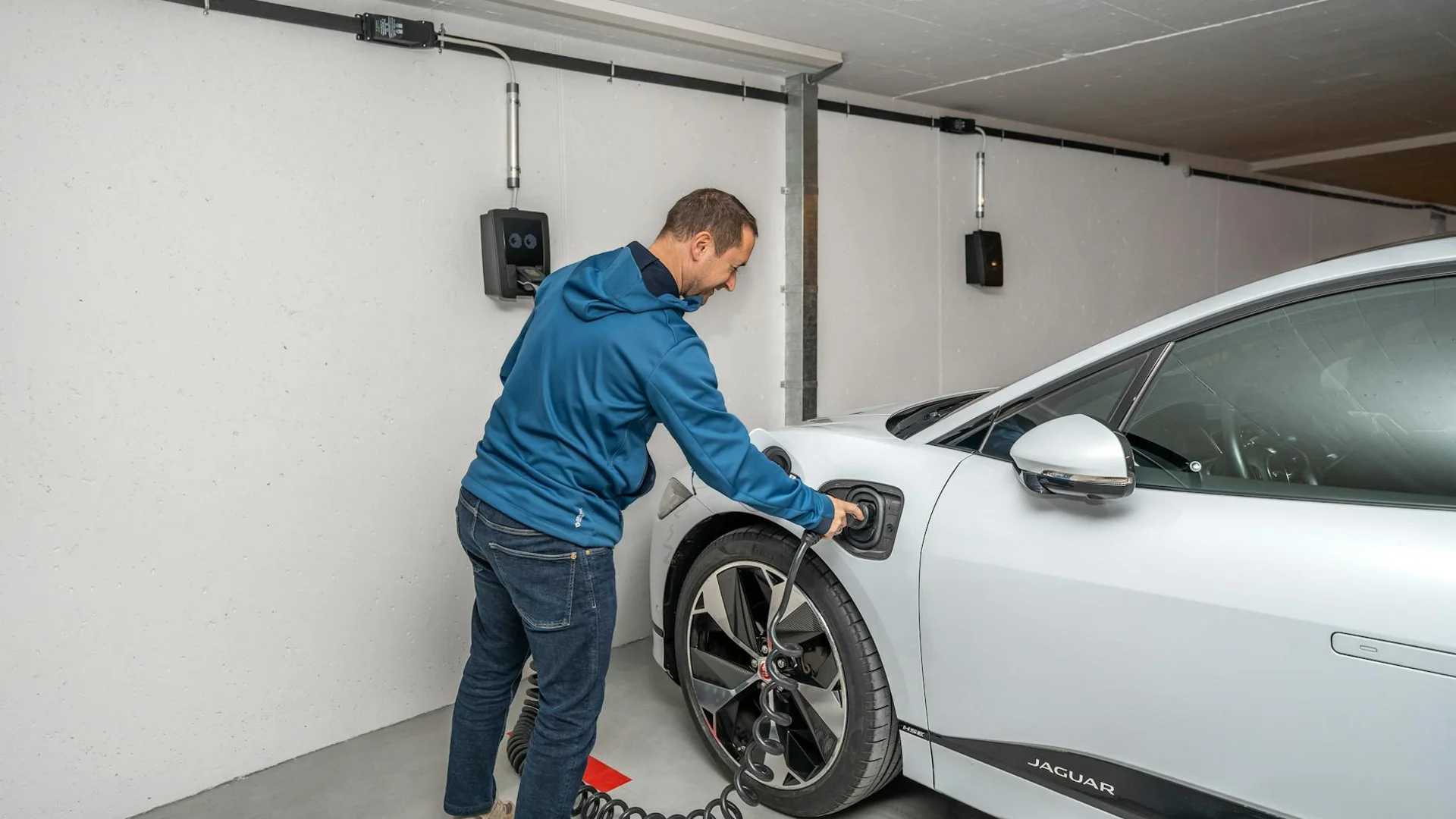
A "12 bars" reading on a Leaf dashboard and a fault code on a Model 3 sound like the same problem. They almost never are. The pack-replacement figure that gets quoted, $15,000 to $30,000, sometimes $38,000 on a Hummer EV, is the ceiling, not the median, and most EVs that trigger a battery warning never reach it. New research from the EV battery-tracking startup Recurrent shows that modern EV batteries are extremely unlikely to fail, and the technology has only gotten more reliable over time. The number that matters for a Canadian buyer looking at a five-year-old EV is not the OEM replacement quote. It is the module-repair cost, the warranty clock, and the chemistry on the label.
Here is the pick, up front: before you authorize any full-pack replacement, get a module-level diagnosis. In most cases the pack does not need to leave the car, and the bill lands closer to $3,000 than $30,000.
Key takeaways
- Before authorizing any replacement, a module-level diagnosis typically lands the bill at $3,000 not $30,000.
- A 2019 Bolt with a 2022 recall pack carries a fresh warranty until 2030, a used-market detail worth checking.
- The 70% capacity clause means a pack at 71% is in-spec even if it ruins your Vancouver-to-Kelowna trip.
- LFP packs degrade at 1–1.5% per year versus 2–3% for NMC, the most underpriced variable in Canadian used-EV pricing.
- BMS firmware glitches can throw the same warning as a dead module; a scan tool sorts it out in an afternoon.
What "Battery Failure" Actually Means in Practice
An EV pack is not one battery. It is a stack of modules, each holding a cluster of cells, all managed by a battery management system (BMS) that decides what the driver sees on the dashboard. "Battery failure" collapses four very different faults into one scary phrase.
Cell degradation is the slow one, the pack gradually holds less energy year over year. NMC chemistries typically lose 2–3% capacity per year under normal use; LFP packs closer to 1–1.5%. This is not a failure. It is the warranty's assumed operating condition.
Module failure is the common expensive one. One or two of the pack's modules develop a fault, a bad weld, a dead cell group, a thermal-sensor problem, and the BMS derates the whole pack to protect it. The driver sees reduced range, a check-battery light, or a "12-bar" health readout. The pack is fine. One component inside it is not.
BMS faults are the misdiagnosed ones. A firmware glitch or a sensor error can throw the same warning as a dead module without any cell being unhealthy. A scan tool sorts this out in an afternoon.
Thermal events, fire, crush damage, coolant intrusion, are the only failure mode that genuinely kills a whole pack. They are also rare enough that fleet-level data barely registers them outside crash statistics.
Then there is the 12-volt auxiliary battery: a conventional lead-acid or AGM unit that runs the car's low-voltage electronics, dies every four to six years, and generates a large fraction of "EV won't start" complaints that have nothing to do with the traction pack. It is, technically, still a battery.
Gear worth having
As an Amazon Associate, ThinkEV earns a small commission from qualifying purchases — at no extra cost to you.

Qifutan Vent Phone Mount (Military-Grade Clip)
A rock-solid vent clip that holds even a big phone level on rough roads, then releases with one hand.
As an Amazon Associate, ThinkEV earns from qualifying purchases — at no extra cost to you.
Quick Answer: Repair, Remanufacture, or Replace?
Three paths, three price tiers, one decision rule.
Module swap. A shop opens the pack, replaces the failed module or two, reseals the housing, and recalibrates the BMS. Roughly eight hours of labour, $2,000–$4,000 CAD on a Bolt-class pack. This is the answer for the majority of single-fault failures and the option most drivers never hear about because dealers rarely lead with it.
Remanufactured pack. A third-party rebuilder, Greentec Auto in Canada, a growing bench of specialists in the US, tears down a used pack, tests every module, replaces the weak ones, and sells the result with its own warranty. Middle cost tier. Availability is thin outside major metros, which matters more in Prince George than it does in Mississauga.
Full OEM replacement. New pack, dealer install, factory warranty. $15,000–$30,000 CAD depending on chemistry and kWh; a GMC Hummer EV replacement can hit $38,000 because the pack is 200-plus kWh and structurally integrated. This is the number the headlines quote. It is also the option a diagnostician should recommend last, not first.
The decision rule is unglamorous and non-negotiable: get a module-level diagnosis before authorizing anything. A qualified shop can identify whether the fault is single-module, multi-module, or pack-wide within two hours. If a dealer's only offer is a full replacement without opening the pack, get a second opinion, the Canadian repair-and-parts landscape for imported EVs is thin enough that a phone call to an independent EV specialist can change the bill by an order of magnitude.
Warranty Coverage and What It Actually Guarantees
Every EV sold new in Canada carries a traction-battery warranty of at least 8 years or 160,000 km, whichever comes first. The federal minimum is a floor, not a ceiling, some manufacturers extend to 10 years or unlimited kilometres on select models.
The clause that trips people up is the capacity guarantee. Most warranties cover replacement only if the pack falls below a stated capacity threshold, typically 70% of original within the warranty period. A pack sitting at 71% is technically within spec even if the range loss is noticeable enough to change how you plan a Vancouver-to-Kelowna trip. This is the gap between what the warranty promises and what an owner experiences.
Recall replacements reset the clock. Chevrolet Bolt vehicles that received a recall battery replacement get a fresh 8-year/160,000 km warranty from the installation date of the new pack. This makes a post-recall Bolt one of the better used-EV warranty propositions on the market, a 2019 Bolt with a 2022 recall pack is effectively warranted on that pack until 2030. A used-market detail that changes how to read a used-EV warranty in Canada meaningfully if you know to check for it.
Gear worth having
As an Amazon Associate, ThinkEV earns a small commission from qualifying purchases — at no extra cost to you.

Lectron Level 2 J1772 Charger (40A, WiFi)
Smart WiFi charger with real-time energy monitoring. 40A / 9.6 kW, J1772 with a NEMA 14-50 plug, schedule charging right from your phone.
As an Amazon Associate, ThinkEV earns from qualifying purchases — at no extra cost to you.
EVAP-eligible vehicles carry the same federal warranty floor regardless of brand. What varies is the capacity threshold, the exclusions, and whether third-party repair voids coverage. Check the actual owner's manual, not the sales sheet, the capacity number is usually buried in the powertrain warranty section, and it is the single most important line item to verify before signing.
Gear worth having
As an Amazon Associate, ThinkEV earns a small commission from qualifying purchases — at no extra cost to you.

RGB Car Interior LED Strip Light
A 24-LED strip that tucks under the dash and washes the footwells in any color. Five-minute upgrade, big mood shift.
As an Amazon Associate, ThinkEV earns from qualifying purchases — at no extra cost to you.
Model-by-Model Cost Reality in Canada
Sticker-shock quotes vary wildly by model, chemistry, and year. Here is what the actual Canadian repair market looks like.
Nissan Leaf (24–40 kWh, older generations). A new replacement pack at a Nissan dealer runs approximately $8,500 CAD. Third-party module repair is often meaningfully cheaper if the failure traces to a single cell group, which, on early Leafs with passively cooled packs, it frequently does. The Leaf's thermal-management design is the root cause of its degradation reputation, not a defect in the cells themselves.
Chevrolet Bolt (60 kWh). Refurbished packs land at $5,000–$9,000 CAD in Canada; single-module repair at $2,000–$4,000. The recall population created a secondary market of tested pull packs that keeps refurbished pricing competitive.
Tesla Model 3 / NMC 75 kWh. A new dealer pack runs $12,000–$18,000. A Greentec-style refurbished-pack market is emerging in Canada, though supply is intermittent. Tesla's own service pricing has softened as the fleet has aged and third-party competition has grown.
LFP packs (BYD, base Model 3 RWD, base Model Y RWD). Lower replacement cost per kWh and slower degradation, roughly 1–1.5% per year versus 2–3% for NMC. This chemistry gap matters when you price long-term ownership on a used EV. An LFP pack seven years in typically has more usable life ahead of it than an NMC pack of the same age, and it costs less to replace when the day comes. The ongoing degradation gap between chemistries is the single most under-priced variable in the Canadian used-EV market right now.
GMC Hummer EV (outlier). Full pack replacement can reach $38,000 because the pack is enormous and structural. Insurance data suggests full battery replacements represent roughly 3% of all EV insurance claims across the fleet, the Hummer's number is real but the frequency is not.
Gear worth having
As an Amazon Associate, ThinkEV earns a small commission from qualifying purchases — at no extra cost to you.

Grizzl-E Classic Level 2 EV Charger (40A)
Canadian-made and rated for minus 40C winters. 40A / 9.6 kW, NEMA 14-50, indoor/outdoor, 24-ft cable. The charger built for Canadian weather.
As an Amazon Associate, ThinkEV earns from qualifying purchases — at no extra cost to you.
How to Read Failure Risk Before It Costs You
The catastrophic-failure narrative around EV batteries is not supported by the fleet data. It is supported by anecdotes, by early-Leaf horror stories from the passively-cooled era, and by a headline economy that prefers $30,000 numbers to $3,000 ones.
Recurrent's tracking of the modern EV fleet finds that only about 1.5% of vehicles built after 2016 have needed a pack replacement. Gen-1 EVs, the pre-2016 cohort with early thermal management and first-generation chemistries, saw a meaningfully higher rate, which is exactly what you would expect from a technology in its first production decade. Liz Najman, Recurrent's director of market insights, has put the finding plainly: it is very rare that you will need to get a battery replaced.
Geotab's analysis of 22,700 electric vehicles found that modern EV batteries retain an average of 81.6% capacity after 8 years, and only 0.3% of batteries in vehicles built after 2022 have needed replacement. Those are fleet numbers, not marketing numbers, drawn from telematics on working commercial vehicles that get used hard.
For Tesla owners and used-Tesla shoppers, there is a specific early-warning signal worth knowing about. Tesla packs that later failed already scored abnormally in ordinary charging data roughly 90 days before replacement, the anomalies are visible in third-party battery-health apps that read the car's own logs. This is not diagnostic-grade evidence, but it flips the question from "will the pack die without warning" to "is the pack showing charging behaviour a diagnostician should look at". Two very different problems.
If you are shopping a used EV, ask for a state-of-health (SoH) report, not just the dashboard range estimate. The two numbers diverge on degraded packs, dashboard range is smoothed by the BMS and updated slowly; SoH pulled from the pack itself is the number. A dealer who refuses to provide SoH on request is telling you something.
The longer arc is friendlier still. BloombergNEF projects battery pack costs to fall below $100 USD per kWh by 2027, reducing replacement costs an additional 20–30% from 2026 levels. A buyer picking up a used 2022 EV today is looking at replacement economics in the mid-2030s that will look nothing like the quotes currently circulating on Reddit. The pack-swap number that scares people out of the used-EV market is a 2020 number applied to a 2030 problem.
The number to watch on your own car is not the range estimate. It is the state-of-health readout, checked once a year, kept in a note somewhere. If it drops more than a few percentage points in a single year, that is when a diagnostician earns their fee. The rest is a slow, well-characterized curve, and by 2027, a cheaper one.
Gear worth having
As an Amazon Associate, ThinkEV earns a small commission from qualifying purchases — at no extra cost to you.

TP-Link Kasa Smart Plug with Energy Monitoring
Track exactly how much electricity your Level 1 charger uses and schedule it for off-peak hours. Know your real cost per kWh.
As an Amazon Associate, ThinkEV earns from qualifying purchases — at no extra cost to you.

Founder & Chief Editor
Vlad Pereira is the founder and chief editor of ThinkEV.ca, the Canadian electric-vehicle publication he writes and edits from Courtenay, British Columbia. He covers EV pricing, federal and provincial rebates, charging costs, and the Chinese manufacturers now entering Canada, from the buyer's side rather than the press-fleet side. ThinkEV is a venture of Vlad Pereira Online; his writing on health, income and the long game lives at vladpereira.com.
Frequently asked questions
Does a used Bolt with a recall pack get a fresh warranty?
Can a third-party shop repair my pack without voiding warranty?
What does a battery warranty actually guarantee at 70% capacity?
Is LFP really cheaper to replace than NMC long-term?
How long does a module-level diagnosis actually take?
More EV & road-trip finds
Affordable upgrades worth a look — tap any to check the price on Amazon.
 ★ 55
★ 55LED Car Door Logo Projector Light
View on Amazon ★ 1,083
Crystal Push-Start Button Ring (2-Pack)
View on Amazon ★ 21,304
Car Headrest Hooks (4-Pack)
View on Amazon ★ 308
★ 308Coiled Lightning Car Cable for iPhone (2-Pack)
View on Amazon ★ 119
★ 119Foldable Waterproof Trunk Organizer
View on Amazon ★ 268
★ 268Anti-Slip Leather Steering Wheel Cover
View on Amazon ★ 96,686
PULIDIKI Car Cleaning Gel (Detailing Putty)
View on Amazon ★ 164
★ 164Solar-Powered LED Ambient Light
View on AmazonRead, Plan, Then Stay Current
Explore our expert articles to understand incentives and ownership costs, use the map to pressure-test charging reality, then subscribe so new EV coverage comes straight to you.
Continue Reading

EV Battery Degradation: What's Normal and How to Slow It

EREVs Explained: The Backup Engine Comeback for 2026
Level 1 vs Level 2 EV Charging: Which to Choose
What Driver-Assist Features Actually Do, and What They Don't
EV Charge Limits: NMC vs LFP and What Owners Miss