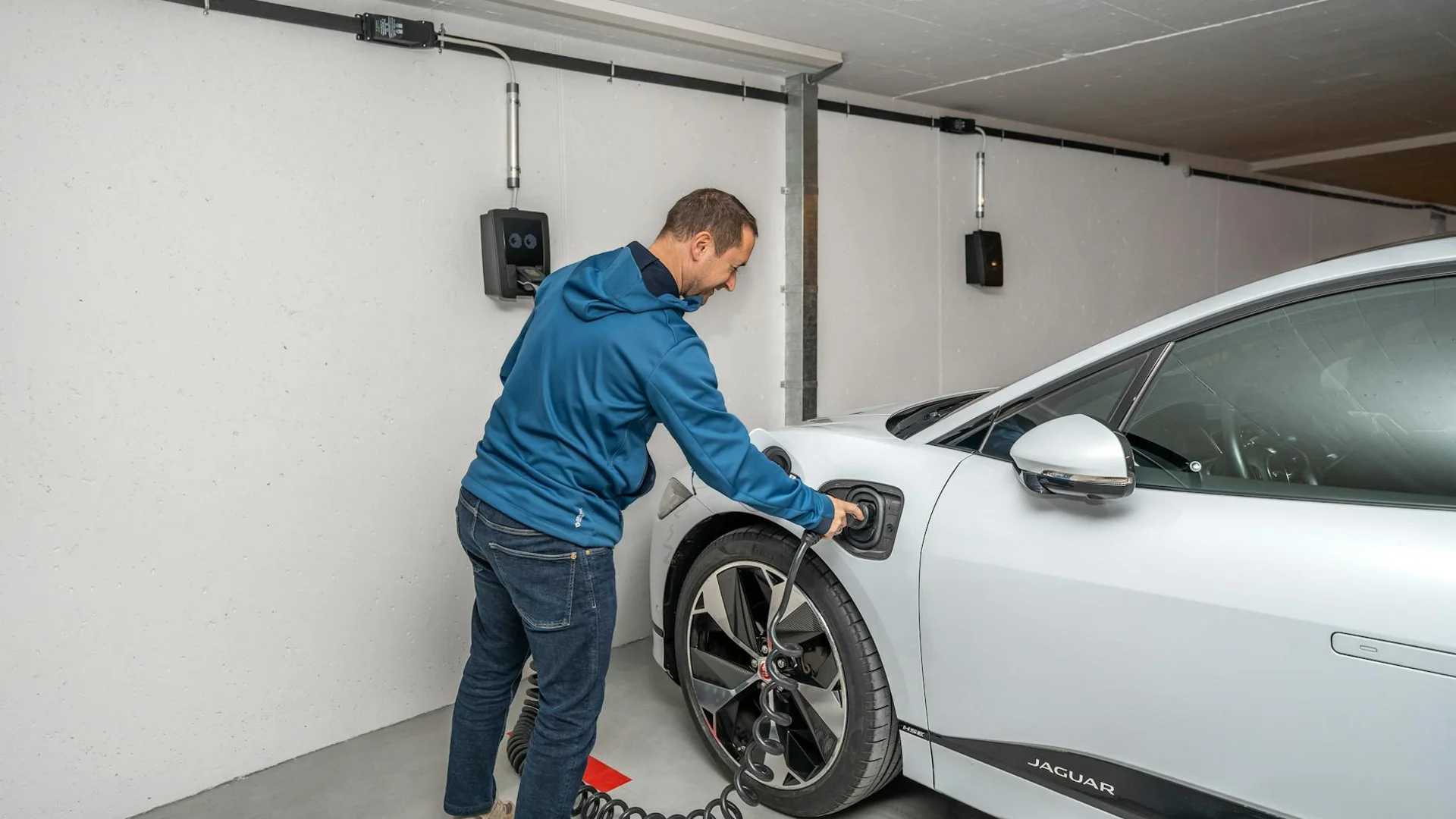
Ram's upcoming EREV pickup promises more than 500 miles of total range. The engine never touches the wheels. That is the entire pitch, and it is a stranger pitch than it sounds, a gasoline motor along for the ride, permitted to generate electricity and nothing else.
The category disappeared once already. The Chevy Volt shipped from 2010 to 2019 and then died quietly, buried by falling battery prices and the arrival of 300-mile BEVs that made the whole idea look redundant. It is back now because a specific slice of the market, pickups, rural drivers, tow rigs, never got the BEV that actually solves their problem. Sixteen range-extender vehicles are expected in the U.S. between 2026 and 2029, and Canada gets most of them by extension. This is the guide to what an EREV actually is, why the architecture came back, and whether one belongs in your driveway.
Key takeaways
- Sixteen range-extender vehicles are expected in the U.S. between 2026 and 2029, with Canada getting most by extension.
- The Chevy Volt pioneered the EREV format from 2010 to 2019 before falling battery prices killed it off.
- In an EREV, the gasoline engine never mechanically connects to the wheels, it only generates electricity.
- Canada's DC fast-charging gaps in Northern Ontario, BC interior, and the Prairies make EREVs genuinely practical over BEVs.
- An EREV charged nightly behaves like a near-BEV; never plugged in, it becomes a heavy, expensive gas vehicle.
Quick Answer: What an EREV Is and Isn't
An EREV is a battery electric vehicle with a gasoline generator on board. The generator recharges the battery or feeds the motors directly. It never mechanically drives the wheels. That single distinction separates it from every other electrified powertrain on the market.
The internal combustion engine has no mechanical link to the drivetrain; its sole job is to act as a portable generator to recharge the battery or provide power directly to the motors once the initial charge is depleted. Contrast this with a plug-in hybrid, where the engine and the electric motor both drive the wheels through a shared transmission. EREVs use a series configuration versus the parallel systems (or a combination of the two) in conventional PHEVs.
The practical consequence is that daily driving happens on the battery. Commutes, errands, the school run, all electric, all silent, all charged at home overnight. The engine wakes up when the battery drops on a long trip, and then it runs at whatever RPM makes electricity most efficiently, independent of how fast the vehicle is moving. The combustion engine can be sized to the vehicle's average power requirement rather than its peak demand, and can operate at or near its most efficient rotational speed, independent of vehicle speed or load.
The line has blurred. In practice, the boundary between PHEV and EREV designs has become less distinct as battery capacities have grown. Some vehicles marketed as PHEVs use primarily series-hybrid operation in everyday driving, while some EREVs allow limited direct engine contribution under specific high-load conditions. Marketing gets to call things what it likes. The engineering test is whether the engine can, under any condition, turn the wheels through a clutch.
Gear worth having
As an Amazon Associate, ThinkEV earns a small commission from qualifying purchases — at no extra cost to you.

Portable Level 2 EV Charger (40A, NEMA 14-50)
Throw it in the trunk and charge anywhere with a 240V outlet. 40A portable with NEMA 14-50 plug. Your road-trip insurance policy.
As an Amazon Associate, ThinkEV earns from qualifying purchases — at no extra cost to you.
Why the Architecture Disappeared and Why It's Back
General Motors got there first. The EREV is far from a new concept. General Motors' entry into the EV mass market was an EREV. The Volt ran for nine model years, earned a devoted owner base, and then vanished when GM decided battery costs had fallen far enough that a pure BEV made the range extender look like dead weight.
That call was correct for sedans. It was wrong for pickups, and the industry has spent the intervening five years quietly figuring that out. A BEV pickup rated at 400 miles unloaded returns something closer to 220 to 260 miles with a trailer behind it, and the DC fast-charging network outside urban corridors is not dense enough to make that a comfortable proposition. The buyer who tows a boat to a lake without a Level 3 charger for 200 kilometres in any direction is the buyer the industry lost. The EREV wins that buyer back.
The lineup arriving reflects that math. Extended-range electric vehicles are returning to the U.S., with pickups and SUVs from Ram, Scout, Jeep, Hyundai, and others launching from 2026 onward. The stated range numbers are ambitious. Launching in 2027, Extended Range EVs will utilize high-performance batteries and motors to deliver EV-like driving experiences with more than 600 miles (960 km) of range through optimized battery-engine integration. Six hundred miles is a marketing figure until an EPA sticker confirms it, but even a conservative haircut leaves the category well clear of BEV competition on long-distance capability.
China proved the formula works commercially. Li Auto built a premium SUV business almost entirely on EREVs, and BYD, Huawei-partnered AITO, and others followed. Chinese manufacturers moved so far in this direction that as extended-range electric vehicles pack ever larger batteries, the petrol engine under the hood has quietly shifted from a piece of engineering into a piece of psychology: a reassurance feature designed to calm range anxiety rather than burn much fuel. That is a useful way to think about the North American launches too. The engine is insurance. Most weeks, most owners will not use it.
If you want the deeper argument on why electric drivetrains are more efficient than the gasoline ones they carry as backup, the physics of electric motors versus gas engines makes the case in one number: 85 to 95 percent efficiency for the electric side, 20 to 40 percent for combustion.
The Honest Engineering Trade-Off
An EREV carries a generator, a fuel tank, an exhaust system, and the maintenance items that go with them. A BEV does not. That is real weight, real cost, and a real service line that will send you to a garage for oil changes long after your neighbours with pure electrics have forgotten what those are.
The counter is that when the generator does run, it runs well. A parallel PHEV asks its engine to accelerate a heavy vehicle from a stop, cruise at highway speeds, and idle in traffic, three wildly different operating conditions the engine has to compromise across. An EREV generator does one job at one RPM. Fuel economy in charge-sustaining mode is meaningfully better than a PHEV of comparable size, which is why the architecture keeps coming back despite the added parts count.
The case against the whole category is that BEVs are catching up fast. EVs with 400+ miles of range and advances in charging are eroding the case for EREVs and large-battery PHEVs. InsideEVs is reporting this from China specifically, where EREV market share is now shrinking against pure BEVs as fast-charging networks densify and battery costs continue to fall. That is a serious signal. Canada is not China, and the DC fast-charging network here is roughly a decade behind Shanghai's, but the direction of travel is not in doubt.
Gear worth having
As an Amazon Associate, ThinkEV earns a small commission from qualifying purchases — at no extra cost to you.

TP-Link Kasa Smart Plug with Energy Monitoring
Track exactly how much electricity your Level 1 charger uses and schedule it for off-peak hours. Know your real cost per kWh.
As an Amazon Associate, ThinkEV earns from qualifying purchases — at no extra cost to you.
The environmental math is honest too. Drivers can complete most everyday journeys electrically, but still have a backup energy source when charging options are limited or a trip becomes longer than expected. Like plug-in hybrids, they still use a combustion engine, so they are only better for the environment if drivers charge them often. An EREV plugged in nightly and driven mostly on battery is a near-BEV. An EREV bought as a status object, filled at the pump, and never plugged in is a heavy, expensive, inefficient gasoline vehicle. The buyer determines the outcome.
Gear worth having
As an Amazon Associate, ThinkEV earns a small commission from qualifying purchases — at no extra cost to you.

Grizzl-E Classic Level 2 EV Charger (40A)
Canadian-made and rated for minus 40C winters. 40A / 9.6 kW, NEMA 14-50, indoor/outdoor, 24-ft cable. The charger built for Canadian weather.
As an Amazon Associate, ThinkEV earns from qualifying purchases — at no extra cost to you.
The Canadian Context: Charging Gaps and Cold Math
Canada's fast-charging network is concentrated where the population is. The Windsor-to-Quebec City corridor, the Lower Mainland, the Calgary-Edmonton corridor, and the metro Halifax area all have credible DCFC density. Northern Ontario, the BC interior, most of the Prairies outside the two major cities, and much of Atlantic Canada do not. FLO and BC Hydro have built out aggressively along Highway 1 and the Trans-Canada, but a driver heading from Prince George to Fort Nelson, or from Sudbury to Thunder Bay, is still doing charging math that makes an EREV look sensible.
Winter compounds the argument. The CAA's sub-zero range testing across 14 EVs found losses ranging from 14 to 39 percent depending on the model, the temperature, and the drive cycle. A 400-mile BEV in a Manitoba January is a 280-mile BEV, and a 280-mile BEV towing a snowmobile trailer to a cabin is a 180-mile BEV. The EREV's generator makes that trip trivial. The BEV owner is doing spreadsheet work in a Tim Hortons parking lot.
On the rebate side, the current federal program is EVAP, launched February 2026, and the key eligibility rule is that a plug-in hybrid or EREV must have all-electric range at or above 50 km to qualify. Most of the announced EREV lineup clears that threshold with room, the Ram pickup targets more than 145 miles of AER, and Scout's Harvester variant is in a similar zone. The $50,000 final transaction cap will be the harder gate for full-size trucks; a loaded EREV pickup will land above it. EVAP pays up to $5,000 for qualifying vehicles.
Chinese EREVs are effectively locked out. Li Auto, AITO, and Huawei-partnered brands are the mature end of the segment globally, but they face Canada's 6.1% tariff inside a 49,000-unit quota, and China-built vehicles are excluded from EVAP on country-of-origin grounds. The broader picture on Chinese EV market access under the 2026 tariff regime sits alongside this one, the practical result is that the EREVs Canadians will actually buy will come from Detroit, Seoul, and eventually Volkswagen's Scout brand in Blythewood, South Carolina.
Gear worth having
As an Amazon Associate, ThinkEV earns a small commission from qualifying purchases — at no extra cost to you.

VEVOR Portable Level 2 EV Charger (32A)
A 240V portable charger you can keep in the trunk. 32A, NEMA 14-50, long cable. A reliable backup charger for travel and road trips.
As an Amazon Associate, ThinkEV earns from qualifying purchases — at no extra cost to you.
Who Should Actually Buy One (and Who Shouldn't)
The right buyer is easier to name than the wrong one. If your annual driving splits roughly 85 percent local and 15 percent long-haul, if you tow anything more than an empty utility trailer, if you live where the nearest DC fast charger is more than 100 kilometres away, or if you commute in a region that spends four months a year below freezing, the EREV solves problems the BEV does not. Rural households, contractors with job sites off the highway grid, and anyone whose current gasoline vehicle earns its keep on a boat launch or a hunting trip fit the profile.
The wrong buyer is the urban commuter with home charging and a second household vehicle for the occasional road trip. That driver is buying a generator they will use twice a year, paying for the weight and complexity every day, and giving up cargo volume to a fuel tank. A BEV, any BEV, and there are many good ones on the Canadian family EV shortlist, costs less to buy, less to run, and does the job. The EREV is not a hedge against inconvenience; it is a tool for a specific job.
Pricing is going to sting at launch. Expect EREV pickups to land $5,000 to $12,000 above equivalent BEV trims when they arrive, the range is a wide band because the two vehicles that anchor it, Ram's REV and Scout's Harvester, are still finalising specifications and Canadian MSRPs. That is an estimate, not a spec-sheet number, and it will move. The gap is likely to narrow by 2028 as production scales and the second wave of entrants pressures pricing. If you want a cheaper long-range electric that is on sale today, the Kia EV4 lands under $40,000 with over 500 km of range and answers most of the same questions without the extra hardware.
The residual-value question is the one I would not answer confidently. If BEV range and charging density both improve on the current trajectory, an EREV bought in 2027 could depreciate faster than a comparable BEV bought the same year, the market will re-rate the generator from useful hardware to expensive ballast. The bet is that Canadian charging infrastructure lags the vehicle side long enough for the EREV to keep its logic through the 2020s. That bet looks reasonable in the BC interior. It looks less reasonable in the GTA.
The number to watch is EVAP-eligible EREV registrations through 2027. If they clear 15 percent of the plug-in market, the category has found its buyer and the second wave of entrants will price accordingly. If they stall below 8 percent, the sceptics were right and the Volt's second death will look a lot like its first.
Gear worth having
As an Amazon Associate, ThinkEV earns a small commission from qualifying purchases — at no extra cost to you.

AstroAI Portable Tire Inflator
One tap, it inflates to your exact PSI then stops automatically. Low tires cost 5 to 10 percent of your range, so this pays for itself in a week.
As an Amazon Associate, ThinkEV earns from qualifying purchases — at no extra cost to you.

Founder & Chief Editor
Vlad Pereira is the founder and chief editor of ThinkEV.ca, the Canadian electric-vehicle publication he writes and edits from Courtenay, British Columbia. He covers EV pricing, federal and provincial rebates, charging costs, and the Chinese manufacturers now entering Canada, from the buyer's side rather than the press-fleet side. ThinkEV is a venture of Vlad Pereira Online; his writing on health, income and the long game lives at vladpereira.com.
Frequently asked questions
Can the gas engine ever drive the wheels directly?
Do EREVs still need oil changes like a regular gas vehicle?
Is towing range actually better than a comparable BEV pickup?
What happens if you never plug it in?
Are EREVs eligible for Canadian EV purchase incentives?
More EV & road-trip finds
Affordable upgrades worth a look — tap any to check the price on Amazon.
 ★ 1,340
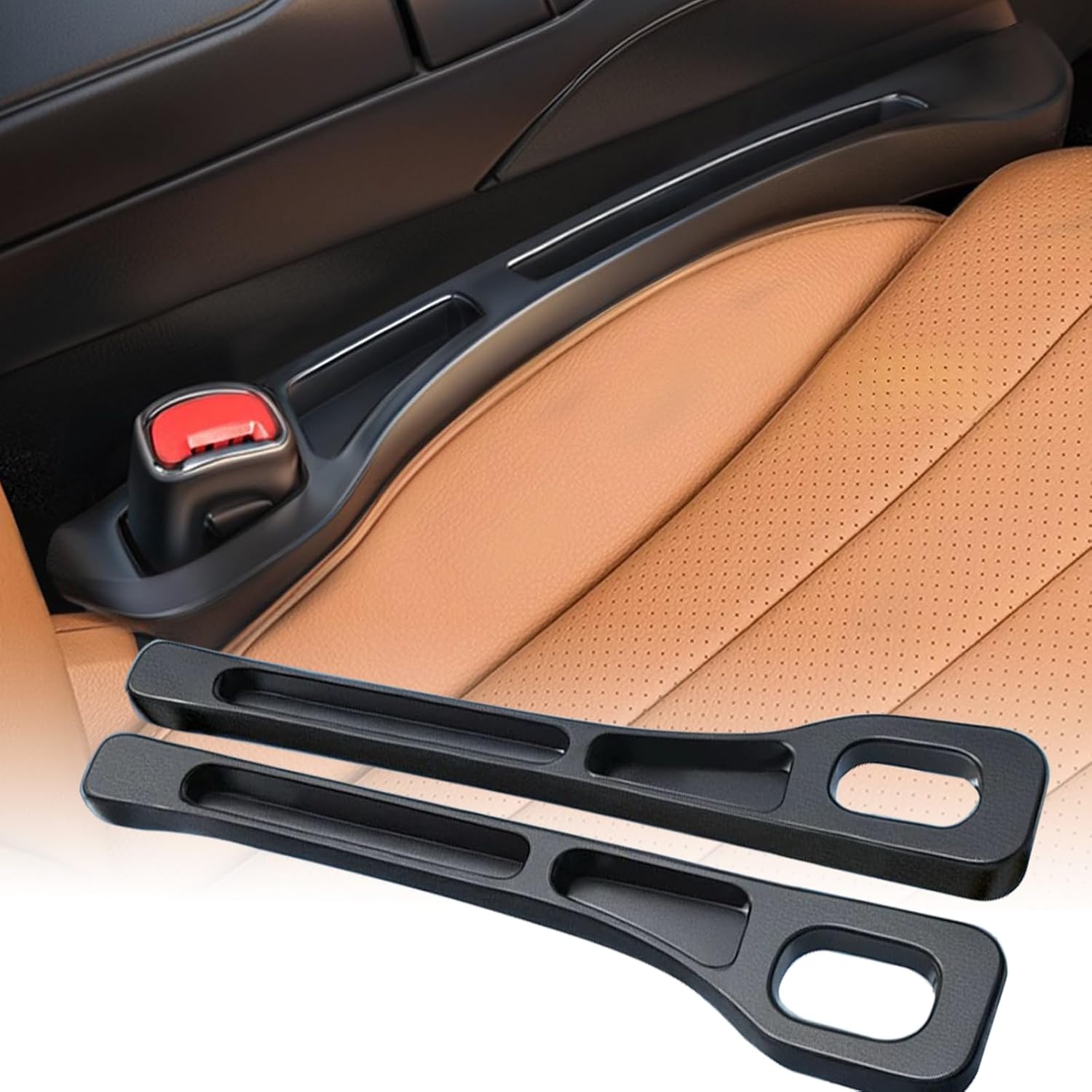
Car Seat Gap Filler (Universal)
View on Amazon ★ 308
★ 308Coiled Lightning Car Cable for iPhone (2-Pack)
View on Amazon ★ 119
★ 119Foldable Waterproof Trunk Organizer
View on Amazon ★ 392
★ 392Large Cup Holder Adapter (32-40oz)
View on Amazon ★ 9,349
Auto Detailing Brush Set (10-Piece)
View on Amazon ★ 419
★ 419RGB Car Interior LED Strip Light
View on Amazon ★ 1,083
Crystal Push-Start Button Ring (2-Pack)
View on Amazon ★ 4,424
Sun Visor Card and Document Organizer
View on AmazonRead, Plan, Then Stay Current
Explore our expert articles to understand incentives and ownership costs, use the map to pressure-test charging reality, then subscribe so new EV coverage comes straight to you.
Continue Reading

Rivian Canada 2026: R1T, R1S Prices and R2 Release Date

EV Battery Replacement: What a Failed Pack Actually Costs
BYD Seal 06 DM-i: 128 km EV Range, $14K USD Starting Price
Level 1 vs Level 2 EV Charging: Which to Choose
What Driver-Assist Features Actually Do, and What They Don't