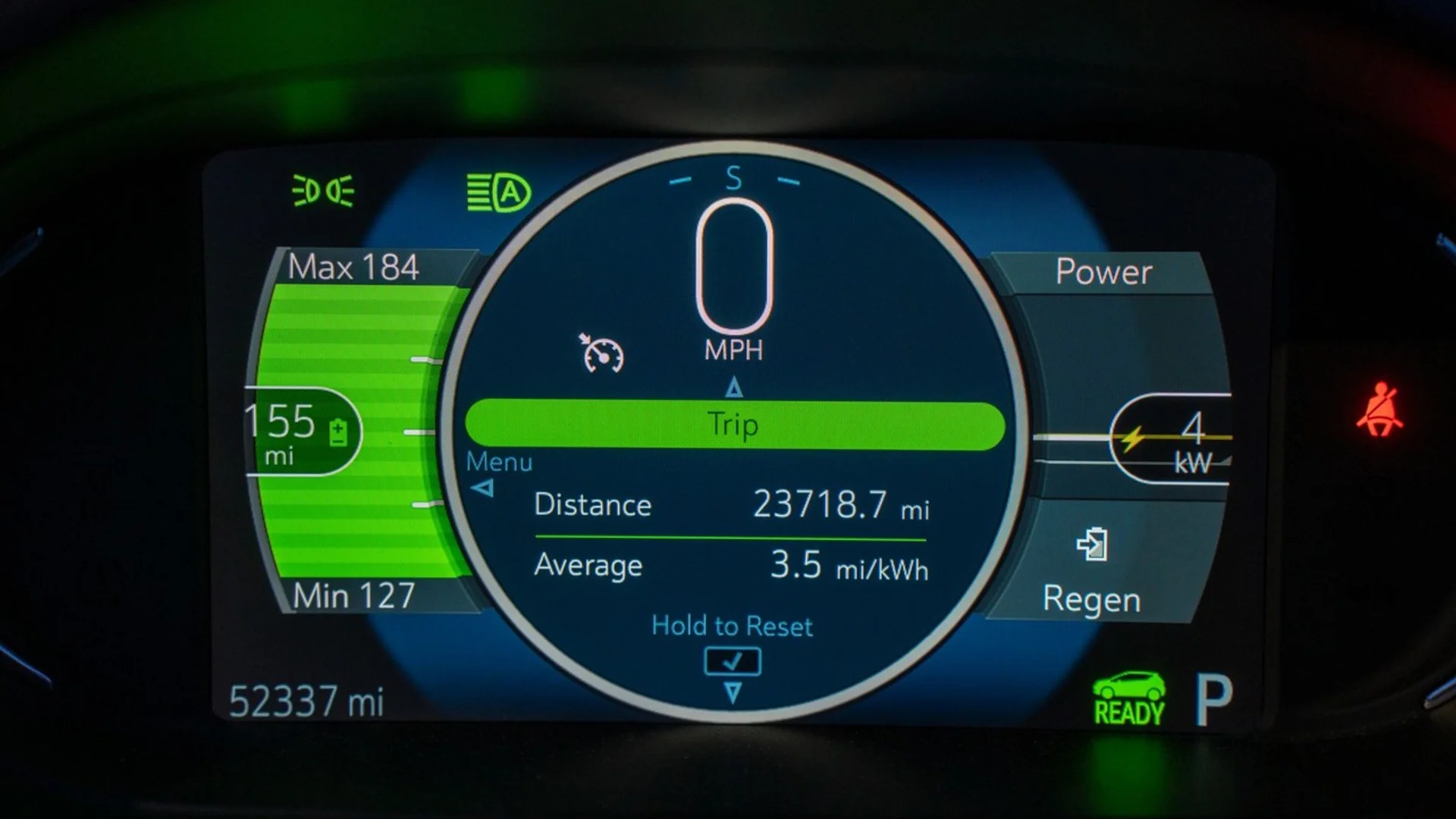
Two-point-three percent per year. That is the number Geotab pulled from 22,700 vehicles, and it is the only degradation figure most Canadian EV owners need to carry around. A 400 km pack at purchase delivers roughly 340–360 km at year ten under normal use. EV batteries can outlast the vehicle's lifetime with minimal degradation, and the financial risk associated with future replacement is collapsing due to advancements in chemistry and thermal management. The 2.3% average is not a verdict on your pack. It is a reference line, and chemistry and charging habits decide whether yours beats the line or falls behind it. My verdict up front: if you buy an LFP car in 2026 and charge it on Level 2 at home, you will not meaningfully worry about your battery for the decade you own it. That is a strong claim. The rest of this post is why I will defend it.
Key takeaways
- Geotab's 22,700-vehicle dataset puts average EV battery loss at 2.3% per year, a 400 km pack keeps 340–360 km at year ten.
- LFP packs degrade at roughly 1.5–2% per year and tolerate daily 100% charges without the NMC penalty BYD and Tesla standard-range owners avoid.
- Year-one loss hits 2–5% as the SEI layer forms, then flattens to under 1.5% annually, the scariest number comes first.
- Daily DC fast charging over years, not occasional road-trip use, is what costs measurable range, LFP handles it better than NMC.
- Pricing a used 2015 air-cooled Leaf against a 2026 Ioniq 5 as the same battery risk is the costliest mistake in Canada's used-EV market.
Quick Answer: What to Expect From Your Battery Over Time
Average lithium-ion EV degradation runs about 2.3% per year across the big real-world datasets, with a typical ten-year total of 10–15%. The curve is not linear. Year-one loss usually runs 2–5% as the solid electrolyte interphase layer settles in, then flattens to 1–2% per year through years two to five, then flattens further to roughly 0.5–1.5% per year from year five on. The pack ages fastest when it is new. That feels counterintuitive and it is one of the more useful things to know about owning an EV, the scary number lands early and the curve gets friendlier from there.
A 400 km WLTP pack typically delivers around 340–360 km of real range at year ten under normal use. That is before you account for driving in a Canadian February, which is a separate problem addressed further down. EV batteries often outlast vehicle lifetimes with minimal degradation. Industry standard warranties cover batteries for 8 years or 100,000 miles, in Canada the federal floor is 8 years or 160,000 kilometres to 70% capacity. That is the legal minimum, not the expected outcome. Most packs stay well above it.
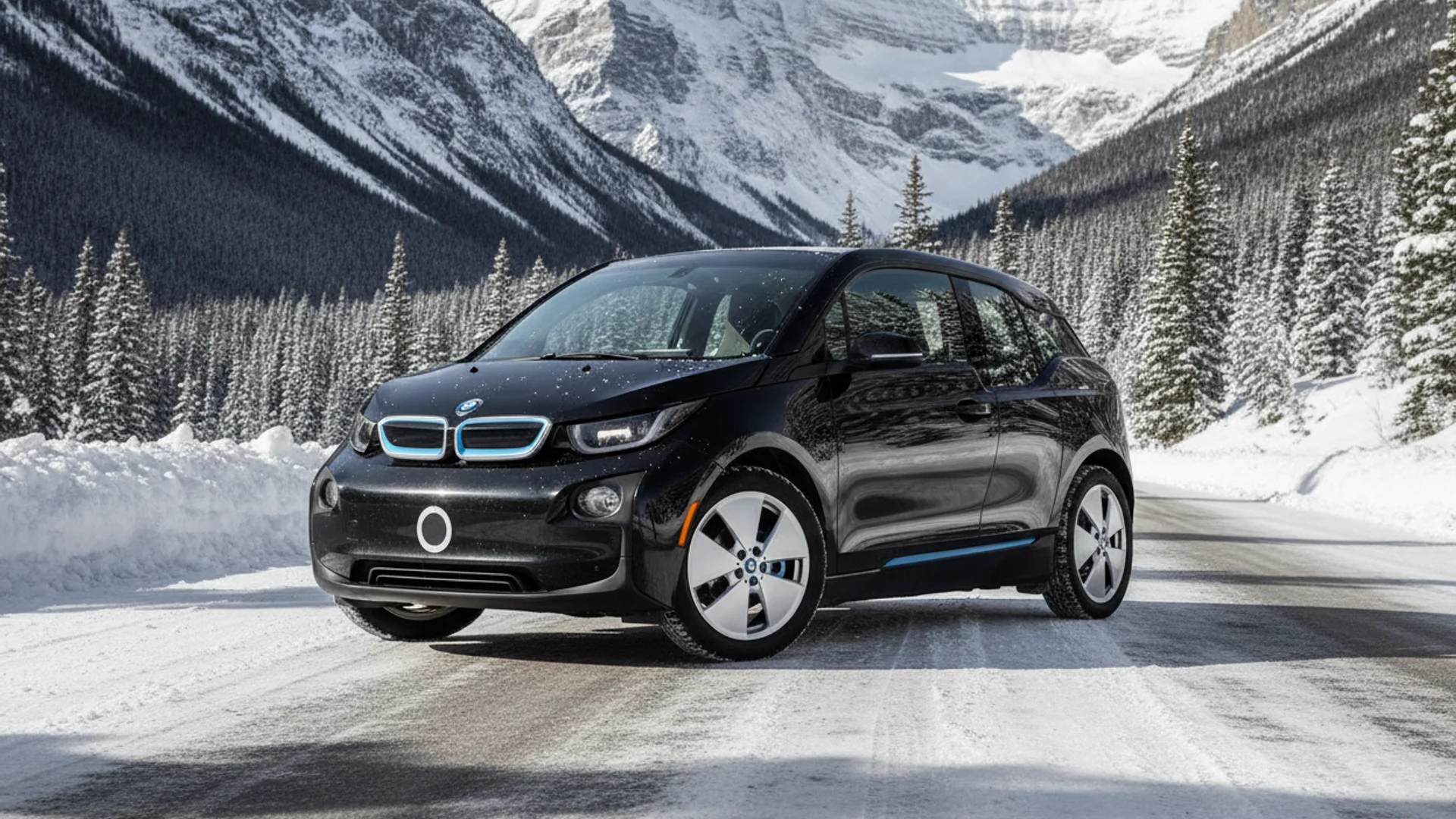
The sceptic's objection is fair: industry averages hide ugly tails, and a buyer who ends up on the wrong side of the distribution does not care that the mean was reassuring. The Geotab sample is large enough that the tails are visible, though, and the catastrophic-failure cluster sits mostly in early Nissan Leaf vintages with no active thermal management. Modern liquid-cooled packs do not share that curve. The risk is not that the average is wrong, the risk is that you treat an air-cooled 2015 Leaf as representative of a 2026 Ioniq 5, and the chemistry and engineering between those two cars are not comparable. Pricing a used Leaf against a used Ioniq 5 as if they are the same battery problem is the single most expensive mistake in the Canadian used-EV market right now.
The long view on how Canadian-climate packs actually age across 22,700 vehicles confirms the shape of that curve.
Why Lithium-Ion Cells Age: The Chemistry in Plain Terms
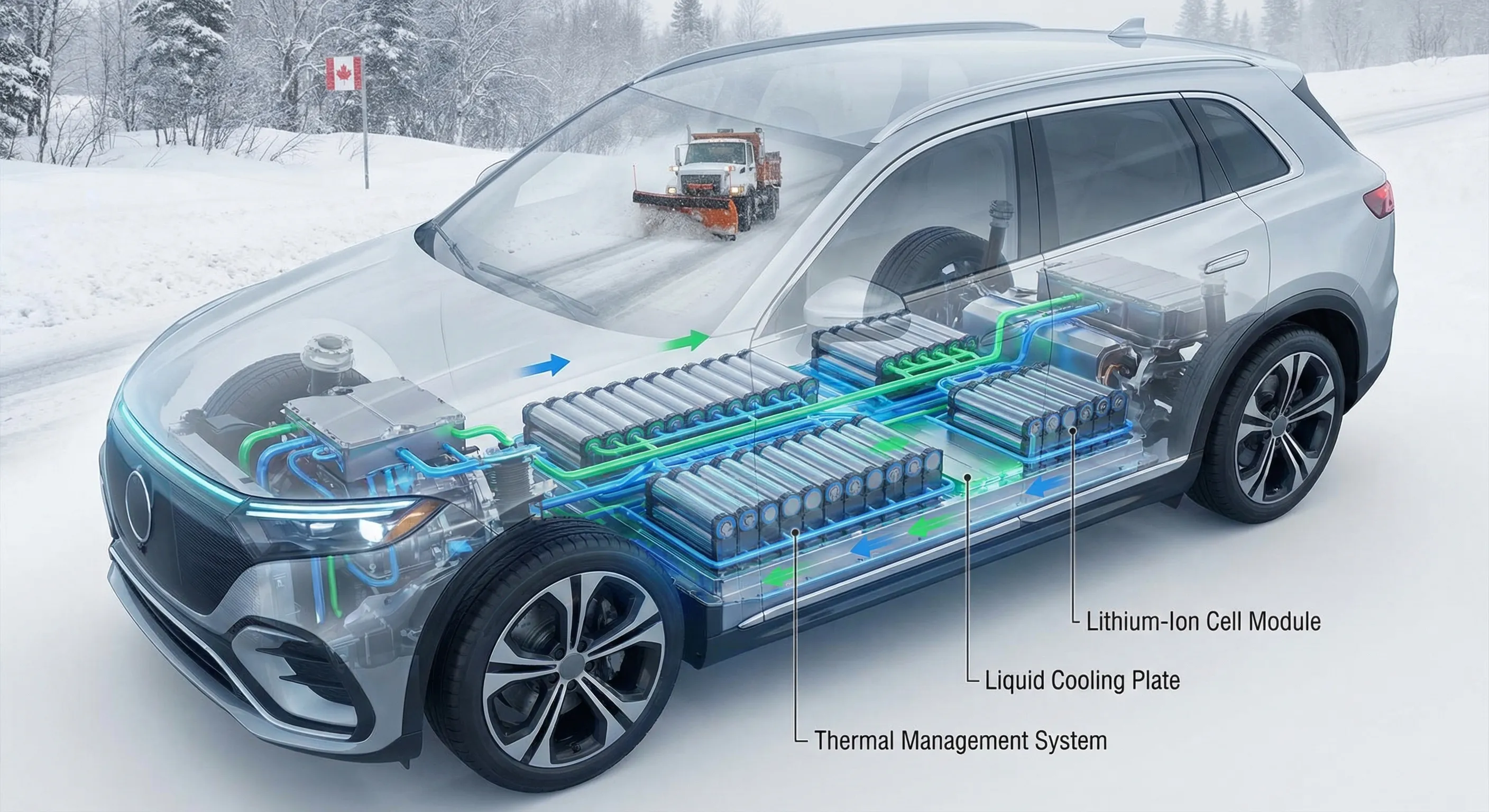
Three mechanisms do the work. The first is the solid electrolyte interphase, the SEI layer, a thin film that forms on the anode the first time the cell charges and keeps thickening slowly with every subsequent cycle. The film is useful; it protects the anode. It also consumes a small amount of lithium each cycle and raises internal resistance. That is the baseline loss you cannot engineer away.
The second mechanism is lithium plating. If you push high current into a cold cell, lithium ions that should intercalate into the graphite anode instead deposit as metallic lithium on its surface. The plating is permanent. The lithium that plated is lithium that will never carry charge again, and the deposits can grow dendrites that short the cell internally. Charging a cold pack fast is the single fastest route to irreversible damage. This is why pre-conditioning exists, and why the car fights you when you pull into a fast charger at -15°C with a cold-soaked battery.
The third mechanism is cathode fatigue. NMC and NCA cathodes expand and contract as lithium shuttles in and out, and the crystal structure eventually cracks under that cycling, fastest when the pack is held at high states of charge. LFP's olivine structure handles the expansion more gracefully, which is why LFP packs degrade at roughly 1.5–2% per year and tolerate daily 100% charges without the NMC penalty. The gap widens at cycle count: LFP cells shed about 10% capacity after 3,000 cycles, while NCA cells shed roughly 20% after 1,500. That is a two-to-one durability advantage before you touch any other variable. The way BYD's Blade pack handles the daily 100% top-up and the way a long-range NMC Model 3 does not are not the same engineering problem, they are different chemistries doing different jobs, and the Blade is winning the one that matters for daily commuting.
The charging protocol, how much voltage and current, for how long and what to do when charging is complete, depends on the size and type of the battery being charged, and this is where the chemistry choice stops being an abstraction. The deeper teardown of how NMC and LFP packs diverge under Canadian conditions across 22,700 vehicles makes the practical gap concrete.
Gear worth having
As an Amazon Associate, ThinkEV earns a small commission from qualifying purchases — at no extra cost to you.

Lectron Level 2 J1772 Charger (40A, WiFi)
Smart WiFi charger with real-time energy monitoring. 40A / 9.6 kW, J1772 with a NEMA 14-50 plug, schedule charging right from your phone.
As an Amazon Associate, ThinkEV earns from qualifying purchases — at no extra cost to you.
The Four Conditions That Actually Accelerate Degradation
Heat first. A pack stored at 35°C degrades roughly twice as fast as one at 25°C, because SEI growth is temperature-dependent and the Arrhenius curve is not sympathetic. A Canadian July in a Toronto surface lot is not a Phoenix summer, but it is not nothing either, and the car that lives outdoors in Windsor is quietly aging faster than the one in a Calgary garage. Thermal management does most of the work; parking in shade does the rest.
Second, chronic high state of charge. Holding an NMC or NCA pack at 100% is the chemistry equivalent of parking the engine at redline. The cathode sits under maximum voltage stress, SEI growth accelerates, and the pack ages faster than it would at 50–80%. LFP sidesteps this, the olivine cathode does not fatigue the same way, which is why the standard-range Model 3, the Model Y RWD, and every BYD on sale in Canada can live at 100% without penalty. Know your chemistry before you pick a daily charge target.
Third, DC fast charging. The current is high, the heat is a byproduct, and the combination of the two is what SEI growth loves most. One fast charge on a road trip is a rounding error. Daily fast charging because home charging is inconvenient will cost you measurable range in three to five years. Repeatedly charging to 100% and running the battery down to near 0% accelerates degradation, and DC fast charging generates heat and draws high current, both of which stack onto the same wear mechanism. Industry research puts the delta at a few percentage points over a decade for heavy DCFC users versus Level 2 defaulters. That is not catastrophic. It is also not nothing, and if your home charging situation is genuinely a dealbreaker, I would rather you buy an LFP car and lean on fast charging than buy an NMC car and do the same thing, the chemistries do not punish that choice equally.
Gear worth having
As an Amazon Associate, ThinkEV earns a small commission from qualifying purchases — at no extra cost to you.

WixGear Magnetic Air Vent Phone Mount (2-Pack)
A magnet strong enough that your phone never flinches over potholes or rail crossings. Two in the box, one for each car.
As an Amazon Associate, ThinkEV earns from qualifying purchases — at no extra cost to you.
Fourth, deep discharge. Running below 10% regularly stresses the electrode chemistry at its low extreme, the opposite of the 100% problem, same category of harm. The useful habit is to keep the pack between roughly 20% and 80% for daily use, which brings us to the next section.
Five Habits That Slow the Curve
Here is the short checklist, in the order they matter:
- Set the charge limit by chemistry. 80% for NMC and NCA daily; 90–100% fine for LFP. If you do not know what chemistry your car has, the manual says so. Tesla standard-range trims, every BYD on sale here, and most entry Chinese imports are LFP. Hyundai, Kia, Ford, GM, and most Volkswagen packs are NMC or NCA.
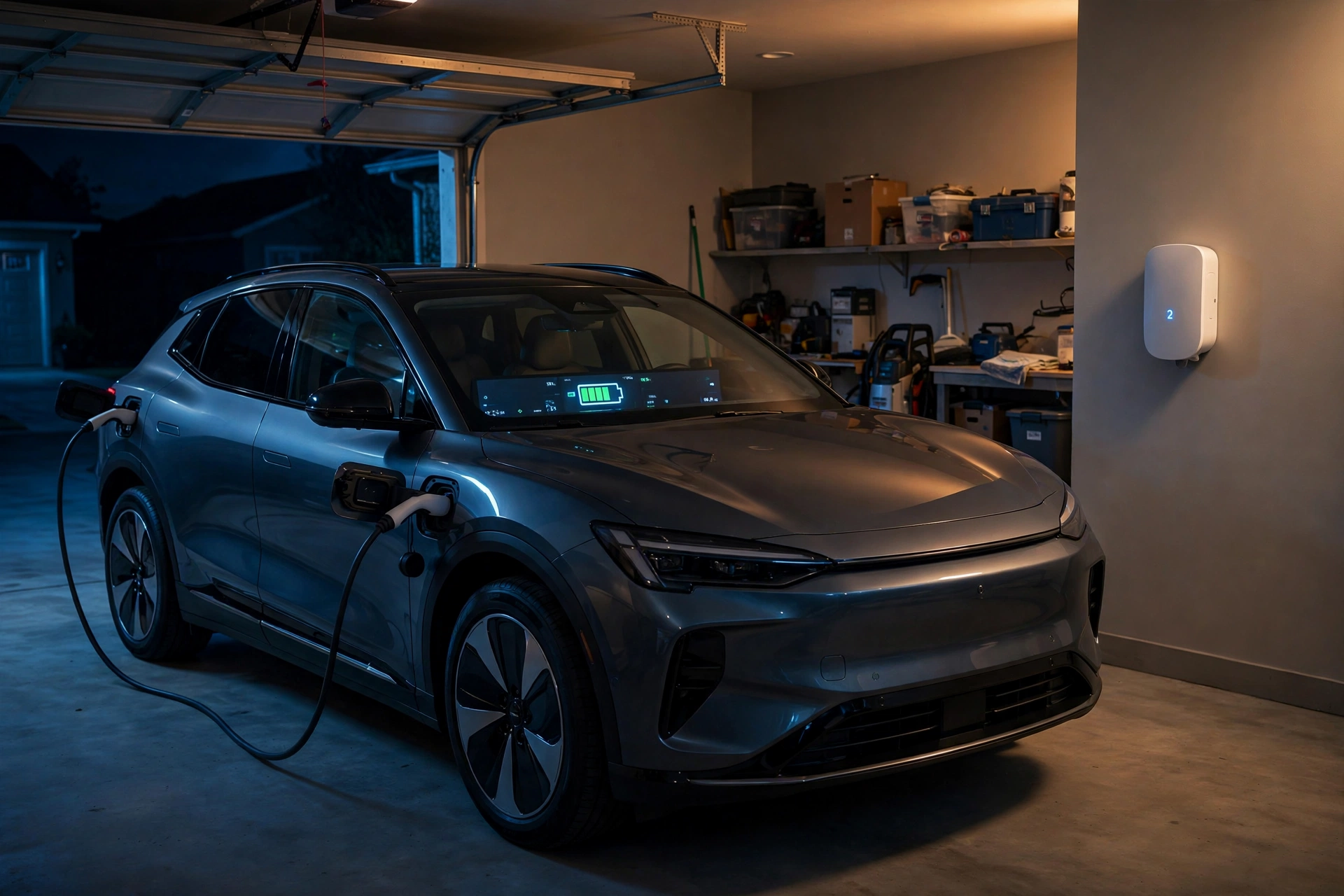
- Default to AC Level 2, reserve DC fast charging for road trips. Home Level 2 at 7–11 kW is the lowest-stress charging the pack sees. Over a decade the delta between an AC-defaulter and a daily-DCFC driver shows up in real residuals.
- Do not leave the pack at 100% for days. Charge before you leave, not the night before. A pack sitting at full voltage for twelve hours ages faster than a pack that hit 100% at 7 a.m. and started discharging into the commute. LFP cares less; NMC cares more; the habit is free either way.
- Pre-condition before fast charging in winter. The app pulls heat from the grid, not from the pack, and warms the cells to the window where fast charging does not plate lithium. Plugging a cold-soaked pack into a 150 kW stall at -15°C and letting the car figure it out is how you lose capacity you cannot get back.
- Prefer shallow, frequent top-ups over deep full cycles. Topping from 40% to 75% is gentler on the chemistry than running from 15% to 85% every few days. The depth of each cycle matters as much as the number of cycles, and the car does not care about round numbers.
Those five, in that order, are worth more than any aftermarket "battery saver" product on the market, none of which I would spend a dollar on. The habits are the product. The practical playbook under Canadian conditions for maximising pack lifespan walks through each one with specific numbers.
Gear worth having
As an Amazon Associate, ThinkEV earns a small commission from qualifying purchases — at no extra cost to you.

Grizzl-E Classic Level 2 EV Charger (40A)
Canadian-made and rated for minus 40C winters. 40A / 9.6 kW, NEMA 14-50, indoor/outdoor, 24-ft cable. The charger built for Canadian weather.
As an Amazon Associate, ThinkEV earns from qualifying purchases — at no extra cost to you.
Cold Weather, Canadian Context, and the Numbers That Actually Matter Here
Canadian cold does two different things to a battery, and they are worth separating because the public conversation routinely conflates them. At -10°C a lithium-ion pack loses 20–30% of available capacity temporarily; at -20°C the loss can reach 40%. That is the February range cliff every Canadian EV owner knows. It is also fully reversible, the capacity returns when the pack warms up. It is not degradation. It is physics being annoying for four months a year.
Permanent degradation from cold comes from one place: charging a cold pack with high current. The driving itself is fine. A pack discharging at highway speed warms itself through internal resistance, and the chemistry stays well inside its safe window. The permanent damage happens at the fast charger when a cold-soaked cell cannot accept lithium ions quickly enough and plates them on the anode instead. Pre-conditioning, built into every modern EV sold here, exists specifically to prevent this. Use it.
LFP has a separate winter trade worth naming. The olivine chemistry that makes it immune to the 100% penalty also makes it noticeably more sluggish in cold weather, LFP performance drops below -15°C as internal resistance rises and reduces available power and charging speed until the battery warms up. An NMC Ioniq 5 and an LFP BYD Dolphin do not have the same February, even parked beside each other. The LFP car is the longer-lived pack over a decade; the NMC car is the one that fast-charges harder on a January road trip. If your use case is a 20-minute daily commute and a Costco run, buy LFP and never think about it again. If your use case is Toronto-to-Montréal every other weekend in January, the NMC car is the right call and the shorter lifetime is the price you pay for the trip not taking six hours.
The warranty backstop in Canada is the 8-year / 160,000-kilometre floor to 70% capacity retention, which federal rebate-eligible vehicles must carry. The replaced EVAP program keeps this intact; the retired iZEV program had the same minimum. Below 70% at those thresholds, the manufacturer owes you a battery. Above 70%, you own what you have. The Canadian EV warranty breakdown by brand shows which manufacturers actually honour that floor without a fight, and which drag their feet.
The reassuring number is what Tesla's own fleet shows under real use. A 2019 Model 3 at 150,000 kilometres typically carries 5–8% degradation; a Hyundai Ioniq 5 at 80,000 kilometres typically shows 2–4%. Those are inside the warranty floor by a wide margin, and they match the Geotab average rather than the catastrophic-failure headlines. The pack is not the fragile part of the car, the twelve-volt accessory battery still holds that title, as tradition demands.
The number worth watching in your own ownership is year three. Year-one loss of 2–5% is normal; by year three the curve should have flattened to the 1–2%-per-year range. If a three-year-old pack has shed more than 20% of its original capacity, that is a dealer visit and, likely, a warranty claim. If it has shed 8–12%, you own an entirely normal EV and the next seven years will cost you less range than the first three did.
Buy / wait / skip, for the three cars that come up most in reader questions: the 2026 Model 3 LFP is a buy, the long-range NMC Model Y is a buy only if road trips are your actual use case, and any used Nissan Leaf without active thermal management is a skip at any price, the chemistry is not forgiving and the ten-year curve is already written.
Gear worth having
As an Amazon Associate, ThinkEV earns a small commission from qualifying purchases — at no extra cost to you.

ChargePoint Home Flex Level 2 Charger (50A)
Premium 50A / 12 kW charger with the best app ecosystem. Hardwired or NEMA 14-50, with real-time energy tracking and smart scheduling.
As an Amazon Associate, ThinkEV earns from qualifying purchases — at no extra cost to you.
October's 2.3% Decides the 2027 Conversation
Geotab's next annual update is the number that resolves the open question. The 2023 edition reported a 1.8% average annual degradation rate; the 2025 edition reported 2.3%. If the 2027 edition lands below 2.0% as LFP share climbs and liquid-cooled packs dominate the sample, the long-term range-anxiety story is effectively over. If it drifts above 2.5%, the fast-charging-first ownership pattern is doing more damage than the industry has been willing to say out loud, and the five habits above stop being optional. My bet is the former, by a margin wide enough that the headline writes itself: EV battery degradation is a solved problem for anyone who charges at home. Hold me to it in October 2027.
Gear worth having
As an Amazon Associate, ThinkEV earns a small commission from qualifying purchases — at no extra cost to you.

Magnetic EV Charger Plug Cover
A magnetic cap that keeps rain, road salt, and grit out of your home charger handle between sessions.
As an Amazon Associate, ThinkEV earns from qualifying purchases — at no extra cost to you.

Founder & Chief Editor
Vlad Pereira is the founder and chief editor of ThinkEV.ca, the Canadian electric-vehicle publication he writes and edits from Courtenay, British Columbia. He covers EV pricing, federal and provincial rebates, charging costs, and the Chinese manufacturers now entering Canada, from the buyer's side rather than the press-fleet side. ThinkEV is a venture of Vlad Pereira Online; his writing on health, income and the long game lives at vladpereira.com.
Frequently asked questions
Does cold weather in Canada permanently damage my battery?
How do I know if my car has LFP or NMC?
Is a used 2015 Leaf a battery risk compared to a 2026 EV?
Will I need to replace my battery before selling the car?
How much does daily DC fast charging actually cost long-term?
More EV & road-trip finds
Affordable upgrades worth a look — tap any to check the price on Amazon.
 ★ 297
★ 297360-Degree One-Hand Dashboard Phone Mount
View on Amazon ★ 61
★ 61Toddler Car Seat Snack and Cup Tray
View on Amazon ★ 17,839
Qifutan Vent Phone Mount (Military-Grade Clip)
View on Amazon ★ 4,050
Touchscreen Mist Screen Cleaner Kit
View on Amazon ★ 164
★ 164Solar-Powered LED Ambient Light
View on Amazon ★ 4,055
6-Speed Manual Shift Knob Display
View on Amazon ★ 4,424
Sun Visor Card and Document Organizer
View on Amazon ★ 1,944
VIOFO A229 Pro 4K Dash Cam
View on AmazonRead, Plan, Then Stay Current
Explore our expert articles to understand incentives and ownership costs, use the map to pressure-test charging reality, then subscribe so new EV coverage comes straight to you.
Continue Reading
EV Battery Lifespan: Real Data From 22,700 Vehicles (2026)
How to Maximize Your EV Battery's Lifespan in Canada
EV Battery Degradation: How Long They Last in Canada

EV Battery Size vs Range: Why Bigger Isn't Always Better
Which EVs Should Be Charged to 100%? The LFP Exception