Zero engine oil changes over the life of the car. Zero spark plugs. Zero timing belts. Zero exhaust inspections. Zero emissions tests in most Canadian provinces. That is the part of the maintenance schedule that disappears when you switch to a battery-electric vehicle, not shrinks, disappears.
What replaces it is a five-item list most first-time EV buyers have never been walked through. EV maintenance runs roughly half the lifetime cost of a comparable ICE vehicle, real savings, not marketing copy. But "half" is not "none," and the items that remain, tires, brake fluid, battery coolant, cabin filter, washer fluid, run on their own calendars that don't care how quiet your drivetrain is.
Key takeaways
- EVs skip oil, spark plugs, timing belts, and emissions tests, roughly half of all ICE maintenance items disappear permanently.
- PHEVs still need oil changes on a time-based calendar, not odometer-based, because unused oil acidifies sitting in a rarely-run engine.
- Tires are the biggest ongoing EV cost: instant torque and extra weight wear tread 15–20 percent faster than equivalent gas vehicles.
- The Bolt needs battery coolant service at five years; the Ioniq 5's 800-volt architecture stretches that interval to ten years.
- Brake fluid needs replacement every two to three years regardless of regen braking, it absorbs moisture from the air whether the pads engage or not.
Quick Answer: No Oil, But the List Doesn't End There
Battery-electric vehicles never need an engine oil change. There is no engine. There is a single-speed reduction gear turning the wheels off a permanent-magnet or induction motor, and neither one uses the crankcase-and-piston architecture that engine oil exists to protect.
Plug-in hybrids are the exception people keep tripping over. A PHEV carries a full internal combustion engine alongside its battery pack, and that engine follows the same oil-change schedule as any other gas car, typically every 8,000 to 12,000 kilometres depending on the manufacturer. If you drive a PHEV mostly on electric power, the oil ages on the calendar rather than the odometer, which is arguably worse: unchanged oil sitting in a rarely-run engine collects moisture and acidifies. Follow the time-based interval, not the distance one. The confusion runs deep enough that the industry has to actively debunk it, dealer service departments routinely note that when a "fully electric" car throws an oil-service warning, the actual scenario is almost always a misclassified PHEV whose owner didn't realize there was an engine under the frunk in the first place.
For a true BEV, a Tesla, a Bolt, an Ioniq 5, an Atto 3, an F-150 Lightning, the maintenance list shrinks by roughly half compared to an equivalent gas vehicle. Not to zero. The items that remain are the ones every car has always had: rubber that touches the road, fluid in the brake lines, filters that clean the air you breathe in the cabin, and a thermal system that keeps the battery in its happy temperature band. What EVs lose is the combustion side of the ledger. What they keep is everything else.
What You Actually Skip (and Why the Numbers Are Real)
The list of services an EV never needs is longer than most buyers realize. Engine oil and filter, gone. Spark plugs, gone. Timing belt or timing chain, gone. Fuel filter, gone. Exhaust system inspection, gone. Emissions testing, gone in most Canadian provinces because there are no emissions to test. Serpentine belt, gone on most designs. Transmission fluid changes on a conventional 6-to-10-speed automatic, gone, the single-speed reduction gear on most EVs is sealed for life or requires service only at very high mileage.
Tesla's owner manual was changed to say: "your Tesla does not require annual maintenance and regular fluid changes," and instead it recommends periodic servicing of the specific components as needed. That's a manufacturer confirming in writing what the drivetrain math already told you: fewer moving parts, fewer wear surfaces, fewer scheduled services.
The cost delta shows up in every serious study of the question. AAA has pegged average ICE maintenance at roughly ten cents per mile over a vehicle's life; multiple analyses of EV maintenance costs, from Consumer Reports to fleet operators tracking real-world data, land 25 to 40 percent below that number. The savings compound over an eight-to-ten-year ownership window into thousands of dollars, and that math is before you count the fuel cost gap.
A single out-of-warranty battery replacement can wipe out a decade of maintenance savings in one invoice, and the sceptics who lead with that scenario are not wrong that it exists. What they get wrong is the frequency: independent tracker data on modern packs shows out-of-warranty catastrophic failures running well under one percent of the fleet, and the trajectory is improving with each chemistry generation. The right way to hold both facts at once is to buy the warranty, read it, and factor the tail risk into your purchase, not to pretend the maintenance savings aren't real because a worst-case exists.
The reason the base math works is mechanical, not marketing. A modern gasoline engine has somewhere between 200 and 300 moving parts in its drivetrain, once you count the transmission. An EV drivetrain has roughly 20. Fewer parts means fewer failure modes, fewer service intervals, and fewer opportunities for a dealer to sell you a $400 induction cleaning you didn't need. If you're comparing lifetime cost of ownership on a spreadsheet, the maintenance line is where the EV quietly pulls ahead, before the fuel savings even show up.
Gear worth having
As an Amazon Associate, ThinkEV earns a small commission from qualifying purchases — at no extra cost to you.

Lectron Level 2 J1772 Charger (40A, WiFi)
Smart WiFi charger with real-time energy monitoring. 40A / 9.6 kW, J1772 with a NEMA 14-50 plug, schedule charging right from your phone.
As an Amazon Associate, ThinkEV earns from qualifying purchases — at no extra cost to you.
What Still Needs Service, and When
OEM service schedules across the major EV lineups sold in Canada converge on five items:
- Tires: rotate every 6,000 to 8,000 kilometres. EVs are heavier than comparable ICE vehicles, a Model Y outweighs a RAV4 by roughly 300 kg, and instant torque scrubs tread faster off the line. Expect to replace tires 15 to 20 percent sooner than you would on a gas car in the same class. This is the single largest ongoing maintenance cost for most EV owners.
- Brake fluid: inspect every two years, replace when moisture content exceeds three percent. Brake fluid is hygroscopic, it pulls water out of the atmosphere regardless of whether your pads ever touch the rotors. Most OEMs specify a two-to-three-year replacement calendar, and the interval doesn't stretch just because your regen system is doing most of the stopping.
- Battery coolant: interval varies sharply by model. The Chevrolet Bolt calls for coolant service every five years or 150,000 kilometres. Tesla lists no fixed interval on most current models but recommends inspection at the same cadence. Hyundai and Kia specify roughly ten years or 200,000 km on Ioniq and EV6 platforms. Check your specific vehicle's manual, this is not a fluid to guess on. Independent EV service guides are blunt about why: battery cooling systems rely on specialized coolant to keep temperatures stable, especially during heavy charging or extreme weather, and neglecting the loop is one of the fastest ways to shorten pack life outside of a manufacturing defect.
- Cabin air filter: every two years, or annually if you drive in dusty conditions or spend time in wildfire-smoke season. Same schedule as any gas car.
- Windshield washer fluid: consumption is identical between EVs and ICE vehicles. Some facts just sit there.
The Chevrolet Bolt coolant interval is the one most owners have never been told about. Five years passes quickly, and a coolant loop that's overdue for service is a coolant loop that's slowly losing its ability to keep the pack in its temperature band, which is a battery-longevity problem, not just a scheduled-maintenance problem. If you're buying a used EV, ask when the coolant was last done. If the seller doesn't know, budget for it.
Compare the two coolant regimes and the design philosophy jumps out. The Bolt's five-year interval reflects a first-generation pack design and a smaller coolant reservoir working harder; the Ioniq 5's ten-year interval reflects a newer 800-volt architecture with more thermal headroom and a larger loop that ages more slowly. Neither is wrong. But if you're cross-shopping a 2023 Bolt against a 2023 Ioniq 5 and running total cost of ownership numbers, penciling in a $400 coolant service in year five on one and year ten on the other is the difference between an honest spreadsheet and a marketing brochure.
For a fuller walkthrough of the ownership calculus behind buying a Chinese EV in Canada, including who services what and where the parts come from, see what happens when your Chinese EV needs repairs in Canada.
Battery Health: The Maintenance Question Nobody Frames Correctly
The battery is not on a maintenance schedule in the way brake fluid is. There is no service interval where a technician "does the battery." What there is, instead, is a set of driving and charging habits that quietly determine how the pack ages, and a warranty that covers you if it ages badly.
Gear worth having
As an Amazon Associate, ThinkEV earns a small commission from qualifying purchases — at no extra cost to you.

Digital Tire Pressure Gauge
Low tires quietly cost 5 to 10 percent of your range. A 10-second check with an accurate digital gauge keeps every kWh on the road.
As an Amazon Associate, ThinkEV earns from qualifying purchases — at no extra cost to you.
Lithium-ion degradation is real, but slow. The consensus from long-running fleet studies and independent tracker data (Recurrent, Geotab, the various Model 3 and Bolt owner surveys) is that most modern packs lose under ten percent of their original capacity in the first eight years of normal use. "Normal" is doing a lot of work in that sentence. What accelerates degradation, in order of severity: sustained storage at 100 percent state of charge, frequent DC fast charging above 80 percent SOC in hot weather, and prolonged exposure to high ambient temperatures without active thermal management running.
The habits that keep a pack healthy are boringly consistent across chemistries: keep daily charge to 80 percent, top up to 100 percent only when you need the range for a trip, avoid parking at full charge in summer heat, and use Level 2 AC charging at home when time permits rather than defaulting to DC fast charging for routine top-ups. A pack that lives most of its life between 20 and 80 percent SOC will outlast one that ping-pongs between 5 and 100.
Canada's EV policy environment has always been paired with strong battery warranty floors on eligible vehicles. Eight years or 160,000 kilometres of pack coverage is the baseline on essentially every mainstream EV sold in Canada, and several manufacturers exceed it. Read your specific warranty before you buy: the pro-rated versus full-replacement threshold varies, and the definition of a warrantable failure (usually a capacity floor of 70 percent) is not universal. The concrete checkpoint to watch: BYD's Atto 3 warranty terms when the brand's Canadian pricing lands under the January 16, 2026 tariff drop to 6.1 percent within the 49,000-unit quota, if the pack coverage matches or exceeds the eight-year, 160,000 km floor the incumbents offer, the value math changes overnight. If it doesn't, that gap is the story.
The one maintenance function that EVs have and ICE vehicles don't: over-the-air software updates that recalibrate charge curves, adjust thermal limits, and occasionally add measurable range to an existing pack. That is a service the car performs on itself, at no cost, while you sleep. It is not nothing.

Gear worth having
As an Amazon Associate, ThinkEV earns a small commission from qualifying purchases — at no extra cost to you.

Grizzl-E Classic Level 2 EV Charger (40A)
Canadian-made and rated for minus 40C winters. 40A / 9.6 kW, NEMA 14-50, indoor/outdoor, 24-ft cable. The charger built for Canadian weather.
As an Amazon Associate, ThinkEV earns from qualifying purchases — at no extra cost to you.
Regenerative Braking Changes the Math More Than People Expect
Regenerative braking does most of the work friction brakes used to do. On a one-pedal-capable EV driven the way its engineers intended, brake pads routinely last 100,000 to 150,000 kilometres. On some fleet-tracked Model 3s and Bolts, original pads have made it past 200,000 km with meaningful material still on them. Compare that to the 40,000-to-60,000 km pad life on a typical gas sedan and the drivetrain savings suddenly look small.
The catch is that brake fluid does not care how little the pads move. It absorbs moisture on a calendar schedule, degrades its boiling point, and eventually risks vapor lock in the lines. The two-year inspection interval is not negotiable just because you never touch the pedal.
There is a second catch specific to EVs, and it's the one most owners aren't warned about: the skateboard architecture that puts the battery pack on the bottom of most EVs also means the friction brakes sit largely idle in normal driving. Calipers that don't cycle regularly can seize. Rotors that don't get scrubbed by pad contact can rust. The failure mode isn't dramatic, it's a stuck slider pin or a corroded rotor face that shows up on inspection, but it's real, and it's cheaper to prevent than to repair.
The prevention is trivial: on longer trips, deliberately use the friction brakes a handful of times. A firm stop from highway speed, or a couple of moderate brake applications on the way down a long grade. A handful of firm stops cleans the rotors, cycles the calipers, and costs nothing except the kinetic energy you were sending to heat anyway.
Skeptics of one-pedal driving argue the seized-caliper problem is a reason to prefer a traditional two-pedal EV setup, where the driver naturally cycles the friction brakes into every stop. That's a real trade, but it swaps a preventable maintenance problem for a permanent efficiency penalty, since every friction stop is kinetic energy converted to heat instead of electrons back into the pack. Six deliberate brake applications on a monthly highway trip cost you nothing and solve the corrosion problem. Giving up regen entirely costs you range on every drive for the life of the car.
Gear worth having
As an Amazon Associate, ThinkEV earns a small commission from qualifying purchases — at no extra cost to you.

PULIDIKI Car Cleaning Gel (Detailing Putty)
Press it into vents, buttons, and seams and it lifts out dust you did not know was there. Weirdly satisfying, genuinely useful.
As an Amazon Associate, ThinkEV earns from qualifying purchases — at no extra cost to you.
Canadian Context: Winter, FLO Networks, and the Real Maintenance Curveball
The Canadian climate does two things to EV maintenance that the American sunbelt reviews will never warn you about.
First, cold weather pulls 20 to 40 percent more energy into the battery's thermal management system. That system runs on the coolant loop discussed above, and it earns its scheduled service in a way that Arizona owners will never fully appreciate. If you live north of, say, Toronto, the coolant interval is a floor to hit reliably, not a suggestion to stretch. A pack that spends its winters being aggressively pre-conditioned and thermally managed is working its coolant harder than the OEM's global-average interval assumes.
Second, road salt accelerates corrosion on brake hardware, the calipers, sliders, and rotor edges, and the problem compounds with the regen-braking underuse pattern described in the previous section. Inspect brake hardware in early spring, before the OEM service interval says you need to. Most seized-caliper problems on Canadian EVs show up in April, on cars that spent the winter braking almost entirely on regen through six months of salt spray. A $60 caliper slider cleaning in March is a $600 caliper replacement in July if you skip it, a ten-to-one preventive maintenance ratio that doesn't exist on gas cars because their friction brakes get exercised every commute.
Charging behaviour also shapes long-term maintenance load. Level 2 AC charging at home or on public networks, the FLO, Circuit électrique, and BC Hydro pedestals scattered across the country, is gentler on the pack than DC fast charging on every trip. If you're doing most of your kilometres on 240-volt Level 2, the thermal system barely notices; if you're roadtripping on 150-kilowatt DCFC every weekend, the coolant loop is working overtime and the pack is cycling through wider temperature bands. For the fuller picture on how the Canadian charging landscape actually works day to day, see how to charge your EV in Canada, and for the home-charger side of the equation, wiring two EV chargers on one 60A circuit covers the load-sharing math most installers get wrong.
The winter tire swap matters more on EVs than it does on gas cars. The extra 200 to 400 kilograms most EVs carry over a comparable ICE vehicle wears all-season rubber faster, and the difference between a dedicated winter tire and a stretched all-season is more consequential when your battery is already fighting a range hit. Two sets of tires, rotated seasonally, is the right budget assumption, not one set worked hard through both seasons.
The whole Canadian EV maintenance calendar fits on an index card. Oil is not on it. Tire rotation twice a year with the seasonal swap is. Brake hardware inspection in April, after six months of salt spray, is. Brake fluid every two to three years, cabin filter every two, battery coolant on the OEM interval, five years for a Bolt, ten for an Ioniq 5, and a software update whenever the car asks for one. That is the entire list.
Gear worth having
As an Amazon Associate, ThinkEV earns a small commission from qualifying purchases — at no extra cost to you.

WixGear Magnetic Air Vent Phone Mount (2-Pack)
A magnet strong enough that your phone never flinches over potholes or rail crossings. Two in the box, one for each car.
As an Amazon Associate, ThinkEV earns from qualifying purchases — at no extra cost to you.

Founder & Chief Editor
Vlad Pereira is the founder and chief editor of ThinkEV.ca, the Canadian electric-vehicle publication he writes and edits from Courtenay, British Columbia. He covers EV pricing, federal and provincial rebates, charging costs, and the Chinese manufacturers now entering Canada, from the buyer's side rather than the press-fleet side. ThinkEV is a venture of Vlad Pereira Online; his writing on health, income and the long game lives at vladpereira.com.
More EV & road-trip finds
Affordable upgrades worth a look — tap any to check the price on Amazon.
 ★ 1,340
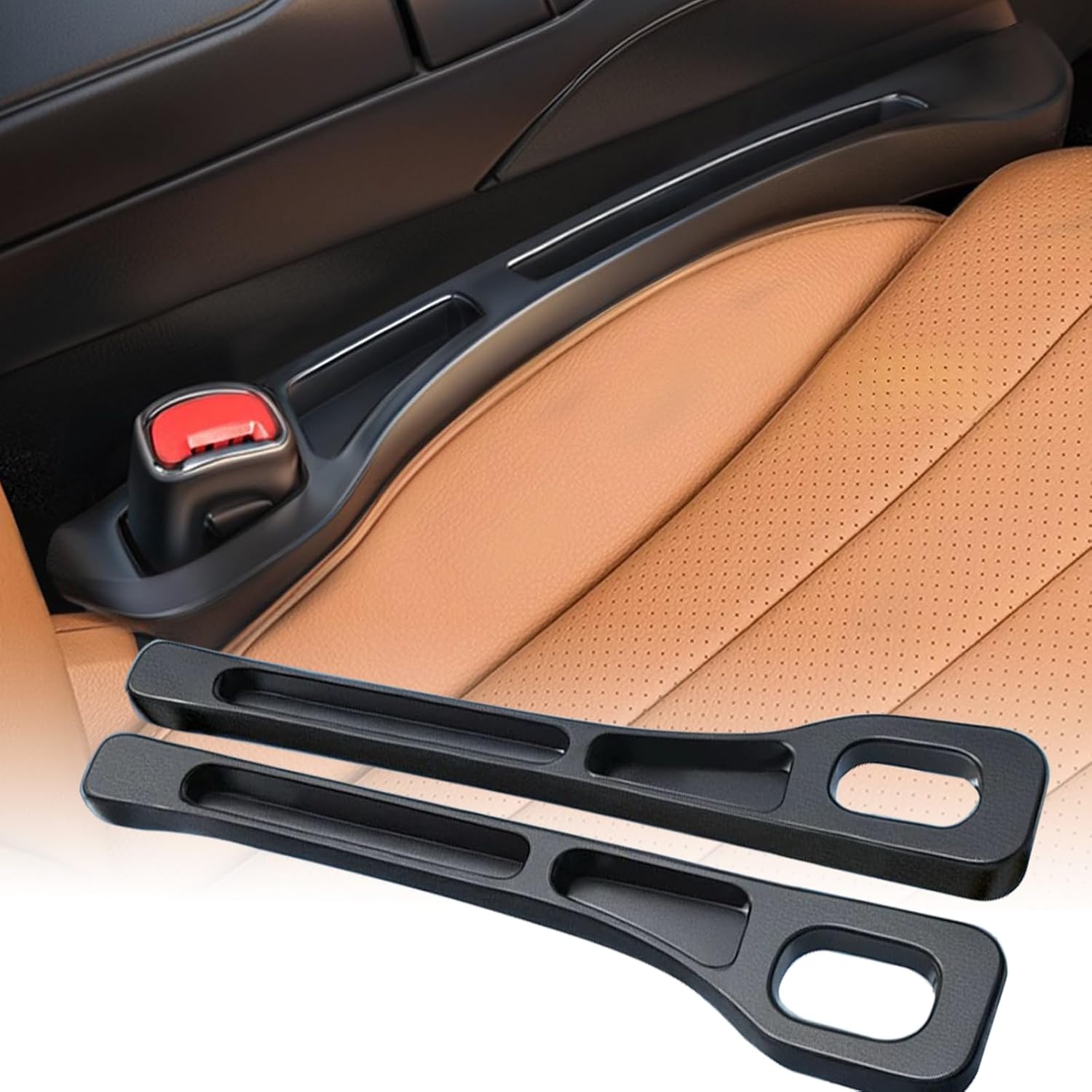
Car Seat Gap Filler (Universal)
View on Amazon ★ 21,310
Magnetic Car Phone Mount
View on Amazon ★ 121
★ 121Foldable Windshield Sun Umbrella
View on Amazon ★ 268
★ 268Anti-Slip Leather Steering Wheel Cover
View on Amazon ★ 12,051
Windex Electronics Screen Wipes
View on Amazon ★ 164
★ 164Solar-Powered LED Ambient Light
View on Amazon ★ 1,349
Cool Swinging Duck Dashboard Ornament
View on Amazon ★ 4,424
Sun Visor Card and Document Organizer
View on AmazonRead, Plan, Then Stay Current
Explore our expert articles to understand incentives and ownership costs, use the map to pressure-test charging reality, then subscribe so new EV coverage comes straight to you.
Continue Reading
How Long to Charge an EV: The Three Numbers That Matter
How Long Does It Take to Charge an Electric Car? (2026 Guide)
EV Maintenance Costs Canada 2026: What You Pay

Rivian Canada 2026: R1T, R1S Prices and R2 Release Date
Why Cold Weather Cuts EV Range, the Real Reasons