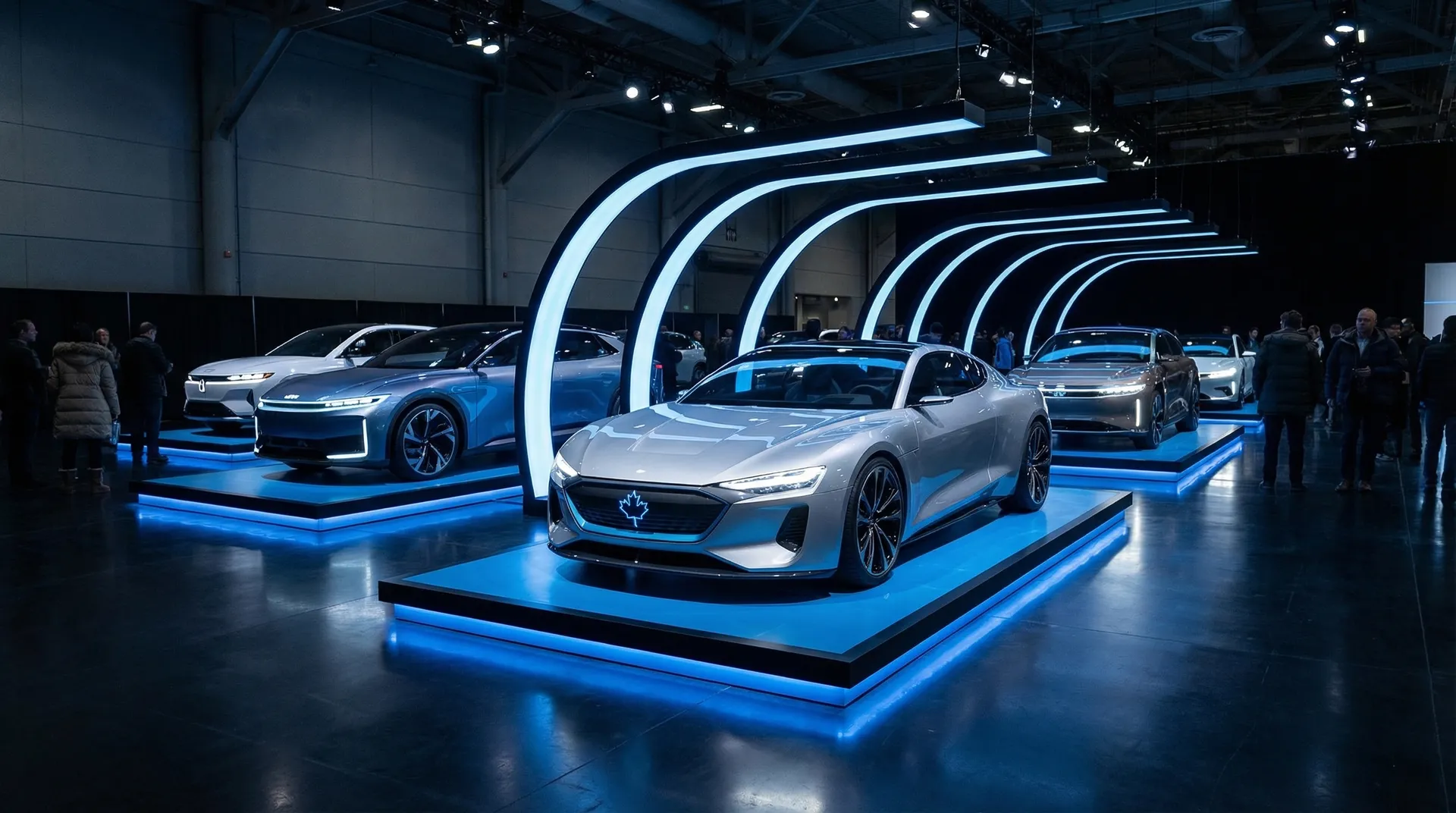
Canadian EV sales fell from roughly 170,000 in 2024 to 143,000 in 2025, a 16% drop in a single year. Tesla collapsed 63%. GM stepped into the gap and took the top spot. And yet almost none of it had to do with what Canadians actually want.
The crash wasn't caused by Canadians losing interest in EVs. It was caused by policy failure, tariff chaos, a brand crisis, and a pricing gap that nobody addressed for twelve months. And nearly every one of those factors is being corrected in 2026.
Key takeaways
- Canadian EV sales fell ~16% in 2025, with zero-emission vehicle market share dropping from ~11% to under 10%
- Tesla sales collapsed ~63%, GM overtook them as Canada's #1 EV brand with 25,000+ registrations
- Hybrids surged to 16.9% national market share as buyers chose the "safe" middle ground
- 2026 recovery signals are strong: EVAP launched, China tariff deal opens the market, 15+ new models under $50K incoming
The Numbers: What Actually Happened in 2025
The data first, then the causes.
Overall EV Market: Zero-emission vehicle registrations in Canada dropped from approximately 170,000 in 2024 to roughly 143,000 in 2025, a decline of approximately 16%. ZEV market share fell from approximately 11% of total new vehicle sales in 2024 to under 10% in 2025.
Quarterly Breakdown: The decline was immediate and sustained. Q1 2025 saw a meaningful year-over-year drop, with ZEV share falling to 9.7%, down from approximately 11% in Q1 2024 and a noticeable drop from the roughly 12% achieved in Q4 2024. By March, monthly EV sales had plummeted 44.9% year-over-year. Q3 recorded 45,366 registrations at a 9.4% market share, showing stabilization but no recovery.
Tesla's Collapse: Tesla registered roughly 20,000 vehicles in Canada in 2025, down from approximately 54,000 in 2024, a roughly 63% decline. Tesla's market share, which was nearly half of all ZEV registrations in early 2022, fell below 10% by April 2025. In Quebec, traditionally one of Tesla's strongest markets, registrations dropped from 5,097 in Q4 2024 to just 524 in Q1 2025. That's an 87% quarter-over-quarter collapse in a single province.
GM's Rise: General Motors sold over 25,000 EVs in Canada in 2025, capturing 21.2% of the EV market. The Chevrolet Equinox EV was the second-most registered EV in the country. Chevrolet alone held 13.3% of the national EV market, and Cadillac became the #1 luxury EV brand in Canada. GM didn't just take Tesla's crown. They built an entirely new throne.
The Hybrid Surge: While fully electric vehicle sales contracted, hybrids had a record-setting year, reaching 16.9% national market share. Plug-in hybrids held steady at 4.2%, carving out a consistent niche. The combined used EV and hybrid market share climbed from 7.7% in 2024 to 9.7% in 2025.
Why It Crashed
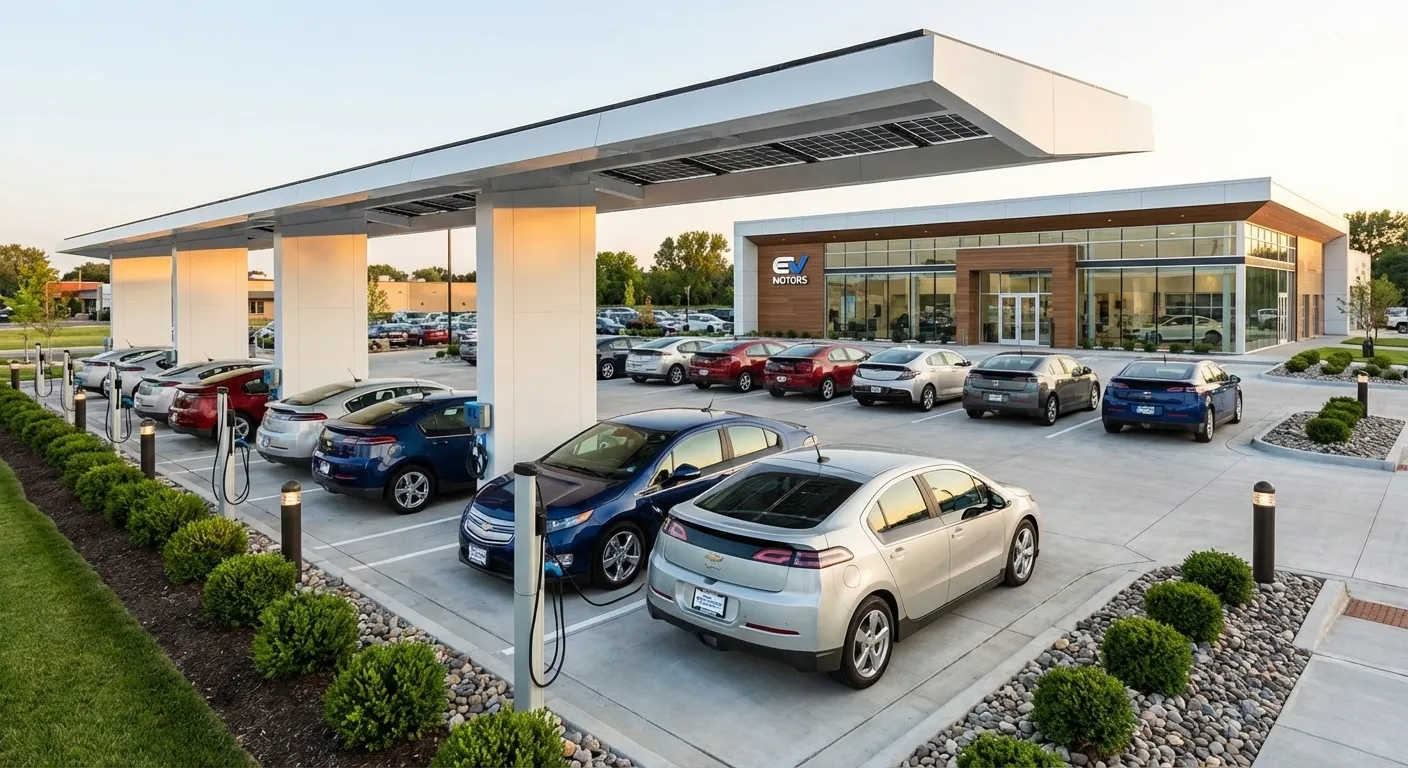
The 2025 EV crash wasn't one thing. It was five things happening simultaneously, each amplifying the others. Here's the breakdown.
1. The iZEV Program Ran Out of Money
This is the single biggest factor. The federal Incentives for Zero-Emission Vehicles program, which provided up to $5,000 for BEVs and $2,500 for PHEVs, was scheduled to run through March 31, 2025. It didn't make it. The program exhausted its funding by January 12, 2025, leaving buyers who were planning winter and spring purchases without a federal incentive.
The data is unambiguous. In the eight months following iZEV's expiry, ZEV sales were approximately 108,000, significantly below the 158,000 sold in the same period of 2024. That's a shortfall of 50,000 vehicles directly attributable to the incentive gap.
Documents later revealed that the federal government knew funding was running out months before telling the public. By the time consumers realized the rebate was gone, the damage was done.
Quebec compounded the problem by significantly reducing its provincial incentive from $7,000 to just $2,000 under the restructured Roulez Vert program. In the province with Canada's highest EV adoption rate (12.8% of all registrations), the combined incentive drop, from $12,000 to $2,000, was devastating.
2. Tariff Uncertainty Froze Chinese EV Imports
In 2024, Canada imposed a 100% surtax on Chinese-made EVs, effectively banning affordable BYD, Chery, and Great Wall vehicles from the Canadian market. Throughout 2025, this tariff remained in place while trade negotiations dragged on.
The uncertainty had a chilling effect beyond just Chinese brands. Consumers who were waiting for cheaper Chinese EVs delayed purchases. Manufacturers that sourced components from China faced cost uncertainty. The entire supply chain operated in a fog of "what happens next?"
Meanwhile, the United States maintained its own 100% tariff on Chinese EVs, and Canada's trade relationship with the US was simultaneously under pressure from USMCA renegotiation tensions. The result: automakers were reluctant to commit to Canadian market strategies, and consumers sat on their wallets.
3. Tesla's Brand Crisis
Tesla's ~63% sales decline in Canada can't be explained by market conditions alone. The broader EV market fell ~16%. Tesla fell nearly four times as hard. Something specific happened to the brand.
The political controversy surrounding Elon Musk's increasingly visible involvement in U.S. politics alienated Canadian buyers, particularly in Quebec, where Tesla's registrations dropped 87% in a single quarter. Musk's association with the Trump administration and his public stances on issues unpopular with Canadian EV buyers created a disconnect between the brand's environmental positioning and its CEO's public persona.
The Cybertruck also hurt. Quality issues, panel gap complaints, and a design that polarized opinions didn't just affect Cybertruck sales, they undermined confidence in Tesla's manufacturing quality across the lineup. When your flagship product becomes a meme, the halo effect works in reverse.
Tesla also failed to meaningfully update the Model 3 or Model Y for the Canadian market. While competitors launched new models and new pricing strategies, Tesla relied on brand loyalty in a market where brand loyalty was actively eroding.
4. The Affordability Gap Widened
In 2024, the average transaction price for a new EV in Canada was significantly higher than the average for a comparable gas vehicle. When the iZEV rebate existed, it narrowed that gap. When it disappeared, the gap returned in full force.
The Parliamentary Budget Officer estimated that without the iZEV program, the relative ownership cost of BEVs would need to decrease by 33% to meet Canada's ZEV sales target of 60% by 2030. In other words, EVs were still too expensive for mainstream adoption without incentive support.
Rising interest rates throughout 2025 made the problem worse. Monthly payments on a $50,000 EV at 7% interest are significantly higher than payments on a $35,000 gas car at the same rate. For budget-conscious buyers, which, in this economy, is most buyers, the math didn't work.
5. Hybrids Stole Market Share
The hybrid surge was partly a response to everything else on this list. Consumers who wanted to reduce emissions but couldn't afford a full EV, didn't trust the charging network, or were spooked by the incentive gap turned to hybrids.
Toyota, in particular, benefited enormously. Their hybrid lineup, RAV4 Hybrid, Corolla Hybrid, Camry Hybrid, offered fuel savings without any of the infrastructure anxiety. No charging needed. No range calculations. Just a car that uses less gas.
At 16.9% market share, hybrids weren't a niche anymore. They were the mainstream green option, and they took market share directly from BEVs.
The Bright Spots
Not everything in 2025 was bad. Two stories stand out.
Gear worth having
As an Amazon Associate, ThinkEV earns a small commission from qualifying purchases — at no extra cost to you.
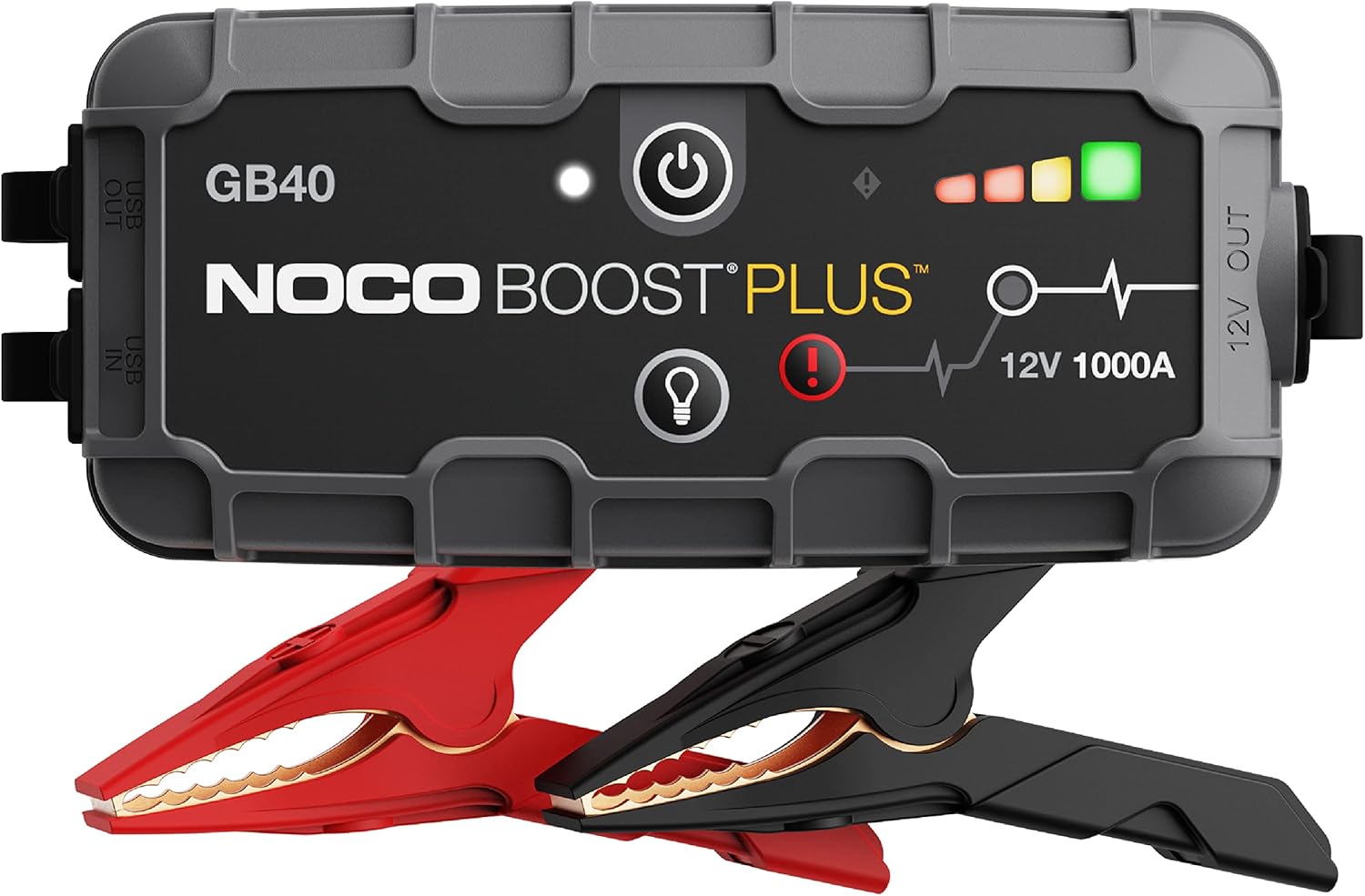
NOCO Boost Plus GB40 Jump Starter
A 1000A lithium jump starter that fits in your glovebox and works on any 12V battery. Your insurance against a dead 12V in a parking lot.
As an Amazon Associate, ThinkEV earns from qualifying purchases — at no extra cost to you.
GM's Equinox EV: General Motors proved that you can sell EVs in a down market if you price them right and distribute them widely. The Equinox EV hit dealer lots across Canada at a competitive price point, with a national dealer network that dwarfs Tesla's service centre model. GM sold over 25,000 EVs and captured 21.2% of the market. The lesson: affordability and accessibility beat brand cachet.
Hyundai and Kia's Consistency: While Tesla imploded, the Korean manufacturers maintained relatively stable EV sales. The Ioniq 5, Kona Electric, EV6, and newly launched EV4 gave buyers options across multiple price points. Kia's EV4, launching in late 2025 for the 2026 model year at $38,995, immediately became the most affordable EV in Canada.
Why 2026 Looks Different
Several structural changes are landing in 2026 that directly address the factors behind the 2025 crash.
EVAP Replaces iZEV
The Electric Vehicle Affordability Program launched on February 16, 2026, offering up to $5,000 for BEVs and $2,500 for PHEVs. The program is funded through 2031, with rebate amounts declining each year, $5,000 in 2026, down to $2,000 by 2030.
Critically, EVAP uses a "final transaction value" cap of $50,000 instead of iZEV's $55,000 MSRP cap. This is both more restrictive (it excludes some vehicles that would have qualified under iZEV) and more targeted (it pushes the incentive toward genuinely affordable EVs). Canadian-made vehicles face no transaction value cap, a deliberate policy to incentivize domestic manufacturing.
Transport Canada has listed 69 eligible vehicles at launch, with more expected throughout 2026. The incentive gap that destroyed 2025 sales is closed.
The China Tariff Deal
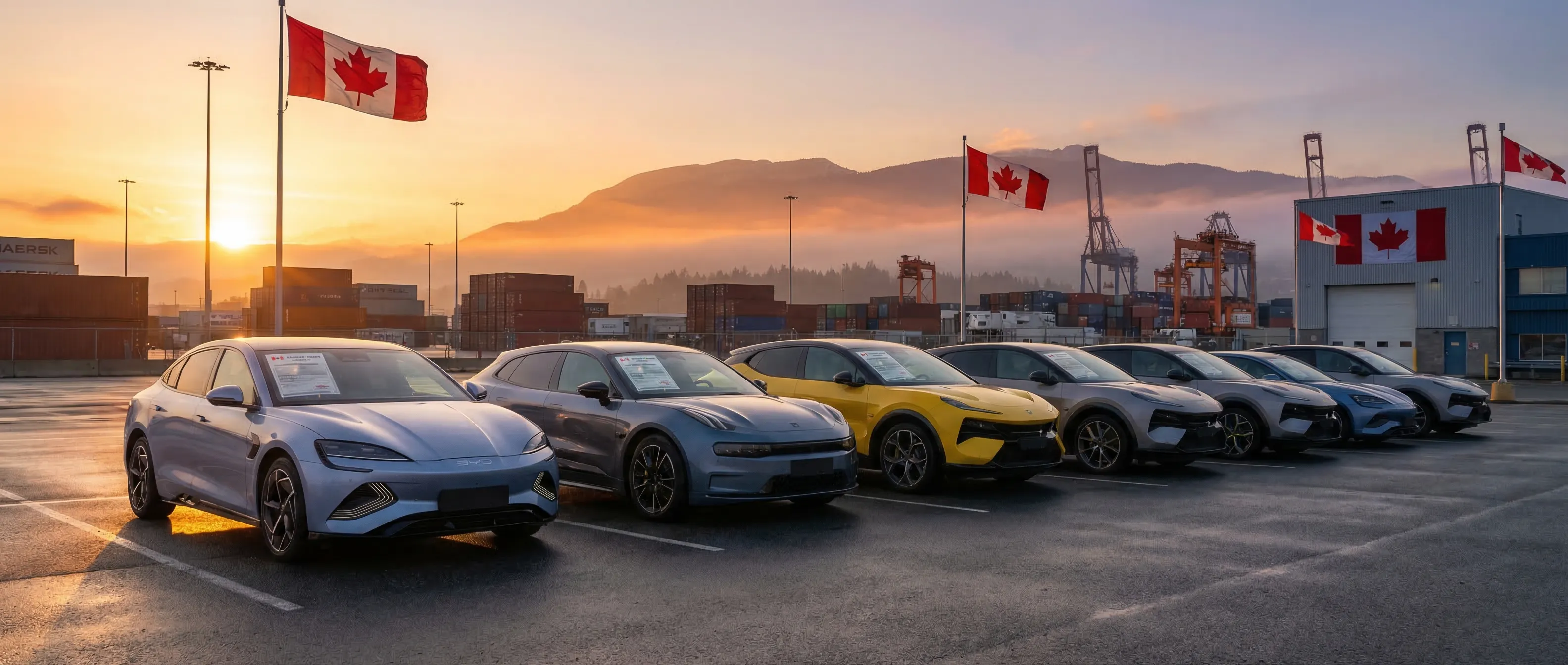
In January 2026, Canada broke with the United States and replaced the 100% surtax on Chinese EVs with a managed import quota. The deal allows up to 49,000 Chinese EV imports at a 6.1% tariff, rising to 70,000 vehicles by 2031. Half of the imports must be priced at or below CA$35,000.
Import permit applications opened March 1, 2026, and first retail deliveries are expected in Q2-Q3 2026, likely in Quebec and BC, where dealer relationships are forming and EV adoption is highest.
BYD, Chery, and Great Wall are preparing Canadian market entries. BYD already operates an electric bus assembly plant in Ontario and has manufacturing facilities cleared for Canadian import. Chinese automakers must establish joint ventures for vehicles or batteries within Canada within three years, ensuring long-term investment, not just imports.
This is a major shift for affordability. Vehicles like the BYD Seal, priced under $45,000, and future sub-$35,000 models will dramatically expand the market.
15+ New Models Under $50,000
The 2026 model year brings more affordable EV options than any previous year in Canada:
- Kia EV4 at $38,995, the most affordable EV in Canada with up to 552 km range
- Chevy Equinox EV at $44,995, the reigning champion continues
- Hyundai Kona Electric at $43,999, subcompact SUV value play
- VW ID.4, refreshed for 2026 with a new generation design
- Kia EV6 Light at $48,995, fast-charging flagship made accessible
- Kia Niro EV, affordable subcompact starting under $45,000
- Chinese imports arriving mid-year, targeting the sub-$35,000 segment
The previous lack of choice at affordable price points was a genuine barrier. That barrier is falling.
The EV Availability Standard
Canada's Electric Vehicle Availability Standard mandates that 20% of new vehicle sales must be zero-emission by 2026, scaling to 60% by 2030 and 100% by 2035. This creates regulatory pressure on manufacturers to price, market, and stock EVs in Canada regardless of short-term market conditions.
Automakers that fail to meet the targets face penalties, which means they have a financial incentive to offer competitive pricing and promotions to move EV inventory. Expect aggressive lease deals and purchase incentives from manufacturers layered on top of the government EVAP rebate.
What This Means for Buyers

If you were thinking about buying an EV in 2025 and held off, you made the right call. The incentive gap was real, the options were limited, and the uncertainty was justified.
2026 is a different picture. Here's my timing advice based on the data:
Buy now (Q1 2026) if you want maximum savings. The EVAP rebate is highest in 2026 ($5,000) and decreases every year. Vehicles like the Equinox EV, Kona Electric, and EV4 are on dealer lots today and qualify immediately.
Gear worth having
As an Amazon Associate, ThinkEV earns a small commission from qualifying purchases — at no extra cost to you.

Grizzl-E Classic Level 2 EV Charger (40A)
Canadian-made and rated for minus 40C winters. 40A / 9.6 kW, NEMA 14-50, indoor/outdoor, 24-ft cable. The charger built for Canadian weather.
As an Amazon Associate, ThinkEV earns from qualifying purchases — at no extra cost to you.
Wait until Q2-Q3 if you're interested in Chinese EVs. BYD and others should have retail deliveries in Quebec and BC by mid-year. The pricing could be dramatically lower than anything currently available.
Don't wait past 2026 if you want the best deal. The EVAP rebate drops to $4,000 in 2027 and continues declining. The math gets worse every year you delay.
The best deals in 2026 will be on Canadian-made EVs that bypass the EVAP transaction value cap, vehicles like the Equinox EV from GM's Ingersoll, Ontario plant. These can be optioned up without losing eligibility.
Gear worth having
As an Amazon Associate, ThinkEV earns a small commission from qualifying purchases — at no extra cost to you.

Amazon Basics Seat Belt Cutter and Window Hammer
The 10-dollar tool you hope to never use: cuts a jammed belt and shatters a window in an emergency. Mount it within reach.
As an Amazon Associate, ThinkEV earns from qualifying purchases — at no extra cost to you.
Where 2026 Stands
The 2025 Canadian EV market crash was real, but it was fixable. It was caused by policy gaps, not consumer rejection. The data is clear: when incentives existed (2024 and before), EV adoption grew steadily. When they disappeared (2025), sales collapsed. When they returned (February 2026), the conditions for recovery were immediately in place.
The recovery won't be instant. Consumer confidence was damaged, and it takes time to rebuild. Tesla's brand problems in Canada aren't solved by a federal rebate program they don't qualify for. And the hybrid surge represents a genuine alternative pathway that many buyers find more comfortable.
But the structural factors favour a rebound. The EVAP incentive is funded through 2031. Chinese EVs are entering the market at unprecedented price points. The EV Availability Standard creates manufacturer pressure. And there are simply more good, affordable EVs available in Canada than at any point in history.
The 2025 crash was the market breaking. 2026 is the market being rebuilt, with better foundations.
Gear worth having
As an Amazon Associate, ThinkEV earns a small commission from qualifying purchases — at no extra cost to you.

Roadside Emergency Safety Kit
Jumper cables, a portable air compressor, tow strap, first aid, and more for when something goes wrong between chargers. Canadian winters do not forgive the unprepared.
As an Amazon Associate, ThinkEV earns from qualifying purchases — at no extra cost to you.
Related Reading
- Why Tesla Doesn't Qualify for Canada's New EV Rebate, And What to Buy Instead, EVAP breakdown and the best alternatives
- Every Dollar You Can Save on an EV in Canada (2026 Guide), Complete incentive breakdown for every province
- New EVs Coming to Canada in 2026-2027, Full timeline of upcoming models and availability
Gear worth having
As an Amazon Associate, ThinkEV earns a small commission from qualifying purchases — at no extra cost to you.

Escape Tool Keychain (5-Pack, Glass Breaker)
A keychain-sized window breaker and belt cutter for every set of keys in the family. Tiny, until the day it matters.
As an Amazon Associate, ThinkEV earns from qualifying purchases — at no extra cost to you.

Founder & Chief Editor
Vlad Pereira is the founder and chief editor of ThinkEV.ca, the Canadian electric-vehicle publication he writes and edits from Courtenay, British Columbia. He covers EV pricing, federal and provincial rebates, charging costs, and the Chinese manufacturers now entering Canada, from the buyer's side rather than the press-fleet side. ThinkEV is a venture of Vlad Pereira Online; his writing on health, income and the long game lives at vladpereira.com.
Frequently asked questions
Will Canadian EV sales fully recover to 2024 levels in 2026?
Is Tesla done in Canada?
When will Chinese EVs actually be available to buy in Canada?
Are hybrids a better choice than EVs right now?
How does the EV Availability Standard affect what I can buy?
What's the cheapest EV I can buy in Canada in 2026?
More EV & road-trip finds
Affordable upgrades worth a look — tap any to check the price on Amazon.
 ★ 692
★ 692USB-A to USB-C CarPlay Adapter (3-Pack)
View on Amazon ★ 87
★ 87Car Window Sun Shades for Kids (4-Pack)
View on Amazon ★ 68
★ 68WeatherTech FloorLiner for Tesla Model 3
View on Amazon ★ 4,050
Touchscreen Mist Screen Cleaner Kit
View on Amazon ★ 419
★ 419RGB Car Interior LED Strip Light
View on Amazon ★ 4,626
HoogaLife Hanging Car Diffuser (2-Pack)
View on Amazon ★ 4,424
Sun Visor Card and Document Organizer
View on Amazon ★ 308
★ 308Coiled Lightning Car Cable for iPhone (2-Pack)
View on AmazonRead, Plan, Then Stay Current
Explore our expert articles to understand incentives and ownership costs, use the map to pressure-test charging reality, then subscribe so new EV coverage comes straight to you.
Continue Reading
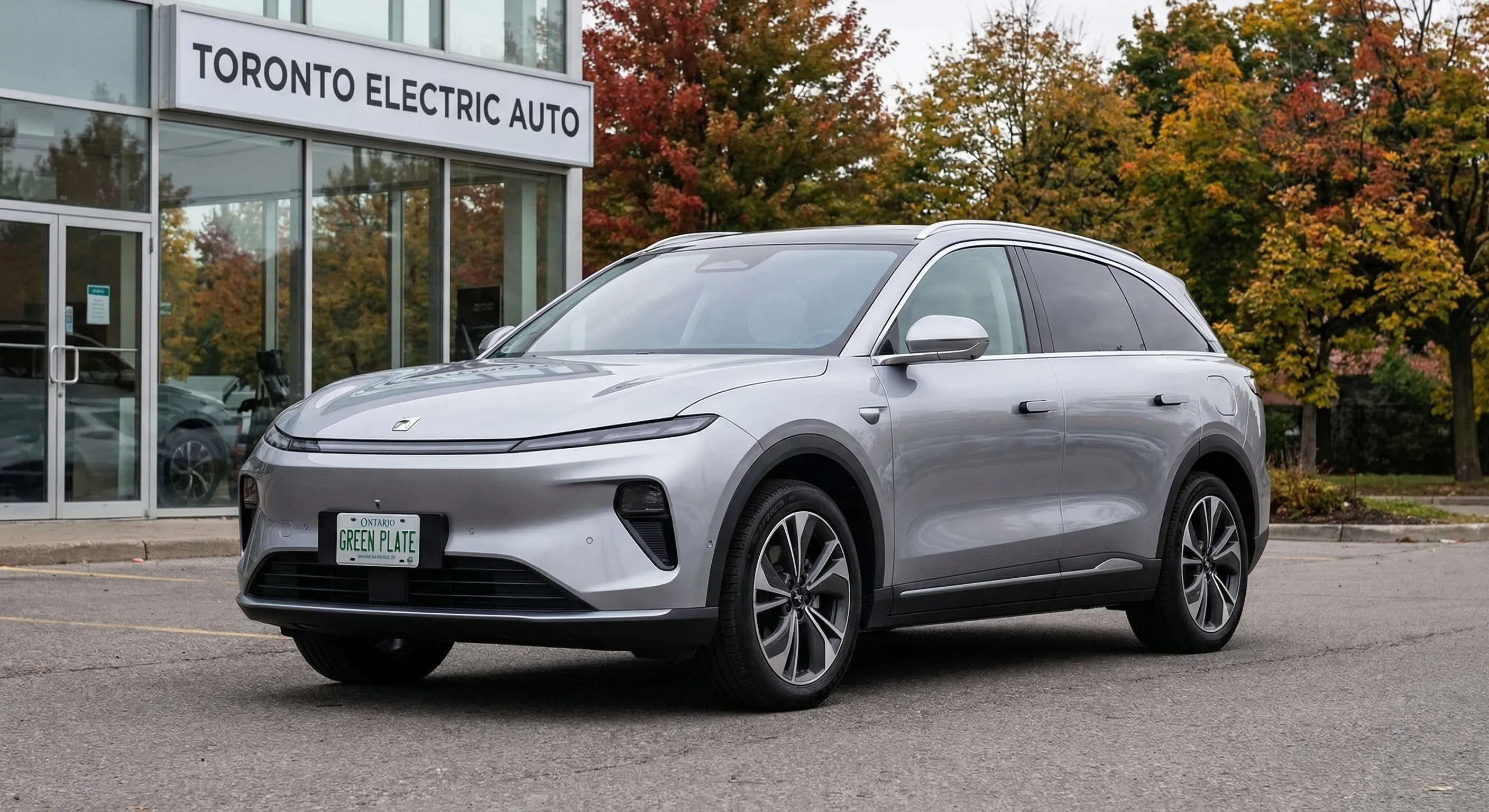
Chery EVs Coming to Canada: Models and Prices
Who Got Canada's First Chinese EV Import Permits
Uber and Lyft EV Switch Canada 2026: The Savings
New EV Brands Coming to Canada: BYD, Chery, Xpeng

When Will New EVs Arrive in Canada? The Timeline