Key takeaways
- Tesla Canadian sales dropped roughly 60% in 2025 to about 18,000 units, but the 2026 Juniper refresh Model Y is a genuinely better vehicle than the one that presided over that collapse
- The Model Y Long Range at approximately $55,000 sits right at the EVAP eligibility line, the Performance trim at approximately $62,000 does not qualify for the federal $5,000 rebate under any circumstances
- Competitors like the Ioniq 5 ($47K), Chevy Equinox EV ($44K), and Kia EV5 ($43,495) all comfortably qualify for EVAP and are currently being discounted by $10,000 or more by their manufacturers
- The Supercharger network remains Tesla's single biggest real-world advantage in Canada, but it now works with other EVs via CCS adapter, so exclusive access no longer exists
- Tesla is still the right answer for certain Canadian buyers, but not for every buyer, and the financial math has shifted significantly enough in 2026 that the decision deserves careful analysis
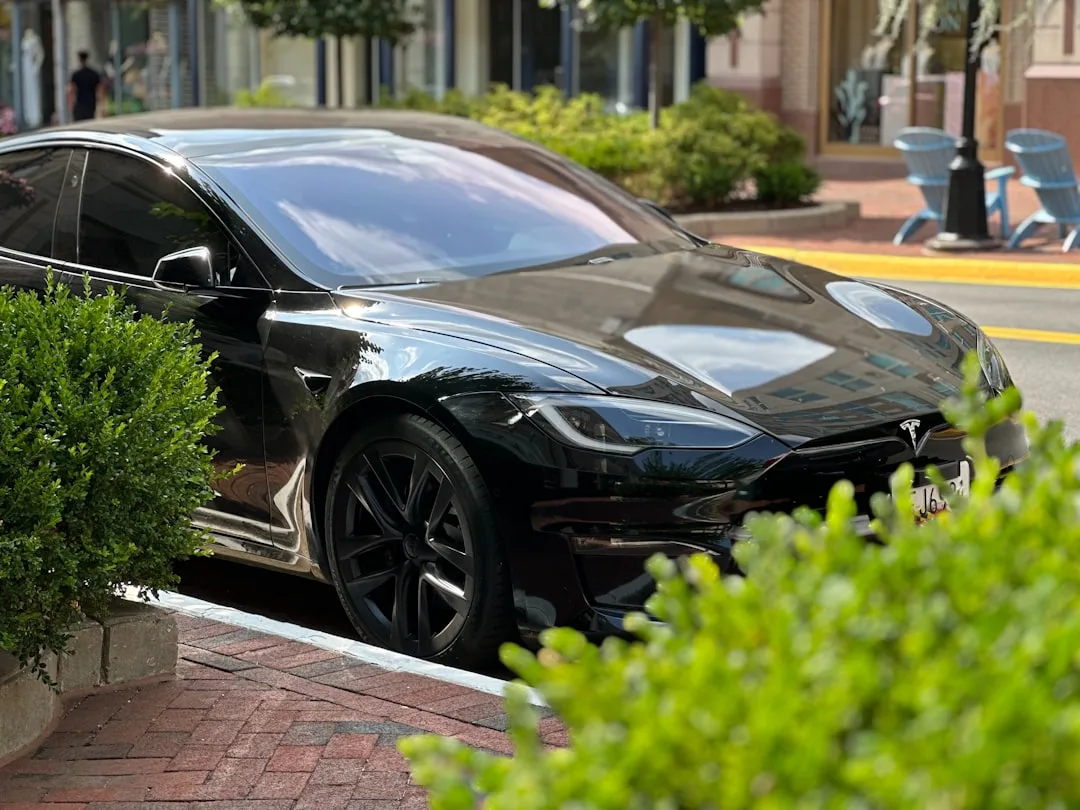
Tesla sold roughly 18,000 vehicles in Canada in 2025. That is down approximately 60% from their peak. The overall Canadian EV market contracted 23% year-over-year. Tesla fell twice as hard as the market itself. In a year when the EV market broadly contracted, Tesla contracted twice as fast as its own industry. If you are looking at a Model Y right now, you are doing so against that backdrop, and against the question every serious Canadian EV shopper eventually ends up asking: is this brand still worth it?
My answer is not a clean yes or no. It depends on which Tesla you're considering, where you live in Canada, what you're actually comparing it to, and, I will say this plainly, how much Elon Musk's recent public behaviour factors into a major purchase decision for you personally. I'm not going to pretend that last part is irrational. It isn't. Brand association is real. Resale impact is real and documented. But I'm also not going to let the political noise cloud what needs to be a clear product and financial assessment. The 2026 Model Y with the Juniper refresh is a better vehicle than the Model Y that presided over this sales collapse. That matters, and it needs to be part of any honest analysis.
Let me walk through the complete picture, what happened, what changed with the product, where Tesla still wins, where it has genuinely been surpassed, what the service reality looks like across this country, and what the math actually produces for a Canadian buyer after all rebates and incentives are factored in.
What Actually Happened to Tesla's Canadian Sales
The 60% decline did not happen because the Model Y suddenly became a bad car overnight. It happened because several unfavourable conditions converged in a compressed timeframe, and understanding each one separately is essential if you're trying to make a rational purchase decision rather than an emotional one.
The rebate structure shifted decisively against Tesla. The federal EVAP rebate was suspended in late 2024, then reinstated with a significantly tighter $50,000 final transaction value cap. Tesla's entire Canadian lineup, Model Y starting around $55,000, Model 3 Long Range and Performance trims pushing well above that, Model X and Model S at luxury territory, was structurally excluded from benefiting. When competitors suddenly became $5,000 cheaper in effective terms because they qualified and Tesla did not, a segment of buyers who had been on the fence shifted immediately to the alternatives. Five thousand dollars is real money. Stacked with provincial incentives in BC, it can compound substantially.
Competition reached genuine parity in ways it had not before. In 2021 when Tesla commanded Canadian EV sales, the alternatives were either genuinely limited or supply-constrained. The Ioniq 5 was brand new and hard to get. The Chevy Equinox EV did not exist. The Kia EV5 did not exist. Kia's EV4 at the sub-$40,000 price point did not exist. The BYD lineup in Canada barely existed.
The entire competitive picture has been transformed in the space of three years, and buyers who would have defaulted to a Model Y in 2022 because it was the clear best available option now face a genuinely different decision. The Ioniq 5 charges faster than the old Model Y. The Equinox EV has a more conventional interior that appeals to buyers who find Tesla's screen-centric approach alienating.
The EV5 offers a more premium-feeling cabin at a lower price point. These are not marginal improvements, they are category-level changes in what competitors offer.
Brand reputational damage was real and concentrated in Tesla's core demographic. I'll be direct here because hedging helps nobody. Elon Musk's political activities and public statements since late 2024 generated significant negative sentiment toward the Tesla brand. The Tesla customer profile historically skewed toward educated, values-driven, early-adopter buyers, precisely the segment most likely to vote with their purchase decision when they disagree with a company's CEO. Sales data suggests that a meaningful portion of that cohort made exactly that decision. That is neither surprising nor irrational. It is a market response, and the numbers reflect it clearly.
The used Tesla market created downward pressure on new sales. As early adopters and values-driven owners listed their vehicles, a wave of used Model Y inventory hit the Canadian market simultaneously. When a clean 2022 Model Y Long Range can be found for $35,000-$37,000, the value proposition of a new $55,000 Juniper requires a more compelling justification. The used Tesla market did not cause the sales collapse, but it amplified it.
The broader EV market contraction was itself a headwind. The overall Canadian EV market contracted 23% in 2025. Consumer confidence in EVs nationally was under pressure from range anxiety concerns, the ongoing charging infrastructure gaps in rural Canada, high interest rates, and general economic uncertainty. Tesla operated in that context. The 60% Tesla decline looks more severe when you understand that even the overall EV market was shrinking, Tesla fell at more than twice the rate of the market segment it operates in.
None of these factors mean the car is bad. They mean the conditions around Tesla in Canada became significantly harder in a very short period, at exactly the moment when strong, well-priced competition finally arrived in volume.
The Product vs. The Brand: A Necessary Separation
Here is where I need to be precise, because conflating the product quality and the brand circumstances leads to bad purchase decisions in both directions. Some buyers are avoiding a genuinely improved product because of brand association concerns. Other buyers are choosing the brand loyalty reflex over what the financial analysis actually supports. Both approaches are errors.
The 2026 Model Y with the Juniper refresh is genuinely improved across the areas that previously made it weak relative to European and Korean competition.
The interior, long the Model Y's most criticised weakness, received a serious overhaul. Ambient lighting runs throughout the cabin and responds to different driving modes and time of day in a way that actually enhances the interior atmosphere rather than feeling gimmicky. A rear entertainment screen was added, which is something the previous Model Y conspicuously lacked while competitors like the Ioniq 5 had offered it for years. Seat comfort and support were improved, the previous generation seats were polarising, with long-drive owners frequently citing discomfort. The acoustic insulation package was upgraded, producing a noticeably quieter highway driving experience. The external styling was refreshed with a cleaner front fascia and revised lighting signatures.
The central instrument cluster situation remains what it has always been: you read your speed and primary navigation information from the central touchscreen. Tesla improved the software presentation to make that experience more intuitive, and the heads-up display functionality expanded. But if you find driving without a traditional instrument cluster in front of you to be a genuine dealbreaker, the Juniper addresses everything except that particular design philosophy. That is a known, deliberate Tesla design choice that is unlikely to change.
Range improved meaningfully through efficiency rather than by adding a larger battery pack, which is the more sophisticated engineering approach. The Model Y Long Range is now rated at approximately 533 km under ideal conditions, with NRCan-equivalent real-world testing suggesting 470-500 km in moderate Canadian spring and autumn driving. In winter at -15C to -20C, which is the relevant metric for the majority of Canadian owners outside of coastal BC, expect 310-370 km. That is not class-leading in winter performance, but it is competitive with every mainstream alternative except the BYD lineup, which uses a different battery chemistry with better cold-weather characteristics.
The software advantage that Tesla has carried since the beginning of the EV era remains its most durable competitive moat. Over-the-air updates in Tesla's system actually add meaningful features, new navigation functionality, improved driver assistance capabilities, expanded Supercharger integration, rather than just patching vulnerabilities. The regularity and depth of these updates creates an ownership experience where the car genuinely improves after you buy it, which no other automaker delivers at this level. Hyundai's BlueLink system has improved. GM's Ultifi platform is developing. But neither delivers the same integrated, continuously improving experience that Tesla has built over a decade.
Full Self-Driving is the polarising one. Musk's public timelines for FSD have been famously wrong, repeatedly, for years. The technology itself, the actual capability the system demonstrates in Canadian urban and suburban driving, is meaningfully more advanced than any driver assistance product any other automaker offers. It is not fully autonomous. It requires supervision. But if advanced driver assistance capability is a priority for your purchase decision, there is no meaningful competitor in Canada right now. Sony Honda's Afeela, which was positioned to challenge Tesla's software leadership, has been halted indefinitely. Every other OEM is behind by at least two product generations.
The Supercharger network is Tesla's other significant product advantage, though the competitive dynamics have changed in important ways. Tesla opened its Canadian Supercharger network to other EV brands through a CCS adapter programme. Non-Tesla EVs can now charge at Supercharger locations. What this means in practice: if you buy an Ioniq 5, you can charge at Tesla Superchargers with the appropriate adapter. The experience is somewhat less smooth, you need the Tesla app, authentication is a separate step, billing is not integrated into the vehicle's navigation system, but the network access exists.
For Tesla owners, the practical implication is that the Supercharger exclusivity argument is gone. You are no longer paying a Tesla premium to access a network unavailable to competitors. You are paying for better integration, a larger Canadian Supercharger footprint than any competitor, and the most reliable fast-charging hardware on the market. Those are still real advantages, but they are diminished compared to the pre-network-opening era.
The brand consequences that matter beyond subjective sentiment are three specific, measurable things:
Resale value trajectory. The Canadian used Tesla market is oversupplied with 2021-2023 Model Y inventory from departing early-adopter owners. Resale values for that generation are meaningfully lower than comparable-age competitors. If you purchase a new Model Y today on a 3-5 year ownership cycle, you are exposed to that used market dynamic when you go to sell. The Ioniq 5 and Equinox EV do not yet carry that used market overhang because neither has been sold in Canada long enough to create the same inventory profile.
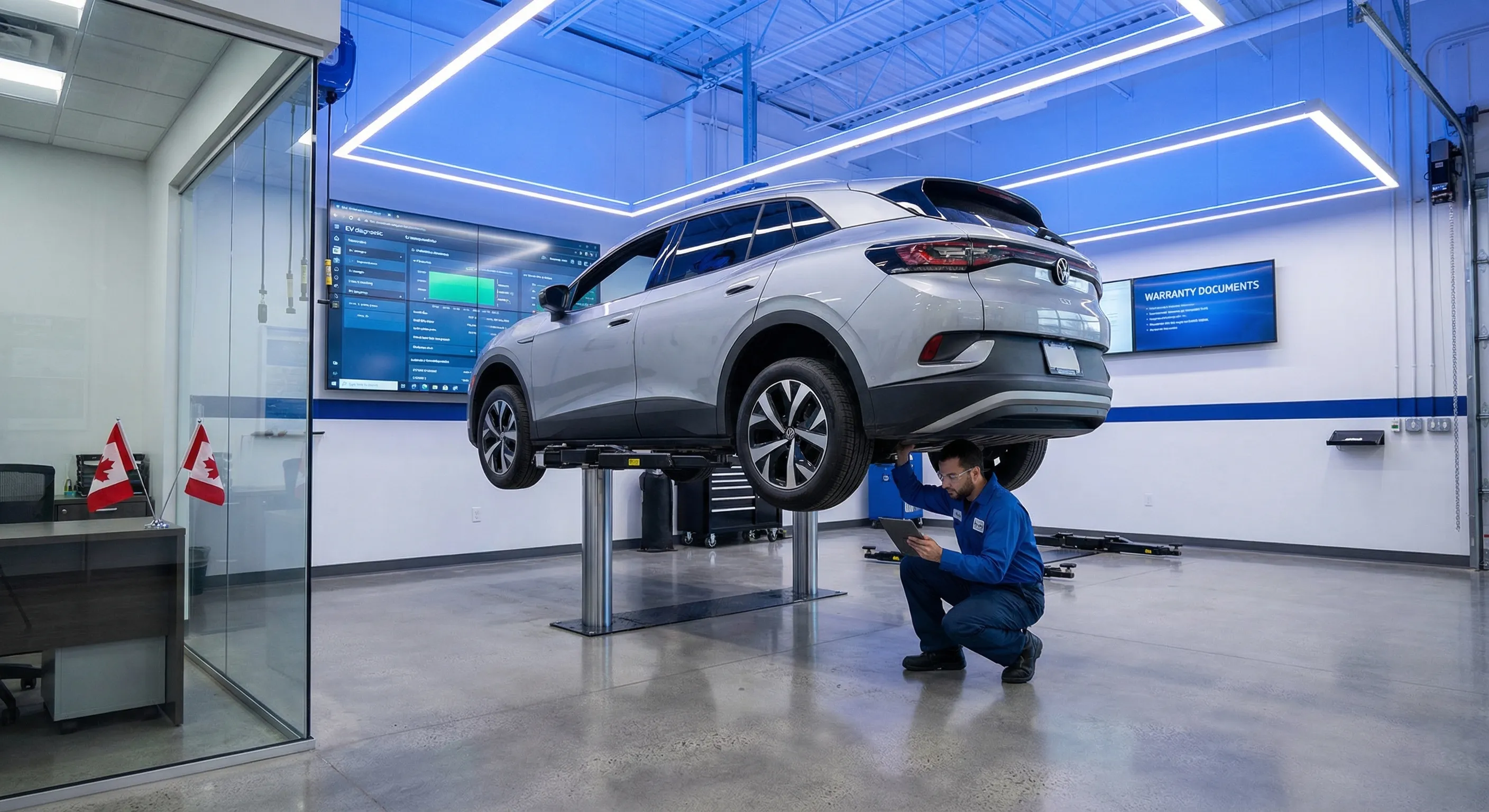
Service infrastructure density. Tesla's service centre footprint in Canada consists of a small number of owned locations concentrated in the three largest metro areas. The mobile service fleet is real and handles a meaningful volume of minor repairs. But for anything requiring a lift, specialist diagnosis, or parts replacement, you are going to a service centre, and if you are outside Toronto, Vancouver, or Montreal, that may represent a 3-6 hour return journey. This is not a hypothetical concern for the majority of Canadians who do not live in those three cities.
Brand perception in your community. If this matters to you, it matters. Owning a Tesla in 2026 carries a different social meaning in some communities than it did in 2022. If you are someone for whom that social dimension is relevant, either because you share Musk's political views and find that alignment positive, or because you find the association problematic, that is a legitimate factor in a major purchase decision. I am not going to tell anyone how to weigh it. I will say that it is a real factor that affects ownership experience in ways that pure product specifications do not capture.
Gear worth having
As an Amazon Associate, ThinkEV earns a small commission from qualifying purchases — at no extra cost to you.

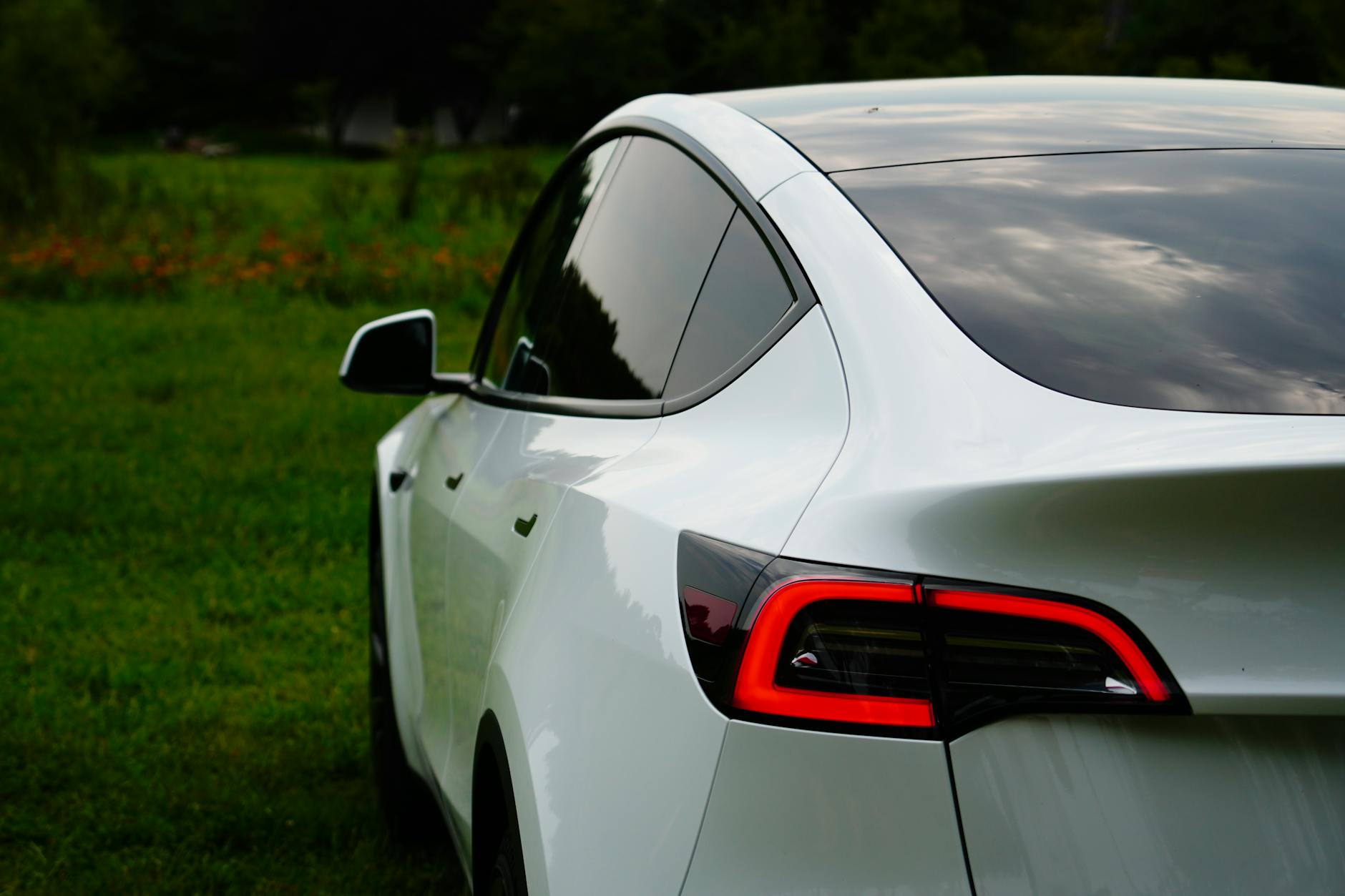
WeatherTech FloorLiner for Tesla Model 3
Deep-channel liners that trap every drop of slush and salt. The difference between a ruined interior and a showroom-fresh cabin after a Canadian winter.
As an Amazon Associate, ThinkEV earns from qualifying purchases — at no extra cost to you.
When a Tesla Still Makes Sense in Canada
I'm going to give you the genuine, honest cases for buying a Tesla in 2026. These are real scenarios where the Tesla is the better answer, not a rationalisation for brand loyalty.
You live and primarily drive in Toronto, Vancouver, or Montreal. Service access in these cities is adequate. Supercharger density is among the highest in North America in each of these markets. The ecosystem works as advertised, mobile service handles most minor issues quickly, service centres are accessible within a reasonable distance, and the smooth Supercharger integration with in-car navigation means road trips between these cities are genuinely frictionless in a way that other EVs and CCS-based charging networks are not quite replicating yet.
Software quality is your first-order priority, not just a consideration. There is a type of buyer, and I encounter them regularly in this industry, for whom the technological integration of a vehicle is not just a nice feature but a fundamental criterion. If you are the person who adopted Apple products before the mainstream because you valued the integrated ecosystem over individual spec sheets, the Model Y's software experience is designed for you. The integration of the instrument, navigation, audio, climate, charging, and connectivity systems into a single coherent platform, continuously updated, has no peer in the Canadian market. Competitors are improving. But "improving" is not the same as "arrived."
You want the longest-established EV reliability data. Tesla has been selling volume EVs in Canada since 2013. There are Model S vehicles in this country approaching or exceeding 500,000 kilometres. The long-term battery degradation profile, drivetrain reliability pattern, and high-mileage ownership cost structure are known quantities with real data behind them. For the Ioniq 5, the Equinox EV, the EV5, these are newer platforms. The long-term data is still being collected. If you are a high-mileage driver planning to keep a vehicle for 10+ years, Tesla's track record on battery longevity provides a level of confidence that no newer competitor can match on empirical grounds.
You are buying a clean used Tesla at a post-collapse valuation. The sales collapse and early-adopter exodus have created genuinely exceptional value in the Canadian used Tesla market. A clean 2022-2023 Model Y Long Range with 50,000-70,000 km is available in many Canadian markets in the mid-$30,000 range. That price point gets you the full Supercharger network access, class-leading software, proven battery performance, and 400-430 km of real-world summer range. It does not qualify for the EVAP rebate, which applies only to new vehicles, but the purchase price reflects a discount that exceeds what any rebate would have provided. For a buyer whose priority is maximising value for their dollar in the EV space, a well-selected used Tesla is one of the best choices in Canada right now.
You are cross-shopping against another vehicle that also does not qualify for EVAP. The rebate argument disappears when neither vehicle qualifies. If you are comparing a Model Y Long Range against a BMW i4, a Genesis GV60, or a Volvo EC40, none of which sit at the EVAP-eligible price point, the Tesla's software and charging integration advantages reassert themselves as the primary differentiators. At comparable effective prices, the Model Y's superiority in OTA updates and charging network integration is a meaningful advantage.
FSD and advanced driver assistance are genuinely important to you. No other automaker operating in Canada offers a comparable product. If you commute in complex urban environments and want the most capable driver assistance system available, the Model Y with FSD is the answer. That is not a future promise, it is the current state of the technology relative to competitive alternatives.
When the Alternatives Win
Now for the equally honest cases where the competitors are the better choice for a Canadian buyer in 2026. These are real, not contrarian positions.
You want EVAP eligibility and you want it without uncertainty. The Hyundai Ioniq 5 at approximately $47,000 qualifies. The Chevy Equinox EV at approximately $44,000 qualifies. The Kia EV5 at $43,495 qualifies. All three put the effective purchase price well below any new Tesla model before you add provincial incentives. The financial delta here is not marginal, it is $5,000 in direct federal savings, stacked on top of the price differential between the vehicles themselves. In British Columbia, a buyer combining the $5,000 EVAP with the CleanBC Go Electric provincial rebate and current Hyundai or Kia promotional pricing could be looking at effective EV ownership in the mid-$30,000s for a vehicle with 500+ km range and genuine premium features. That is a category-redefining price point.
Gear worth having
As an Amazon Associate, ThinkEV earns a small commission from qualifying purchases — at no extra cost to you.

VIOFO A229 Pro 4K Dash Cam
4K front plus 2K rear with parking mode and GPS. Your silent witness for insurance claims, with always-on sentry recording while parked.
As an Amazon Associate, ThinkEV earns from qualifying purchases — at no extra cost to you.
You live outside Toronto, Vancouver, or Montreal. If you are in Kelowna, Saskatoon, Fredericton, Sudbury, Red Deer, Prince George, or any of the dozens of mid-sized Canadian cities where the majority of Canadians actually live, the dealer network reality matters. A Hyundai dealer in almost every city above 30,000 people means warranty work, routine service, and unexpected repairs are handled locally, within a reasonable distance, by trained technicians with a parts supply chain behind them.
Tesla's mobile service is genuinely good for the things it handles. But it does not handle everything, and a service centre that is three hours away is structurally different from a dealer that is twenty minutes away. For a purchase decision on a vehicle that you will own for five or more years, this is not a minor consideration.
You are on a 2-3 year vehicle cycle and resale value matters. The current used Tesla inventory overhang in Canada is a real financial exposure for anyone planning to sell in the near term. If you buy a new Model Y today and plan to sell or trade in 2028-2029, you are betting on the used Tesla market recovering from its current oversupply situation. That may happen. It may not happen as quickly as you need it to. The Ioniq 5 and Equinox EV carry no comparable inventory overhang, and Hyundai and Kia's brand trajectory in Canada is positive, not negative.
Hyundai or Kia are offering $10,000 or more off in March 2026. At the time of this writing, Hyundai and Kia have both been running promotional pricing with $10,000 or more in combined manufacturer discount and cash incentives on their EV lineups across Canadian dealers. Stack that with the $5,000 EVAP rebate and the result is effective savings of $15,000 or more compared to a base new Tesla. That gap does not disappear because the Model Y has better software. It is a $15,000 gap. At some point, software quality stops being a sufficient justification.
Interior feel and conventional ergonomics matter to you. I am stating this plainly because it needs to be said: a meaningful portion of the population finds Tesla's screen-centric cabin deeply uncomfortable to live with. No traditional instrument cluster. Climate controls only on the touchscreen. Speed displayed on a central screen rather than directly ahead.
For some buyers this is a non-issue or even a selling point. For others it is a persistent source of driving discomfort and distraction. The Ioniq 5, Equinox EV, and EV5 all offer more conventional instrument layouts that place critical driving information in the driver's primary sightline. If you have test-driven a Tesla and found the central-screen orientation to be a genuine ergonomic concern for you personally, that is a valid reason to look elsewhere, and the alternatives are now genuinely competitive on every other dimension.
You want the most vehicle-per-dollar in the Canadian EV market right now. The Kia EV5 at $43,495 effective, the Chevy Equinox EV at $39,000 after EVAP, and the Ioniq 5 at $42,000 effective after current promotional pricing and EVAP represent extraordinary value for what they deliver. They are not the Model Y. They do not have the same software ecosystem. They do not have the same charging network integration. But they are close enough in range, performance, feature content, and interior quality that the value gap, particularly after all incentives, is very difficult to justify away unless you have a specific, concrete use case that only Tesla addresses.
Gear worth having
As an Amazon Associate, ThinkEV earns a small commission from qualifying purchases — at no extra cost to you.
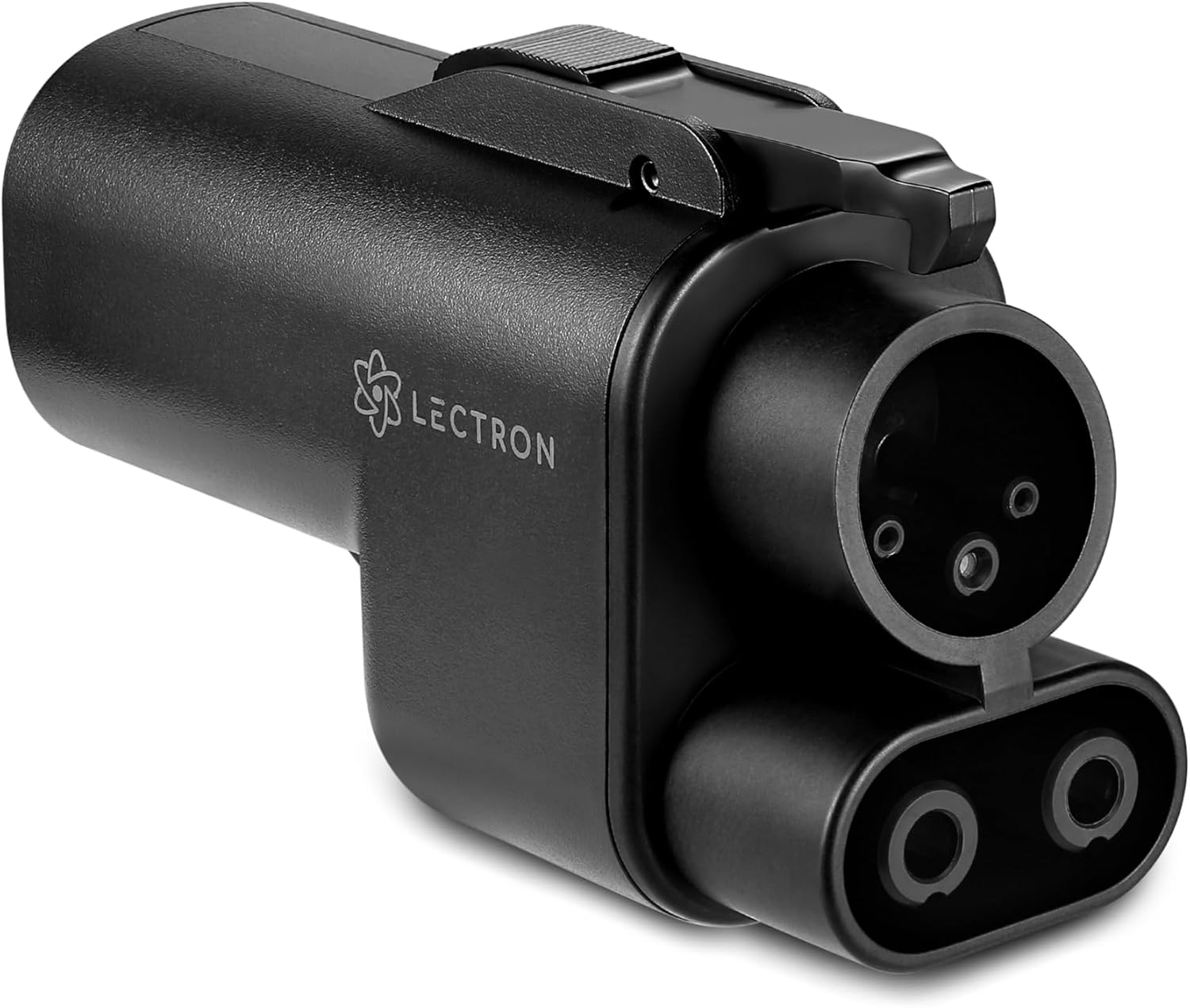
Lectron NACS to CCS Fast-Charge Adapter
Unlock every CCS fast charger for your Tesla, up to 500A DC. Never get stranded at a non-Tesla DC station again.
As an Amazon Associate, ThinkEV earns from qualifying purchases — at no extra cost to you.
The Service Question Nobody Asks Directly
Service is the sleeper issue in every Canadian EV market discussion. Every article covers range. Every comparison covers price. Almost nobody addresses seriously and systematically what happens when something goes wrong with your vehicle, where you take it, and how long you wait.
Tesla's service model is structurally different from every other automaker selling vehicles in Canada. Tesla operates owned service centres rather than franchise dealerships. The company deploys mobile service technicians for a defined list of repairs that can be performed without a service lift, charging port repairs, software diagnostics, minor body work, cabin filter replacement, sensor recalibration, tire rotations in markets where Tesla offers that service. For many owners, particularly those whose vehicles are relatively new and experiencing software-related issues, the mobile service model is adequate and often faster than traditional dealer service.
The problem is the category of repairs that mobile service cannot handle. Body damage from accidents, a dented door, a cracked front bumper, a rear panel that got involved with a parking structure column, requires a collision repair centre or service centre with lift capacity. Suspension components. Brake work beyond pad replacement. Anything requiring physical disassembly of major vehicle systems. For these repairs, you need to either visit a Tesla service centre or use a third-party Tesla-certified collision centre, which is a smaller category than general automotive body shops.
In Toronto, this is manageable. Multiple service centres operate in the GTA, scheduling has improved substantially from the bad years in 2021-2022 when multi-month wait times were documented, and the mobile service fleet handles a high proportion of routine visits. Same situation in Vancouver and Montreal.
Outside those three cities, the situation is genuinely different. If you are in Kelowna and your Model Y needs a suspension component replaced after hitting a pothole on Highway 97 in March, you are potentially looking at a significant service journey. The same repair on a Hyundai Ioniq 5 happens at the Hyundai dealer on Harvey Avenue.
Parts supply chain is a separate, related issue. Tesla's parts supply chain, particularly for body panels, trim components, and collision repair parts, has historically been slower than the industry average. This has improved since the worst period in 2021-2023 when Tesla owners in Canada were documenting months-long waits for collision repair parts. But it has not reached parity with established OEM parts distribution networks. If you are a driver who is concerned about minimising total time off the road when something unexpected happens, this is worth factoring into your decision.
None of this should be overstated. Modern EVs, including Teslas, are mechanically simpler than internal combustion vehicles. Fewer moving parts. No oil changes. Brake wear is dramatically reduced through regenerative braking. The majority of Tesla owners in Canada go through their ownership period without experiencing significant service issues. What I am describing is the tail risk, what happens in the scenarios outside normal operation, and how that tail risk differs depending on where you live in this country.
The practical recommendation is this: if you are in a major Canadian metro area and you are comfortable with the service model, service quality is not a reason to avoid Tesla. If you are outside the major metros, honestly assess your proximity to service infrastructure and your tolerance for service-related inconvenience before committing to the premium the Tesla commands over its alternatives.
The Math After Rebates: Real Canadian Scenarios
The abstract discussion of rebates and pricing is meaningless without specific numbers. Let me work through four realistic scenarios that represent the actual range of Canadian buying situations in 2026.
Scenario A: Model Y Long Range at approximately $55,000, purchased in Alberta
Alberta has no provincial EV incentive, no CleanBC equivalent, no Roulez Vert equivalent. The federal EVAP rebate requires a final transaction value at or below $50,000. The Model Y Long Range at approximately $55,000 exceeds that threshold and does not qualify. The buyer is paying approximately $55,000 plus GST and applicable fees. There is no rebate path on a standard-priced new Model Y in Alberta. Effective all-in cost: approximately $58,000-$60,000 depending on options and fees.
Scenario B: Model Y Long Range at approximately $55,000, purchased in BC
BC's CleanBC Go Electric rebate offers up to $4,000 for battery-electric vehicles under certain price thresholds. The threshold for the provincial rebate has historically been set at approximately $55,000-$60,000 depending on current programme parameters, verify with SCRAP-IT and the CleanBC programme page before counting on eligibility. If the Model Y qualifies for the provincial rebate, the buyer gets $4,000 back. The federal EVAP at $50K cap still likely excludes the Model Y at standard pricing. Effective all-in cost: approximately $51,000-$56,000 depending on provincial rebate eligibility.
Scenario C: Hyundai Ioniq 5 Standard Range AWD at approximately $47,000 in Ontario, with current March 2026 promotional pricing
Hyundai has been running $10,000 in combined factory incentive and dealer cash during March 2026 promotions. Effective list price before rebates: approximately $37,000. Federal EVAP rebate: $5,000 (Ioniq 5 qualifies comfortably under the $50K cap with current pricing). Ontario has no provincial EV incentive. Effective all-in cost: approximately $32,000. That is a $20,000+ gap below the Alberta Tesla scenario for a vehicle with 395 km rated range, 350 km real-world summer range, 800V architecture with 239 kW DC fast charging (far faster than the Model Y), and a 5-star Euro NCAP safety rating.
Scenario D: Chevy Equinox EV 2LT at approximately $44,000 in Ontario
Federal EVAP rebate: $5,000. No Ontario provincial incentive. Some dealers are offering additional cash incentives on Equinox EV inventory. Effective all-in cost: $37,000-$39,000 depending on dealer. The Equinox EV 2LT is a well-equipped vehicle with a large 17.7-inch screen, 150 kW DC fast charging, approximately 480 km rated range, and a full GM dealer network across Canada. At $37,000-$39,000 effective, this is among the strongest value propositions in the Canadian EV market.
Scenario E: Used 2022 Model Y Long Range in Toronto
A clean 2022 Model Y Long Range with 60,000 km in good condition can be found in the Toronto used market for $34,000-$37,000 depending on colour, options, and seller. No EVAP rebate applies. But the purchase price produces a per-dollar value that is difficult to match anywhere in the Canadian EV market. The 2022 LR delivers approximately 480 km rated range, access to the full Supercharger network, and the full suite of Tesla software features. Battery degradation on a well-maintained 2022 with 60,000 km is typically 3-7% based on documented owner data. At $35,000, this is one of the most compelling buys in Canadian EVs right now, for the right buyer with reasonable access to service infrastructure.
These scenarios shift constantly as manufacturers adjust pricing, rebate programmes update, and market conditions change. The Incentives page has current EVAP vehicle eligibility. But the directional reality is consistent: in most Canadian buying scenarios for new vehicles in 2026, the effective cost of alternatives with rebates is substantially lower than a new Tesla.
The Verdict
Tesla sales in Canada collapsed for real reasons. The brand made unforced errors. The competition improved dramatically in the compressed timeframe of 2022-2026. The regulatory incentive structure shifted against Tesla's price positioning. None of that makes a 2026 Model Y a bad vehicle, the Juniper refresh is genuinely the best Model Y Tesla has ever built, with a substantially improved interior, better range, and software that remains unmatched by any competitor in the Canadian market.
But "best Tesla ever" and "best EV purchase decision for a Canadian buyer in 2026" are not the same sentence.
If you are in Toronto, Vancouver, or Montreal, you value software and charging infrastructure as first-order priorities, you are not relying on EVAP rebate eligibility to make the purchase viable, and the price differential versus alternatives does not fundamentally change your financial situation, the Tesla remains a defensible choice that I would not talk you out of. The Supercharger network integration, the OTA update ecosystem, the FSD advancement, and the long-term reliability track record all provide genuine value that supports the premium.
If you are anywhere outside those three cities, if you are sensitive to near-term resale value, if the EVAP rebate meaningfully changes your financial picture, if conventional instrument ergonomics matter to your driving comfort, or if you simply want the most capable vehicle per dollar available in the Canadian market right now, the Ioniq 5, Equinox EV, and Kia EV5 are better answers. They are cheaper by a substantial margin at effective prices after all incentives. They are supported by dealer networks that exist in virtually every Canadian city. And they are backed by manufacturers who are investing heavily in their EV lineups and offering aggressive promotional pricing that creates value no Tesla discount currently matches.
The sales collapse is a signal worth paying attention to. Not as a reason to avoid Tesla on ideological grounds, but as a market signal that buyers voting with real money, a lot of real money, 60% of Tesla's Canadian customer base, have found the alternatives more compelling when they ran the numbers. When 60% of your former customers leave in a single year, some portion of them are reacting emotionally and some portion of them are running a very rational analysis. Your job is to figure out which analysis applies to your situation.
For a detailed breakdown of the Model Y's competitive position globally versus its Canadian decline, read the Model Y Analysis. For a direct head-to-head between the Equinox and the Model Y, see Equinox EV vs Tesla Model Y. To run your own comparison across the full Canadian EV market with current pricing, use the Compare EVs tool. And before making any financial assumptions about rebate eligibility, verify the current Transport Canada EVAP vehicle list at the Incentives page, the list changes, and counting on a rebate that turns out not to apply is an expensive error.
The bottom line: Tesla built the best version of their car so far and is having one of their worst market years in Canada at the same time. Both of those things are true simultaneously. Your job is to figure out which truth is more relevant to the specific purchase you are actually making.
Gear worth having
As an Amazon Associate, ThinkEV earns a small commission from qualifying purchases — at no extra cost to you.

Tesla Key Card Holder with AirTag Slot
Stop fishing the keycard out of your wallet, and slot an AirTag in case the car wanders off in a lot.
As an Amazon Associate, ThinkEV earns from qualifying purchases — at no extra cost to you.
Related Reading
- Tesla Model Y: Still the Bestselling Car Globally, Still Losing Canada, A detailed look at how the world's top-selling car became a cautionary tale in its own backyard
- Chevy Equinox EV vs Tesla Model Y Canada 2026, Head-to-head comparison of the two leading electric SUVs in the Canadian market
- Canada's EVAP Rebate Guide for 2026, The complete, current guide to rebate-eligible vehicles with pricing
- Compare EVs, Side-by-side comparison tool for the full Canadian EV market
Gear worth having
As an Amazon Associate, ThinkEV earns a small commission from qualifying purchases — at no extra cost to you.
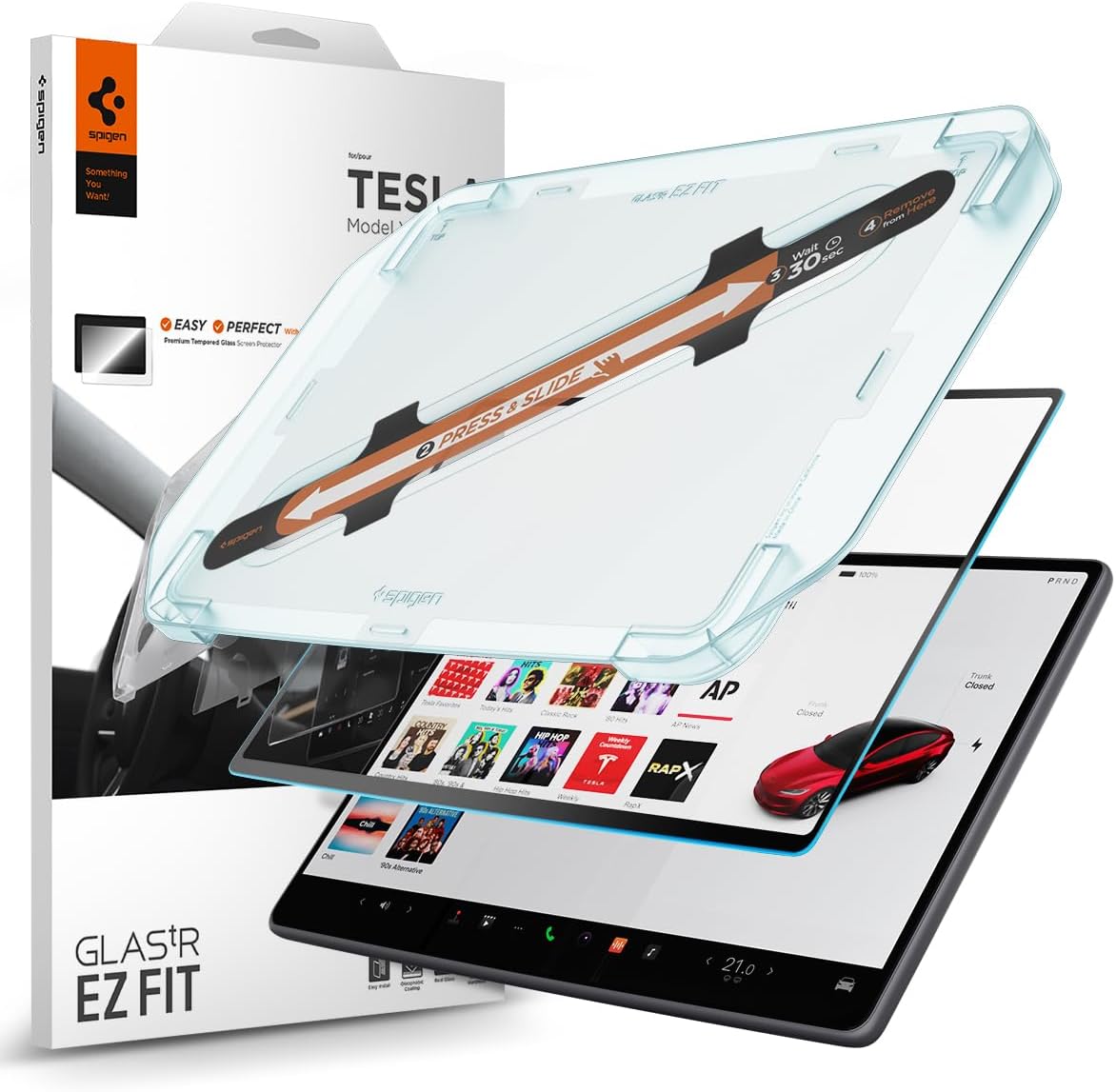
Spigen Tempered Glass for Tesla Model 3/Y
Tempered-glass protection for the touchscreen that kills fingerprints and scratches. Two minutes to install, lasts the life of the car.
As an Amazon Associate, ThinkEV earns from qualifying purchases — at no extra cost to you.

Founder & Chief Editor
Vlad Pereira is the founder and chief editor of ThinkEV.ca, the Canadian electric-vehicle publication he writes and edits from Courtenay, British Columbia. He covers EV pricing, federal and provincial rebates, charging costs, and the Chinese manufacturers now entering Canada, from the buyer's side rather than the press-fleet side. ThinkEV is a venture of Vlad Pereira Online; his writing on health, income and the long game lives at vladpereira.com.
Frequently asked questions
Does the Tesla Model Y qualify for Canada's federal EVAP rebate in 2026?
Why did Tesla sales drop so much in Canada in 2025?
What is the best Tesla alternative for a Canadian buyer in 2026?
Can non-Tesla EVs now use the Supercharger network in Canada?
Is the 2026 Tesla Model Y Juniper significantly better than the previous version?
More EV & road-trip finds
Affordable upgrades worth a look — tap any to check the price on Amazon.
 ★ 55
★ 55LED Car Door Logo Projector Light
View on Amazon ★ 568
★ 568Personalized Photo and Text Keychain
View on Amazon ★ 21,304
Car Headrest Hooks (4-Pack)
View on Amazon ★ 721
★ 72145W USB-C Fast Car Charger
View on Amazon ★ 121
★ 121Foldable Windshield Sun Umbrella
View on Amazon ★ 392
★ 392Large Cup Holder Adapter (32-40oz)
View on Amazon ★ 96,686
PULIDIKI Car Cleaning Gel (Detailing Putty)
View on Amazon ★ 164
★ 164Solar-Powered LED Ambient Light
View on AmazonRead, Plan, Then Stay Current
Explore our expert articles to understand incentives and ownership costs, use the map to pressure-test charging reality, then subscribe so new EV coverage comes straight to you.
Continue Reading
Tesla and Canada's EV Rebate: Why It Doesn't Qualify
Why Tesla Is Losing Canada With the World's Top EV
Buy or Lease an EV in Canada? The 2026 Answer

Your First EV in Canada, The No-BS 2026 Buying Guide
Can Americans Buy Chinese EVs Through Canada?