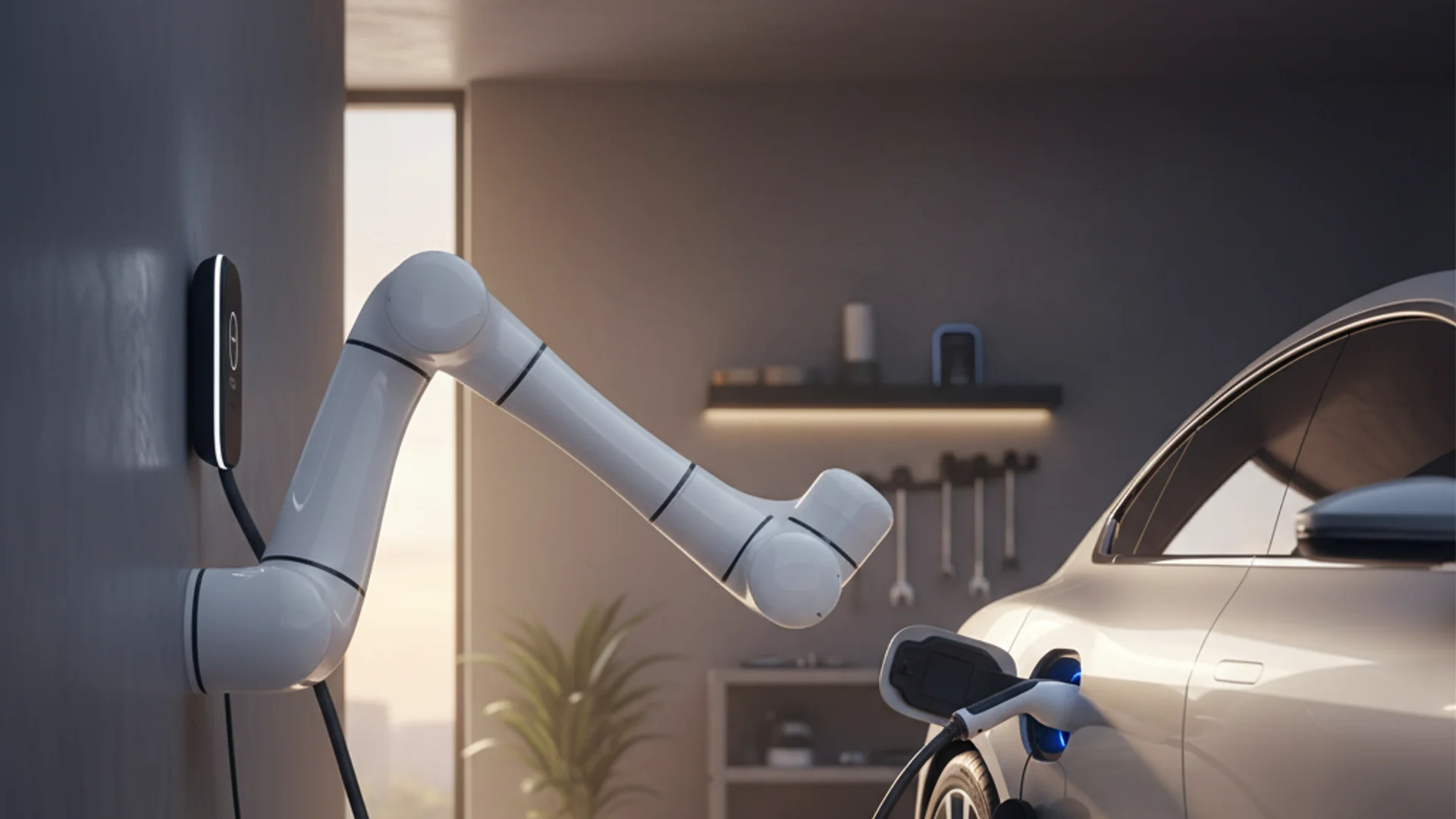
Tesla filmed a snake charger demo in December 2015. Eleven years later, a smartphone company is shipping the production version. Xiaomi has unveiled a home robotic arm charger that autonomously plugs and unplugs your EV, delivering on a concept Tesla prototyped over a decade ago and never brought to market.
The gap is the story. Not the kilowatts, not the form factor, not the Chinese-tech-giant-does-EV-thing framing. The company that demonstrated this idea to the world, then made it a recurring tease at investor events, let it die quietly while a phone manufacturer with a four-year-old car program turned it into a SKU you can put in your garage. That's an execution-culture verdict, and the verdict goes against Tesla.
This product matters less for what it does than for what it proves. Xiaomi has built a consumer-facing piece of robotics hardware that operates safely in the most cluttered, unpredictable environment in the home: the garage, with a car in it, in the dark, with a kid's bike leaning against the wall. If the thing works as demoed, the robotics moat Tesla has been promising investors for three years just got a Chinese competitor who shipped first.
Key takeaways
- Xiaomi's home robotic arm charger ships at 2.8 kW charge and 3.5 kW V2H discharge on standard 220V.
- Tesla tweeted a working snake charger demo in December 2015 and never sold a single unit.
- At 152mm wide, the arm fits tight single-car garages where a standard Level 2 wall box won't.
- Xiaomi's factory humanoid robots hit 90.2% autonomous success in March 2026; the home arm runs the same stack.
- A senior Tesla Optimus engineer reportedly crossed to Xiaomi, and the shipping product appeared roughly two years later.
Tesla showed the concept; Xiaomi built the product
Tesla's snake charger appeared in a brief Elon Musk-tweeted clip in late 2015. The prosthetic-looking arm crept out of a wall-mounted housing, located the Model S charge port, and inserted itself. The clip went viral, Tesla never sold the product, and the concept slid into the same drawer as the Roadster 2.0 and the second-generation Master Plan timeline. Eleven years of nothing happened to a hardware idea that already worked on camera, in a company that spent that same decade telling shareholders robotics was a core competency.
Xiaomi's version is not a concept clip. It's a sub-six-inch device built for production. It doubles as both a charger and a discharger with a charging output of 2.8kW and a discharge output of 3.5kW, all running off standard 220V household power. The 152 mm width is the differentiating physical spec: narrow enough to fit in a tight single-car garage where a wall-mounted Level 2 box would foul the door swing or the side mirror.
The editorial point here is not that Xiaomi out-innovated Tesla. It's that Tesla had eleven years, a charging-network arm of the business, and a stated robotics thesis, and it still let a phone company turn its own demo into a shipping product. Distraction with Optimus and Full Self-Driving consumed the engineering bandwidth that should have closed obvious adjacent loops like this one. The snake charger was a solved hardware problem in 2015 that needed a product team. It got a press cycle instead.
The gap isn't technical. It's organisational. Xiaomi has a robotics group that ships, and Tesla has a robotics group that demonstrates. Those are different companies, and the difference compounds.
What the hardware does, and what it doesn't
The spec sheet is modest, and the modesty matters. 2.8 kW of AC output on 220V puts this device in low-Level-2 territory, roughly equivalent to a 12-amp Level 2 circuit, well below the 7.7 kW that a standard 32-amp residential Level 2 charger delivers and a long way from the 9.6 kW that a 40-amp unit like the Canadian-made Grizzl-E Classic provides. If you measure this product by raw kilowatts, you'll dismiss it. That would be a category error.
The 3.5 kW discharge spec is the more interesting number. Vehicle-to-Home discharge at that rate covers essential household loads (fridge, furnace fan, lighting, a laptop or two) during a grid outage, which is functionality no standard residential AC charger offers. The compact device is designed to fit in tight home garage parking spaces and integrates into Xiaomi's smart home ecosystem for smartphone control.
The ceiling is real, though. 2.8 kW is not a Level 2 replacement for a 100 kWh battery pack; you'd need roughly 36 hours to fill an empty Lucid Air from this device. The pitch isn't speed. The pitch is that the friction of plugging in vanishes, and for the daily 30-to-60-km commuter use case, 2.8 kW overnight is more than enough. This is a convenience product first, an energy product second.
Convenience is the underrated lever in residential EV ownership. The reason gas stations beat home charging on perceived ease, for years, was the muscle memory of an operation that took 90 seconds. Automating the plug-in motion removes the last manual step in the home-charging routine. That is worth more than another 5 kW. For the conventional alternative, the step-by-step home Level 2 install math for Canadian garages spells out where the real costs land, and that's the baseline this Xiaomi product would have to displace.
Gear worth having
As an Amazon Associate, ThinkEV earns a small commission from qualifying purchases — at no extra cost to you.

Lectron Level 2 J1772 Charger (40A, WiFi)
Smart WiFi charger with real-time energy monitoring. 40A / 9.6 kW, J1772 with a NEMA 14-50 plug, schedule charging right from your phone.
As an Amazon Associate, ThinkEV earns from qualifying purchases — at no extra cost to you.
This is robotics infrastructure, not a charger accessory
If you read the robotic arm as a charger, you'll miss what Xiaomi is actually building. Xiaomi's humanoid robots are working autonomously in factory settings with 90.2% success rate using a VLA model that fuses vision with fingertip sensor data, approaching human-level performance on the production line. That deployment landed in March 2026. The deployment marks a significant advancement for Xiaomi in embodied intelligence, positioning it to compete with rivals like Tesla and Xpeng in humanoid robotics.
The home robotic arm is a consumer-facing application of the same embodied-intelligence stack: vision models, force-feedback grippers, autonomous path planning in cluttered environments. Beijing-based Xiaomi is ramping up its robotics research and development to compete in the growing global humanoid market, and reports suggest the company has hired a senior engineer from Elon Musk's Tesla Optimus team. A senior Optimus engineer crossing the Pacific to work on robot hand dexterity is the kind of talent signal that doesn't show up in quarterly earnings but shows up in shipping product two years later.
Xiaomi's interest in automated EV charging predates this product. When the company unveiled its Xiaomi Pilot Technology autonomous driving solution, automatic robotic arm charging was already listed as one of its planned features alongside autonomous valet parking. The home charging arm is that vision taking physical form.
Gear worth having
As an Amazon Associate, ThinkEV earns a small commission from qualifying purchases — at no extra cost to you.

TP-Link Kasa Smart Plug with Energy Monitoring
Track exactly how much electricity your Level 1 charger uses and schedule it for off-peak hours. Know your real cost per kWh.
As an Amazon Associate, ThinkEV earns from qualifying purchases — at no extra cost to you.
The strategic read: the charger is a beachhead. It's a low-stakes, single-task robotics deployment that gets the hardware into homes, builds the dataset, and validates the supply chain. The platform underneath it, the same one running 90.2% autonomous in the factory, is the long game. Tesla has been selling that long game to investors since 2021. Xiaomi just put the first consumer product on the shelf.
Why convenience wins even when the kilowatts are modest
Spec-sheet readers will look at 2.8 kW and conclude this is a worse charger than a $600 wall box. They're right on the kilowatts and wrong on the use case. Most residential EV charging in Canada happens overnight, and overnight has 10 to 14 hours of availability. Even an aggressive daily commuter pulling 80 km of range needs roughly 16 kWh added back, well under six hours at 2.8 kW.
Several reasons sit behind this gap between spec-sheet ranking and lived-use ranking:
- The friction in home charging isn't speed. It's the cable. Cold-weather Canadian garages amplify this: a stiffened 40-amp Level 2 cable in February is genuinely unpleasant to wrestle into a charge port at 11 PM.
- Automating the plug-in motion removes the last manual step, which is a usability improvement no firmware update to a conventional charger can deliver.
- The 3.5 kW V2H discharge number is the second feature people will undervalue, enough to ride through a multi-hour outage running the essential loads of a Canadian home in winter.
- Grid-tied bidirectional charging hardware that does V2H is currently priced well into four figures, so bundling it into a robotic arm changes the comparison set entirely.
If Xiaomi prices this product anywhere near a mid-tier home charger, the conventional comparison set (wall box plus separate V2H gateway plus the manual plug-in) starts looking quaint.
Gear worth having
As an Amazon Associate, ThinkEV earns a small commission from qualifying purchases — at no extra cost to you.
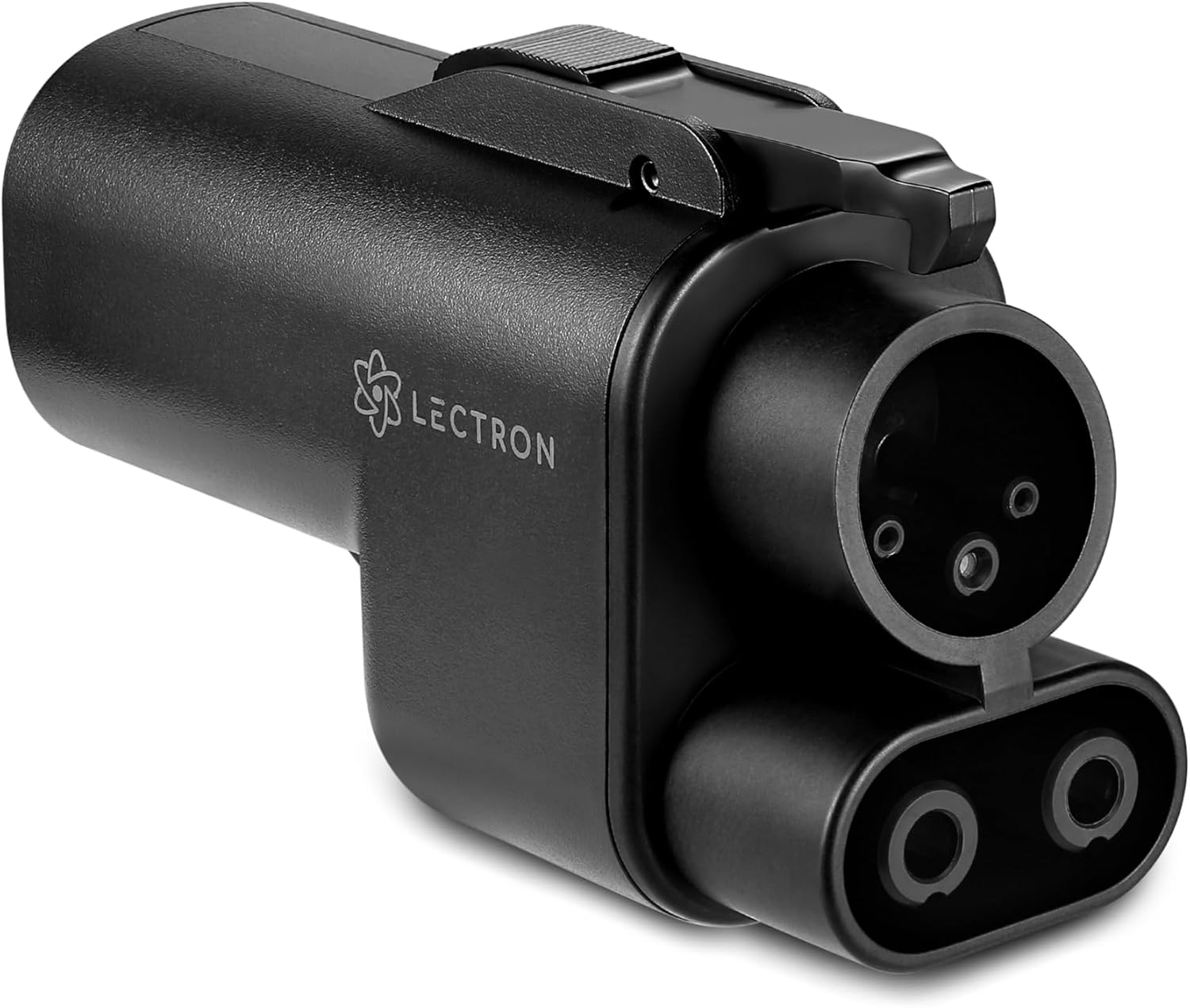
Lectron NACS to CCS Fast-Charge Adapter
Unlock every CCS fast charger for your Tesla, up to 500A DC. Never get stranded at a non-Tesla DC station again.
As an Amazon Associate, ThinkEV earns from qualifying purchases — at no extra cost to you.
The Canadian angle: hardware like this needs ecosystem to land here
Xiaomi has no confirmed Canadian distribution for the robotic arm. The manufacturer has not yet disclosed the cost and exact timing of the robotic manipulator's availability. This is a China-market launch with the usual we'll-see-about-export footnote.
The technical barriers to a Canadian launch are unusually low. 220V household power is the Canadian residential standard. The connector question is the open one. Chinese-market EV charging uses GB/T, which is incompatible with the CCS1 and J1772 standards that dominate the Canadian fleet. A China-only connector kills the North American case before it starts. A CCS1 or J1772 variant changes the conversation entirely.
The policy layer is also unresolved. Natural Resources Canada's EVAP rebate language covers Level 2 home charger hardware, but the programme was written before robotic-arm form factors existed. Whether NRCan classifies a 2.8 kW robotic AC charger as eligible Level 2 equipment, or punts it to a separate category, will determine whether the product can play in the rebate-conscious mainstream Canadian market or stays a niche import for early adopters.
For Canadian buyers shopping the conventional category today, the seven Level 2 chargers ranked for cold-weather Canadian use is the comparison set this Xiaomi product would have to break into. The incumbents (Grizzl-E, EVduty, Emporia) already have CSA certification, cold-weather track records, and Canadian distribution. Xiaomi has none of those yet.
Gear worth having
As an Amazon Associate, ThinkEV earns a small commission from qualifying purchases — at no extra cost to you.

Tesla Key Card Holder with AirTag Slot
Stop fishing the keycard out of your wallet, and slot an AirTag in case the car wanders off in a lot.
As an Amazon Associate, ThinkEV earns from qualifying purchases — at no extra cost to you.
What would change the read
Three conditions would invalidate the thesis that Xiaomi just shipped what Tesla failed to ship.
First: distribution. If this device never escapes mainland China and stays a showcase SKU sold in limited quantities to Xiaomi Auto buyers as an ecosystem accessory, the eleven-year gap stays closed only on paper. Tesla still didn't ship the product, but neither did anyone else at meaningful scale. That outcome is plausible; Xiaomi has shipped showcase products before.
Second: the patent thicket around the adjacent space. Xiaomi has also patented a wireless charging system based on the use of unmanned freight vehicles, where an autonomous charger should drive up to an electric car that needs energy and automatically establish a connection. If a Western tier-one (Hyundai, Stellantis, ChargePoint, FLO) wants to ship a robotic-arm AC charger in 2027, they need to clear or build around that IP. Whether one of them licenses or clones the form factor inside the next 18 months is the cleanest test of whether incumbent charging hardware companies still set the pace.
Third, and the one that decides the Canadian market: connector compatibility. A CCS1 or J1772 variant of this product, sold through a North American distribution channel with EVAP eligibility, lands in a market that genuinely wants the convenience. A GB/T-only product is a domestic Chinese curiosity. Watch for connector announcements before you watch for price.
For context on where Canada's broader charging infrastructure sits heading into 2026, and why a convenience product like this would land into a market still working through gaps in fast-charging corridor coverage, the state of Canadian EV charging infrastructure in 2026 is the backdrop. The EVAP rebate timing question for Canadian buyers in 2026 is the other half of that picture, because rebate eligibility will decide whether a product like this lands at $1,500 or $3,000 in practice. And for the broader pricing backdrop on what Chinese-built EV hardware costs once it crosses the Pacific, the 2026–2027 EV pricing guide for Canada is the reference point.
Bottom line: Xiaomi has shipped a piece of hardware that Tesla has been promising for eleven years. The kilowatts are modest, the form factor is clever, and the strategic implication is that the embodied-intelligence platform underneath is real. The next 18 months tell us whether the West sees this and responds, or watches Xiaomi turn a snake-charger demo into a consumer robotics franchise.
Gear worth having
As an Amazon Associate, ThinkEV earns a small commission from qualifying purchases — at no extra cost to you.
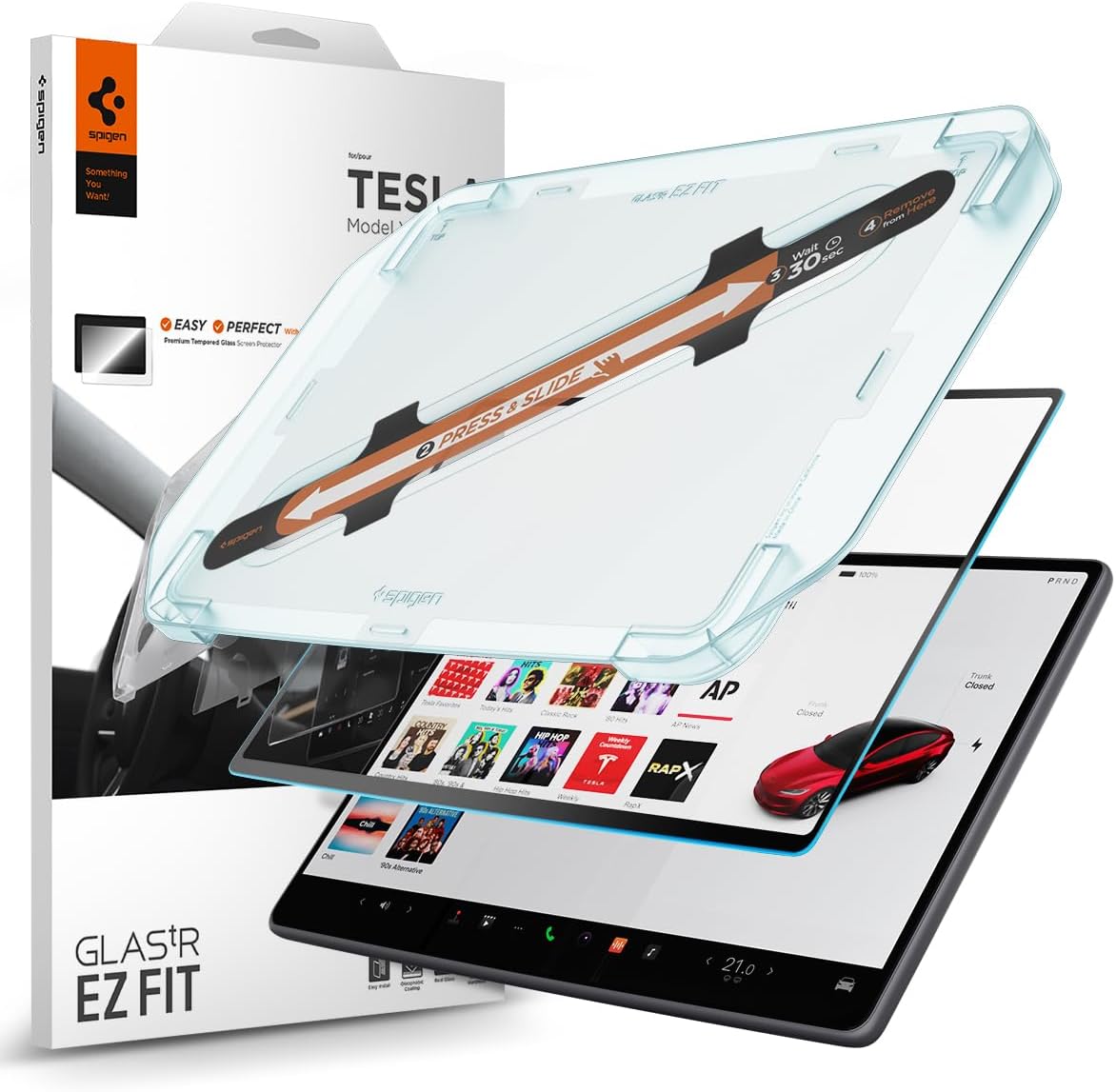
Spigen Tempered Glass for Tesla Model 3/Y
Tempered-glass protection for the touchscreen that kills fingerprints and scratches. Two minutes to install, lasts the life of the car.
As an Amazon Associate, ThinkEV earns from qualifying purchases — at no extra cost to you.

Founder & Chief Editor
Vlad Pereira is the founder and chief editor of ThinkEV.ca, the Canadian electric-vehicle publication he writes and edits from Courtenay, British Columbia. He covers EV pricing, federal and provincial rebates, charging costs, and the Chinese manufacturers now entering Canada, from the buyer's side rather than the press-fleet side. ThinkEV is a venture of Vlad Pereira Online; his writing on health, income and the long game lives at vladpereira.com.
Frequently asked questions
Will this Xiaomi charger work with Canadian 220V garage wiring?
Does the robotic arm work with non-Xiaomi EVs?
Is 2.8 kW enough for a typical Canadian daily commute?
How does the V2H discharge compare to dedicated home backup systems?
When does it actually go on sale, and will Canada see it?
More EV & road-trip finds
Affordable upgrades worth a look — tap any to check the price on Amazon.
 ★ 1,340
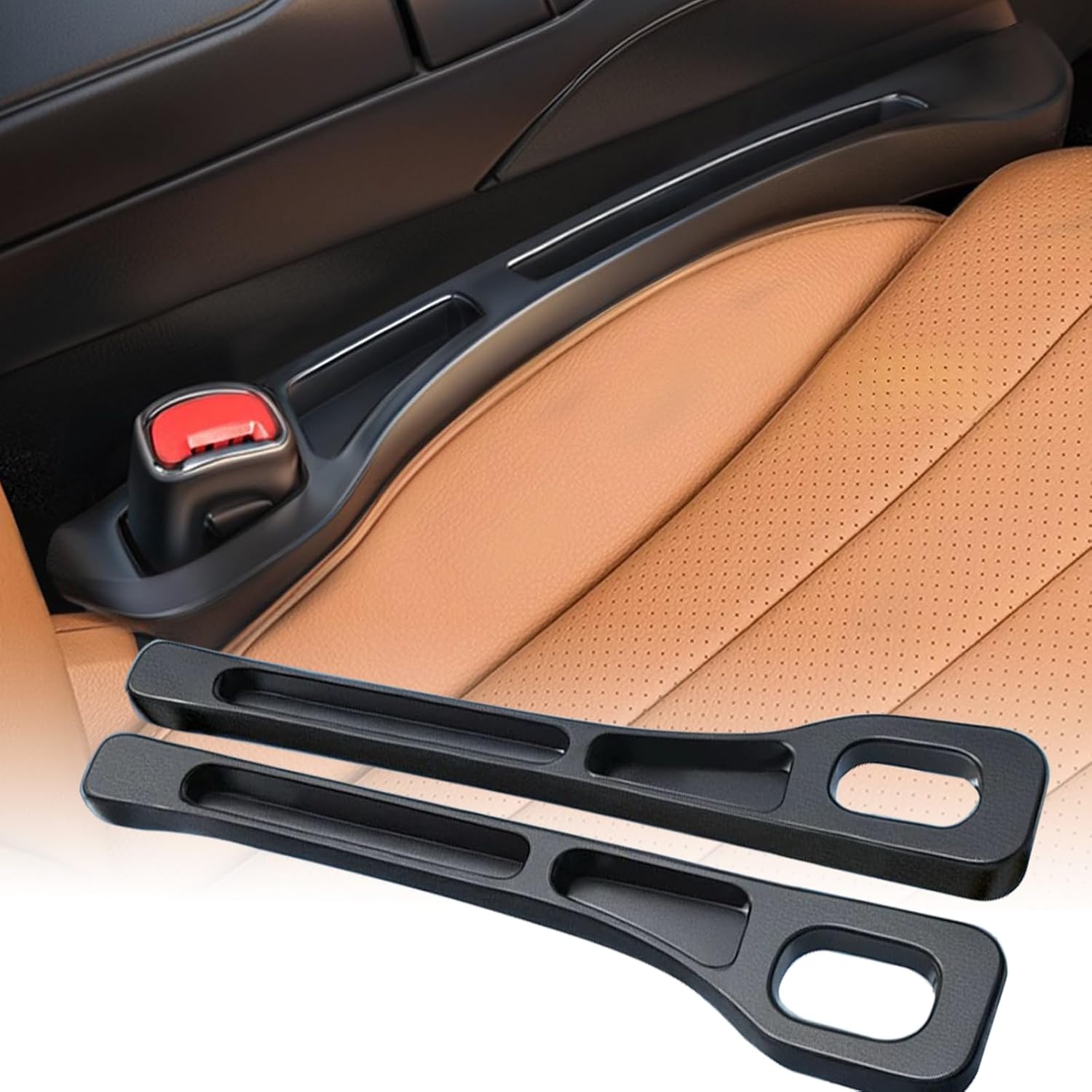
Car Seat Gap Filler (Universal)
View on Amazon ★ 1,944
VIOFO A229 Pro 4K Dash Cam
View on Amazon ★ 61
★ 61Toddler Car Seat Snack and Cup Tray
View on Amazon ★ 17,839
Qifutan Vent Phone Mount (Military-Grade Clip)
View on Amazon ★ 9,349
Auto Detailing Brush Set (10-Piece)
View on Amazon ★ 419
★ 419RGB Car Interior LED Strip Light
View on Amazon ★ 401
★ 401Crochet Daisy Rear-View Mirror Charm
View on Amazon ★ 4,424
Sun Visor Card and Document Organizer
View on AmazonRead, Plan, Then Stay Current
Explore our expert articles to understand incentives and ownership costs, use the map to pressure-test charging reality, then subscribe so new EV coverage comes straight to you.
Continue Reading
Xiaomi's Xring D100 Chip Targets 2027 Driver-Assist Debut
Jaecoo J5 EV Uber Discount: $31,500 Fleet Math Changes
Tesla Pauses Model 3 Premium Orders in Canada, Blames the Quota. The Numbers Tell a Different Story

Chinese EVs in Canada: 15,603 In, Still No BYD
BYD Great Seagull: A Bigger $10,000 EV Hatch Is Coming