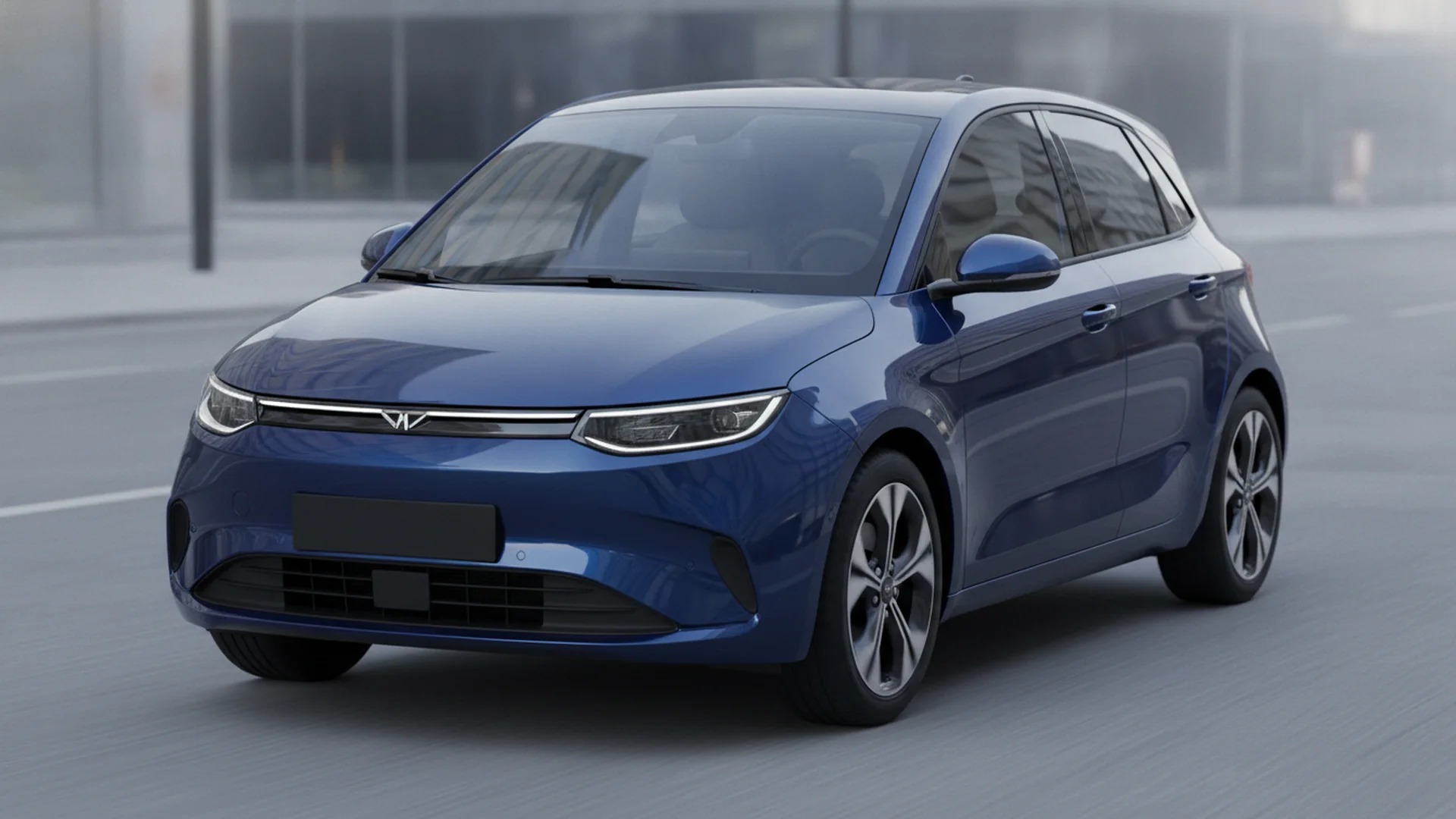
The way BYD solves the affordable global PHEV, and Volkswagen doesn't, is by treating range as a packaging problem first and a battery problem second. The Dolphin G, spotted in public ahead of its imminent debut, makes that argument visible in sheet metal. BYD's new PHEV is set to go on sale in the coming weeks as the brand's first car specifically built for overseas markets, including Europe, and the small details, the rotary selector, the unfussy console, the proportions of a hatchback engineered to hide a complete plug-in drivetrain under a B-segment floor, say more about BYD's manufacturing strategy than the company's own press materials.
This is not the Dolphin you can almost-buy in Mexico with a Chinese-market dashboard awkwardly translated. The Dolphin G will go on sale soon as BYD's first car developed specifically for global markets. That distinction reads small on paper and enormous in product strategy. Everything BYD has shipped overseas until now has been a domestic car wearing an export visa. The Dolphin G inverts the process, engineered for the buyer it has not yet met, in a market it has not yet conquered.
Key takeaways
- BYD's fifth-generation DM-i pairs a 43%-efficient Atkinson engine with a dual-motor e-axle that rarely drives wheels directly.
- The Dolphin G is BYD's first car engineered from scratch for overseas markets, not a domestic model re-badged for export.
- Hitting 1,000 km combined range in a B-segment hatchback required BYD to vertically integrate every powertrain component, battery, e-axle, and controllers.
- The cabin's rotary selector and physical HVAC strip are deliberate taste engineering targeting Golf and Polo buyers, not cost-cutting.
- BYD stopped building ICE-only vehicles in 2022, making DM-i the direct output of a decade-long pivot toward electrified architecture.
The Dolphin G Is Not a Dolphin, It's a Philosophy
The original Dolphin is a Chinese-market B-segment EV built around domestic taste, domestic regulation, and domestic price ceilings. The Dolphin G shares the name and very little else. BYD's design brief for this car began outside China, with European pedestrian-impact rules, European cabin ergonomic expectations, European HMI conventions, and the unsentimental reality that a continent of Golf and Polo buyers will not tolerate a touchscreen-only HVAC stack.
The shift matters because every legacy export operation in the auto industry has, at some point, tried to internationalise a domestic car and discovered that the cost of compromise outruns the savings of platform reuse. Toyota learned it with the early Camry. Hyundai learned it with the first Sonata sold in North America. Volkswagen still hasn't quite learned it with the Chinese-built Tiguan L. BYD has watched this play out for two decades and decided to skip the lesson by paying the engineering bill upfront.
What you see in the spy shots, the deliberately conventional gear selector, the floating but not oversized display, the cabin trim chosen to age past three European winters, is not cost engineering. It is taste engineering, and it is the part of the export game that Chinese OEMs have historically lost. The Dolphin G is BYD's argument that the era of losing it is over. For Canadian buyers tracking the same question from a different angle, the broader Chinese-brand readiness picture sits in our coverage of who actually fits in a Canadian household. The same buyer who asks whether a Dolphin G can replace a Golf usually also asks whether to wait for BYD to officially land in Canada or take what's available now, and the answer depends on which segment they're sitting in.
What 1,000 km of Range Actually Requires Mechanically
BYD said its plug-in hybrid system will offer over 1,000 km (621 miles) of combined range at an affordable price. The number is dramatic; the engineering required to land it is more interesting than the number itself. Combined PHEV range is not a battery-capacity problem. It is a thermal-efficiency problem stacked on top of an aerodynamic problem stacked on top of a packaging problem, and BYD's DM-i architecture is the only mass-produced plug-in system that addresses all three simultaneously.
The fifth-generation DM-i pairs an Atkinson-cycle gasoline engine, tuned past 43 percent thermal efficiency, with a dual-motor e-axle that handles low-speed and mid-range propulsion electrically. The engine almost never directly drives the wheels at urban speed. It exists to generate electricity at its single most efficient operating point and shut off again. That sounds like a Prius in description and behaves like nothing Toyota has ever built in practice, because the battery side carries enough usable kWh to handle the daily commute as a pure EV.
The packaging consequence is the part nobody outside the engineering press writes about. A combined-range figure above 1,000 km in a B-segment hatchback means the battery, the engine, the e-axle, the fuel tank, and the cooling loops have to fit in a footprint smaller than a Volkswagen Polo. BYD's solution is vertical integration of the powertrain itself, the e-axle is BYD-built, the battery is BYD-built, the controllers are BYD-built, and the volumes between them are negotiated in CAD rather than in supplier meetings. A drag coefficient kept honest by genuine wind-tunnel discipline does the rest. Range here is aerodynamics multiplied by chemistry multiplied by packaging, not chemistry alone. BYD formerly produced internal combustion engine cars until 2022, when the company announced that it would focus on PHEVs and BEVs, and the DM-i platform is the receipt for the decade of engineering hours that pivot required.
Gear worth having
As an Amazon Associate, ThinkEV earns a small commission from qualifying purchases — at no extra cost to you.

ChargePoint Home Flex Level 2 Charger (50A)
Premium 50A / 12 kW charger with the best app ecosystem. Hardwired or NEMA 14-50, with real-time energy tracking and smart scheduling.
As an Amazon Associate, ThinkEV earns from qualifying purchases — at no extra cost to you.
Interior Sighting: What the Spy Shots Actually Reveal
With its debut just around the corner, the new plug-in hatch was recently spotted in public, giving us our first real look at the interior. The cabin is more interesting for what it leaves out than for what it adds. There is no curved 14-inch passenger screen, no triple-zone ambient lighting menu, no haptic steering-wheel scroll wheel pretending to be a control surface. The console has a real rotary selector. The HVAC has a real horizontal vent. The seats look like seats.
Strip away the marketing temptation to read every deletion as a cost cut. Some of it is, this is a sub-Seal car aimed at a specific price band. But the larger pattern is intent. BYD's Denza and Yangwang sub-brands exist precisely so the Dolphin G does not have to flex. Yangwang's U9 hypercar carries the brand's flagship engineering wattage; Denza handles the premium-electric narrative for buyers who would otherwise look at Audi. The Dolphin G is allowed to be a B-segment hatchback the way a Golf is allowed to be a Golf, without apologising for its segment.
The material choices in the spy images suggest a price ceiling several thousand euros above the Seagull and several thousand euros below the Seal. For reference, the Seagull starts at roughly $9,500 USD in China and delivers around 305 km of CLTC range, which puts the Dolphin G's likely positioning into focus, a B-segment plug-in built to sit between the cheapest BEV in BYD's lineup and the brand's mid-tier sedans. That gap is the band Volkswagen has owned in Europe for thirty years. The Dolphin G's interior is not designed to overdeliver on luxury cues; it is designed to land the buyer who expected to walk out of the showroom with a Golf or a 308 and is now reconsidering. The buyer who would feel patronised by aggressive theatre. The buyer who reads a rotary selector and a physical climate strip as quiet competence. For readers tracking what a real PHEV cabin should and shouldn't compromise on, our Pacifica-versus-ID.Buzz analysis breaks down the same trade-off in a different segment.
Gear worth having
As an Amazon Associate, ThinkEV earns a small commission from qualifying purchases — at no extra cost to you.

Magnetic Windshield Snow Cover
Skip the scraping. Magnets hold it on, peel it off with the snow, and your defroster stops draining range on cold mornings.
As an Amazon Associate, ThinkEV earns from qualifying purchases — at no extra cost to you.
How the Dolphin G Fits Into BYD's Brand Architecture
BYD now runs five distinct sub-brands. The Dynasty and Ocean series carry the mainstream domestic catalogue. Denza handles premium electric. Fang Cheng Bao is best known for its high-end off-road SUVs, and Yangwang sits at the top of the stack with hypercar engineering. Each operates under a separate engineering brief with separate showrooms, separate dealer training, and increasingly separate platforms.
The Dolphin G does not slot cleanly into any of them. It is an export-first product without a sub-brand of its own, which makes it BYD's first genuinely global nameplate rather than a Chinese model with a passport. The platform decision matters: an export-first car can be tuned for the markets it actually serves rather than apologising in every market it visits.
The simultaneity is the part worth watching. BYD is already testing the new Z model at the legendary Nürburgring track ahead of its global launch this summer at the Goodwood Festival of Speed. A €200,000-plus Denza Z drop-top and a sub-€30,000 Dolphin G are being aimed at the same continent inside the same launch window. That is not opportunism. That is a deliberate high-low strategy, anchor the premium narrative at the top of the market, anchor the volume narrative at the heart of it, and concede the middle to whoever wants to fight a two-front war. Toyota ran the same playbook with Lexus and Daihatsu for three decades. Stellantis has never quite executed it. BYD's brand structure now includes vehicles marketed under the Denza, Yangwang, Fangchengbao and Linghui brands, and the Dolphin G adds a sixth lane outside any of them, the export-native lane.
Gear worth having
As an Amazon Associate, ThinkEV earns a small commission from qualifying purchases — at no extra cost to you.

PULIDIKI Car Cleaning Gel (Detailing Putty)
Press it into vents, buttons, and seams and it lifts out dust you did not know was there. Weirdly satisfying, genuinely useful.
As an Amazon Associate, ThinkEV earns from qualifying purchases — at no extra cost to you.
What Volkswagen and Stellantis Should Actually Be Worried About
The European B-segment plug-in hybrid market is precisely the corner of the electrified landscape where legacy OEMs still hold real margin. Volkswagen's Golf eHybrid, Peugeot's 308 PHEV, the Renault Captur E-Tech, all target the same buyer the Dolphin G is built for, at materially higher prices, with materially shorter combined-range numbers, on platforms that began life as internal-combustion architectures asked to swallow a battery.
BYD's structural advantage is not range and not price in isolation. The advantage is that BYD has accumulated more PHEV engineering hours than any company outside Japan. BYD Auto reported sales over 1,000 BYD F3DMs by October 2011, that was the first mass-produced plug-in hybrid sedan, and BYD has been iterating PHEV calibration relentlessly since. The DM-i fifth generation is the product of fifteen years of compounding refinement on a powertrain the European industry treated as a transitional bridge rather than a destination.
The strategic mistake the legacy OEMs made was not the BEV pivot. The strategic mistake was treating PHEV as a stopgap that did not deserve real platform investment, while BYD treated PHEV as a permanent product category that deserved its own architecture. The Dolphin G is the bill arriving for that decision. The Golf eHybrid is an excellent engineering job constrained by a chassis that started life with an inline-four under the bonnet. The Dolphin G is a chassis that started life with a fifth-generation DM-i drivetrain in CAD. That difference compounds across thermal efficiency, packaging, and cost simultaneously. Our deeper look at why legacy automakers keep ceding ground on platforms like this explains the structural side of the problem, and the first-EV buying guide for Canada walks through how a buyer evaluates a PHEV versus a BEV in this exact segment.
Gear worth having
As an Amazon Associate, ThinkEV earns a small commission from qualifying purchases — at no extra cost to you.

WixGear Magnetic Air Vent Phone Mount (2-Pack)
A magnet strong enough that your phone never flinches over potholes or rail crossings. Two in the box, one for each car.
As an Amazon Associate, ThinkEV earns from qualifying purchases — at no extra cost to you.
The Solid-State Horizon and What It Means for This Platform
The next generation of EV batteries may be closer than expected. BYD and several others plan to begin deploying EVs with all-solid-state batteries in just a few months. The headline reads as a BEV story. The more interesting implication is what it does to the Dolphin G platform mid-cycle.
PHEV architectures benefit more immediately from solid-state chemistry than full BEVs do, in a counter-intuitive way. A 100 kWh BEV battery upgraded to solid-state gets meaningfully lighter and meaningfully faster to charge, and those gains are real but incremental at the product level. A 20 kWh PHEV battery upgraded to solid-state can shrink to roughly 14 kWh while delivering the same usable electric range, freeing packaging volume, removing weight from the most weight-sensitive part of the car, and letting the engineering team either lower the price or expand the electric-only band without redesigning the chassis.
A platform designed in 2025 with a 2027 solid-state upgrade path baked in is a different kind of product than a platform designed to be replaced when the chemistry shifts. BYD's willingness to engineer the Dolphin G as a modular export platform, rather than a fixed-spec single-generation car, is itself a signal. It says the company expects this nameplate to outlast the powertrain generation it launches with. That is the same logic that kept Toyota investing in Prius hardware long after the press declared the platform dead, and it is the logic the European OEMs have spent five years denying applies to plug-in hybrids. For readers tracking how this platform thinking lands when these cars actually reach Canada, the broader Canadian Chinese-EV import picture is moving faster than most buyers realise.
Bottom line: the Dolphin G is not a cheap car with a long range. It is the first global mass-market product from a company that learned the export game by watching everyone else lose it, and the spy shots are quietly telling the European industry that the next decade of B-segment competition is going to be fought on PHEV architecture engineered for a buyer who reads a rotary selector as quiet competence. Watch for the launch pricing in Germany, if the Dolphin G lands within €2,000 of the Golf eHybrid with two hundred extra kilometres of combined range, the segment math changes for everyone selling a plug-in hatchback in Europe.
Gear worth having
As an Amazon Associate, ThinkEV earns a small commission from qualifying purchases — at no extra cost to you.
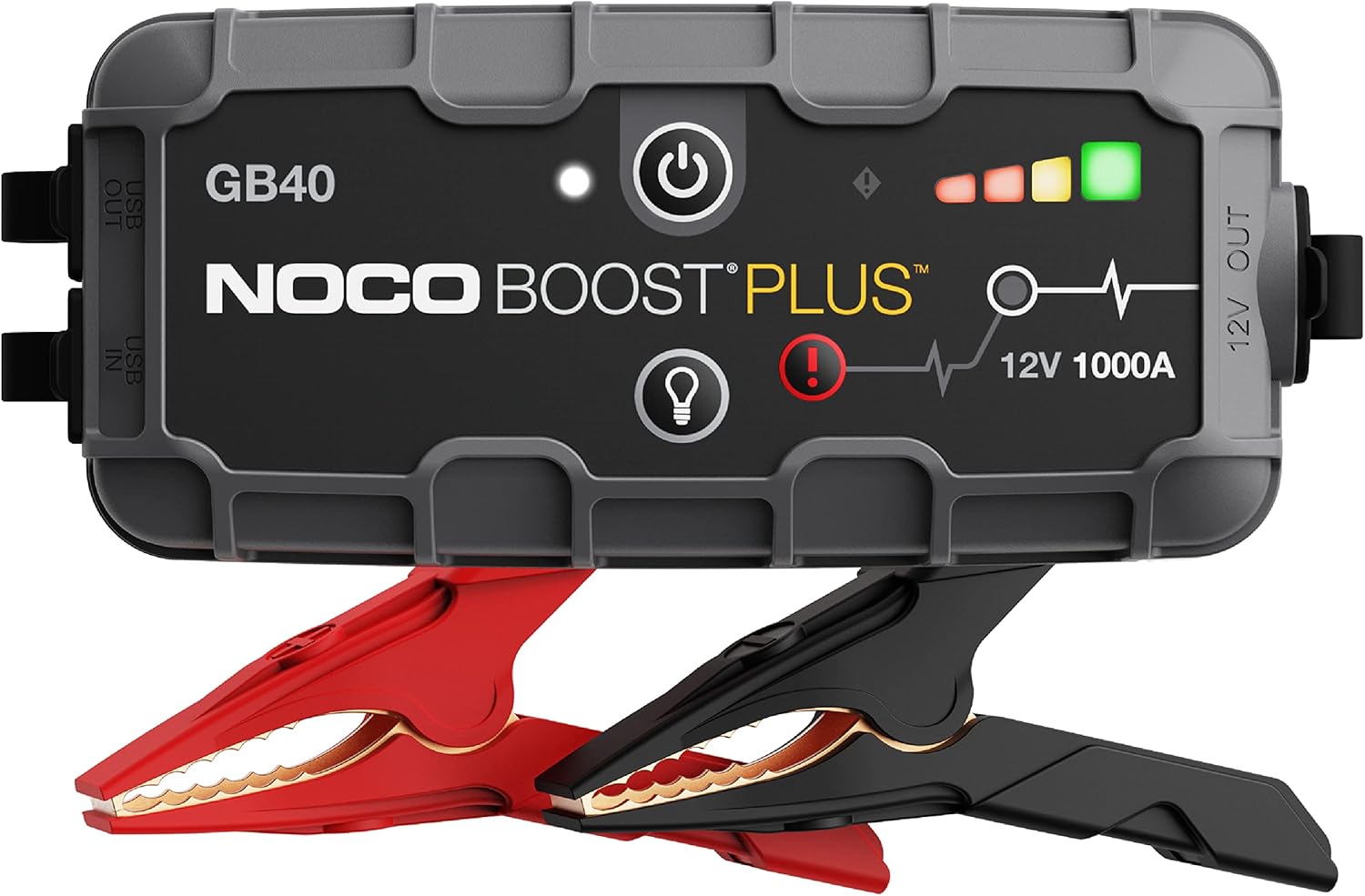
NOCO Boost Plus GB40 Jump Starter
A 1000A lithium jump starter that fits in your glovebox and works on any 12V battery. Your insurance against a dead 12V in a parking lot.
As an Amazon Associate, ThinkEV earns from qualifying purchases — at no extra cost to you.

Founder & Chief Editor
Vlad Pereira is the founder and chief editor of ThinkEV.ca, the Canadian electric-vehicle publication he writes and edits from Courtenay, British Columbia. He covers EV pricing, federal and provincial rebates, charging costs, and the Chinese manufacturers now entering Canada, from the buyer's side rather than the press-fleet side. ThinkEV is a venture of Vlad Pereira Online; his writing on health, income and the long game lives at vladpereira.com.
Frequently asked questions
Will the Dolphin G actually come to Canada, and when?
How does DM-i's 1,000 km claim compare to what I'd actually drive?
Is 43% thermal efficiency actually meaningful to the average driver?
Why does a B-segment car need a rotary gear selector?
What's the Dolphin G's likely price in markets where it does launch?
More EV & road-trip finds
Affordable upgrades worth a look — tap any to check the price on Amazon.
 ★ 268
★ 268Anti-Slip Leather Steering Wheel Cover
View on Amazon ★ 2,941
Microfiber Cleaning Cloths (Multi-Pack)
View on Amazon ★ 55
★ 55LED Car Door Logo Projector Light
View on Amazon ★ 568
★ 568Personalized Photo and Text Keychain
View on Amazon ★ 865
★ 865Collapsible Trunk Organizer
View on Amazon ★ 1,866
70mai A810 4K Dual Dash Cam
View on Amazon ★ 121
★ 121Foldable Windshield Sun Umbrella
View on Amazon ★ 392
★ 392Large Cup Holder Adapter (32-40oz)
View on AmazonRead, Plan, Then Stay Current
Explore our expert articles to understand incentives and ownership costs, use the map to pressure-test charging reality, then subscribe so new EV coverage comes straight to you.
Continue Reading
BYD Seal 06 DM-i: 128 km EV Range, $14K USD Starting Price

BYD Denza Z9 GT Adds $50K Tri-Motor Trim to China's Top GT
Chinese EVs Will Reach the US, Tariffs or Not, Analysts Say
MG Puts Semi-Solid Batteries in Its 2027 Plug-In Hybrids
BYD Denza Z: 1,000+ hp Hypercar, Canadian Price