Key takeaways
- ✓The Blade Battery mattered because it made battery safety easier to understand and easier to sell.
- ✓BYD paired LFP chemistry with a long-cell pack design that cut packaging waste and gave it a stronger mainstream cost story.
- ✓The biggest win was not magic range. It was a more practical balance of safety, durability, pack efficiency, and manufacturing scale.
- ✓For Canadian buyers, the right takeaway is not hype. It is that battery architecture now matters almost as much as the badge on the hood.
The short answer is that BYD's Blade Battery changed the industry because it turned battery engineering into a clear product argument. Not a lab argument. Not a conference argument. A product argument.
That sounds obvious now, but it wasn't obvious a few years ago. For a long stretch, the battery discussion around EVs was dominated by one habit: chase the biggest number and hope the public fills in the rest. More range. Faster charging. More power. Higher density. Those numbers were useful, but they did not answer the questions that kept mainstream buyers up at night.
People wanted to know four things.
Is it safe?
Will it last?
Will it cost too much to replace?
And if something goes wrong, am I the one stuck holding the bag?
BYD's Blade Battery did not solve every battery problem, and it certainly did not make chemistry tradeoffs disappear. What it did do was shift the centre of gravity. It made safety, pack design, and cost discipline part of the same conversation. That was the real breakthrough.
The famous nail-penetration footage helped because it translated battery risk into something anyone could grasp. You did not need to understand cell impedance or cathode chemistry to understand what you were looking at. One battery failed dramatically less badly than people expected. That visual landed harder than a hundred spec sheets.
In practice, this means the Blade Battery changed the way buyers, automakers, regulators, and competitors talk about batteries. It also changed the way companies think about mainstream EV pricing. If the pack is safer, simpler, and easier to industrialize, then the whole vehicle program gets more flexible. That is why this battery mattered beyond BYD's own lineup.
For most people, that is also the most useful way to think about it now. The Blade Battery is not important because it is mysterious. It is important because it is understandable.
Why the Blade Battery Was More Than a Chemistry Story
The Blade Battery is built around lithium iron phosphate chemistry, better known as LFP. LFP was never a secret chemistry. The industry already knew its basic strengths and weaknesses. It was known for stability, long cycle life, and lower dependence on expensive materials like nickel and cobalt. It was also known for lower raw energy density than many nickel-rich chemistries.
That last point is why a lot of Western coverage used to treat LFP like a compromise chemistry. Good for buses, maybe good for fleets, maybe good for cheaper cars, but not the kind of thing you build your broader EV strategy around if you want to look sophisticated. BYD basically answered that attitude with a shrug and a production plan.
The company's key insight was not just "use LFP." It was "use LFP differently enough that the pack-level penalty stops looking fatal." That is where the Blade format matters. The cells are long and narrow, which lets BYD package them in a way that cuts down on traditional module overhead and makes the pack layout flatter and more space-efficient.
Battery marketing often lives at the cell level because the cell number is usually prettier. Buyers do not drive the cell. They drive the pack. If a company can close the gap between cell promise and pack reality, that company has a real product advantage even if the underlying chemistry is not the most glamorous option on paper.
That is what BYD managed to do. It took a safer, cheaper chemistry and gave it a pack architecture that looked commercially serious, not second-tier. The result was a battery story that hit three groups at once.
Engineers could respect the packaging logic.
Finance teams could respect the cost logic.
Buyers could respect the safety logic.
That combination is rare. A lot of battery ideas can persuade one of those groups. Far fewer can persuade all three.
And that is where BYD changed the conversation. It moved LFP from "lower-cost alternative" to "credible mainstream strategy." Once that happened, the rest of the industry had to respond.
What the Blade Design Actually Improves
It is easy to overcomplicate the Blade Battery. The simpler explanation is better.
The Blade Battery improves how much useful battery pack you get out of the chemistry you started with. That sounds modest, but it has big consequences.
Traditional pack design can waste a painful amount of space and weight on housings, module structures, barriers, connectors, and packaging compromises. Some of that is necessary. Some of it is legacy habit. BYD's long-cell approach attacks that overhead directly.
That matters because pack efficiency affects almost everything:
- vehicle weight
- packaging freedom
- cost
- thermal behavior
- repair planning
- range-per-dollar
When those long cells are integrated tightly into the pack, the battery becomes less like a box full of smaller containers and more like a structural part of the vehicle. That is good for space use, and it can also be good for thermal distribution and rigidity if the rest of the vehicle is engineered around it properly.
There is also a less glamorous benefit here. Simpler packaging can mean fewer things to manufacture, fewer things to align, fewer things to protect, and fewer things to pay for. At a time when entry-level EVs still struggle to hit the right price points in Canada, Ontario, British Columbia, and Quebec, that matters more than another dramatic headline about a concept car charging in six minutes.
I keep coming back to that point because it is the part the industry still tries to dance around. Mainstream EV adoption is not blocked by a lack of futuristic prototypes. It is blocked by cost, trust, and the friction of daily use. The Blade Battery did not erase those problems, but it attacked all three honestly.
BYD could suddenly say something that many automakers could not say with the same confidence: we can build around this battery across multiple segments and not apologize for it. That is not a small thing.
The Safety Story Is Why Buyers Paid Attention
Automakers love to talk about performance because performance is easy to dramatize. Battery safety is harder to dramatize because no company wants the audience thinking about failure modes while they are trying to sell aspiration. BYD leaned into that discomfort and got rewarded for it.
The nail test worked as communication because it showed rather than promised. If a battery abuse test ends with less heat, less drama, and less visible escalation, buyers do not need much translation. They understand the implication even if they have never read a battery chemistry paper.
This was especially powerful in the years after EV fire headlines started punching above their statistical weight. Some of those headlines reflected rare events. Some reflected poor public understanding of how EV fire risk compares with internal combustion vehicles. That distinction did not matter much in the public imagination. Once fear gets attached to a technology, the numbers alone will not save you.
BYD understood that, so it made safety part of the pitch. Not hidden. Not softened. Central.
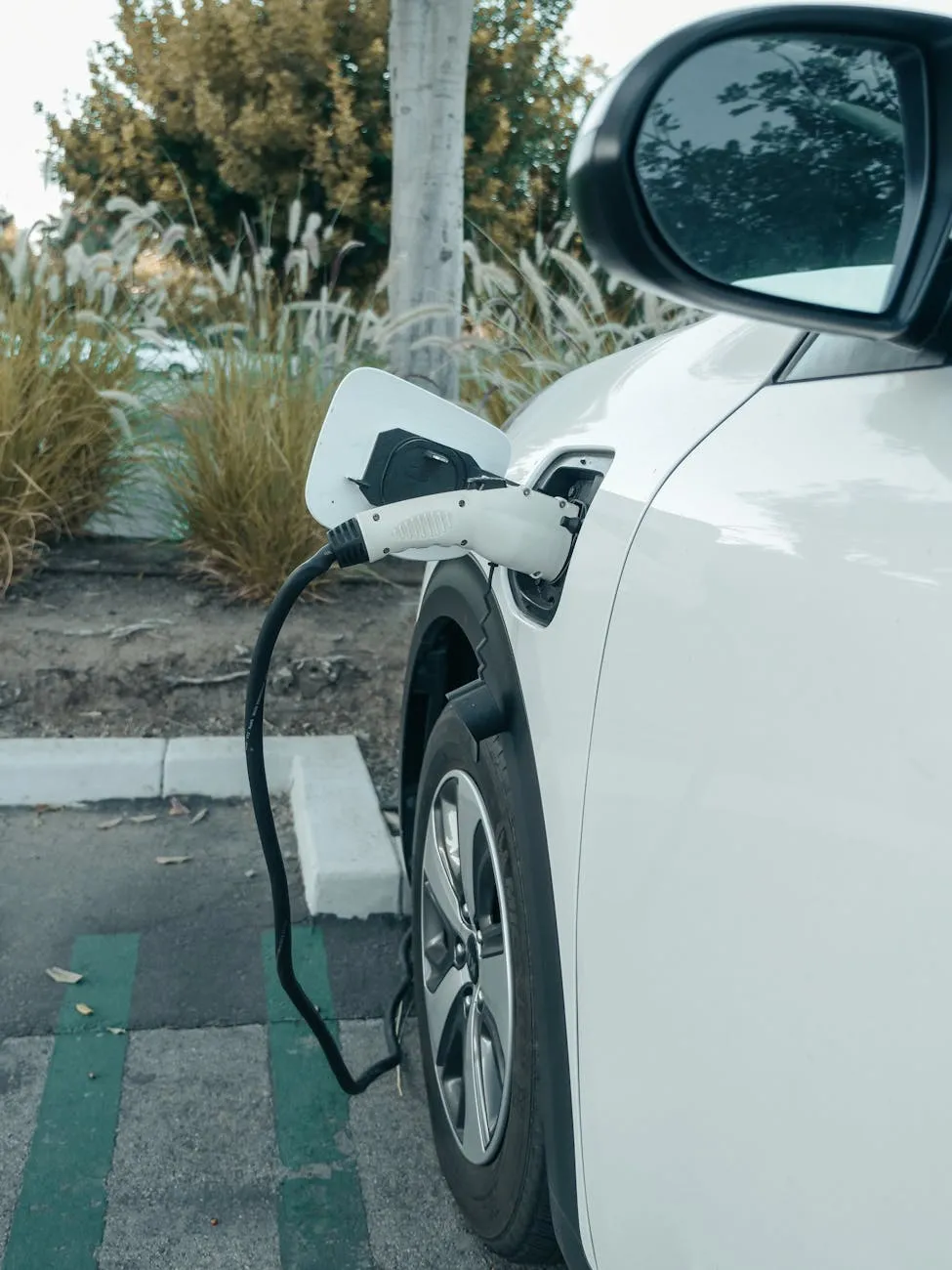
For Canadian buyers, that lands differently than it does in some other markets. A lot of EV ownership in Canada is tied to home charging, condo charging, underground parkades, winter idling habits, and insurance sensitivity. If buyers in Vancouver, Calgary, Montreal, or Ottawa think the battery underneath them is risky, that concern does not stay theoretical. It becomes a question about where the vehicle sleeps and what the strata council thinks about it.
That is why the Blade Battery safety story did real work. It gave BYD something plain to say to cautious buyers: this pack was designed to be less alarming. That does not mean it is immune to failure. It means the company understood the emotional barrier and built a product argument around it.
There is also a fleet angle here. Delivery operators, ride-hail fleets, and municipal buyers do not just ask about sticker price. They ask about downtime, abuse tolerance, warranty exposure, and reputational risk. A battery architecture that is easier to defend on safety grounds is easier to buy in volume.
None of this means the Blade Battery is a miracle device. It means BYD framed the battery around the exact anxieties most likely to slow adoption. That is why the industry took it seriously.
That point is worth sitting with for another moment. When a battery changes the emotional tone of an EV conversation, it changes more than marketing. It changes financing confidence, fleet confidence, insurance comfort, and even the way sceptical family members talk about the car at the dinner table. That is a bigger commercial shift than it first appears.
The Cost Story Is Even Bigger Than the Safety Story
The safety angle got the headlines. The cost angle is what probably scared competitors more.
Battery cost still dominates EV economics. That means any company that finds a more durable and scalable battery path has more freedom than rivals do. It can price harder. It can defend margin longer. It can push into segments that look unattractive for brands with more expensive battery strategies.
That is where the Blade Battery fits into BYD's broader advantage. BYD is not just a car company buying batteries from someone else and bolting them into a platform someone else co-developed. It controls a large part of its value chain. That matters because battery strategy is strongest when it is not isolated from the rest of the business.
If your company can align cell chemistry, pack layout, vehicle architecture, supplier exposure, and production timing, you can make moves your rivals cannot make easily. That is why BYD has looked so aggressive in segments where North American brands still seem strangely nervous.
Think about the price bands that keep coming up in Canada.
Around $25,000 CAD, buyers start paying close attention because that is where mainstream affordability begins to feel real again.
Around $35,000 CAD, buyers start comparing EVs with well-equipped compact crossovers and used alternatives.
Around $45,000 CAD, the math becomes more painful because rebates, financing, and insurance all start deciding the conversation.
That price ladder is where battery economics stop being abstract. A few thousand dollars in pack cost can be the difference between "interesting" and "forget it."
The Blade Battery improved BYD's position on that ladder because it supports a vehicle strategy built around lower material risk and simpler packaging. That does not guarantee perfect pricing in Canada, especially once tariffs, homologation, and dealer structure get involved. But it gives BYD a much better starting point than many rivals have.
This is also why the Blade story spread so quickly beyond BYD itself. Once one major automaker proves that a cheaper and safer battery route can look commercially credible, everyone else has to revisit their own assumptions. That is part of why LFP keeps showing up more often in conversations about lower-cost Teslas, mainstream GM planning, fleet vehicles, and future entry models from brands that used to talk as if nickel-rich chemistry was the only serious path.
For most people, the lesson is simple. The Blade Battery mattered because it made affordable EVs look more believable.
That price story is not abstract in Canada. If a buyer in Surrey is looking at a projected $25,000 CAD entry EV, a $35,000 CAD compact hatch, a $45,000 CAD crossover, or a $52,000 CAD long-range sedan, the battery is sitting underneath every one of those decisions whether the brochure says so or not. A battery strategy that trims a few thousand dollars from the pack can change the financing conversation more than a slightly larger touchscreen ever will.
Put it another way: a monthly payment built around $35,000 CAD feels different from one built around $42,000 CAD, even before insurance gets added. In Toronto or Vancouver, where rent and mortgage pressure already eat up too much income, that difference is not a rounding error. It can be the line between "interesting" and "not happening this year."
There is a policy angle too. Canada keeps talking about EV adoption targets, rebate frameworks, and charging expansion, but the average household still experiences the market as a price test. If an EV buyer sees a comparable gas crossover at $33,000 CAD and an EV at $47,000 CAD, all the climate language in the world will not rescue that comparison. The battery has to help close the gap. That is one reason LFP keeps gaining attention from policymakers and planners as well as automakers (IEA).
Where the Blade Battery Still Has Tradeoffs
It would be lazy to turn this into a fan post, so the limits need to be stated plainly.
LFP still gives up energy density to some nickel-heavy chemistries. That is real. If the only goal is maximum range from a given pack size and weight, there are still use cases where other chemistries have an edge. That matters for premium performance vehicles, longer-range luxury sedans, and large SUVs where every kilogram counts.
There is also the winter question, and Canadian buyers should not skip it. LFP can behave less kindly in very cold temperatures than some NMC-based alternatives. Smart thermal management, battery preconditioning, and better software can narrow the gap, but they do not erase chemistry realities.
Gear worth having
As an Amazon Associate, ThinkEV earns a small commission from qualifying purchases — at no extra cost to you.

Grizzl-E Classic Level 2 EV Charger (40A)
Canadian-made and rated for minus 40C winters. 40A / 9.6 kW, NEMA 14-50, indoor/outdoor, 24-ft cable. The charger built for Canadian weather.
As an Amazon Associate, ThinkEV earns from qualifying purchases — at no extra cost to you.
That matters in Edmonton, Winnipeg, Saskatoon, Sudbury, and northern Quebec in a way that it does not matter in mild coastal climates. A battery architecture can be excellent overall and still require more careful expectations in January than the marketing department would prefer to admit.
The other tradeoff is that battery branding can start doing too much work. Once a company creates a strong battery identity, buyers can assume every vehicle using that family of technology will automatically be excellent. That is not how this works. The battery is one part of the ownership experience. The rest still depends on software, thermal controls, charging curves, dealer support, price, vehicle efficiency, and plain old product competence.
This is where a lot of EV coverage goes wrong. It starts treating the battery as destiny. It is not. It is a huge part of the vehicle story, but it is not the whole story.
For Canadian buyers, the position is this. The Blade Battery improves the mainstream EV case. It strengthens the cost and safety argument. It does not cancel winter reality. It does not make every BYD automatic good value. And it still needs to be judged through the final vehicle, not just the cell format.
I'd argue that this is the grown-up way to read battery news now. Buyers do not need to swing between panic and hero worship every time a company releases a battery claim. They need to ask whether the design improves the car they might actually buy, in the province they actually live in, at the price they would actually have to finance.
That is especially true in Canada because weather and infrastructure expose weak battery claims fast. A battery strategy that looks fine in a mild-climate sales deck can feel very different after a week of Prairie cold, a crowded condo parkade, or a public charging stop that takes longer than the optimistic brochure implied. Good battery reporting should prepare buyers for that reality, not hide it.
Why the Blade Battery Changed Competitor Behaviour and Why That Matters Next
One of the easiest ways to see the Blade Battery's effect is to watch what competitors started talking about after it gained traction.
Suddenly, pack efficiency was a bigger talking point.
Suddenly, cell-to-pack integration looked more respectable.
Suddenly, LFP was not merely a fleet chemistry or a China-specific chemistry. It started showing up in broader public-facing strategies.
That shift was not accidental. BYD proved that a company could take a chemistry many people treated as lower tier and make it central to a strong EV business. That forces imitation, or at least adaptation.
Tesla is the clearest example of this broader trend. The company still chases density and manufacturing innovation in several directions, but it has also embraced LFP more directly in parts of its range. That is not charity. It is economics.
General Motors, Ford, Hyundai, Kia, Volkswagen, and others all now have to decide which models truly need premium battery chemistry and which ones need a more defensible cost structure. Once the industry starts asking that question honestly, a battery like the Blade Battery has already done its job.
This is also where BYD's vertical integration keeps showing up. Competitors can copy concepts faster than they can copy supply-chain position. It is one thing to announce an LFP strategy. It is another to build around it with speed and confidence.
That is why the Blade Battery should be understood as business pressure, not just product pressure.
It tells competitors something uncomfortable:
You may not need a more exotic battery.
You may need a cheaper and more disciplined way to build the one you already have.
That message lands hard in markets where EV affordability is still not where it needs to be. In Canada, buyers do not need another six-figure halo EV to admire. They need a car payment that does not feel ridiculous, a winter range estimate that is not fantasy, and a battery they can trust in a condo parkade.
That is exactly the territory the Blade Battery helped BYD target.
Every battery story now gets pulled toward the same cliff edge. Someone mentions pack design, and the conversation jumps straight to solid-state. Or sodium-ion. Or a lab result that sounds like science fiction. Some of that research is real and promising. The problem is not the science. The problem is how quickly the public conversation confuses "promising" with "commercially ready."
For most people, the next chapter after the Blade Battery is probably going to be more practical than magical.
The industry is likely to keep doing five things at once.
First, it will keep pushing LFP into more mainstream vehicles, especially where price sensitivity is high.
Second, it will keep trying to improve pack efficiency so the chemistry gives up less in the real world.
Third, it will keep improving thermal management and charging curves, because buyers feel those gains immediately.
Fourth, it will test sodium-ion where the density requirements are modest and the cost case is strong.
Fifth, it will keep chasing solid-state without admitting how much industrial work still sits between a great prototype and a mass-market vehicle.
That may not sound romantic, but it is how industries actually move. They usually do not leap cleanly from today's compromise to tomorrow's miracle. They grind through the middle.
BYD's own battery direction will likely reflect that same pragmatism. The company has every reason to keep squeezing more value out of practical chemistries and pack designs before betting the house on a laboratory breakthrough that is still not easy to mass produce.
There is a Canadian version of this story too. Buyers in Halifax, Regina, Kelowna, or Laval do not wake up asking whether a ceramic electrolyte lab sample hit 400 Wh/kg in a controlled test. They ask whether the car will charge properly in February, whether the monthly cost is sane, and whether the battery will still feel healthy after eight winters. Those are boring questions, but boring questions decide markets.
That is why I don't think the next battery winner will necessarily be the company with the fanciest press release. It will more likely be the company that can give buyers a clean answer on cost, durability, and winter confidence. If it can also back that answer with decent service support and a plausible sticker price, then the battery strategy has done its job.
That is also why Canadian buyers should read Blade Battery coverage with a bit more discipline. The right takeaway is not "the battery race is over." The right takeaway is "the race changed direction."
Now the prize is not just density. It is confidence.
Can the battery be made at scale?
Can it keep costs under control?
Can it survive a harsh climate?
Can it give buyers a reason to stop worrying?
The Blade Battery answered those questions well enough that the rest of the industry had to stop ignoring them.
Gear worth having
As an Amazon Associate, ThinkEV earns a small commission from qualifying purchases — at no extra cost to you.

Portable Level 2 EV Charger (40A, NEMA 14-50)
Throw it in the trunk and charge anywhere with a 240V outlet. 40A portable with NEMA 14-50 plug. Your road-trip insurance policy.
As an Amazon Associate, ThinkEV earns from qualifying purchases — at no extra cost to you.
What Canadian Buyers Should Actually Do With This Information
For most people, this is not a post about buying a battery. It is a post about learning what kind of battery story deserves attention.
If a future BYD, Tesla, Hyundai, Kia, or GM model starts making claims about safety, longevity, winter behavior, or cost, the Blade Battery gives buyers a better filter for evaluating those claims.
Ask better questions:
- Is the company talking about the cell or the finished pack?
- Is it selling density at the expense of stability?
- Is it using a battery architecture that supports lower-cost mainstream vehicles, or only halo models?
- Does the battery story line up with Canadian winter use, condo charging reality, and real household budgets?
That is how this becomes practical.
If you are curious about how BYD's broader lineup might land in this market, read our BYD Seagull Canada preview and our BYD Dolphin Canada review. If you are more interested in what comes after LFP, the best companion read is what BYD's solid-state battery plans could mean for Canadian buyers.
Charging still matters too. No battery architecture rescues a bad charging setup. If the vehicle is going to live in a house, townhouse, or semi-rural property, the boring hardware is still part of the ownership math. That is why a dependable home charger continues to matter more than most people expect.
For Canadian homeowners, the Grizzl-E remains the obvious practical answer because it is simple, winter-tolerant, and built for the kind of use pattern real people actually have. Nobody buys a charger for excitement. They buy it because waking up with a full battery is half the point of owning an EV.
Portable charging also has a place, especially for renters, travellers, and households that are not fully settled yet.
Gear worth having
As an Amazon Associate, ThinkEV earns a small commission from qualifying purchases — at no extra cost to you.

AstroAI Portable Tire Inflator
One tap, it inflates to your exact PSI then stops automatically. Low tires cost 5 to 10 percent of your range, so this pays for itself in a week.
As an Amazon Associate, ThinkEV earns from qualifying purchases — at no extra cost to you.
That is where a portable Level 2 setup can still make sense. It is not elegant, but it can save a weekend, a road trip, or an awkward visit to a property where the charging promise sounded better over text than it looks in the driveway.
The other practical piece is tire management.
Gear worth having
As an Amazon Associate, ThinkEV earns a small commission from qualifying purchases — at no extra cost to you.
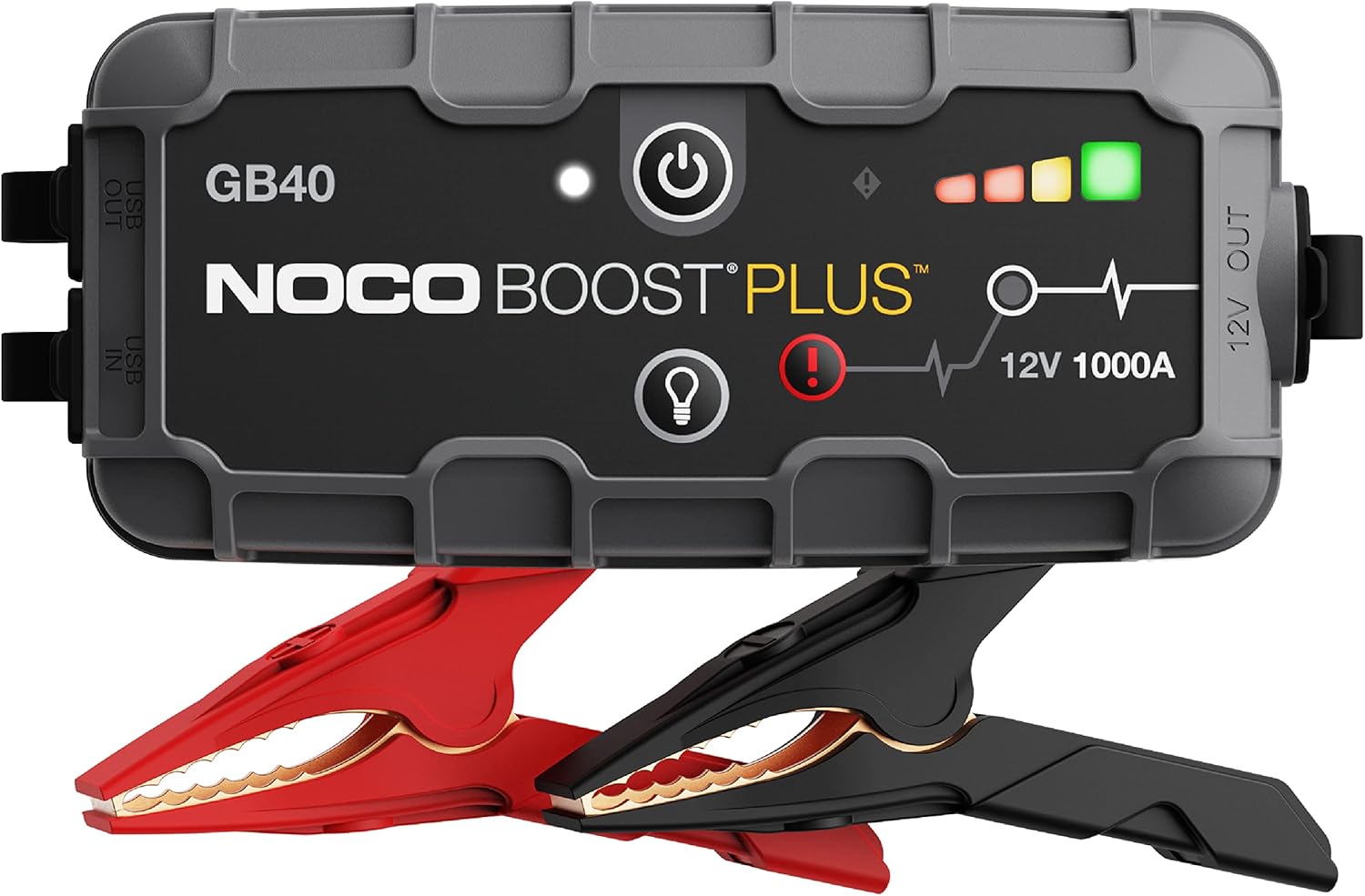
NOCO Boost Plus GB40 Jump Starter
A 1000A lithium jump starter that fits in your glovebox and works on any 12V battery. Your insurance against a dead 12V in a parking lot.
As an Amazon Associate, ThinkEV earns from qualifying purchases — at no extra cost to you.
EV battery stories get all the attention, but Canadians still throw away range every winter with underinflated tires. A battery can be excellent and still feel disappointing if the basics are sloppy. That is not sexy advice, but it is true.
This is also where the ownership story turns practical fast. A buyer in Burnaby who keeps tire pressures right, charges overnight at roughly $0.12 per kWh, and drives mostly local kilometres is going to experience the battery very differently from a buyer in downtown Toronto relying on public charging at $0.45 to $0.70 per kWh. Same battery family, different ownership reality. A good battery helps. A good setup still matters just as much.
The same goes for weather. Natural Resources Canada has spent years reminding buyers that climate, speed, tire choice, and heating load all move EV efficiency (Natural Resources Canada). That does not mean the Blade Battery is less useful. It means battery architecture has to be judged in the real-world context of the vehicle and the place. In practice, this means battery literacy is becoming part of buyer literacy.
BYD's Blade Battery changed the industry because it proved that a battery does not need to win every benchmark to change the market. It needs to solve the right cluster of problems better than rivals do.
The Blade Battery did that.
It made LFP look stronger at the pack level.
It made battery safety more visible.
It gave BYD a sharper cost story.
It pushed competitors toward simpler, more disciplined battery planning.
And it gave mainstream buyers a battery story that did not sound like marketing nonsense.
For most people, that is enough reason to care.
The next decade of EVs will not be decided only by who announces the most dramatic chemistry breakthrough. It will also be decided by who can build batteries that people trust, price vehicles that households can actually afford, and make those vehicles easy to live with in places like Vancouver, Toronto, Halifax, Calgary, and Montreal.
That is the standard now.
The Blade Battery helped set it, and that is why the industry still has to answer to it.
That is a far better place for this conversation to end than another breathless promise about a battery miracle that still has not reached a Canadian driveway.
Gear worth having
As an Amazon Associate, ThinkEV earns a small commission from qualifying purchases — at no extra cost to you.

Amazon Basics Seat Belt Cutter and Window Hammer
The 10-dollar tool you hope to never use: cuts a jammed belt and shatters a window in an emergency. Mount it within reach.
As an Amazon Associate, ThinkEV earns from qualifying purchases — at no extra cost to you.

Founder & Chief Editor
Vlad Pereira is the founder and chief editor of ThinkEV.ca, the Canadian electric-vehicle publication he writes and edits from Courtenay, British Columbia. He covers EV pricing, federal and provincial rebates, charging costs, and the Chinese manufacturers now entering Canada, from the buyer's side rather than the press-fleet side. ThinkEV is a venture of Vlad Pereira Online; his writing on health, income and the long game lives at vladpereira.com.
Frequently asked questions
Is the BYD Blade Battery safer than most EV battery designs?
Why did the Blade Battery matter so much to the rest of the industry?
Does the Blade Battery automatically solve winter EV problems in Canada?
What comes after the Blade Battery?
More EV & road-trip finds
Affordable upgrades worth a look — tap any to check the price on Amazon.
 ★ 55
★ 55LED Car Door Logo Projector Light
View on Amazon ★ 401
★ 401Crochet Daisy Rear-View Mirror Charm
View on Amazon ★ 21,304
Car Headrest Hooks (4-Pack)
View on Amazon ★ 848
★ 848Coiled USB-C to USB-C Car Cable (2-Pack)
View on Amazon ★ 61
★ 61Toddler Car Seat Snack and Cup Tray
View on Amazon ★ 17,839
Qifutan Vent Phone Mount (Military-Grade Clip)
View on Amazon ★ 96,686
PULIDIKI Car Cleaning Gel (Detailing Putty)
View on Amazon ★ 164
★ 164Solar-Powered LED Ambient Light
View on AmazonRead, Plan, Then Stay Current
Explore our expert articles to understand incentives and ownership costs, use the map to pressure-test charging reality, then subscribe so new EV coverage comes straight to you.
Continue Reading
Thermal Runaway: How EVs Stop a Chain Reaction
Which EVs Should Be Charged to 100%? The LFP Exception
First-Time EV Buyer Mistakes Worth Avoiding in Canada

Rivian Canada 2026: R1T, R1S Prices and R2 Release Date
Why Cold Weather Cuts EV Range, the Real Reasons