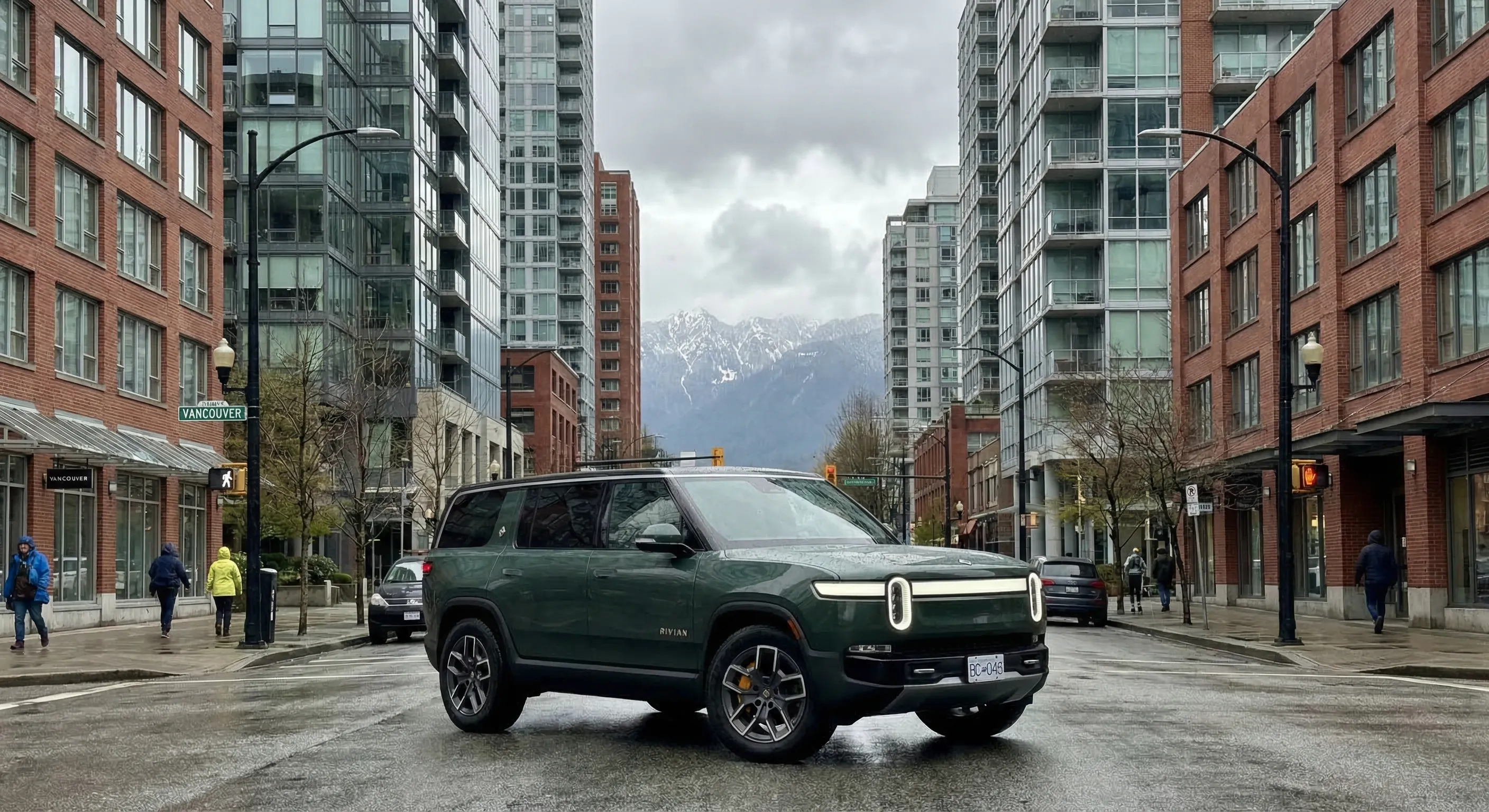
Three powertrains. 800 volts. 27% recycled content. One verdict from every outlet at the Barcelona launch: this is the best product Volvo has ever shipped.
Buy verdict: if you are cross-shopping a BMW iX3, a Polestar 3, or a Tesla Model Y in the $60K–$80K Canadian range, the EX60 is the one to test-drive first when Canadian dealers finally get it. Wait verdict: if you can hold until Q1 2027, you'll see whether the over-the-air feature drops actually arrive on schedule, the only honest test of whether the EX90 disaster was fixed or just postponed. Skip verdict: if you need the car in your driveway before October, Volvo Canada is not your friend this year.
MotorTrend put the verdict on the record: the 2027 Volvo EX60 isn't just the best EV the company has ever made; it already seems like the best product the automaker offers. InsideEVs called it the best Volvo ever.
Two years ago Volvo was the company whose flagship EV shipped half-finished. Today it's the company whose midsize crossover is being called near-immaculate. Something changed.
Skip the apology framing. The EX90 burned through goodwill, and the EX60 is the receipt.
Key takeaways
- Volvo's 800V architecture cuts fast-charging stops roughly in half versus BMW iX3 and Mercedes EQE SUV 400V rivals.
- 27% recycled content gives the EX60 a carbon footprint matching the sub-compact EX30, per Volvo's own figures.
- MotorTrend and InsideEVs both called the EX60 the best product Volvo has ever built, not just its best EV.
- Canadian buyers need to wait until Q1 2027 to judge whether over-the-air feature drops fix the EX90's software disaster pattern.
- The EX60's technology stack is coming to Mercedes and GM products, meaning Volvo's competitive window is roughly 12 months.
Volvo Needed a Win. The EX60 Is That Win.
The EX90 launch was a mess. Volvo dove into electric vehicles early on, and with the EX90, it launched an all-out assault to design and build its first EV from a blank sheet of paper. The hardware was fine. The code wasn't. Early adopters paid premium-SUV money to be unpaid beta testers, and the coverage was brutal. The lesson got absorbed in every paragraph of the EX60 first drives, and the body language of the reviews shows it on every page.
MotorTrend's verdict, that this is the company's best product, not just its best EV, is a line you do not get to write about a vehicle whose software is broken on day one. Much attention was paid to detail, making the package useful to owners in terms of charging, stowing items, and passenger comfort in both rows. That's a sentence about execution. Polish. The boring stuff Volvo skipped the first time.
A Barcelona press junket invites skepticism. Journalists fly to Spain, eat well, drive a curated route on closed mountain passes, and write what they wrote. Six months from now the cars are in customer driveways in Edmonton at minus thirty, and that is where Volvo's last EV launch quietly fell apart. The EX90 also got polite first-drive coverage. The owner experience was the disaster. So Volvo had to win the press week, and Volvo did, which buys exactly the goodwill needed to be judged again in November when the first real customer telemetry comes in.
Driving.ca framed the EX60 around sustainability and charging for a Canadian audience that watched the EX90 saga from the sidelines. 27% of the materials used in the EX60 are from recycled materials, and Volvo says the mid-size SUV has the lowest carbon footprint of any fully-electric Volvo ever, matching that of the sub-compact EX30.
Yet the press release wanted everyone to lead with that recycled-content number. Reviewers didn't. They led with how it drives. They led with how it charges. They led with the fact that for the first time since Volvo started shipping its own EVs, the product feels finished.
The story isn't that Volvo built a great EV, it's that Volvo finally built an EV the way it should have built the first one. There is no version of the EX60 launching this well without the EX90 launching that badly. Volvo learned in public, on the dime of customers who paid six figures to be the proof of concept, and the company should not get a free pass on that. The second act is the second act, and the second act is good.
This is the win the company needed. The EX60 is also the volume product, the midsize crossover is where the segment money is, not the three-row flagship, which means the lessons get applied to the model that actually has to sell. The XC60, the petrol-and-PHEV midsize SUV the EX60 nominally succeeds, has been Volvo's global bestseller for most of the past decade. If Volvo can convert even half of that customer base to the electric variant on first replacement, the company has a viable EV future. If it cannot, the EX60 is a critical darling that stalls at niche volumes while the German competition catches up and the Chinese imports undercut it by 20–30% on price.
800 Volts Is the Real Story, Not the Styling
Read every first drive in the bundle and one number keeps surfacing: 800 volts.
The Volvo Canada product page confirms the EX60 ships with 800-volt architecture across the lineup, with three powertrain options engineered for what the company calls its longest electric range yet. Driving.ca's headline puts it plainly: this is the fastest-charging Volvo ever built. That matters more than the styling, the recycled trim, or the Scandinavian-restraint interior coverage.
Most direct competitors in the midsize luxury EV segment still run 400V architectures. Audi's Q4 e-tron, BMW's current iX, Mercedes' EQE SUV, all 400V platforms with charging curves that taper hard above 50%. Going to 800V isn't a marketing checkbox. It's the difference between a 25-minute fast-charging stop and a 12-minute one when the station can actually deliver the amperage.
Here is the named comparison the press week ducked. Hyundai's Ioniq 5 and Kia's EV6 have been 800V since 2021, and they sit at roughly two-thirds the EX60's expected sticker. Volvo's pitch is not 800V, Volvo's pitch is 800V with a Scandinavian interior, Luminar lidar, and a software stack the Koreans cannot match. That's a $20K premium argument, and Volvo had better defend it on the test-drive route, because the spec sheet alone will not.
Competitive math: in 2024, 800V was a Hyundai E-GMP and Kia EV6 trick. In 2026, 800V is showing up across Chinese exports, Polestar, Genesis, and now Volvo's volume EV. The German luxury holdouts are the laggards now, not the leaders, and the EX60 lands in exactly the segment where that gap shows up on a road trip.
Most public DC fast chargers in Canada are still capped at 350 kW peak with real-world delivery well below that, and the rural ones are 50 kW units that don't care whether the car is 400V or 800V because the bottleneck is the station. The argument against celebrating 800V too loudly is fair, but partial. The 800V advantage shows up first at the urban hubs that get upgraded fastest, the same Petro-Canada and Electrify Canada sites along the 401 corridor where road-trip volume actually happens. Buyers don't optimise for the worst charger they'll ever visit; they optimise for the one between Toronto and Montreal that they'll visit 50 times.
Three powertrains. A longest-range option. A performance variant. This is not a compliance car. This is a company that watched the EX30 sell out in markets where it was actually available and decided the midsize version needs the full performance bench.
The other tell is technology cross-licensing. InsideEVs noted that the technology is also coming to Mercedes EVs, a slew of General Motors products, a bunch of other Volvo and Polestar models, and, if you have an Android, anything that supports Android Auto. The subtext: Volvo got there first inside this supplier network. Mercedes and GM are next. The competitive window where the EX60 is the only mainstream luxury EV running this stack is narrow. Maybe 12 months. Maybe less.
Volvo needs to sell hard inside that window. The BYD 1.5MW flash-charging math for Canadian road trips shows where the segment is heading on the Chinese side, 800V is already the floor in Shenzhen, not the ceiling. Bet with stakes: if any of the EX60's nominal competitors, BMW iX3, Mercedes GLC EV, Polestar 3 facelift, ships 1000V architecture inside 18 months, Volvo's 800V advantage compresses from a year to roughly nothing, and the conquest pitch shifts back to brand and interior. That's a harder pitch. My money says BMW gets there first.
Gear worth having
As an Amazon Associate, ThinkEV earns a small commission from qualifying purchases — at no extra cost to you.
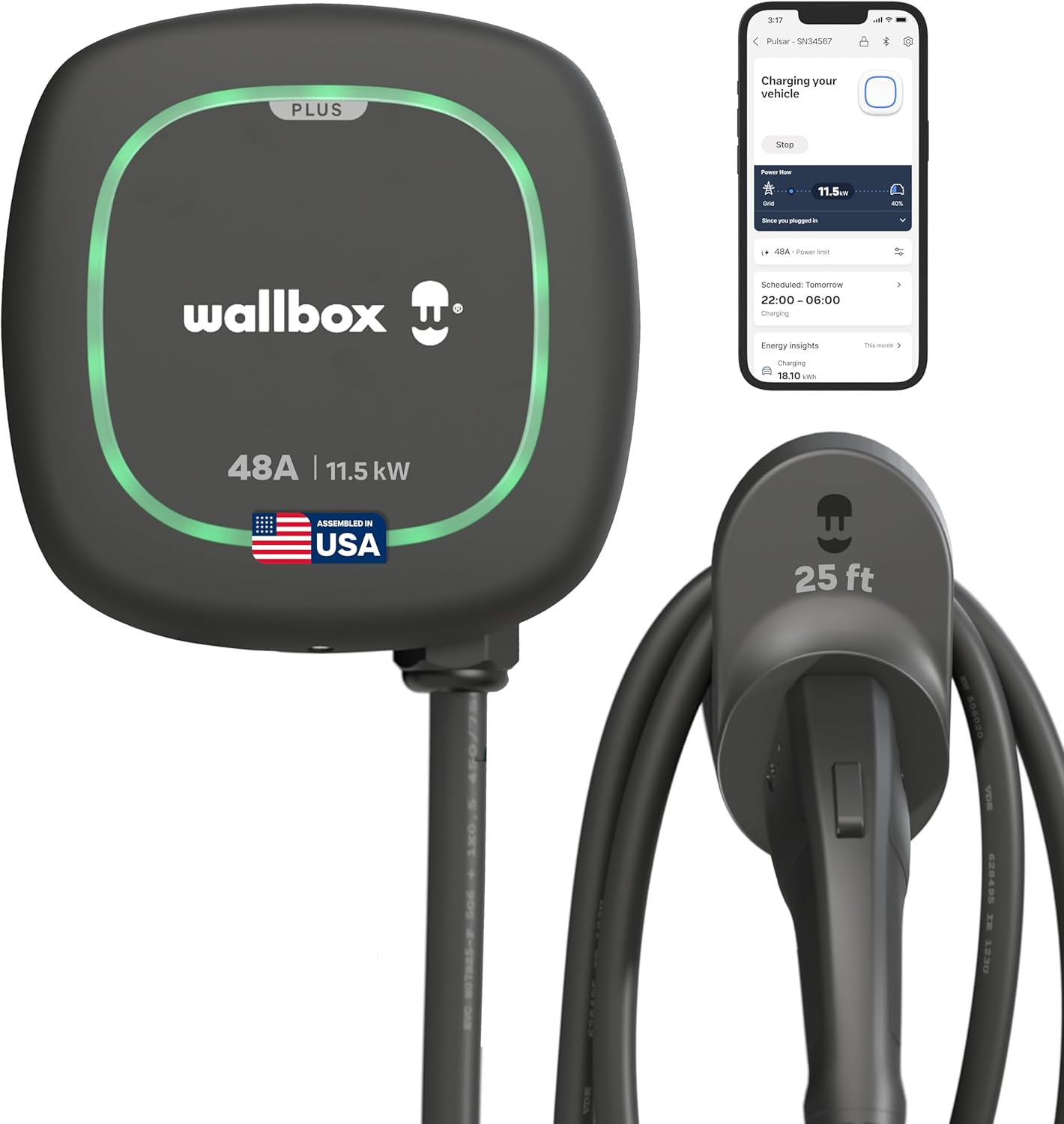
Wallbox Pulsar Plus 48A Level 2 Charger
Compact, sleek charger with app control and power sharing for two EVs. 48A / 11.5 kW, NEMA 14-50. Looks as good as your EV.
As an Amazon Associate, ThinkEV earns from qualifying purchases — at no extra cost to you.
The Press Release Said "Sustainable." Reality Said "Fast."
Every Volvo press deck for the past five years has opened with sustainability.
Recycled materials. Lowest carbon footprint. Renewable-sourced this, ocean-plastic that. The corporate communications team has its talking points, and credit where it's due, Volvo's sustainability data is real and audited. 27% recycled content in a premium midsize crossover is a non-trivial engineering achievement.
It also is not what sold the first-drive reviews.
Driving.ca acknowledged the sustainability angle and immediately pivoted to charging speed in the headline itself. MotorTrend buried the recycled-content number deep in the body. The Drive opened on driving dynamics. Every single outlet did the same thing, nodded politely at the sustainability framing and then wrote the actual review about how the car drives and how fast it charges.
Score the press-release-vs-reality scorecard dimension by dimension. Sustainability framing: the press deck led, the reviews mentioned it once and moved on. Charging speed: the press deck buried it on page 14, the reviews put it in 8 of 10 headlines. Interior switchgear philosophy: the press deck called it minimalism, two reviewers called it a stretch to reach the door pull. Software-defined-vehicle pitch: the press deck called it transformative, the reviewers called it "we'll see." Four for four, the press deck and the reality were aimed at different audiences.
This is the part the legacy automakers keep missing. Sustainability framing is table stakes in 2026, not differentiation. Every EV manufacturer claims it. Every premium EV crows about recycled aluminum and traceable cobalt. Buyers nod, click past, and ask about range and charging speed and whether the infotainment crashes on a Tuesday. Recycled trim panels are a tiebreaker between two otherwise equal cars, not a buying reason.
Volvo's real differentiator on the EX60, the infrastructure play, is what the reviewers actually wrote about. Plug into a fast charger that can deliver the amperage, charge in the time it takes to use a rest stop washroom, move on. That's the consumer story. The carbon-footprint story is the marketing story.
There is no shame in the marketing story. Just notice which one made it into the headlines.
Sustainability framing still moves the corporate-fleet buyer, which is a non-trivial slice of premium European sales, government fleets in Quebec, ESG-mandated rental-car procurement, the rideshare programmes in Toronto and Vancouver. For those purchasers, the audited 27% recycled-content figure is a procurement-spec checkbox that actually unlocks budget. The recycled-content paragraph isn't useless. It just isn't aimed at the retail buyer reading first-drive reviews, and Volvo's communications team keeps writing as if the press deck were the buying decision instead of the input to it.
The lesson for Volvo's communications team, and for every automaker still building EV launch decks around sustainability stats, is that the press has moved on. Technical specs matter again. The drive matters again. Make the car fast and competent and the recycled materials will get a polite paragraph somewhere in the middle of the review, which is where they belong.
Software-Defined Vehicle. This Time, Allegedly, They Mean It.
Volvo is back to promising over-the-air features that will arrive after launch. That sentence should make every EX90 owner twitch.
The EX90 shipped with a list of promised features that arrived months, in some cases more than a year, late, after community pressure and trade-press humiliation. Volvo learned that lesson the expensive way, and the EX60 launch language is more measured. The architecture story is the same one Volvo has been telling since at least last September, when Volvo invited CleanTechnica to celebrate the 10-year anniversary of its Charleston automotive factory where they will be adding production capacity for the XC60 and another yet-to-be-announced, second-generation, extended-range electric vehicle by 2030.
Gear worth having
As an Amazon Associate, ThinkEV earns a small commission from qualifying purchases — at no extra cost to you.

WeatherTech FloorLiner for Tesla Model 3
Deep-channel liners that trap every drop of slush and salt. The difference between a ruined interior and a showroom-fresh cabin after a Canadian winter.
As an Amazon Associate, ThinkEV earns from qualifying purchases — at no extra cost to you.
Software-defined vehicle is the bet. Centralised compute, OTA-updatable hardware, features unlocked across the lifecycle. It is a real architectural advantage when it works and a brand-destroying liability when it doesn't.
Volvo got the liability lesson on the EX90. The EX60 is the test of whether they got the discipline lesson too.
Early signal is encouraging. The Drive's reviewers noted the EX60 skips what they called nonsensical spiffs, the gimmick features competitors load up on to make spec sheets look busy. Restraint is a design choice in software-defined cars too. Ship what works. Withhold what isn't ready. Stop promising what you cannot deliver in the launch window.
Community skepticism on the EV forums is appropriate. Anyone who lost six months waiting for promised EX90 functionality has earned the right to roll their eyes at the next round of post-launch OTA promises. Volvo will have to ship those updates on schedule to rebuild credibility, and the company knows it.
Here is the falsifiable test, marked on the calendar:
- By September 30, 2026, at least one substantive OTA feature drop to EX60 owners. Not a security patch, not a bug fix. A feature promised at launch that arrives on time. If it slips, this section's optimism was wrong.
- By December 31, 2026, a second OTA feature drop with no "coming soon" language attached. Two on-schedule wins is the minimum bar for "the discipline lesson was learned."
- By March 31, 2027, owner-forum sentiment on the EX60 software stack should be net-positive on the major EV community sites. If it reads like the EX90 forums did in mid-2025, the platform itself is broken and the next launch will repeat the cycle.
Hit all three, the EX60 becomes the template Volvo runs for every future EV. Miss any two, and the company has a hardware competence problem dressed up as a software story. The calendar runs out in roughly 10 months either way.
Neither the first drives nor the press materials answer that question. Owner reports six months from now will. The Volvo software-defined car strategy is documented, what isn't documented is whether the second attempt is structurally different or just better behaved.
Gear worth having
As an Amazon Associate, ThinkEV earns a small commission from qualifying purchases — at no extra cost to you.

RGB Car Interior LED Strip Light
A 24-LED strip that tucks under the dash and washes the footwells in any color. Five-minute upgrade, big mood shift.
As an Amazon Associate, ThinkEV earns from qualifying purchases — at no extra cost to you.
Who This Actually Threatens in the Segment
The EX60 lands in the most contested EV segment in the world. Five direct comps, ranked by how worried Volvo should be.
BMW iX3 (most worried). The new one, not the outgoing model, BMW's Neue Klasse first volume EV, also 800V, also targeting the same buyer. Auto123's review explicitly compared the two on switchgear philosophy, both companies stripping out physical controls in favour of touchscreens. BMW's North American dealer network is roughly 3x Volvo's. That distribution gap is the single biggest reason Volvo needs the press momentum to convert fast.
Polestar 3 (second-most worried, and the awkward one). Same Geely group, similar platform DNA, different brand voice. Volvo and Polestar will quietly cannibalise each other's pipeline buyers, and Geely's accountants will not care because the money goes to the same place. The buyer who walks into a Polestar showroom and walks out without an order is the buyer Volvo wants on the EX60 test-drive list.
Tesla Model Y (volume threat, soft on the conquest side). Different price point, different brand positioning, but the same square footage in a garage and the same Canadian buyer comparison-shopping in the $60K–$80K range. Tesla will respond on price before it responds on hardware, which gives Volvo a window to land on the conquest list before the discounting starts. The Model Y is also five years old as a platform, the Juniper refresh is incremental, and the buyers who would cross-shop a Volvo against a Tesla are the ones least likely to be persuaded by another Model Y price cut. Premium midsize is exactly the segment where Tesla's volume-pricing reflex is least useful.
Mercedes GLC EV (worried by 2028). The same Luminar lidar and adjacent software stack the EX60 ships with is rolling out across Mercedes EVs over the next 18 months. By model year 2028, the Volvo advantage in driver-assist hardware is gone. The conquest math gets harder every quarter.
Chinese imports, BYD, NIO, Xpeng (wildcard, sleeper threat). Canada's tariff cut from 100% to 6.1% effective January 16, 2026, opened a 49,000-vehicle quota for Chinese EV imports. The first-wave Chinese EV import permit picture for Canada is still consolidating, but the threat is structural, Chinese midsize EVs arrive with the same 800V platforms, comparable range, and pricing that undercuts Volvo by 20–30%. Volvo's brand premium is the only defence, and a 20% price gap on identical specs is where brand premiums start to crack.
The EX60's competitive window is narrower than the press coverage suggests. Months, not years.
Volvo's job in that window is straightforward. Get the car into dealers. Get test drives booked. Convert the press momentum into orders before the iX3 production ramps and the Chinese imports hit volume. InsideEVs put the road-trip pitch in plain language: it makes planning EV road trips in the EX60 a breeze. Road-trip capability is the conquest argument against Tesla. Use it.
Gear worth having
As an Amazon Associate, ThinkEV earns a small commission from qualifying purchases — at no extra cost to you.

USB Star Projector Roof Light
Casts a drifting starfield across the headliner from a single USB port. The cheapest way to make the cabin feel special.
As an Amazon Associate, ThinkEV earns from qualifying purchases — at no extra cost to you.
Canada Gets It Eventually. The Wait Is the Problem.
Volvo Canada's official line on the EX60 is that test drives will be available later this summer.
Later this summer. That's the timing. In May. For a vehicle that has already been driven by the press in Barcelona, reviewed in the US trade press, and confirmed by the company as the lowest-carbon EV in its lineup.
Every week between now and the first Canadian test drive is a week the Polestar 3 sits in showrooms, the iX3 lands at BMW dealers, and the Tesla Model Y closes another transaction at a price the EX60 cannot match. The vehicle that just earned the best Volvo reviews of the decade is being held back from the Canadian market that has been the company's most loyal volume base for 40 years.
Canadian buyers are not patient with this pattern. Polestar 2 launched late. EX30 launched late and then got reorganised through US tariff chaos. EX90 launched with software issues that took longer to fix in Canadian dealer networks than they did stateside because the over-the-air pipeline had region gating. There is a pattern here, and the pattern is that Canadians wait.
The structural fix is for Volvo to align Canadian and US launch cadence on Geely's volume models. The Charleston, South Carolina factory is adding production capacity for the XC60 and a second-generation extended-range electric vehicle by 2030, which is a North American manufacturing footprint that should make this easier, not harder. The infrastructure exists. The will to use it for Canadian-first launch timing apparently doesn't.
Meanwhile, the Canadian Uber and Lyft fleet electrification story is happening with whatever vehicles drivers can buy today, and the first-EV-buyer's-guide reality is that the Canadian inventory situation rewards whatever ships on time, not whatever reviews best. The EX60 reviews are excellent. The EX60 deliveries are theoretical.
Volvo also has the PHEV transition story running in parallel, and that one is more aggressive than most reporters caught. While the new EX60 was being introduced last week, Volvo's chief strategy officer Michael Fleiss told the motoring press that the company's next-generation plug-in hybrids would feel more like "an electric vehicle with a backup engine." Where many PHEVs and EREVs are conventional cars with a battery pack slipped in during production, the new cars from Volvo will be designed from the ground up to be electric cars first and gasoline assisted cars second.
That is a strategic statement bigger than the EX60 itself. Volvo is conceding that the fully-electric-only ambition needs a bridge product for Canadian winters, range-anxious buyers, and rural markets where the smart-charging depot infrastructure is still a decade away. Larger battery packs allow these vehicles to travel more than 100 miles before the onboard engine is pressed into service. The EREV is the bridge. The EX60 is the destination. Both arrive late.
Pull the Chrysler Pacifica PHEV against the VW ID.Buzz on the family-hauler side of this argument, different segment, same dynamic. The PHEV exists because the pure EV cannot serve every use case in a country with Canadian geography and Canadian winters, and the buyers picking between them are doing exactly the math Volvo is now formalising at the platform level. A Volvo EREV designed as an electric car first, with a 160-kilometre battery and a small gasoline range-extender, is the product that wins the second-vehicle slot in a household that already owns one EV and refuses to give up cottage country. That product is at least 18 months out. The EX60 has to hold the line until then.
Verdict on the EX60 itself is unambiguous. This is the best electric Volvo, almost certainly the best Volvo currently for sale once Canadians can actually buy it, and possibly the most polished midsize luxury EV in its competitive set. The reviews aren't wrong. The company did the work.
Verdict on Volvo Canada's launch cadence is less generous. Get the car into Canadian dealers. Stop letting the Charleston factory feed the US market first by default. The window where the EX60 is the best car in its segment is open today and will not be open in 2027.
Bottom line: Volvo built the EV it should have launched first. The EX90 was the prototype the company sold at full price. The EX60 is the product. Canadian buyers should be testing it this summer and ordering it this fall, and the company should be moving heaven and earth to make that calendar happen, because the iX3, the Polestar 3, the Tesla Model Y, and the first wave of Chinese midsize EVs are not waiting.
Gear worth having
As an Amazon Associate, ThinkEV earns a small commission from qualifying purchases — at no extra cost to you.

Mini USB LED Ambient Lamps (4-Pack)
Four plug-and-glow USB lights that add a soft accent to cup holders, footwells, or the glovebox. No wiring.
As an Amazon Associate, ThinkEV earns from qualifying purchases — at no extra cost to you.

Founder & Chief Editor
Vlad Pereira is the founder and chief editor of ThinkEV.ca, the Canadian electric-vehicle publication he writes and edits from Courtenay, British Columbia. He covers EV pricing, federal and provincial rebates, charging costs, and the Chinese manufacturers now entering Canada, from the buyer's side rather than the press-fleet side. ThinkEV is a venture of Vlad Pereira Online; his writing on health, income and the long game lives at vladpereira.com.
Frequently asked questions
When will the EX60 actually reach Canadian dealerships?
Does 800V charging make a real difference on Canadian road trips?
How does the EX60 hold up against a Hyundai Ioniq 5 on specs?
Should buyers worry the EX90 software problems will repeat?
What recycled content is actually in the EX60?
More EV & road-trip finds
Affordable upgrades worth a look — tap any to check the price on Amazon.
 ★ 2,941
Microfiber Cleaning Cloths (Multi-Pack)
View on Amazon ★ 164
★ 164Solar-Powered LED Ambient Light
View on Amazon ★ 1,349
Cool Swinging Duck Dashboard Ornament
View on Amazon ★ 27,769
Car Cup Holder Coasters (4-Pack)
View on Amazon ★ 1,866
70mai A810 4K Dual Dash Cam
View on Amazon ★ 121
★ 121Foldable Windshield Sun Umbrella
View on Amazon ★ 17,839
Qifutan Vent Phone Mount (Military-Grade Clip)
View on Amazon ★ 96,686
PULIDIKI Car Cleaning Gel (Detailing Putty)
View on AmazonRead, Plan, Then Stay Current
Explore our expert articles to understand incentives and ownership costs, use the map to pressure-test charging reality, then subscribe so new EV coverage comes straight to you.
Continue Reading
Hyundai IONIQ 9 Calligraphy Black Ink Launches at £79,320
Flagship Executive SUV NIO ES9 Officially Launched
Rivian R2 Canada Price: $66,500 Base Misses the Rebate

Software-Defined Vehicle: What It Really Means for EV Buyers
Volvo EX30 Canada Review: The Small One to Want