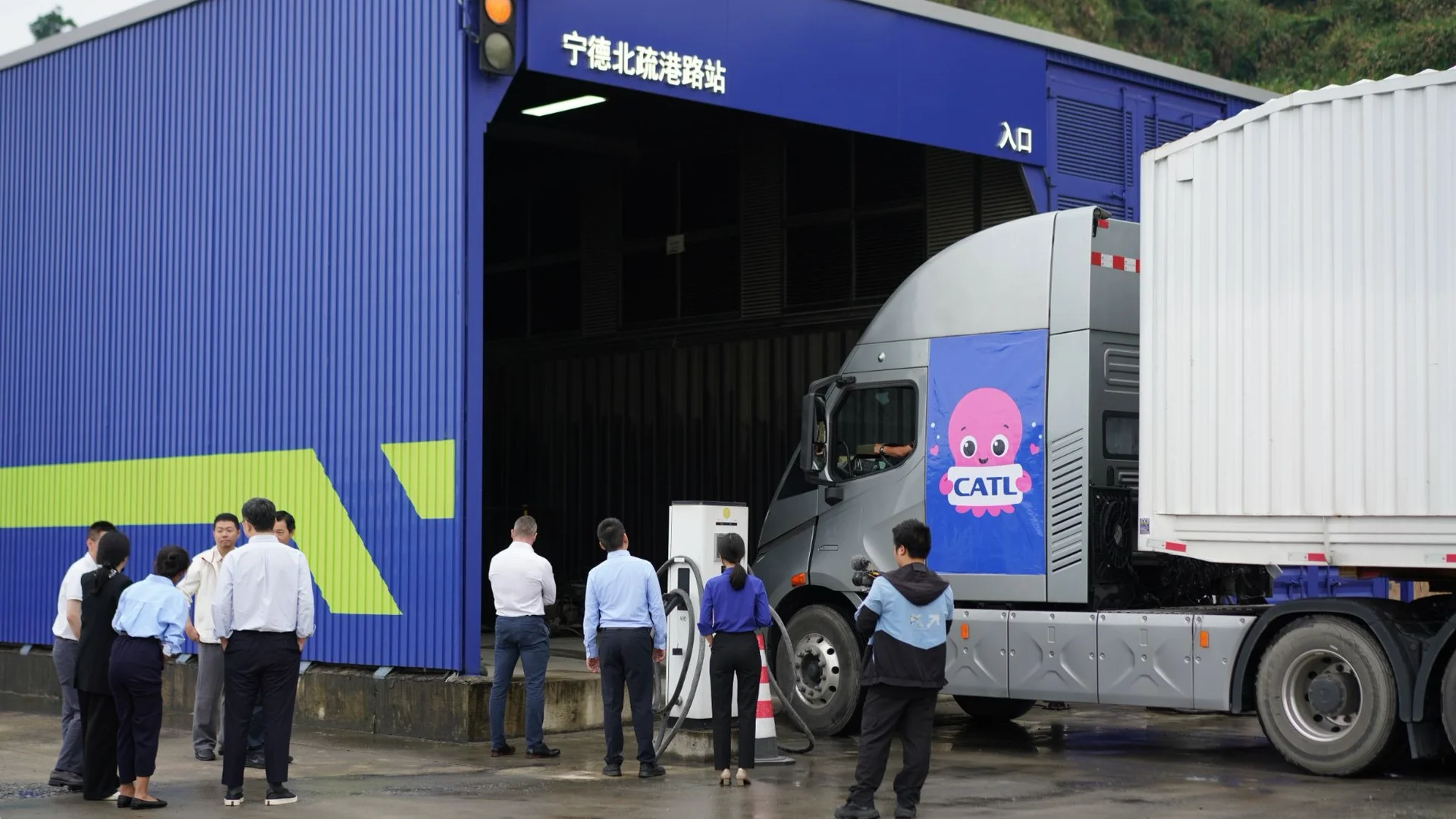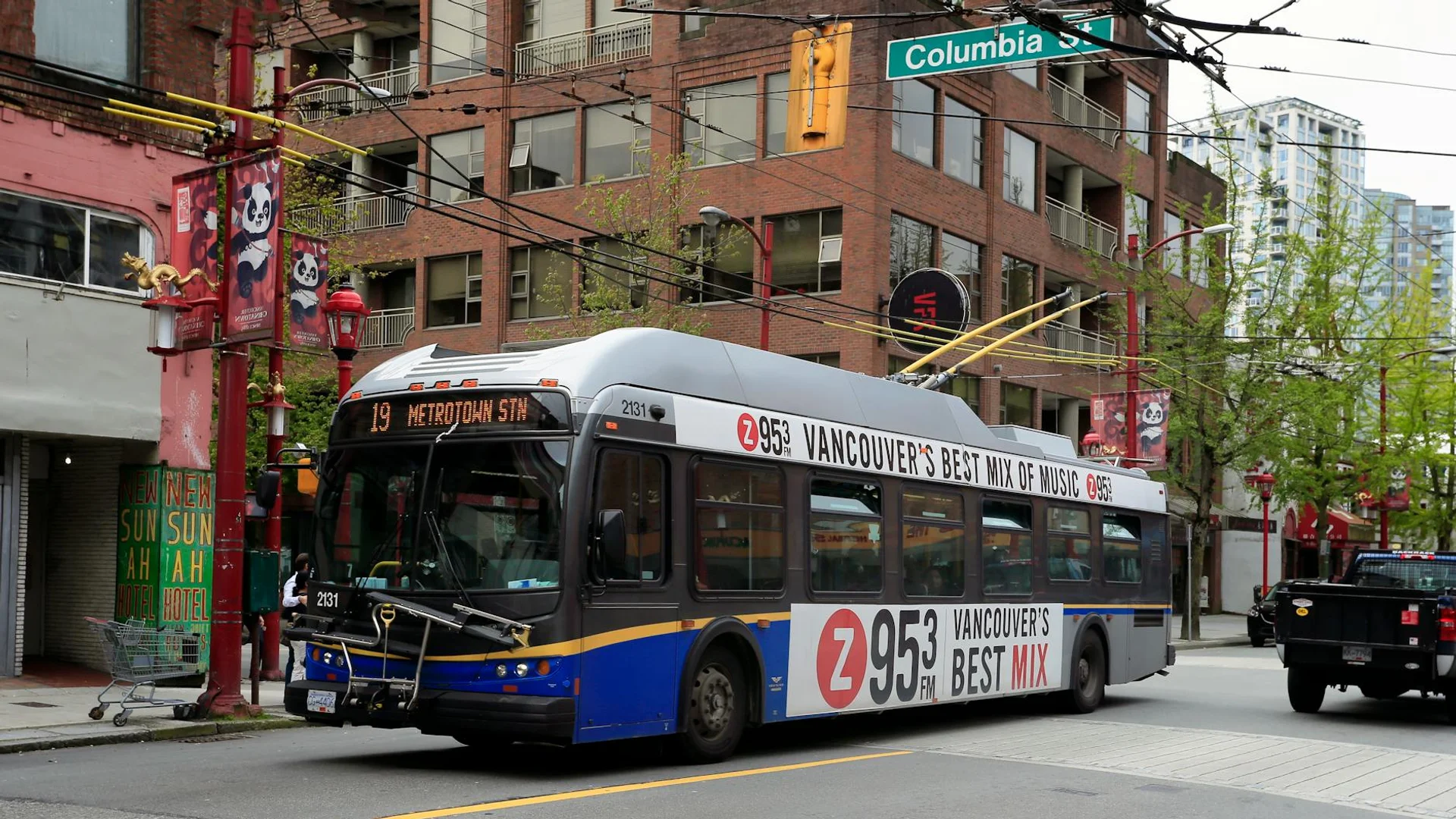
In May 2026, First Bus depots in Glasgow began adjusting their overnight charging behaviour in response to real-time signals from the UK's National Grid. The trial is being delivered with Optimo Energy, whose platform manages charging schedules according to real-time grid signals while ensuring buses remain operationally available. The fleet behind the trial is not modest. First Bus currently operates more than 1,400 zero-emission buses in the UK, around one quarter of its fleet, and plans to achieve a fully zero-emission commercial bus fleet by 2035.
That is the headline. The more consequential reading is that the UK has just built the first commercial template the rest of the world will copy, and it has done so under a regulatory framework that does not yet exist in Canada. A bus depot is not a power plant, but in regulatory terms it is starting to look like one, a dispatchable load that a grid operator can lean on during the hours when wind generation outruns demand, or when peak consumption threatens system frequency. Charging electric buses during periods of high renewable energy production helps the grid absorb more energy and alleviates periods of high demand. The technology to do this is, in operational terms, unremarkable; the platforms have been deployed at smaller scale in Bologna, Frankfurt, and Paris for years. The contractual and regulatory infrastructure that lets a transit operator earn money for it is the actual story, and that infrastructure varies sharply by jurisdiction.
The engineering behind smart depot charging is converging globally. The policy is not. Canada's federal-provincial layering means a transit fleet in Brampton in 2026 cannot legally capture the revenue stream that an identical fleet in Glasgow can. That gap is the subject of this piece: what smart depot charging is, what the First Bus trial covers, how the UK's current rules price it, and how the same activity would, or would not, be remunerated in Canada, the EU, the US, and China.
Key takeaways
- First Bus's 1,400-strong UK zero-emission fleet began grid-responsive charging with Optimo Energy in Glasgow, May 2026.
- The four-party structure, fleet operator, aggregator, system operator, regulator, is the template every jurisdiction must replicate.
- Canadian transit fleets in 2026 cannot legally earn the same grid-flexibility revenue as an identical Glasgow depot.
- Smart depot charging shifts when buses draw power; it does not export energy back, V2G requires separate hardware and settlement rules.
- OFGEM's Demand Flexibility Service, not ancillary-services markets, is the only commercially structured route for a fleet of this scale in the UK.
What Smart Depot Charging Is, and What It Is Not
Smart depot charging is a load-management practice. A central platform decides when each bus charges, at what power, and in what sequence, based on three concurrent inputs: the operational schedule for the next service day, the on-site electrical capacity, and an external price or grid-state signal. The platform does not export energy back to the grid. The buses remain pure consumers.
That distinction matters because the term "vehicle-to-grid" has been used loosely for years to describe activities that are technically only "managed charging" or "demand-side response" (DSR). Managed charging shifts when a vehicle draws power. V2G discharges the vehicle's battery into the local distribution network, which requires bi-directional hardware, a different connection agreement with the utility, and, in most jurisdictions, a settlement framework that does not yet exist for commercial transit fleets.
The First Bus trial sits firmly on the managed-charging side of that line. Optimo Energy's platform reads grid signals and re-sequences charging windows. Buses that need a higher state of charge by 04:00 dispatch get prioritised. Buses with later pull-out times can wait for a cheaper or greener interval. The grid benefits because the depot's aggregate load curve becomes shapeable, not because the depot supplies electrons back into the system.
Within managed charging, three sub-categories carry different regulatory treatments. Frequency response, sub-second adjustments to balance grid frequency around 50 Hz in the UK or 60 Hz in North America, pays the most per megawatt but demands the strictest response time. Demand-side response covers slower, scheduled load shifts measured in minutes or hours, and is the category most depots can realistically deliver. Peak-shaving is an internal cost-reduction practice that may or may not interact with a utility tariff, depending on the rate structure.
The Glasgow trial is, in regulatory terms, a demand-side response pilot. That places it under OFGEM's Demand Flexibility Service framework rather than the more demanding ancillary-services markets. It is the right starting point. It is also, in 2026, the only commercially structured route by which a transit fleet of this scale can earn revenue from a national grid operator without bespoke per-site contracts.
The forward question, and the one regulators in Canada and the EU are quietly working on, is when the same depots will be allowed to discharge as well as defer. The bi-directional case requires both new hardware certification (ISO 15118-20) and new connection agreements that most transit utility contracts do not currently include. That is a separate trial, on a separate timeline.
The First Bus Trial: Scope, Counterparties, and Regulatory Context
The trial began in Glasgow and is set to extend. The UK's first smart charging trial for electric buses has already begun in Glasgow and is planned to expand to the First Bus depot in Great Yarmouth, Norfolk, shortly. The geographic spread matters because Glasgow's distribution network is constrained differently than East Anglia's, and proving the platform across distinct grid topographies is the precondition for a national rollout.
The counterparty stack is worth naming precisely. First Bus is the fleet operator; it owns the buses and the depot land and pays the electricity bill. Optimo Energy is the technology provider and, more importantly, the contracting party with National Grid ESO for demand-side response settlement. National Grid ESO is the system operator that issues the dispatch signals. OFGEM, the UK energy regulator, sets the rules under which Optimo Energy can aggregate the depot's flexibility and bid it into the Demand Flexibility Service.
That four-party structure, fleet operator, aggregator, system operator, regulator, is the template every other jurisdiction will need to replicate before a comparable trial can run. The aggregator is the load-bearing role. Few transit operators have the in-house energy-market capability to bid directly into a national balancing market, so the aggregator function is what converts a fleet of buses into a financial instrument.
First Bus's broader infrastructure programme provides the headroom for trial expansion. The company is also developing 20 electric depots across the country. Each new depot is a candidate site for enrolment in DFS, which is how a 1,400-bus pilot becomes a multi-thousand-bus commercial offering over the next 24 to 36 months.
The trial is structured as time-limited. That is standard for OFGEM sandbox arrangements: the regulator collects performance data, the aggregator demonstrates that dispatch availability does not compromise public-service commitments, and the National Grid ESO documents the actual flexibility delivered against contracted volumes. If the data clears the threshold, the contract converts from pilot terms to commercial terms, and the same framework opens to other fleet operators.
The constraint on extension is not technical. The platform exists. The best systems go further, predicting battery health, assessing required energy for tomorrow's route based on terrain and weather, and checking if the grid can handle simultaneous fast charging. The constraint is contractual: every depot needs a grid connection sized for participation, every aggregator contract needs a minimum dispatchable capacity floor, and every dispatch event needs a verifiable fall-back so that no scheduled service is delayed because the grid asked for a load reduction at the wrong moment.
The First Bus trial is more important as a regulatory precedent than as a technical proof. The technology has been deployed at smaller scale on the continent. In Italy, the city of Bologna opened the country's first electric bus depot in March. In Germany, the national company Deutsch Bahn is using electric buses for local public transport in cities such as Frankfurt. In France, the Paris public transport is expected to add 3,500 new electric buses to its fleet. What is new in Glasgow is the contractual integration with a national balancing market, at fleet scale, under a published regulatory framework. That is the precedent other system operators will study.
Gear worth having
As an Amazon Associate, ThinkEV earns a small commission from qualifying purchases — at no extra cost to you.

TP-Link Kasa Smart Plug with Energy Monitoring
Track exactly how much electricity your Level 1 charger uses and schedule it for off-peak hours. Know your real cost per kWh.
As an Amazon Associate, ThinkEV earns from qualifying purchases — at no extra cost to you.
Canadian Transit Operators: Where the Policy Gap Sits
Canada has the buses. Canadian transit operators are running electric fleets at meaningful scale today. Brampton Transit, Vancouver's TransLink, and Montreal have electric buses in active service as of 2026, with procurement partly financed through the Canada Infrastructure Bank's Zero Emission Bus Fund. The capital side of the policy stack is in place. A federal lender provides concessional financing to municipal transit authorities to procure zero-emission buses and the depot infrastructure to charge them.
Gear worth having
As an Amazon Associate, ThinkEV earns a small commission from qualifying purchases — at no extra cost to you.

Lectron Level 2 J1772 Charger (40A, WiFi)
Smart WiFi charger with real-time energy monitoring. 40A / 9.6 kW, J1772 with a NEMA 14-50 plug, schedule charging right from your phone.
As an Amazon Associate, ThinkEV earns from qualifying purchases — at no extra cost to you.
What Canada does not have, federally or in any province, is an equivalent to OFGEM's Demand Flexibility Service tailored to transit fleet aggregators. The provincial system operators run their own demand-response programmes, IESO in Ontario, BC Hydro in British Columbia, AESO in Alberta, Hydro-Québec in Quebec, and each has rules that were written for industrial loads or, more recently, behind-the-meter battery storage. Transit depot eligibility is, in most cases, ambiguous. The procurement cycle that brought buses into Brampton's fleet did not include a parallel revenue contract with IESO for grid services delivered by those buses.
The implication is concrete. A Canadian transit operator with an identical fleet, identical software, and identical depot configuration to First Bus's Glasgow site cannot, in 2026, monetise the same demand-side response activity. The cost-avoidance savings are available, time-of-use tariffs in Ontario and British Columbia are publicly schedulable and any modern charge-management platform can optimise against them, the same logic that governs Ontario's Level 2 workplace charging build-out. The DSR revenue layer is not.
The policy ask is narrow and identifiable. IESO's Capacity Auction and BC Hydro's demand-response pilots would need to either explicitly enumerate transit depot aggregators as an eligible asset class, or amend the technical qualification criteria to admit the load profile a managed bus depot delivers. Neither change requires new legislation. Both require regulatory rule-making by the system operators under existing provincial energy mandates.
The gap also has a federal dimension. The Canada Infrastructure Bank's Zero Emission Bus Fund is structured around capital deployment, not operating revenue. A complementary federal programme, or a CIB lending product that conditions concessional rates on depot enrolment in provincial DSR, would align the procurement subsidy with the grid-services opportunity. As things stand, the federal lever and the provincial lever do not connect.
The structural problem is one of jurisdictional layering. Transit operations are municipal. Transit funding is federal and provincial. Electricity regulation is provincial. The grid-services revenue model that works for First Bus in the UK exists at the national level because OFGEM and National Grid ESO are national institutions. In Canada, the equivalent integration would have to be assembled across at least three levels of government in each province. That is a slower process. It is not an impossible one.
Barriers to Scale: Infrastructure, Contractual, and Data Constraints
Three constraints currently bound how quickly the First Bus model can be replicated, and they apply across jurisdictions.
The first is physical. Grid connection upgrades remain the largest capital line item for a new electric bus depot. The figures cited earlier, $200,000 to $500,000 per facility, reflect the cost of the substation, the distribution-side feeder, and the on-site switchgear that allows a depot to draw the megawatts it needs at peak. Smart load management mitigates this. It does not eliminate it. Even a perfectly orchestrated depot needs a connection sized for its committed dispatch availability. The power of the grid connection must be strong enough.
The second is contractual. Aggregator contracts under DFS-equivalent schemes typically impose a minimum dispatchable capacity threshold. Small depots, fewer than 20 buses, or with low-power Level 2 charging, may not clear that floor on their own. The solution is portfolio aggregation, where a single platform pools several depots into one bid. That solution requires a software platform that can guarantee compliance across all sites, and a contractual structure that distributes payment back to each operator proportionally. Both exist commercially. Neither is trivial to set up.
The third is operational and data-related. With growing electric fleets and limited depot chargers, the traditional one-to-one charger-to-vehicle model is no longer viable. The dispatching algorithm must guarantee, with high reliability, that every bus assigned to the morning's services has the state of charge needed to complete its route. That is a non-trivial constraint when combined with a third-party demand signal that may instruct the depot to defer charging at exactly the moment the operational planner would prefer to accelerate it. Grid stability is now a core requirement for scaling EV charging at depots and microgrids, requiring real-time energy management to coordinate chargers, batteries, solar, and utility constraints without risking overloads or curtailment. The platform must arbitrate, the operator must trust the arbitration, and the regulator must verify it.
The data dimension is downstream of the operational one. Real-time telemetry from the depot, bus state of charge, charger availability, scheduled service times, has to flow to the aggregator's platform and, indirectly, to the system operator. That telemetry sharing is contractually scoped, but it raises procurement questions for public transit authorities about which third parties hold operational data on a public service. Canadian transit operators in particular will need to negotiate this carefully, given that procurement rules around data sharing with private aggregators are not standardised across provinces.
Regulatory fragmentation compounds all three constraints for any operator running across borders. A pan-European or transatlantic operator faces different settlement periods, different qualification rules, and different dispatch protocols at every site. The technology is portable; the contracts are not.
Gear worth having
As an Amazon Associate, ThinkEV earns a small commission from qualifying purchases — at no extra cost to you.

Grizzl-E Classic Level 2 EV Charger (40A)
Canadian-made and rated for minus 40C winters. 40A / 9.6 kW, NEMA 14-50, indoor/outdoor, 24-ft cable. The charger built for Canadian weather.
As an Amazon Associate, ThinkEV earns from qualifying purchases — at no extra cost to you.
Gear worth having
As an Amazon Associate, ThinkEV earns a small commission from qualifying purchases — at no extra cost to you.

ChargePoint Home Flex Level 2 Charger (50A)
Premium 50A / 12 kW charger with the best app ecosystem. Hardwired or NEMA 14-50, with real-time energy tracking and smart scheduling.
As an Amazon Associate, ThinkEV earns from qualifying purchases — at no extra cost to you.
What Comes Next: Regulatory Triggers That Would Unlock V2G at Scale
The First Bus trial is a demand-side response programme. The next regulatory frontier, bidirectional discharge from bus batteries into the grid, sits behind two specific gates, and both are identifiable.
The first gate is hardware and protocol. ISO 15118-20, the bidirectional charging communication standard, is the technical baseline that allows charger and vehicle to negotiate discharge as well as charge. Compliance is rolling out across charger OEMs through 2026 and 2027, but the installed base of depot chargers in use today is overwhelmingly ISO 15118-2, charge-only. Until enough depot infrastructure is upgraded or replaced, the V2G option is not physically present at most sites. Comparable bus-depot deployments in other markets, including the high-power wireless and pantograph systems documented in Shenzhen, illustrate that the engineering is solved; the standardisation is the gap.
The second gate is regulatory. Bi-directional grid connection agreements differ from one-way ones in how they treat liability, metering, and settlement for energy exported to the network. Most transit utility contracts in 2026 do not include such terms. Adding them requires either renegotiation of the connection agreement or a regulatory directive that opens a standardised V2G connection class, as some EU member states and a handful of US ISOs are now drafting.
OFGEM in the UK is running a V2G regulatory sandbox in parallel with DFS, with results expected to inform the rule-making cycle in late 2026 and into 2027. The EU's Vehicle Energy Task Force is targeting interoperability standards on a similar horizon. NRCan in Canada announced V2G pilot funding in 2025, but a transit-fleet-specific stream is not yet confirmed; the pilot funding to date has emphasised passenger and light-commercial use cases, partially overlapping with the V2G capabilities now appearing in vehicles like the VW ID.Buzz.
The trigger condition I would watch is the first commercial V2G contract for a transit fleet, not a pilot, not a sandbox, a tariff-rated commercial contract, written under any of these four frameworks. That contract will set the template the others copy, much as the First Bus DFS arrangement is now setting the template for managed-charging contracts globally. My bet is that it lands first in the UK, second in California or New York under FERC 2222, and third in Germany or the Netherlands. Canada is not in the first three on current trajectory, and the policy gap identified above is the principal reason why.
The Glasgow trial settles the technical question. The open question is which jurisdictions structure their regulatory frameworks to let transit operators capture the value, and which leave that value on the table. Technical convergence is happening on a global timeline. Policy convergence is not.
Gear worth having
As an Amazon Associate, ThinkEV earns a small commission from qualifying purchases — at no extra cost to you.

Magnetic EV Charger Plug Cover
A magnetic cap that keeps rain, road salt, and grit out of your home charger handle between sessions.
As an Amazon Associate, ThinkEV earns from qualifying purchases — at no extra cost to you.

Founder & Chief Editor
Vlad Pereira is the founder and chief editor of ThinkEV.ca, the Canadian electric-vehicle publication he writes and edits from Courtenay, British Columbia. He covers EV pricing, federal and provincial rebates, charging costs, and the Chinese manufacturers now entering Canada, from the buyer's side rather than the press-fleet side. ThinkEV is a venture of Vlad Pereira Online; his writing on health, income and the long game lives at vladpereira.com.
Frequently asked questions
Can Canadian transit agencies earn revenue from grid flexibility today?
What stops a bus depot from doing V2G instead of managed charging?
Who actually gets paid when a depot responds to a grid signal?
Does smart charging risk leaving buses short of charge for morning service?
Is the Glasgow trial replicable without a national grid operator involved?
More EV & road-trip finds
Affordable upgrades worth a look — tap any to check the price on Amazon.
 ★ 61
★ 61Toddler Car Seat Snack and Cup Tray
View on Amazon ★ 17,839
Qifutan Vent Phone Mount (Military-Grade Clip)
View on Amazon ★ 12,051
Windex Electronics Screen Wipes
View on Amazon ★ 55
★ 55LED Car Door Logo Projector Light
View on Amazon ★ 401
★ 401Crochet Daisy Rear-View Mirror Charm
View on Amazon ★ 979
★ 979Leather Headrest Purse Hook
View on Amazon ★ 297
★ 297360-Degree One-Hand Dashboard Phone Mount
View on Amazon ★ 87
★ 87Car Window Sun Shades for Kids (4-Pack)
View on AmazonRead, Plan, Then Stay Current
Explore our expert articles to understand incentives and ownership costs, use the map to pressure-test charging reality, then subscribe so new EV coverage comes straight to you.
Continue Reading
Nissan Pixo: Europe Gets a Renault Twingo in Nissan Clothes

BYD Great Seagull: A Bigger $10,000 EV Hatch Is Coming

10–97% in 9 Min: Sunwoda Joins the Flash Charging Race

Tesla Roadster: $50,000 Deposit, No Unveil Yet

Cops Used 'LMAO' To Search 19,000 License Plate Cameras