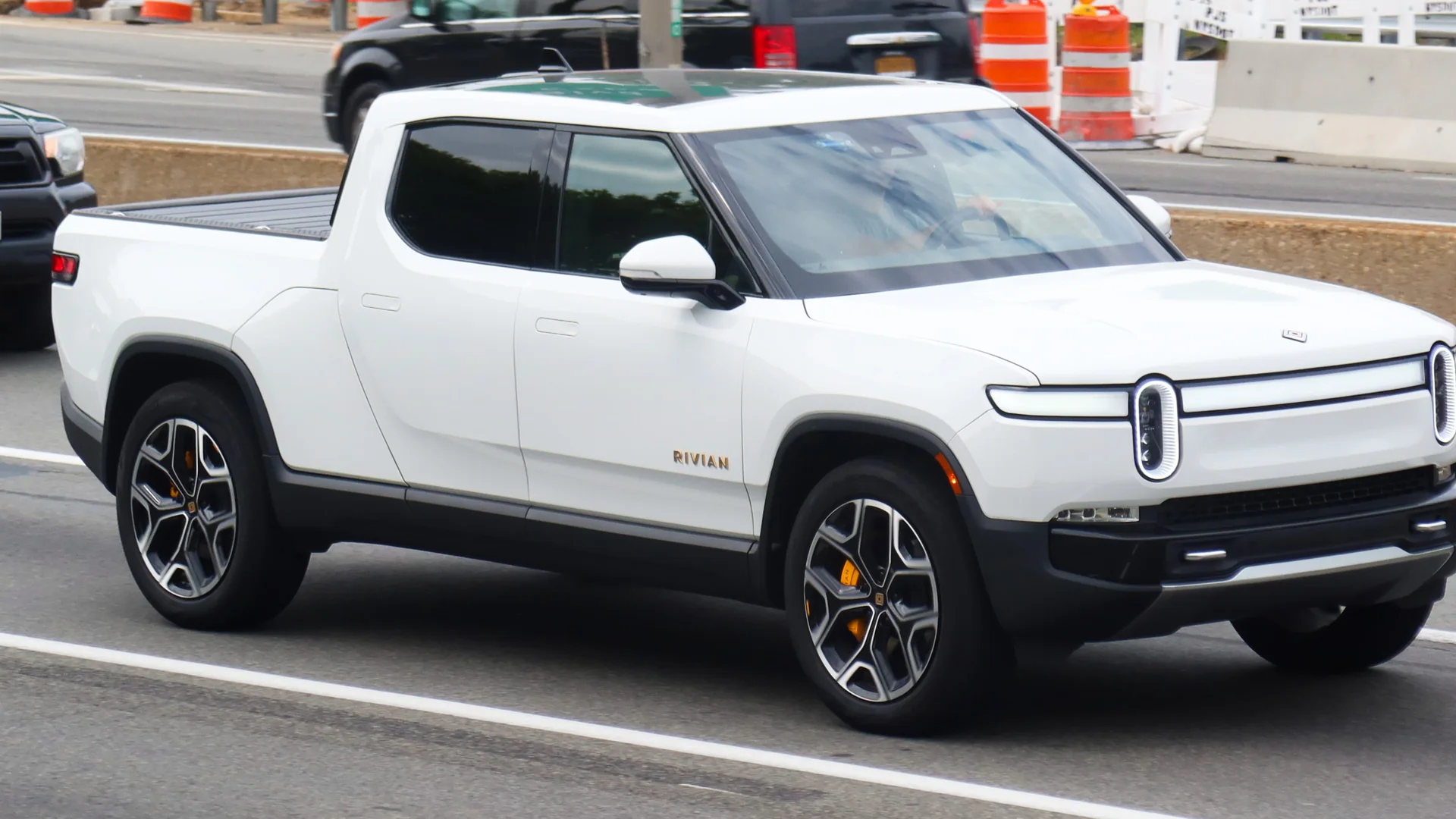
Rivian Canada sells two vehicles today and adds a third in 2027, and the gap between them is roughly eighty thousand dollars. The 2027 R1T runs $144,990 to $193,990 CAD, with the entry Premium Dual-Motor Standard Pack carrying a 397-kW motor and 97-kWh battery. The 2027 R1S runs $151,990 to $202,990, entry trim sharing that same 397-kW dual-motor setup and 97-kWh battery. The R2, the vehicle most Canadian shoppers are actually waiting for, arrives in 2027 at roughly a third of the price. Which of the three fits depends less on the spec sheet than on whether the buyer can wait eighteen months and whether EVAP eligibility survives the final MSRP.
Key takeaways
- R1T starts at $144,990 and R1S at $151,990, neither clears EVAP's $50,000 rebate ceiling.
- The R2 arrives in Canada in 2027, estimated $57,000–$66,000, but one dollar above $50,000 kills the rebate.
- R2 rated 555 km; expect closer to 400 km on a cold Canadian February morning.
- Rivian's Adventure Network is US-primary, Canadian coverage is thin north of the 401 and absent in the Prairies.
Quick Answer: Which Rivian Can You Actually Buy in Canada
Two right now, one later. The R1T pickup comes in four trim levels from $144,990 to $193,990 MSRP, and the R1S SUV mirrors that structure with four trims from $151,990 to $202,990. Both are on sale, both are being delivered, both are firmly in luxury-EV territory. The R2 slots under the R1S in overall size, Rivian effectively shrunk the R1S by roughly a quarter, with the R2 measuring 4.7 metres long against the R1S at 5.2 metres, and Canadian deliveries begin in 2027.
Neither R1 qualifies for the federal EVAP rebate. EVAP caps at a $50,000 final transaction value for non-Canadian-built vehicles, and Rivian's cheapest Canadian trim overshoots that ceiling by nearly three times. The R2 might qualify at the entry trim if pricing holds where estimates put it, but that math depends on a Canadian MSRP that has not been announced. The reasonable objection is that EVAP eligibility is a moving target, Ottawa has revised the programme once already and could raise the cap or add a Canadian-content clause that excludes the R2 regardless of sticker. Fair. But the buyer's decision has to be made against the rules that exist on the day the deposit clears, not the rules that might exist in eighteen months. For a buyer under $100K who wants a Rivian, the answer is: wait for the R2, and watch the January 2027 price sheet closely.
Gear worth having
As an Amazon Associate, ThinkEV earns a small commission from qualifying purchases — at no extra cost to you.

Magnetic Car Phone Mount
Snaps your phone to the dash or vent so navigation and charging apps stay in view. The cheapest upgrade that makes every EV drive easier.
As an Amazon Associate, ThinkEV earns from qualifying purchases — at no extra cost to you.
R1T and R1S: What Four Trims and Six Figures Actually Gets You
The two R1 models share nearly everything under the skin. Both use the same 2027 lineup logic: the entry Premium Dual-Motor Standard Pack pairs a 397-kW motor with a 97-kWh battery, and both step up through Large Pack, then tri-motor and quad-motor Adventure and Launch trims into the $170K–$200K range. The mid-range Premium Dual-Motor Large Pack R1T is $153,990; the equivalent R1S is $160,990. The SUV carries a consistent $7,000 premium over the truck across the lineup, the price of an extra row and a roof over the bed.
Rivian's own positioning is straightforward: a long-range electric truck built for performance, sustainability and adventure. The marketing is not wrong. What the six-figure ask buys is a genuinely different platform, gear tunnel, camp kitchen accessory, on-board air compressor, tank-turn, wading depth measured in metres rather than centimetres. This is not a Ford Lightning wearing a nicer interior. It is a truck engineered around the assumption that its owner will, at some point, drive it somewhere with no pavement. Rivian has been building toward this since the company was founded in 2009, which matters because the R1 platform is the product of a fifteen-year runway rather than a legacy automaker's two-year electrification sprint.
Whether that assumption fits the buyer is the entire question. A Vancouver Island contractor towing a boat to Tofino every second weekend gets full value from the platform. A Toronto commuter parking in a Yorkville tower gets a very expensive way to go grocery shopping. The R1T and R1S do not apologize for their price, but they only earn it when the capability is actually used, the same test that applies to any $180,000 truck, electric or otherwise. The sharpest objection is that plenty of $180,000 vehicles get bought as status objects and their owners are happy with the trade, a Range Rover in a downtown garage is a market segment, not a scandal. True. But a Range Rover buyer is not also claiming the moral high ground of driving an off-road-capable EV; the Rivian pitch specifically bundles adventure capability into the price, and a buyer who never uses the capability is paying a premium for a story rather than a tool. For the direct comparison against Ford's electric pickup, the R1T vs F-150 Lightning breakdown covers the tow-and-haul math in detail.
R2 Canada Launch: 2027, Three Trims, and a 555 km Range Claim
The R2 is a meaningfully smaller footprint that still shares the familial resemblance, as if Rivian put an R1S in a Xerox machine and pressed the reduce button. Rivian's original mission with the R1S and R1T was to break the molds of what all-electric SUVs and pickups represent, achieved in impressive fashion, but the six-figure sticker put both out of reach for the masses. The R2 is the answer to that problem. Three trims, Standard, Premium, Performance, with Canadian deliveries planned for 2027.
The Canadian price band I'd put on the R2 is $57,000 to $66,000 for the base trim, and I'm labelling that as an estimate on purpose. Rivian has not announced Canadian MSRPs. The band is triangulated from the announced US pricing, current CAD/USD exchange, and the pricing pattern the R1 lineup already established between the two markets. If the final number lands under $50,000 the base R2 clears the EVAP ceiling; above it, the rebate math collapses. That is a real cliff, not a rounding error, the difference between a $52,000 R2 and a $58,000 R2 is not $6,000, it is $6,000 plus the $5,000 EVAP rebate the more expensive trim can't claim. The full R2 Canada pricing analysis walks through the trim-by-trim EVAP math.
Gear worth having
As an Amazon Associate, ThinkEV earns a small commission from qualifying purchases — at no extra cost to you.

USB Star Projector Roof Light
Casts a drifting starfield across the headliner from a single USB port. The cheapest way to make the cabin feel special.
As an Amazon Associate, ThinkEV earns from qualifying purchases — at no extra cost to you.
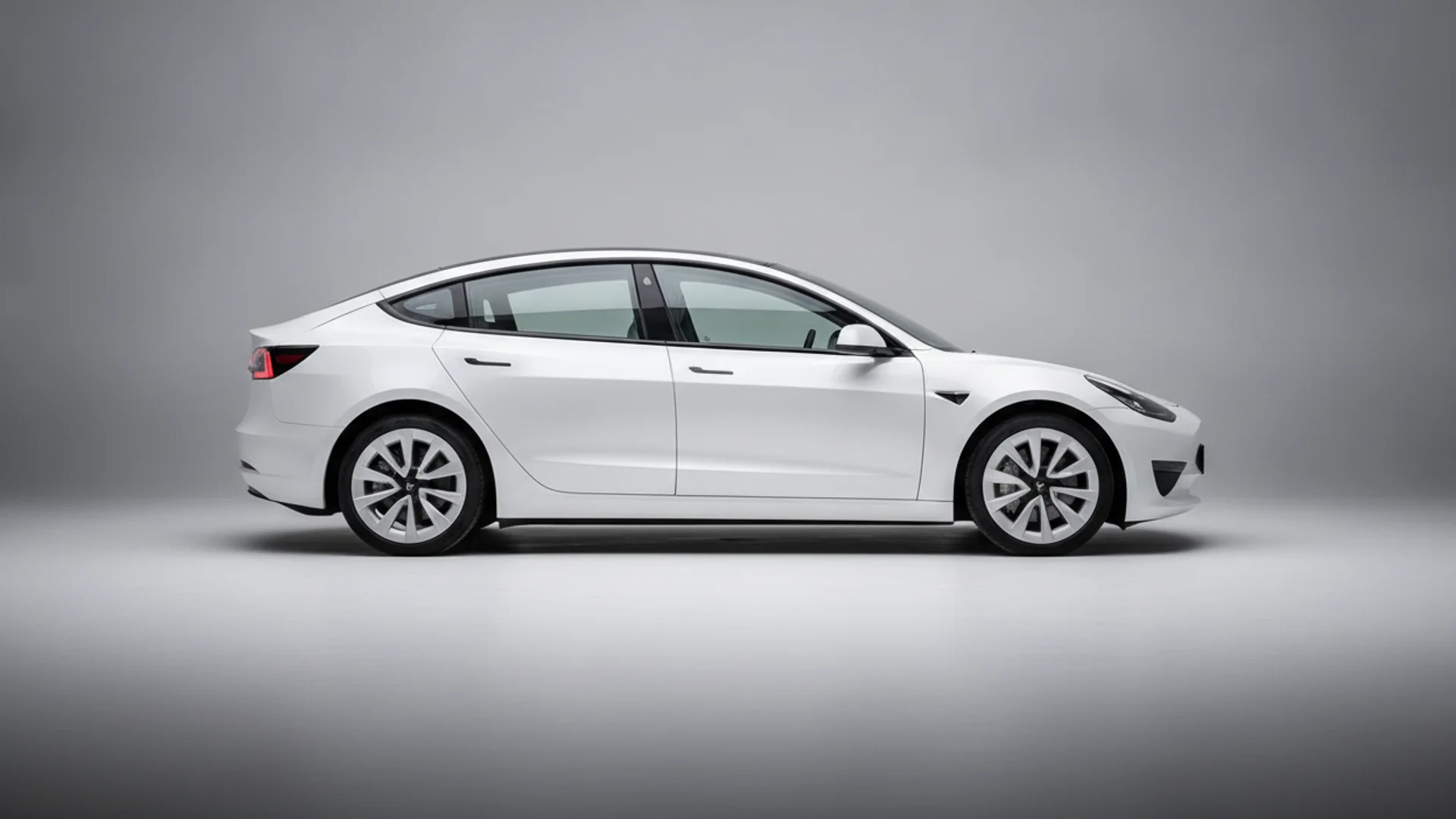
The 555 km range claim on the top spec is competitive with the segment leaders. It is also, per convention, a claim, real Canadian winter range on a 555 km rating tends to land closer to 400 km on a cold February morning. The R2 competes directly with the Tesla Model Y, Hyundai Ioniq 5, and Ford Mustang Mach-E in a segment where the federal rebate is not a nice-to-have but the entire buying decision for many households. The Model Y is the sharpest comparison: it clears the EVAP cap on its cheapest trim, ships from Shanghai or Fremont depending on the month, and outsells every other EV in Canada by a margin most rivals cannot close. If the R2's base trim lands north of $57,000 without a rebate, Rivian is not fighting the Model Y on price, Rivian is fighting the Model Y with a $12,000 handicap and an off-road story most Model Y shoppers do not need. Whether Rivian's Canadian price sheet reflects that knowledge is the question that gets answered when order books open.
Gear worth having
As an Amazon Associate, ThinkEV earns a small commission from qualifying purchases — at no extra cost to you.

Grizzl-E Classic Level 2 EV Charger (40A)
Canadian-made and rated for minus 40C winters. 40A / 9.6 kW, NEMA 14-50, indoor/outdoor, 24-ft cable. The charger built for Canadian weather.
As an Amazon Associate, ThinkEV earns from qualifying purchases — at no extra cost to you.
Charging in Canada: Rivian's Network and the Practical Reality
The Rivian Adventure Network is the manufacturer's own DC fast-charging build-out, and it is US-primary. Canadian coverage exists, a handful of stations in British Columbia and along the Ontario corridor, but it is thin north of the 401 and effectively absent in the Prairies and Atlantic Canada. For an owner whose charging life is home overnight plus the occasional highway top-up, this does not matter. For an owner buying a Rivian specifically to drive to Tuktoyaktuk, the network gap is real.
The R1T and R1S accept both J1772 (Level 2) and CCS (DC fast), which means they work fine on FLO, ChargePoint, Petro-Canada, and BC Hydro's DCFC network, the actual Canadian charging infrastructure most owners use most of the time. The R2 will support Tesla's NACS connector in addition to CCS, opening up Supercharger access once the network's non-Tesla access is broadly live. That is a meaningful difference. NACS access effectively doubles the practical DC-fast-charging footprint for a Canadian R2 owner over what an R1 owner gets today, and it puts the R2 on the same plug parity as the Model Y it will be cross-shopped against, a strategic concession Rivian would not have made in 2022 and could not avoid in 2026.
The practical charging story for a Canadian Rivian buyer in 2026 is that the vehicle plugs into what is already there. Rivian's own network is a bonus in the two provinces where it exists and a non-factor everywhere else. This is not a criticism, it is the same story every non-Tesla EV manufacturer tells in Canada. Worth knowing before signing.
Gear worth having
As an Amazon Associate, ThinkEV earns a small commission from qualifying purchases — at no extra cost to you.

PULIDIKI Car Cleaning Gel (Detailing Putty)
Press it into vents, buttons, and seams and it lifts out dust you did not know was there. Weirdly satisfying, genuinely useful.
As an Amazon Associate, ThinkEV earns from qualifying purchases — at no extra cost to you.
Should You Wait for the R2 or Buy an R1 Now
If the use case actually needs a truck-grade or three-row-SUV-grade platform, real towing, real off-road, seven seats with a functional third row, the R1T or R1S makes sense today. The R2 will not replace them. It is a smaller vehicle on a smaller battery with less towing capacity and a shorter wheelbase. Buying an R1 in 2026 is buying the capability, and if the capability matches how the vehicle will be used, the six-figure price is a legitimate expense rather than a status purchase. Nobody owes an apology for spending $150,000 on a truck that will spend a decade doing what a $60,000 truck cannot. The R1S vs Tesla Model X comparison covers the six-figure SUV decision in more detail; the R1T Canadian review covers the truck side.
If the use case is a family SUV that occasionally goes camping and mostly does school runs and Costco trips, waiting for the R2 is the smarter call. Three factors drive that read:
- Price gap. Roughly $80,000 to $90,000 separates an entry R1S from an estimated entry R2, that is not a trim difference, it is a different vehicle class.
- EVAP eligibility. If the R2's Canadian base MSRP clears $50,000, a $5,000 federal rebate enters the calculation. That rebate does not exist for the R1 at any trim.
- Segment logic. The R2 competes against vehicles most families are already cross-shopping. The R1S competes against Range Rover, Escalade IQ, and Model X.
The risk of waiting is genuine and worth naming. Rivian's 2027 Canadian delivery timeline is a soft commitment, not a hard one. The company has already slid launch dates on this vehicle once. A buyer choosing to wait is placing a bet that Rivian holds the 2027 date, holds the price band, and delivers the promised range. Two of those three feel likely; the third is the industry's habitual weak point, WLTP-style range claims often shrink under Canadian winter conditions in ways the marketing brochure does not preview. A twenty-percent cold-weather derate on a 555 km rating leaves a real-world 444 km, which is still segment-competitive; a thirty-percent derate leaves 388 km, which is Model Y RWD territory at a probable $10,000 premium.
The tiebreaker: R1 buyers are paying for capability they can use tomorrow. R2 buyers are paying less for a vehicle that arrives when Rivian says it will. If capability today matters more than saving eighty thousand dollars, buy the R1. If the eighty thousand matters more than capability today, wait, and put a calendar reminder on the January 2027 Canadian price announcement. Three numbers on that announcement decide the whole thing: the base R2 MSRP relative to the $50,000 EVAP cap, the Standard-trim range figure relative to the 555 km claim on Performance, and the Canadian delivery window relative to Rivian's stated 2027 target. If the base clears the cap and deliveries slip into 2028, the R2 becomes a nicer Model Y at a Model Y price. If it lands under the cap and deliveries hold, it becomes the mainstream Canadian Rivian, and the R1 lineup goes back to being what it always should have been, a specialist tool for buyers who actually use the capability.
Gear worth having
As an Amazon Associate, ThinkEV earns a small commission from qualifying purchases — at no extra cost to you.

WixGear Magnetic Air Vent Phone Mount (2-Pack)
A magnet strong enough that your phone never flinches over potholes or rail crossings. Two in the box, one for each car.
As an Amazon Associate, ThinkEV earns from qualifying purchases — at no extra cost to you.

Founder & Chief Editor
Vlad Pereira is the founder and chief editor of ThinkEV.ca, the Canadian electric-vehicle publication he writes and edits from Courtenay, British Columbia. He covers EV pricing, federal and provincial rebates, charging costs, and the Chinese manufacturers now entering Canada, from the buyer's side rather than the press-fleet side. ThinkEV is a venture of Vlad Pereira Online; his writing on health, income and the long game lives at vladpereira.com.
Frequently asked questions
Do either R1 models qualify for the federal EVAP rebate?
When exactly does the R2 go on sale in Canada?
Will the R2 qualify for the $5,000 EVAP rebate?
How does Rivian's Canadian charging network compare to Tesla's?
Is the R1T actually that different from a Ford Lightning?
More EV & road-trip finds
Affordable upgrades worth a look — tap any to check the price on Amazon.
 ★ 1,340
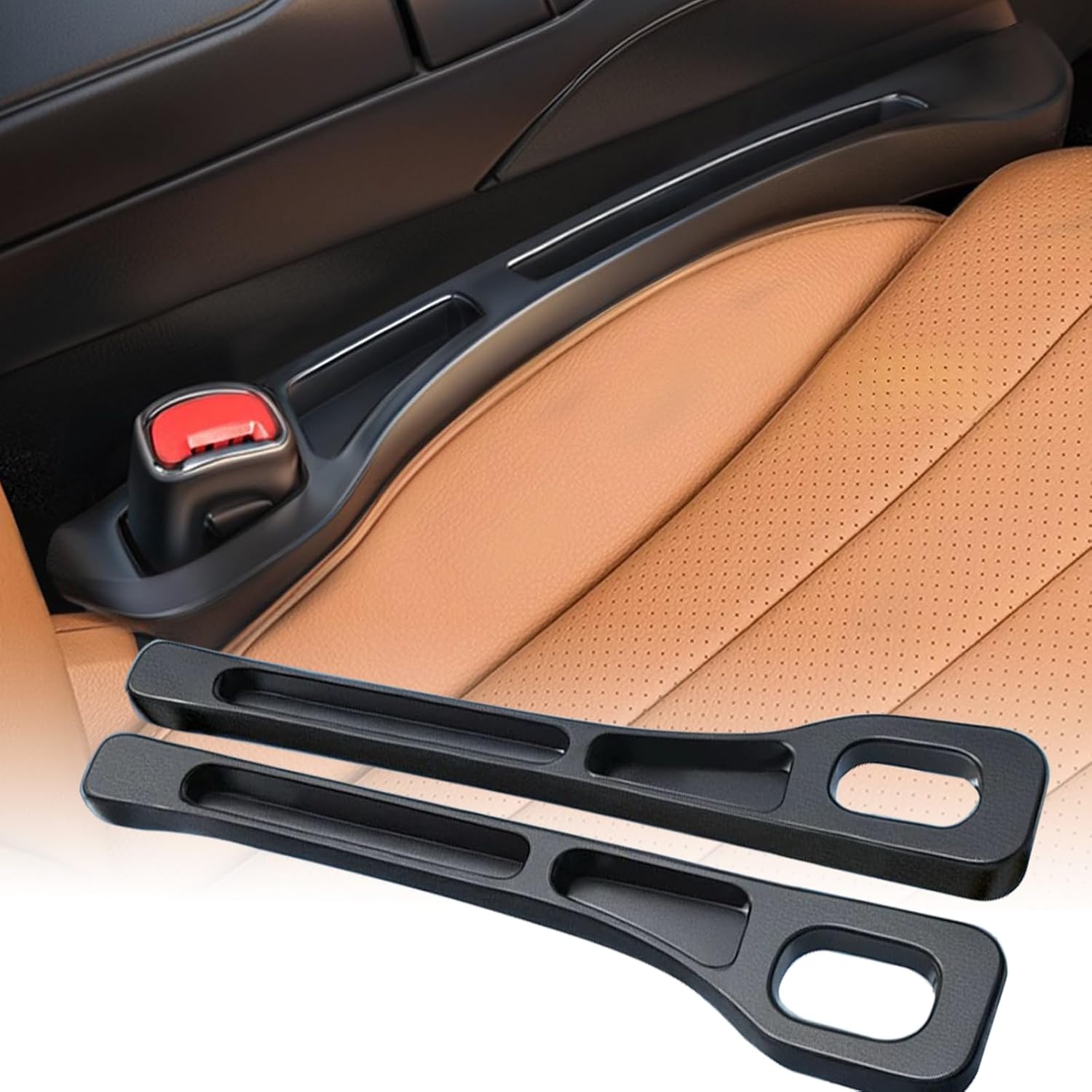
Car Seat Gap Filler (Universal)
View on Amazon ★ 848
★ 848Coiled USB-C to USB-C Car Cable (2-Pack)
View on Amazon ★ 87
★ 87Car Window Sun Shades for Kids (4-Pack)
View on Amazon ★ 68
★ 68WeatherTech FloorLiner for Tesla Model 3
View on Amazon ★ 8,681
Chemical Guys Complete Car Wash Kit
View on Amazon ★ 419
★ 419RGB Car Interior LED Strip Light
View on Amazon ★ 900
★ 900Personalized Photo Car Air Freshener
View on Amazon ★ 4,424
Sun Visor Card and Document Organizer
View on AmazonRead, Plan, Then Stay Current
Explore our expert articles to understand incentives and ownership costs, use the map to pressure-test charging reality, then subscribe so new EV coverage comes straight to you.
Continue Reading
Rivian R2 Canada Price: $66,500 Base Misses the Rebate

Rivian Posted 14.4% Delivery Growth Without The Tax Credit
Rivian R1T Canada Review 2026: 515 km Quad-Motor
EREVs Explained: The Backup Engine Comeback for 2026
California's $3,500 EV Rebate Leaves Tesla Out